
A bioreactor and its treatment method for eutrophic water
A bioreactor and water body technology, applied in biological water/sewage treatment, biological treatment devices, sustainable biological treatment, etc., can solve problems such as poor governance effects, achieve low cost, increase transparency, and improve physical and chemical properties
Patent Information
- Authority / Receiving Office
- CN · China
- Patent Type
- Patents(China)
- Current Assignee / Owner
- Publication Date
- 2019-02-26
Smart Images
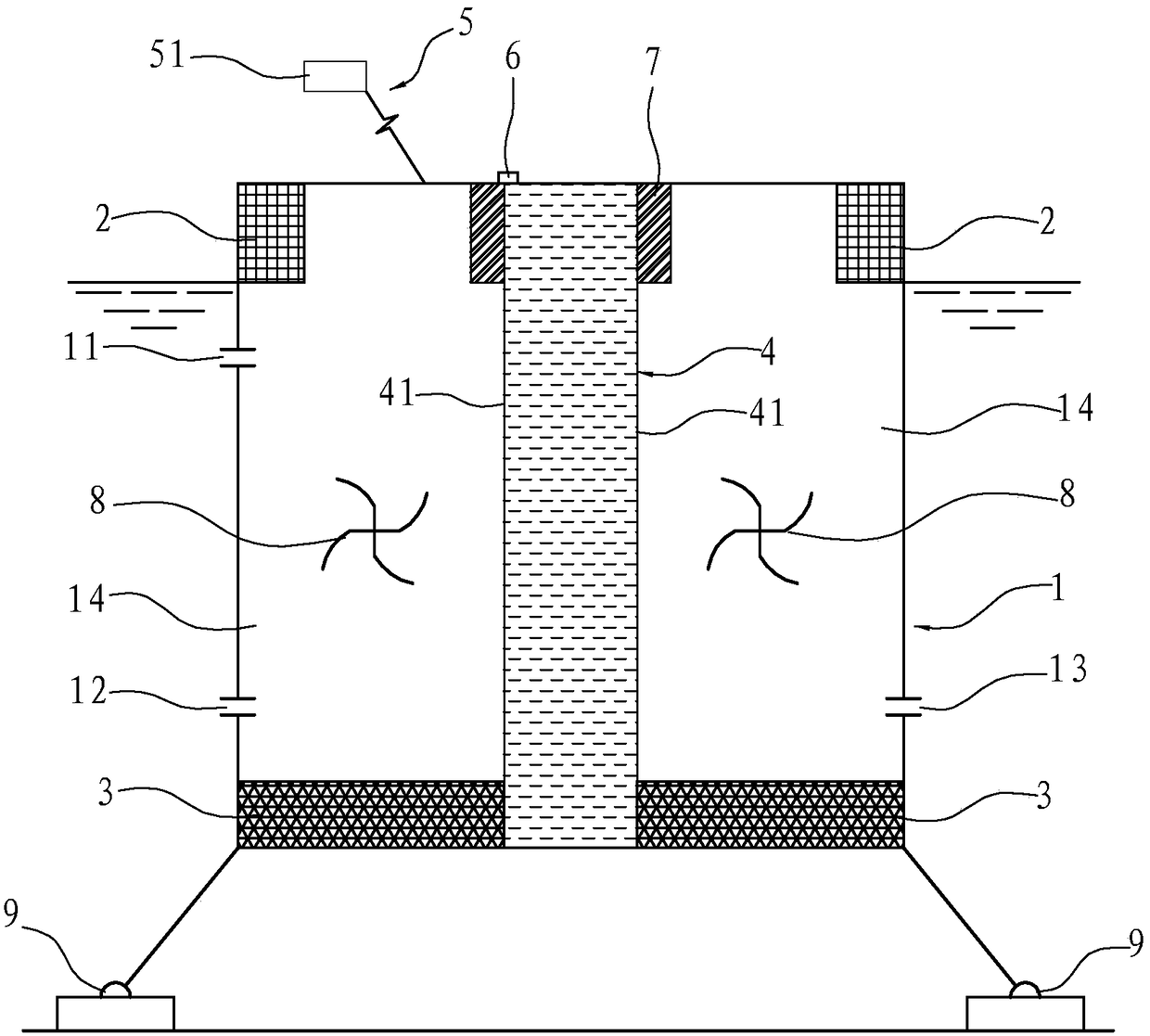
Figure 1 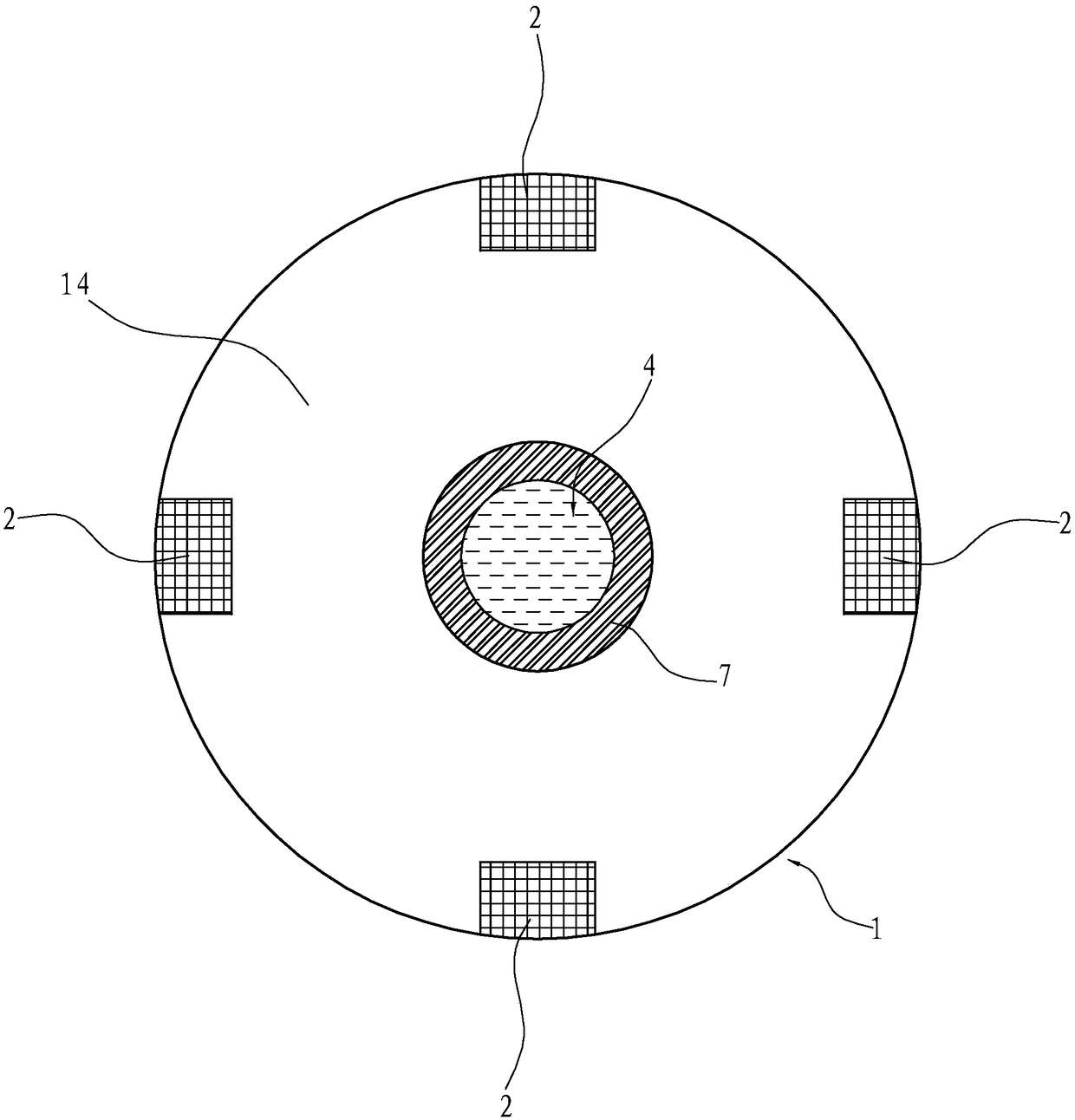
Figure 2
Abstract
Description
technical field
[0001] The invention relates to the field of ecological restoration of water bodies, in particular to a bioreactor and a treatment method for eutrophic water bodies. Background technique
[0002] Cladocera (Cladocera) referred to as "daphnia" and "water flea", commonly known as red worms, belong to invertebrates, crustacea, branchiopoda, cladocera, mainly filter-feed bacteria in water, single-celled algae and Protozoa can be used for water purification. Among the common daphnia species, Daphnia magna, Daphnia grandis, Daphnia and a few species of Daphnia genus are suitable for artificial cultivation. The sources of artificially cultivated daphnia species are very wide. Generally, when the water temperature reaches above 18°C, cladocera often multiply in large numbers in some eutrophic water bodies, and they can be collected with zooplankton nets when they cluster in the morning and evening; when the outdoor water temperature is low, there is no large amount ...
Examples
Embodiment 1
[0025] Such as Figure 1~2 Shown, a kind of bioreactor is used for cultivating daphnia, comprises culture floating chamber 1, is provided with zooplankton seed lattice 2, overwintering seed lattice 3 and the culture medium that provides growth nutrition for zooplankton in this cultivation floating chamber 1 grid 4, wherein the overwintering seed storage grid 3 is arranged at the bottom of the inner cavity of the culture floating chamber 1. Above-mentioned zooplankton seed grid 2, overwintering storage grid 3 and culture grid 4 form the cultivation area 14 for the growth of zooplankton seedlings, and the chamber wall of the cultivation floating chamber 1 where this cultivation area 14 is located offers water inlet 11 , water outlet 12 and overflow 13, the daphnia after cultivation can be released by water outlet 11 and overflow 13, for facilitating the release of daphnia, preferably, the setting height of water outlet 12 and overflow 13 is lower than water inlet 11.
[0026] S...
Embodiment 2
[0030]The above-mentioned bioreactor is placed in the water area to be treated, and the throwing distance of the bioreactor in the water area to be treated is 50m, wherein the seedlings of daphnia magna are put in in the zooplankton seedling grid of the bioreactor, and the amount of throwing in is planktonic 3‰ of the water quality of animal seedlings, the water temperature in the breeding process is controlled at 18-20°C, the pH value is 7.5-8.0, the dissolved oxygen saturation in the breeding water is 70-80%, and the Mg of the breeding water 2+ The concentration is less than 50mg / L.
[0031] When the density of daphnia in the bioreactor reaches 1500 / liter, the daphnia will be released from the bioreactor into the polluted waters to be treated, making them prey on blue-green algae, absorbing and degrading toxic substances, thereby purifying the water body, where 1 Shrimp nets are used to block organisms larger than 2-3mm from entering the polluted waters to be treated. The r...
Embodiment 3
[0034] The above-mentioned bioreactor is placed in the polluted waters to be treated, and the throwing distance of the bioreactor in the waters to be treated is 66m, wherein the seedlings of Daphnia grandis are put in the zooplankton seedlings of the bioreactor, and the amount of throwing It is 4‰ of the water quality of zooplankton seedlings, the water temperature is controlled at 20-24°C during the breeding process, the pH value is 7.5-8.0, the dissolved oxygen saturation in the breeding water is 80-100%, and the Mg of the breeding water 2+ The concentration is less than 50mg / L.
[0035] When the density of daphnia in the bioreactor reaches 2000 / liter, the daphnia overflows from the bioreactor into the polluted water area to be treated, making it prey on blue-green algae, absorbing and degrading toxic substances, thereby purifying the water body, where 2 Shrimp nets are used to block organisms larger than 2-3mm from entering the polluted waters to be treated. The removal ra...