
A self-powered self-backhaul method for small cell base stations based on full-duplex and large-scale antenna technology
A technology of small cell base stations and large-scale antennas, which is applied in duplex signal operation, wireless communication, power management, etc., and can solve problems such as high deployment costs and low environmental matching
Patent Information
- Authority / Receiving Office
- CN · China
- Patent Type
- Patents(China)
- Current Assignee / Owner
- Publication Date
- 2020-01-10
Smart Images
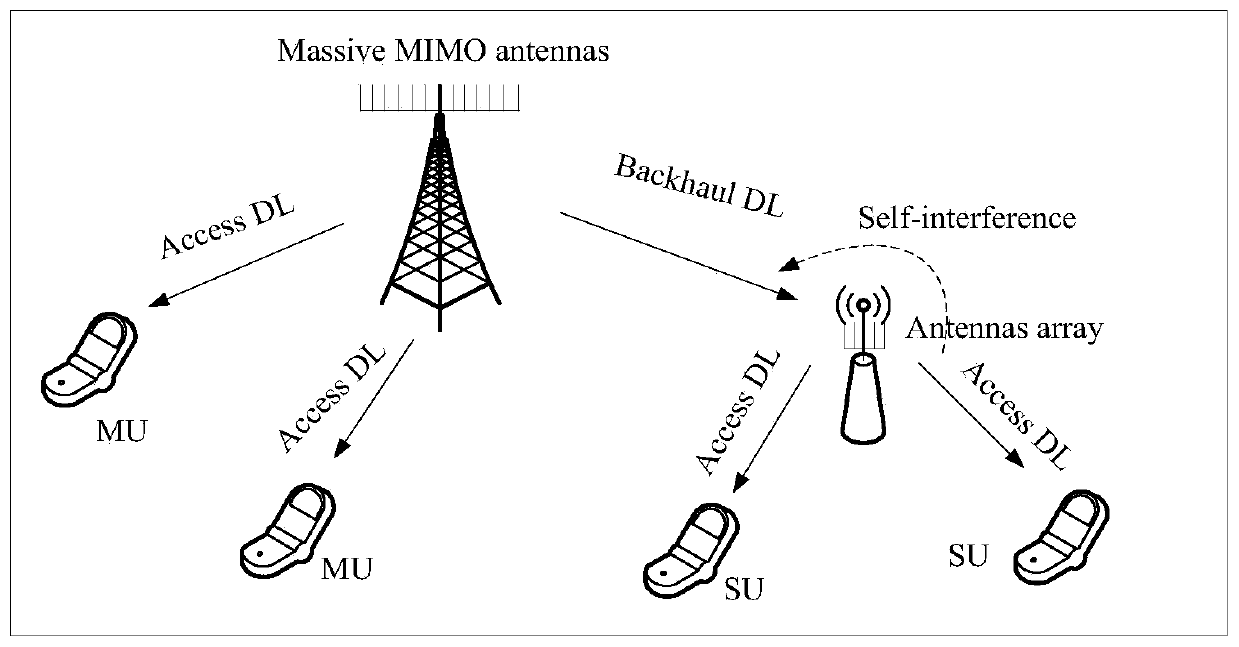
Figure 1 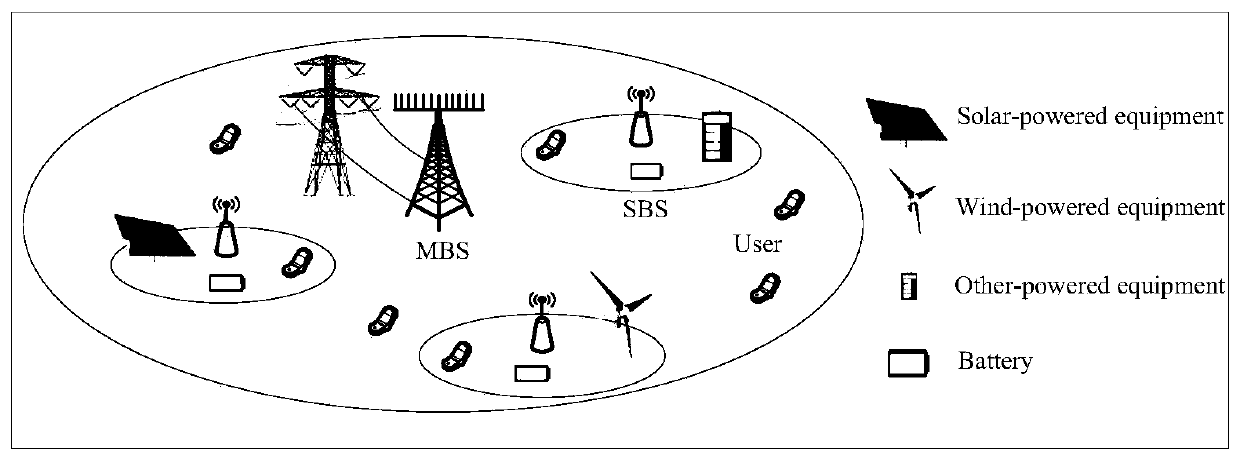
Figure 2 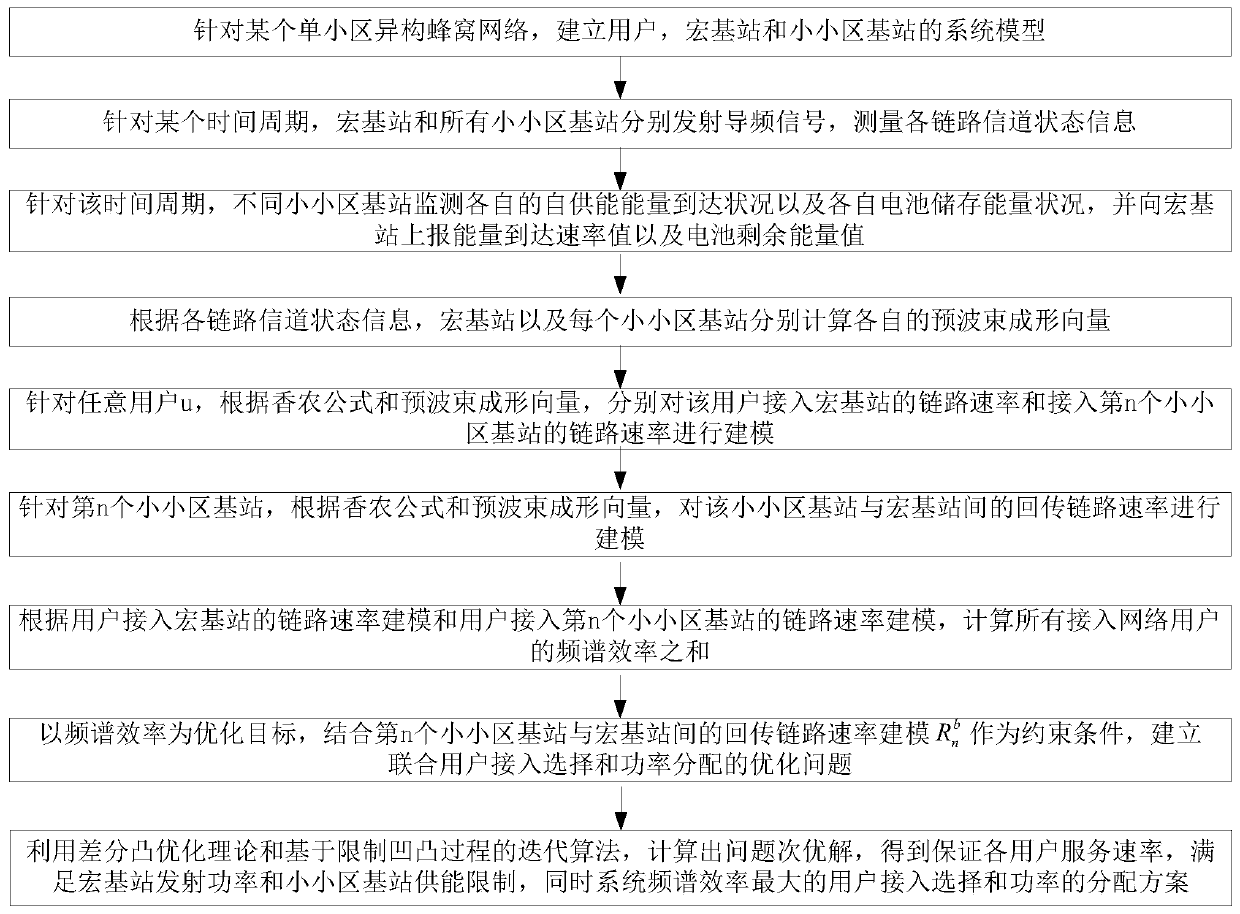
Figure 3
Abstract
Description
technical field
[0001] The invention belongs to the technical field of wireless communication, in particular to a method for self-supply and self-backhaul of a small cell base station based on full-duplex and large-scale antenna technology. Background technique
[0002] Since the 21st century, the global economy has developed rapidly, science and technology are changing with each passing day, and high-speed communication technology is gradually applied to various fields of social life. The requirements of the information age for future communications are concentrated in: high reliability, high energy efficiency, low delay and high quality. The current third-generation and fourth-generation mobile communication technologies partially fulfill the above requirements, while sacrificing some other aspects of performance. Today, with the rapid development of the communication industry, these technologies can no longer meet the needs of users; how to effectively process massive in...
Examples
Embodiment Construction
[0078] The specific implementation method of the present invention will be described in detail below in conjunction with the accompanying drawings.
[0079] The present invention is based on the full-duplex technology and the large-scale antenna technology self-supplying and self-returning method of the small cell base station. In this method, the small cell base station SBS uses the energy harvesting device to collect the energy in the surrounding environment and store it for the base station function. Cellular spectrum is used for user access and SBS backhaul. The enhanced block diagonal beamforming scheme for eliminating interference is adopted to eliminate cross-layer interference and multi-user interference at the same time; the algorithm adapted to joint user access and power allocation can effectively use energy according to the current energy level of the network to ensure users While improving the quality of service, the spectral efficiency of the network is improved....