
Steel for mechanical structures and induction hardened steel parts
A mechanical structure and high-frequency quenching technology, which is applied in the fields of high-frequency hardened steel parts, mechanical structural steel and high-frequency hardened steel parts, can solve the problems of decreased hardenability, difficulty in completing the transformation to austenite, and unclear , to achieve excellent surface fatigue strength, excellent machinability and quality improvement
Patent Information
- Authority / Receiving Office
- CN · China
- Patent Type
- Applications(China)
- Current Assignee / Owner
- Publication Date
- 2018-06-08
- Estimated Expiration
- Not applicable · inactive patent
Smart Images
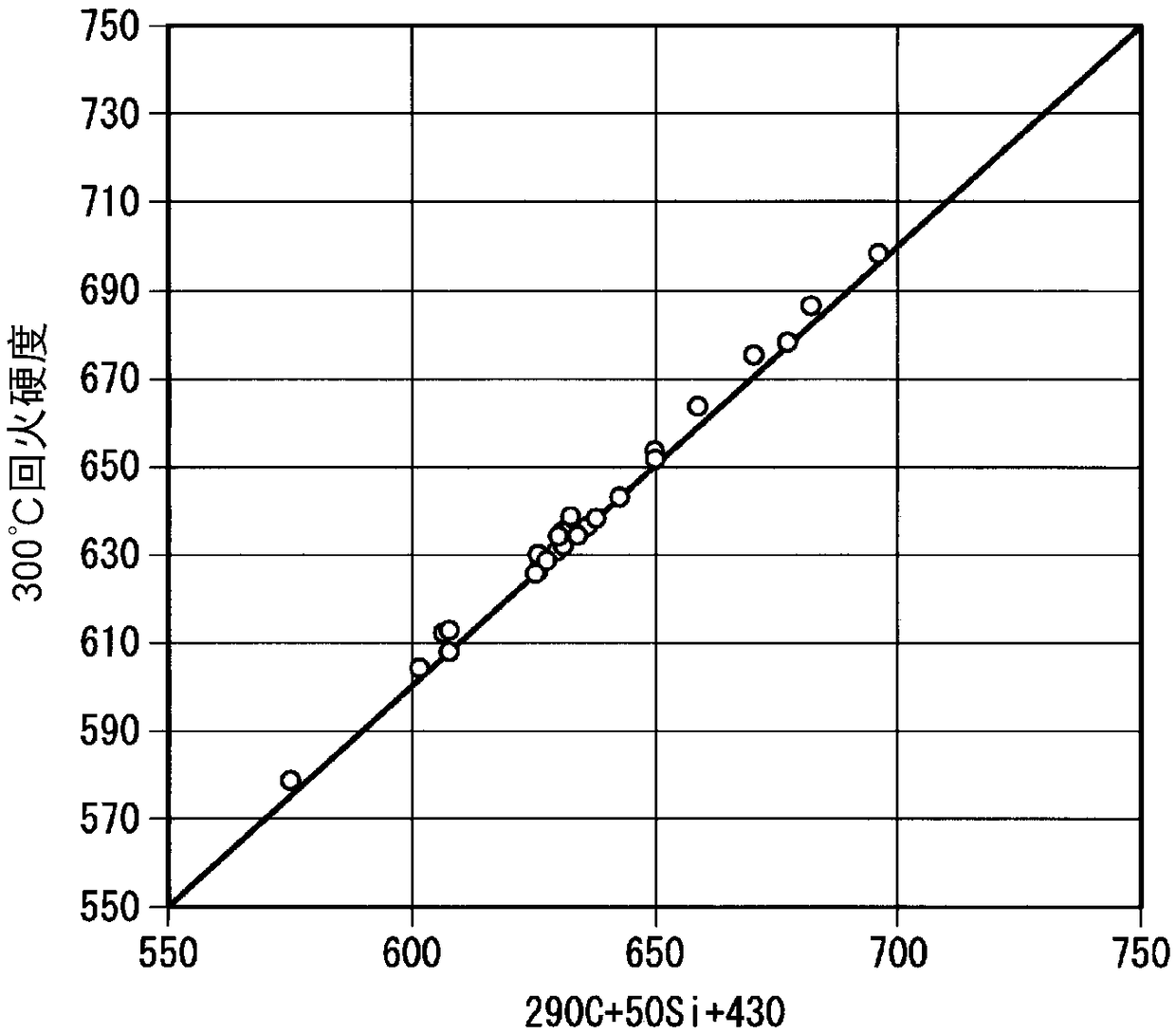
Figure 1 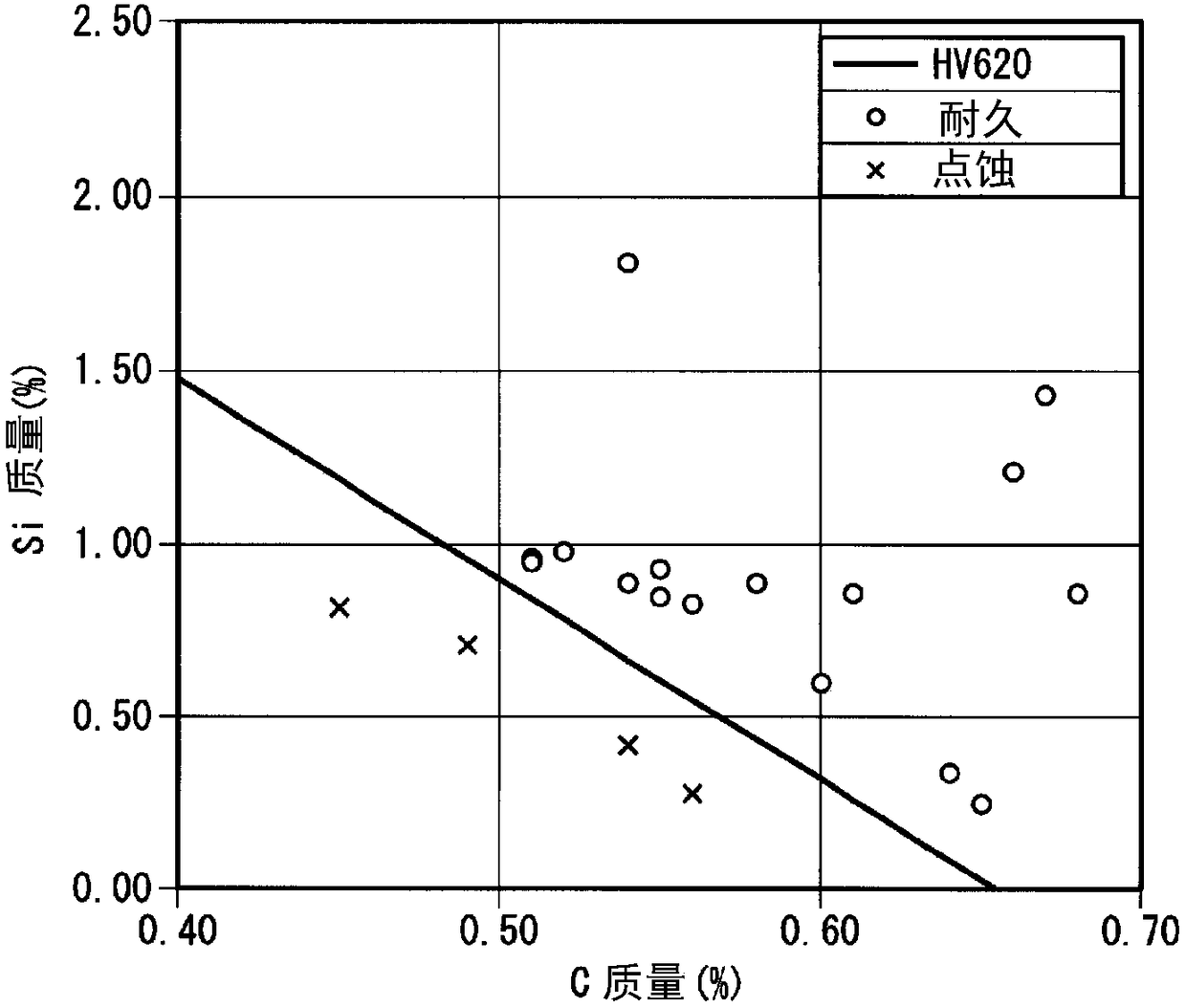
Figure 2 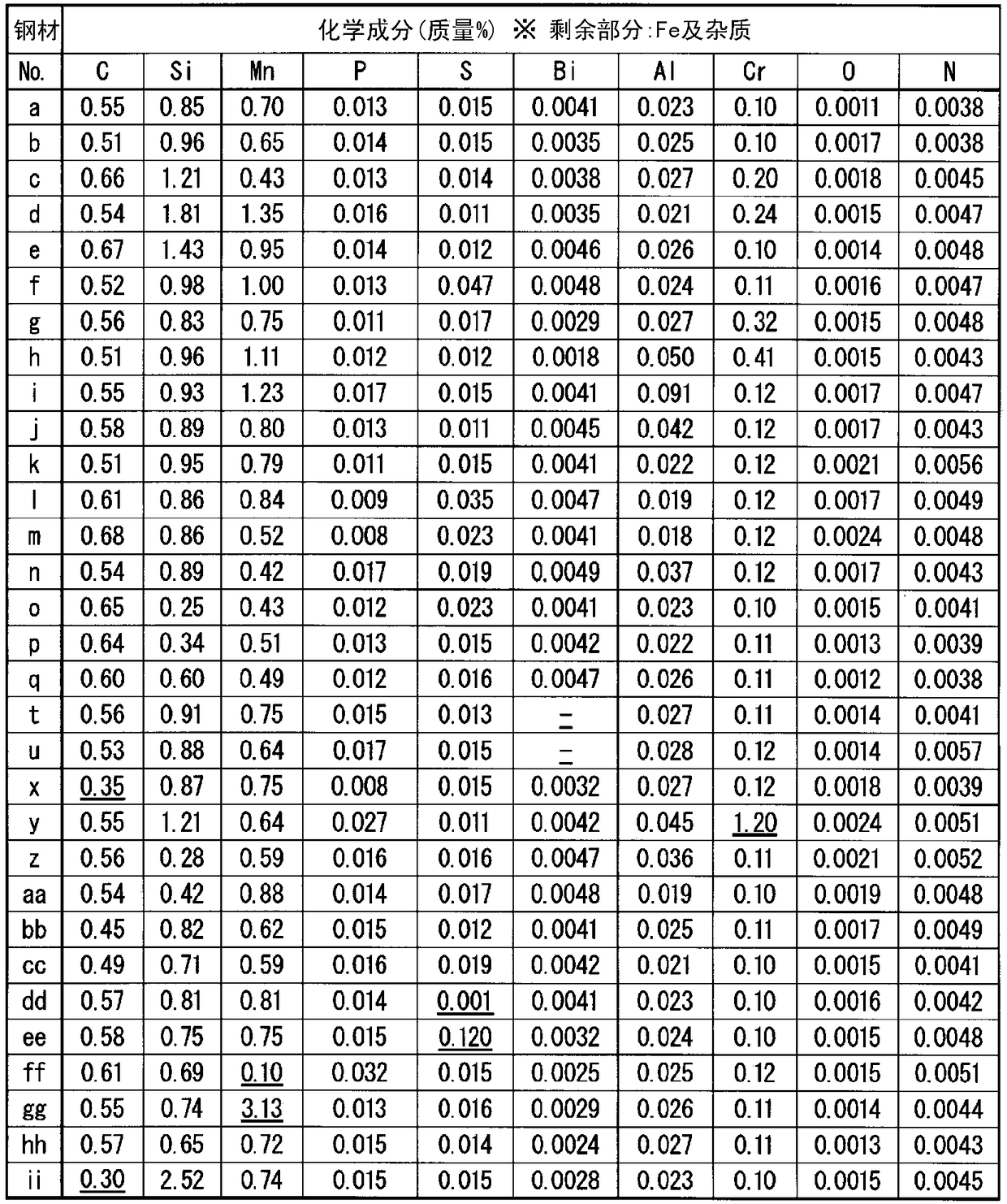
Figure 3
Abstract
Description
technical field
[0001] The present invention relates to structural steel and high-frequency quenched steel parts, and in particular to power transmission parts (such as gears, bearings, CVT pulleys, shafts, etc.) Induction hardened steel parts used in, etc.) and mechanical structural steel as its raw material.
[0002] this application claims priority based on Japanese Patent Application No. 2015-205631 for which it applied in Japan on October 19, 2015, and uses the content here. Background technique
[0003] In the past, power transmission parts such as gears were often used after surface hardening treatment. As a surface hardening method, carburizing, nitriding, or induction hardening is used. Among them, "carburizing" is a method of hardening the surface by carbonizing the surface layer of a material with high toughness in the base (base material), and it is mainly used in gears and CVTs for automobiles in order to improve fatigue strength (surface fatigue strength). O...
Examples
Embodiment
[0139] The present invention will be described in detail below through examples. The conditions in the examples are one example of conditions employed to confirm the feasibility and effects of the present invention, and the present invention is not limited to this one example of conditions. As long as the object of the present invention can be achieved without departing from the gist of the present invention, various conditions can be employed in the present invention.
[0140] Steel materials No.a to ii having the chemical compositions shown in Table 1 and Table 2 were melted in a 270-ton converter, and continuously casted using a continuous casting machine to manufacture a 220×220 mm square billet. Pressing is applied at a stage in the middle of solidification of continuous casting. In the continuous casting of the slab, the average cooling rate in the temperature range from the liquidus temperature to the solidus temperature at a position at a depth of 15 mm from the surfa...