
Shock absorption counterweight system for bridge and working method thereof
A bridge and counterweight technology, applied in bridges, bridge parts, bridge construction, etc., can solve the problem of high cost of shock-absorbing and isolating devices, and achieve the effects of simple structure, reduced engineering cost, and reduced seismic demand
Patent Information
- Authority / Receiving Office
- CN · China
- Patent Type
- Applications(China)
- Current Assignee / Owner
- Publication Date
- 2018-09-28
Smart Images
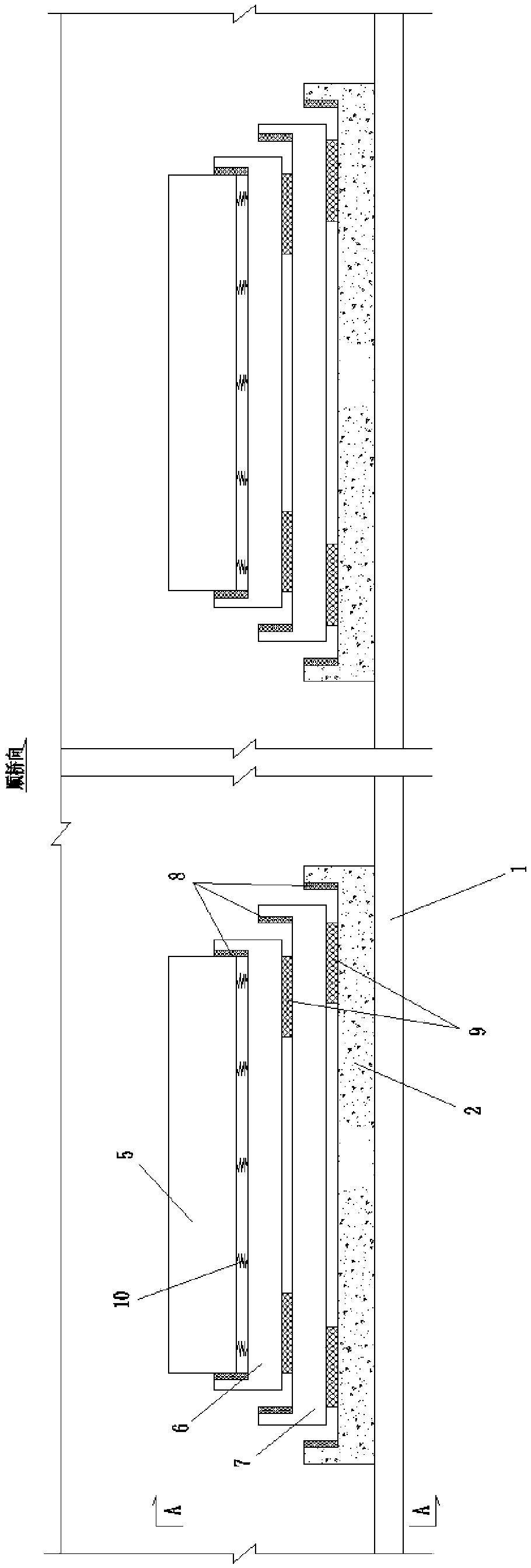
Figure 1 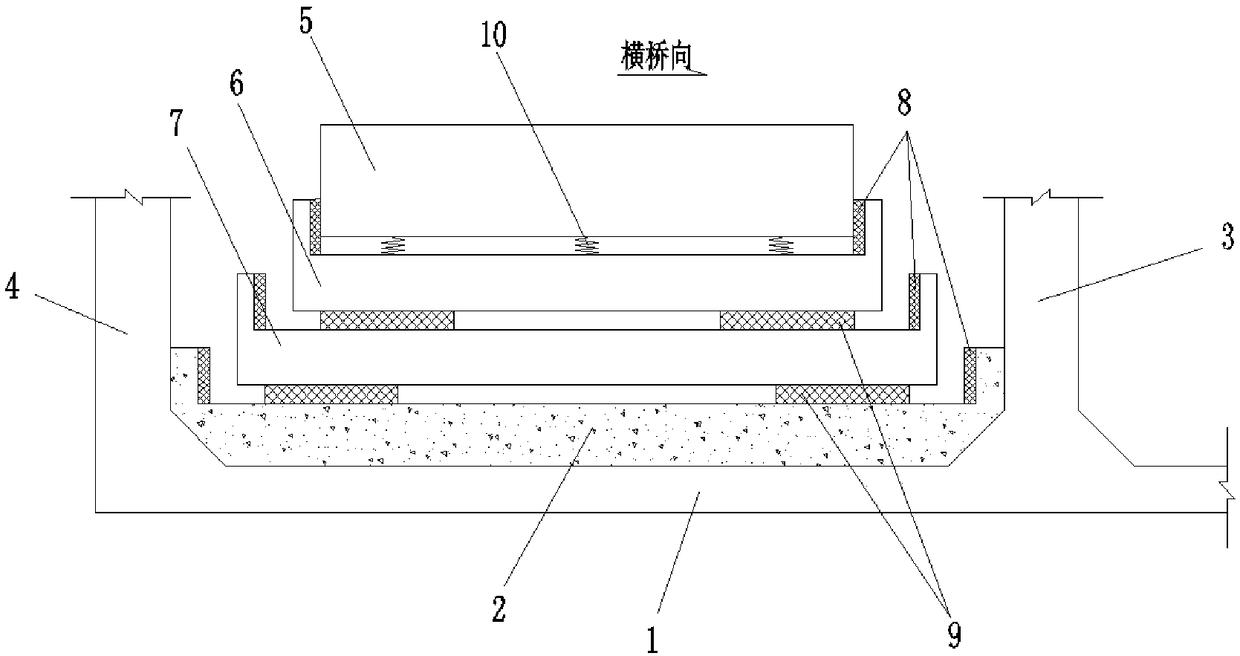
Figure 2 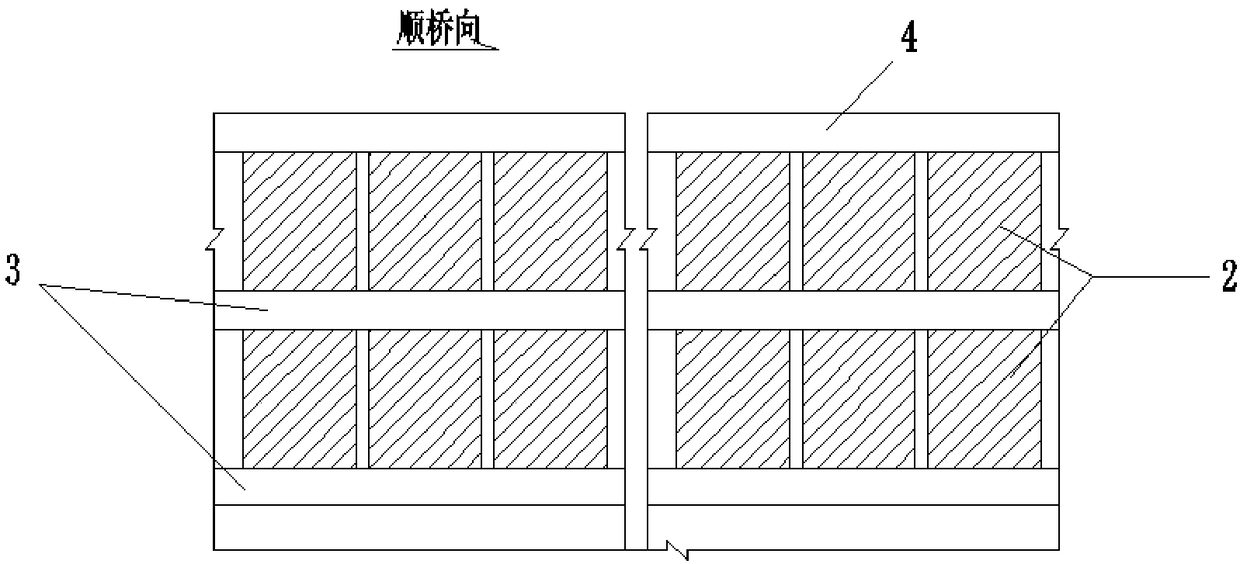
Figure 3
Abstract
Description
technical field
[0001] The invention relates to the technical field of bridge construction, in particular to a shock-absorbing counterweight system for bridges and a working method thereof. Background technique
[0002] In recent years, earthquakes have occurred frequently all over the world, causing great loss of life and property to humans in the disaster-stricken areas. A large number of bridge structures have been severely damaged in earthquakes, causing serious secondary disasters. In order to improve the seismic performance of bridge structures, seismic isolation technology has gradually been widely used in the design of bridge structures. At present, shock-absorbing and isolating bearings, dampers and other devices are mainly used in bridge structures for shock-absorbing and isolating design. higher. Contents of the invention
[0003] The purpose of the present invention is to overcome above-mentioned deficiencies in the prior art, provide a kind of damping counte...
Examples
Embodiment Construction
[0024] It should be pointed out that the following detailed description is exemplary and intended to provide further explanation to the present application. Unless defined otherwise, all technical and scientific terms used herein have the same meaning as commonly understood by one of ordinary skill in the art to which this application belongs.
[0025] It should be noted that the terminology used here is only for describing specific implementations, and is not intended to limit the exemplary implementations according to the present application. As used herein, unless the context clearly dictates otherwise, the singular is intended to include the plural, and it should also be understood that when the terms "comprising" and / or "comprising" are used in this specification, they mean There are features, steps, operations, means, components and / or combinations thereof.
[0026] For the convenience of description, if the words "up", "down", "left" and "right" appear in the present i...