
Variation sheets intended for mold inserts for tire vulcanization
An in-mold, thin plate technology, used in household appliances, other household appliances, tires, etc., can solve problems such as not optimizing tire performance
Patent Information
- Authority / Receiving Office
- CN · China
- Patent Type
- Patents(China)
- Current Assignee / Owner
- Publication Date
- 2021-06-15
Smart Images
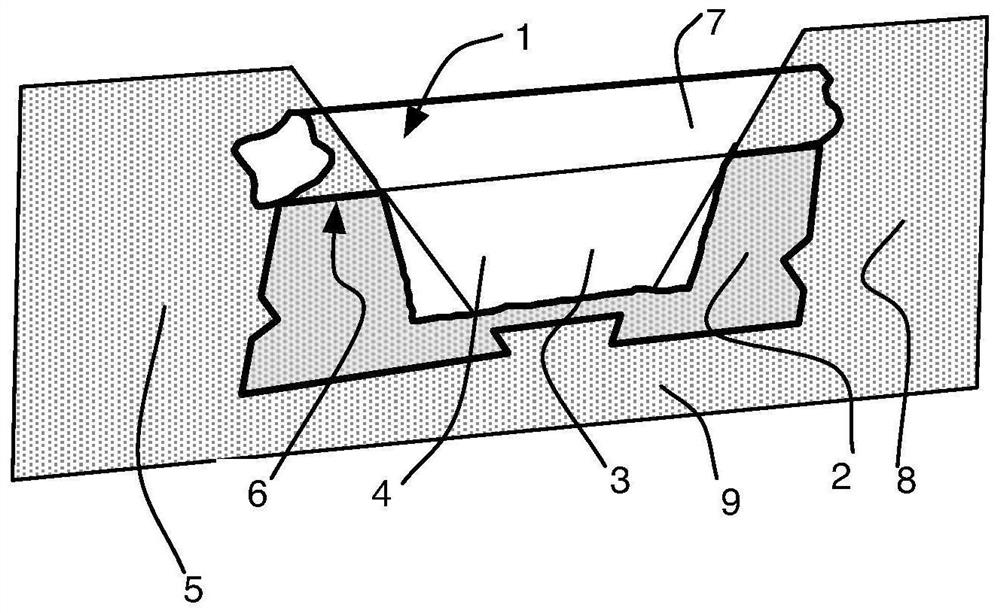
Figure 1 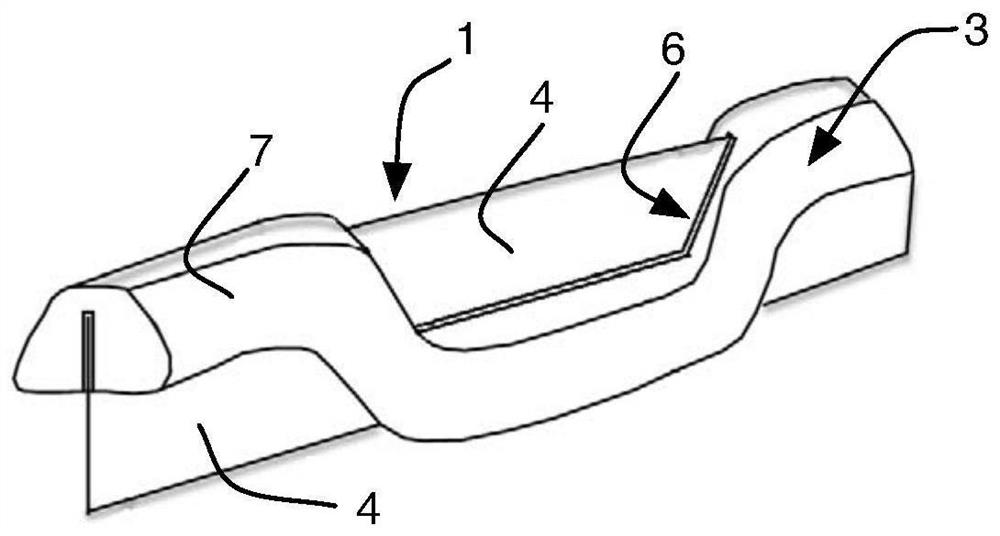
Figure 2 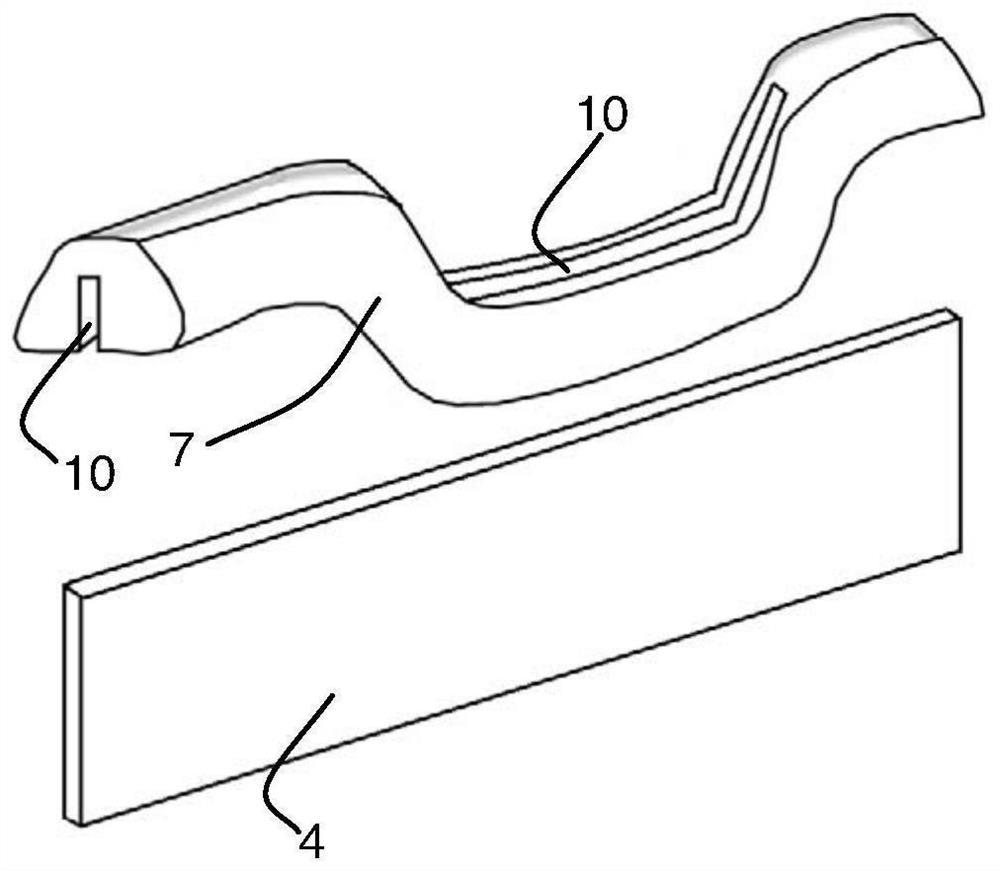
Figure 3
Abstract
Description
technical field
[0001] The invention relates to an inner panel thin plate of a tire vulcanization mold. Background technique
[0002] Document US6264453 describes an inlay sheet for molds for tire vulcanization. The sheet is provided with protrusions for producing channels with a tubular profile in the tread of the molded tyre. These channels are oriented in the radial direction of the tyre. This orientation does not optimize certain properties of the tire. Furthermore, this orientation makes it impossible to produce concealed channels in the tire to be molded for drainage after wear.
[0003] Therefore, there is a need for sheets that can produce tires with optimum dynamic performance.
[0004] The present invention provides various technical means to improve these various disadvantages. Contents of the invention
[0005] First of all, a first object of the present invention is to provide an inner panel of a mold for tire vulcanization, which makes it possible to pro...
Examples
Embodiment Construction
[0025] figure 1 An exemplary embodiment of a sheet 1 of a mold insert intended for tire tread vulcanization is shown. The main body 5, into which the thin plate is inserted, is shown in section. It can be seen that the thin plate extends from one side of the body 5 to the other, and it can be seen that a section called the molded part 3 is hollow between the two strips 8 of the body 5 . The part of the sheet housed in the strip 8 and the base 9 of the body 5 forms the fixed part 2 . The molding portion 3 is configured to mold at least one cut in the tire tread. The fixing part 2 is configured to hold the sheet 1 in the body 5 of the insert.
[0026] As shown, the molded part 3 includes a protrusion 7 and a thin part 4 . Depending on the embodiment, the thin portion may have an average thickness between 0.1 mm and 0.4 mm, the thinnest area can even be as thin as 0.05 mm. Advantageously, this thickness is obtained by a forming method such as pressing.
[0027] exist fig...