
A kind of leech polypeptide with antithrombotic and brain nerve cell protection and its application
A brain nerve cell, leech polypeptide technology, applied in extracellular fluid diseases, peptides, blood diseases, etc., can solve the problem of unclear active ingredients, and achieve the effect of improving neurobehavior, reducing brain edema, and being easy to prepare in large quantities.
Patent Information
- Authority / Receiving Office
- CN · China
- Patent Type
- Patents(China)
- Current Assignee / Owner
- Publication Date
- 2020-11-13
Smart Images
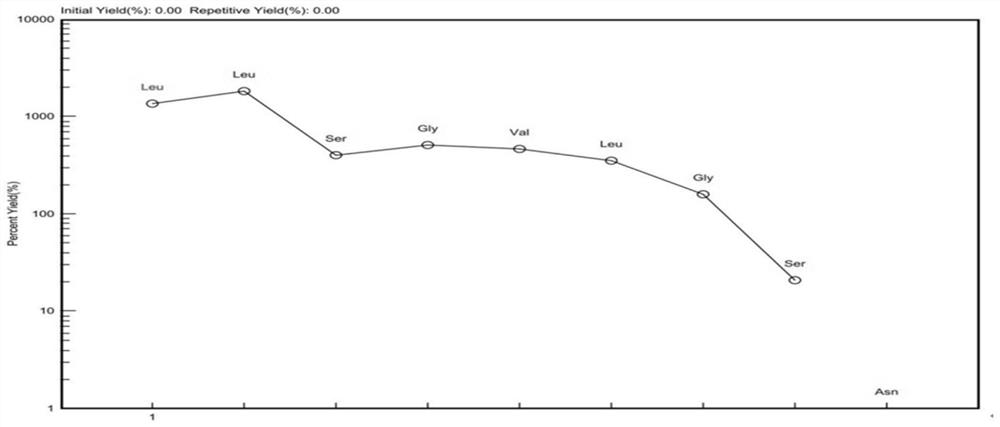
Figure 1 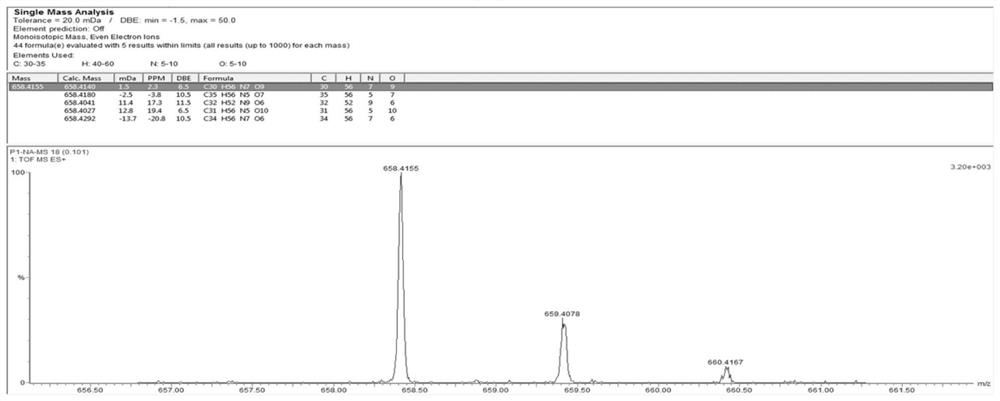
Figure 2 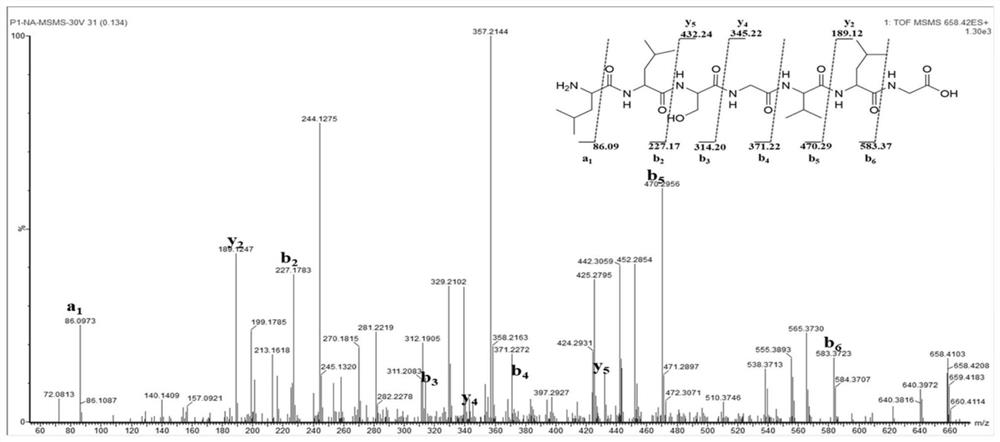
Figure 3
Abstract
Description
technical field
[0001] The invention relates to the fields of traditional Chinese medicines, natural medicines and health products, in particular to a class of leech polypeptides with antithrombotic and cerebral nerve cell protection functions and applications thereof. Background technique
[0002] According to the World Health Organization, cardiovascular and cerebrovascular diseases are the number one cause of death in the world. Atherosclerosis, stroke, myocardial infarction, and hemiplegia are common cardiovascular and cerebrovascular diseases. The clinical treatment drugs for cardiovascular disease have many adverse reactions such as drug resistance and high risk of hemorrhage, and there is currently a lack of effective drugs for neurological function repair after stroke. Polypeptide has good biocompatibility, strong specificity, low toxicity, is not easy to accumulate in the body, and has less interaction with other components, but has the defect of easy enzymatic ina...
Examples
Embodiment 1
[0055] Example 1 Separation of polypeptide whitmantides A-C
[0056] (1) 3 kg of leeches were dried, washed, soaked, pulverized and homogenized with physiological saline, and the homogenate was freeze-thawed to obtain an extract. The obtained extract is processed by an ultrafiltration membrane with a molecular weight cut-off of 50KDa, and the ultrafiltrate part with a molecular weight of less than 50KDa is collected, and the obtained ultrafiltrate is subjected to solid-phase desalination, concentrated under reduced pressure or freeze-dried to obtain the total extract (13g) . Total extracts were separated by gel Sephadex G25 at 4-8°C. The ultra-high performance liquid chromatography-mass spectrometry (UPLC-MS) method was used for analysis, tracking and detection, and the fractions containing the peptide compounds were collected, concentrated under reduced pressure or vacuum dried to obtain a peptide-enriched site (10 g).
[0057] (2) Take the polypeptide enriched part in step...
Embodiment 2
[0061] Example 2 Structural characterization of the polypeptide whitmantide A
[0062] The polypeptide whitmantide A prepared in Example 1 is an amorphous powder, UV (H 2 O)λ max (logε): 195(3.20). IR(KBr)ν max :3275.5,2960.2,1657.52,1541.81cm -1 . HR-ESI-MS m / z 658.4155[M+H] + (calcd for C 30 H 56 N 7 O 9 :658.4140). The N-terminal sequencing of whitmantide A was performed by Edman degradation method, and the amino acid sequence was determined to be NH 2 -Leu-Leu-Ser-Gly-Val-Leu-Gly-COOH. The MS / MS secondary mass spectrum showed that the a, b and y ion fragments of this compound were consistent with its amino acid sequence, and the above results further verified the amino acid linking sequence of whitmantide A. The results of Marfey analysis showed that whitmantide A contained two D-leucines and one L-leucine, and other chiral amino acids were all L-shaped. The absolute configuration of whitmantide A was determined by solid-phase synthesis. The positions of D- an...
Embodiment 3
[0063] Example 3 Structural characterization of the polypeptide whitmantide B
[0064] The polypeptide whitmantide B prepared in Example 1 is an amorphous powder, UV (H 2 O)λ max (logε): 196(3.18). IR(KBr)ν max :3275.5,2957.3,1640.16,1544.7,1132.97cm -1 ;HR-ESI-MS m / z715.4331[M+H] + (calcd for C 32 H 59 N 8 O 10 :715.4354). The N-terminal sequencing of whitmantide B was performed by Edman degradation method, and the amino acid sequence was determined to be NH 2 -Leu-Leu-Ser-Gly-Val-Leu-Gly-Gly-COOH. MS / MS secondary mass spectrum showed that the a, b and y ion fragments of this compound were consistent with its amino acid sequence, and the above results further verified the amino acid linking sequence of whitmantide B. The results of Marfey analysis showed that whitmantide B contained two D-leucines and one L-leucine, and other chiral amino acids were all L-type. The absolute configuration of whitmantide B was determined by solid-phase synthesis. The positions of D-...