
An oil-cooled hollow shaft structure
A shaft structure, cold hollow technology, applied in the field of oil-cooled hollow shaft structure, can solve the problems of failing to meet the requirements of lightweight design, increasing the dynamic unbalance value of the rotor, and reducing the NVH performance, so as to improve the NVH performance and reduce the dynamic Unbalanced effects, simple effects
Patent Information
- Authority / Receiving Office
- CN · China
- Patent Type
- Patents(China)
- Current Assignee / Owner
- Publication Date
- 2022-05-31
Smart Images
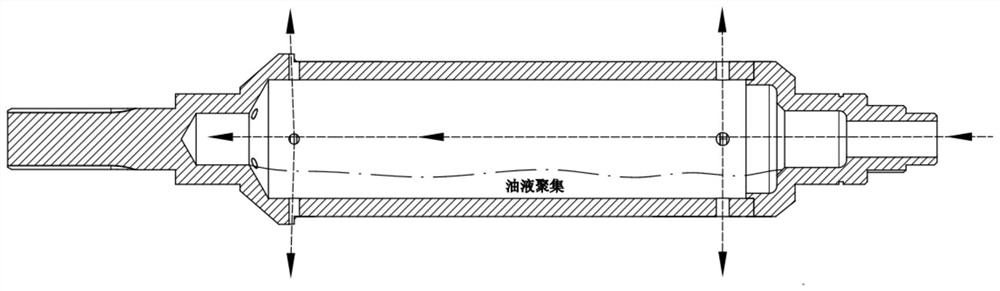
Figure 1 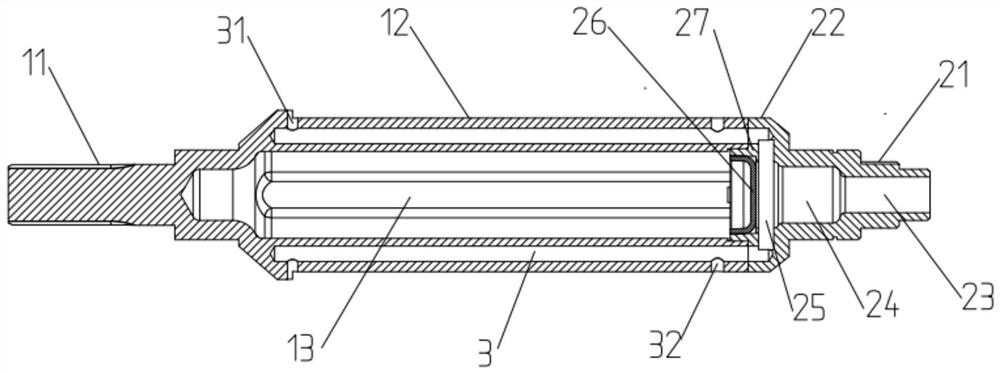
Figure 2 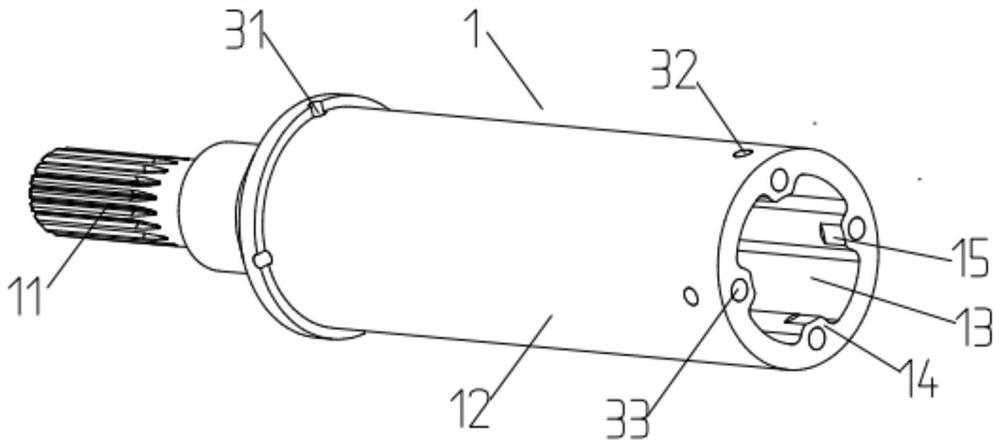
Figure 3
Abstract
Description
An oil-cooled hollow shaft structure technical field
[0001] The invention belongs to the technical field of motors, in particular to a kind of oil-cooled hollow shaft structure. Background technique
[0002] As the power requirements of the motor are getting higher and higher, the heat dissipation requirements of the motor are gradually improved, and the heat dissipation mode of the motor is also has changed. It is a widely used solution to directly cool and dissipate the heat-generating components of the motor through cooling oil. The common oil circuit form of the front oil-cooled motor is as follows: after the external oil enters the motor, the first oil circuit is introduced into the casing, and passes through the oil on the casing. The oil passage or the oil injection hole cools the stator core and the end windings; the second oil passage enters the hollow shaft through the oil passage on the end cover The internal oil circuit, and then enter the internal oil cir...
Examples
Embodiment Construction
[0025] The second shaft end 21 is provided with an oil inlet 23 and a first inner cavity 24 that communicate with each other, and the second shaft body 22 is provided with a second inner cavity
[0027] During the processing, the first connecting portion 1 and the second connecting portion 2 can be formed by forging and then rough machining,
[0031] It should be understood that the above-described specific embodiments of the present invention are only used to illustrate or explain the present invention.