
Plate-type hinge moment balance
A hinge torque and balance technology, applied in the field of plate hinge torque balance, achieves the effects of reliable positioning, high rigidity and reliable connection
Patent Information
- Authority / Receiving Office
- CN · China
- Current Assignee / Owner
- Publication Date
- 2022-02-01
Smart Images
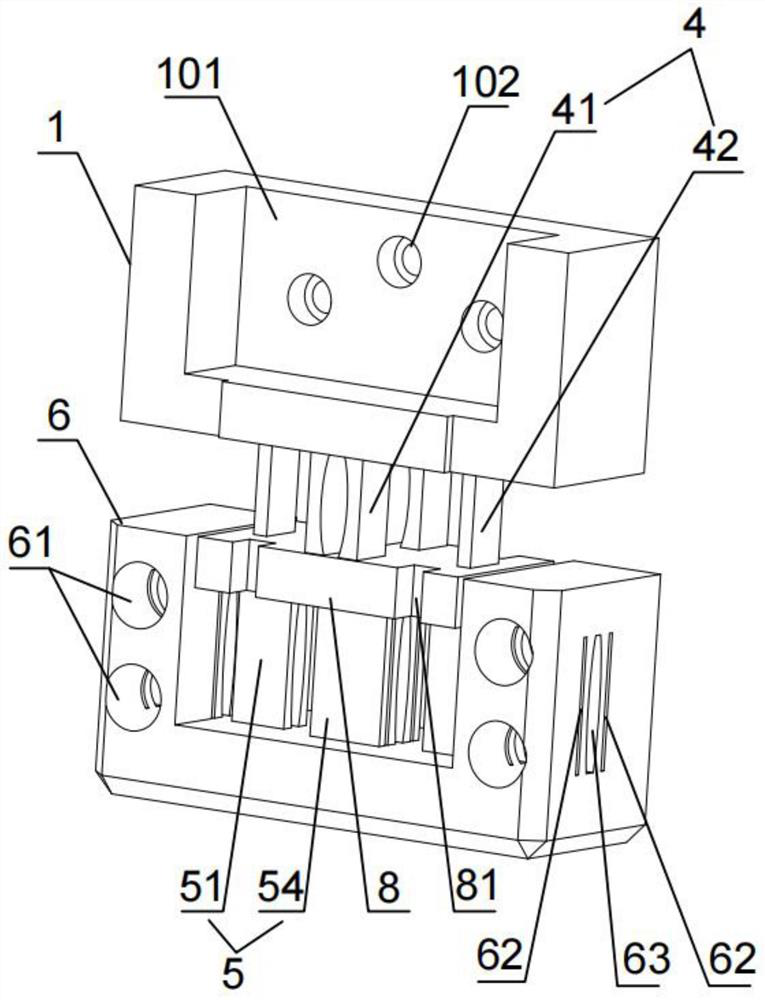
Figure 1 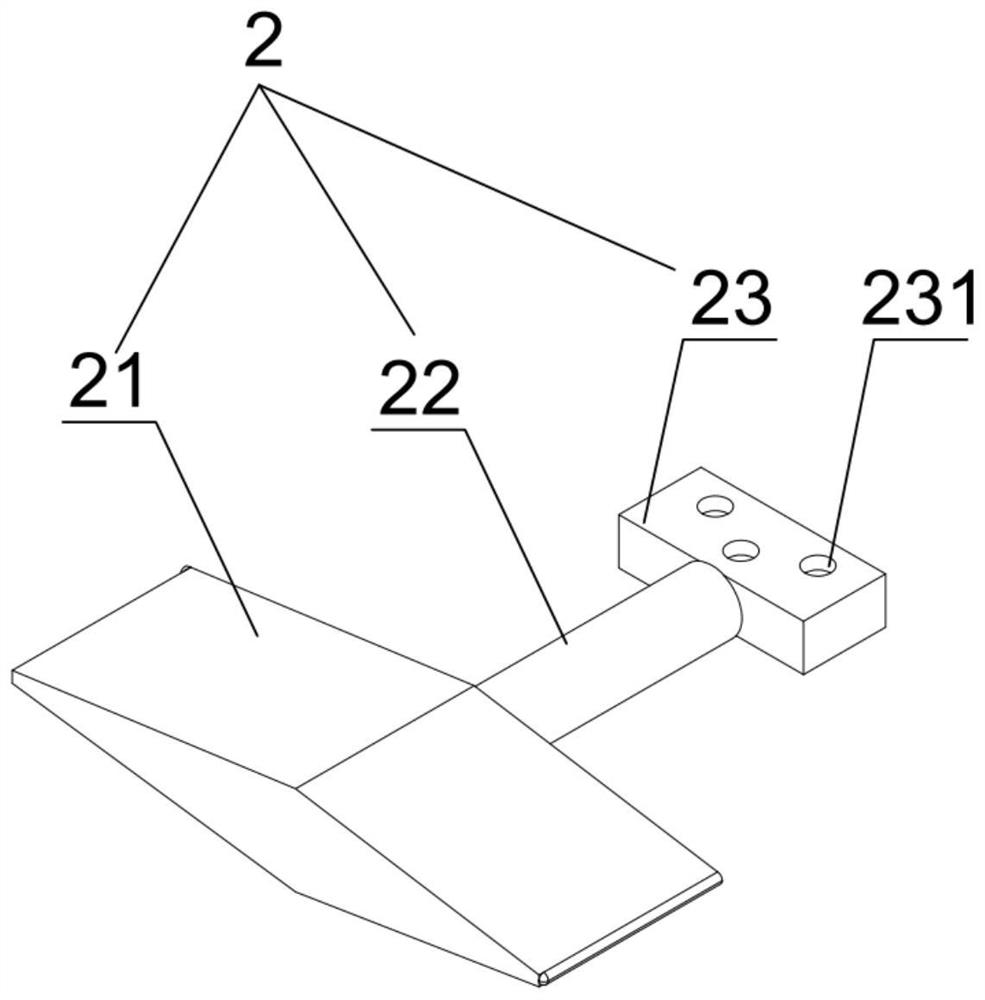
Figure 2 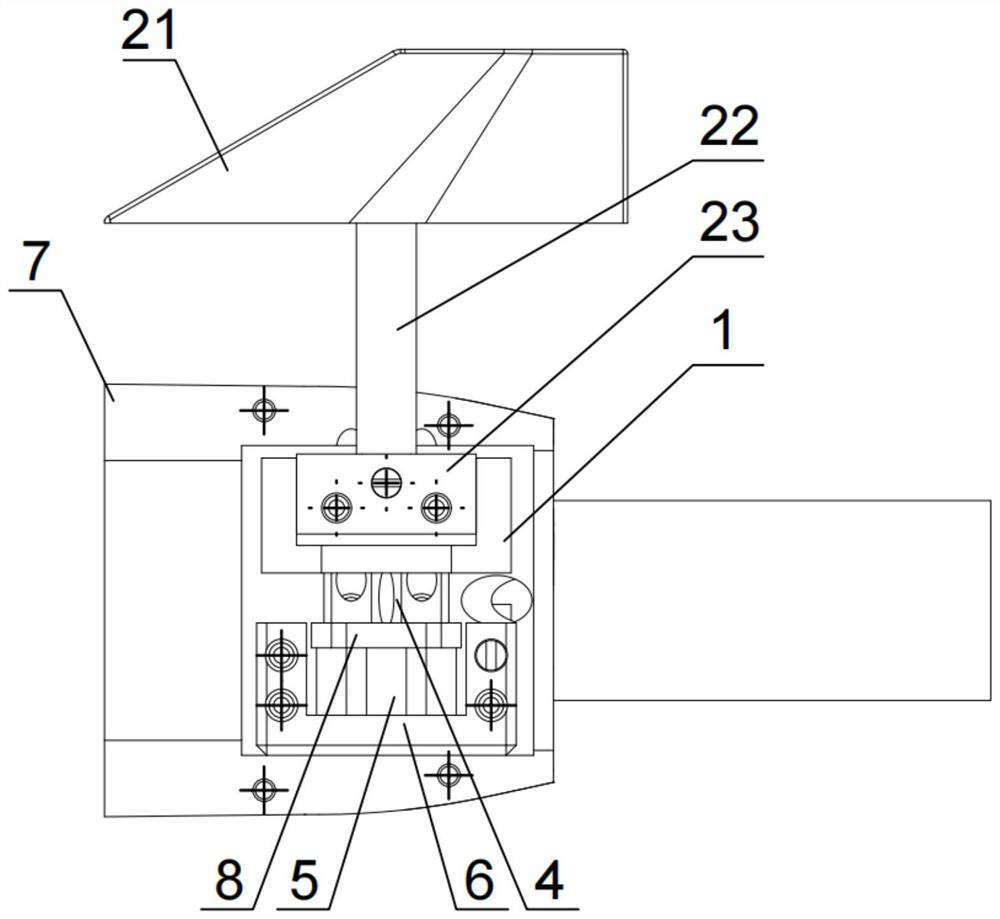
Figure 3
Abstract
Description
technical field
[0001] The invention belongs to the technical field of wind tunnel tests, and more specifically, the invention relates to a plate hinge moment balance. Background technique
[0002] The hinge moment balance is the core component of the hinge moment wind tunnel test. The connection mode between the balance and the rudder surface, the connection mode between the balance and the main body of the model, and the angle transformation method of the rudder surface are all closely related to the accuracy of the test data.
[0003] The shape of the aircraft and the structural form of the control rudder are various. At present, there is no general structure of the hinge moment test balance that can meet the test requirements of the hinge moment of all aircraft rudder surfaces.
[0004] At present, there are two main installation and positioning methods for measuring rudders: (1) taper fit, flat key positioning, and wedge key tensioning; (2) measuring rudder and balance...
Examples
Embodiment Construction
[0039] The present invention will be further described in detail below in conjunction with the accompanying drawings, so that those skilled in the art can implement it with reference to the description.
[0040] It should be understood that terms such as "having", "comprising" and "including" used herein do not exclude the presence or addition of one or more other elements or combinations thereof.
[0041] It should be noted that in the description of the present invention, the orientation or positional relationship indicated by the term is based on the orientation or positional relationship shown in the drawings, which is only for the convenience of describing the present invention and simplifying the description, and does not indicate or imply No device or element must have a specific orientation, be constructed, and operate in a specific orientation and therefore should not be construed as limiting the invention. In addition, the terms "first" and "second" are used for desc...