
Adsorbent, heat storage system containing the same, iron-aluminium phosphate and its producing method
An iron-aluminum phosphate and adsorbent technology, applied in the field of adsorbents, can solve problems such as waste heat reduction, achieve the effects of preventing fuel efficiency from declining and reducing size
Patent Information
- Authority / Receiving Office
- CN · China
- Patent Type
- Patents(China)
- Current Assignee / Owner
- Publication Date
- 2010-05-26
- Estimated Expiration
- Not applicable · inactive patent
Smart Images
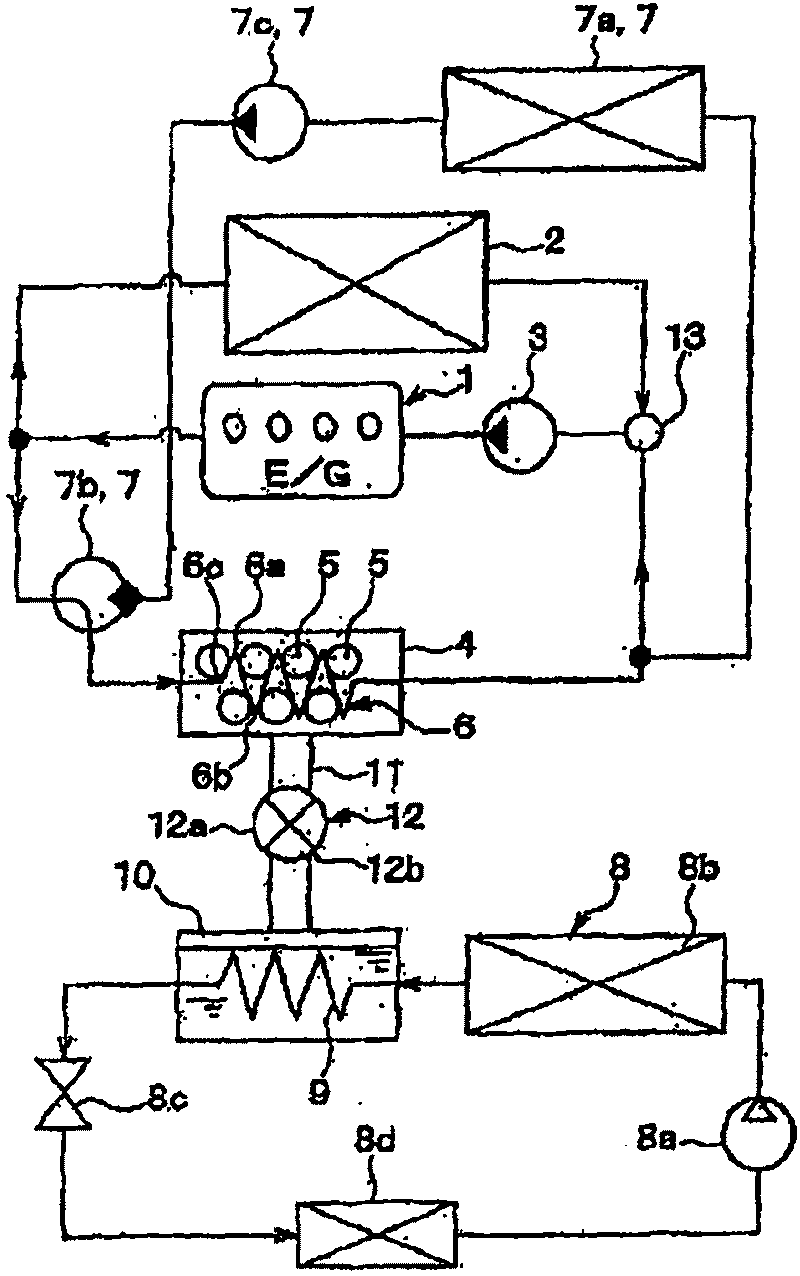
Figure 1 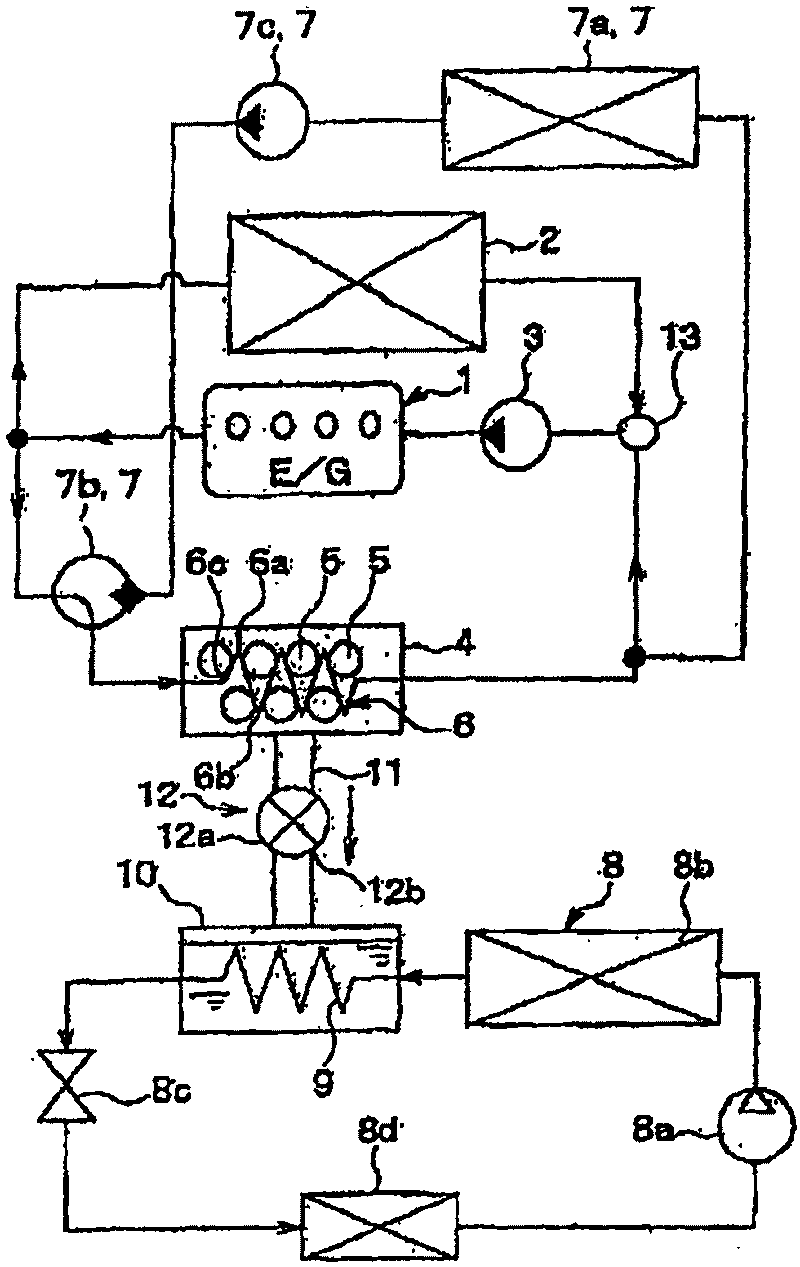
Figure 2 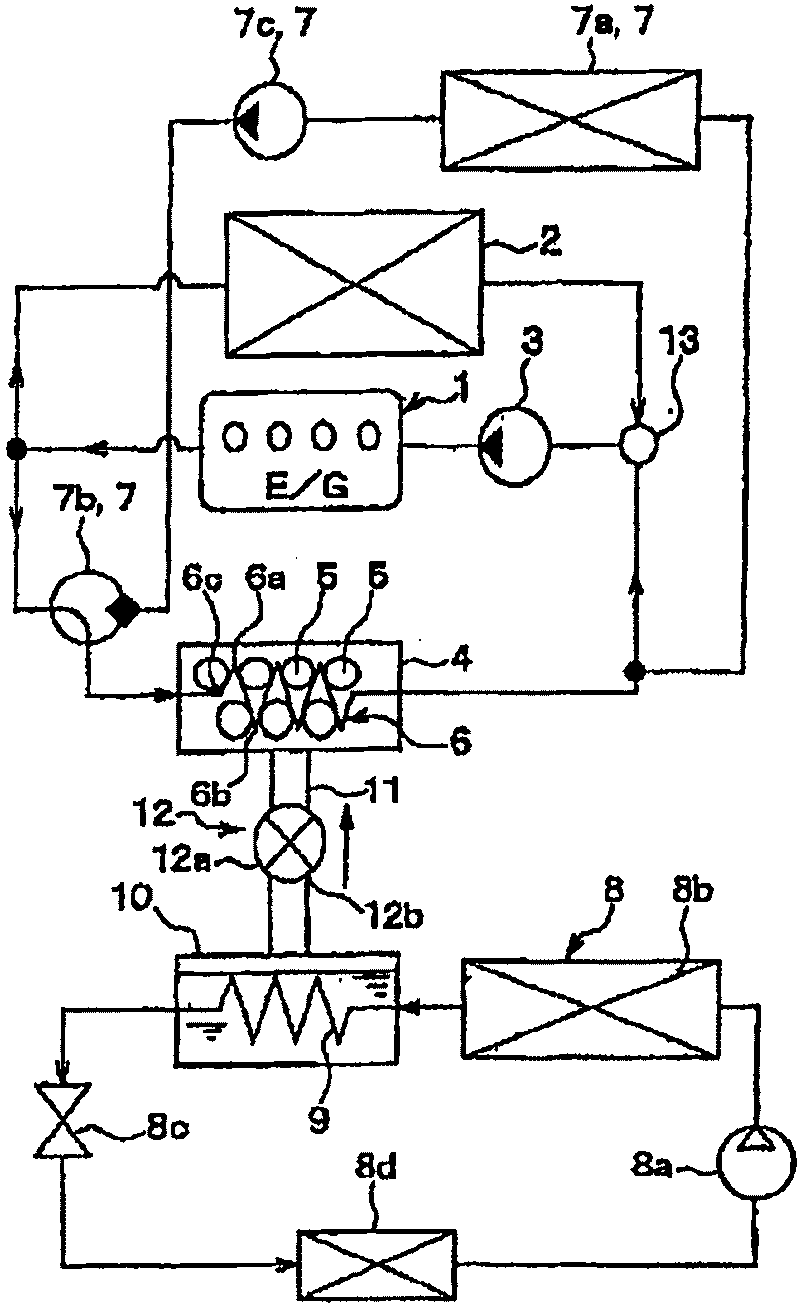
Figure 3
Abstract
Description
field of invention
[0001] The invention relates to an adsorbent for a heat accumulator system, a heat utilization system and a heat accumulator system including the adsorbent, iron aluminum phosphate and a production method thereof. More precisely, the present invention relates to adsorbents which can be advantageously used in heat accumulator systems, which efficiently utilize the heat sources available from automobiles etc., thereby obtaining efficient heat accumulator systems, heat accumulator systems comprising such adsorbents, Iron aluminophosphates which can be advantageously used as adsorbents for regenerator systems, and methods for their production. Background technique
[0002] Utilization of waste heat generated in large quantities by vehicles etc. is currently under investigation. A heat accumulator system for a vehicle utilizing waste heat generated by the vehicle is described, for example, in JP-A1-267346. According to this, waste heat from the engine of the ...
Examples
Embodiment 1
[0310] Example 1 illustrates the production of FAPO-2 by using morpholine and triethylamine as templates.
[0311] To a mixture of 28.05 g of water and 11.53 g of 85% phosphoric acid, 6.8 g of pseudo-boehmite (containing 25% water, produced by Condea) was gradually added and stirred. This is Liquid A. In addition to liquid A, 2.78 g of ferrous sulfate heptahydrate, 5.05 g of morpholine, 4.35 g of triethylamine and 29 g of water were mixed to prepare a liquid. It was gradually added to Liquid A and stirred for further 3 hours to prepare a starting reaction mass having the following composition.
[0312] 0.2FeSO 4 :Al 2 o 3 :P 2 o 5 : 1.16 morpholine: 0.86 triethylamine: 70H 2 o
[0313] This starting reaction material was fed into a 200-cc stainless steel autoclave having a Teflon (registered trade name) inner cylinder, and reacted at 160° C. for 4 days while remaining still. After thus reacting, it was cooled, its supernatant liquid was removed by decantation, and the...
Embodiment 2
[0347] Zeolite was produced under the same conditions as in Example 1, however, the synthesized template-containing zeolite was calcined in nitrogen. Table 7 shows the XRD data of the zeolites thus obtained.
[0348] Table 7
[0349] 2θ
[0350] 2θ
[0351] Figure 9 is the water vapor-air isotherm of the zeolite measured at 55°C by using an adsorption isothermal calorimeter (Bellsorb 18, Nippon Bell). Specifically, the samples were analyzed under the following conditions: the adsorption temperature in the thermostat was 60°C; the adsorption temperature was 55°C; the initial pressure was 3.0 Torr, the pressure setting was 0; the saturated vapor pressure was 118.11 mmHg, and the equilibration time is 500 seconds.
Embodiment 3
[0353] The sample calcined in Example 2 was recalcined under the same conditions as in Example 1 in air. Table 7 shows the XRD data of the zeolites thus obtained. It can be seen that the recalcined zeolite is almost the same as the zeolite in Example 1.
[0354] Table 8
[0355] 2θ
[0356] 2θ