
Knitted fabric
a technology of knitted fabric and woven fabric, which is applied in the field of knitted fabric, can solve the problems of fabric loosening its shade factor, fabric further stretching, and affecting the quality of knitted fabrics,
Patent Information
- Authority / Receiving Office
- US · United States
- Patent Type
- Applications(United States)
- Current Assignee / Owner
- Publication Date
- 2003-04-03
- Estimated Expiration
- Not applicable · inactive patent
Smart Images
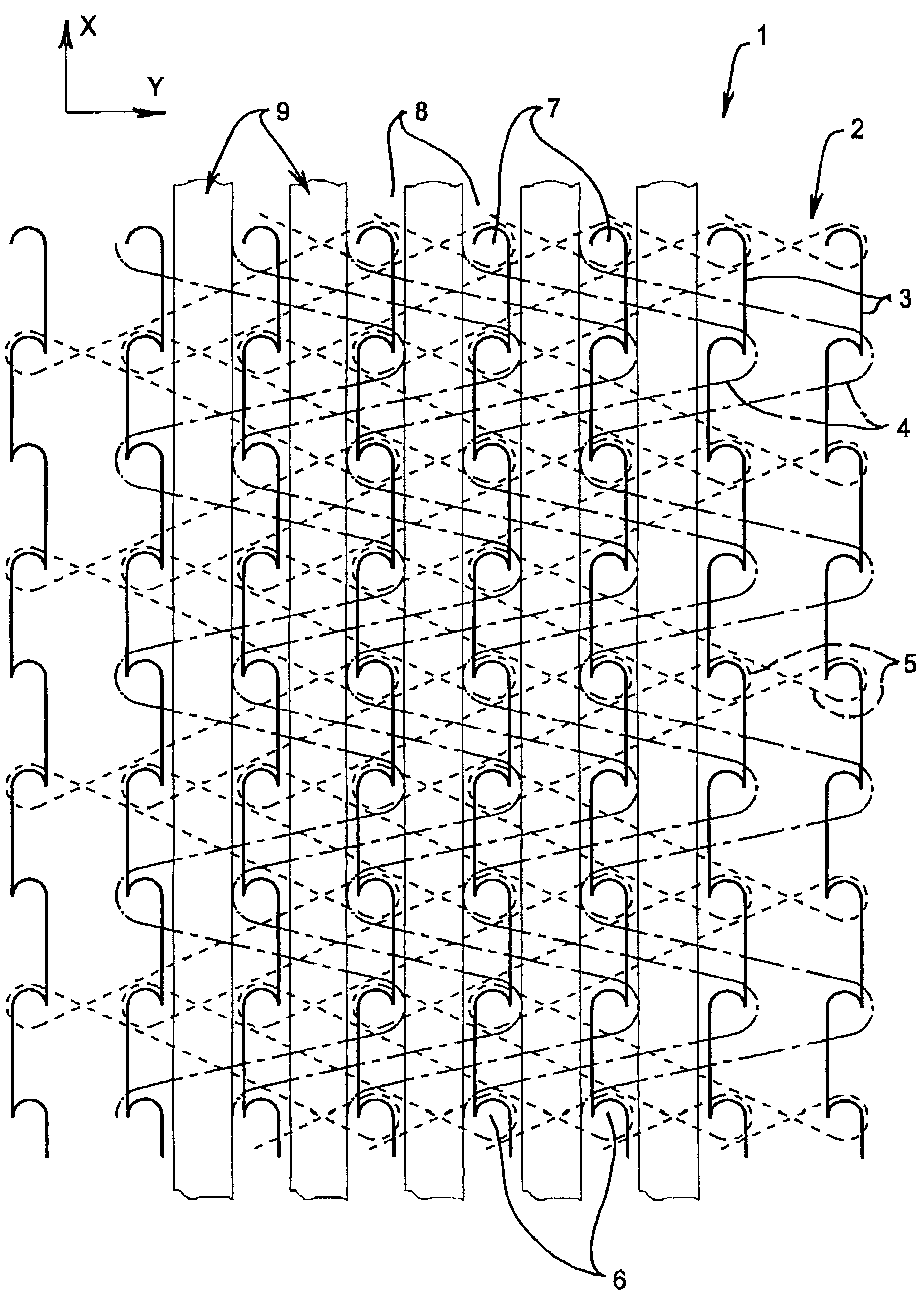
Figure 1 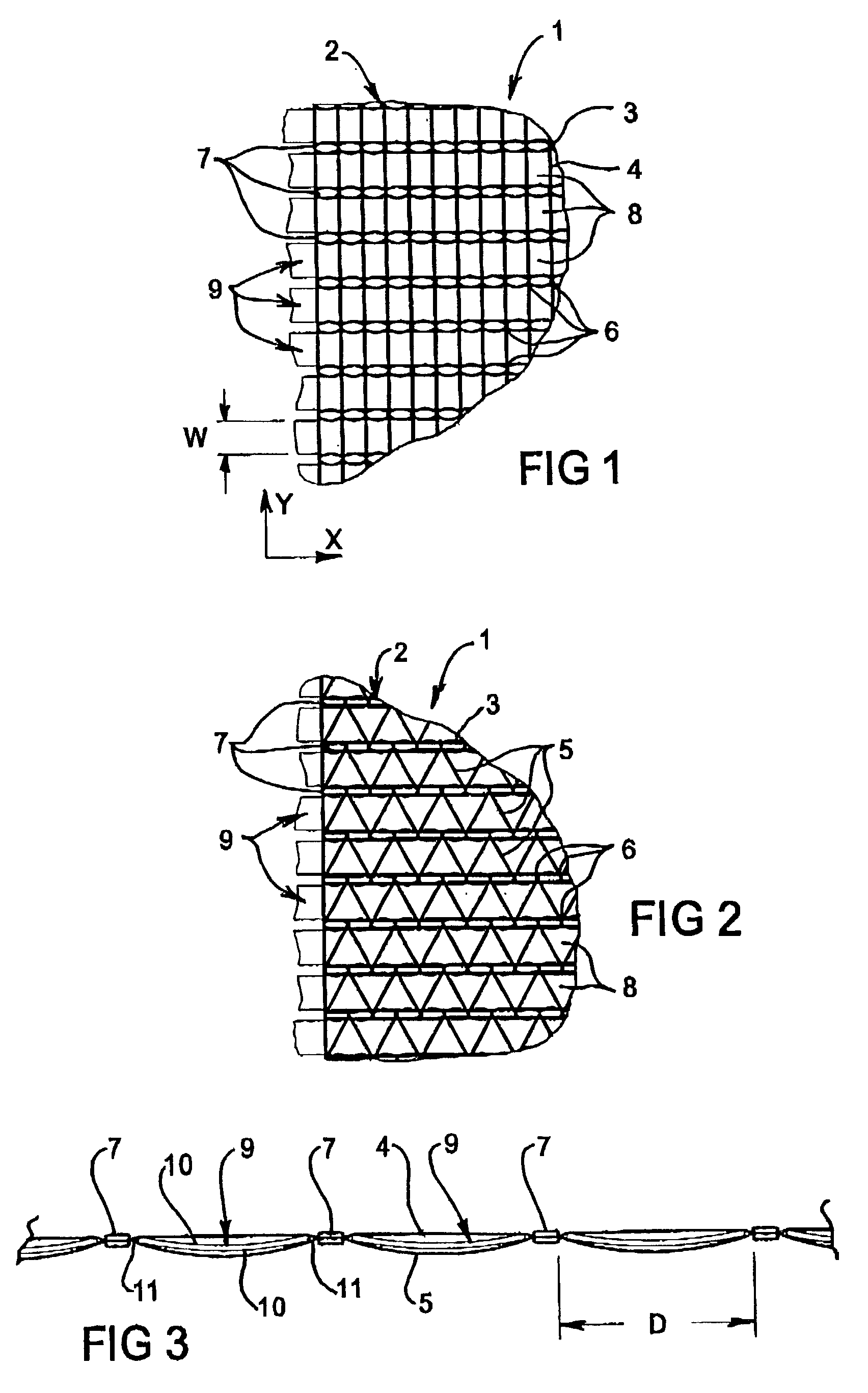
Figure 2 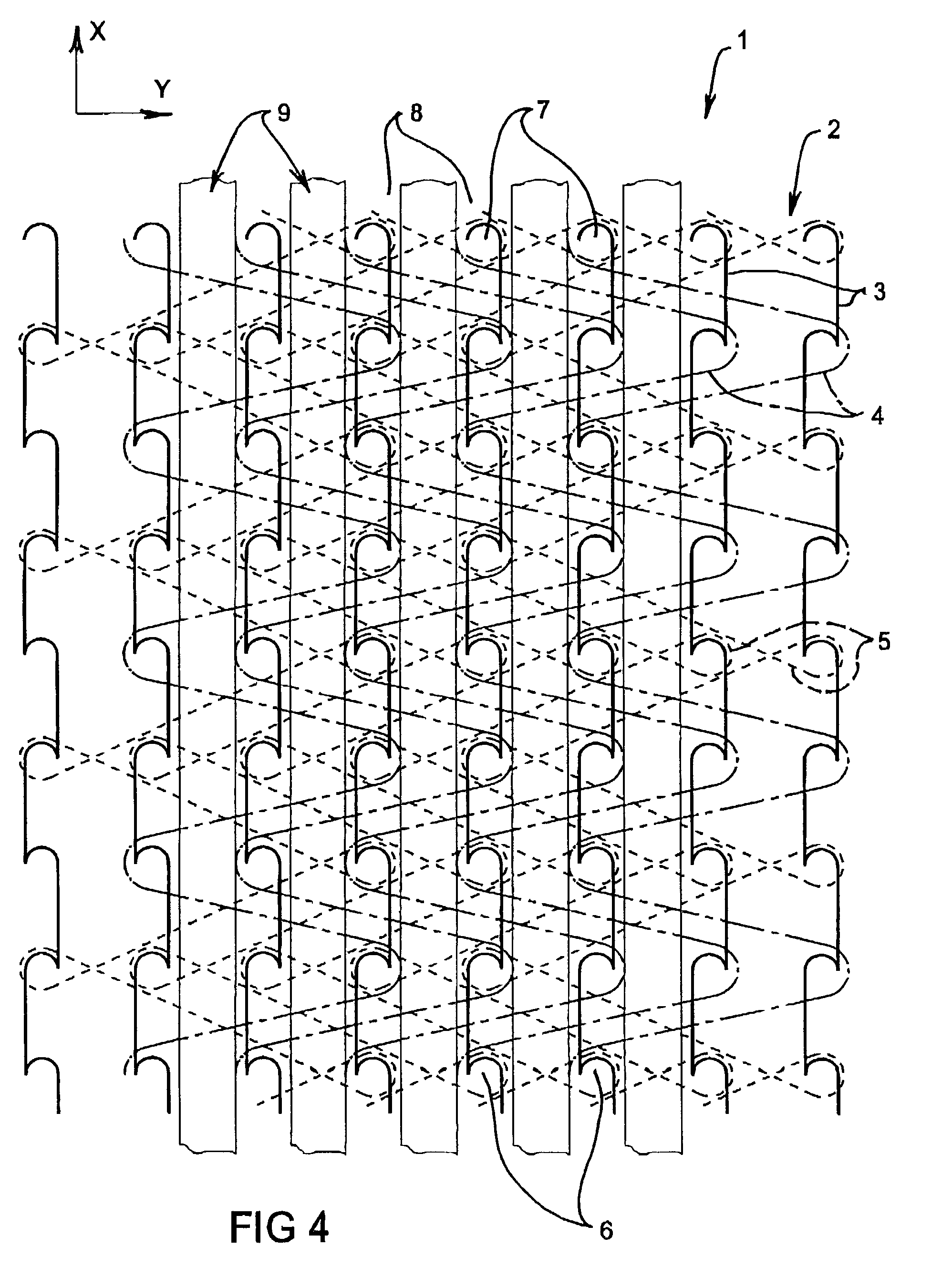
Figure 3
Abstract
Description
[0001] 1. Field of the Invention
[0002] This invention relates generally to knitted fabric, and in particular to a warp knitted fabric incorporating laid-in strips of material. The fabric is applicable for use as a canopy in a covering structure in order to provide shade and other protective covering. It will be convenient to hereinafter disclose the invention in relation to that exemplary application, although it is to be appreciated that the invention is not limited thereto.
[0003] 2. Description of the Prior Art
[0004] In a typical application, a knitted canopy fabric such as shade cloth is supported by a structure which extends over an agricultural or horticultural crop or orchard to be protected, or an area to be shaded or otherwise protected. The structures take a variety of forms, but have in common that it is desirable to stretch the fabric over the structure so that it remains taut in use.
[0005] One form of knitted fabric provides a plurality of longitudinally extending flexib...
Examples
Embodiment Construction
[0026] Referring to the drawings, there is generally shown a piece of warp knitted fabric 1. The fabric 1 has an open framework 2 in the nature of mesh or net formed of a plurality of threads 3,4,5 knitted together in a predetermined knit pattern of those threads 3,4,5 and the mesh or net nature of the fabric 1 are best shown in FIGS. 1 and 2. In FIG. 4, the threads 3,4,5 are drawn in different line formations only to assist in distinguishing those threads . In particular, those different formations do not represent different types of thread.
[0027] The threads 3,4,5 are knitted together to form an array of thread connetions 6. Those thread connections 6 extend in parallel, spaced apart rows 7 along the fabric and define longitudinal open spaces 8 between the rows 7 of thread connections 6. The threads 3 extend generally in a longitudinal direction X of the fabric 1 along the rows 7, whilst the threads 4,5 extend generally in a transverse direction Y of the fabric 1 across the spaces...