
Transforaminal lumbar interbody fusion cage
a lumbar interbody and cage technology, applied in the field of orthopedic surgery, can solve the problems of difficult insertion of a fusion cage, and the prior art's need for considerable space to be rotated, and achieve the effects of reducing the need for dislocation, facilitating the insertion of the cage, and less room
Patent Information
- Authority / Receiving Office
- US · United States
- Patent Type
- Applications(United States)
- Current Assignee / Owner
- Publication Date
- 2009-02-26
- Estimated Expiration
- Not applicable · inactive patent
Smart Images
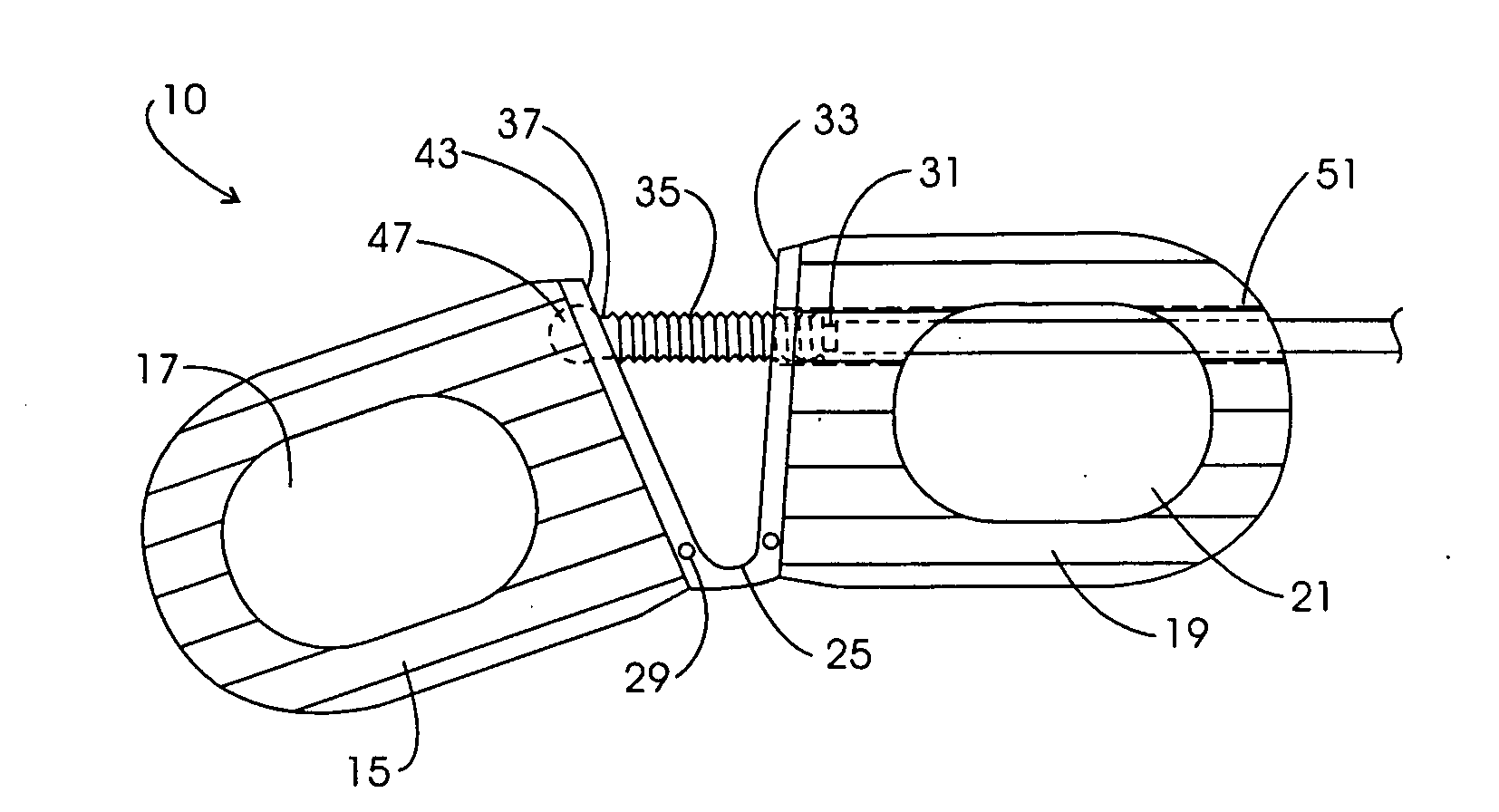
Figure 1 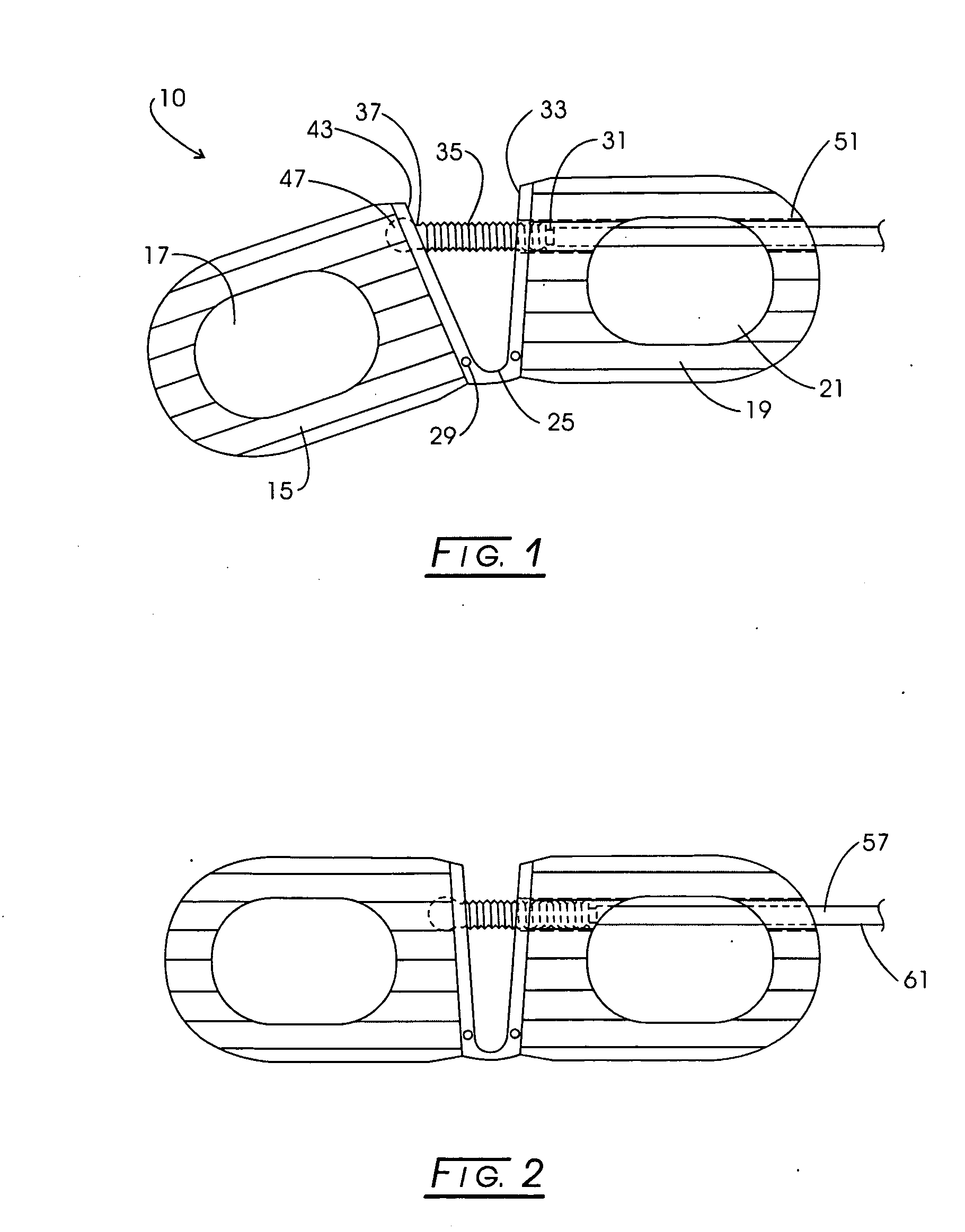
Figure 2 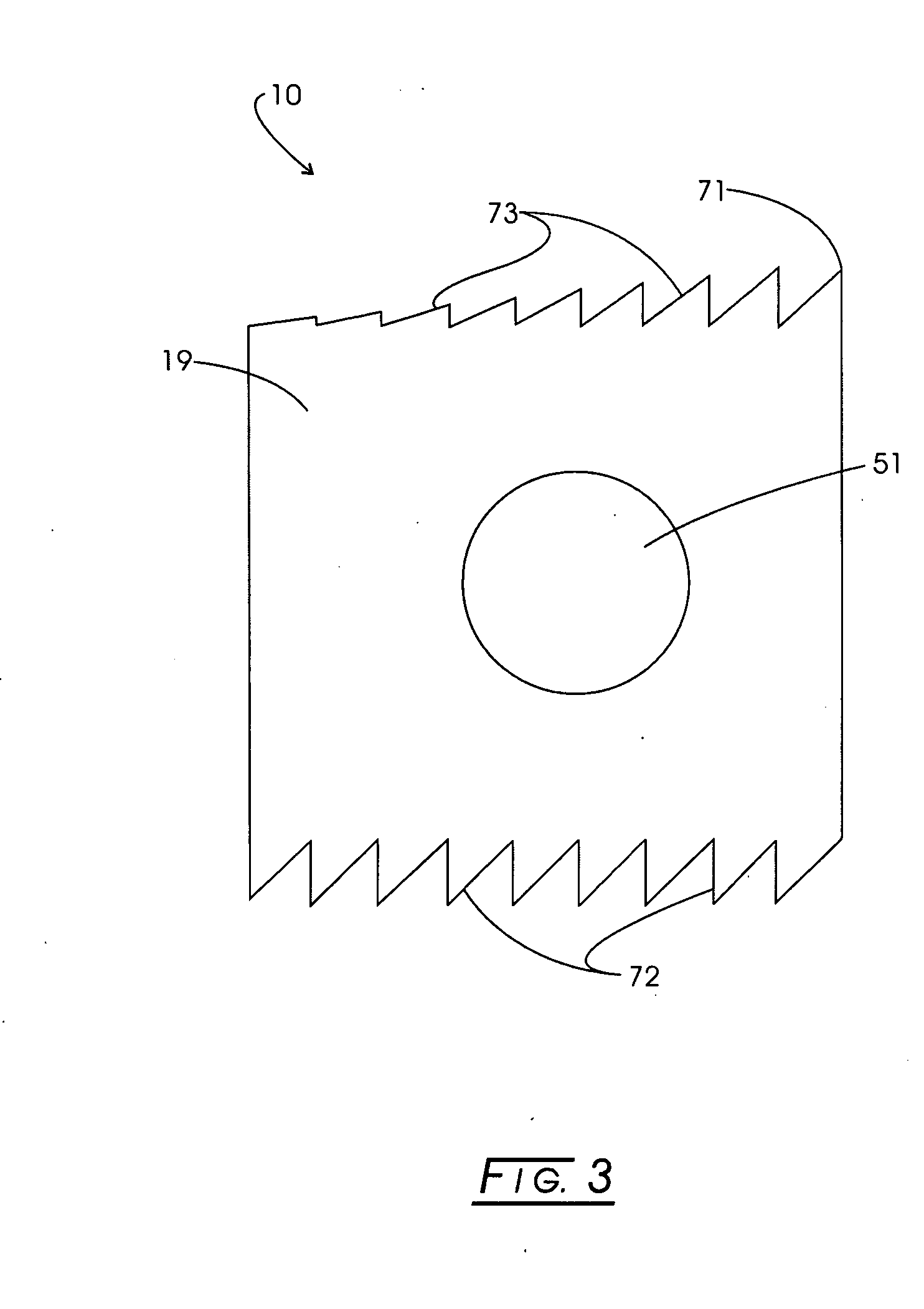
Figure 3
Abstract
Description
CROSS-REFERENCE TO RELATED APPLICATIONS
[0001] The present application is a continuation-in-part of application Ser. No. 11 / 742,873, filed on May 1, 2007, which claims the filing benefit of U.S. Provisional Application Ser. No. 60 / 796,691, filed May 2, 2006, the disclosures of which are hereby incorporated herein by reference in their entirety.STATEMENT REGARDING FEDERALLY SPONSORED RESEARCH
[0002] Not applicable.BACKGROUND
[0003] The present disclosure relates generally to the field of orthopedic surgery and, more particularly, to the field of spinal implants.
[0004] Fusion cages generally have been used in orthopedic surgery for fixing bones in a pre-selected spacial orientation. However, in inserting such fusion cages using minimally invasive surgical techniques, it is oftentimes difficult to insert a fusion cage without making an incision that is larger than desired or significantly displacing the neural element. Typically, interbody fusion cages of the prior art require considerable sp...
Examples
Embodiment Construction
[0028]The present disclosure is directed to an interbody fusion cage assembly that is used in spinal fusion procedures, such as a transforaminal lumbar spinal fusion procedure, by way of example. More particularly, the present disclosure is directed to an articulated fusion cage assembly that can be adjusted in configuration to facilitate the insertion of the cage assembly between adjacent vertebrae in the spine, such as the lumbar region. The fusion cage assembly of the present disclosure may be inserted by the use of minimally invasive surgical techniques wherein relatively small incisions are made in the patient and instruments are utilized to guide the cage assembly to the desired location between adjacent vertebrae. The articulated nature of the cage assembly allows the cage assembly to be disposed at an angle that facilitates the insertion of the cage assembly around the neural elements and reduces the displacement or impact on the nerve roots during the insertion process.
[002...