
Organic compound, charge-transporting material, and organic electroluminescent element
a charge-transporting material and organic technology, applied in the direction of organic chemistry, luminescent compositions, natural mineral layered products, etc., can solve the problems of insufficient luminous efficiency, poor electron transporting ability of devices using biphenyl derivatives, and insufficient luminous efficiency. , to achieve the effect of satisfactory durability, excellent electron transport ability, and excellent hole transport ability
Patent Information
- Authority / Receiving Office
- US · United States
- Patent Type
- Applications(United States)
- Current Assignee / Owner
- Publication Date
- 2009-07-30
Smart Images
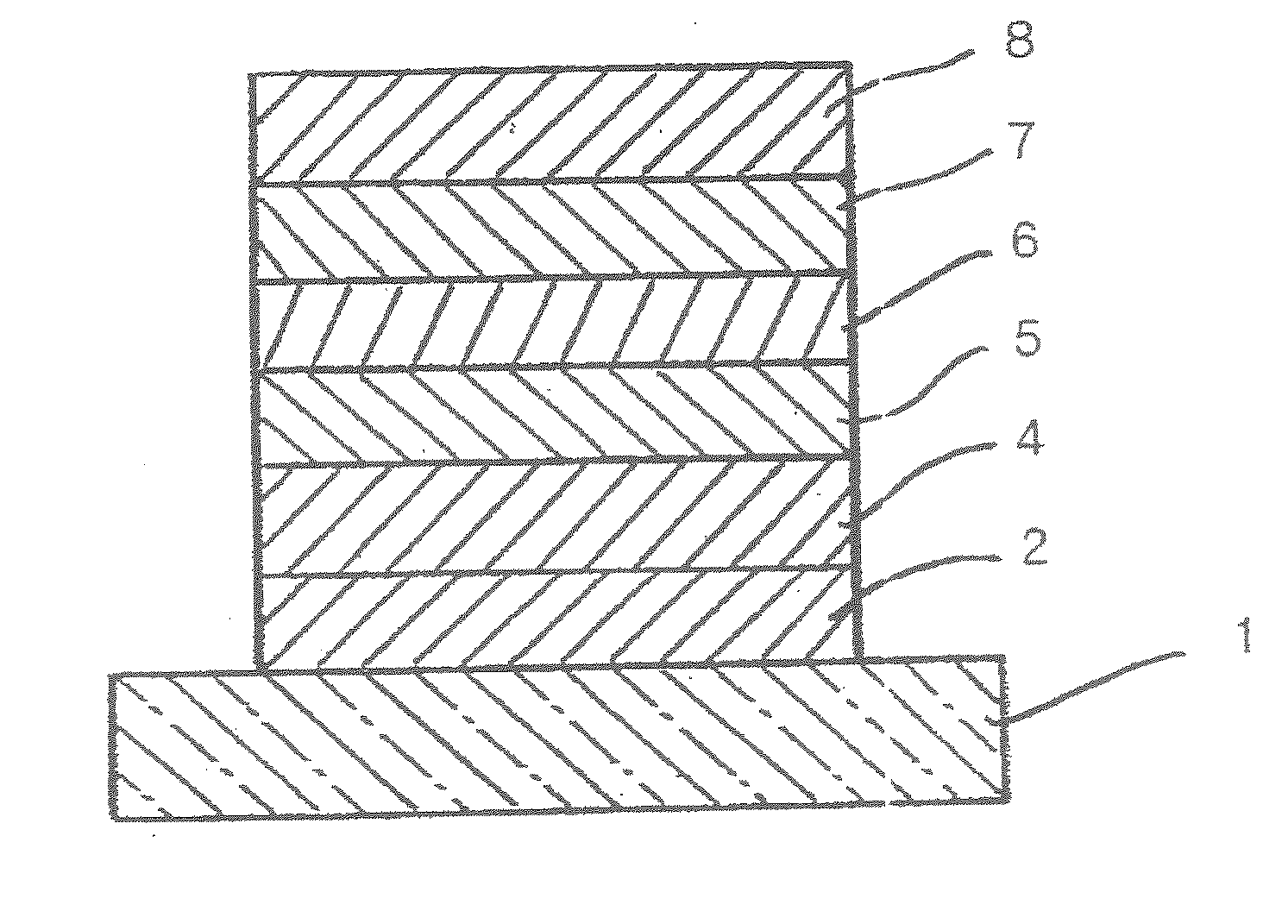
Figure 1 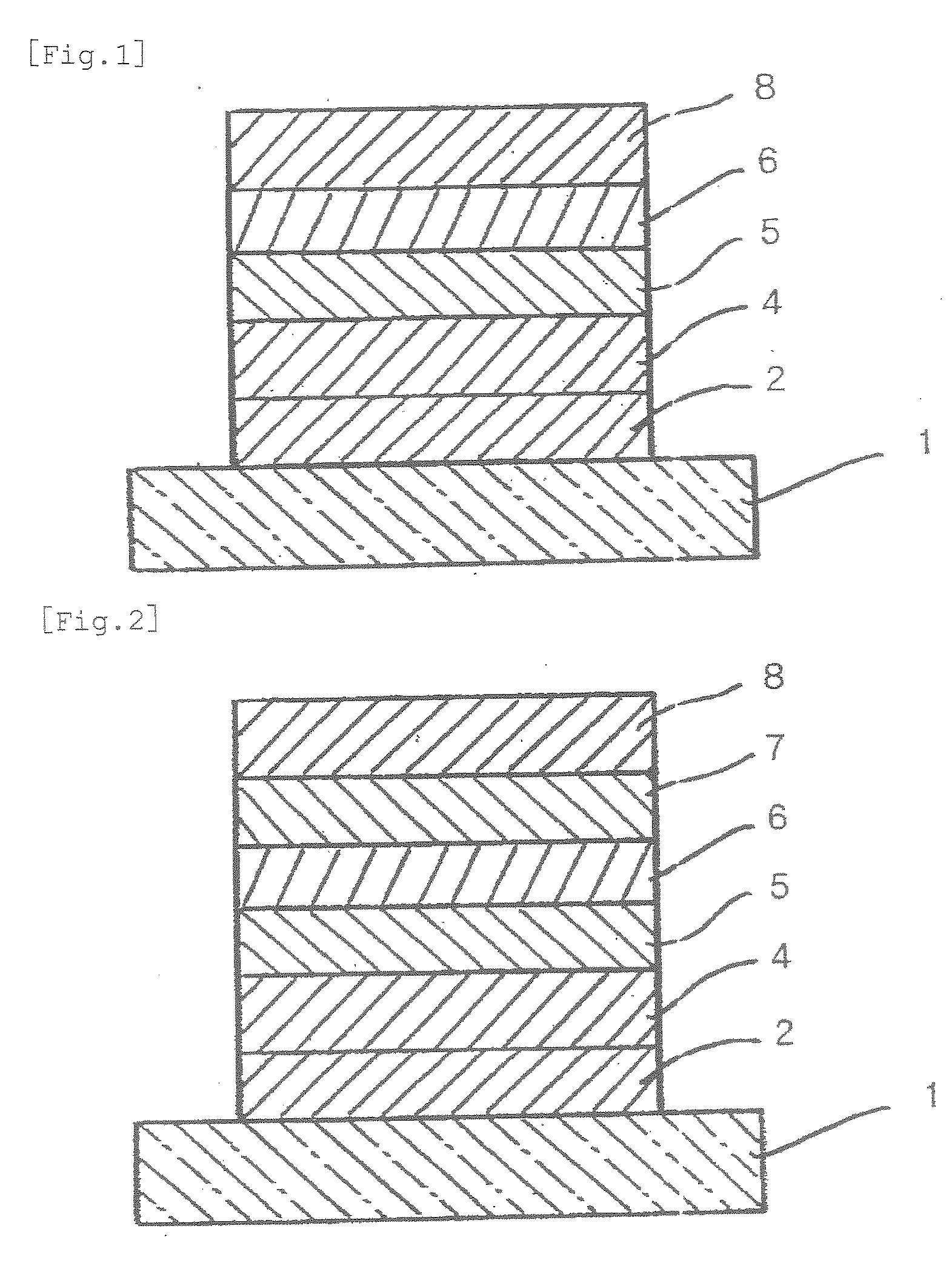
Figure 2 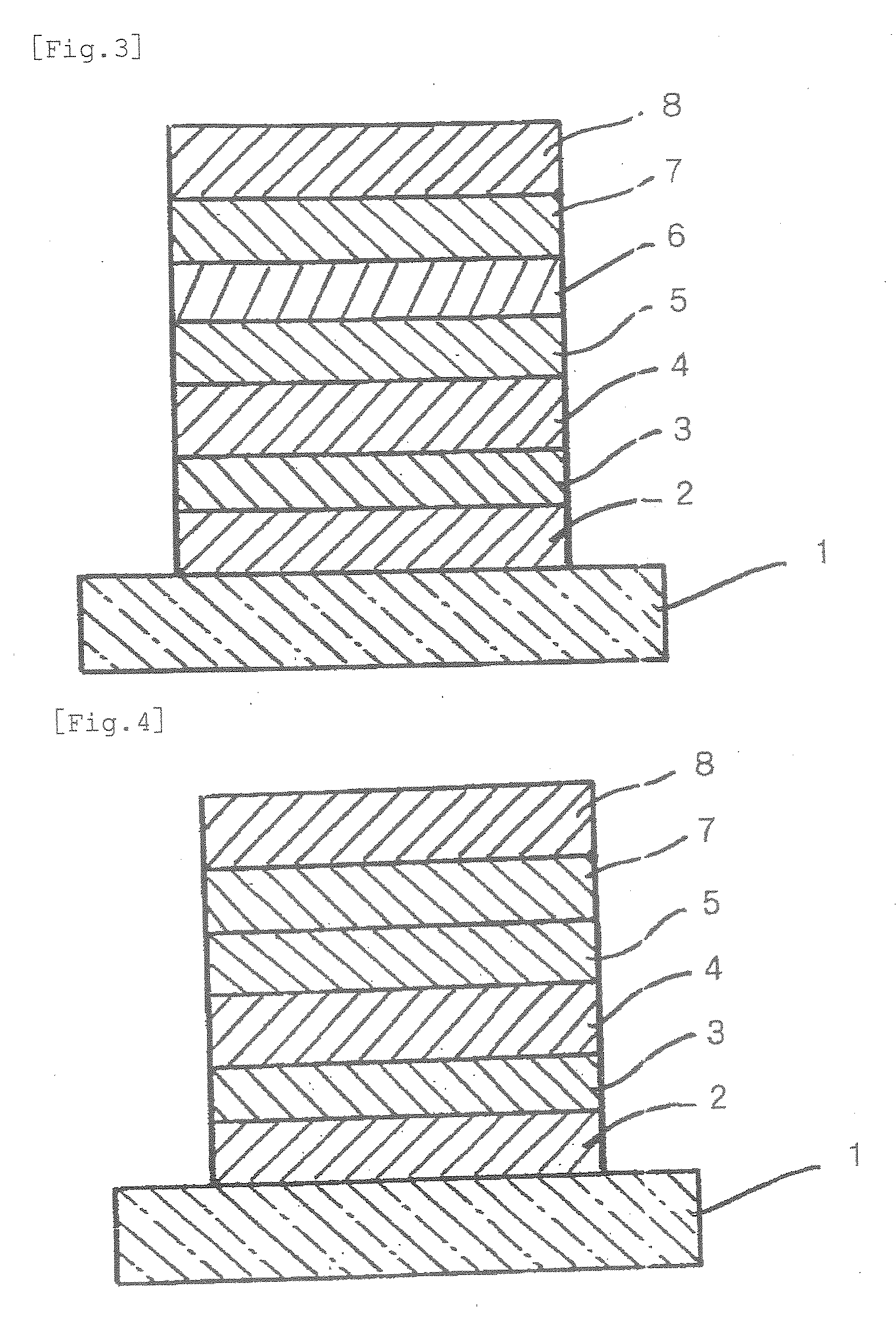
Figure 3
Abstract
Description
FIELD OF THE INVENTION
[0001] The present invention relates to novel organic compounds and charge transporting materials, and organic electroluminescent devices using the organic compounds. More specifically, it relates to organic compounds and charge transporting materials which are stable even when repeatedly subjected to electric oxidation and / or reduction, and organic electroluminescent devices using the organic compounds and having a high luminous efficiency and a long lifetime. BACKGROUND OF THE INVENTION
[0002] There have been developed electroluminescent devices using organic thin films. Such electroluminescent devices using organic thin films, namely, organic electroluminescent devices each generally include a substrate bearing an anode, a cathode, and one or more organic layers. The one or more organic layers are arranged between the two electrodes and include at least a light-emitting layer. Such organic layers may include a hole injection layer (anode buffer layer), a ho...
Examples
synthesis example 1
Syntheses of Target Compounds 1 to 3
[0318]
[0319] Concentrated sulfuric acid (11.6 ml) was added to a mixture as a solution of 2,5-difluorobenzaldehyde (10.24 g), acetophenone (8.66 g), and acetic acid (100 ml) in a dry air atmosphere, followed by stirring at 35° C. for seven hours. The mixture was combined with methanol (5 ml) and water (150 ml) to yield a precipitate, and the precipitate was collected by filtration and washed with water. This was washed in a suspended state in methanol with heating under reflux and thereby yielded Target Compound 1 (10.94 g).
[0320] Target Compound 1 (6.34 g), 1-phenacylpyridinium bromide (10.83 g), ammonium acetate (50.0 g), and acetic acid (220 ml), and N,N-dimethylformamide (220 ml) were stirred with heating under reflux in a dry air atmosphere for six hours. The resulting mixture was combined with water (440 ml) to yield a precipitate, and the precipitate was collected by filtration and washed with methanol. This was purified by washing in a s...
synthesis example 2
Syntheses of Target Compounds 4 to 7
[0324]
[0325] Concentrated sulfuric acid (11.4 ml) was added to a mixture as a solution of 4-bromobenzaldehyde (12.90 g), acetophenone (8.37 g), and acetic acid (100 ml), followed by stirring at 40° C. in a dry air atmosphere for five hours. The mixture was combined with methanol (100 ml) to yield a precipitate, and the precipitate was collected by filtration and washed with methanol. This was washed in a suspended state in methanol and thereby yielded Target Compound 4 (8.72 g).
[0326] Target Compound 4 (8.62 g), 1-phenacylpyridinium bromide (12.52 g), ammonium acetate (57.8 g), acetic acid (257 ml), and N,N-dimethylformamide (257 ml) were stirred with heating under reflux in a dry air atmosphere for 5.5 hours, followed by pouring into water (600 ml) with ice cooling to yield a precipitate. The precipitate was collected by filtration and washed with a mixed solvent of ethanol / water. This was purified by washing in a suspended state in ethanol wit...
synthesis example 3
Syntheses of Target Compounds 8 to 9
[0331]
[0332] Benzaldehyde (2.12 g), 2′,5′-difluoroacetophenone (6.25 g), ammonium acetate (19.7 g), and acetic acid (50 ml) were stirred at 100° C. in the atmosphere for five hours, followed by cooling with ice. The mixture was combined with methanol and water to yield a precipitate, and the precipitate was separated by filtration, purified by washing in a suspended state in methanol, dried with heating under reduced pressure, and thereby yielded Target Compound 8 (1.15 g).
[0333] Carbazole (3.03 g) was added to a suspension of sodium hydride (55%, 0.79 g) in anhydrous N,N-dimethylformamide (54 ml) in a nitrogen stream, followed by stirring at 80° C. for sixty minutes. The mixture was combined with Target Compound 8 (1.15 g) and stirred with heating under reflux for 4.8 hours. This was combined with water (50 ml) and methanol (50 ml) under cooling with ice to yield a precipitate, and the precipitate was separated by filtration and washed with met...