
Aggregated information access and control using a personal unifying taxonomy
a taxonomy and information access technology, applied in the field of aggregated information access and control, can solve the problems of difficult for the user to cohesively and coherently view all of her family photographs, the limited manner in which those photographs may be viewed, and the compounding of problems
Patent Information
- Authority / Receiving Office
- US · United States
- Current Assignee / Owner
- Publication Date
- 2015-05-07
Smart Images
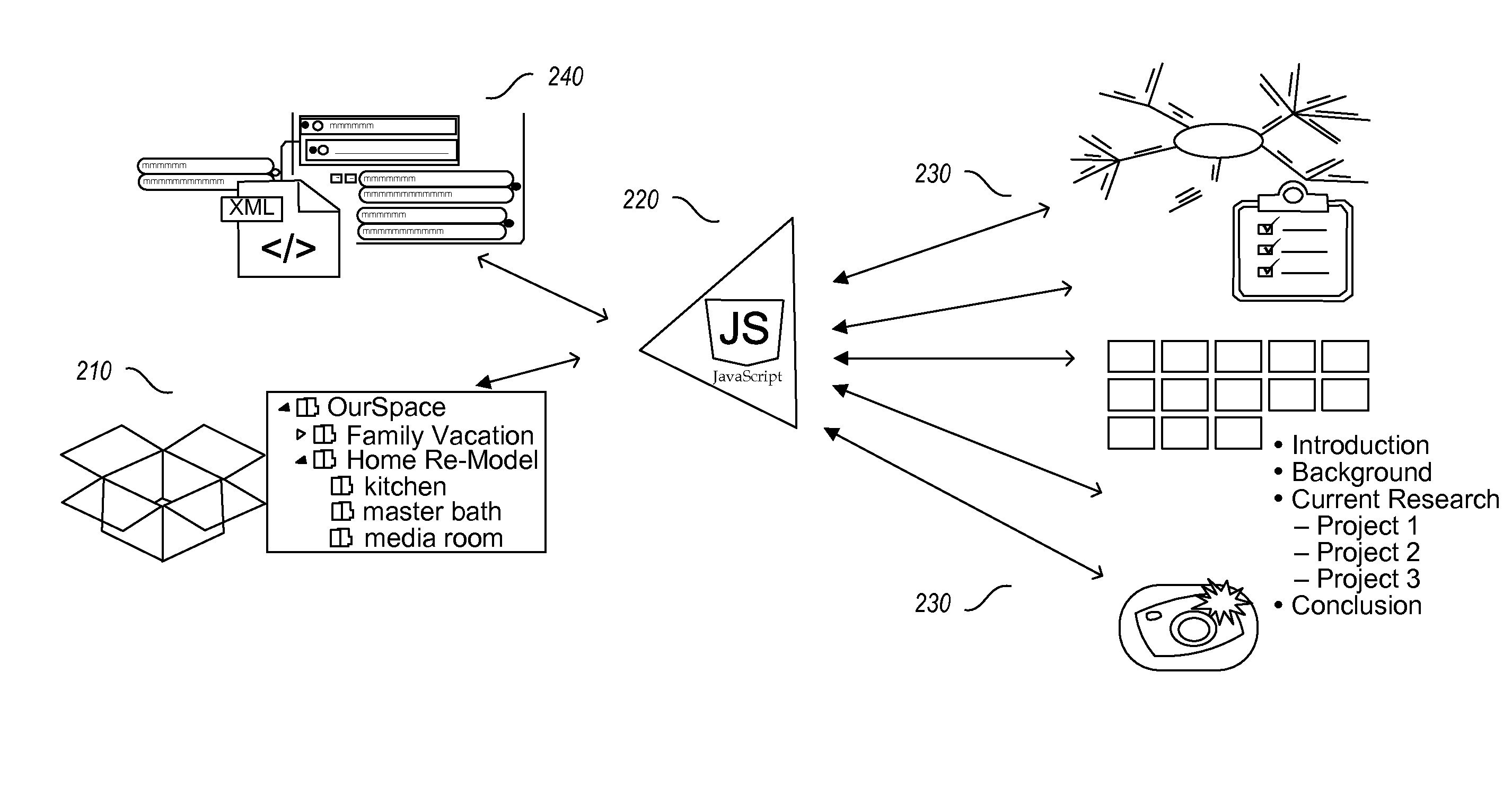
Figure 1 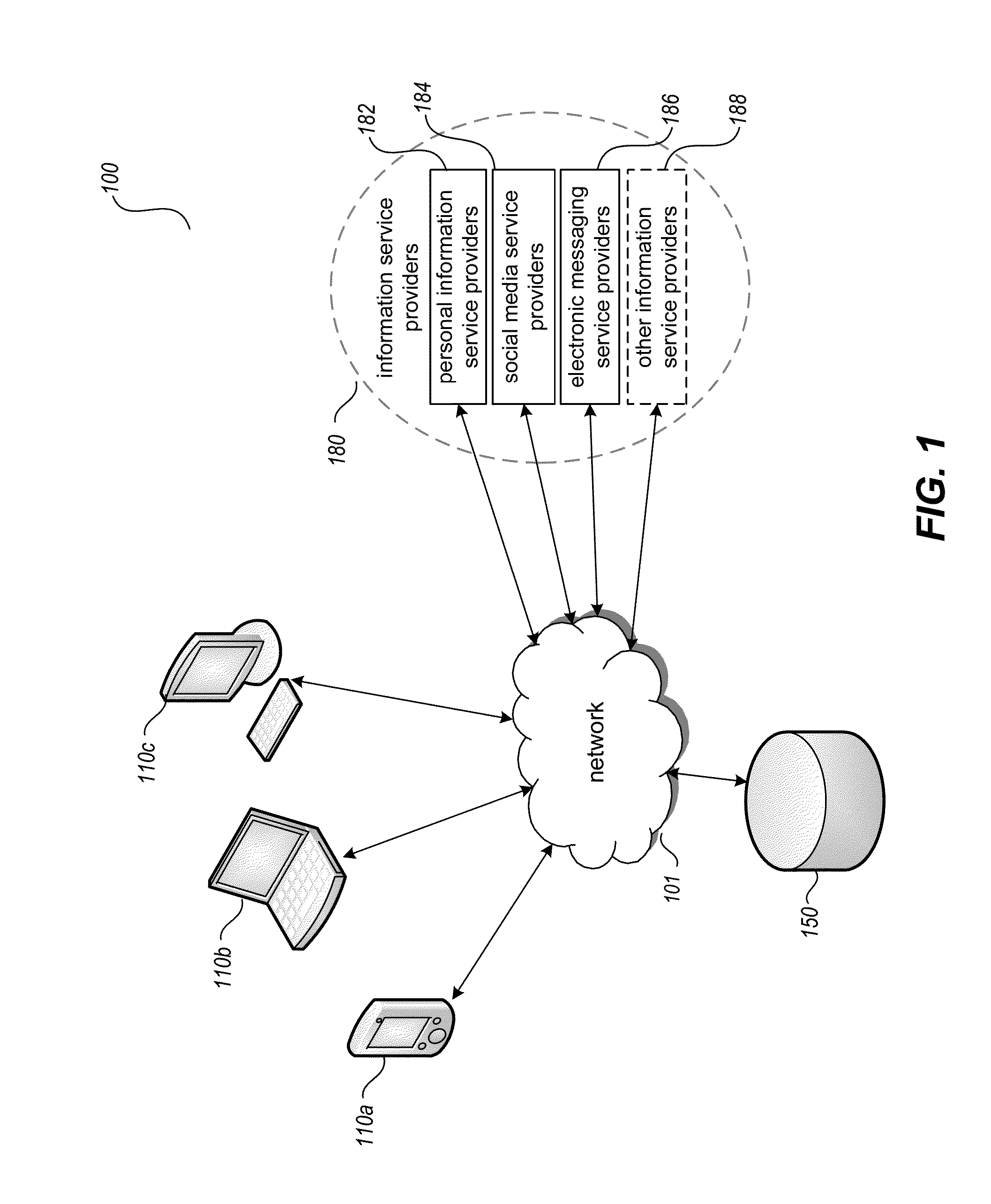
Figure 2 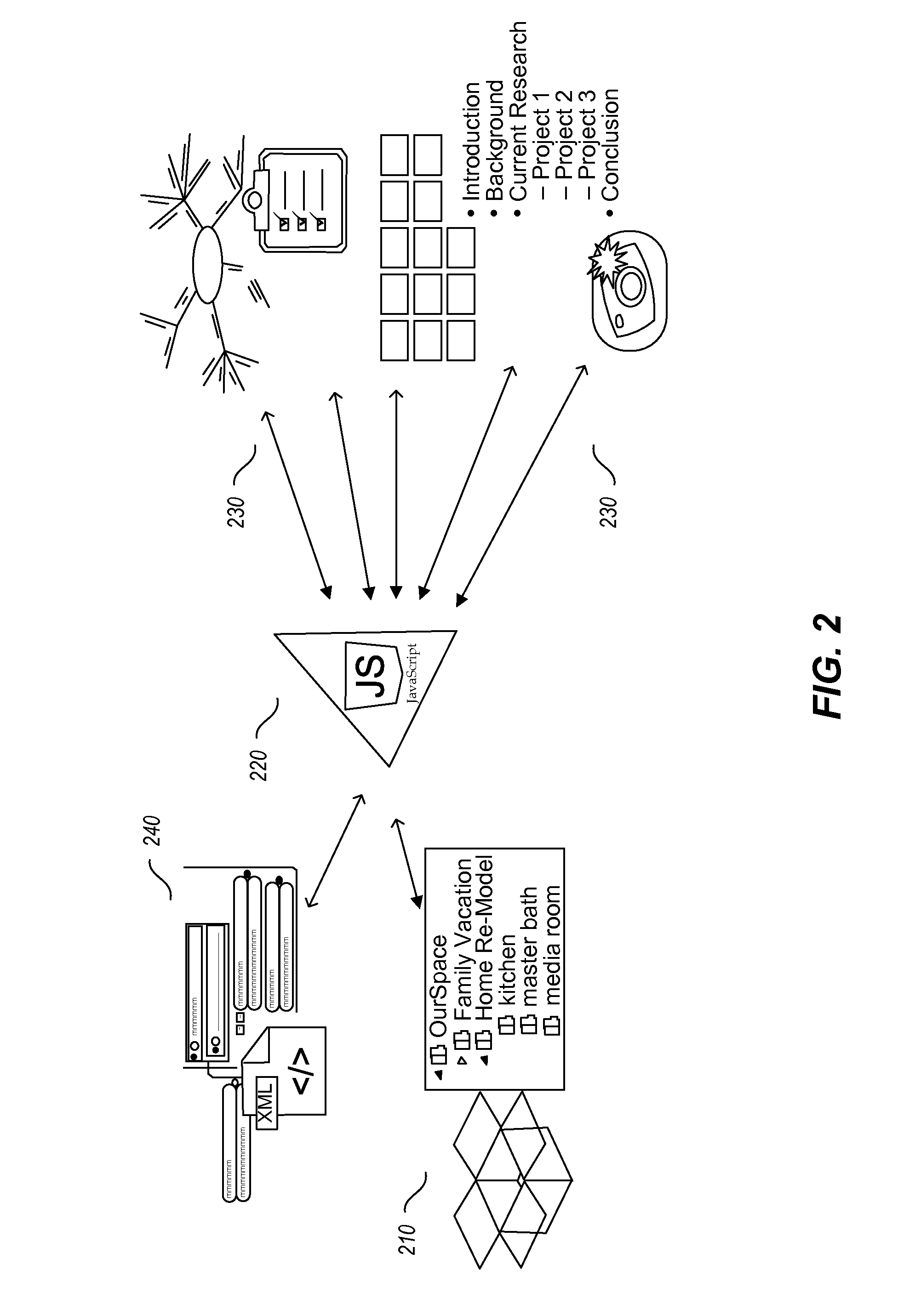
Figure 3
Abstract
Description
TECHNICAL FIELD
[0001] The following disclosure relates generally to aggregated information access and control, and in particular to techniques for providing users with aggregate access to and control over information from multiple storing applications and information services.BACKGROUND
[0002] Personal information for any particular user typically may be stored across multiple applications and services, with a user's access to such information being application-dependent, service-dependent, and generally tool-dependent, such that the user must (a) remember where (or by what) a given piece or collection of information is stored, (b) access the relevant application / service / tool, and only then is enabled to (c) access the desired information. Furthermore, similar but non-identical pieces of information for a particular user may be stored in multiple disparate applications / services / tools, so that any given application or service only provides part of such information.
[0003] For example, sup...
Examples
Embodiment Construction
[0013]A method for associating metadata with grouping items (defined / explained below) is described. Metadata is represented using XML (eXtensible Markup Language) according to a Xooml schema (described elsewhere herein). One or more fragments of metadata can be associated with any given grouping item. A XooML metadata fragment can be shared by any number of applications from any number of devices. Each application can persist its own application-specific metadata within a XooML fragment where such metadata co-resides with the metadata of other applications. In addition, applications can view, modify and make common use of the application-independent structure of a grouping item. Applications can also make common use of metadata standards (such as Dublin Core or iCalendar).
[0014]Applications, can, by using XooML metadata e.g., as supported through itemMirror (described below), work together through simple use by an end user but without central coordination or any effort at pairwise c...