
Reinforced electrical terminal
a technology of electrical terminals and reinforced parts, which is applied in the direction of coupling contact members, coupling device connections, electrical apparatus, etc., can solve the problems of terminals being vulnerable to damage or deformation when in use, and achieve the effects of removing loose components, and preventing damage or deformation of retention parts
Patent Information
- Authority / Receiving Office
- US · United States
- Current Assignee / Owner
- Publication Date
- 2021-12-23
Smart Images
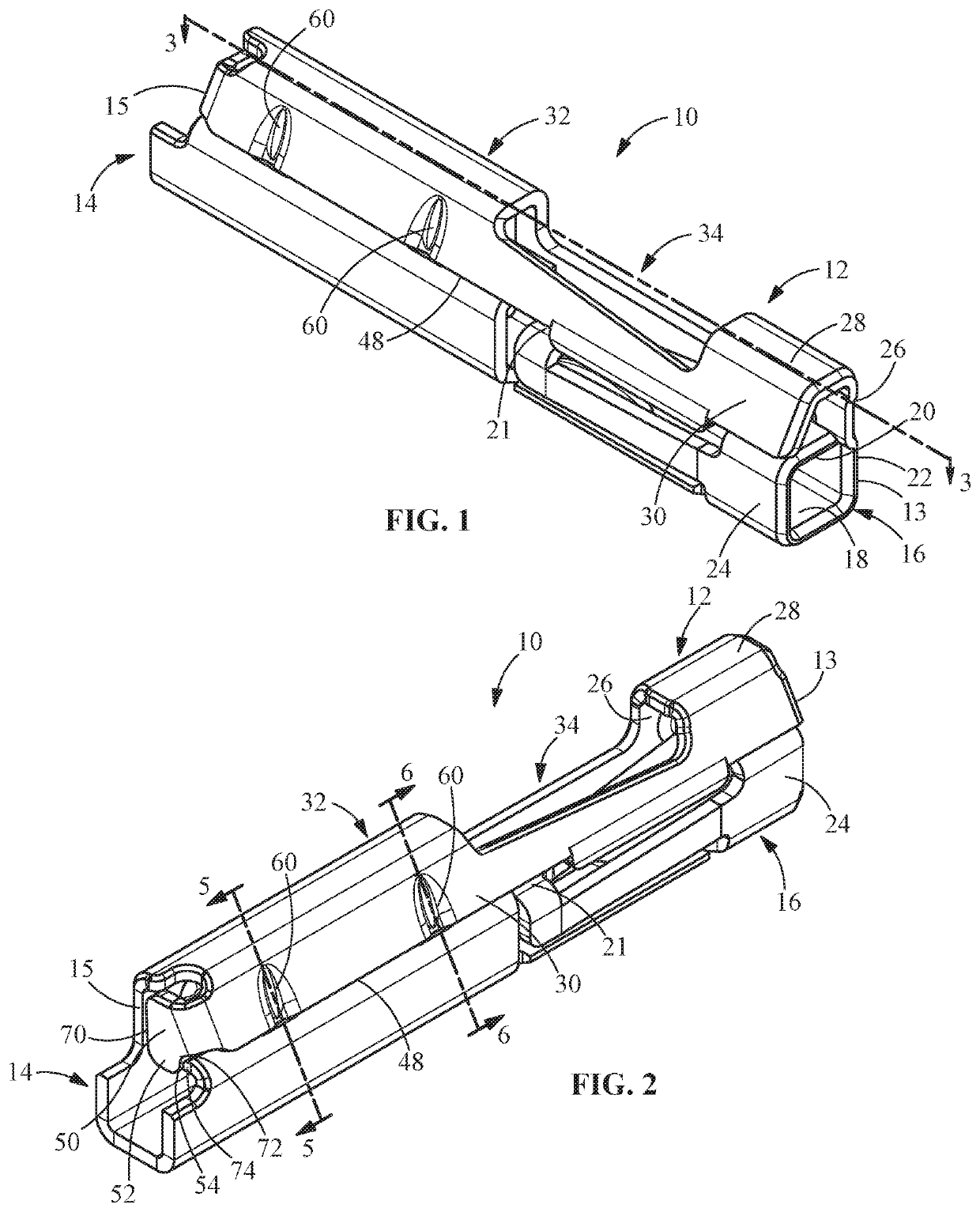
Figure 1 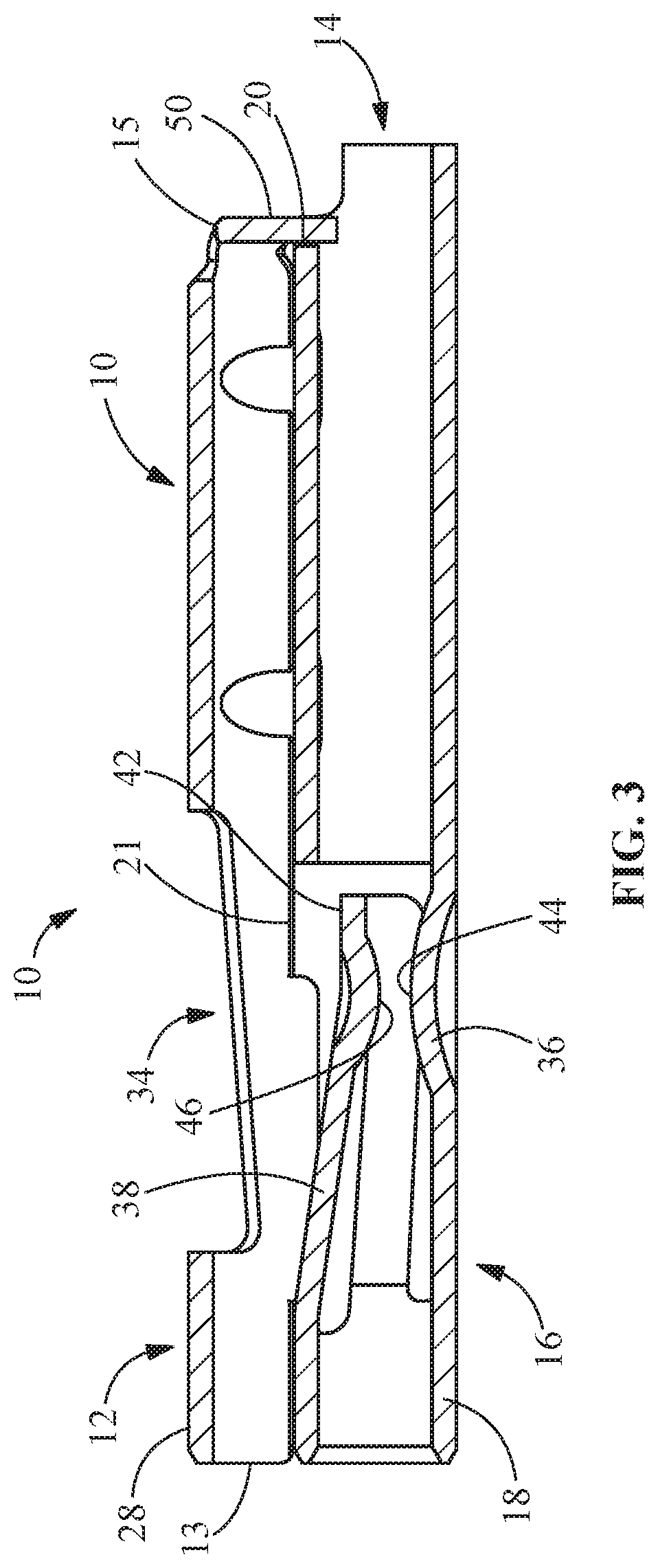
Figure 2 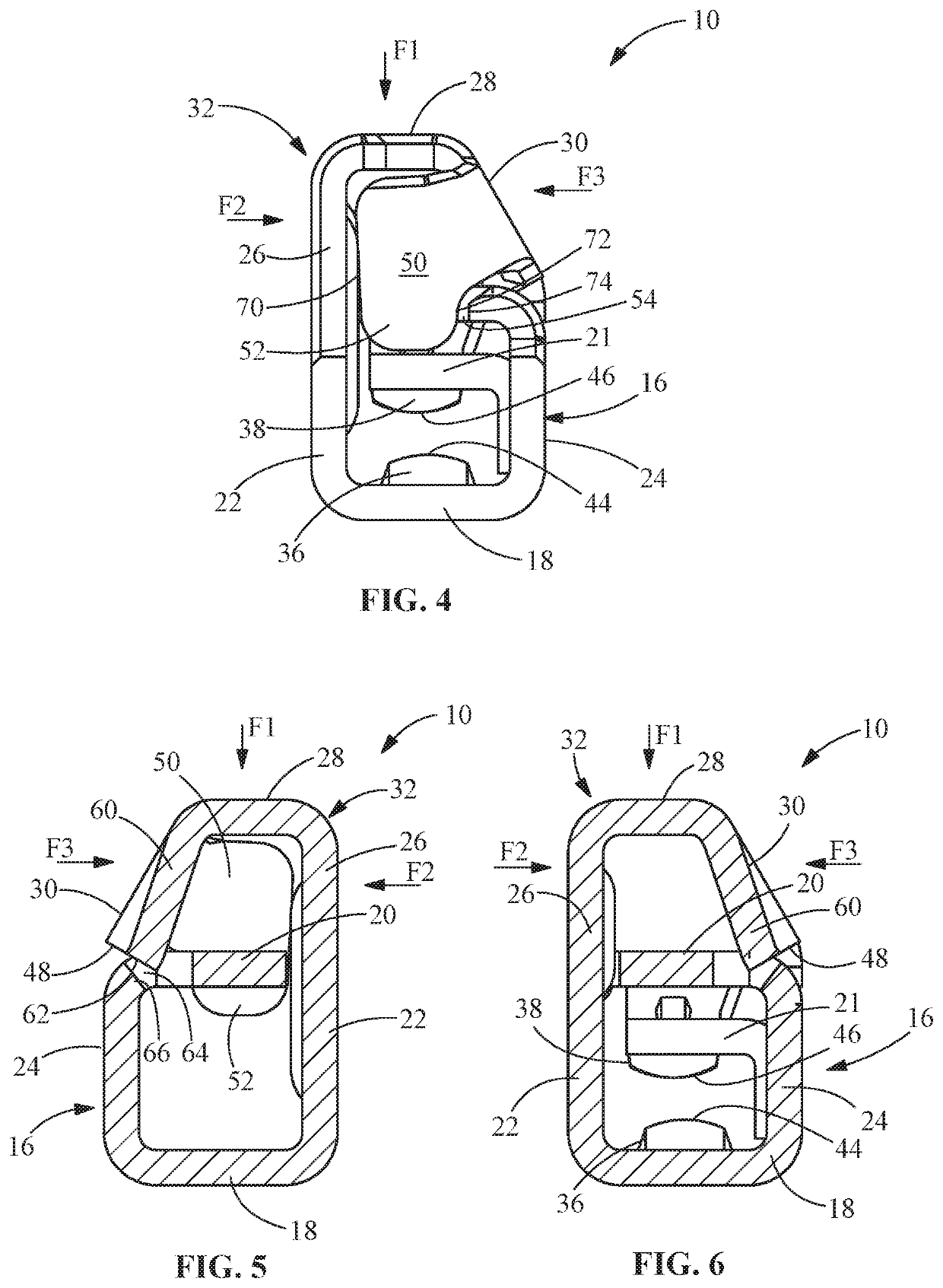
Figure 3
Abstract
Description
FIELD OF THE INVENTION
[0001] The present invention is directed to an electrical terminal with improved strength. In particular, the invention is directed to a terminal with improved strength to avoid damage when undergoing qualification or assembly into the connector housing.BACKGROUND OF THE INVENTION
[0002] The need for electrical connectors which are compact in size continues to increase. As the connectors are made smaller, the electrical terminals positioned in the connectors must also be made smaller. The miniaturization of the terminals requires that less material be used in the manufacturer of the terminals, thereby making the terminals vulnerable to damage or deformation when in use or when undergoing testing, qualification or assembly into the connector housing.
[0003] It would, therefore, be beneficial to provide a terminal with improved strength to prevent damage or deformation. It would also be beneficial to provide such a reinforced terminal without increasing the overall si...
Examples
Embodiment Construction
[0017]The description of illustrative embodiments according to principles of the present invention is intended to be read in connection with the accompanying drawings, which are to be considered part of the entire written description. In the description of embodiments of the invention disclosed herein, any reference to direction or orientation is merely intended for convenience of description and is not intended in any way to limit the scope of the present invention. Relative terms such as “lower,”“upper,”“horizontal,”“vertical,”“above,”“below,”“up,”“down,”“top” and “bottom” as well as derivative thereof (e.g., “horizontally,”“downwardly,”“upwardly,” etc.) should be construed to refer to the orientation as then described or as shown in the drawing under discussion. These relative terms are for convenience of description only and do not require that the apparatus be constructed or operated in a particular orientation unless explicitly indicated as such. Terms such as “attached,”“affi...