

Enhanced ion desolvation for an ion mobility spectrometry device
a technology of mobility spectrometry and enhanced ion desolvation, which is applied in the field of enhanced ion desolvation for ion mobility spectrometry, can solve the problems of peak broadening, loss of separation resolution, and significant compromise of the performance of the faims cell, and achieve the effect of promoting evaporation
Patent Information
- Authority / Receiving Office
- US · United States
- Patent Type
- Patents(United States)
- Current Assignee / Owner
- Publication Date
- 2008-04-01
Smart Images
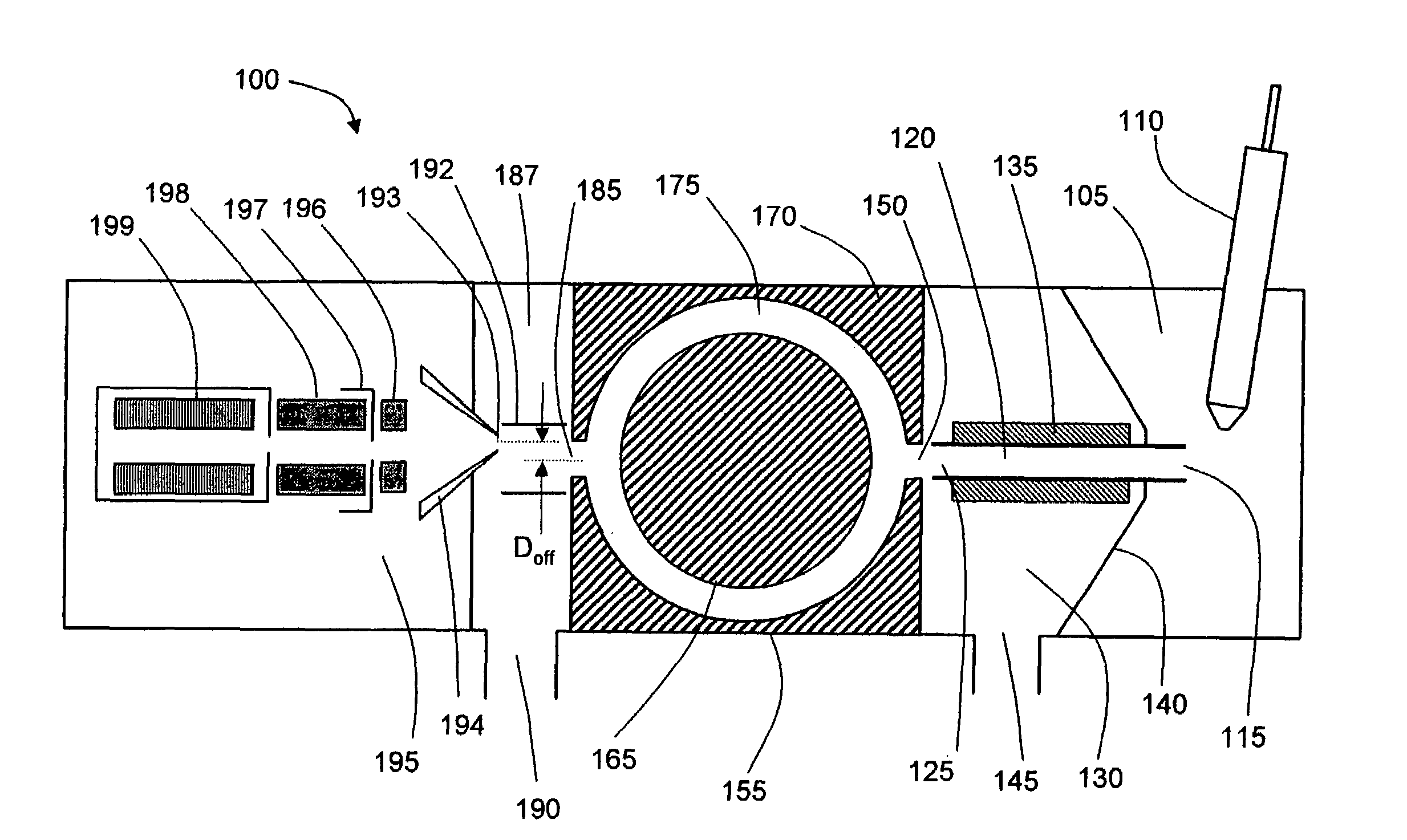
Figure 1 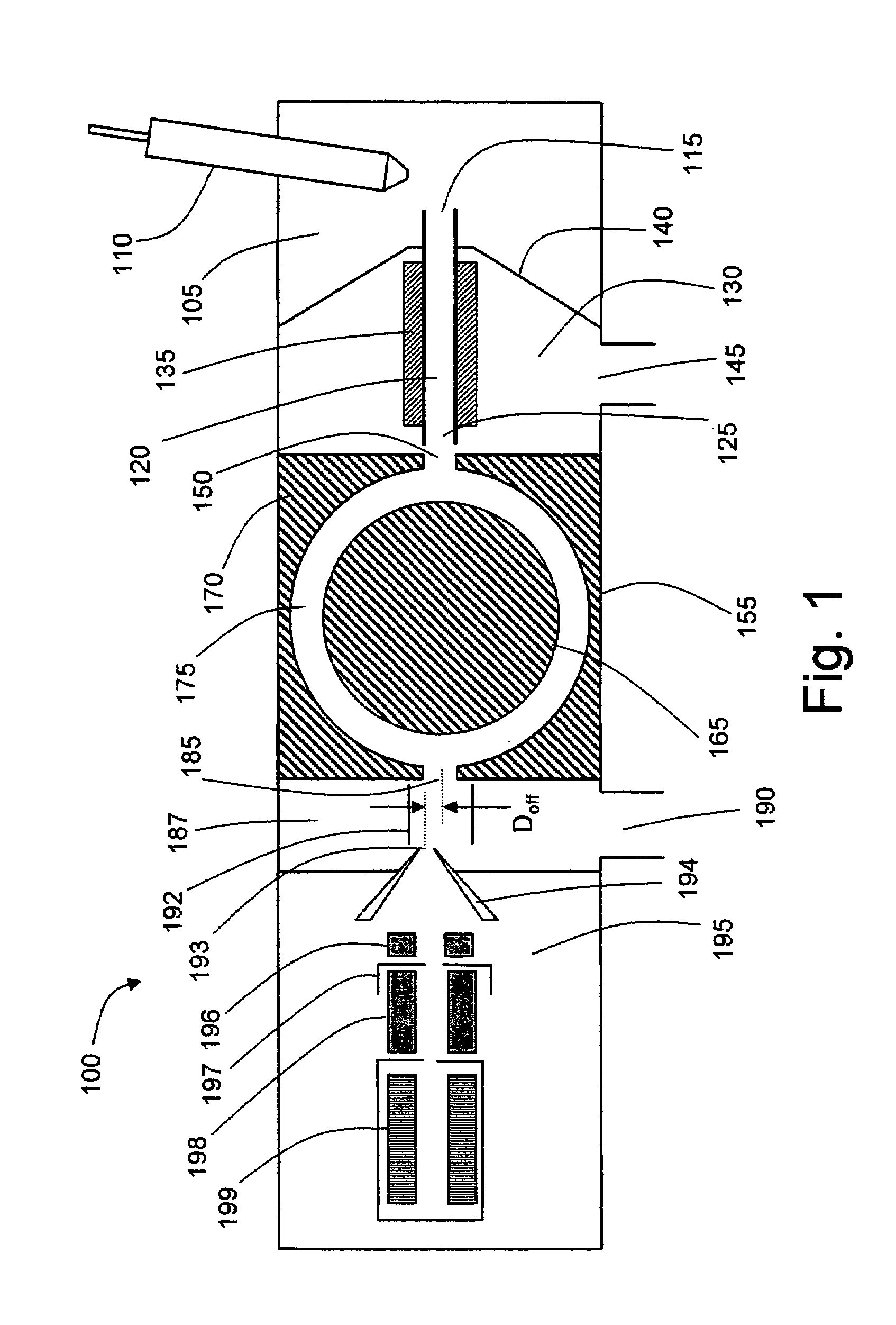
Figure 2 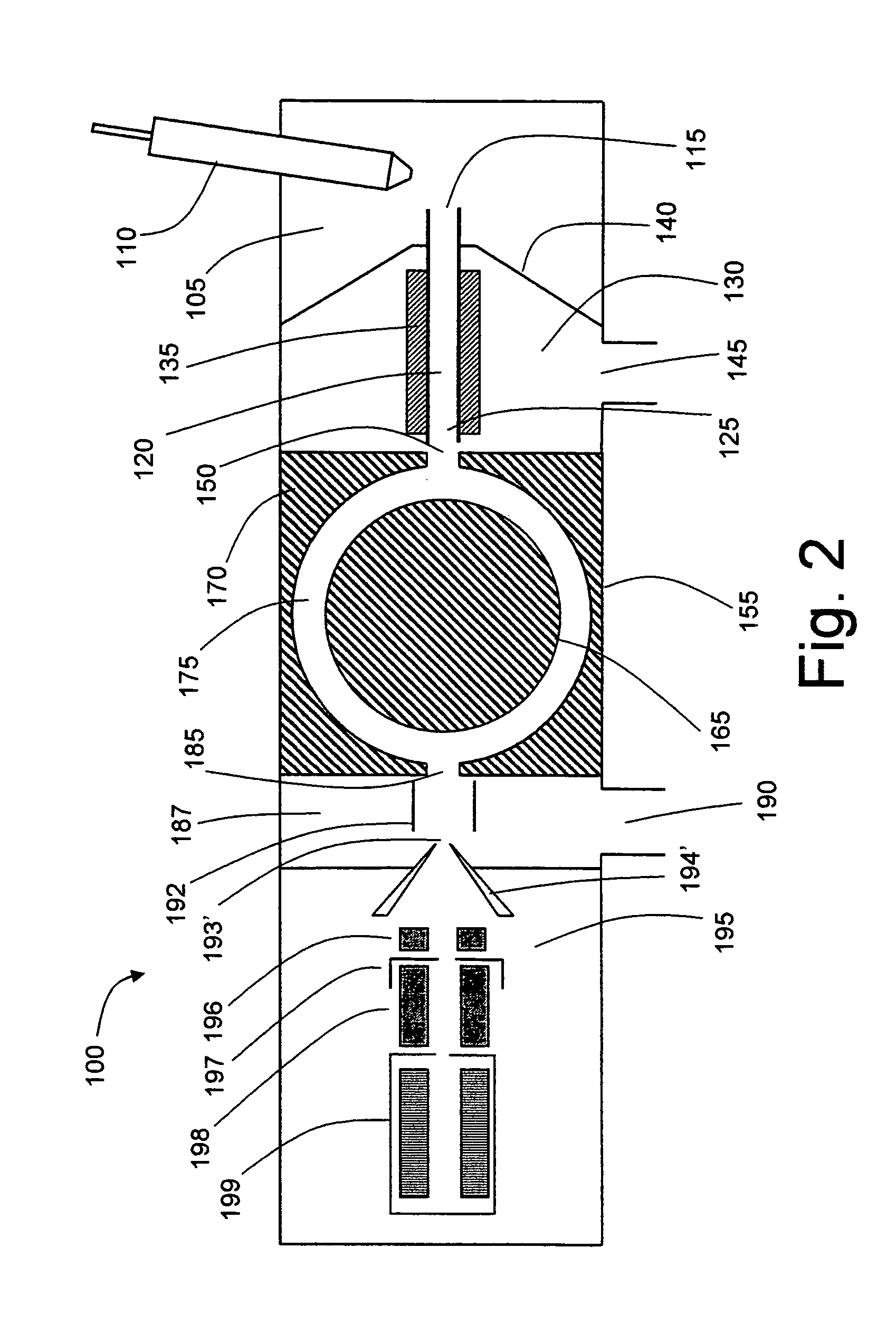
Figure 3
Abstract
Description
FIELD OF THE INVENTION
[0001] The present invention relates generally to ion mobility spectrometry, and more particularly to the desolvation of ions prior to introduction into a ion mobility spectrometry device, such as a high field asymmetric ion mobility spectrometry (FAIMS) cell.BACKGROUND OF THE INVENTION
[0002] In ion mobility spectrometry devices, separation of gas-phase ions is accomplished by exploiting variations in ion drift velocities under an applied electric field arising from differences in ion mobilities. One well-known type of ion mobility spectrometry device is the FAIMS cell, which separates ions on the basis of a difference in the mobility of an ion at high field strength (commonly denoted as Kh) relative to the mobility of the ion at low field strength (commonly denoted as K). Briefly described, a FAIMS cell consists of a pair of spaced apart electrodes that define therebetween a separation region through which a stream of ions is directed. An asymmetric waveform com...
Examples
Embodiment Construction
[0014]FIG. 1 symbolically depicts a mass spectrometer system 100 configured in accordance with a first embodiment of the invention. A solution of sample to be analyzed is introduced as a spray of liquid droplets into an ionization chamber 105 via probe 110. Ionization chamber 105 is maintained at a high pressure relative to the regions downstream in the ion path, typically at or near atmospheric pressure. Probe 110 may be configured as an electrospray ionization (ESI) probe, wherein a high DC voltage (either positive or negative) is applied to the capillary through which the sample solution flows. This voltage imparts a charge to the droplets as they are emitted from the capillary exit. The charge accumulates at the droplet surface during solvent evaporation, causing droplet fragmentation and the formation of analyte ions. Other suitable ionization techniques may be utilized in place of ESI, including without limitation such well-known techniques as atmospheric pressure chemical ion...