
Kit for converting N class bus plug to a J class bus plug
Patent Information
- Authority / Receiving Office
- US · United States
- Current Assignee / Owner
- Publication Date
- 2010-05-18
- Estimated Expiration
- Not applicable · inactive patent
Smart Images

Figure 1 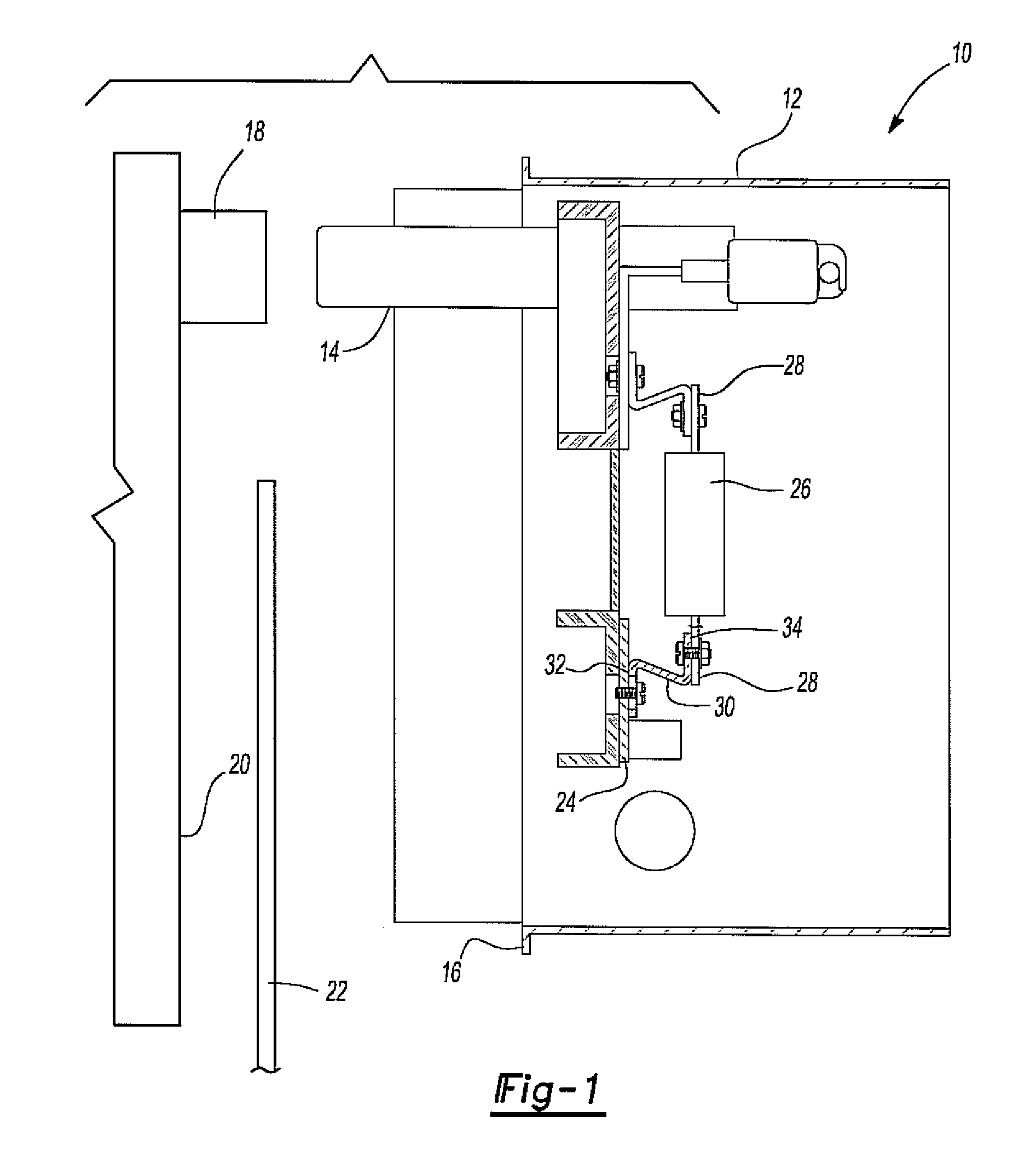
Figure 2 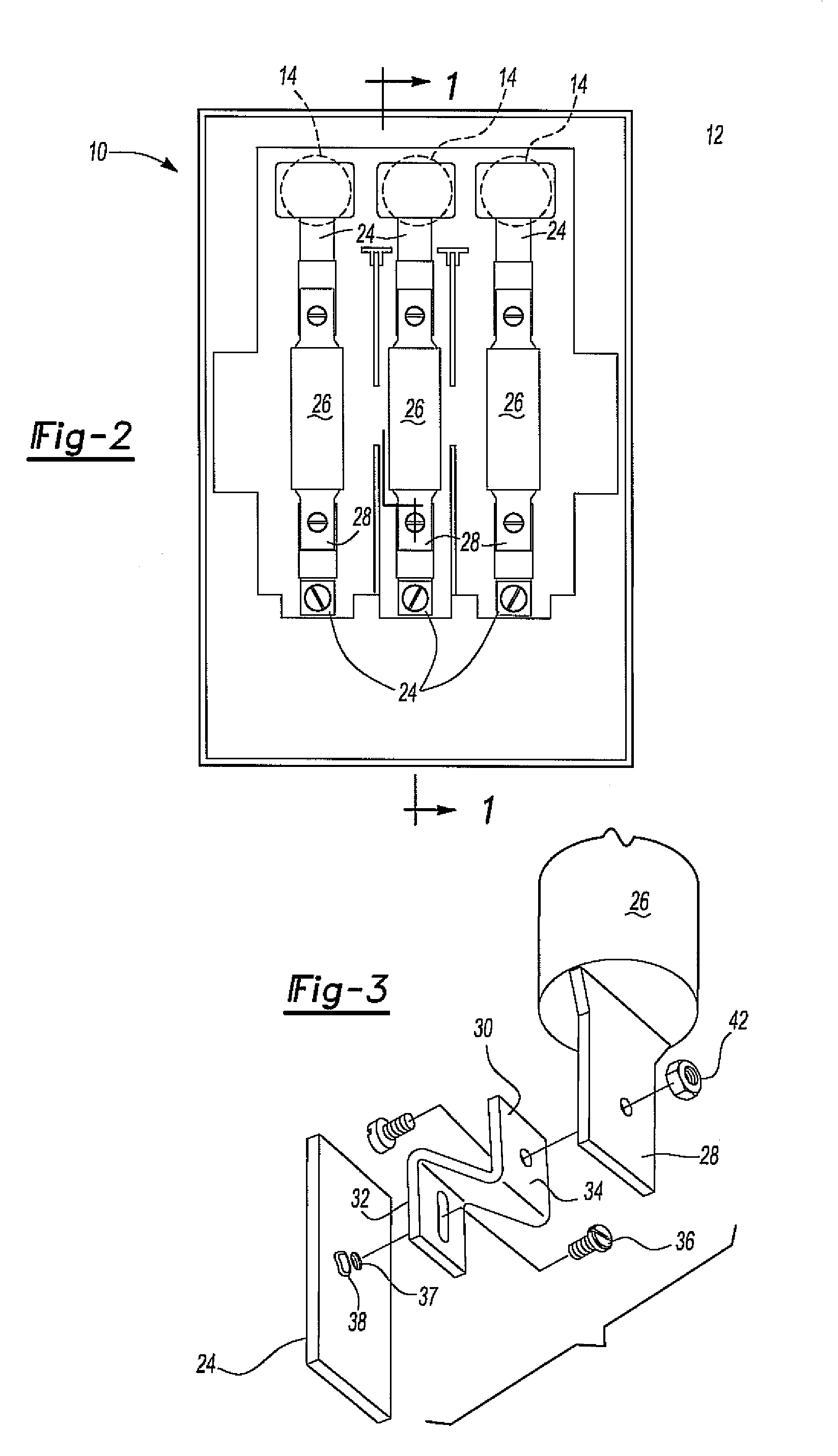
Figure 3
Abstract
Description
BACKGROUND OF THE INVENTION
[0001] I. Field of the Invention
[0002] The present invention relates generally to bus plugs.
[0003] II. Description of Related Art
[0004] Modern day factories are typically equipped with electrical bus for supplying three phase electrical power to the machinery in the factory. The electrical bus typically includes three main conductors and occasionally has a neutral phase and an integral ground bar. The supply voltage may be either 240 or with 600 volts being the maximum rating.
[0005] In order to electrically connect the electrical bus with the machinery, conventionally a bus plug is attached to the preexisting ports along a length of bus. The bus plug contains three fuses, one for each phase bar of the electrical bus. Consequently, once the bus plug is attached to the electrical bus, one end of each of the electrical fuses is electrically connected to the electrical bus (line side). The other ends of the fuses (load side) are then connected to the machinery whic...
Examples
Embodiment Construction
[0020]With reference first to FIGS. 1 and 2, a bus plug 10 is shown having an N class housing 12. The housing 12 also includes a cover which has been removed in the drawing for clarity.
[0021]The bus plug 10 includes three electrical connectors 14 which protrude outwardly from a back 16 of the housing 12. Each electrical connector 14 is adapted for connection with one line 18 (FIG. 1) of an electrical bus 20 of the type found in factories. Such electrical bus includes three separate lines, and together they supply three phase electrical power. The electrical bus 20 illustrated in FIG. 1 is rare at 600 volts maximum.
[0022]For safety, the electrical bus 20 is contained within and separated by insulators from the housing 22. The housing 22 includes access plates (not shown) which are removed to allow the electrical connectors 14 to engage the electrical contacts 18 of the electrical bus 20. The bus plug housing 12 is then secured to the bus housing 22 in any conventional fashion, such a...