
System and method to improve WLAN handover behavior at entry/exit points
a handover behavior and system technology, applied in the field of wireless communication, can solve the problems of consuming a significant amount of battery power, affecting the handover behavior of wan systems, so as to improve the handover behavior of wan devices, prevent unnecessary loads on wan systems, and save costs
Patent Information
- Authority / Receiving Office
- US · United States
- Patent Type
- Patents(United States)
- Current Assignee / Owner
- Publication Date
- 2010-08-03
- Estimated Expiration
- Not applicable · inactive patent
Smart Images
Figure 1 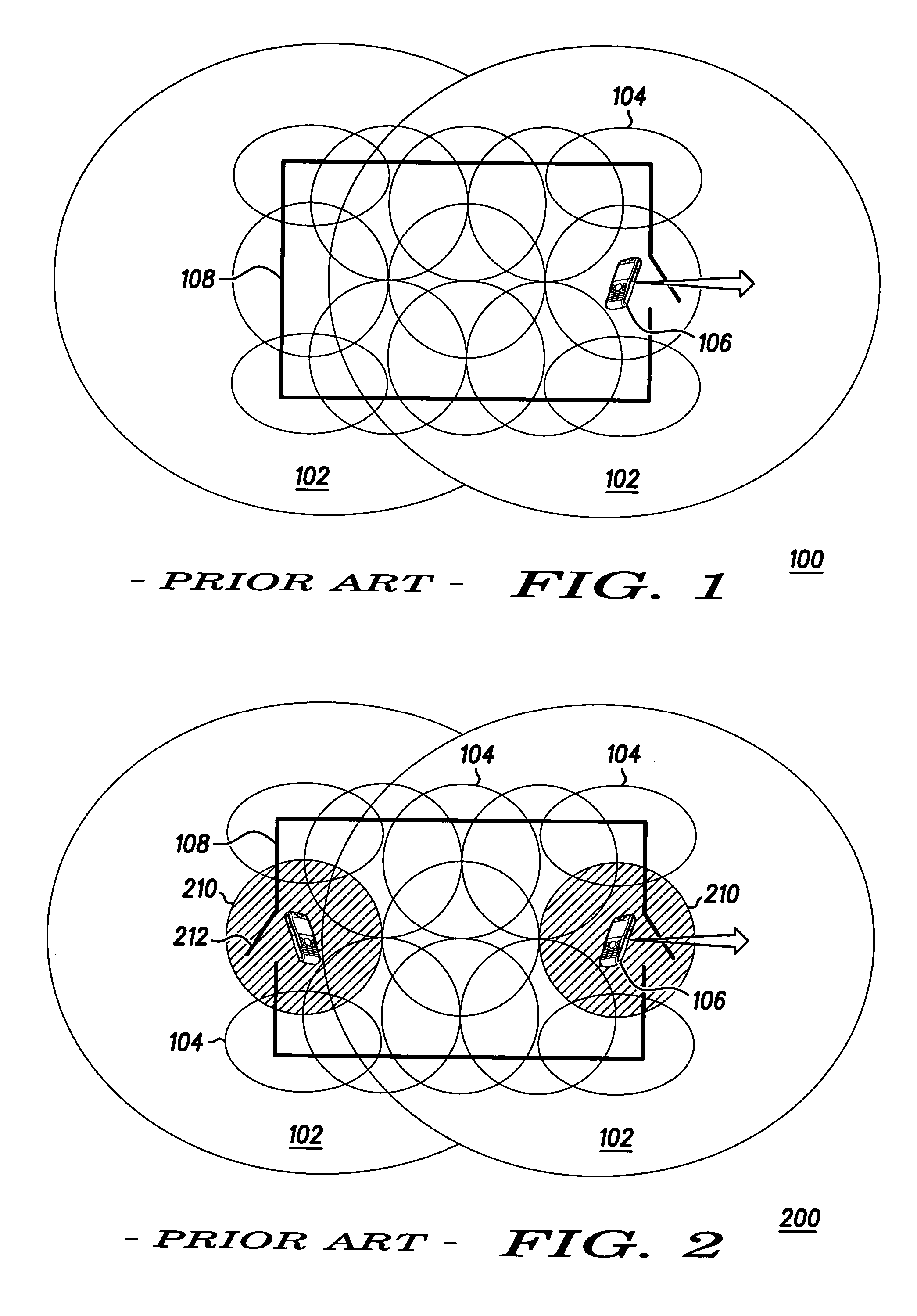
Figure 2 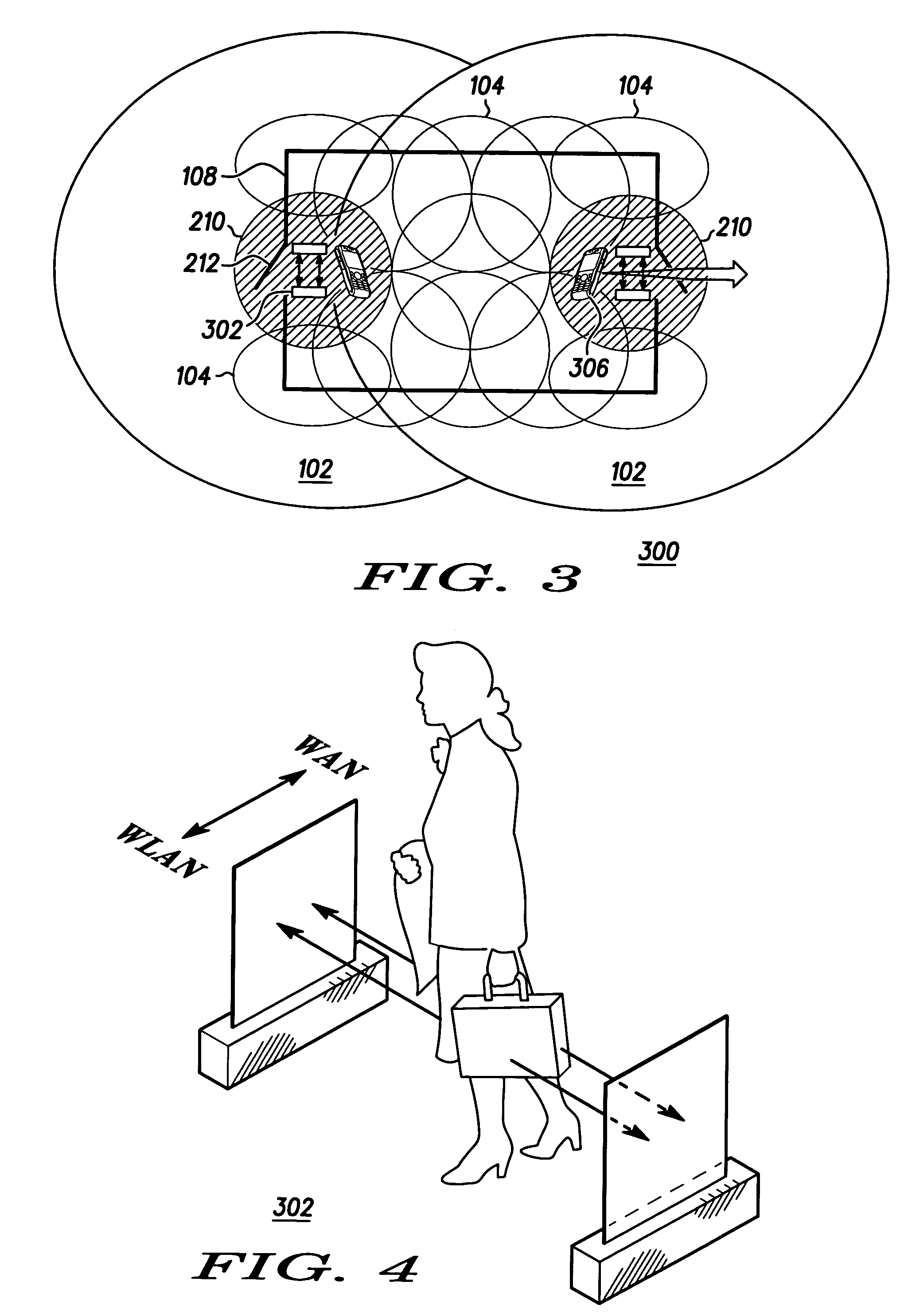
Figure 3
Abstract
Description
CROSS-REFERENCE TO RELATED APPLICATION
[0001] The present patent application is related to co-pending and commonly owned U.S. patent application Ser. No. 10 / 649,999, entitled “SYSTEM AND METHOD TO IMPROVE WLAN HANDOVER BEHAVIOR AND PHONE BATTERY LIFE WHEN STATIONARY IN BORDER CELLS”, filed on even date with the present patent application, the entire teachings of which being hereby incorporated by reference.FIELD OF THE INVENTION
[0002] The present invention generally relates to the field of wireless communications, and more particularly relates to a system and method to improve handover behavior between WLANs and WANs at exit points.BACKGROUND OF THE INVENTION
[0003] Many cellular communication systems consist of a combination of different types of systems and protocols. Likewise, many of the devices used on these networks, such as cellular telephones and handheld personal data assistants, are designed to be multi-mode devices, i.e. will operate on multiple networks. Ideally, there should...
Examples
Embodiment Construction
[0030]As required, detailed embodiments of the present invention are disclosed herein; however, it is to be understood that the disclosed embodiments are merely exemplary of the invention, which can be embodied in various forms. Therefore, specific structural and functional details disclosed herein are not to be interpreted as limiting, but merely as a basis for the claims and as a representative basis for teaching one skilled in the art to variously employ the present invention in virtually any appropriately detailed structure. Further, the terms and phrases used herein are not intended to be limiting; but rather, to provide an understandable description of the invention.
[0031]The terms “a” or “an”, as used herein, are defined as one or more than one. The term plurality, as used herein, is defined as two or more than two. The term another, as used herein, is defined as at least a second or more. The terms including and / or having, as used herein, are defined as comprising (i.e., ope...