
Method and system to monitor hand hygiene compliance
a hand hygiene and compliance technology, applied in the field of monitoring hand hygiene compliance, can solve the problems of hospital infections and related complications, and is a tremendous burden on the patient, the physician, and the healthcare system
Patent Information
- Authority / Receiving Office
- US · United States
- Patent Type
- Patents(United States)
- Current Assignee / Owner
- Publication Date
- 2010-08-10
Smart Images
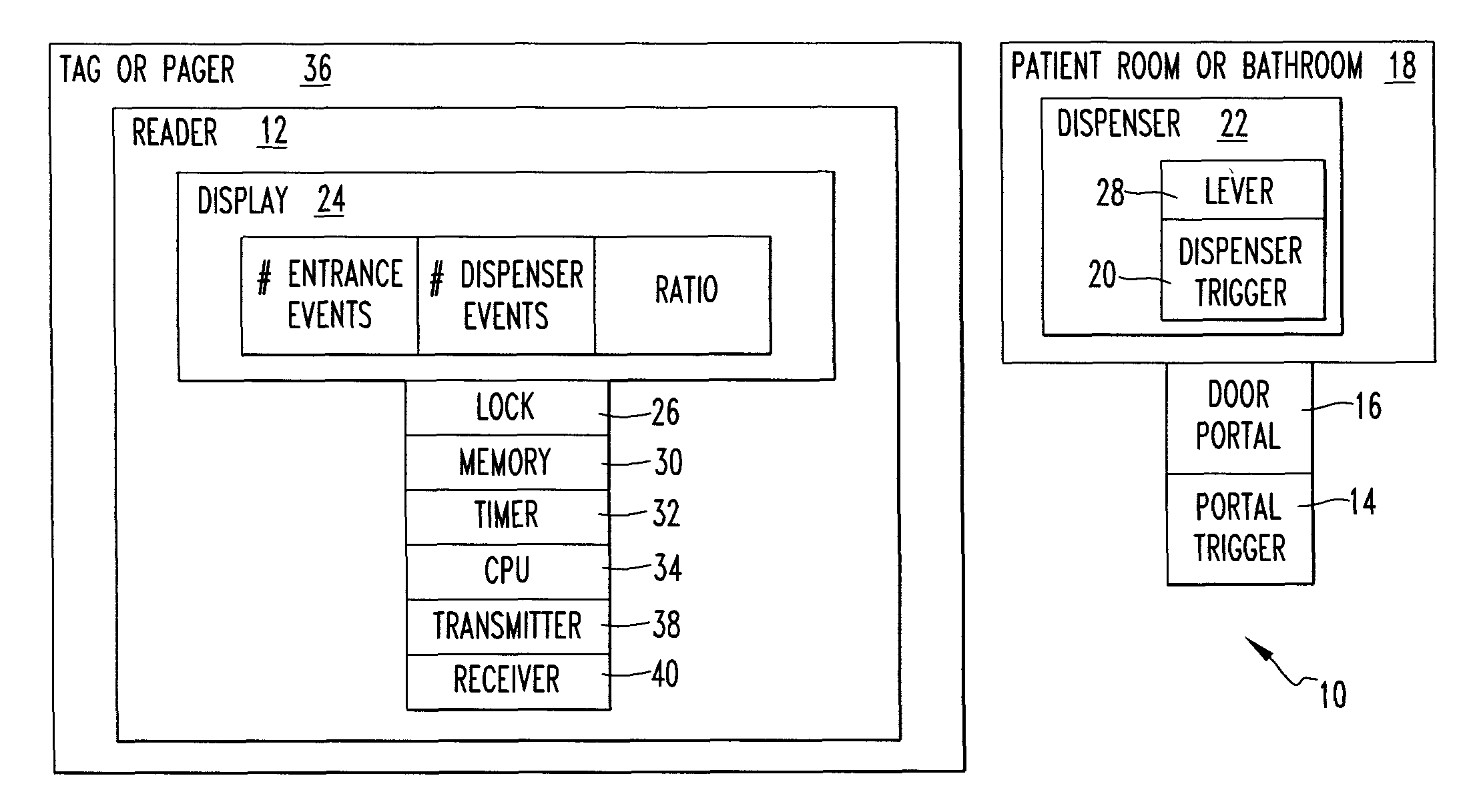
Figure 1 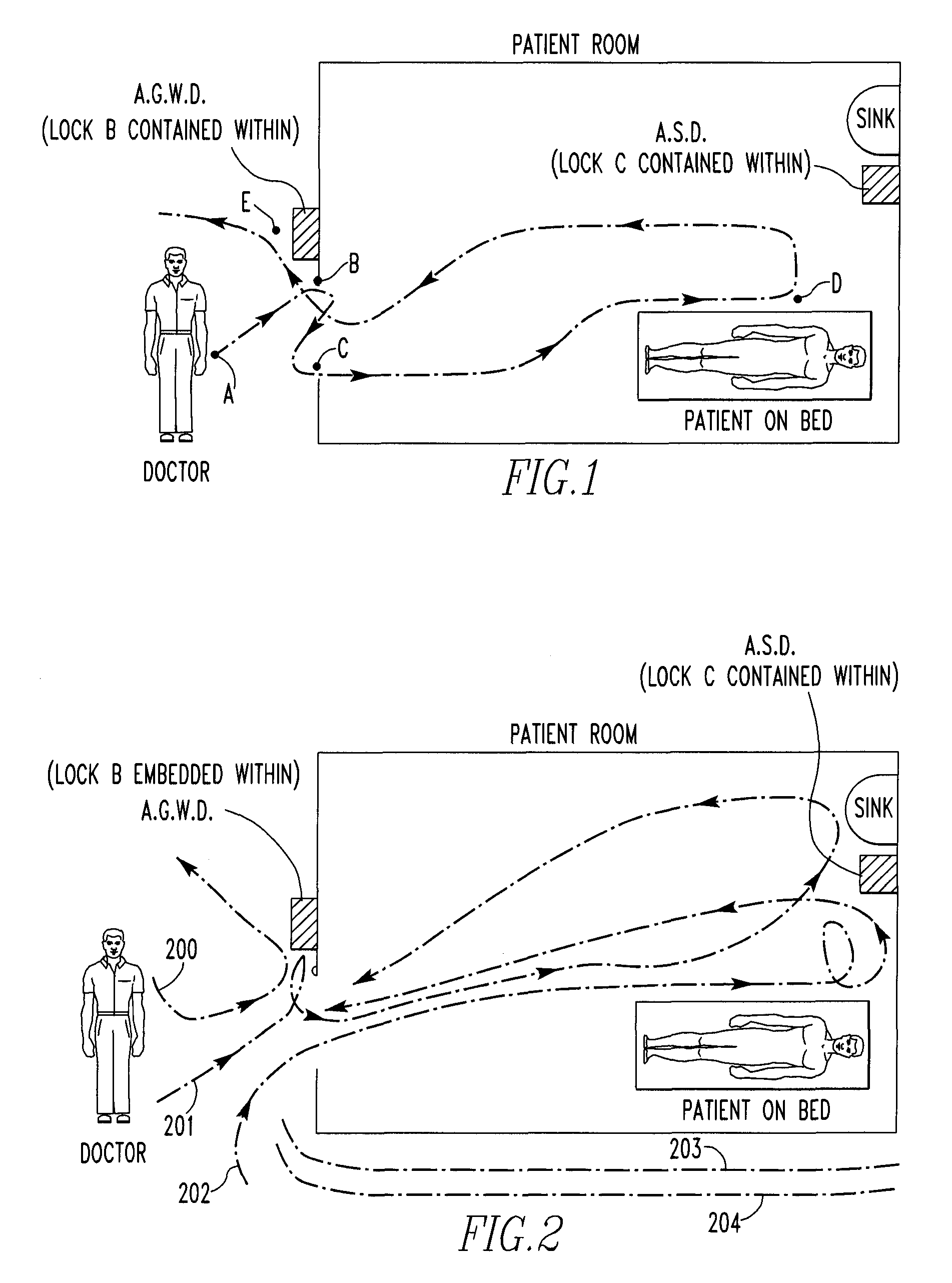
Figure 2 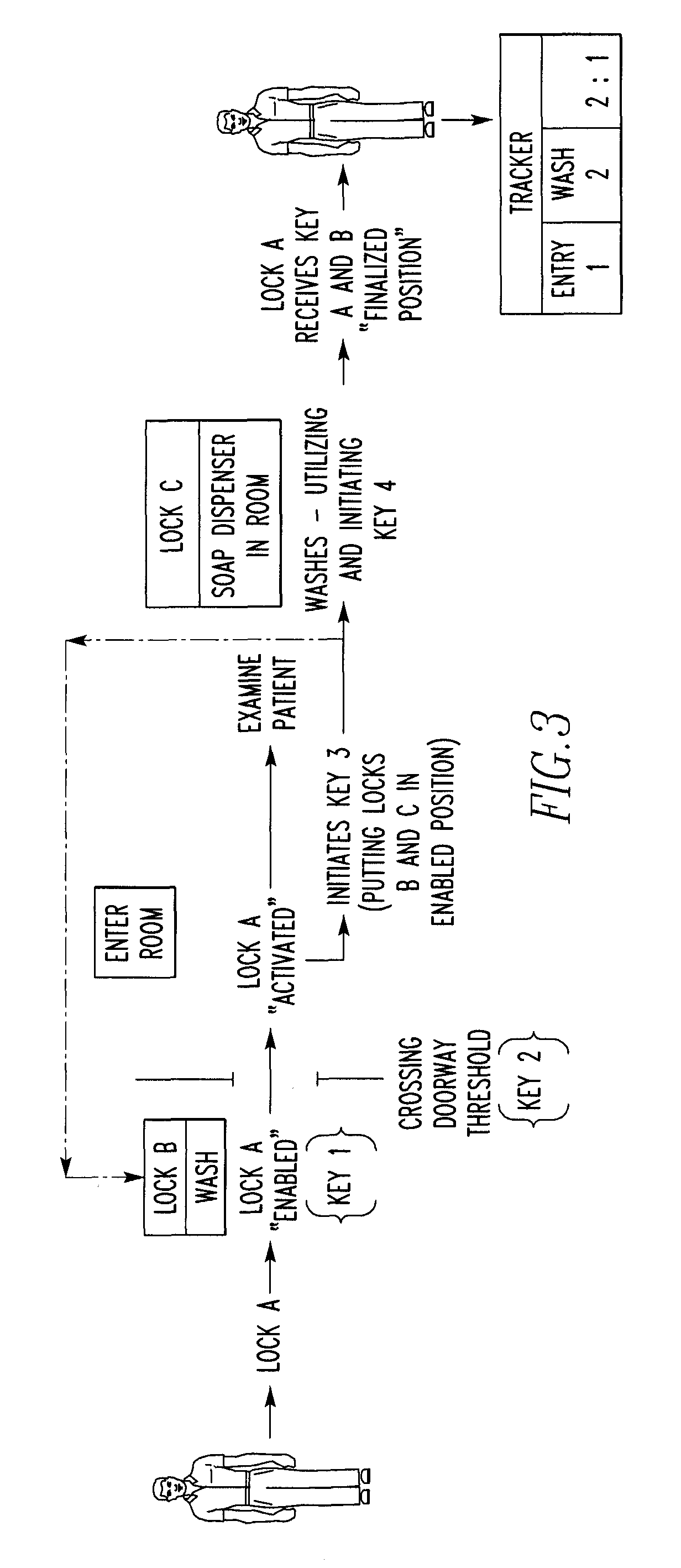
Figure 3
Abstract
Description
FIELD OF THE INVENTION
[0001] The present invention is related to monitoring hand hygiene compliance. More specifically, the present invention is related to monitoring hand hygiene compliance using triggers to record entrance and dispensing events.BACKGROUND OF THE INVENTION
[0002] Hospital infections and related complications are a tremendous burden to the patient, the physician, and the healthcare system. Many initiatives have been implemented to combat these problems and yet, ultimately, hand hygiene is still the single most effective means of spreading infection. It is estimated that 35-40% of healthcare providers are compliant with accepted hand hygiene protocols.
[0003] A tool for tracking hand washing which is simple, easily to adopt, inconspicuous, and which can provide real time feedback is needed.BRIEF SUMMARY OF THE INVENTION
[0004] The present invention pertains to a system which allows healthcare providers to monitor hand hygiene compliance. The system comprises a data reader a...
Examples
example
[0039]Doctor Andrew walks up to a patient room 18. He presses the lever 28 on the alcohol gel hand hygiene dispenser which is located on the wall adjacent to the patient room 18. This action serves to take Lock A from “closed” position to “open” positions. Specifically it acts to place Lock A into the “enable” position. Lock A is an electronic lock which is part of the Reader 12 which Doctor Andrew is wearing. Lock A has three open positions “enabled”, “activated” and “finalized”. Enabling requires an initial action by a first electronic key, and activation requires the action of a second electronic key. So, to review, the act of dispensing the hand sanitizer by depressing the lever 28, serves to “turn the first key” which in turn sends a signal back to the Reader 12 which Doctor Andrew is wearing, and places Lock A in the enabled position. The reader 12 then remains in the enabled position for a predetermined period by means of a timer 32 mechanism. If Doctor Andrew does not enter ...