
Electrophoretic displays with controlled amounts of pigment
a technology of controlled pigments and electrophoretic displays, applied in the field of electrophoretic displays with controlled pigments, can solve the problems of irregular microcavities in microcavity electrophoretic displays, inadequate service life of these displays, and widespread use, and achieves convenient visualization, avoid visible artifacts, and simplify the position of color filters with respect to pixel electrodes
Patent Information
- Authority / Receiving Office
- US · United States
- Patent Type
- Patents(United States)
- Current Assignee / Owner
- Publication Date
- 2010-12-07
- Estimated Expiration
- Not applicable · inactive patent
Smart Images
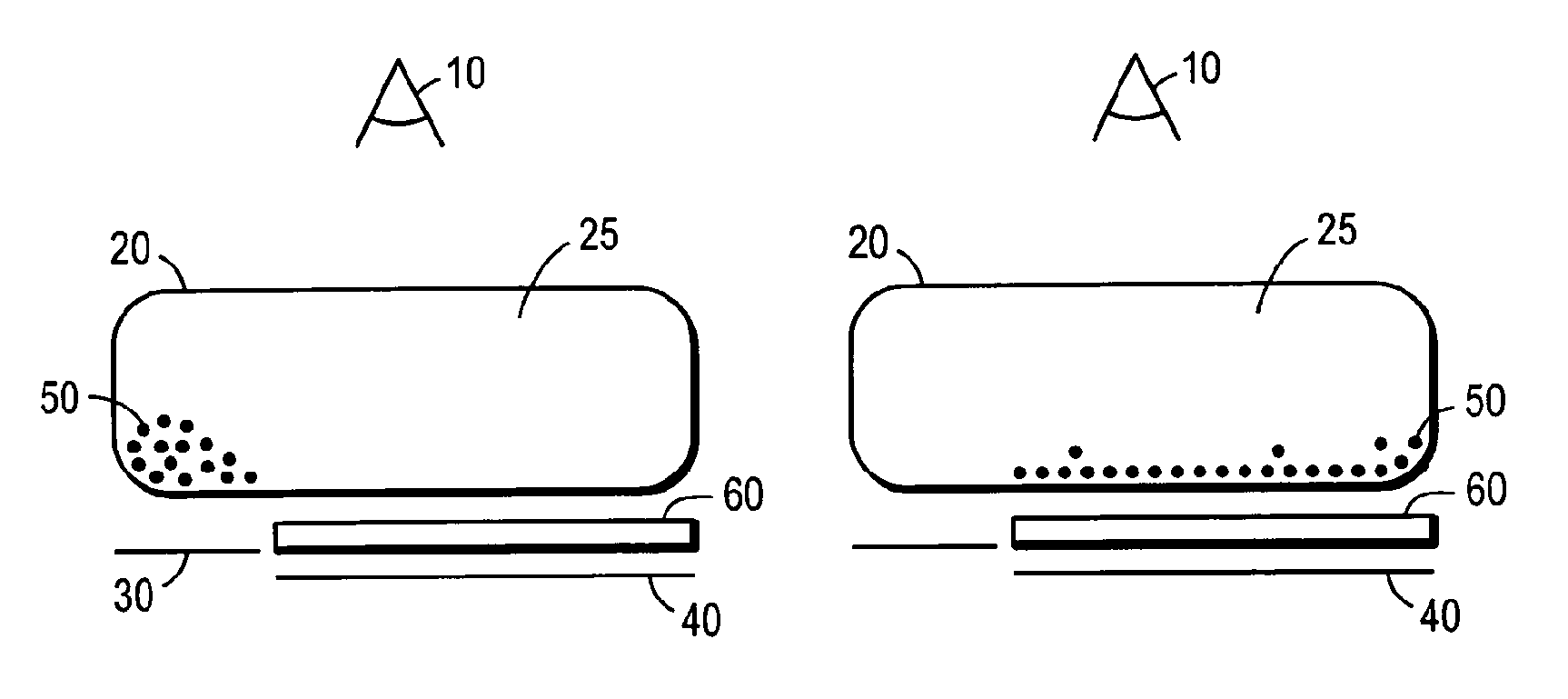
Figure 1 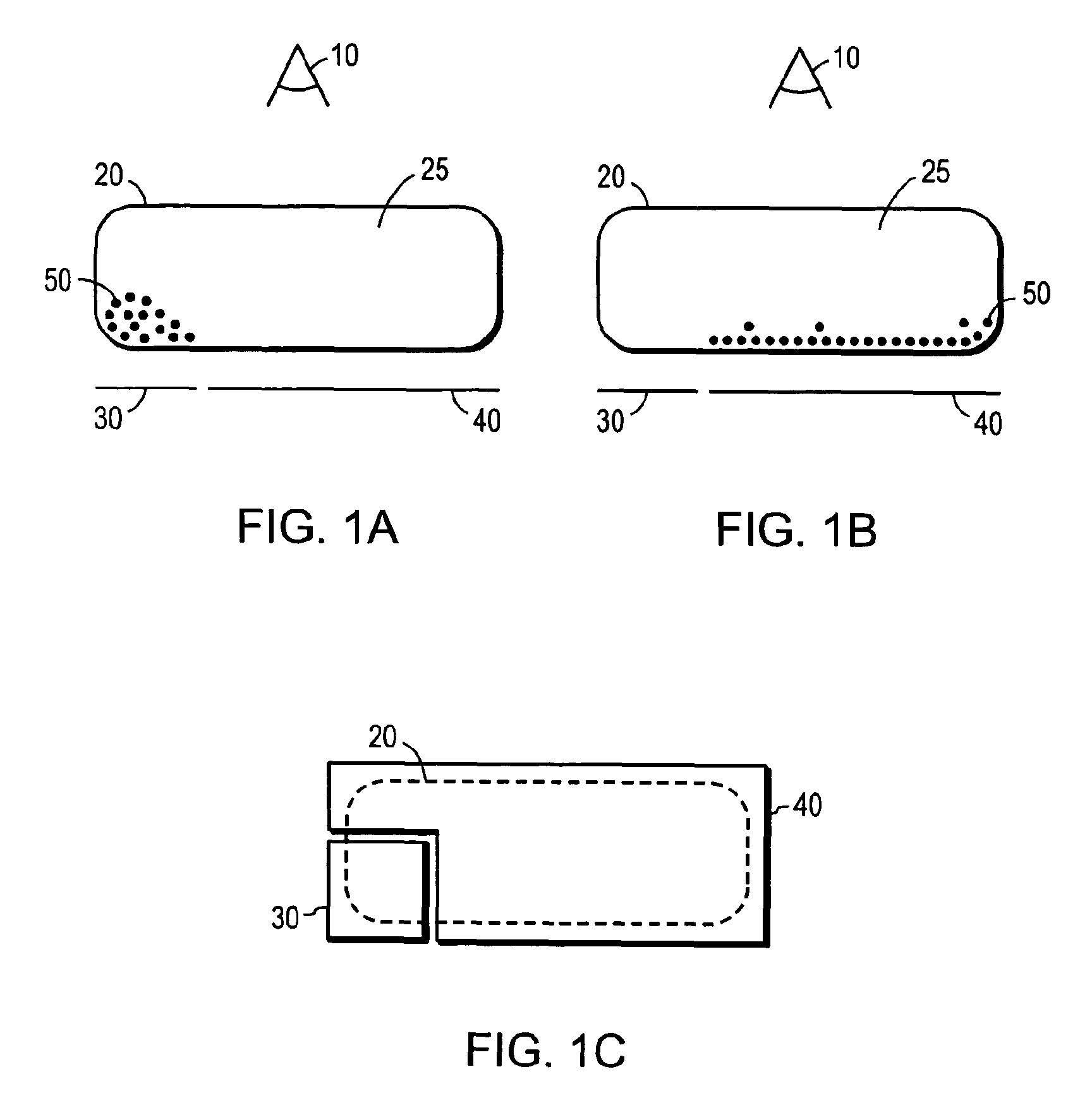
Figure 2 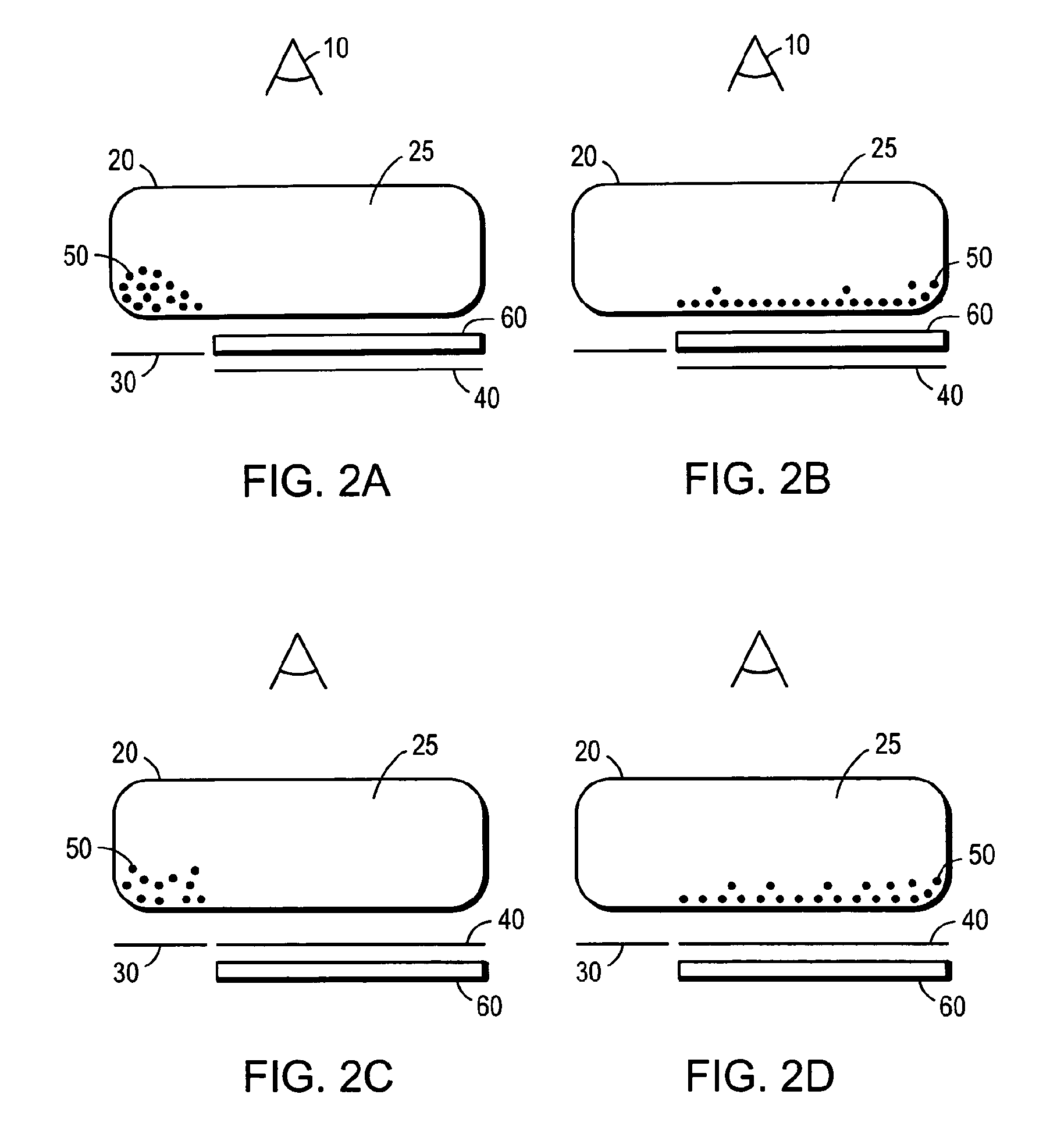
Figure 3
Abstract
Description
REFERENCE TO RELATED APPLICATIONS
[0001] This application is a continuation-in-part of copending application Ser. No. 10 / 837,062, filed Apr. 30, 2004 (Publication No. 2005 / 0012980), which claims benefit of Provisional Application Ser. No. 60 / 320,158, filed May 2, 2003, and of Provisional Application Ser. No. 60 / 320,169, filed May 6, 2003.
[0002] This application is also a continuation-in-part of copending application Ser. No. 11 / 970,811, filed Jan. 8, 2008, which is a continuation of copending application Ser. No. 10 / 729,044, filed Dec. 5, 2003 (now U.S. Pat. No. 7,352,353, issued Apr. 1, 2008), which is a continuation of application Ser. No. 09 / 140,860, filed Aug. 27, 1998 (now U.S. Pat. No. 6,710,540, issued Mar. 23, 2004). The aforementioned application Ser. No. 09 / 140,860 is a continuation-in-part of U.S. Ser. No. 08 / 504,896 filed Jul. 20, 1995 (now U.S. Pat. No. 6,124,851, issued Sep. 26, 2000), of U.S. Ser. No. 08 / 983,404 filed Jul. 19, 1997 (now U.S. Pat. No. 7,106,296, issued Se...
Examples
example
[0154]An internal phase was prepared comprising 10 percent by volume white particles and 1 percent by volume black particles (carbon black) by volume in a hydrocarbon suspending fluid; the internal phase had a viscosity of 4.75 mPa sec. The white particles comprised titania and had an average size of approximately 0.6 μm and a saturation particle thickness estimated at 1.5 to 2.5 μm. The internal phase was encapsulated in gelatin / acacia microcapsules substantially as described in Paragraphs [0069] to [0074] of U.S. Patent Publication No. 2002 / 0180687. The resultant microcapsules were separated into three batches differing in wet capsule diameter size distributions. Each batch was mixed into a slurry with a polymeric binder, coated to form an electrophoretic film, and laminated to a back electrode to form a switchable display pixel, substantially as described in Paragraphs [0075] and [0076] of the aforementioned 2002 / 0180687. During the coating process, suitable equipment settings su...