
Retaining wall system
a technology of retaining walls and walls, applied in the direction of excavation, artificial islands, foundation engineering, etc., can solve the problems of many blocks, heavy weight of relative small modules, and limited degree of setback they are capable of attaining, so as to simplify and optimize the casting and demolding process, light weight, and the effect of reducing weigh
Patent Information
- Authority / Receiving Office
- US · United States
- Patent Type
- Patents(United States)
- Current Assignee / Owner
- Publication Date
- 2012-09-25
- Estimated Expiration
- Not applicable · inactive patent
Smart Images
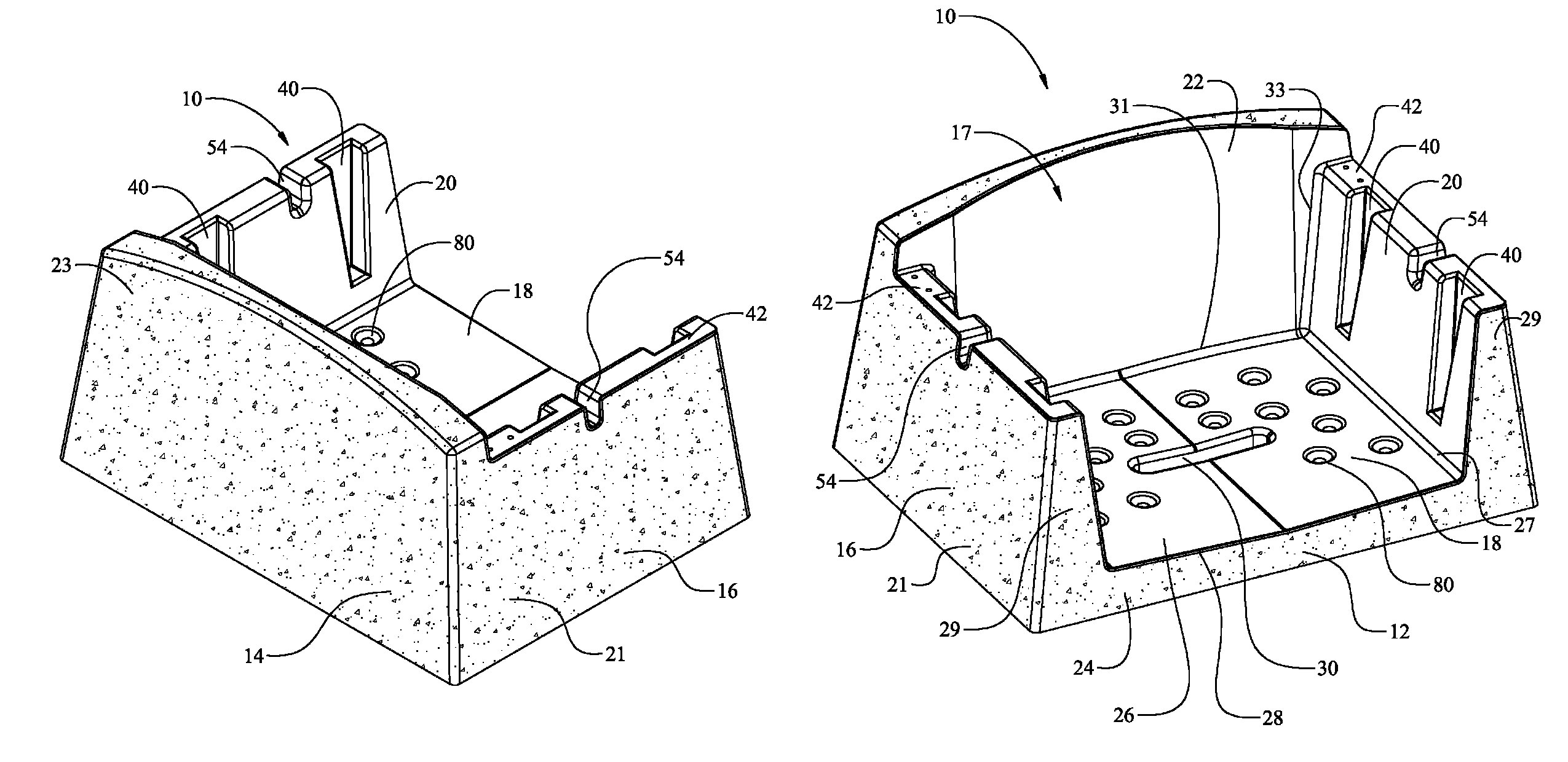
Figure 1 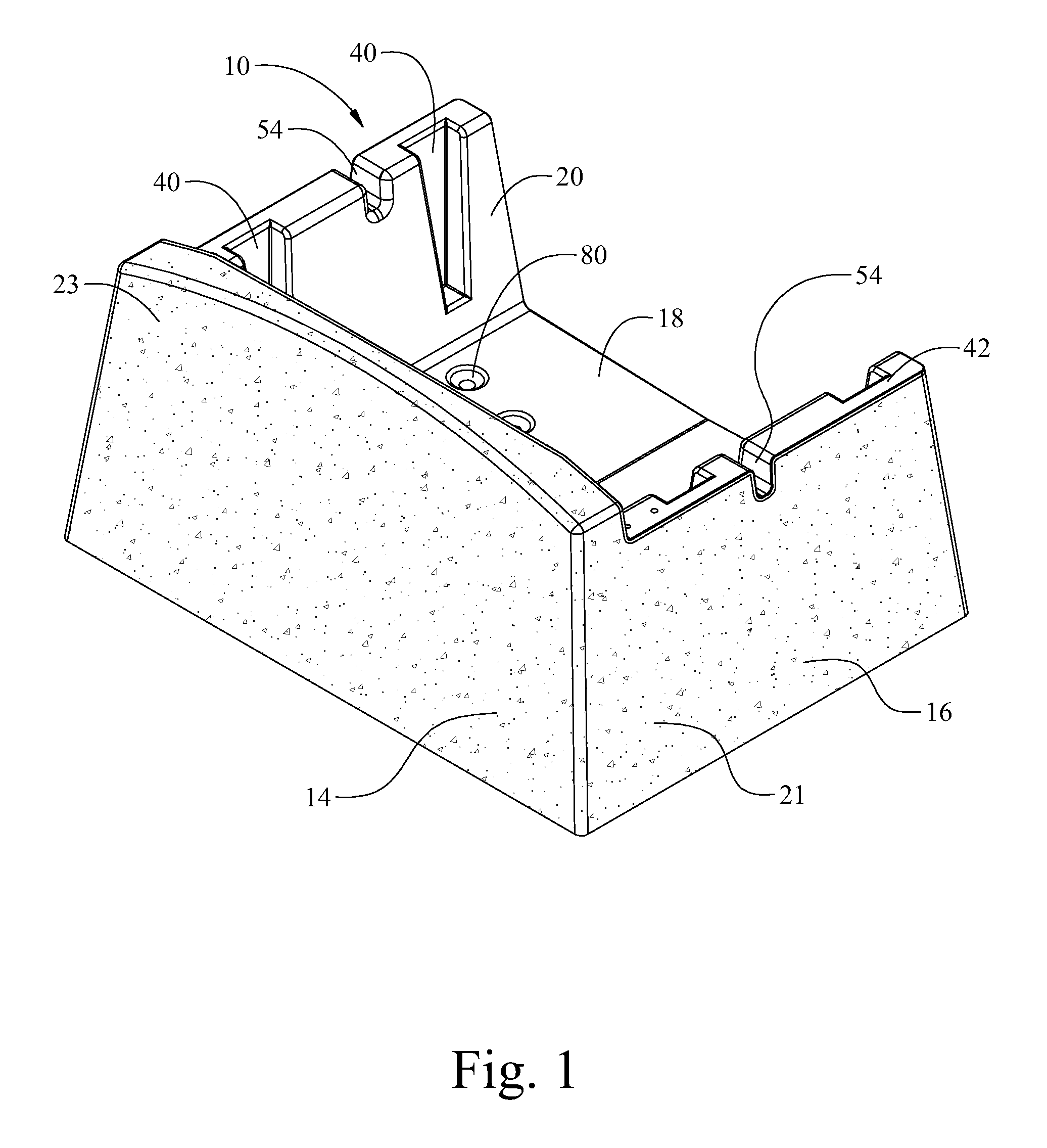
Figure 2 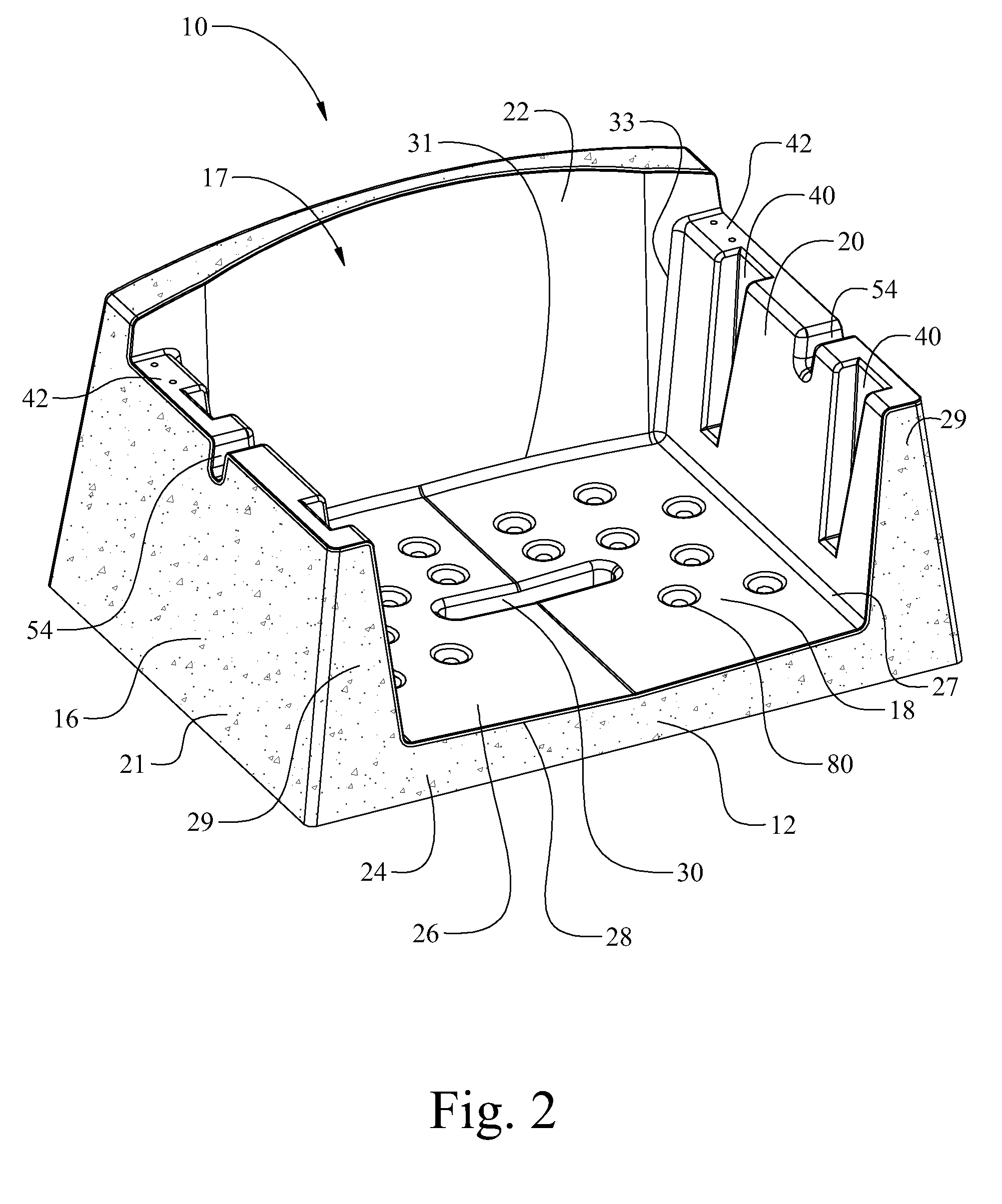
Figure 3
Abstract
Description
[0001] This application claims priority from U.S. patent application Ser. No. 61 / 089063, filed Aug. 15, 2008, the entire contents of which are incorporated herein by reference.FIELD OF THE INVENTION
[0002] The present invention relates to a retaining wall system comprised of units, sometimes referred to as building blocks or modules comprising a cementitious or polymeric composition, and more specifically, to a retaining wall system comprised of building blocks or modules having a planter compartment.BACKGROUND OF THE INVENTION
[0003] Currently, a wide variety of building blocks or modules are available for construction of retaining walls to hold back or support earth or other fill material, each tailored to a particular use. Generally, a retaining wall may be constructed with building blocks made from natural sources such as timber, granite or stone, or with man-made materials such as concrete. Man-made materials typically cost less than most natural materials and are more versatile sin...
Examples
Embodiment Construction
[0063]FIGS. 1-9 illustrate one preferred embodiment of the building block of the present invention, generally indicated in its entirety by the reference numeral 10. In general, building block 10 comprises base 12, generally upright face wall 14 extending upward from the base, and two generally upright side walls 16 extending upward from the base and generally rearward of the face wall. Base 12 has an inner surface 18 and an outer surface 19, sidewalls 16 have an inner surface 20 and an outer surface 21, and face wall 14 has an inner surface 22 and an outer surface 23. Fill receiving cavity 17 (FIGS. 2 & 4) is defined by base inner surface 18, side wall inner surfaces 20 and face wall inner surface 22 and receives fill material such as earth, sand, aggregate, mulch and the like during construction of a retaining wall.
[0064]As shown in FIGS. 1-9, building block 10 does not possess a rear wall but it is to be understood that it may optionally include a rear wall extending upward from t...