
Ink-jet recording apparatus
a recording apparatus and inkjet technology, applied in the direction of printing mechanism, spacing mechanism, printing, etc., can solve the problem of difficult to prevent the complete decline of throughput in the recording process, and achieve the effect of reducing the number of flushing processes, preventing the decline of throughput in the recording process, and maintaining the throughput of the recording process
Patent Information
- Authority / Receiving Office
- US · United States
- Patent Type
- Patents(United States)
- Current Assignee / Owner
- Publication Date
- 2014-11-18
Smart Images
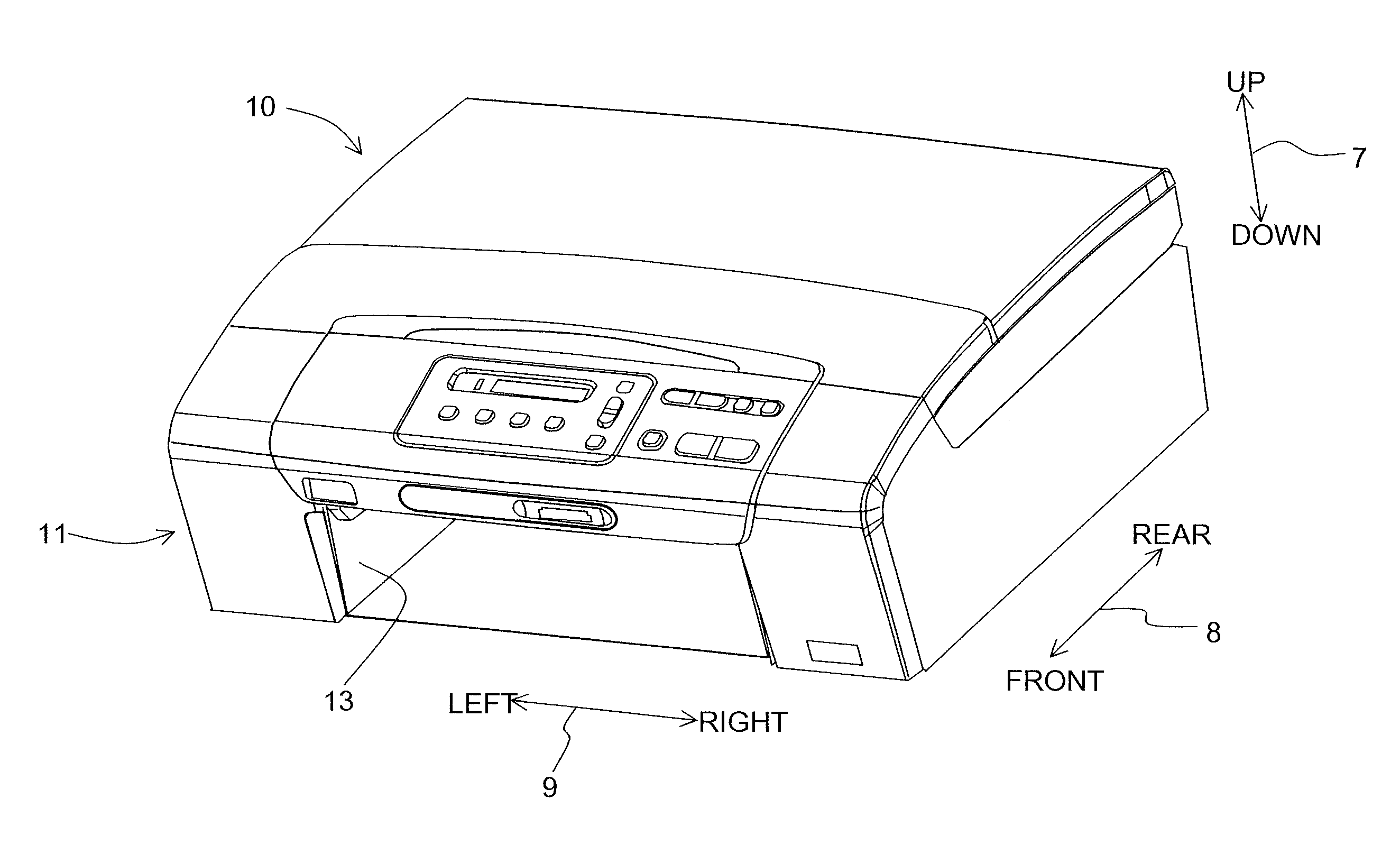
Figure 1 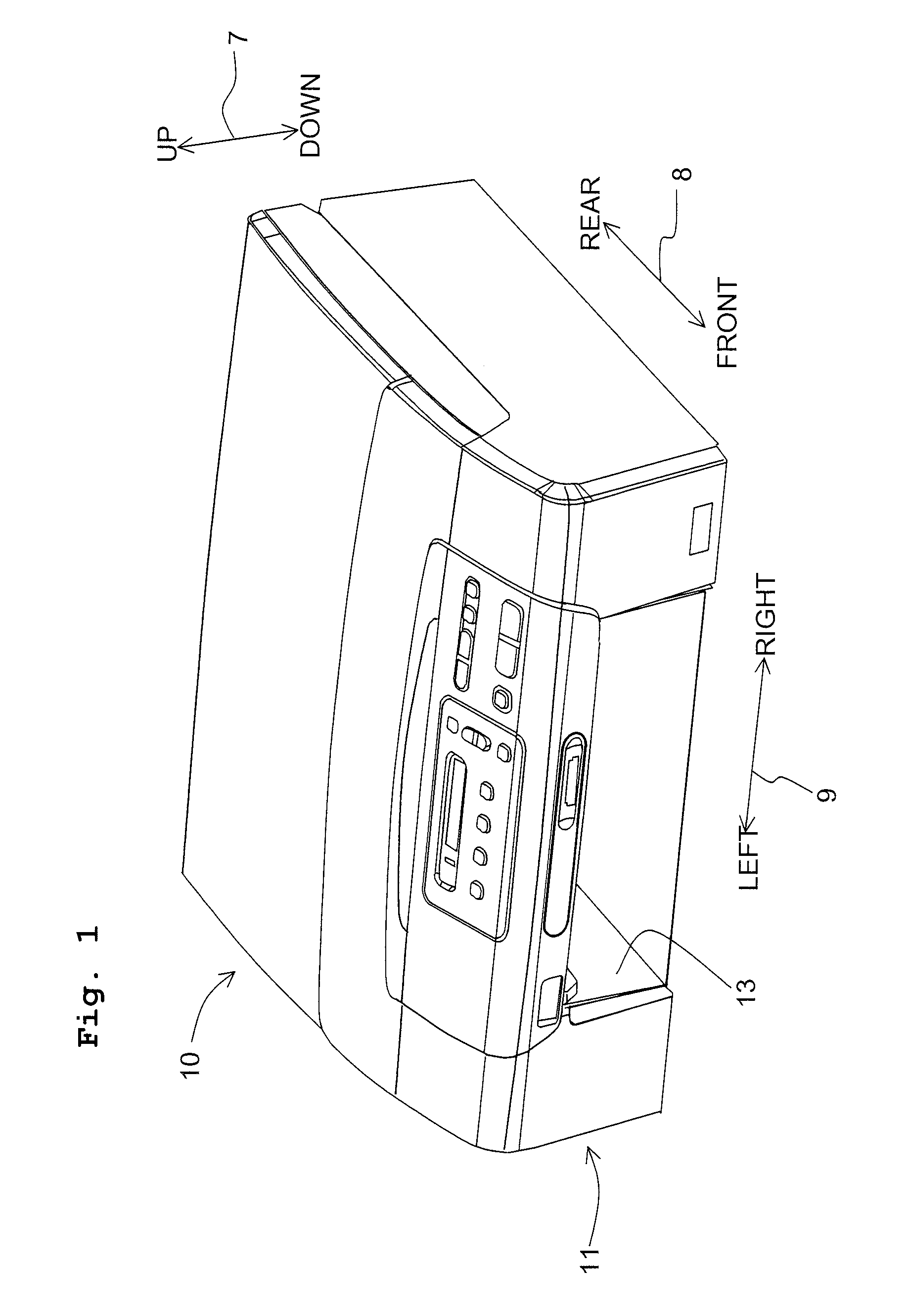
Figure 2 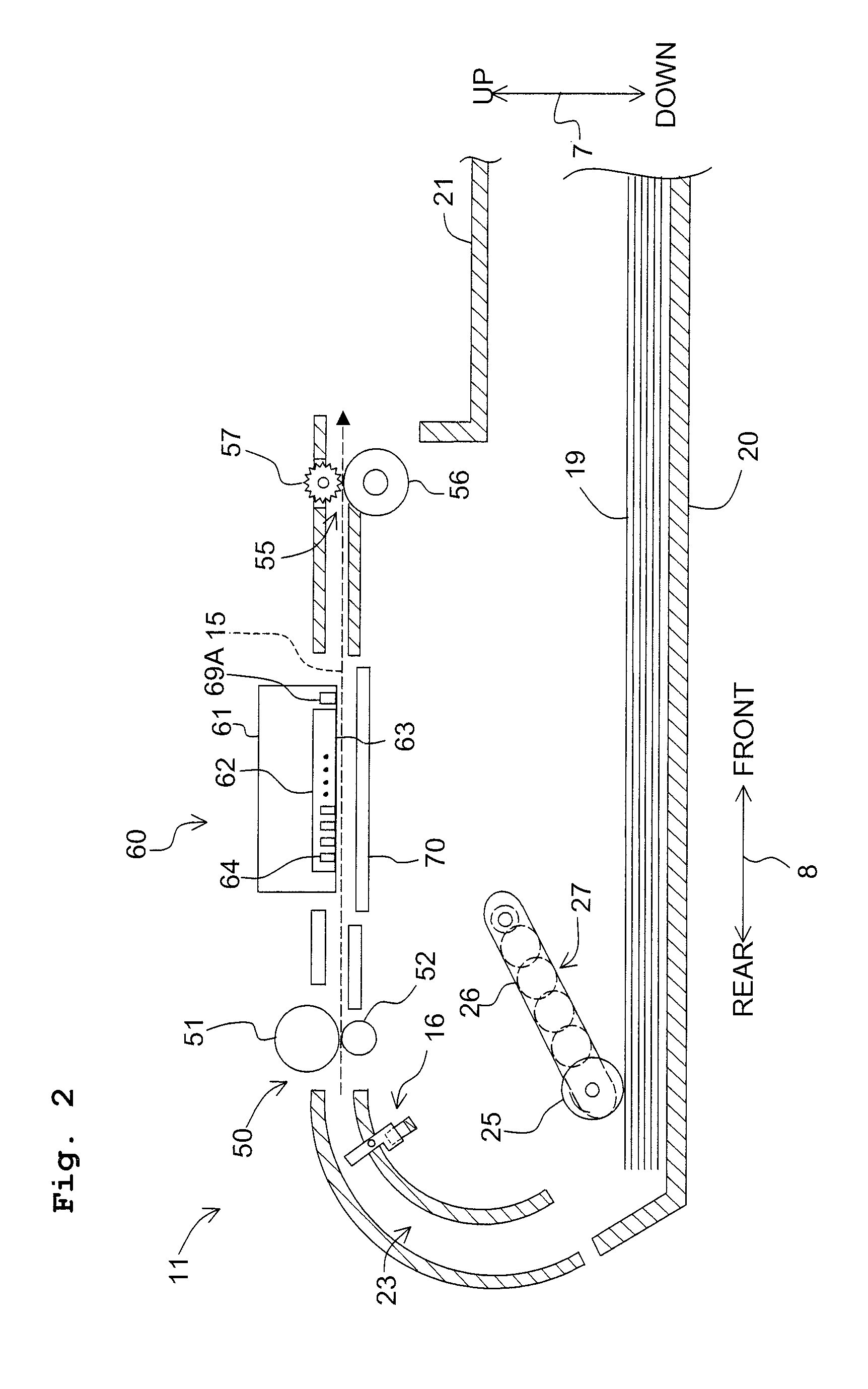
Figure 3
Abstract
Description
CROSS REFERENCE TO RELATED APPLICATION
[0001] The present application claims priority from Japanese Patent Application No. 2012-283340, filed on Dec. 26, 2012, the disclosure of which is incorporated herein by reference in its entirety.BACKGROUND OF THE INVENTION
[0002] 1. Field of the Invention
[0003] The present invention relates to an ink-jet recording apparatus.
[0004] 2. Description of the Related Art
[0005] There has conventionally been an ink-jet recording apparatus in which a flushing operation is performed by a recording head in a flushing area. The flushing area is positioned outside a recording area in which an image is recorded on a sheet, and further an ink receiving section is arranged in the flushing area. The flushing operation is an operation in which an ink is discharged from nozzles to the ink receiving section in a state that the recording head is positioned in the flushing area. Also, there has been an ink-jet recording apparatus in which the flushing operation is perform...
Examples
first embodiment
[Operation and Effect of First Embodiment]
[0081]According to the first embodiment, in a case that the acceleration of the carriage 61 in the acceleration section is great (that is, the quality is low), the number of nozzle groups 64 for which the flushing operations are performed in one flushing process is decreased. Accordingly, the ink discharged from each of the nozzle groups 64 can be landed in the waste ink tray 80 reliably. On the other hand, in a case that the acceleration of the carriage 61 in the acceleration section is small (that is, the quality is high), the number of nozzle groups 64 for which the flushing operations are performed in one flushing process is increased. Accordingly, the number of flushing processes can be decreased. That is, the throughput of the recording process can be maintained and further the discharged ink can be landed in the waste ink tray 80 reliably.
[0082]In the first embodiment, since the nozzle group for which the flushing operation is perform...
second embodiment
[Second Embodiment]
[0085]Subsequently, an explanation will be made about an image recording process according to the second embodiment with reference to FIGS. 11 to 14. The explanation of common parts between the first and second embodiments is omitted, and differences between the first and second embodiments will be explained in detail. The image recording process of the second embodiment is different from that of the first embodiment in that the number of nozzle groups 64 for which the flushing operations are performed in one flushing process can be changed during the image recording on one recording paper sheet 19.
[0086]At first, the controller 130 determines only the recording velocity depending on the image quality in an operation method determining process shown in FIGS. 11A and 11B (S81). That is, in the operation method determining process shown in FIG. 7, in a case that the image quality is the first quality (S51: Yes), the controller 130 selects the first recording velocit...