

Accelerometer Sensors for Seismic Applications: Noise Floor Optimization
JUN 27, 20269 MIN READ
Generate Your Research Report Instantly with AI Agent
Patsnap Eureka helps you evaluate technical feasibility & market potential.
Seismic Accelerometer Background and Performance Goals
Seismic accelerometers represent a critical component in earthquake monitoring and geophysical research systems, with their development tracing back to the early 20th century when mechanical seismographs dominated the field. The evolution from analog mechanical systems to modern digital accelerometers has revolutionized seismic data acquisition, enabling more precise measurements of ground motion across a broader frequency spectrum.
The fundamental principle of seismic accelerometers relies on measuring the acceleration of ground motion during seismic events. Unlike traditional velocity-based seismometers, accelerometers provide direct acceleration measurements without requiring integration, making them particularly valuable for strong motion recording and structural health monitoring applications. Modern piezoelectric and capacitive MEMS-based accelerometers have largely replaced older force-balance systems due to their improved reliability and reduced power consumption.
Current technological trends indicate a shift toward ultra-low noise accelerometer designs capable of detecting micro-seismic events while maintaining high dynamic range for strong motion recording. The integration of advanced signal processing algorithms and improved sensor materials has enabled significant reductions in self-noise levels, approaching the theoretical limits imposed by Brownian motion and electronic noise sources.
Performance goals for next-generation seismic accelerometers focus primarily on achieving sub-micro-g noise floors while maintaining flat frequency response from DC to several hundred Hz. Target specifications include noise density levels below 10 ng/√Hz at 1 Hz, dynamic range exceeding 140 dB, and temperature stability better than 10 ppm/°C across operational temperature ranges from -40°C to +85°C.
The optimization of noise floor performance requires addressing multiple noise sources including mechanical-thermal noise, electronic noise from readout circuits, and environmental interference. Advanced packaging techniques, temperature compensation algorithms, and sophisticated analog front-end designs are essential for achieving these ambitious performance targets while maintaining long-term stability and reliability in harsh deployment environments.
Future development objectives emphasize the integration of artificial intelligence for real-time noise characterization and adaptive filtering, enabling dynamic optimization of sensor performance based on environmental conditions and seismic activity levels.
Market Demand for Low-Noise Seismic Monitoring Systems
The global seismic monitoring industry has experienced substantial growth driven by increasing awareness of earthquake risks and the need for enhanced infrastructure protection. Traditional seismic networks, while functional, often struggle with noise interference that compromises data quality and early warning capabilities. This limitation has created a significant market opportunity for low-noise accelerometer sensors that can deliver superior signal-to-noise ratios in challenging environments.
Government agencies and research institutions represent the primary demand drivers for advanced seismic monitoring systems. National geological surveys, earthquake research centers, and civil defense organizations require high-precision instruments capable of detecting micro-seismic events and providing accurate ground motion measurements. These organizations increasingly prioritize systems that can operate effectively in urban environments where ambient noise levels are elevated.
The oil and gas industry constitutes another major market segment, utilizing seismic monitoring for hydraulic fracturing operations, reservoir monitoring, and induced seismicity assessment. Environmental regulations and public safety concerns have intensified the demand for sensitive monitoring equipment that can detect even minor seismic activities associated with extraction operations.
Critical infrastructure operators, including nuclear power plants, dams, and transportation networks, represent a growing market segment. These facilities require continuous seismic monitoring systems with extremely low noise floors to ensure structural integrity assessment and emergency response capabilities. The increasing focus on infrastructure resilience has expanded demand for permanent monitoring installations.
Emerging applications in urban seismology and smart city initiatives are creating new market opportunities. Metropolitan areas seek comprehensive monitoring networks that can provide real-time ground motion data for emergency management and urban planning purposes. These applications demand sensors with exceptional noise performance to distinguish seismic signals from urban vibrations.
The market trend toward distributed monitoring networks has increased demand for cost-effective, low-maintenance sensors that maintain high performance standards. Cloud-based data processing and IoT integration capabilities are becoming essential requirements, driving demand for next-generation seismic monitoring solutions that combine superior noise characteristics with modern connectivity features.
Current Noise Floor Challenges in Seismic Accelerometers
Seismic accelerometers face significant noise floor challenges that fundamentally limit their ability to detect and accurately measure low-amplitude ground motions. The noise floor represents the minimum detectable signal level above the inherent electronic and mechanical noise of the sensor system, creating a critical performance boundary for seismic monitoring applications.
Thermal noise constitutes one of the primary contributors to elevated noise floors in seismic accelerometers. This Johnson-Nyquist noise originates from the random thermal motion of charge carriers within resistive elements of the sensor's electronic circuitry. The noise power is directly proportional to temperature and resistance values, making it particularly problematic in sensitive seismic applications where extremely low acceleration levels must be detected.
Electronic noise from amplification circuits presents another substantial challenge. The input-referred noise of operational amplifiers, particularly at low frequencies relevant to seismic monitoring, can dominate the overall system noise performance. Flicker noise, also known as 1/f noise, becomes increasingly problematic at the low frequencies typically encountered in seismic applications, often ranging from 0.1 Hz to 100 Hz.
Mechanical noise sources further complicate noise floor optimization efforts. Brownian motion of the proof mass creates fundamental mechanical noise limits that cannot be eliminated through electronic design improvements alone. This thermomechanical noise is inversely related to the proof mass size and quality factor of the mechanical resonator, creating design trade-offs between sensitivity and noise performance.
Environmental interference significantly impacts achievable noise floors in practical seismic installations. Electromagnetic interference from power lines, communication systems, and other electronic equipment can couple into sensitive accelerometer circuits. Ground loops and inadequate shielding often exacerbate these interference issues, particularly in field deployment scenarios where controlled laboratory conditions cannot be maintained.
Digitization noise from analog-to-digital conversion processes introduces additional noise floor limitations. Quantization noise, sampling jitter, and reference voltage stability all contribute to the overall system noise budget. The effective number of bits and sampling rate selection directly influence the achievable dynamic range and noise floor performance.
Temperature-dependent noise variations pose ongoing challenges for maintaining consistent noise floor performance across varying environmental conditions. Component parameter drift, particularly in precision resistors and capacitors, can degrade noise performance over time and temperature ranges typically encountered in seismic monitoring applications.
Existing Noise Floor Optimization Solutions
01 Noise reduction through signal processing and filtering techniques
Advanced signal processing algorithms and digital filtering methods are employed to reduce noise floor in accelerometer sensors. These techniques include adaptive filtering, digital signal processing, and noise cancellation algorithms that help eliminate unwanted noise components from the sensor output while preserving the desired acceleration signals.- Noise reduction through signal processing and filtering techniques: Advanced signal processing methods and digital filtering algorithms are employed to reduce noise floor in accelerometer sensors. These techniques include adaptive filtering, digital signal processing, and noise cancellation algorithms that help eliminate unwanted noise components from the sensor output while preserving the desired acceleration signals.
- Mechanical design optimization for vibration isolation: Mechanical structures and isolation systems are designed to minimize external vibrations and mechanical noise that can affect accelerometer performance. This includes specialized mounting techniques, damping materials, and structural modifications that reduce the transmission of unwanted mechanical disturbances to the sensor element.
- Electronic circuit design for low-noise amplification: Low-noise electronic circuits and amplification systems are implemented to minimize electrical noise contributions to the overall sensor noise floor. These designs focus on optimizing amplifier configurations, reducing thermal noise, and implementing proper grounding and shielding techniques to maintain signal integrity.
- Calibration and compensation methods for noise characterization: Systematic calibration procedures and compensation algorithms are developed to characterize and correct for noise floor variations in accelerometer sensors. These methods involve measuring noise characteristics under different conditions and applying correction factors to improve overall sensor accuracy and reduce noise impact.
- Multi-sensor fusion and redundancy for noise mitigation: Multiple accelerometer sensors are combined using fusion algorithms and redundancy techniques to reduce the effective noise floor through statistical averaging and cross-validation. This approach leverages the benefits of multiple measurements to improve signal-to-noise ratio and overall system reliability.
02 Mechanical design optimization for vibration isolation
Mechanical structures and isolation systems are designed to minimize external vibrations and mechanical noise that can affect accelerometer performance. This includes specialized mounting techniques, damping materials, and structural configurations that reduce the transmission of unwanted mechanical disturbances to the sensor element.Expand Specific Solutions03 Electronic circuit design for low-noise operation
Electronic circuit architectures are optimized to minimize electrical noise sources within the accelerometer system. This involves careful design of amplification stages, power supply filtering, grounding schemes, and component selection to achieve lower noise floor characteristics in the sensor's electronic interface.Expand Specific Solutions04 Calibration and compensation methods for noise characterization
Systematic calibration procedures and compensation algorithms are implemented to characterize and correct for noise floor variations in accelerometer sensors. These methods involve measuring baseline noise levels, temperature compensation, and real-time correction techniques to maintain consistent low-noise performance across different operating conditions.Expand Specific Solutions05 Multi-sensor fusion and redundancy for noise mitigation
Multiple accelerometer sensors are combined with sensor fusion algorithms to reduce overall system noise floor through redundancy and statistical processing. This approach leverages the benefits of multiple measurements to improve signal-to-noise ratio and provides more robust acceleration sensing with reduced noise characteristics.Expand Specific Solutions
Key Players in Seismic Sensor and Accelerometer Industry
The accelerometer sensor market for seismic applications is in a mature growth phase, driven by expanding oil and gas exploration activities and increasing demand for high-precision geological surveying. The market demonstrates substantial scale with major energy corporations like China National Petroleum Corp., PetroChina, and Shell Oil Co. investing heavily in advanced seismic technologies. Technology maturity varies significantly across market players, with established geophysical service providers such as PGS Geophysical AS, WesternGeco Ltd., and BGP Inc. leading in specialized seismic data acquisition systems. Sensor manufacturers like OMRON Corp., Samsung Electronics, and KISTLER HOLDING AG are advancing MEMS-based accelerometer technologies to achieve lower noise floors and enhanced sensitivity. The competitive landscape features a convergence of traditional oilfield service companies, semiconductor manufacturers, and specialized sensor developers, all pursuing noise floor optimization through improved signal processing algorithms, advanced materials, and innovative packaging solutions to meet increasingly stringent seismic detection requirements.
Schlumberger Technologies, Inc.
Technical Solution: Schlumberger has developed advanced MEMS-based accelerometer arrays for seismic acquisition systems that achieve noise floors below 5 μg/√Hz through innovative packaging and signal processing techniques. Their technology incorporates multi-axis sensing capabilities with integrated analog-to-digital conversion and real-time noise cancellation algorithms. The sensors feature hermetic packaging with getter materials to maintain vacuum conditions and reduce Brownian motion noise. Schlumberger's approach includes advanced calibration techniques and temperature compensation to ensure consistent performance across varying environmental conditions typical in seismic surveys.
Strengths: Comprehensive seismic expertise, integrated system solutions, proven field performance. Weaknesses: Proprietary technology limits third-party integration, higher system complexity.
WesternGeco Ltd.
Technical Solution: WesternGeco has developed next-generation broadband seismic sensors utilizing advanced accelerometer technology with optimized noise floor characteristics for marine and land seismic applications. Their sensors employ sophisticated mechanical isolation systems and active noise cancellation to achieve sub-microGal sensitivity levels. The technology incorporates adaptive filtering algorithms that dynamically adjust to environmental conditions, reducing cultural noise and improving signal-to-noise ratios. WesternGeco's accelerometers feature ruggedized designs capable of operating in harsh offshore environments while maintaining calibration stability over extended deployment periods.
Strengths: Extensive seismic acquisition experience, robust marine-grade designs, advanced signal processing capabilities. Weaknesses: Focus primarily on large-scale surveys, limited availability for specialized research applications.
Core Innovations in Ultra-Low Noise Accelerometer Design
Ultra-low noise MEMS piezoelectric accelerometers
PatentInactiveUS7849745B2
Innovation
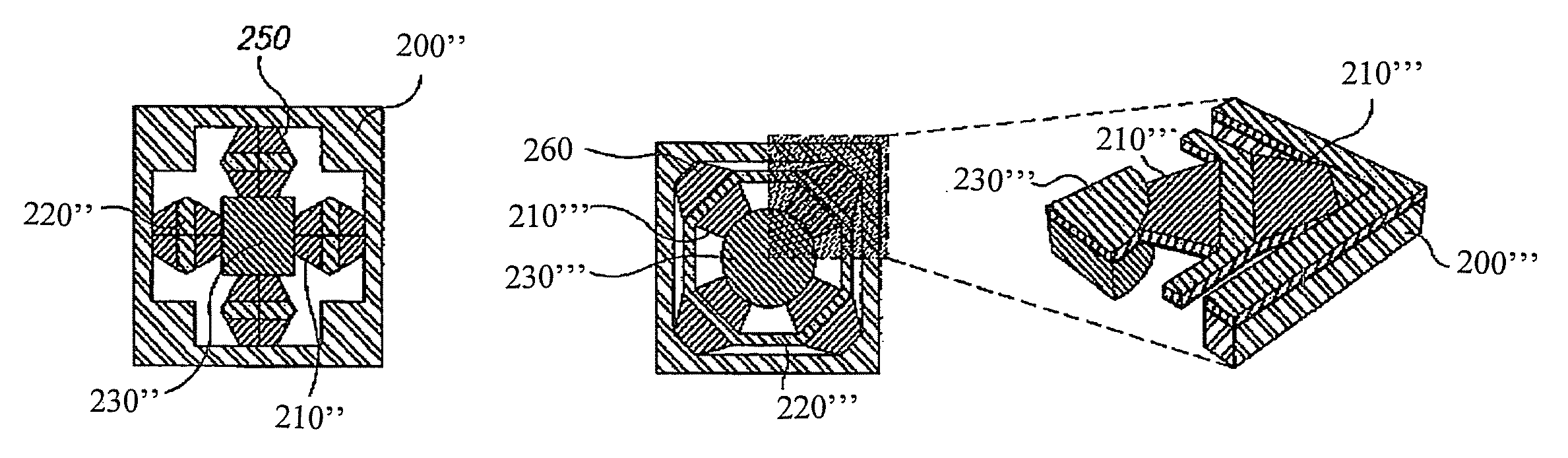
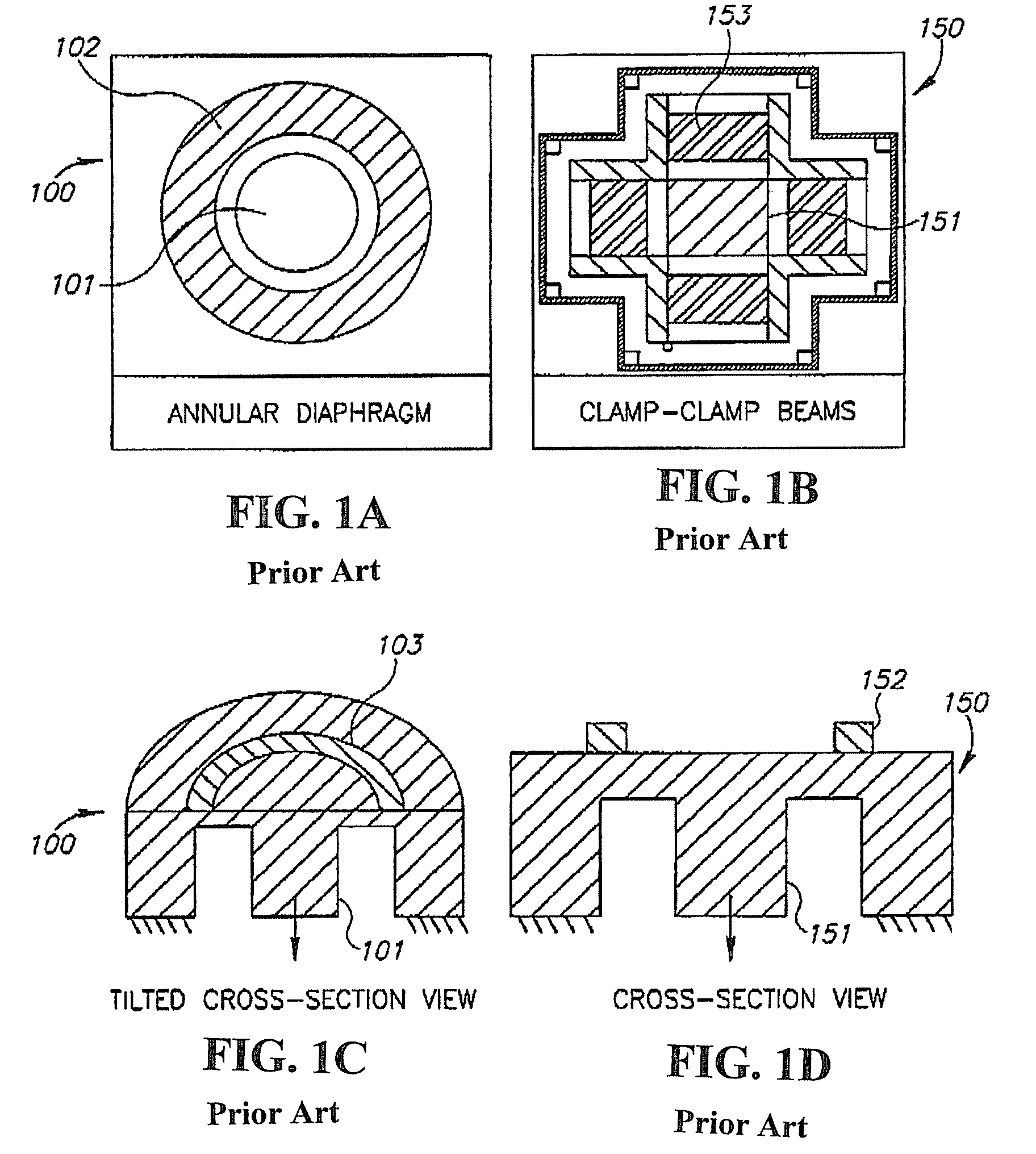
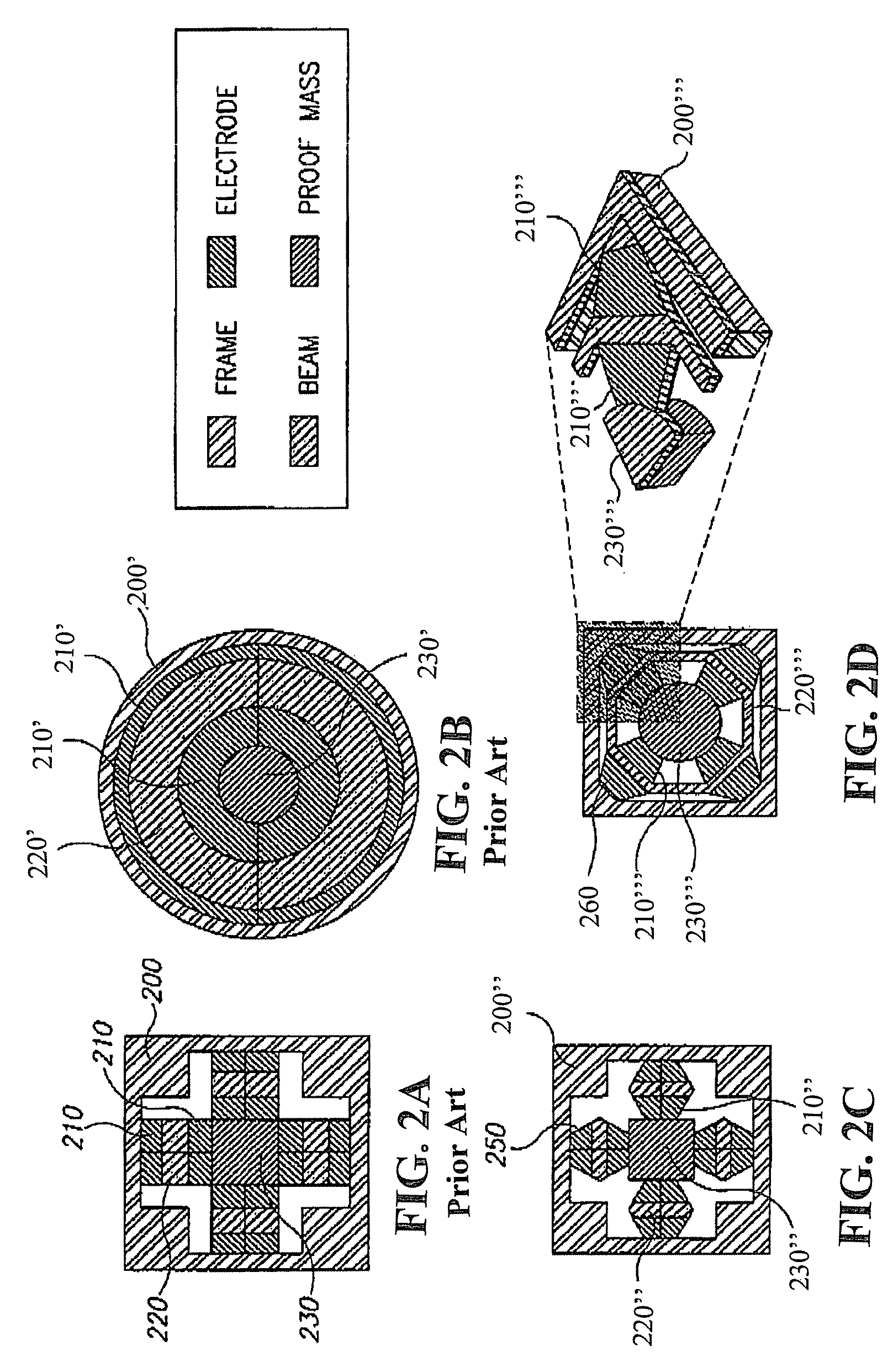
- The design of a piezoelectric accelerometer with a tapered arm structure and a ring-like beam configuration, which increases charge sensitivity and reduces thermal-electrical noise, achieving a lower noise floor and improved sensitivity per area.

Systems and methods for detecting noise floor of a sensor
PatentWO2021150443A1
Innovation
- A computer-implemented method that receives sensor signals, determines power spectral densities, filters frequency spikes, and uses a counter to track deviations from a threshold, excluding the sensor from adaptive filter updates and noise-cancellation calculations when the noise floor exceeds the expected value, ensuring accurate noise cancellation.


Environmental Standards for Seismic Monitoring Equipment
Seismic monitoring equipment operates in diverse and challenging environmental conditions that demand stringent compliance with established standards to ensure reliable performance and data integrity. The primary environmental standards governing seismic accelerometer sensors include temperature stability requirements, humidity resistance specifications, and electromagnetic compatibility protocols. These standards are essential for maintaining optimal noise floor characteristics across varying operational environments.
Temperature specifications typically require seismic accelerometers to function within extended ranges from -40°C to +85°C, with some specialized applications demanding performance at temperatures as low as -55°C. The IEEE 1293 standard provides guidelines for temperature coefficient specifications, ensuring that sensor sensitivity variations remain within acceptable limits across the operational temperature range. Thermal shock resistance is equally critical, as rapid temperature changes can introduce mechanical stress and affect the sensor's noise characteristics.
Humidity and moisture protection standards, particularly IP67 and IP68 ratings, are fundamental for seismic monitoring equipment deployed in outdoor environments. These standards ensure that moisture ingress does not compromise the sensor's electronic components or introduce additional noise sources. The IEC 60529 standard defines the specific test procedures and requirements for ingress protection, which directly impacts the long-term stability of the noise floor performance.
Electromagnetic interference (EMI) and electromagnetic compatibility (EMC) standards, including IEC 61000 series, are crucial for maintaining low noise floors in seismic applications. These standards address conducted and radiated emissions, as well as immunity requirements that prevent external electromagnetic fields from degrading sensor performance. Proper EMC compliance ensures that the accelerometer's inherent noise characteristics are not masked or amplified by environmental electromagnetic disturbances.
Vibration and shock resistance standards, such as MIL-STD-810 and IEC 60068, define the mechanical robustness requirements for seismic monitoring equipment. These standards ensure that the sensor housing and internal components can withstand transportation, installation, and operational stresses without degrading the noise floor performance. Additionally, seismic isolation requirements help minimize the impact of non-seismic vibrations on measurement accuracy.
Calibration and drift specifications under environmental stress conditions are governed by standards that ensure long-term measurement reliability. These include requirements for periodic calibration intervals, acceptable drift rates under various environmental conditions, and traceability to national measurement standards, all of which contribute to maintaining consistent noise floor characteristics throughout the equipment's operational lifetime.
Signal Processing Advances for Seismic Data Enhancement
The evolution of signal processing techniques for seismic data enhancement has undergone remarkable transformation over the past decades, driven by the increasing demand for higher precision in seismic monitoring and the proliferation of accelerometer-based sensing systems. Traditional analog filtering methods have progressively given way to sophisticated digital signal processing algorithms that can effectively address the complex noise characteristics inherent in seismic accelerometer data.
Modern digital filtering approaches have emerged as cornerstone technologies, incorporating adaptive filtering algorithms such as Wiener filters and Kalman filters that dynamically adjust to varying noise conditions. These methods demonstrate superior performance in distinguishing between genuine seismic signals and environmental noise, particularly in low-amplitude detection scenarios where traditional threshold-based systems fail.
Spectral analysis techniques have witnessed significant advancement through the implementation of advanced Fourier transform variants and wavelet decomposition methods. Short-Time Fourier Transform (STFT) and Continuous Wavelet Transform (CWT) enable time-frequency domain analysis, allowing for precise identification and isolation of seismic events from background noise across different frequency bands.
Machine learning integration represents a paradigm shift in seismic signal processing, with deep learning architectures demonstrating exceptional capability in pattern recognition and noise reduction. Convolutional Neural Networks (CNNs) and Recurrent Neural Networks (RNNs) have shown promising results in automatically detecting seismic events while suppressing various noise sources, including electronic interference and mechanical vibrations.
Real-time processing capabilities have been enhanced through the development of optimized algorithms specifically designed for embedded systems and edge computing platforms. These advances enable immediate signal conditioning and preliminary analysis at the sensor level, reducing data transmission requirements and improving overall system responsiveness for critical seismic monitoring applications.
Unlock deeper insights with Patsnap Eureka Quick Research — get a full tech report to explore trends and direct your research. Try now!
Generate Your Research Report Instantly with AI Agent
Supercharge your innovation with Patsnap Eureka AI Agent Platform!