Achieve Higher Integration in Multipoint Control Unit Systems
MAR 17, 20269 MIN READ
Generate Your Research Report Instantly with AI Agent
Patsnap Eureka helps you evaluate technical feasibility & market potential.
MCU Integration Background and Objectives
Multipoint Control Unit (MCU) systems have evolved significantly since their inception in the early 1990s as centralized conference management platforms. Originally designed as standalone hardware solutions for basic audio and video switching in enterprise conferencing environments, MCUs have undergone substantial transformation driven by increasing demands for scalable, cost-effective, and feature-rich communication solutions. The traditional approach of deploying separate hardware components for different conferencing functions has proven increasingly inadequate in meeting modern enterprise requirements for unified communications.
The historical development trajectory of MCU technology reveals a clear progression from simple audio mixers to sophisticated multimedia processing platforms. Early systems required dedicated hardware for each conferencing modality, resulting in complex infrastructure deployments with high maintenance overhead and limited scalability. The emergence of digital signal processing capabilities in the 2000s enabled the first generation of integrated solutions, though these remained largely hardware-centric with limited software-defined functionality.
Current market dynamics are driving unprecedented demand for higher integration levels in MCU architectures. Organizations increasingly require unified platforms capable of seamlessly handling multiple communication protocols, media formats, and deployment scenarios within a single system framework. This shift reflects broader industry trends toward software-defined networking, cloud-native architectures, and the need for more agile, cost-effective communication infrastructure.
The primary objective of achieving higher MCU integration centers on consolidating disparate conferencing functions into cohesive, software-defined platforms that can dynamically allocate resources based on real-time demand. This integration encompasses multiple dimensions including protocol convergence, media processing unification, management interface consolidation, and deployment model flexibility. The goal extends beyond simple hardware consolidation to encompass intelligent resource optimization, automated scaling capabilities, and seamless interoperability across diverse communication ecosystems.
Technical objectives include developing unified media processing engines capable of handling multiple codecs simultaneously, implementing software-defined networking principles for dynamic resource allocation, and creating abstraction layers that enable consistent management interfaces across different deployment models. These objectives align with broader industry movements toward microservices architectures, containerized deployments, and API-driven integration frameworks that facilitate rapid innovation and customization.
The historical development trajectory of MCU technology reveals a clear progression from simple audio mixers to sophisticated multimedia processing platforms. Early systems required dedicated hardware for each conferencing modality, resulting in complex infrastructure deployments with high maintenance overhead and limited scalability. The emergence of digital signal processing capabilities in the 2000s enabled the first generation of integrated solutions, though these remained largely hardware-centric with limited software-defined functionality.
Current market dynamics are driving unprecedented demand for higher integration levels in MCU architectures. Organizations increasingly require unified platforms capable of seamlessly handling multiple communication protocols, media formats, and deployment scenarios within a single system framework. This shift reflects broader industry trends toward software-defined networking, cloud-native architectures, and the need for more agile, cost-effective communication infrastructure.
The primary objective of achieving higher MCU integration centers on consolidating disparate conferencing functions into cohesive, software-defined platforms that can dynamically allocate resources based on real-time demand. This integration encompasses multiple dimensions including protocol convergence, media processing unification, management interface consolidation, and deployment model flexibility. The goal extends beyond simple hardware consolidation to encompass intelligent resource optimization, automated scaling capabilities, and seamless interoperability across diverse communication ecosystems.
Technical objectives include developing unified media processing engines capable of handling multiple codecs simultaneously, implementing software-defined networking principles for dynamic resource allocation, and creating abstraction layers that enable consistent management interfaces across different deployment models. These objectives align with broader industry movements toward microservices architectures, containerized deployments, and API-driven integration frameworks that facilitate rapid innovation and customization.
Market Demand for Integrated MCU Systems
The telecommunications industry is experiencing unprecedented growth in demand for video conferencing and multipoint communication solutions, driving significant market expansion for integrated MCU systems. Enterprise adoption of remote collaboration technologies has accelerated substantially, with organizations seeking more efficient and cost-effective solutions for managing multiple simultaneous connections across diverse communication channels.
Traditional MCU architectures face increasing pressure to support higher participant counts while maintaining superior audio and video quality. Market research indicates that enterprises are prioritizing solutions that can seamlessly handle mixed media streams, including high-definition video, crystal-clear audio, and real-time data sharing capabilities within a single integrated platform.
The healthcare sector represents a particularly robust growth segment, where telemedicine applications require reliable multipoint connections for remote consultations, medical training, and collaborative diagnosis sessions. Educational institutions similarly demand integrated MCU systems capable of supporting large-scale virtual classrooms and interactive learning environments with minimal latency and maximum reliability.
Financial services organizations are driving demand for secure, high-performance MCU solutions that can facilitate confidential multi-party communications while ensuring regulatory compliance. These applications require advanced integration capabilities to support encrypted communications, participant authentication, and audit trail functionality within unified system architectures.
Cloud-based deployment models are reshaping market expectations, with customers increasingly seeking MCU solutions that offer seamless integration with existing infrastructure while providing scalable capacity management. The shift toward hybrid work environments has intensified requirements for systems that can efficiently bridge on-premises and cloud-based communication resources.
Emerging markets in Asia-Pacific and Latin America are contributing significantly to demand growth, as organizations in these regions invest heavily in modern communication infrastructure. Government initiatives promoting digital transformation are creating substantial opportunities for integrated MCU system providers to capture market share in these expanding economies.
The integration trend is further accelerated by customer preferences for simplified management interfaces and reduced total cost of ownership, making highly integrated MCU systems increasingly attractive compared to traditional multi-component architectures.
Traditional MCU architectures face increasing pressure to support higher participant counts while maintaining superior audio and video quality. Market research indicates that enterprises are prioritizing solutions that can seamlessly handle mixed media streams, including high-definition video, crystal-clear audio, and real-time data sharing capabilities within a single integrated platform.
The healthcare sector represents a particularly robust growth segment, where telemedicine applications require reliable multipoint connections for remote consultations, medical training, and collaborative diagnosis sessions. Educational institutions similarly demand integrated MCU systems capable of supporting large-scale virtual classrooms and interactive learning environments with minimal latency and maximum reliability.
Financial services organizations are driving demand for secure, high-performance MCU solutions that can facilitate confidential multi-party communications while ensuring regulatory compliance. These applications require advanced integration capabilities to support encrypted communications, participant authentication, and audit trail functionality within unified system architectures.
Cloud-based deployment models are reshaping market expectations, with customers increasingly seeking MCU solutions that offer seamless integration with existing infrastructure while providing scalable capacity management. The shift toward hybrid work environments has intensified requirements for systems that can efficiently bridge on-premises and cloud-based communication resources.
Emerging markets in Asia-Pacific and Latin America are contributing significantly to demand growth, as organizations in these regions invest heavily in modern communication infrastructure. Government initiatives promoting digital transformation are creating substantial opportunities for integrated MCU system providers to capture market share in these expanding economies.
The integration trend is further accelerated by customer preferences for simplified management interfaces and reduced total cost of ownership, making highly integrated MCU systems increasingly attractive compared to traditional multi-component architectures.
Current MCU Integration Status and Challenges
Current multipoint control unit (MCU) systems exhibit varying degrees of integration across different market segments and application domains. Traditional MCU architectures typically employ distributed processing approaches, where individual functional modules operate as separate entities connected through standardized communication protocols. This segmented design philosophy has historically provided flexibility and modularity but increasingly presents limitations in meeting modern performance and efficiency requirements.
The semiconductor industry has witnessed significant advancement in MCU integration capabilities over the past decade. Leading manufacturers have successfully consolidated multiple discrete functions into single-chip solutions, achieving substantial reductions in board space and power consumption. However, integration levels remain inconsistent across different functional domains, with audio processing, video handling, and network management often requiring separate dedicated processors.
Contemporary MCU systems face several critical integration challenges that impede further consolidation efforts. Thermal management represents a primary constraint, as increased functional density generates concentrated heat loads that exceed conventional cooling capabilities. Power distribution complexity escalates proportionally with integration density, requiring sophisticated power management circuits that consume additional silicon area and introduce design complications.
Signal integrity issues become increasingly problematic as integration levels rise. High-frequency digital switching activities create electromagnetic interference patterns that can compromise sensitive analog circuits and communication interfaces. Cross-talk between adjacent functional blocks necessitates careful layout planning and often requires physical separation that contradicts integration objectives.
Manufacturing yield considerations present another significant obstacle to higher integration levels. As die sizes increase to accommodate additional functionality, the probability of defects rises exponentially, resulting in reduced production yields and increased per-unit costs. This economic reality often favors distributed architectures despite their inherent inefficiencies.
Software complexity represents an often-underestimated integration challenge. Highly integrated MCU systems require sophisticated software architectures capable of managing multiple concurrent processes while maintaining real-time performance guarantees. Resource contention, priority management, and fault isolation become increasingly complex as functional integration deepens.
Current integration efforts are further constrained by legacy compatibility requirements and standardization pressures. Existing communication protocols and interface specifications were designed for distributed systems and may not fully exploit the potential advantages of integrated architectures. Industry standardization bodies have been slow to adapt specifications that would enable more aggressive integration strategies.
The semiconductor industry has witnessed significant advancement in MCU integration capabilities over the past decade. Leading manufacturers have successfully consolidated multiple discrete functions into single-chip solutions, achieving substantial reductions in board space and power consumption. However, integration levels remain inconsistent across different functional domains, with audio processing, video handling, and network management often requiring separate dedicated processors.
Contemporary MCU systems face several critical integration challenges that impede further consolidation efforts. Thermal management represents a primary constraint, as increased functional density generates concentrated heat loads that exceed conventional cooling capabilities. Power distribution complexity escalates proportionally with integration density, requiring sophisticated power management circuits that consume additional silicon area and introduce design complications.
Signal integrity issues become increasingly problematic as integration levels rise. High-frequency digital switching activities create electromagnetic interference patterns that can compromise sensitive analog circuits and communication interfaces. Cross-talk between adjacent functional blocks necessitates careful layout planning and often requires physical separation that contradicts integration objectives.
Manufacturing yield considerations present another significant obstacle to higher integration levels. As die sizes increase to accommodate additional functionality, the probability of defects rises exponentially, resulting in reduced production yields and increased per-unit costs. This economic reality often favors distributed architectures despite their inherent inefficiencies.
Software complexity represents an often-underestimated integration challenge. Highly integrated MCU systems require sophisticated software architectures capable of managing multiple concurrent processes while maintaining real-time performance guarantees. Resource contention, priority management, and fault isolation become increasingly complex as functional integration deepens.
Current integration efforts are further constrained by legacy compatibility requirements and standardization pressures. Existing communication protocols and interface specifications were designed for distributed systems and may not fully exploit the potential advantages of integrated architectures. Industry standardization bodies have been slow to adapt specifications that would enable more aggressive integration strategies.
Existing MCU Integration Solutions
01 MCU architecture and communication protocols
Multipoint Control Units utilize specific architectures and communication protocols to enable efficient data exchange between multiple endpoints in conferencing systems. These systems implement standardized protocols to manage signaling, control, and media streams across distributed networks. The architecture typically includes components for protocol conversion, bandwidth management, and quality of service optimization to ensure seamless multipoint communication.- MCU architecture and control methods for multipoint conferencing: Multipoint Control Units employ various architectural designs and control methods to manage multipoint conferencing sessions. These systems utilize centralized or distributed architectures to coordinate multiple endpoints, handle media streams, and manage conference resources. The control methods include signaling protocols, session management, and resource allocation algorithms that enable efficient multipoint communication. Advanced architectures support scalability, fault tolerance, and quality of service management across multiple conference participants.
- Media processing and transcoding in MCU systems: MCU systems incorporate media processing capabilities to handle various audio and video codecs, perform transcoding between different formats, and optimize bandwidth usage. These systems process incoming media streams from multiple participants, mix or switch them appropriately, and distribute the processed streams to all conference endpoints. The media processing includes echo cancellation, noise reduction, video layout management, and adaptive bitrate control to ensure optimal quality for all participants regardless of their connection capabilities.
- Integration with communication networks and protocols: MCU systems are designed to integrate seamlessly with various communication networks and support multiple conferencing protocols. This includes compatibility with traditional circuit-switched networks, packet-switched IP networks, and hybrid environments. The integration supports standard protocols for call setup, media negotiation, and conference control, enabling interoperability between different vendor equipment and communication platforms. Network integration also addresses security, firewall traversal, and quality of service requirements.
- Distributed MCU systems and cloud-based conferencing: Modern MCU implementations utilize distributed architectures and cloud-based deployment models to provide scalable and flexible conferencing solutions. These systems distribute processing loads across multiple servers or cloud instances, enabling dynamic resource allocation based on conference demands. Distributed MCU systems support geographic distribution of resources, load balancing, and redundancy for high availability. Cloud-based approaches offer elastic scalability, reduced infrastructure costs, and simplified deployment and management.
- MCU management, monitoring and user interface systems: MCU systems include comprehensive management and monitoring capabilities to control conference operations, track system performance, and provide user interfaces for conference participants and administrators. These features enable real-time monitoring of active conferences, resource utilization, and quality metrics. Management systems provide configuration tools, diagnostic capabilities, and reporting functions. User interfaces support conference scheduling, participant management, layout control, and interactive features that enhance the conferencing experience.
02 Resource allocation and bandwidth management
Advanced resource allocation mechanisms are employed in multipoint control systems to optimize bandwidth distribution among multiple participants. These systems dynamically adjust resource allocation based on network conditions, participant priorities, and content types. Intelligent algorithms monitor and manage available bandwidth to maintain communication quality while accommodating varying numbers of endpoints and different media requirements.Expand Specific Solutions03 Scalability and distributed processing
Scalable architectures enable multipoint control systems to handle increasing numbers of participants and sessions through distributed processing approaches. These implementations utilize load balancing, clustering technologies, and modular designs to expand system capacity. The distributed nature allows for geographic distribution of processing resources while maintaining centralized control and coordination capabilities.Expand Specific Solutions04 Security and authentication mechanisms
Comprehensive security frameworks are integrated into multipoint control systems to protect communications and authenticate participants. These mechanisms include encryption protocols, access control systems, and secure key exchange methods. The security infrastructure ensures data confidentiality, integrity verification, and protection against unauthorized access while maintaining system performance and usability.Expand Specific Solutions05 Interoperability and legacy system integration
Multipoint control systems incorporate interoperability features to enable communication between different platforms, protocols, and legacy systems. These solutions provide gateway functions, protocol translation, and adaptation layers to bridge incompatible systems. The integration capabilities allow organizations to leverage existing infrastructure while adopting new technologies and standards for multipoint communications.Expand Specific Solutions
Leading MCU Integration Players Analysis
The multipoint control unit (MCU) systems market is experiencing significant evolution driven by the shift toward hybrid and cloud-based communication solutions. The industry is transitioning from traditional hardware-centric architectures to software-defined platforms, representing a mature but rapidly transforming sector. Market growth is fueled by increasing demand for scalable video conferencing and unified communications, particularly accelerated by remote work trends. Technology maturity varies significantly across players, with established telecommunications giants like Cisco Technology and Microsoft Technology Licensing leading in cloud-native solutions, while traditional hardware manufacturers such as Siemens AG and NEC Corp. are adapting their legacy systems. Semiconductor companies including Advanced Micro Devices and Samsung Electronics are driving integration through specialized chipsets, while automation specialists like Beckhoff Automation and Phoenix Contact contribute industrial-grade control technologies. The competitive landscape shows convergence between IT, telecommunications, and industrial automation sectors, with companies like Hitachi Ltd. and Contec Co. leveraging their systems integration expertise to deliver highly integrated MCU solutions.
Cisco Technology, Inc.
Technical Solution: Cisco provides network-centric multipoint control solutions leveraging their expertise in networking infrastructure. Their approach focuses on IP-based control systems that enable centralized management of distributed control units through advanced routing and switching technologies. The solution incorporates Quality of Service (QoS) mechanisms to prioritize control traffic and ensure deterministic communication latency. Cisco's platform supports software-defined networking principles, allowing dynamic reconfiguration of control pathways and enhanced scalability for large-scale multipoint deployments in enterprise and industrial environments.
Strengths: Superior networking capabilities, scalable architecture, strong cybersecurity features. Weaknesses: Limited industrial-specific control expertise, dependency on network infrastructure.
Beckhoff Automation GmbH & Co. KG
Technical Solution: Beckhoff offers PC-based control technology for multipoint control unit systems through their TwinCAT automation software platform. Their solution enables integration of multiple control points using EtherCAT real-time Ethernet communication, providing microsecond-precise synchronization across distributed control nodes. The system supports modular I/O expansion and allows seamless integration of motion control, safety functions, and process control within a single platform. Their approach emphasizes open standards and flexibility, enabling customers to scale from single-point to complex multipoint configurations while maintaining deterministic real-time performance.
Strengths: Real-time performance, open architecture, cost-effective scalability. Weaknesses: PC-based reliability concerns, requires specialized programming knowledge.
Core MCU Integration Technologies
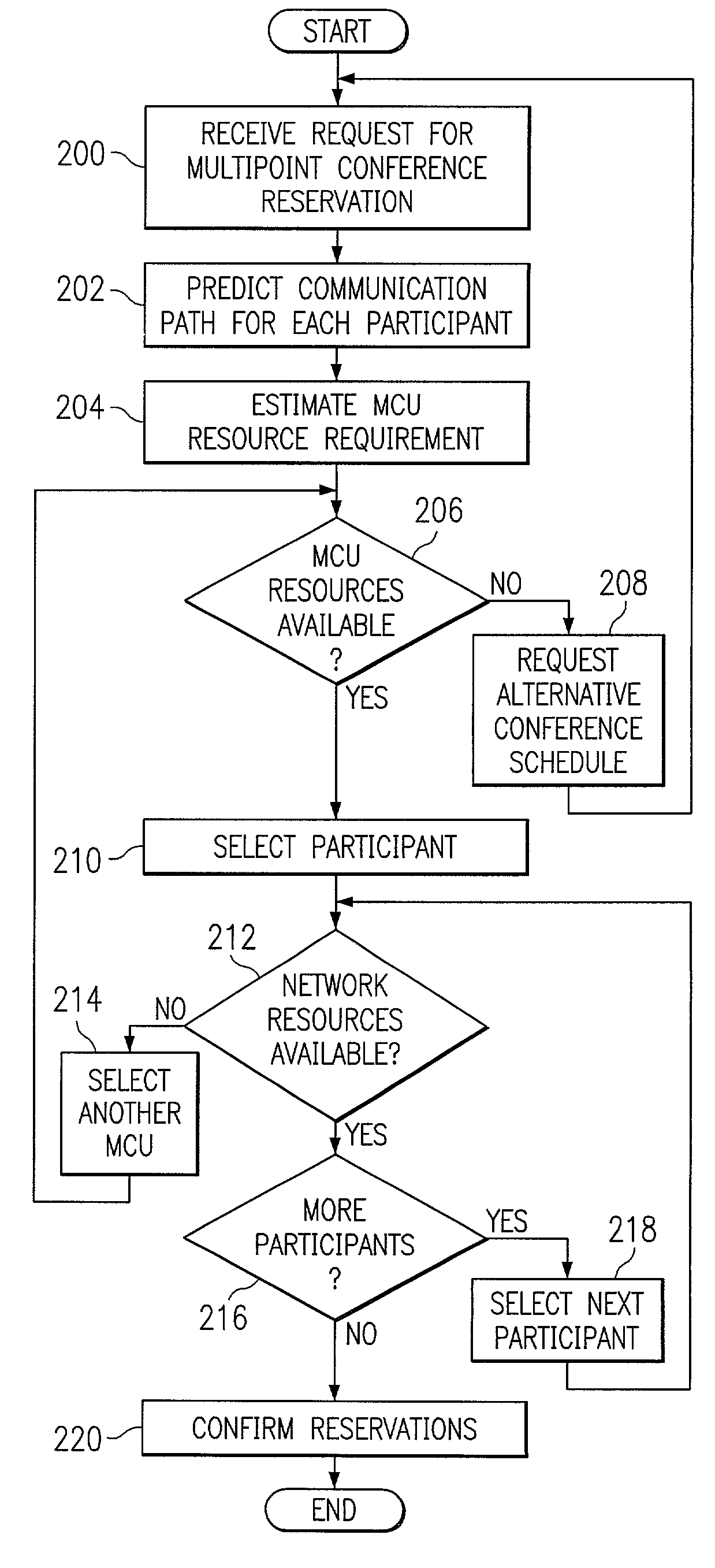
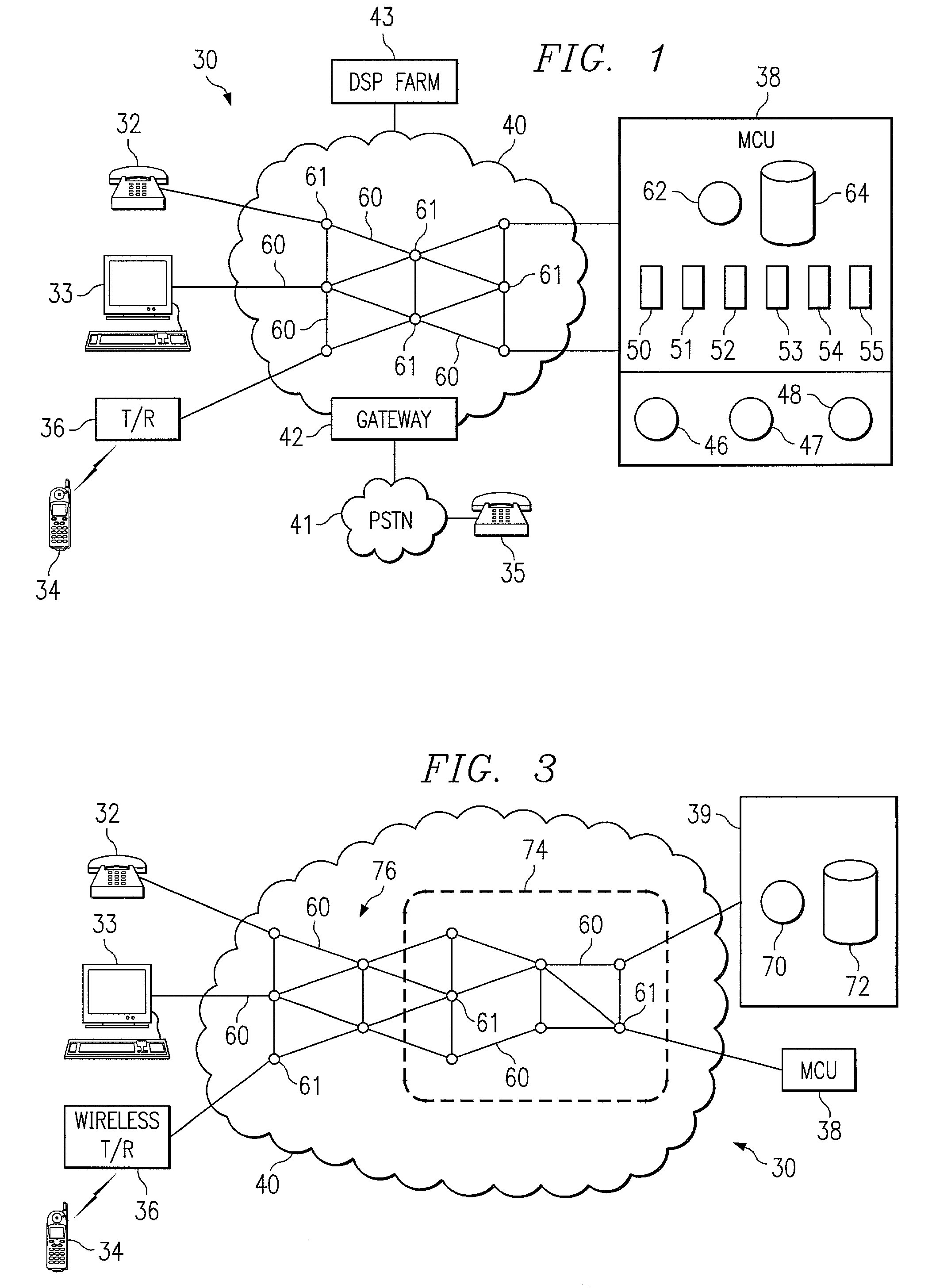
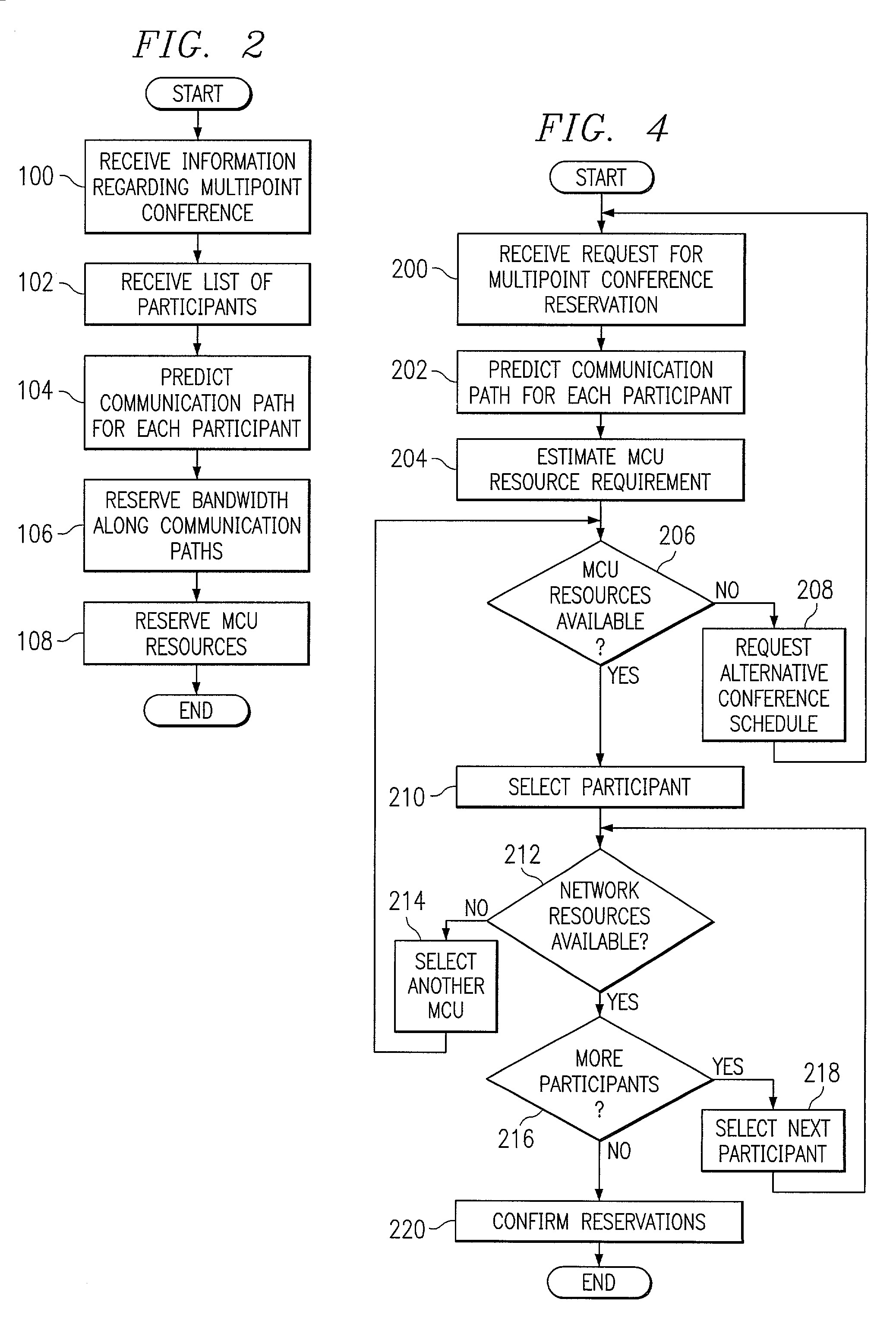
System and method for reserving conference resources for a multipoint conference using a priority scheme
PatentInactiveUS7213050B1
Innovation
- A method for prioritized reservation of network and MCU resources involves estimating resource requirements, selecting suitable MCUs and communication paths, and reserving bandwidth and DSP resources in advance, with a policy server managing resource allocation and prioritization based on conference type and participant identity.

Multipoint-conference connection system
PatentInactiveEP0889629A3
Innovation
- The system is divided into part-sets, where each multipoint conference control unit manages its internal information and can request information from other part-sets, with representative units facilitating communication and maintaining consistency across the conference domain using peer connections, reducing the need for a single high-capacity top unit.


MCU System Reliability Standards
Multipoint Control Unit (MCU) systems operating in high-integration environments must adhere to stringent reliability standards to ensure consistent performance across distributed network architectures. The increasing complexity of integrated MCU deployments necessitates comprehensive reliability frameworks that address both hardware resilience and software fault tolerance mechanisms.
International standards such as IEC 61508 and ISO 26262 provide foundational guidelines for functional safety in MCU systems, establishing Safety Integrity Levels (SIL) that define acceptable failure rates. For high-integration MCU applications, SIL 2 or SIL 3 compliance typically becomes mandatory, requiring Mean Time Between Failures (MTBF) exceeding 10,000 hours under continuous operation conditions.
Hardware reliability standards focus on component-level durability and system-wide redundancy implementations. Critical specifications include operating temperature ranges from -40°C to +85°C, electromagnetic compatibility (EMC) compliance per IEC 61000 series, and vibration resistance according to IEC 60068-2-6 standards. Power supply reliability must maintain ±5% voltage stability with surge protection capabilities up to 2kV transient voltages.
Software reliability encompasses real-time operating system (RTOS) certification, deterministic response timing within microsecond precision, and comprehensive error detection and correction (EDAC) mechanisms. Memory integrity protection through Error Correcting Code (ECC) implementation becomes essential for maintaining data consistency across multiple control points.
Network reliability standards address communication protocol robustness, including redundant pathway establishment, automatic failover mechanisms, and Quality of Service (QoS) guarantees. Packet loss rates must remain below 0.01% during normal operations, with recovery times under 100 milliseconds following network disruptions.
Environmental testing protocols validate MCU system performance under accelerated aging conditions, thermal cycling stress tests, and electromagnetic interference scenarios. Compliance verification requires extensive documentation of failure mode analysis, reliability prediction calculations, and continuous monitoring capabilities for proactive maintenance scheduling.
International standards such as IEC 61508 and ISO 26262 provide foundational guidelines for functional safety in MCU systems, establishing Safety Integrity Levels (SIL) that define acceptable failure rates. For high-integration MCU applications, SIL 2 or SIL 3 compliance typically becomes mandatory, requiring Mean Time Between Failures (MTBF) exceeding 10,000 hours under continuous operation conditions.
Hardware reliability standards focus on component-level durability and system-wide redundancy implementations. Critical specifications include operating temperature ranges from -40°C to +85°C, electromagnetic compatibility (EMC) compliance per IEC 61000 series, and vibration resistance according to IEC 60068-2-6 standards. Power supply reliability must maintain ±5% voltage stability with surge protection capabilities up to 2kV transient voltages.
Software reliability encompasses real-time operating system (RTOS) certification, deterministic response timing within microsecond precision, and comprehensive error detection and correction (EDAC) mechanisms. Memory integrity protection through Error Correcting Code (ECC) implementation becomes essential for maintaining data consistency across multiple control points.
Network reliability standards address communication protocol robustness, including redundant pathway establishment, automatic failover mechanisms, and Quality of Service (QoS) guarantees. Packet loss rates must remain below 0.01% during normal operations, with recovery times under 100 milliseconds following network disruptions.
Environmental testing protocols validate MCU system performance under accelerated aging conditions, thermal cycling stress tests, and electromagnetic interference scenarios. Compliance verification requires extensive documentation of failure mode analysis, reliability prediction calculations, and continuous monitoring capabilities for proactive maintenance scheduling.
Power Efficiency in MCU Integration
Power efficiency represents a critical design consideration in modern multipoint control unit (MCU) integration, directly impacting system performance, operational costs, and thermal management. As integration density increases, power consumption challenges become exponentially more complex, requiring sophisticated approaches to maintain optimal energy utilization while preserving functionality across multiple control points.
Advanced power management architectures in integrated MCU systems leverage dynamic voltage and frequency scaling (DVFS) techniques to optimize energy consumption based on real-time workload demands. These systems implement intelligent power gating mechanisms that selectively disable inactive circuit blocks, reducing static power dissipation by up to 40% compared to traditional always-on configurations. Modern implementations incorporate multiple power domains with independent voltage rails, enabling fine-grained control over power distribution across different functional units.
Thermal-aware design methodologies play a crucial role in maintaining power efficiency during high-integration scenarios. Heat generation from densely packed components can significantly impact power consumption through increased leakage currents and reduced switching efficiency. Advanced thermal management solutions include on-chip temperature sensors, dynamic thermal throttling, and intelligent workload distribution algorithms that prevent hotspot formation while maintaining system responsiveness.
Clock domain optimization emerges as another fundamental strategy for enhancing power efficiency in integrated MCU systems. Multi-clock architectures allow different subsystems to operate at optimal frequencies, reducing unnecessary switching activity in low-performance requirement modules. Clock gating techniques, combined with asynchronous interface designs, minimize power consumption during idle periods while ensuring rapid wake-up capabilities when processing demands increase.
Energy harvesting integration represents an emerging trend in power-efficient MCU design, particularly for distributed control applications. These systems incorporate ambient energy collection mechanisms, such as vibration or thermal gradient harvesting, to supplement traditional power sources and extend operational lifetime in remote or inaccessible installations.
Advanced power management architectures in integrated MCU systems leverage dynamic voltage and frequency scaling (DVFS) techniques to optimize energy consumption based on real-time workload demands. These systems implement intelligent power gating mechanisms that selectively disable inactive circuit blocks, reducing static power dissipation by up to 40% compared to traditional always-on configurations. Modern implementations incorporate multiple power domains with independent voltage rails, enabling fine-grained control over power distribution across different functional units.
Thermal-aware design methodologies play a crucial role in maintaining power efficiency during high-integration scenarios. Heat generation from densely packed components can significantly impact power consumption through increased leakage currents and reduced switching efficiency. Advanced thermal management solutions include on-chip temperature sensors, dynamic thermal throttling, and intelligent workload distribution algorithms that prevent hotspot formation while maintaining system responsiveness.
Clock domain optimization emerges as another fundamental strategy for enhancing power efficiency in integrated MCU systems. Multi-clock architectures allow different subsystems to operate at optimal frequencies, reducing unnecessary switching activity in low-performance requirement modules. Clock gating techniques, combined with asynchronous interface designs, minimize power consumption during idle periods while ensuring rapid wake-up capabilities when processing demands increase.
Energy harvesting integration represents an emerging trend in power-efficient MCU design, particularly for distributed control applications. These systems incorporate ambient energy collection mechanisms, such as vibration or thermal gradient harvesting, to supplement traditional power sources and extend operational lifetime in remote or inaccessible installations.
Unlock deeper insights with Patsnap Eureka Quick Research — get a full tech report to explore trends and direct your research. Try now!
Generate Your Research Report Instantly with AI Agent
Supercharge your innovation with Patsnap Eureka AI Agent Platform!