
AI Rendering and Blockchain: Enhancing Transaction Transparency
APR 7, 20269 MIN READ
Generate Your Research Report Instantly with AI Agent
Patsnap Eureka helps you evaluate technical feasibility & market potential.
AI Rendering and Blockchain Integration Background and Objectives
The convergence of artificial intelligence rendering and blockchain technology represents a transformative approach to addressing long-standing challenges in digital transaction transparency and verification. This integration emerges from the growing need to establish trust and accountability in increasingly complex digital ecosystems where traditional verification methods prove inadequate.
AI rendering technology has evolved significantly over the past decade, transitioning from basic computational graphics to sophisticated neural network-driven systems capable of generating photorealistic imagery and real-time visual representations. Simultaneously, blockchain technology has matured beyond cryptocurrency applications to become a foundational infrastructure for transparent, immutable record-keeping across various industries.
The intersection of these technologies addresses critical gaps in current transaction verification systems. Traditional blockchain networks, while providing cryptographic security and decentralization, often lack intuitive visualization mechanisms that enable stakeholders to comprehend complex transaction flows and data relationships. AI rendering fills this void by transforming abstract blockchain data into comprehensible visual formats, creating unprecedented levels of transparency.
The primary objective of this technological integration centers on developing intelligent visualization systems that can automatically interpret blockchain transaction data and render it into meaningful, real-time visual representations. This includes creating dynamic dashboards, interactive transaction maps, and predictive analytics visualizations that enhance stakeholder understanding and decision-making capabilities.
Secondary objectives encompass establishing standardized protocols for AI-driven blockchain visualization, ensuring scalability across different blockchain networks, and maintaining computational efficiency while processing large-scale transaction datasets. The integration aims to democratize blockchain data interpretation, making complex financial and operational information accessible to non-technical users.
Furthermore, this technological convergence seeks to enhance regulatory compliance by providing auditors and regulatory bodies with sophisticated tools for monitoring and analyzing blockchain-based transactions. The visual rendering capabilities enable rapid identification of anomalous patterns, potential fraud indicators, and compliance violations that might otherwise remain hidden within raw blockchain data.
The ultimate goal involves creating a new paradigm for digital transparency where AI-powered visualization transforms blockchain technology from a technical infrastructure into an intuitive, user-friendly platform for enhanced transaction oversight and accountability across diverse industry applications.
AI rendering technology has evolved significantly over the past decade, transitioning from basic computational graphics to sophisticated neural network-driven systems capable of generating photorealistic imagery and real-time visual representations. Simultaneously, blockchain technology has matured beyond cryptocurrency applications to become a foundational infrastructure for transparent, immutable record-keeping across various industries.
The intersection of these technologies addresses critical gaps in current transaction verification systems. Traditional blockchain networks, while providing cryptographic security and decentralization, often lack intuitive visualization mechanisms that enable stakeholders to comprehend complex transaction flows and data relationships. AI rendering fills this void by transforming abstract blockchain data into comprehensible visual formats, creating unprecedented levels of transparency.
The primary objective of this technological integration centers on developing intelligent visualization systems that can automatically interpret blockchain transaction data and render it into meaningful, real-time visual representations. This includes creating dynamic dashboards, interactive transaction maps, and predictive analytics visualizations that enhance stakeholder understanding and decision-making capabilities.
Secondary objectives encompass establishing standardized protocols for AI-driven blockchain visualization, ensuring scalability across different blockchain networks, and maintaining computational efficiency while processing large-scale transaction datasets. The integration aims to democratize blockchain data interpretation, making complex financial and operational information accessible to non-technical users.
Furthermore, this technological convergence seeks to enhance regulatory compliance by providing auditors and regulatory bodies with sophisticated tools for monitoring and analyzing blockchain-based transactions. The visual rendering capabilities enable rapid identification of anomalous patterns, potential fraud indicators, and compliance violations that might otherwise remain hidden within raw blockchain data.
The ultimate goal involves creating a new paradigm for digital transparency where AI-powered visualization transforms blockchain technology from a technical infrastructure into an intuitive, user-friendly platform for enhanced transaction oversight and accountability across diverse industry applications.
Market Demand for Transparent AI Rendering Transactions
The convergence of AI rendering and blockchain technology is creating unprecedented market opportunities driven by growing demands for transparency, accountability, and trust in digital content creation. Industries across entertainment, advertising, architecture, and digital media are increasingly recognizing the critical need for verifiable rendering processes as AI-generated content becomes more sophisticated and widespread.
Entertainment and media sectors represent the largest market segment demanding transparent AI rendering solutions. Film studios, game developers, and streaming platforms require comprehensive audit trails for AI-generated visual effects, character animations, and procedural content creation. The ability to verify the authenticity and provenance of rendered assets has become essential for intellectual property protection, regulatory compliance, and maintaining creative integrity in an era where deepfakes and synthetic media pose significant challenges.
Enterprise visualization markets, including architectural firms, product design companies, and marketing agencies, demonstrate substantial demand for blockchain-verified rendering workflows. These organizations need transparent documentation of rendering processes to ensure client trust, meet regulatory requirements, and protect against potential legal disputes regarding content authenticity. The ability to provide immutable records of rendering parameters, asset sources, and processing steps addresses critical business needs in professional services.
The emerging metaverse and virtual reality ecosystems are driving significant demand for transparent AI rendering transactions. Virtual world creators, NFT artists, and digital asset marketplaces require verifiable proof of rendering authenticity to establish value, prevent fraud, and maintain ecosystem integrity. Blockchain-based transparency mechanisms enable new business models where rendering provenance directly impacts asset valuation and market acceptance.
Financial services and insurance industries present growing market opportunities as they seek to verify AI-generated visual content used in claims processing, risk assessment, and fraud detection. The ability to audit rendering processes and validate content authenticity through blockchain records addresses regulatory compliance requirements and reduces operational risks associated with synthetic media manipulation.
Regulatory pressures across multiple jurisdictions are accelerating market demand for transparent AI rendering solutions. Government agencies, legal systems, and compliance organizations increasingly require verifiable documentation of AI-generated content creation processes, particularly in sectors involving public safety, financial reporting, and evidence presentation.
Entertainment and media sectors represent the largest market segment demanding transparent AI rendering solutions. Film studios, game developers, and streaming platforms require comprehensive audit trails for AI-generated visual effects, character animations, and procedural content creation. The ability to verify the authenticity and provenance of rendered assets has become essential for intellectual property protection, regulatory compliance, and maintaining creative integrity in an era where deepfakes and synthetic media pose significant challenges.
Enterprise visualization markets, including architectural firms, product design companies, and marketing agencies, demonstrate substantial demand for blockchain-verified rendering workflows. These organizations need transparent documentation of rendering processes to ensure client trust, meet regulatory requirements, and protect against potential legal disputes regarding content authenticity. The ability to provide immutable records of rendering parameters, asset sources, and processing steps addresses critical business needs in professional services.
The emerging metaverse and virtual reality ecosystems are driving significant demand for transparent AI rendering transactions. Virtual world creators, NFT artists, and digital asset marketplaces require verifiable proof of rendering authenticity to establish value, prevent fraud, and maintain ecosystem integrity. Blockchain-based transparency mechanisms enable new business models where rendering provenance directly impacts asset valuation and market acceptance.
Financial services and insurance industries present growing market opportunities as they seek to verify AI-generated visual content used in claims processing, risk assessment, and fraud detection. The ability to audit rendering processes and validate content authenticity through blockchain records addresses regulatory compliance requirements and reduces operational risks associated with synthetic media manipulation.
Regulatory pressures across multiple jurisdictions are accelerating market demand for transparent AI rendering solutions. Government agencies, legal systems, and compliance organizations increasingly require verifiable documentation of AI-generated content creation processes, particularly in sectors involving public safety, financial reporting, and evidence presentation.
Current State and Challenges of AI Rendering Blockchain Solutions
The integration of AI rendering technologies with blockchain systems represents an emerging frontier that promises to revolutionize transaction transparency across multiple industries. Currently, several pioneering solutions are being developed and deployed, though the field remains in its nascent stages with significant technological and implementation hurdles to overcome.
Leading blockchain platforms such as Ethereum, Polygon, and Solana have begun incorporating AI-powered rendering capabilities to visualize complex transaction data and smart contract interactions. These implementations primarily focus on creating intuitive graphical representations of transaction flows, enabling stakeholders to better understand the movement of digital assets and the execution of automated contracts. However, the computational intensity required for real-time AI rendering often conflicts with blockchain's inherent scalability limitations.
The geographical distribution of AI rendering blockchain development shows concentrated activity in North America, particularly in Silicon Valley and New York financial districts, followed by significant contributions from European fintech hubs in London and Berlin. Asian markets, led by Singapore and South Korea, are rapidly advancing in this space, with several government-backed initiatives promoting blockchain transparency solutions.
Current technical challenges center around the fundamental incompatibility between AI rendering's computational demands and blockchain's distributed processing architecture. Traditional blockchain networks struggle to handle the intensive calculations required for sophisticated AI rendering algorithms, leading to increased transaction costs and reduced throughput. The consensus mechanisms that ensure blockchain security often create bottlenecks when processing AI-generated visual data.
Scalability remains the most pressing constraint, as existing blockchain infrastructures cannot efficiently support the bandwidth requirements for transmitting rendered visual content across distributed networks. Additionally, the deterministic nature of blockchain operations conflicts with certain AI rendering processes that rely on probabilistic algorithms, creating consistency issues across network nodes.
Data privacy concerns present another significant challenge, as AI rendering often requires access to sensitive transaction metadata that blockchain systems are designed to protect. Balancing transparency objectives with privacy requirements demands sophisticated cryptographic solutions that are still under development.
Despite these obstacles, several proof-of-concept implementations demonstrate promising potential, particularly in supply chain visualization, financial audit trails, and decentralized autonomous organization governance displays, indicating a foundation for future technological breakthroughs.
Leading blockchain platforms such as Ethereum, Polygon, and Solana have begun incorporating AI-powered rendering capabilities to visualize complex transaction data and smart contract interactions. These implementations primarily focus on creating intuitive graphical representations of transaction flows, enabling stakeholders to better understand the movement of digital assets and the execution of automated contracts. However, the computational intensity required for real-time AI rendering often conflicts with blockchain's inherent scalability limitations.
The geographical distribution of AI rendering blockchain development shows concentrated activity in North America, particularly in Silicon Valley and New York financial districts, followed by significant contributions from European fintech hubs in London and Berlin. Asian markets, led by Singapore and South Korea, are rapidly advancing in this space, with several government-backed initiatives promoting blockchain transparency solutions.
Current technical challenges center around the fundamental incompatibility between AI rendering's computational demands and blockchain's distributed processing architecture. Traditional blockchain networks struggle to handle the intensive calculations required for sophisticated AI rendering algorithms, leading to increased transaction costs and reduced throughput. The consensus mechanisms that ensure blockchain security often create bottlenecks when processing AI-generated visual data.
Scalability remains the most pressing constraint, as existing blockchain infrastructures cannot efficiently support the bandwidth requirements for transmitting rendered visual content across distributed networks. Additionally, the deterministic nature of blockchain operations conflicts with certain AI rendering processes that rely on probabilistic algorithms, creating consistency issues across network nodes.
Data privacy concerns present another significant challenge, as AI rendering often requires access to sensitive transaction metadata that blockchain systems are designed to protect. Balancing transparency objectives with privacy requirements demands sophisticated cryptographic solutions that are still under development.
Despite these obstacles, several proof-of-concept implementations demonstrate promising potential, particularly in supply chain visualization, financial audit trails, and decentralized autonomous organization governance displays, indicating a foundation for future technological breakthroughs.
Current Solutions for AI Rendering Transaction Transparency
01 AI-based rendering optimization in blockchain systems
Artificial intelligence techniques are employed to optimize rendering processes within blockchain-based systems. These methods utilize machine learning algorithms to enhance computational efficiency, reduce processing time, and improve visual output quality. The AI models can predict rendering requirements and allocate resources dynamically, ensuring optimal performance while maintaining the integrity of blockchain transactions.- AI-based rendering optimization in blockchain systems: Artificial intelligence techniques are employed to optimize rendering processes within blockchain-based systems. These methods utilize machine learning algorithms to enhance computational efficiency, reduce processing time, and improve visual output quality. The AI models can predict rendering requirements and allocate resources dynamically, ensuring optimal performance in decentralized environments where rendering tasks need to be verified and recorded on blockchain networks.
- Blockchain-based transaction transparency mechanisms: Systems and methods for enhancing transaction transparency through blockchain technology involve creating immutable records of all transactions that can be audited and verified by authorized parties. These mechanisms implement cryptographic techniques to ensure data integrity while maintaining transparency. The technology enables real-time tracking and verification of transactions across distributed networks, providing stakeholders with complete visibility into transaction histories and ensuring accountability.
- Integration of AI rendering with distributed ledger technology: Methods for combining artificial intelligence rendering capabilities with distributed ledger systems to create transparent and verifiable rendering processes. This integration allows rendering operations to be recorded on blockchain networks, providing proof of work and ensuring authenticity of rendered content. The approach enables decentralized rendering services where multiple nodes can participate in rendering tasks while maintaining complete transparency of the rendering process and results.
- Smart contract implementation for rendering and transaction management: Utilization of smart contracts to automate and manage rendering tasks and associated transactions on blockchain platforms. These contracts define rules for rendering job allocation, payment processing, and quality verification. The smart contract framework ensures transparent execution of agreements between parties, automatic settlement of transactions upon completion of rendering tasks, and immutable recording of all contract interactions, providing a trustless environment for rendering services.
- Cryptographic verification systems for AI-generated content and transactions: Implementation of cryptographic protocols to verify the authenticity and integrity of AI-generated rendered content and associated blockchain transactions. These systems employ digital signatures, hash functions, and consensus mechanisms to ensure that rendered outputs have not been tampered with and that all transactions are legitimate. The verification process provides end-to-end transparency, allowing stakeholders to trace the origin of rendered content and validate the complete transaction history through cryptographic proofs.
02 Blockchain-enabled transparency for AI-generated content
Systems and methods for providing transparency and traceability of AI-generated rendered content through blockchain technology. Each rendering operation is recorded as an immutable transaction on the blockchain, creating an auditable trail of content creation, modification, and distribution. This approach ensures authenticity verification and prevents unauthorized alterations of AI-rendered materials.Expand Specific Solutions03 Smart contract integration for rendering transaction management
Implementation of smart contracts to automate and manage rendering transactions with enhanced transparency. These contracts execute predefined rules for rendering operations, payment processing, and rights management. The system ensures that all parties involved in the rendering process can verify transaction details, resource allocation, and compensation distribution through the blockchain ledger.Expand Specific Solutions04 Decentralized rendering networks with transaction verification
Distributed computing architectures that leverage blockchain for transparent rendering task allocation and verification. Multiple nodes participate in rendering operations, with each contribution recorded and validated through consensus mechanisms. This decentralized approach ensures fair distribution of computational workload while maintaining complete visibility of transaction history and resource utilization.Expand Specific Solutions05 Cryptographic authentication for AI rendering provenance
Methods for establishing and verifying the provenance of AI-rendered content using cryptographic techniques integrated with blockchain. Digital signatures and hash functions are applied to rendering outputs, creating unique identifiers that are stored on the blockchain. This enables stakeholders to trace the origin, authorship, and modification history of rendered content, ensuring accountability and preventing fraudulent claims.Expand Specific Solutions
Key Players in AI Rendering and Blockchain Industry
The AI rendering and blockchain integration for transaction transparency represents an emerging market at the intersection of two rapidly evolving technologies. The industry is in its early development stage, with significant growth potential as organizations increasingly demand verifiable and transparent transaction systems. The market size remains nascent but shows promising expansion driven by regulatory requirements and enterprise adoption needs. Technology maturity varies considerably across key players: established blockchain specialists like nChain Holdings and Chainalysis demonstrate advanced capabilities in transaction analysis and blockchain infrastructure, while major financial institutions including Bank of America and Industrial & Commercial Bank of China are integrating these technologies into traditional banking systems. Technology companies such as Lenovo, LG Electronics, and Tencent are developing hardware and software solutions to support AI-enhanced blockchain applications. The convergence of AI rendering capabilities with blockchain's immutable ledger creates opportunities for real-time transaction visualization and automated compliance monitoring, though standardization and scalability challenges persist across the competitive landscape.
nChain Holdings Ltd.
Technical Solution: nChain has developed comprehensive blockchain infrastructure solutions that integrate AI-powered rendering capabilities for enhanced transaction visualization and transparency. Their technology combines advanced cryptographic protocols with machine learning algorithms to create real-time visual representations of blockchain transactions, enabling stakeholders to monitor and analyze transaction flows with unprecedented clarity. The system utilizes distributed rendering nodes that process transaction data through AI models, generating interactive dashboards and visual analytics that make complex blockchain operations accessible to non-technical users while maintaining cryptographic security and immutability.
Strengths: Pioneer in blockchain infrastructure with strong patent portfolio and deep technical expertise. Weaknesses: Limited market adoption and high implementation complexity for enterprise clients.
Chainalysis, Inc.
Technical Solution: Chainalysis leverages AI-driven rendering technologies to provide advanced blockchain analytics and transaction transparency solutions. Their platform employs machine learning algorithms to process and visualize complex transaction patterns, creating intuitive graphical representations that help financial institutions, government agencies, and cryptocurrency businesses understand transaction flows and identify suspicious activities. The system renders real-time network graphs and transaction timelines, utilizing natural language processing and computer vision techniques to enhance the interpretability of blockchain data while ensuring compliance with regulatory requirements and maintaining user privacy through selective disclosure mechanisms.
Strengths: Market leader in blockchain analytics with strong regulatory relationships and proven track record. Weaknesses: Focus primarily on compliance rather than broader transparency applications, potentially limiting innovation scope.
Core Technologies in AI Rendering Blockchain Integration
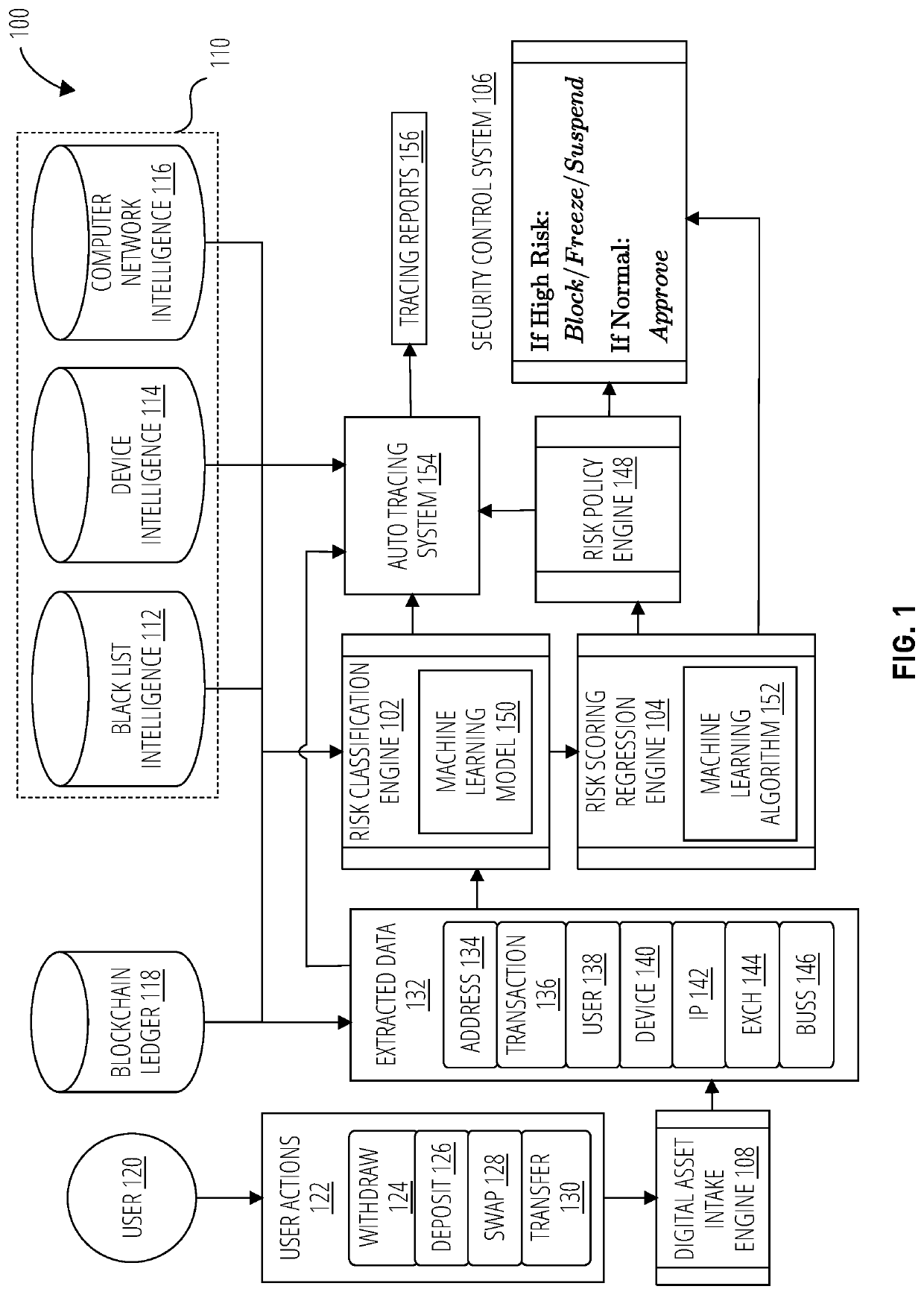
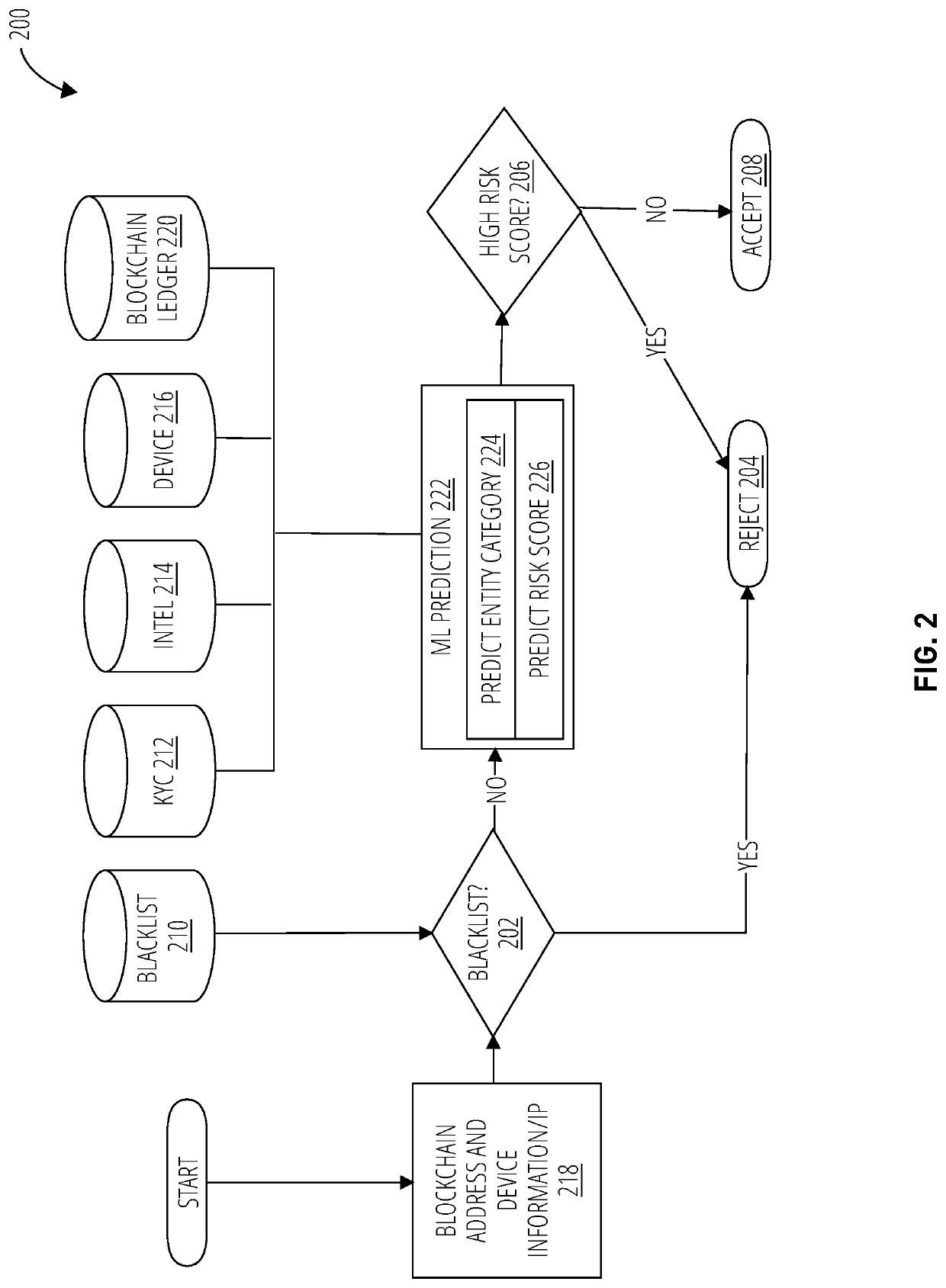
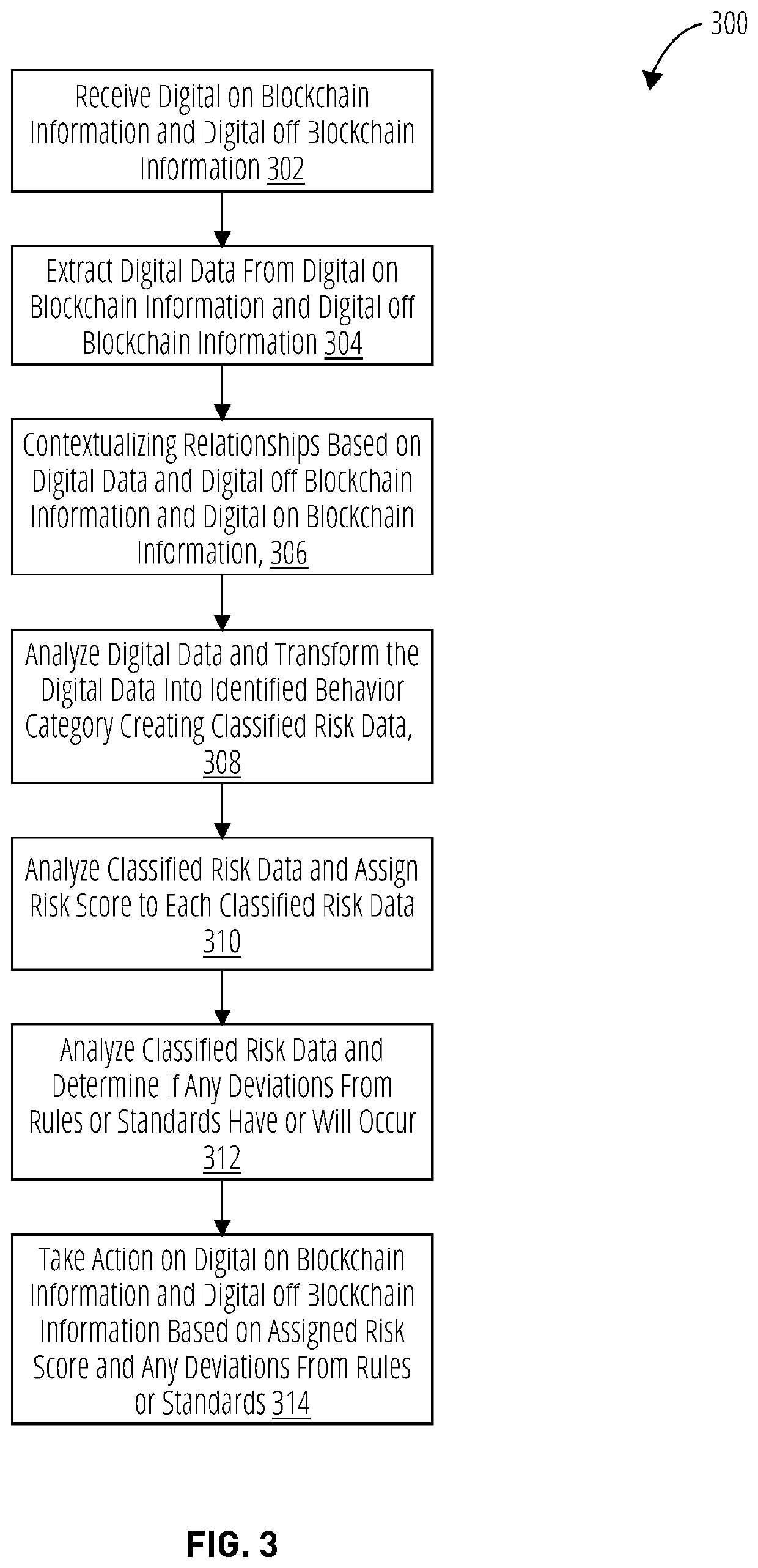
System and Method for Blockchain Automatic Tracing of Money Flow Using Artificial Intelligence
PatentActiveUS20220067738A1
Innovation
- A method and system utilizing artificial intelligence and machine learning to trace cryptocurrency transactions by applying intelligence labels to blockchain addresses, employing an AI graph search algorithm to determine suspicious transaction paths, and generating reports for alerting users or suspending transactions, while integrating with KYC regulations to map cryptocurrency addresses to real-world identities.

Artificial-intelligence-based execution on blockchains
PatentWO2024229231A1
Innovation
- Integration of Artificial Intelligence (AI) and Large Language Models (LLMs) within blockchain validators to interpret natural language inputs, eliminating the need for programming and translation, and enabling low-latency interactions by capturing intent and context for transaction execution.


Data Privacy and Security Framework for AI Rendering
The integration of AI rendering with blockchain technology necessitates a comprehensive data privacy and security framework to address the unique challenges posed by distributed computational environments and transparent ledger systems. This framework must balance the inherent transparency requirements of blockchain with the confidentiality needs of proprietary rendering algorithms and user data.
At the foundational level, the framework employs multi-layered encryption protocols specifically designed for AI rendering workflows. Zero-knowledge proofs serve as a cornerstone technology, enabling verification of rendering computations without exposing sensitive algorithmic parameters or input data. This cryptographic approach allows blockchain networks to validate transaction authenticity while preserving the confidentiality of proprietary rendering techniques and client assets.
Data compartmentalization represents another critical component, where sensitive rendering data is segregated into different security zones based on classification levels. Public metadata such as transaction timestamps and computational resource allocation can be stored on-chain, while private elements including detailed scene geometry, texture maps, and rendering parameters are maintained in encrypted off-chain storage systems with blockchain-anchored access controls.
Identity management within this framework utilizes decentralized identity protocols that enable pseudonymous participation in rendering networks. Users and service providers can engage in transactions without revealing personally identifiable information, while maintaining accountability through cryptographic signatures and reputation systems built into smart contracts.
The framework incorporates advanced access control mechanisms through attribute-based encryption and smart contract governance. These systems ensure that only authorized parties can access specific rendering resources or computational results, with permissions dynamically managed based on predefined criteria and real-time risk assessments.
Compliance integration addresses regulatory requirements across different jurisdictions, implementing automated privacy controls that adapt to varying data protection standards. The framework includes audit trails that satisfy regulatory oversight while maintaining operational privacy, utilizing selective disclosure mechanisms that reveal only necessary information to authorized auditors.
Real-time threat detection and response capabilities monitor the entire AI rendering pipeline for potential security breaches or privacy violations. Machine learning algorithms analyze transaction patterns and computational behaviors to identify anomalies that might indicate unauthorized access attempts or data exfiltration efforts, triggering automated protective measures when suspicious activities are detected.
At the foundational level, the framework employs multi-layered encryption protocols specifically designed for AI rendering workflows. Zero-knowledge proofs serve as a cornerstone technology, enabling verification of rendering computations without exposing sensitive algorithmic parameters or input data. This cryptographic approach allows blockchain networks to validate transaction authenticity while preserving the confidentiality of proprietary rendering techniques and client assets.
Data compartmentalization represents another critical component, where sensitive rendering data is segregated into different security zones based on classification levels. Public metadata such as transaction timestamps and computational resource allocation can be stored on-chain, while private elements including detailed scene geometry, texture maps, and rendering parameters are maintained in encrypted off-chain storage systems with blockchain-anchored access controls.
Identity management within this framework utilizes decentralized identity protocols that enable pseudonymous participation in rendering networks. Users and service providers can engage in transactions without revealing personally identifiable information, while maintaining accountability through cryptographic signatures and reputation systems built into smart contracts.
The framework incorporates advanced access control mechanisms through attribute-based encryption and smart contract governance. These systems ensure that only authorized parties can access specific rendering resources or computational results, with permissions dynamically managed based on predefined criteria and real-time risk assessments.
Compliance integration addresses regulatory requirements across different jurisdictions, implementing automated privacy controls that adapt to varying data protection standards. The framework includes audit trails that satisfy regulatory oversight while maintaining operational privacy, utilizing selective disclosure mechanisms that reveal only necessary information to authorized auditors.
Real-time threat detection and response capabilities monitor the entire AI rendering pipeline for potential security breaches or privacy violations. Machine learning algorithms analyze transaction patterns and computational behaviors to identify anomalies that might indicate unauthorized access attempts or data exfiltration efforts, triggering automated protective measures when suspicious activities are detected.
Smart Contract Standards for AI Rendering Services
The development of standardized smart contracts for AI rendering services represents a critical infrastructure component that enables transparent, automated, and trustless transactions between service providers and clients. These standards must address the unique characteristics of AI rendering workloads, including variable computational requirements, quality metrics, and delivery timelines that differ significantly from traditional blockchain applications.
Current smart contract frameworks require adaptation to accommodate the specific needs of AI rendering services. The standards must define clear interfaces for service discovery, resource allocation, and payment mechanisms that can handle both synchronous and asynchronous rendering tasks. Key considerations include establishing standardized data formats for rendering job specifications, output quality parameters, and computational resource measurements that ensure interoperability across different AI rendering platforms.
Service level agreements embedded within smart contracts need to incorporate sophisticated metrics beyond simple completion status. These include rendering quality thresholds, processing time guarantees, and resource utilization efficiency measures. The standards must also address dispute resolution mechanisms for cases where rendered outputs do not meet specified quality criteria or delivery deadlines, incorporating automated arbitration processes that can evaluate technical parameters objectively.
Payment structures within these smart contract standards require innovative approaches to handle the variable nature of AI rendering costs. Dynamic pricing models based on real-time computational demand, complexity scoring algorithms for different rendering tasks, and escrow mechanisms that release payments upon verified completion are essential components. The standards must also support fractional payments for long-running rendering jobs and provide mechanisms for cost adjustments based on actual resource consumption versus initial estimates.
Interoperability standards are crucial for creating a unified ecosystem where different AI rendering service providers can participate seamlessly. This includes standardized APIs for job submission, progress monitoring, and result delivery, as well as common data schemas for describing rendering parameters, hardware requirements, and quality expectations. The standards must also define protocols for cross-platform authentication and authorization, enabling clients to access services from multiple providers through a single interface while maintaining security and accountability.
Current smart contract frameworks require adaptation to accommodate the specific needs of AI rendering services. The standards must define clear interfaces for service discovery, resource allocation, and payment mechanisms that can handle both synchronous and asynchronous rendering tasks. Key considerations include establishing standardized data formats for rendering job specifications, output quality parameters, and computational resource measurements that ensure interoperability across different AI rendering platforms.
Service level agreements embedded within smart contracts need to incorporate sophisticated metrics beyond simple completion status. These include rendering quality thresholds, processing time guarantees, and resource utilization efficiency measures. The standards must also address dispute resolution mechanisms for cases where rendered outputs do not meet specified quality criteria or delivery deadlines, incorporating automated arbitration processes that can evaluate technical parameters objectively.
Payment structures within these smart contract standards require innovative approaches to handle the variable nature of AI rendering costs. Dynamic pricing models based on real-time computational demand, complexity scoring algorithms for different rendering tasks, and escrow mechanisms that release payments upon verified completion are essential components. The standards must also support fractional payments for long-running rendering jobs and provide mechanisms for cost adjustments based on actual resource consumption versus initial estimates.
Interoperability standards are crucial for creating a unified ecosystem where different AI rendering service providers can participate seamlessly. This includes standardized APIs for job submission, progress monitoring, and result delivery, as well as common data schemas for describing rendering parameters, hardware requirements, and quality expectations. The standards must also define protocols for cross-platform authentication and authorization, enabling clients to access services from multiple providers through a single interface while maintaining security and accountability.
Unlock deeper insights with Patsnap Eureka Quick Research — get a full tech report to explore trends and direct your research. Try now!
Generate Your Research Report Instantly with AI Agent
Supercharge your innovation with Patsnap Eureka AI Agent Platform!