
AI Rendering in Weather Forecasting: Visualization Accuracy
APR 7, 202610 MIN READ
Generate Your Research Report Instantly with AI Agent
Patsnap Eureka helps you evaluate technical feasibility & market potential.
AI Weather Rendering Background and Visualization Goals
Weather forecasting has undergone a revolutionary transformation from traditional meteorological observation methods to sophisticated computational modeling systems. The evolution began with basic barometric measurements and visual observations in the 19th century, progressing through numerical weather prediction models in the mid-20th century, and now entering the era of artificial intelligence-enhanced forecasting systems. This technological progression has consistently aimed to improve prediction accuracy while making complex meteorological data more accessible to diverse user groups.
The integration of artificial intelligence into weather rendering represents a paradigm shift in how meteorological information is processed, interpreted, and visualized. Traditional weather visualization systems relied heavily on static maps, basic color coding, and simplified graphical representations that often failed to convey the dynamic and multidimensional nature of atmospheric phenomena. These conventional approaches frequently resulted in information gaps, misinterpretation of weather patterns, and inadequate representation of uncertainty levels inherent in meteorological predictions.
Modern AI-driven weather rendering systems leverage machine learning algorithms, computer vision techniques, and advanced data processing capabilities to create more intuitive and accurate visual representations of atmospheric conditions. These systems can process vast amounts of meteorological data from multiple sources including satellite imagery, radar systems, ground-based sensors, and atmospheric models to generate comprehensive visual outputs that better reflect the complexity of weather systems.
The primary technical objectives of AI weather rendering focus on achieving unprecedented visualization accuracy through several key dimensions. First, spatial accuracy ensures that weather phenomena are precisely located and scaled according to their actual geographic distribution and intensity. Second, temporal accuracy involves creating dynamic visualizations that accurately represent the evolution of weather patterns over time, including the speed and direction of system movements.
Third, probabilistic accuracy addresses the critical need to visualize uncertainty and confidence levels in weather predictions, moving beyond deterministic representations to show probability distributions and potential scenario variations. Fourth, multi-scale accuracy enables seamless transitions between different spatial and temporal scales, from local microclimates to continental weather systems, while maintaining visual coherence and scientific integrity.
The ultimate goal encompasses developing AI rendering systems capable of automatically adapting visualization styles and complexity levels based on user expertise, application context, and decision-making requirements. This includes creating personalized weather visualizations for aviation, agriculture, emergency management, and public consumption, each optimized for specific use cases while maintaining underlying scientific accuracy and reliability standards.
The integration of artificial intelligence into weather rendering represents a paradigm shift in how meteorological information is processed, interpreted, and visualized. Traditional weather visualization systems relied heavily on static maps, basic color coding, and simplified graphical representations that often failed to convey the dynamic and multidimensional nature of atmospheric phenomena. These conventional approaches frequently resulted in information gaps, misinterpretation of weather patterns, and inadequate representation of uncertainty levels inherent in meteorological predictions.
Modern AI-driven weather rendering systems leverage machine learning algorithms, computer vision techniques, and advanced data processing capabilities to create more intuitive and accurate visual representations of atmospheric conditions. These systems can process vast amounts of meteorological data from multiple sources including satellite imagery, radar systems, ground-based sensors, and atmospheric models to generate comprehensive visual outputs that better reflect the complexity of weather systems.
The primary technical objectives of AI weather rendering focus on achieving unprecedented visualization accuracy through several key dimensions. First, spatial accuracy ensures that weather phenomena are precisely located and scaled according to their actual geographic distribution and intensity. Second, temporal accuracy involves creating dynamic visualizations that accurately represent the evolution of weather patterns over time, including the speed and direction of system movements.
Third, probabilistic accuracy addresses the critical need to visualize uncertainty and confidence levels in weather predictions, moving beyond deterministic representations to show probability distributions and potential scenario variations. Fourth, multi-scale accuracy enables seamless transitions between different spatial and temporal scales, from local microclimates to continental weather systems, while maintaining visual coherence and scientific integrity.
The ultimate goal encompasses developing AI rendering systems capable of automatically adapting visualization styles and complexity levels based on user expertise, application context, and decision-making requirements. This includes creating personalized weather visualizations for aviation, agriculture, emergency management, and public consumption, each optimized for specific use cases while maintaining underlying scientific accuracy and reliability standards.
Market Demand for Enhanced Weather Forecast Visualization
The global weather forecasting market has experienced unprecedented growth driven by increasing demand for accurate and visually compelling meteorological information. Traditional weather visualization methods, characterized by static maps and basic graphical representations, no longer meet the sophisticated requirements of modern users across various sectors. The emergence of AI-powered rendering technologies has created substantial market opportunities for enhanced weather forecast visualization solutions.
Commercial aviation represents one of the most lucrative market segments demanding advanced weather visualization capabilities. Airlines require real-time, three-dimensional weather data presentation to optimize flight routes, reduce fuel consumption, and enhance passenger safety. The precision and immediacy of AI-rendered weather visualizations enable pilots and air traffic controllers to make critical decisions with greater confidence and accuracy.
The agricultural sector demonstrates growing appetite for sophisticated weather visualization tools that can display micro-climate variations, precipitation patterns, and temperature gradients with unprecedented detail. Farmers and agricultural enterprises increasingly rely on AI-enhanced weather graphics to optimize planting schedules, irrigation systems, and crop protection strategies. This demand has intensified as climate variability continues to impact global food production systems.
Emergency management and disaster preparedness organizations constitute another significant market segment requiring advanced weather visualization technologies. Government agencies, emergency response teams, and public safety departments need intuitive, accurate visual representations of severe weather events to coordinate evacuation procedures, resource allocation, and public communication strategies. AI rendering capabilities enable these organizations to present complex meteorological data in formats that facilitate rapid decision-making during critical situations.
The media and broadcasting industry has embraced AI-powered weather visualization as a competitive differentiator in news programming and digital content delivery. Television networks, streaming platforms, and digital media companies invest heavily in cutting-edge weather graphics to enhance viewer engagement and establish credibility in meteorological reporting. Consumer expectations for high-quality, interactive weather presentations continue to drive innovation in this market segment.
Maritime and offshore industries represent emerging markets for enhanced weather visualization solutions. Shipping companies, offshore energy operators, and marine transportation services require detailed visual representations of ocean conditions, wind patterns, and storm systems to ensure operational safety and efficiency. The integration of AI rendering technologies enables these industries to visualize complex marine weather phenomena with greater accuracy and predictive capability.
Consumer applications and mobile platforms have created mass market demand for sophisticated weather visualization tools. Smartphone applications, smart home devices, and personal weather stations increasingly incorporate AI-enhanced graphics to deliver personalized, location-specific weather information. This consumer-driven demand has established weather visualization as a critical component of digital lifestyle products and services.
Commercial aviation represents one of the most lucrative market segments demanding advanced weather visualization capabilities. Airlines require real-time, three-dimensional weather data presentation to optimize flight routes, reduce fuel consumption, and enhance passenger safety. The precision and immediacy of AI-rendered weather visualizations enable pilots and air traffic controllers to make critical decisions with greater confidence and accuracy.
The agricultural sector demonstrates growing appetite for sophisticated weather visualization tools that can display micro-climate variations, precipitation patterns, and temperature gradients with unprecedented detail. Farmers and agricultural enterprises increasingly rely on AI-enhanced weather graphics to optimize planting schedules, irrigation systems, and crop protection strategies. This demand has intensified as climate variability continues to impact global food production systems.
Emergency management and disaster preparedness organizations constitute another significant market segment requiring advanced weather visualization technologies. Government agencies, emergency response teams, and public safety departments need intuitive, accurate visual representations of severe weather events to coordinate evacuation procedures, resource allocation, and public communication strategies. AI rendering capabilities enable these organizations to present complex meteorological data in formats that facilitate rapid decision-making during critical situations.
The media and broadcasting industry has embraced AI-powered weather visualization as a competitive differentiator in news programming and digital content delivery. Television networks, streaming platforms, and digital media companies invest heavily in cutting-edge weather graphics to enhance viewer engagement and establish credibility in meteorological reporting. Consumer expectations for high-quality, interactive weather presentations continue to drive innovation in this market segment.
Maritime and offshore industries represent emerging markets for enhanced weather visualization solutions. Shipping companies, offshore energy operators, and marine transportation services require detailed visual representations of ocean conditions, wind patterns, and storm systems to ensure operational safety and efficiency. The integration of AI rendering technologies enables these industries to visualize complex marine weather phenomena with greater accuracy and predictive capability.
Consumer applications and mobile platforms have created mass market demand for sophisticated weather visualization tools. Smartphone applications, smart home devices, and personal weather stations increasingly incorporate AI-enhanced graphics to deliver personalized, location-specific weather information. This consumer-driven demand has established weather visualization as a critical component of digital lifestyle products and services.
Current AI Rendering Limitations in Meteorological Applications
Current AI rendering systems in meteorological applications face significant computational bottlenecks that limit their effectiveness in real-time weather visualization. The primary constraint stems from the massive data processing requirements needed to convert complex atmospheric models into accurate visual representations. Traditional rendering pipelines struggle to handle the multi-dimensional nature of meteorological data, which includes temperature gradients, pressure systems, humidity levels, and wind patterns across varying altitudes and geographical regions.
Temporal resolution presents another critical limitation in AI-powered weather rendering systems. Most current implementations cannot adequately capture rapid atmospheric changes, particularly during severe weather events such as thunderstorms, tornadoes, or sudden pressure drops. The lag between data acquisition and visual output often results in outdated representations that fail to reflect current atmospheric conditions, compromising the accuracy of weather forecasts and potentially endangering public safety.
Spatial interpolation accuracy remains a persistent challenge in meteorological AI rendering applications. Current algorithms frequently produce artifacts when attempting to fill gaps between sparse weather station data points or satellite observations. These interpolation errors manifest as unrealistic weather patterns, smooth transitions where sharp boundaries should exist, or false gradients that do not correspond to actual atmospheric phenomena. The problem becomes particularly pronounced in regions with limited observational infrastructure.
Integration complexity between different data sources poses substantial technical hurdles for AI rendering systems. Weather forecasting relies on inputs from multiple sources including ground-based sensors, radar systems, satellite imagery, and atmospheric models. Current AI rendering frameworks often struggle to harmonize these diverse data types, leading to inconsistencies in visualization output and reduced overall accuracy in weather representation.
Hardware limitations significantly constrain the deployment of sophisticated AI rendering algorithms in operational meteorological environments. The computational demands of high-resolution atmospheric visualization often exceed the capabilities of standard weather service infrastructure. This limitation forces meteorologists to compromise between rendering quality and processing speed, resulting in either delayed forecasts or reduced visual fidelity that may obscure important weather features.
Validation and verification of AI-rendered weather visualizations present ongoing methodological challenges. Unlike traditional computer graphics applications, meteorological rendering accuracy cannot be easily assessed through visual inspection alone. Current systems lack robust frameworks for quantifying rendering accuracy against observed weather phenomena, making it difficult to identify and correct systematic errors in visualization algorithms.
Temporal resolution presents another critical limitation in AI-powered weather rendering systems. Most current implementations cannot adequately capture rapid atmospheric changes, particularly during severe weather events such as thunderstorms, tornadoes, or sudden pressure drops. The lag between data acquisition and visual output often results in outdated representations that fail to reflect current atmospheric conditions, compromising the accuracy of weather forecasts and potentially endangering public safety.
Spatial interpolation accuracy remains a persistent challenge in meteorological AI rendering applications. Current algorithms frequently produce artifacts when attempting to fill gaps between sparse weather station data points or satellite observations. These interpolation errors manifest as unrealistic weather patterns, smooth transitions where sharp boundaries should exist, or false gradients that do not correspond to actual atmospheric phenomena. The problem becomes particularly pronounced in regions with limited observational infrastructure.
Integration complexity between different data sources poses substantial technical hurdles for AI rendering systems. Weather forecasting relies on inputs from multiple sources including ground-based sensors, radar systems, satellite imagery, and atmospheric models. Current AI rendering frameworks often struggle to harmonize these diverse data types, leading to inconsistencies in visualization output and reduced overall accuracy in weather representation.
Hardware limitations significantly constrain the deployment of sophisticated AI rendering algorithms in operational meteorological environments. The computational demands of high-resolution atmospheric visualization often exceed the capabilities of standard weather service infrastructure. This limitation forces meteorologists to compromise between rendering quality and processing speed, resulting in either delayed forecasts or reduced visual fidelity that may obscure important weather features.
Validation and verification of AI-rendered weather visualizations present ongoing methodological challenges. Unlike traditional computer graphics applications, meteorological rendering accuracy cannot be easily assessed through visual inspection alone. Current systems lack robust frameworks for quantifying rendering accuracy against observed weather phenomena, making it difficult to identify and correct systematic errors in visualization algorithms.
Existing AI Rendering Solutions for Weather Data Accuracy
01 Neural network-based rendering optimization
Advanced neural network architectures and deep learning models are employed to enhance rendering accuracy in AI systems. These methods utilize trained models to predict and generate high-fidelity visual outputs by learning from large datasets of rendered images. The techniques focus on improving the precision of texture mapping, lighting calculations, and geometric representations through iterative learning processes that minimize rendering errors and artifacts.- Neural network-based rendering optimization: Advanced neural network architectures and deep learning models are employed to enhance rendering accuracy by learning complex visual patterns and optimizing computational processes. These techniques utilize machine learning algorithms to predict and generate high-quality visual outputs while reducing computational overhead. The systems can adapt to different rendering scenarios and improve accuracy through iterative training processes.
- Real-time rendering accuracy enhancement: Methods for improving visualization accuracy in real-time rendering applications through dynamic adjustment of rendering parameters and quality metrics. These approaches focus on balancing computational efficiency with visual fidelity by implementing adaptive algorithms that respond to scene complexity and hardware capabilities. The techniques enable consistent accuracy across varying rendering conditions and frame rates.
- Multi-modal data integration for visualization: Systems that combine multiple data sources and modalities to improve rendering accuracy and visual representation. These solutions integrate various types of input data, such as geometric information, texture data, and lighting parameters, to create more accurate and realistic visualizations. The integration process employs sophisticated algorithms to ensure consistency and precision across different data types.
- Quality assessment and validation mechanisms: Automated systems for evaluating and validating rendering accuracy through comparison metrics and quality assessment algorithms. These mechanisms provide objective measurements of visualization quality and identify areas requiring improvement. The validation processes incorporate reference standards and benchmarking techniques to ensure rendering outputs meet specified accuracy requirements.
- Adaptive resolution and detail management: Techniques for dynamically adjusting rendering resolution and level of detail to maintain visualization accuracy while optimizing performance. These methods intelligently allocate computational resources based on scene importance and viewer perspective, ensuring critical areas receive higher accuracy treatment. The adaptive approaches enable scalable rendering solutions that maintain quality across different hardware platforms and use cases.
02 Real-time accuracy validation and quality assessment
Systems and methods for evaluating and validating the accuracy of AI-generated renderings in real-time are implemented. These approaches incorporate automated quality metrics, comparison algorithms, and feedback mechanisms to assess visual fidelity against ground truth data. The validation processes measure parameters such as color accuracy, geometric precision, and photorealistic quality to ensure rendered outputs meet specified accuracy thresholds.Expand Specific Solutions03 Multi-modal data integration for enhanced visualization
Integration of multiple data sources and modalities improves the accuracy of AI rendering systems. These techniques combine information from various inputs including 3D models, texture maps, lighting data, and environmental parameters to create more accurate visualizations. The fusion of heterogeneous data streams enables better representation of complex scenes and reduces inconsistencies in rendered outputs.Expand Specific Solutions04 Adaptive rendering resolution and detail optimization
Dynamic adjustment of rendering parameters based on scene complexity and computational resources ensures optimal accuracy-performance balance. These methods employ adaptive algorithms that selectively allocate computational power to critical visual elements while maintaining overall rendering quality. The systems automatically adjust level of detail, sampling rates, and resolution based on viewing distance and importance of scene components.Expand Specific Solutions05 Error correction and artifact reduction techniques
Specialized algorithms detect and correct rendering errors and visual artifacts in AI-generated images. These techniques identify common issues such as aliasing, noise, incorrect shadows, and geometric distortions, then apply corrective measures to improve visual accuracy. The methods utilize post-processing filters, machine learning-based error detection, and iterative refinement to enhance the final rendered output quality.Expand Specific Solutions
Key Players in AI Weather Rendering and Forecast Visualization
The AI rendering in weather forecasting visualization accuracy field represents an emerging market segment within the broader meteorological technology industry, currently in its early growth stage with significant expansion potential driven by increasing demand for precise weather visualization. The market encompasses diverse players ranging from established technology giants to specialized meteorological service providers, indicating a fragmented but rapidly evolving competitive landscape. Technology maturity varies considerably across market participants, with companies like NVIDIA, IBM, and Microsoft leveraging advanced AI and cloud computing capabilities to enhance rendering accuracy, while specialized firms such as DTN LLC and Climate LLC focus on domain-specific applications. Academic institutions including Nanjing University of Information Science & Technology and government research agencies like JAMSTEC contribute foundational research, while automotive companies like Toyota and Waymo drive innovation in weather visualization for autonomous systems, collectively advancing the field's technological sophistication.
International Business Machines Corp.
Technical Solution: IBM's Watson AI platform provides advanced weather forecasting and visualization capabilities through their Weather Company acquisition. Their AI rendering approach combines machine learning algorithms with high-resolution atmospheric modeling to generate accurate weather visualizations. The system utilizes deep neural networks trained on historical weather data and satellite imagery to predict and render future weather conditions with enhanced visual fidelity. IBM's solution incorporates computer vision techniques to process real-time weather sensor data and satellite feeds, translating this information into intuitive visual representations. Their cloud-based infrastructure enables scalable processing of complex meteorological simulations, supporting both 2D and 3D weather visualization with interactive capabilities for meteorologists and end users.
Strengths: Extensive weather data resources, proven enterprise AI platform, cloud scalability. Weaknesses: Limited specialized graphics hardware optimization, dependency on third-party rendering engines.
Huawei Cloud Computing Technology Co. Ltd.
Technical Solution: Huawei has developed AI rendering solutions for weather forecasting through their cloud computing platform and AI chipset technologies. Their approach combines proprietary Ascend AI processors with advanced computer graphics techniques to deliver high-performance weather visualization systems. The solution utilizes deep learning algorithms optimized for their Kunpeng processors to process large-scale meteorological datasets and generate accurate weather renderings. Huawei's AI rendering framework incorporates real-time data fusion from multiple weather sources including satellites, ground stations, and IoT sensors, creating comprehensive weather visualizations with enhanced spatial and temporal resolution. Their cloud-native architecture supports distributed computing for complex atmospheric simulations, enabling meteorological organizations to deploy scalable weather forecasting systems with improved visualization accuracy and reduced computational latency.
Strengths: Integrated hardware-software optimization, strong presence in telecommunications infrastructure, cost-effective cloud solutions. Weaknesses: Limited global market access due to regulatory restrictions, smaller ecosystem compared to established cloud providers.
Core AI Algorithms for Precise Weather Visualization
Method and system for creating visualizations of future weather conditions
PatentInactiveUS7043368B1
Innovation
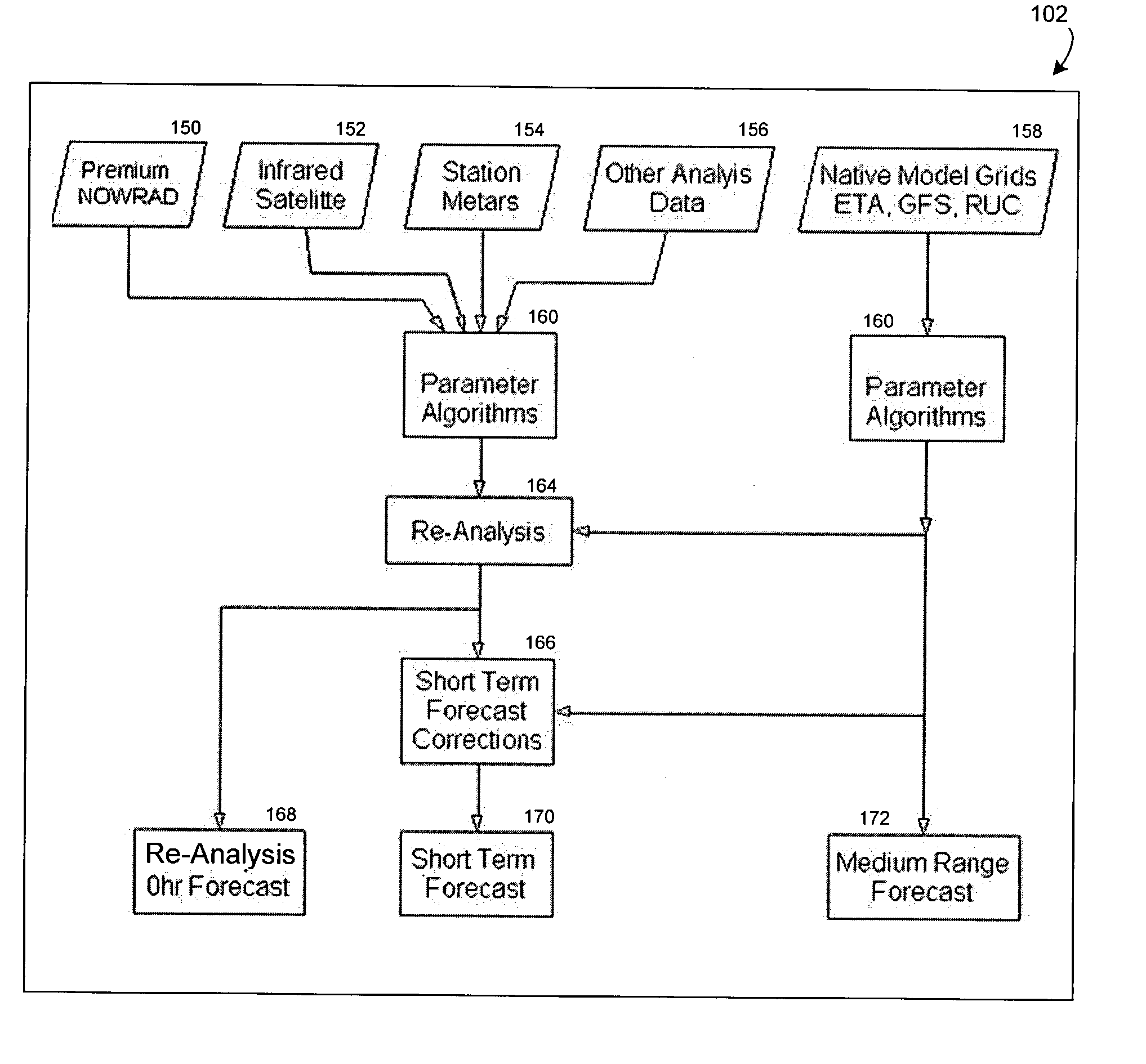
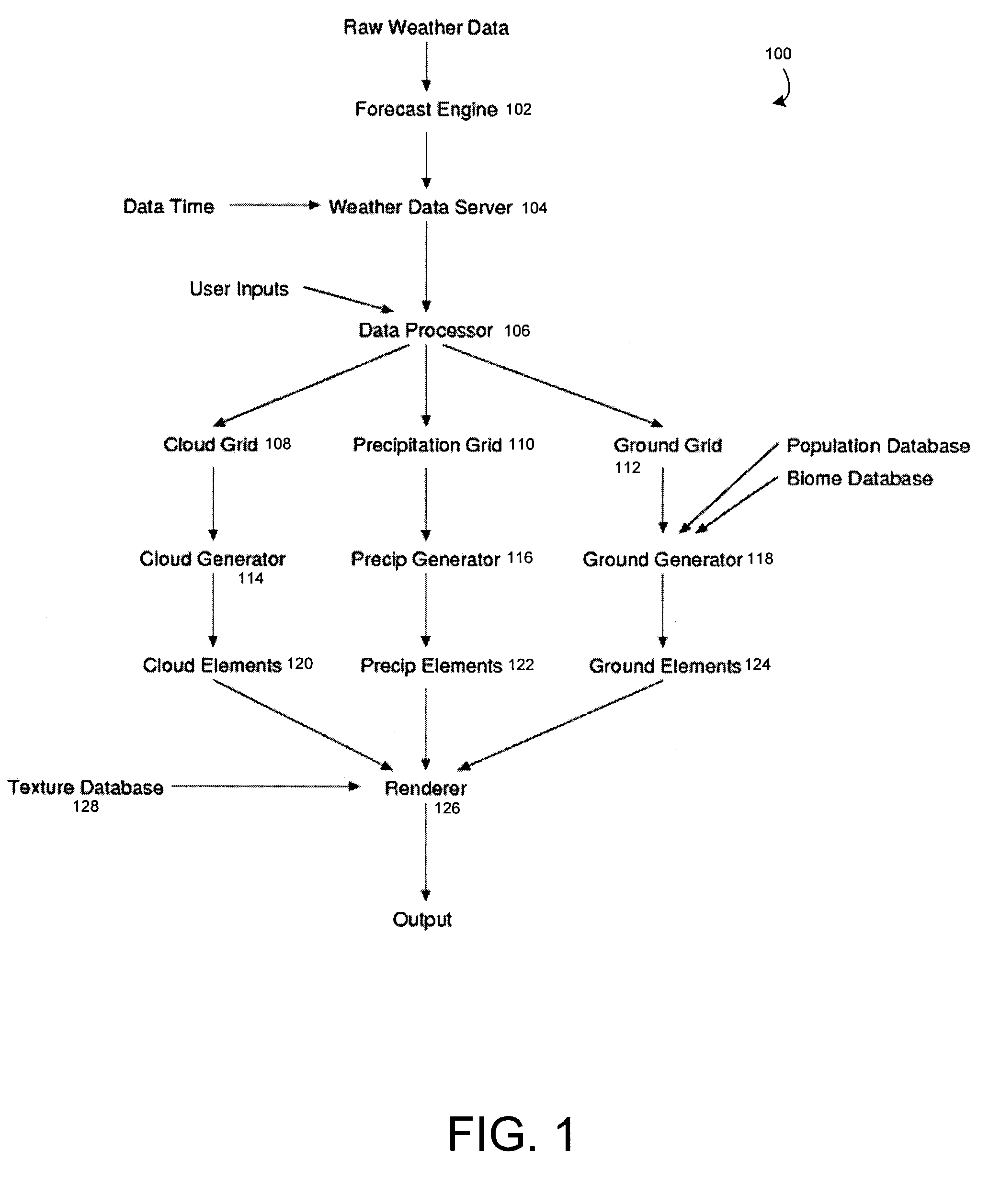
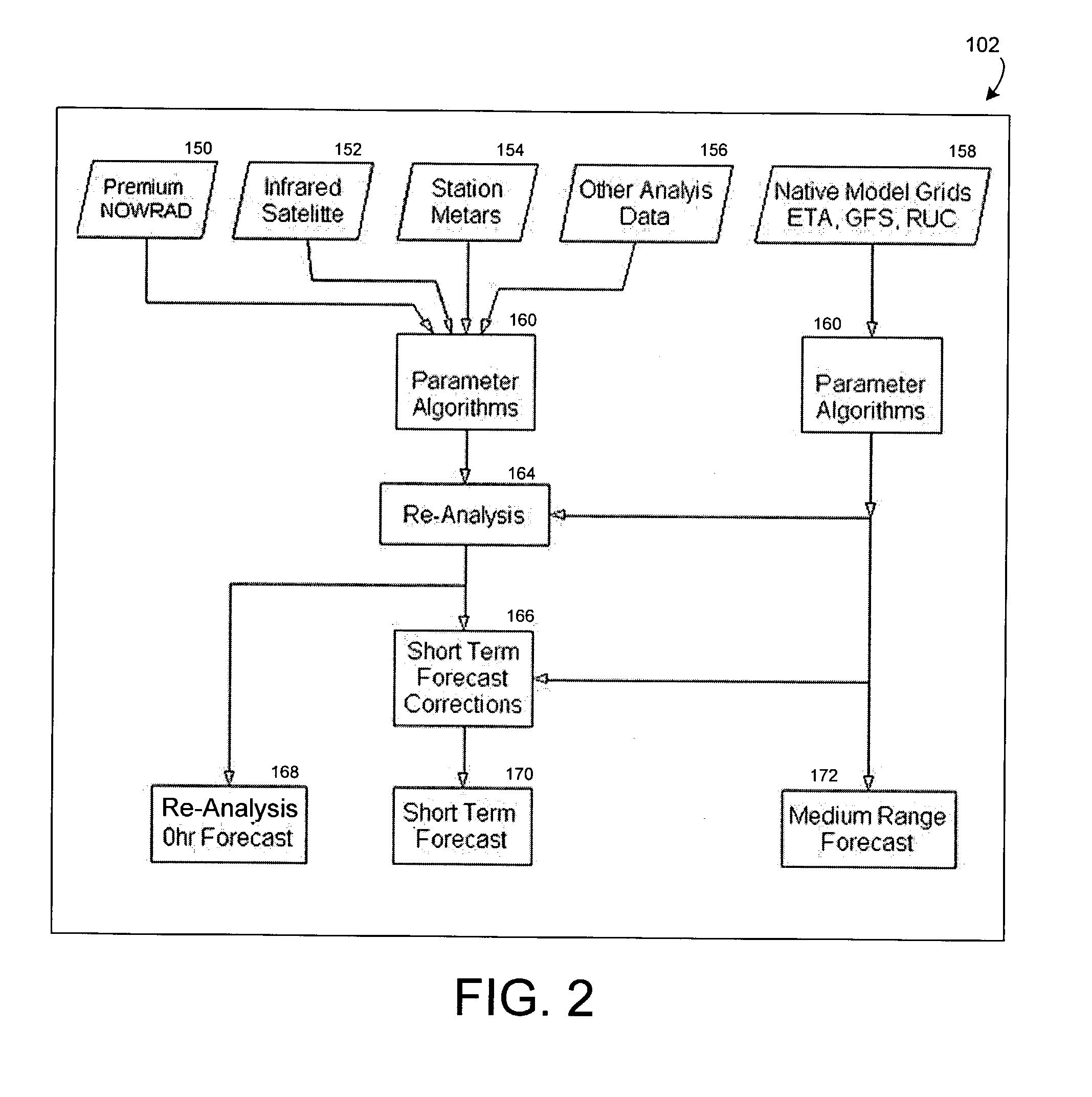
- A system that generates seamless visualizations of future weather conditions using a forecast engine, weather data server, data processor, and renderer, incorporating gridded computer models, radar data, and satellite imagery to create photorealistic animations of cloud, precipitation, and ground elements, adapting to geographic location and time, and correcting forecast errors based on observed conditions.

System and method for providing weather effects in images
PatentPendingCN120147490A
Innovation
- By using artificial intelligence models to predict three-dimensional space in a 2D picture, combined with weather texture images to simulate weather effects in images in real time, allowing the device to simulate weather effects with less computing resources.


Data Privacy Standards for AI Weather Visualization Systems
Data privacy standards for AI weather visualization systems have emerged as a critical regulatory framework addressing the intersection of meteorological data processing, artificial intelligence algorithms, and user information protection. These standards encompass comprehensive guidelines for handling sensitive location data, user behavioral patterns, and personalized weather preferences that AI rendering systems collect during visualization processes.
The foundation of these privacy standards rests on established frameworks such as GDPR, CCPA, and emerging sector-specific regulations that govern how weather visualization platforms collect, process, and store user data. Key requirements include explicit consent mechanisms for location tracking, transparent data usage policies, and mandatory data minimization practices that limit collection to essential visualization parameters only.
Technical implementation standards mandate encryption protocols for data transmission between weather sensors, AI processing units, and end-user devices. These specifications require AES-256 encryption for data at rest and TLS 1.3 for data in transit, ensuring that meteorological datasets and user interaction logs remain protected throughout the AI rendering pipeline.
Anonymization requirements form another crucial component, establishing protocols for removing personally identifiable information from weather query logs while preserving data utility for AI model training. Standards specify k-anonymity thresholds and differential privacy mechanisms that weather visualization systems must implement to protect individual user patterns while maintaining rendering accuracy.
Cross-border data transfer regulations specifically address how AI weather visualization systems handle international meteorological data sharing. These standards define acceptable data residency requirements, establish secure data exchange protocols between national weather services, and mandate compliance with local privacy laws when rendering weather visualizations for global users.
Audit and compliance frameworks require regular privacy impact assessments, mandatory breach notification procedures within 72 hours, and comprehensive logging of data access patterns. These standards also establish user rights including data portability, deletion requests, and access to algorithmic decision-making processes that influence personalized weather visualization outputs.
The foundation of these privacy standards rests on established frameworks such as GDPR, CCPA, and emerging sector-specific regulations that govern how weather visualization platforms collect, process, and store user data. Key requirements include explicit consent mechanisms for location tracking, transparent data usage policies, and mandatory data minimization practices that limit collection to essential visualization parameters only.
Technical implementation standards mandate encryption protocols for data transmission between weather sensors, AI processing units, and end-user devices. These specifications require AES-256 encryption for data at rest and TLS 1.3 for data in transit, ensuring that meteorological datasets and user interaction logs remain protected throughout the AI rendering pipeline.
Anonymization requirements form another crucial component, establishing protocols for removing personally identifiable information from weather query logs while preserving data utility for AI model training. Standards specify k-anonymity thresholds and differential privacy mechanisms that weather visualization systems must implement to protect individual user patterns while maintaining rendering accuracy.
Cross-border data transfer regulations specifically address how AI weather visualization systems handle international meteorological data sharing. These standards define acceptable data residency requirements, establish secure data exchange protocols between national weather services, and mandate compliance with local privacy laws when rendering weather visualizations for global users.
Audit and compliance frameworks require regular privacy impact assessments, mandatory breach notification procedures within 72 hours, and comprehensive logging of data access patterns. These standards also establish user rights including data portability, deletion requests, and access to algorithmic decision-making processes that influence personalized weather visualization outputs.
Climate Change Impact on AI Weather Rendering Requirements
Climate change has fundamentally altered the operational environment for AI weather rendering systems, creating unprecedented demands for enhanced visualization capabilities and computational adaptability. The increasing frequency and intensity of extreme weather events, coupled with shifting atmospheric patterns, require AI rendering algorithms to process and visualize meteorological phenomena that fall outside traditional modeling parameters.
Rising global temperatures have expanded the range of atmospheric conditions that weather forecasting systems must accurately represent. Heat domes, unprecedented temperature gradients, and novel precipitation patterns challenge existing rendering frameworks to maintain visualization fidelity across broader parameter spaces. AI systems must now accommodate temperature ranges and humidity levels that were previously considered statistical outliers, necessitating expanded training datasets and more robust interpolation algorithms.
The intensification of storm systems presents particular challenges for real-time rendering accuracy. Hurricane intensification rates have accelerated beyond historical norms, requiring AI visualization systems to process rapid atmospheric changes while maintaining temporal consistency in rendered outputs. Traditional rendering models, trained on historical weather patterns, struggle to accurately visualize the enhanced convective processes and wind shear patterns characteristic of climate-altered storm systems.
Precipitation pattern shifts demand sophisticated adaptations in AI rendering architectures. The emergence of atmospheric rivers, flash drought conditions, and irregular seasonal precipitation cycles requires rendering systems to visualize complex moisture transport mechanisms with higher spatial and temporal resolution. These phenomena often exhibit non-linear behavior that challenges conventional interpolation methods used in weather visualization.
Arctic climate changes introduce additional complexity through altered jet stream patterns and polar vortex behavior. AI rendering systems must now accurately visualize meridional flow patterns and blocking events that occur with increased frequency, requiring enhanced capability to represent atmospheric wave propagation and energy transfer mechanisms across multiple scales.
The computational requirements for climate-adapted AI weather rendering have increased substantially. Processing the expanded parameter spaces necessary for accurate visualization of climate-altered weather patterns demands enhanced parallel processing capabilities and optimized algorithm architectures. Memory requirements have grown proportionally to accommodate the larger datasets needed for training AI models on contemporary atmospheric conditions.
Rising global temperatures have expanded the range of atmospheric conditions that weather forecasting systems must accurately represent. Heat domes, unprecedented temperature gradients, and novel precipitation patterns challenge existing rendering frameworks to maintain visualization fidelity across broader parameter spaces. AI systems must now accommodate temperature ranges and humidity levels that were previously considered statistical outliers, necessitating expanded training datasets and more robust interpolation algorithms.
The intensification of storm systems presents particular challenges for real-time rendering accuracy. Hurricane intensification rates have accelerated beyond historical norms, requiring AI visualization systems to process rapid atmospheric changes while maintaining temporal consistency in rendered outputs. Traditional rendering models, trained on historical weather patterns, struggle to accurately visualize the enhanced convective processes and wind shear patterns characteristic of climate-altered storm systems.
Precipitation pattern shifts demand sophisticated adaptations in AI rendering architectures. The emergence of atmospheric rivers, flash drought conditions, and irregular seasonal precipitation cycles requires rendering systems to visualize complex moisture transport mechanisms with higher spatial and temporal resolution. These phenomena often exhibit non-linear behavior that challenges conventional interpolation methods used in weather visualization.
Arctic climate changes introduce additional complexity through altered jet stream patterns and polar vortex behavior. AI rendering systems must now accurately visualize meridional flow patterns and blocking events that occur with increased frequency, requiring enhanced capability to represent atmospheric wave propagation and energy transfer mechanisms across multiple scales.
The computational requirements for climate-adapted AI weather rendering have increased substantially. Processing the expanded parameter spaces necessary for accurate visualization of climate-altered weather patterns demands enhanced parallel processing capabilities and optimized algorithm architectures. Memory requirements have grown proportionally to accommodate the larger datasets needed for training AI models on contemporary atmospheric conditions.
Unlock deeper insights with Patsnap Eureka Quick Research — get a full tech report to explore trends and direct your research. Try now!
Generate Your Research Report Instantly with AI Agent
Supercharge your innovation with Patsnap Eureka AI Agent Platform!