

Amide vs Ester: Long-Term Aging Performance in Polymers
FEB 28, 20269 MIN READ
Generate Your Research Report Instantly with AI Agent
PatSnap Eureka helps you evaluate technical feasibility & market potential.
Amide vs Ester Polymer Aging Background and Objectives
Polymer materials have become indispensable in modern industrial applications, with their long-term performance directly impacting product reliability and service life. Among the various polymer backbone structures, amide and ester linkages represent two fundamental chemical bonds that significantly influence material durability under aging conditions. The comparative study of these linkage types has evolved from basic chemical stability research in the 1960s to sophisticated predictive modeling approaches today.
The historical development of polymer aging research began with early observations of material degradation in military and aerospace applications. Initial studies focused on identifying failure mechanisms, leading to the recognition that chemical bond stability plays a crucial role in determining polymer longevity. As synthetic polymer production expanded in the 1970s and 1980s, researchers began systematically comparing different backbone chemistries, with amide versus ester linkages emerging as a critical comparison due to their prevalence in engineering plastics.
Current technological trends emphasize the development of predictive aging models that can accurately forecast polymer performance over decades of service life. Advanced characterization techniques, including real-time monitoring of molecular-level changes, have revolutionized our understanding of degradation mechanisms. The integration of artificial intelligence and machine learning algorithms now enables more sophisticated prediction of long-term behavior based on accelerated testing data.
The primary objective of this research focuses on establishing comprehensive performance benchmarks for amide and ester-based polymers under various aging conditions. This includes developing standardized testing protocols that can reliably predict 20-30 year service life performance through accelerated laboratory testing. Additionally, the research aims to identify optimal polymer formulations and processing conditions that maximize long-term stability for each linkage type.
A secondary objective involves creating predictive models that account for synergistic effects between different aging factors, including thermal cycling, UV exposure, chemical exposure, and mechanical stress. These models will enable engineers to make informed material selection decisions based on specific application requirements and environmental conditions, ultimately reducing product failure rates and extending service life across multiple industries.
The historical development of polymer aging research began with early observations of material degradation in military and aerospace applications. Initial studies focused on identifying failure mechanisms, leading to the recognition that chemical bond stability plays a crucial role in determining polymer longevity. As synthetic polymer production expanded in the 1970s and 1980s, researchers began systematically comparing different backbone chemistries, with amide versus ester linkages emerging as a critical comparison due to their prevalence in engineering plastics.
Current technological trends emphasize the development of predictive aging models that can accurately forecast polymer performance over decades of service life. Advanced characterization techniques, including real-time monitoring of molecular-level changes, have revolutionized our understanding of degradation mechanisms. The integration of artificial intelligence and machine learning algorithms now enables more sophisticated prediction of long-term behavior based on accelerated testing data.
The primary objective of this research focuses on establishing comprehensive performance benchmarks for amide and ester-based polymers under various aging conditions. This includes developing standardized testing protocols that can reliably predict 20-30 year service life performance through accelerated laboratory testing. Additionally, the research aims to identify optimal polymer formulations and processing conditions that maximize long-term stability for each linkage type.
A secondary objective involves creating predictive models that account for synergistic effects between different aging factors, including thermal cycling, UV exposure, chemical exposure, and mechanical stress. These models will enable engineers to make informed material selection decisions based on specific application requirements and environmental conditions, ultimately reducing product failure rates and extending service life across multiple industries.
Market Demand for Long-Term Stable Polymer Materials
The global polymer industry faces increasing pressure to develop materials with enhanced long-term stability, driven by stringent regulatory requirements and evolving application demands. Industries such as automotive, aerospace, medical devices, and electronics require polymers that maintain their mechanical, chemical, and thermal properties over extended service periods, often spanning decades. This demand has intensified focus on the fundamental chemical structures that govern polymer aging behavior, particularly the comparative performance of amide versus ester linkages.
Automotive applications represent a significant market driver, where polymer components must withstand prolonged exposure to elevated temperatures, UV radiation, and chemical environments without degradation. Engine compartment materials, fuel system components, and exterior trim elements require exceptional durability to meet warranty expectations and safety standards. The shift toward electric vehicles has introduced new challenges, including exposure to different thermal cycling patterns and chemical environments from battery systems.
Medical device manufacturing constitutes another critical market segment demanding long-term polymer stability. Implantable devices, drug delivery systems, and diagnostic equipment require materials that maintain biocompatibility and mechanical integrity throughout their intended service life. Regulatory agencies increasingly scrutinize the long-term performance data of polymer materials, creating substantial market opportunities for materials with proven aging resistance.
The electronics industry drives demand for thermally stable polymers in applications ranging from circuit boards to cable insulation. As electronic devices become more compact and operate at higher power densities, polymer materials face increasingly severe thermal stress conditions. The reliability requirements for telecommunications infrastructure and data center equipment further amplify the need for materials with predictable long-term performance characteristics.
Packaging applications, particularly for food and pharmaceutical products, require polymers that resist degradation while maintaining barrier properties over extended storage periods. The growing emphasis on sustainable packaging solutions has created additional market pressure for materials that can withstand multiple use cycles or extended environmental exposure without compromising performance.
Industrial applications in chemical processing, oil and gas, and renewable energy sectors demand polymers capable of withstanding harsh operating conditions for extended periods. The economic impact of premature material failure in these applications drives significant investment in advanced polymer formulations with superior aging characteristics.
Automotive applications represent a significant market driver, where polymer components must withstand prolonged exposure to elevated temperatures, UV radiation, and chemical environments without degradation. Engine compartment materials, fuel system components, and exterior trim elements require exceptional durability to meet warranty expectations and safety standards. The shift toward electric vehicles has introduced new challenges, including exposure to different thermal cycling patterns and chemical environments from battery systems.
Medical device manufacturing constitutes another critical market segment demanding long-term polymer stability. Implantable devices, drug delivery systems, and diagnostic equipment require materials that maintain biocompatibility and mechanical integrity throughout their intended service life. Regulatory agencies increasingly scrutinize the long-term performance data of polymer materials, creating substantial market opportunities for materials with proven aging resistance.
The electronics industry drives demand for thermally stable polymers in applications ranging from circuit boards to cable insulation. As electronic devices become more compact and operate at higher power densities, polymer materials face increasingly severe thermal stress conditions. The reliability requirements for telecommunications infrastructure and data center equipment further amplify the need for materials with predictable long-term performance characteristics.
Packaging applications, particularly for food and pharmaceutical products, require polymers that resist degradation while maintaining barrier properties over extended storage periods. The growing emphasis on sustainable packaging solutions has created additional market pressure for materials that can withstand multiple use cycles or extended environmental exposure without compromising performance.
Industrial applications in chemical processing, oil and gas, and renewable energy sectors demand polymers capable of withstanding harsh operating conditions for extended periods. The economic impact of premature material failure in these applications drives significant investment in advanced polymer formulations with superior aging characteristics.
Current Aging Performance Challenges in Amide and Ester Polymers
Amide and ester polymers face distinct aging challenges that significantly impact their long-term performance across various applications. These challenges stem from fundamental differences in their chemical structures and bonding mechanisms, leading to different degradation pathways and failure modes over extended service periods.
Hydrolytic degradation represents one of the most critical challenges for both polymer families, though manifesting through different mechanisms. Ester linkages demonstrate higher susceptibility to hydrolysis due to their electron-deficient carbonyl carbon, making them more vulnerable to nucleophilic attack by water molecules. This process accelerates under elevated temperatures and humidity conditions, leading to chain scission and molecular weight reduction. Amide polymers, while generally more resistant to hydrolysis, still experience degradation through acid-catalyzed mechanisms, particularly in acidic environments where protonation of the carbonyl oxygen increases electrophilicity.
Thermal oxidation poses another significant challenge, particularly affecting the polymer backbone and side chains. Ester polymers typically exhibit lower thermal stability, with degradation initiating at relatively moderate temperatures through β-elimination reactions and random chain scission. The presence of oxygen accelerates these processes, leading to crosslinking, discoloration, and mechanical property deterioration. Amide polymers generally demonstrate superior thermal stability due to stronger intermolecular hydrogen bonding, but prolonged exposure to elevated temperatures can still result in imide formation and chain degradation.
UV radiation exposure creates additional complexity in aging performance. Both polymer types suffer from photodegradation, though through different photochemical pathways. Ester polymers are particularly vulnerable to UV-induced Norrish Type I and II reactions, leading to chain scission and volatile product formation. Amide polymers experience photooxidation processes that can result in yellowing, embrittlement, and surface degradation.
Chemical compatibility issues present ongoing challenges, especially in applications involving contact with aggressive media. Ester polymers show vulnerability to alkaline environments, which accelerate saponification reactions, while amide polymers may experience stress cracking in certain organic solvents and polar chemicals.
The interaction between multiple aging factors creates synergistic effects that complicate performance prediction. Temperature-humidity combinations, UV-thermal exposure, and chemical-mechanical stress interactions often result in accelerated degradation rates that exceed predictions based on individual factor testing. These complex interactions make long-term performance assessment particularly challenging for both amide and ester polymer systems.
Hydrolytic degradation represents one of the most critical challenges for both polymer families, though manifesting through different mechanisms. Ester linkages demonstrate higher susceptibility to hydrolysis due to their electron-deficient carbonyl carbon, making them more vulnerable to nucleophilic attack by water molecules. This process accelerates under elevated temperatures and humidity conditions, leading to chain scission and molecular weight reduction. Amide polymers, while generally more resistant to hydrolysis, still experience degradation through acid-catalyzed mechanisms, particularly in acidic environments where protonation of the carbonyl oxygen increases electrophilicity.
Thermal oxidation poses another significant challenge, particularly affecting the polymer backbone and side chains. Ester polymers typically exhibit lower thermal stability, with degradation initiating at relatively moderate temperatures through β-elimination reactions and random chain scission. The presence of oxygen accelerates these processes, leading to crosslinking, discoloration, and mechanical property deterioration. Amide polymers generally demonstrate superior thermal stability due to stronger intermolecular hydrogen bonding, but prolonged exposure to elevated temperatures can still result in imide formation and chain degradation.
UV radiation exposure creates additional complexity in aging performance. Both polymer types suffer from photodegradation, though through different photochemical pathways. Ester polymers are particularly vulnerable to UV-induced Norrish Type I and II reactions, leading to chain scission and volatile product formation. Amide polymers experience photooxidation processes that can result in yellowing, embrittlement, and surface degradation.
Chemical compatibility issues present ongoing challenges, especially in applications involving contact with aggressive media. Ester polymers show vulnerability to alkaline environments, which accelerate saponification reactions, while amide polymers may experience stress cracking in certain organic solvents and polar chemicals.
The interaction between multiple aging factors creates synergistic effects that complicate performance prediction. Temperature-humidity combinations, UV-thermal exposure, and chemical-mechanical stress interactions often result in accelerated degradation rates that exceed predictions based on individual factor testing. These complex interactions make long-term performance assessment particularly challenging for both amide and ester polymer systems.
Existing Solutions for Enhanced Polymer Aging Performance
01 Accelerated aging test methods for polymers
Various accelerated aging test methods can be employed to evaluate the long-term aging performance of polymers. These methods simulate real-world environmental conditions such as heat, humidity, UV radiation, and oxidative stress in a compressed timeframe. By subjecting polymer materials to controlled accelerated aging conditions, researchers can predict their long-term durability and performance degradation patterns. These testing protocols help establish correlations between accelerated test results and actual field performance.- Accelerated aging test methods for polymers: Various accelerated aging test methods can be employed to evaluate the long-term aging performance of polymers. These methods simulate real-world environmental conditions such as heat, humidity, UV radiation, and oxidative stress in a compressed timeframe. By subjecting polymer materials to controlled accelerated aging conditions, researchers can predict their durability and service life. These testing protocols help establish correlations between accelerated test results and actual field performance, enabling better material selection and quality control.
- Stabilizers and additives for enhancing polymer aging resistance: The incorporation of stabilizers and additives into polymer formulations significantly improves their resistance to aging and degradation. Antioxidants, UV stabilizers, heat stabilizers, and other protective additives can prevent or slow down the deterioration processes caused by environmental factors. These additives work by scavenging free radicals, absorbing harmful radiation, or forming protective barriers. The proper selection and dosage of stabilizers are critical for extending the service life of polymer products and maintaining their mechanical and physical properties over time.
- Characterization techniques for aged polymer properties: Multiple analytical and characterization techniques are utilized to assess the aging performance of polymers. These methods include mechanical property testing, thermal analysis, spectroscopic analysis, and morphological examination. By monitoring changes in tensile strength, elongation, molecular weight, crystallinity, and chemical structure, researchers can quantify the extent of polymer degradation. Advanced characterization tools enable the identification of aging mechanisms and the establishment of performance degradation models, which are essential for predicting long-term behavior.
- Environmental factors affecting polymer aging: Polymer aging performance is significantly influenced by various environmental factors including temperature, humidity, oxygen exposure, UV radiation, and chemical exposure. Understanding the impact of these factors is crucial for predicting material behavior in different application environments. Research focuses on studying the synergistic effects of multiple environmental stressors and developing models to predict degradation rates under specific conditions. This knowledge helps in designing polymers with improved resistance to particular environmental challenges and in establishing appropriate storage and usage guidelines.
- Polymer composition design for improved aging performance: The design of polymer compositions with enhanced long-term aging performance involves careful selection of base polymers, copolymers, and functional additives. Strategies include using inherently stable polymer backbones, incorporating cross-linking agents, blending different polymers, and designing multi-layer structures. Advanced polymer architectures such as block copolymers and nanocomposites can provide superior aging resistance. The optimization of polymer composition and processing conditions is essential for achieving desired durability and maintaining performance characteristics throughout the intended service life.
02 Stabilizers and additives for enhancing aging resistance
The incorporation of stabilizers and additives into polymer formulations can significantly improve their long-term aging performance. Antioxidants, UV stabilizers, heat stabilizers, and other protective additives help prevent degradation caused by environmental factors. These additives work by scavenging free radicals, absorbing harmful radiation, or forming protective barriers. The proper selection and combination of stabilizers can extend the service life of polymer materials and maintain their mechanical and physical properties over extended periods.Expand Specific Solutions03 Polymer composition modifications for improved durability
Modifying the base polymer composition through copolymerization, blending, or molecular structure optimization can enhance long-term aging performance. These modifications may include adjusting the polymer backbone structure, introducing specific functional groups, or creating polymer blends with complementary properties. Such compositional changes can improve resistance to thermal degradation, oxidation, and environmental stress cracking, thereby extending the material's useful lifetime.Expand Specific Solutions04 Monitoring and characterization techniques for aging assessment
Advanced monitoring and characterization techniques are essential for assessing the long-term aging performance of polymers. These methods include spectroscopic analysis, thermal analysis, mechanical testing, and morphological examination to track changes in polymer properties over time. Real-time monitoring systems and non-destructive testing methods enable continuous assessment of material degradation. These techniques provide valuable data for predicting remaining service life and establishing maintenance schedules.Expand Specific Solutions05 Environmental and application-specific aging considerations
Long-term aging performance of polymers varies significantly depending on specific environmental conditions and application requirements. Factors such as temperature extremes, chemical exposure, mechanical stress, and outdoor weathering conditions must be considered. Application-specific aging studies help identify critical degradation mechanisms and establish appropriate material selection criteria. Understanding the interaction between polymer materials and their service environment enables the development of tailored solutions for enhanced durability in specific applications.Expand Specific Solutions
Key Players in High-Performance Polymer Industry
The amide vs ester long-term aging performance in polymers represents a mature technical field within the broader polymer science industry, which has reached significant market scale driven by applications in automotive, electronics, and packaging sectors. The industry demonstrates advanced technological maturity, evidenced by established players like DuPont de Nemours and BASF Corp. leading fundamental research, while specialized manufacturers such as Toray Industries, Kuraray Co., and Arkema France SA have developed sophisticated polymer formulations. Asian companies including Kingfa Sci. & Tech. Co. and Shanghai PRET Composites represent the growing manufacturing capabilities in modified plastics. Academic institutions like Cornell University and Rutgers State University contribute to theoretical understanding, while companies like Kureha Corp. and Resonac Holdings focus on high-performance specialty polymers, indicating a well-distributed competitive landscape across research, development, and commercial applications.
DuPont de Nemours, Inc.
Technical Solution: DuPont has developed advanced polyamide (amide-based) polymer systems with enhanced long-term aging performance through proprietary stabilization technologies. Their Zytel and Delrin product lines incorporate specialized antioxidant packages and UV stabilizers that significantly extend polymer lifespan under thermal and oxidative stress conditions. The company's research focuses on molecular-level modifications to amide linkages, creating more stable polymer chains that resist hydrolysis and thermal degradation over extended periods. Their testing protocols demonstrate superior retention of mechanical properties after 10+ years of accelerated aging compared to conventional formulations.
Strengths: Extensive R&D capabilities, proven track record in high-performance polymers, comprehensive stabilization technology portfolio. Weaknesses: Higher material costs, complex processing requirements for specialized formulations.
Arkema France SA
Technical Solution: Arkema has developed specialized polymer solutions comparing amide and ester systems for long-term aging applications through their Rilsan and specialty polymer divisions. Their research focuses on bio-based polyamides with enhanced aging resistance and comparative performance analysis against traditional ester polymers. The company's approach includes development of novel monomer structures that improve both amide and ester polymer stability, with particular emphasis on reducing susceptibility to hydrolytic degradation. Their studies indicate that while amide polymers generally show superior long-term mechanical property retention, specially modified ester systems can achieve comparable performance in controlled environments with appropriate stabilization packages.
Strengths: Bio-based polymer expertise, innovative monomer chemistry, sustainable polymer development focus. Weaknesses: Smaller market presence compared to major competitors, limited production scale for specialty formulations.
Core Innovations in Amide-Ester Aging Mechanisms
Polymeric biomaterials derived from phenolic monomers and their medical uses
PatentActiveUS20200181321A1
Innovation
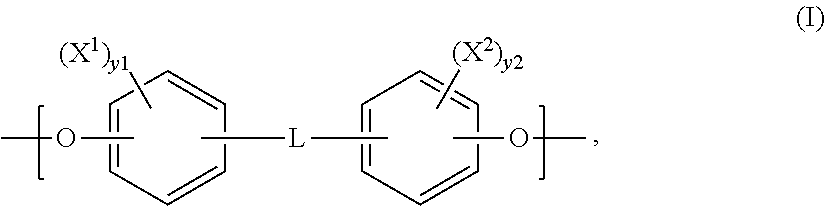
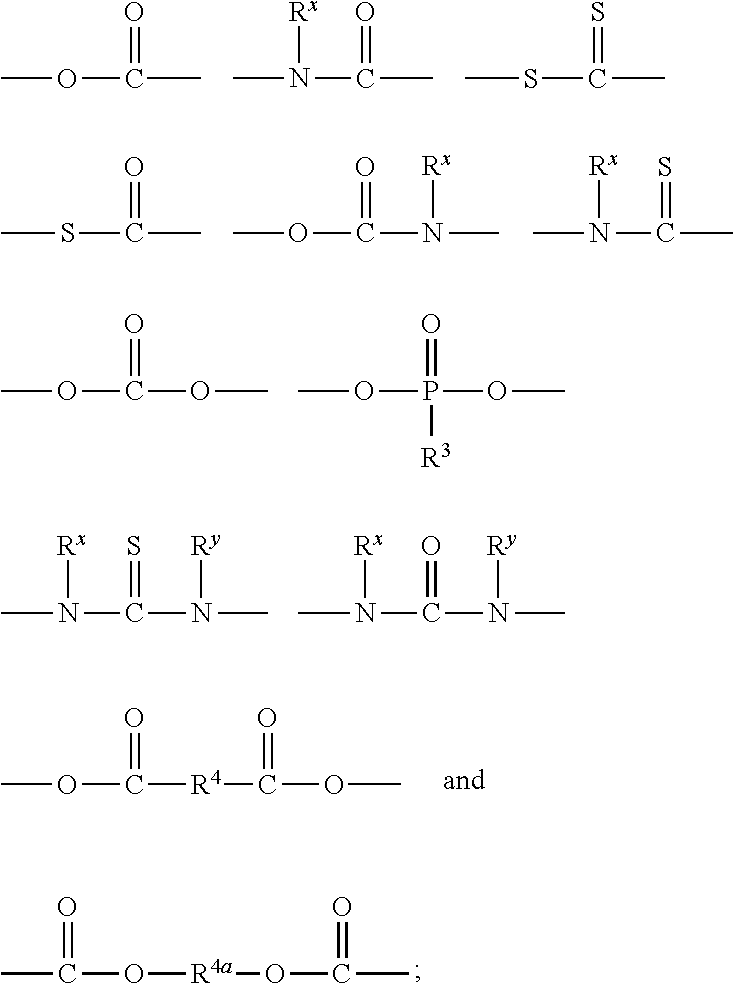
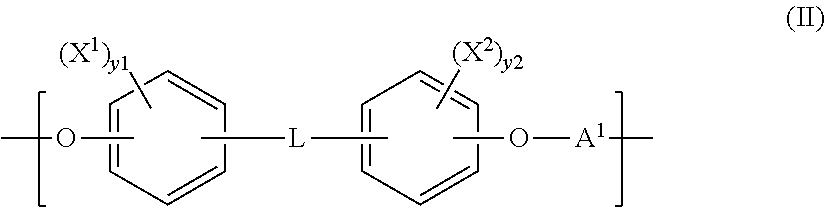
- Development of diphenolic monomers derived from tyrosine and tyrosine analogs, specifically using ester bonds instead of amide bonds to create biodegradable polycarbonates and polyarylates that are more soluble and easier to process thermally, with controlled bioerosion rates and improved mechanical properties.

Modified polymer particle, packing material and column for chromatography
PatentInactiveUS20060052531A1
Innovation
- Treating polymer particles with an acid or alkali hydrous solution to partially hydrolyze ester bonds and cap the resulting carboxyl groups through amidation, enhancing the particles' acid-alkali durability by converting ester bonds into less hydrolyzable amide bonds.
Environmental Regulations for Polymer Durability Standards
Environmental regulations governing polymer durability standards have become increasingly stringent as governments worldwide recognize the critical importance of material longevity in reducing environmental impact. The regulatory landscape specifically addresses the comparative performance of amide and ester linkages in polymer systems, establishing minimum durability requirements that directly influence material selection and design strategies.
The European Union's REACH regulation framework has established comprehensive testing protocols for polymer aging performance, mandating accelerated weathering tests that simulate decades of environmental exposure. These standards require manufacturers to demonstrate that polymer materials maintain structural integrity and performance characteristics over extended periods, with specific attention to hydrolytic stability differences between amide and ester bonds.
In the United States, the Environmental Protection Agency has implemented durability standards under the Toxic Substances Control Act, focusing on polymer degradation products and their environmental fate. These regulations particularly scrutinize ester-based polymers due to their susceptibility to hydrolytic degradation, requiring extensive documentation of degradation pathways and byproduct toxicity assessments.
The International Organization for Standardization has developed ISO 4892 series standards that establish uniform testing methodologies for polymer weathering resistance. These standards mandate specific exposure conditions including UV radiation, temperature cycling, and humidity variations that reveal fundamental differences in amide versus ester bond stability over time.
Recent regulatory developments in Asia-Pacific regions, particularly Japan's Chemical Substances Control Law and China's MEE regulations, have introduced lifecycle assessment requirements that favor polymers with superior long-term stability. These regulations increasingly penalize materials with predictable degradation patterns, creating market advantages for amide-based systems.
Compliance with these evolving standards requires manufacturers to conduct extensive aging studies comparing amide and ester polymer performance under standardized conditions. The regulatory trend clearly favors materials demonstrating enhanced durability, driving innovation toward more stable polymer architectures and influencing fundamental research directions in polymer chemistry and engineering applications.
The European Union's REACH regulation framework has established comprehensive testing protocols for polymer aging performance, mandating accelerated weathering tests that simulate decades of environmental exposure. These standards require manufacturers to demonstrate that polymer materials maintain structural integrity and performance characteristics over extended periods, with specific attention to hydrolytic stability differences between amide and ester bonds.
In the United States, the Environmental Protection Agency has implemented durability standards under the Toxic Substances Control Act, focusing on polymer degradation products and their environmental fate. These regulations particularly scrutinize ester-based polymers due to their susceptibility to hydrolytic degradation, requiring extensive documentation of degradation pathways and byproduct toxicity assessments.
The International Organization for Standardization has developed ISO 4892 series standards that establish uniform testing methodologies for polymer weathering resistance. These standards mandate specific exposure conditions including UV radiation, temperature cycling, and humidity variations that reveal fundamental differences in amide versus ester bond stability over time.
Recent regulatory developments in Asia-Pacific regions, particularly Japan's Chemical Substances Control Law and China's MEE regulations, have introduced lifecycle assessment requirements that favor polymers with superior long-term stability. These regulations increasingly penalize materials with predictable degradation patterns, creating market advantages for amide-based systems.
Compliance with these evolving standards requires manufacturers to conduct extensive aging studies comparing amide and ester polymer performance under standardized conditions. The regulatory trend clearly favors materials demonstrating enhanced durability, driving innovation toward more stable polymer architectures and influencing fundamental research directions in polymer chemistry and engineering applications.
Sustainability Impact of Long-Term Polymer Performance
The sustainability implications of long-term polymer performance, particularly in the context of amide versus ester linkages, represent a critical intersection between material science and environmental stewardship. As global awareness of plastic pollution and resource depletion intensifies, the durability and longevity of polymeric materials have emerged as fundamental factors in determining their overall environmental footprint.
Extended service life directly correlates with reduced material consumption and waste generation. Polymers with superior aging resistance, such as those incorporating amide linkages, can maintain structural integrity and functional properties over decades rather than years. This longevity translates to fewer replacement cycles, reduced manufacturing demands, and decreased end-of-life disposal requirements. The environmental benefits compound significantly when considering large-scale applications in automotive, construction, and packaging industries.
The degradation pathways of amide and ester bonds present distinct sustainability profiles. Ester linkages, while offering certain processing advantages, are more susceptible to hydrolytic degradation, potentially leading to premature failure and increased replacement frequency. Conversely, amide bonds demonstrate superior resistance to environmental stressors, including UV radiation, thermal cycling, and chemical exposure, resulting in extended operational lifespans.
Resource efficiency considerations extend beyond raw material consumption to encompass energy requirements throughout the product lifecycle. Manufacturing processes for amide-based polymers may require higher initial energy inputs, but this investment is offset by reduced processing frequency over the material's extended service life. The cumulative energy savings from decreased production, transportation, and disposal activities often exceed initial manufacturing costs.
Circular economy principles further emphasize the importance of durable polymer performance. Materials with predictable, extended aging characteristics enable more effective recycling strategies and facilitate the development of closed-loop systems. The ability to accurately predict performance degradation allows for optimized material recovery timing and enhanced recyclate quality.
End-of-life scenarios also differ significantly between polymer types. While ester linkages may offer advantages in biodegradable applications, their premature degradation in durable goods applications can lead to microplastic formation and environmental contamination. Amide-based systems, when properly designed for recyclability, provide more controlled degradation pathways and reduced environmental impact through extended use phases.
Extended service life directly correlates with reduced material consumption and waste generation. Polymers with superior aging resistance, such as those incorporating amide linkages, can maintain structural integrity and functional properties over decades rather than years. This longevity translates to fewer replacement cycles, reduced manufacturing demands, and decreased end-of-life disposal requirements. The environmental benefits compound significantly when considering large-scale applications in automotive, construction, and packaging industries.
The degradation pathways of amide and ester bonds present distinct sustainability profiles. Ester linkages, while offering certain processing advantages, are more susceptible to hydrolytic degradation, potentially leading to premature failure and increased replacement frequency. Conversely, amide bonds demonstrate superior resistance to environmental stressors, including UV radiation, thermal cycling, and chemical exposure, resulting in extended operational lifespans.
Resource efficiency considerations extend beyond raw material consumption to encompass energy requirements throughout the product lifecycle. Manufacturing processes for amide-based polymers may require higher initial energy inputs, but this investment is offset by reduced processing frequency over the material's extended service life. The cumulative energy savings from decreased production, transportation, and disposal activities often exceed initial manufacturing costs.
Circular economy principles further emphasize the importance of durable polymer performance. Materials with predictable, extended aging characteristics enable more effective recycling strategies and facilitate the development of closed-loop systems. The ability to accurately predict performance degradation allows for optimized material recovery timing and enhanced recyclate quality.
End-of-life scenarios also differ significantly between polymer types. While ester linkages may offer advantages in biodegradable applications, their premature degradation in durable goods applications can lead to microplastic formation and environmental contamination. Amide-based systems, when properly designed for recyclability, provide more controlled degradation pathways and reduced environmental impact through extended use phases.
Unlock deeper insights with PatSnap Eureka Quick Research — get a full tech report to explore trends and direct your research. Try now!
Generate Your Research Report Instantly with AI Agent
Supercharge your innovation with PatSnap Eureka AI Agent Platform!