

Analysis of Hydrogen Solid Storage and Thermal Stability
OCT 27, 202510 MIN READ
Generate Your Research Report Instantly with AI Agent
PatSnap Eureka helps you evaluate technical feasibility & market potential.
Hydrogen Storage Technology Background and Objectives
Hydrogen storage technology has evolved significantly over the past several decades, driven by the global push towards clean energy solutions and decarbonization efforts. Initially emerging in the 1970s during the oil crisis, hydrogen storage research has progressed from basic conceptual studies to sophisticated engineered systems capable of meeting increasingly demanding performance requirements. The trajectory of development has been characterized by continuous improvements in storage capacity, safety features, and operational efficiency, with solid-state storage emerging as a particularly promising avenue for further advancement.
The fundamental challenge in hydrogen storage lies in achieving high volumetric and gravimetric densities while maintaining practical operating conditions. Conventional storage methods such as compressed gas and cryogenic liquid storage present significant limitations in terms of energy density, safety concerns, and infrastructure requirements. Solid-state hydrogen storage offers potential solutions to these challenges by binding hydrogen atoms within solid materials, thereby increasing storage density while potentially enhancing safety profiles.
Current technological objectives in hydrogen solid storage focus on developing materials and systems that can meet the U.S. Department of Energy's targets: 6.5 wt% gravimetric capacity and 50 g/L volumetric capacity at near-ambient temperatures and moderate pressures. Additionally, researchers aim to achieve rapid hydrogen absorption/desorption kinetics, thermal stability across a wide temperature range, and cycling durability exceeding 1,500 charge-discharge cycles to ensure practical viability in real-world applications.
Thermal stability represents a critical parameter in solid hydrogen storage systems, as it directly impacts safety, operational efficiency, and system longevity. Materials must maintain structural integrity and hydrogen retention capabilities across varying temperature conditions, particularly during rapid temperature fluctuations that may occur in practical applications. The ideal storage material would exhibit minimal hydrogen release at ambient temperatures while allowing controlled desorption at moderate temperatures during intended use.
The global research landscape has expanded significantly, with major initiatives underway in North America, Europe, Japan, South Korea, and China. International collaboration has accelerated progress, with notable breakthroughs in metal hydrides, complex hydrides, and nanoporous materials. Recent advances in computational materials science have enabled more efficient screening of candidate materials, accelerating the discovery process and allowing researchers to predict thermal stability characteristics before experimental validation.
Looking forward, the field is moving toward multi-functional materials that combine high storage capacity with enhanced thermal management capabilities, potentially revolutionizing applications ranging from transportation to grid-scale energy storage. The convergence of nanotechnology, advanced manufacturing, and materials science promises to deliver next-generation storage solutions that overcome current limitations in thermal stability and overall performance.
The fundamental challenge in hydrogen storage lies in achieving high volumetric and gravimetric densities while maintaining practical operating conditions. Conventional storage methods such as compressed gas and cryogenic liquid storage present significant limitations in terms of energy density, safety concerns, and infrastructure requirements. Solid-state hydrogen storage offers potential solutions to these challenges by binding hydrogen atoms within solid materials, thereby increasing storage density while potentially enhancing safety profiles.
Current technological objectives in hydrogen solid storage focus on developing materials and systems that can meet the U.S. Department of Energy's targets: 6.5 wt% gravimetric capacity and 50 g/L volumetric capacity at near-ambient temperatures and moderate pressures. Additionally, researchers aim to achieve rapid hydrogen absorption/desorption kinetics, thermal stability across a wide temperature range, and cycling durability exceeding 1,500 charge-discharge cycles to ensure practical viability in real-world applications.
Thermal stability represents a critical parameter in solid hydrogen storage systems, as it directly impacts safety, operational efficiency, and system longevity. Materials must maintain structural integrity and hydrogen retention capabilities across varying temperature conditions, particularly during rapid temperature fluctuations that may occur in practical applications. The ideal storage material would exhibit minimal hydrogen release at ambient temperatures while allowing controlled desorption at moderate temperatures during intended use.
The global research landscape has expanded significantly, with major initiatives underway in North America, Europe, Japan, South Korea, and China. International collaboration has accelerated progress, with notable breakthroughs in metal hydrides, complex hydrides, and nanoporous materials. Recent advances in computational materials science have enabled more efficient screening of candidate materials, accelerating the discovery process and allowing researchers to predict thermal stability characteristics before experimental validation.
Looking forward, the field is moving toward multi-functional materials that combine high storage capacity with enhanced thermal management capabilities, potentially revolutionizing applications ranging from transportation to grid-scale energy storage. The convergence of nanotechnology, advanced manufacturing, and materials science promises to deliver next-generation storage solutions that overcome current limitations in thermal stability and overall performance.
Market Analysis for Hydrogen Storage Solutions
The global hydrogen storage market is experiencing significant growth, driven by the increasing focus on clean energy solutions and the transition away from fossil fuels. As of 2023, the market size for hydrogen storage solutions has reached approximately $15 billion, with projections indicating a compound annual growth rate (CAGR) of 11.5% through 2030. Solid-state hydrogen storage technologies, particularly those focused on thermal stability improvements, represent one of the fastest-growing segments within this market.
The transportation sector currently dominates the demand landscape, accounting for roughly 40% of the hydrogen storage market. This is primarily due to the expanding adoption of fuel cell electric vehicles (FCEVs) in commercial fleets and public transportation systems. Countries like Japan, South Korea, and Germany are leading this transition, with substantial investments in hydrogen refueling infrastructure and vehicle deployment programs.
Industrial applications constitute the second-largest market segment at 30%, where hydrogen is increasingly utilized for power generation, chemical processing, and as a feedstock for various manufacturing processes. The remaining market share is distributed among stationary power systems, portable power applications, and emerging use cases in residential energy storage.
Regional analysis reveals that Asia-Pacific currently leads the market with a 45% share, driven by aggressive hydrogen economy roadmaps in Japan, South Korea, and China. Europe follows at 30%, with North America at 20%. The remaining 5% is distributed across other regions, though Middle Eastern countries are making significant investments to capitalize on their potential for green hydrogen production.
Consumer demand patterns indicate a growing preference for storage solutions that offer higher energy density, improved safety profiles, and enhanced thermal stability. This trend directly benefits solid-state storage technologies that can address the thermal management challenges inherent in compressed and liquid hydrogen storage methods.
Market barriers include high initial capital costs, with solid-state hydrogen storage systems currently commanding a premium of 30-40% over conventional alternatives. Infrastructure limitations and regulatory uncertainties also present challenges to widespread adoption, particularly in emerging markets.
The competitive landscape features traditional energy companies pivoting toward hydrogen technologies, specialized materials science firms developing proprietary storage media, and automotive manufacturers investing in integrated hydrogen powertrain solutions. Strategic partnerships between technology developers and industrial end-users are becoming increasingly common, accelerating the commercialization timeline for advanced storage solutions with superior thermal stability characteristics.
The transportation sector currently dominates the demand landscape, accounting for roughly 40% of the hydrogen storage market. This is primarily due to the expanding adoption of fuel cell electric vehicles (FCEVs) in commercial fleets and public transportation systems. Countries like Japan, South Korea, and Germany are leading this transition, with substantial investments in hydrogen refueling infrastructure and vehicle deployment programs.
Industrial applications constitute the second-largest market segment at 30%, where hydrogen is increasingly utilized for power generation, chemical processing, and as a feedstock for various manufacturing processes. The remaining market share is distributed among stationary power systems, portable power applications, and emerging use cases in residential energy storage.
Regional analysis reveals that Asia-Pacific currently leads the market with a 45% share, driven by aggressive hydrogen economy roadmaps in Japan, South Korea, and China. Europe follows at 30%, with North America at 20%. The remaining 5% is distributed across other regions, though Middle Eastern countries are making significant investments to capitalize on their potential for green hydrogen production.
Consumer demand patterns indicate a growing preference for storage solutions that offer higher energy density, improved safety profiles, and enhanced thermal stability. This trend directly benefits solid-state storage technologies that can address the thermal management challenges inherent in compressed and liquid hydrogen storage methods.
Market barriers include high initial capital costs, with solid-state hydrogen storage systems currently commanding a premium of 30-40% over conventional alternatives. Infrastructure limitations and regulatory uncertainties also present challenges to widespread adoption, particularly in emerging markets.
The competitive landscape features traditional energy companies pivoting toward hydrogen technologies, specialized materials science firms developing proprietary storage media, and automotive manufacturers investing in integrated hydrogen powertrain solutions. Strategic partnerships between technology developers and industrial end-users are becoming increasingly common, accelerating the commercialization timeline for advanced storage solutions with superior thermal stability characteristics.
Current Challenges in Solid-State Hydrogen Storage
Despite significant advancements in solid-state hydrogen storage technologies, several critical challenges continue to impede widespread commercial implementation. The primary obstacle remains achieving optimal hydrogen storage capacity while maintaining practical operating conditions. Current materials struggle to meet the U.S. Department of Energy's target of 6.5 wt% system-level storage capacity at moderate temperatures and pressures, with most practical systems achieving only 2-4 wt% under real-world conditions.
Thermal stability presents a particularly complex challenge for solid-state hydrogen storage systems. Many promising materials exhibit excellent hydrogen uptake characteristics but suffer from poor thermal management during hydrogenation and dehydrogenation processes. Metal hydrides, while offering high volumetric capacity, typically require temperatures exceeding 300°C for hydrogen release, making them impractical for mobile applications. Conversely, physisorption-based materials operate at extremely low temperatures (-196°C), necessitating energy-intensive cooling systems.
Cycling stability represents another significant hurdle. Most solid-state storage materials demonstrate performance degradation after repeated hydrogen absorption-desorption cycles. This degradation manifests as reduced storage capacity, slower kinetics, and structural deterioration. For instance, complex hydrides may lose up to 30% of their initial capacity after just 50 cycles due to phase segregation and irreversible side reactions.
Reaction kinetics remain problematic across virtually all solid-state storage materials. Slow absorption and desorption rates limit practical hydrogen delivery for on-demand applications. While catalysts have shown promise in enhancing kinetics, they often introduce additional weight to the system, reducing gravimetric capacity and creating a challenging engineering trade-off.
Heat management during operation constitutes a substantial engineering challenge. The exothermic nature of hydrogen absorption requires efficient heat dissipation systems, while endothermic desorption necessitates heat input. This thermal management complexity increases system weight and volume, further reducing effective storage metrics.
Material cost and scalability present significant barriers to commercialization. Many high-performance materials incorporate expensive rare earth elements or require complex synthesis procedures. For example, borohydride-based systems offer impressive theoretical capacities but utilize costly precursors and intricate preparation methods that hinder large-scale production.
Safety concerns persist across various solid-state storage technologies. Some materials, particularly reactive hydrides, present risks of pyrophoricity when exposed to air or moisture. Additionally, potential dust explosion hazards and toxic byproduct formation during cycling require sophisticated containment and handling protocols that add complexity to system design.
Thermal stability presents a particularly complex challenge for solid-state hydrogen storage systems. Many promising materials exhibit excellent hydrogen uptake characteristics but suffer from poor thermal management during hydrogenation and dehydrogenation processes. Metal hydrides, while offering high volumetric capacity, typically require temperatures exceeding 300°C for hydrogen release, making them impractical for mobile applications. Conversely, physisorption-based materials operate at extremely low temperatures (-196°C), necessitating energy-intensive cooling systems.
Cycling stability represents another significant hurdle. Most solid-state storage materials demonstrate performance degradation after repeated hydrogen absorption-desorption cycles. This degradation manifests as reduced storage capacity, slower kinetics, and structural deterioration. For instance, complex hydrides may lose up to 30% of their initial capacity after just 50 cycles due to phase segregation and irreversible side reactions.
Reaction kinetics remain problematic across virtually all solid-state storage materials. Slow absorption and desorption rates limit practical hydrogen delivery for on-demand applications. While catalysts have shown promise in enhancing kinetics, they often introduce additional weight to the system, reducing gravimetric capacity and creating a challenging engineering trade-off.
Heat management during operation constitutes a substantial engineering challenge. The exothermic nature of hydrogen absorption requires efficient heat dissipation systems, while endothermic desorption necessitates heat input. This thermal management complexity increases system weight and volume, further reducing effective storage metrics.
Material cost and scalability present significant barriers to commercialization. Many high-performance materials incorporate expensive rare earth elements or require complex synthesis procedures. For example, borohydride-based systems offer impressive theoretical capacities but utilize costly precursors and intricate preparation methods that hinder large-scale production.
Safety concerns persist across various solid-state storage technologies. Some materials, particularly reactive hydrides, present risks of pyrophoricity when exposed to air or moisture. Additionally, potential dust explosion hazards and toxic byproduct formation during cycling require sophisticated containment and handling protocols that add complexity to system design.
Current Solid-State Hydrogen Storage Solutions
01 Metal hydride materials for hydrogen storage
Metal hydrides are promising materials for solid hydrogen storage due to their high hydrogen capacity and thermal stability. These materials form chemical bonds with hydrogen atoms, allowing for reversible hydrogen storage under appropriate temperature and pressure conditions. The thermal stability of metal hydrides can be enhanced through alloying with other elements or creating composite structures, which helps to optimize hydrogen release temperatures and cycling stability.- Metal hydride materials for hydrogen storage: Metal hydrides are promising materials for solid hydrogen storage due to their high hydrogen capacity and thermal stability. These materials can absorb and release hydrogen through reversible chemical reactions. The thermal stability of metal hydrides can be enhanced through alloying with other elements or creating composite structures. Various metal hydride systems have been developed with improved thermal properties suitable for different operating temperature ranges.
- Carbon-based materials for hydrogen storage: Carbon-based materials such as activated carbon, carbon nanotubes, and graphene have been investigated for hydrogen storage applications. These materials offer advantages including lightweight properties, high surface area, and good thermal stability. The hydrogen storage capacity and thermal stability of carbon-based materials can be improved through surface functionalization, doping with metal particles, or creating hierarchical porous structures.
- Metal-organic frameworks (MOFs) for hydrogen storage: Metal-organic frameworks are crystalline porous materials that show promise for hydrogen storage due to their exceptionally high surface areas and tunable pore structures. The thermal stability of MOFs can be enhanced through the selection of appropriate metal nodes and organic linkers. Some MOFs maintain structural integrity at elevated temperatures, making them suitable for hydrogen storage applications under various thermal conditions.
- Thermal management systems for hydrogen storage: Effective thermal management is crucial for maintaining the stability and efficiency of solid hydrogen storage systems. Various thermal management approaches have been developed, including heat exchangers, cooling systems, and insulation materials. These systems help control the temperature during hydrogen absorption and desorption processes, preventing degradation of storage materials and ensuring safe operation under different environmental conditions.
- Composite materials and additives for enhanced thermal stability: Composite materials combining different hydrogen storage mechanisms can offer improved thermal stability. Additives such as catalysts, stabilizers, and heat transfer enhancers can be incorporated to optimize the thermal properties of hydrogen storage materials. These composites and additives help to lower desorption temperatures, improve cycling stability, and enhance heat transfer within the storage system, resulting in better overall thermal performance.
02 Carbon-based materials for hydrogen storage
Carbon-based materials such as activated carbon, carbon nanotubes, and graphene have been developed for solid hydrogen storage applications. These materials offer advantages including lightweight properties, high surface area, and good thermal stability. The hydrogen storage capacity and thermal performance can be improved through surface functionalization, doping with metal particles, or creating hierarchical porous structures that enhance hydrogen adsorption while maintaining structural integrity at various temperatures.Expand Specific Solutions03 Metal-organic frameworks (MOFs) for hydrogen storage
Metal-organic frameworks represent an innovative class of porous materials for hydrogen storage with tunable thermal stability. Their crystalline structure consists of metal ions coordinated to organic ligands, creating a framework with high surface area and porosity. The thermal stability of MOFs can be enhanced through the selection of specific metal centers, ligand design, and post-synthetic modifications, allowing them to maintain structural integrity and hydrogen storage capacity across a wide temperature range.Expand Specific Solutions04 Thermal management systems for hydrogen storage
Specialized thermal management systems are crucial for maintaining the stability and efficiency of solid hydrogen storage materials. These systems include heat exchangers, insulation materials, and temperature control mechanisms that help regulate the heat generated during hydrogen absorption and desorption processes. Advanced thermal management designs can prevent localized hotspots, ensure uniform temperature distribution, and protect storage materials from thermal degradation during cycling operations.Expand Specific Solutions05 Composite and catalytic materials for enhanced thermal stability
Composite materials combining different hydrogen storage compounds with catalysts can significantly improve thermal stability and hydrogen release kinetics. These composites often incorporate catalytic nanoparticles that lower activation energy barriers for hydrogen absorption and desorption while preventing agglomeration of storage materials during thermal cycling. The strategic integration of stabilizers and catalysts helps maintain structural integrity and performance over extended temperature ranges and multiple hydrogen storage cycles.Expand Specific Solutions
Key Industry Players in Hydrogen Storage Research
The hydrogen solid storage market is currently in a growth phase, characterized by increasing investments and research activities. The global market size for hydrogen storage is projected to expand significantly due to rising demand for clean energy solutions. Technologically, the field is advancing but still faces challenges in thermal stability and storage efficiency. Leading automotive companies like Hyundai, Kia, and Mercedes-Benz are investing heavily in hydrogen storage technologies for fuel cell vehicles. Research institutions including the University of Washington and Northwestern Polytechnical University are developing innovative materials for enhanced storage capacity. Specialized companies such as H2Go Power and Hydrexia are pioneering commercial solid storage solutions with improved thermal characteristics, while industrial giants like Linde and The Japan Steel Works are scaling up manufacturing capabilities to meet anticipated market demand.
H2Go Power Ltd.
Technical Solution: H2Go Power has developed advanced solid-state hydrogen storage materials based on metal hydrides and nanoporous frameworks. Their proprietary technology utilizes catalytically enhanced metal organic frameworks (MOFs) that can store hydrogen at moderate pressures (30-50 bar) and near-ambient temperatures. The company's solid storage system incorporates thermal management solutions that address the exothermic nature of hydrogen absorption and endothermic desorption processes. Their integrated system includes heat exchangers with precise temperature control mechanisms to maintain optimal thermal stability during cycling. H2Go's technology enables volumetric hydrogen densities exceeding 40 g/L, significantly higher than compressed gas storage, while operating at lower pressures. The company has demonstrated over 1000 absorption-desorption cycles with less than 10% capacity degradation, indicating excellent thermal stability and longevity of their materials.
Strengths: Achieves high volumetric density at moderate pressures; excellent cycling stability; integrated thermal management system. Weaknesses: Still requires some pressurization; complete desorption may require elevated temperatures; technology is relatively new to market with limited large-scale deployment history.
HYDREXIA PTY LTD
Technical Solution: Hydrexia has pioneered a magnesium-based alloy system for solid hydrogen storage with enhanced thermal stability characteristics. Their proprietary Mg-Ni-based alloy formulation incorporates specific dopants and catalysts that lower the hydrogen desorption temperature to approximately 250°C (compared to 300-400°C for conventional Mg hydrides). The company's technology features a patented heat management system that utilizes the absorption heat to facilitate subsequent desorption, creating a thermally efficient cycle. Hydrexia's storage system achieves gravimetric hydrogen densities of 5-7 wt%, with volumetric densities approaching 100 kg H₂/m³. Their material structure is engineered with specific grain boundaries and nano-features that enhance hydrogen diffusion kinetics while maintaining structural integrity during thermal cycling. The company has demonstrated stable performance over 500+ cycles with minimal degradation in capacity or kinetics.
Strengths: High volumetric and gravimetric storage capacity; innovative heat recovery system; relatively abundant and low-cost base materials. Weaknesses: Still requires moderately high temperatures for desorption; sensitivity to air and moisture contamination; requires careful thermal management during rapid charging.
Critical Thermal Stability Innovations and Patents
Solid state hydrogen storage system
PatentActiveUS11946597B2
Innovation
- A solid state hydrogen storage system that includes microcapsules coated with a ferromagnetic material, such as Ni or Co, and a thermally conductive material, where a variable magnetic field is applied using a coil to induce heating during hydrogen discharge, enhancing energy transfer and efficiency without the need for additional heating structures.


Reversible hydrogen storage systems
PatentInactiveUS20060013753A1
Innovation
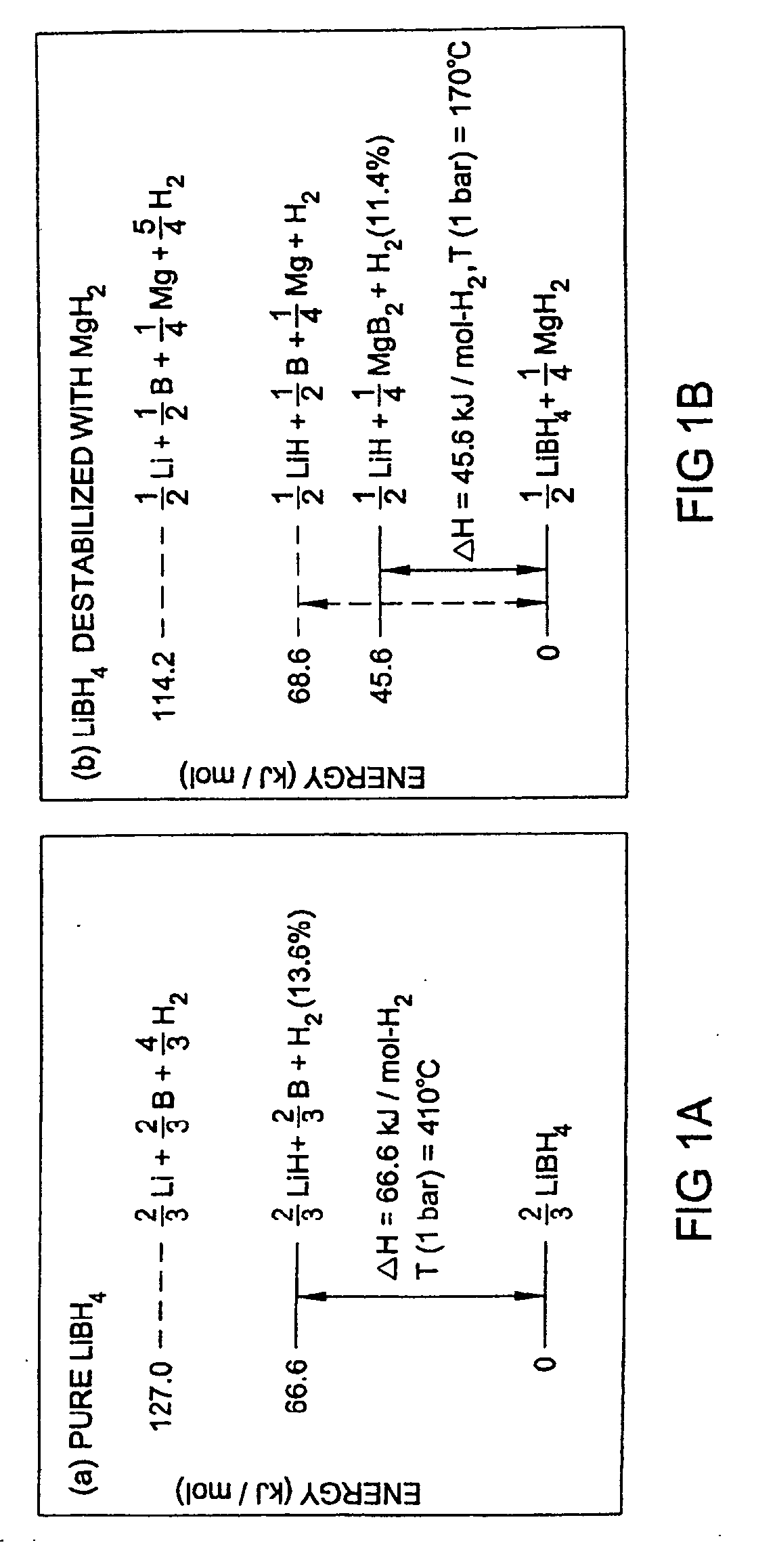
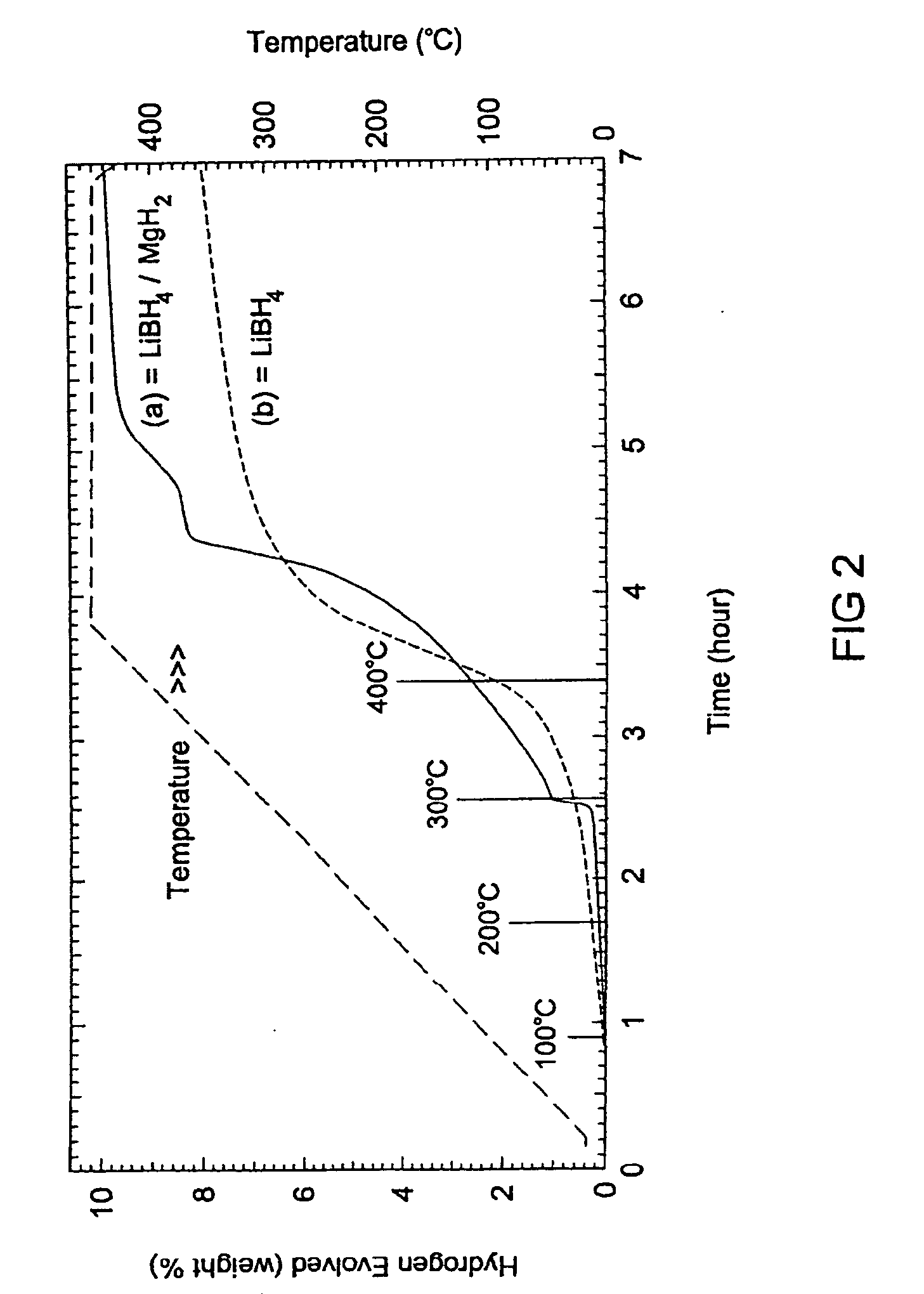
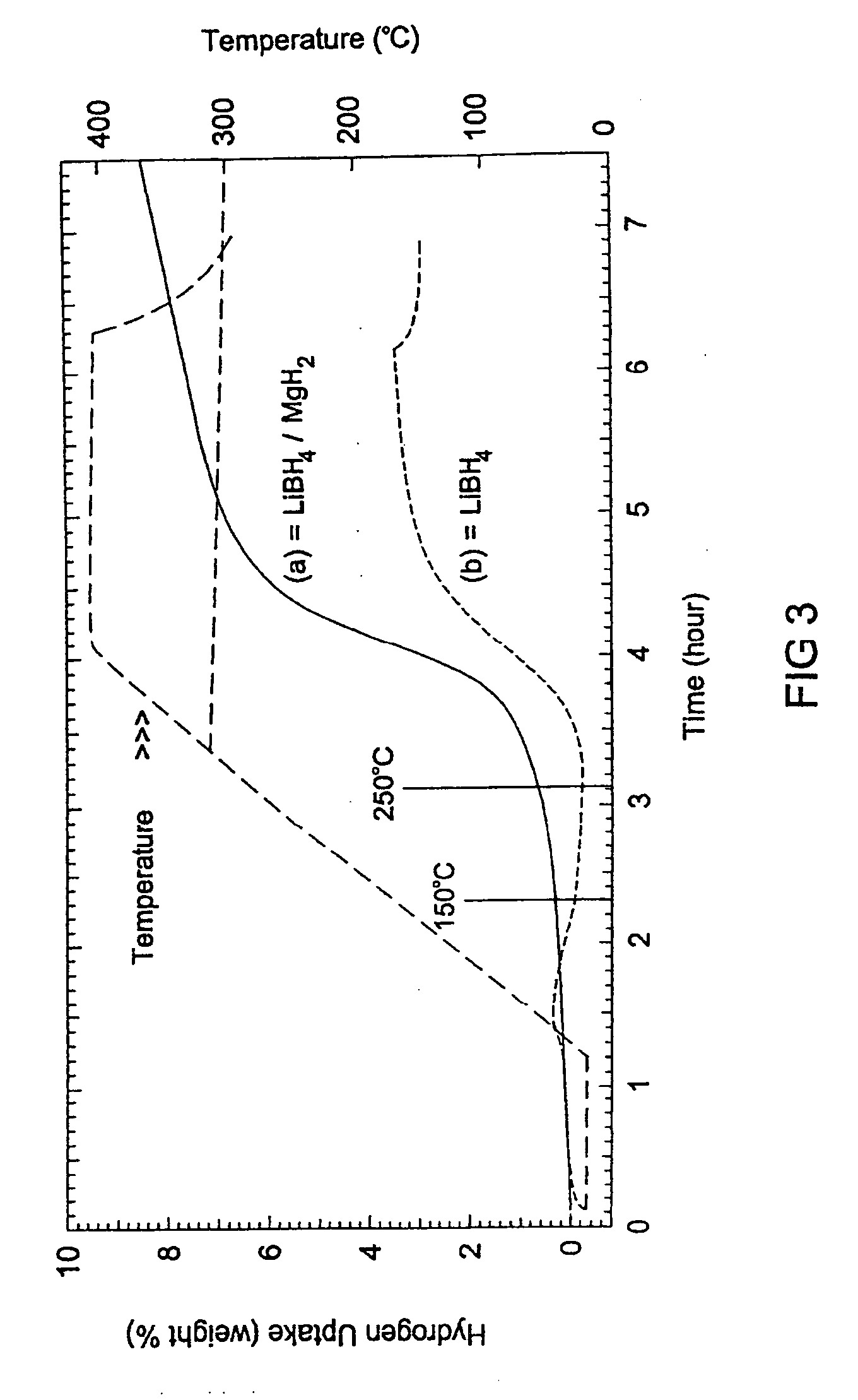
- A reversible hydrogen storage material system comprising a stable hydride and a destabilizing hydride, where the stable hydride is combined with a destabilizing hydride to reduce the energy required for hydrogen release and absorption, achieving a higher hydrogen content and lower energy input, with the destabilizing hydride selected from elements like aluminum, arsenic, and boron to alter the thermodynamics and facilitate reversible reactions at industrially practicable conditions.

Safety Standards and Regulatory Framework
The regulatory landscape for hydrogen solid storage systems is evolving rapidly as governments worldwide recognize hydrogen's potential as a clean energy carrier. Currently, the International Organization for Standardization (ISO) has established ISO 16111:2018, which specifically addresses transportable gas storage devices containing hydrogen absorbed in reversible metal hydrides. This standard outlines critical safety parameters including pressure vessel requirements, thermal stability testing protocols, and material compatibility considerations.
In the United States, the Department of Energy (DOE) has developed comprehensive guidelines for hydrogen storage systems, with particular emphasis on thermal stability requirements. These guidelines mandate that solid storage materials must maintain stability under temperature fluctuations between -40°C and 85°C for automotive applications, with more stringent requirements for stationary storage systems. The National Fire Protection Association (NFPA) has also introduced NFPA 2: Hydrogen Technologies Code, which addresses fire protection, safe use, and handling of hydrogen in both gaseous and liquid states.
European regulations are primarily governed by the EU Regulation No 406/2010, implementing EC Regulation No 79/2009 concerning type-approval of hydrogen-powered vehicles. The European Industrial Gases Association (EIGA) provides additional guidance through Document 100/11, which covers hydrogen storage and handling. These frameworks emphasize thermal cycling tests and stability assessments as critical components of safety certification.
In Asia, Japan has pioneered hydrogen safety standards through its High Pressure Gas Safety Act, which includes specific provisions for solid storage systems. The Japanese Industrial Standards Committee has developed JIS standards that address thermal stability requirements for metal hydrides and other solid storage materials. Similarly, China has implemented GB/T standards that outline safety requirements for hydrogen storage materials, with GB/T 35544-2017 specifically addressing metal hydride storage systems.
International harmonization efforts are underway through the United Nations Global Technical Regulation (GTR) No. 13, which focuses on hydrogen and fuel cell vehicles. This regulation includes provisions for solid storage systems, emphasizing thermal management and stability during both normal operation and emergency scenarios. The International Energy Agency's Hydrogen Technology Collaboration Program (IEA HTP) is working to standardize testing protocols for thermal stability across different solid storage technologies.
Emerging regulatory considerations are increasingly focusing on lifecycle assessment, including end-of-life disposal and recycling of solid storage materials. This is particularly relevant for complex hydrides and metal-organic frameworks, which may contain materials requiring special handling procedures. Future regulatory frameworks will likely incorporate more comprehensive thermal stability requirements across wider temperature ranges and longer duration testing protocols to ensure long-term safety and reliability.
In the United States, the Department of Energy (DOE) has developed comprehensive guidelines for hydrogen storage systems, with particular emphasis on thermal stability requirements. These guidelines mandate that solid storage materials must maintain stability under temperature fluctuations between -40°C and 85°C for automotive applications, with more stringent requirements for stationary storage systems. The National Fire Protection Association (NFPA) has also introduced NFPA 2: Hydrogen Technologies Code, which addresses fire protection, safe use, and handling of hydrogen in both gaseous and liquid states.
European regulations are primarily governed by the EU Regulation No 406/2010, implementing EC Regulation No 79/2009 concerning type-approval of hydrogen-powered vehicles. The European Industrial Gases Association (EIGA) provides additional guidance through Document 100/11, which covers hydrogen storage and handling. These frameworks emphasize thermal cycling tests and stability assessments as critical components of safety certification.
In Asia, Japan has pioneered hydrogen safety standards through its High Pressure Gas Safety Act, which includes specific provisions for solid storage systems. The Japanese Industrial Standards Committee has developed JIS standards that address thermal stability requirements for metal hydrides and other solid storage materials. Similarly, China has implemented GB/T standards that outline safety requirements for hydrogen storage materials, with GB/T 35544-2017 specifically addressing metal hydride storage systems.
International harmonization efforts are underway through the United Nations Global Technical Regulation (GTR) No. 13, which focuses on hydrogen and fuel cell vehicles. This regulation includes provisions for solid storage systems, emphasizing thermal management and stability during both normal operation and emergency scenarios. The International Energy Agency's Hydrogen Technology Collaboration Program (IEA HTP) is working to standardize testing protocols for thermal stability across different solid storage technologies.
Emerging regulatory considerations are increasingly focusing on lifecycle assessment, including end-of-life disposal and recycling of solid storage materials. This is particularly relevant for complex hydrides and metal-organic frameworks, which may contain materials requiring special handling procedures. Future regulatory frameworks will likely incorporate more comprehensive thermal stability requirements across wider temperature ranges and longer duration testing protocols to ensure long-term safety and reliability.
Environmental Impact and Sustainability Assessment
The environmental impact of hydrogen solid storage systems represents a critical dimension in evaluating their viability as sustainable energy solutions. When compared to conventional fossil fuel systems, solid hydrogen storage technologies demonstrate significant potential for reducing greenhouse gas emissions throughout their lifecycle. The production, utilization, and eventual decommissioning of these storage systems generate substantially lower carbon footprints, particularly when the hydrogen itself is produced through renewable energy sources.
Material sustainability constitutes a fundamental consideration in solid storage systems. Metal hydrides, complex hydrides, and carbon-based materials each present distinct environmental profiles. While some metal hydrides contain rare earth elements that raise concerns regarding resource depletion and mining impacts, others utilize more abundant materials with reduced environmental consequences. The recyclability of these materials varies considerably, with certain metal hydride systems demonstrating recovery rates exceeding 90% under optimal conditions.
Water consumption patterns associated with hydrogen solid storage technologies merit careful examination. The manufacturing processes for certain storage materials require substantial water inputs, though significantly less than those needed for hydrogen liquefaction infrastructure. Advanced production methodologies have demonstrated potential water usage reductions of 30-45% compared to earlier generation systems, representing meaningful progress toward water conservation objectives.
Land use implications of solid storage systems generally compare favorably against alternative energy storage technologies. The compact nature of solid storage systems translates to smaller physical footprints for equivalent energy storage capacity. Quantitative assessments indicate that solid storage facilities require approximately 60-70% less land area than comparable compressed gas storage installations, contributing positively to land conservation efforts.
Life cycle assessment (LCA) studies reveal that the environmental advantages of hydrogen solid storage systems become most pronounced during operational phases. While production processes may entail moderate environmental impacts, the extended operational lifespan of these systems—typically 15-20 years with proper thermal management—distributes these impacts across substantial energy delivery, yielding favorable sustainability metrics. End-of-life considerations remain an evolving research area, with emerging recycling protocols demonstrating promising material recovery rates.
Regulatory frameworks increasingly recognize and incentivize the environmental benefits of hydrogen storage technologies. Carbon accounting mechanisms and sustainability certification systems have begun incorporating specific provisions for hydrogen storage technologies, potentially accelerating their market adoption through environmental performance recognition.
Material sustainability constitutes a fundamental consideration in solid storage systems. Metal hydrides, complex hydrides, and carbon-based materials each present distinct environmental profiles. While some metal hydrides contain rare earth elements that raise concerns regarding resource depletion and mining impacts, others utilize more abundant materials with reduced environmental consequences. The recyclability of these materials varies considerably, with certain metal hydride systems demonstrating recovery rates exceeding 90% under optimal conditions.
Water consumption patterns associated with hydrogen solid storage technologies merit careful examination. The manufacturing processes for certain storage materials require substantial water inputs, though significantly less than those needed for hydrogen liquefaction infrastructure. Advanced production methodologies have demonstrated potential water usage reductions of 30-45% compared to earlier generation systems, representing meaningful progress toward water conservation objectives.
Land use implications of solid storage systems generally compare favorably against alternative energy storage technologies. The compact nature of solid storage systems translates to smaller physical footprints for equivalent energy storage capacity. Quantitative assessments indicate that solid storage facilities require approximately 60-70% less land area than comparable compressed gas storage installations, contributing positively to land conservation efforts.
Life cycle assessment (LCA) studies reveal that the environmental advantages of hydrogen solid storage systems become most pronounced during operational phases. While production processes may entail moderate environmental impacts, the extended operational lifespan of these systems—typically 15-20 years with proper thermal management—distributes these impacts across substantial energy delivery, yielding favorable sustainability metrics. End-of-life considerations remain an evolving research area, with emerging recycling protocols demonstrating promising material recovery rates.
Regulatory frameworks increasingly recognize and incentivize the environmental benefits of hydrogen storage technologies. Carbon accounting mechanisms and sustainability certification systems have begun incorporating specific provisions for hydrogen storage technologies, potentially accelerating their market adoption through environmental performance recognition.
Unlock deeper insights with PatSnap Eureka Quick Research — get a full tech report to explore trends and direct your research. Try now!
Generate Your Research Report Instantly with AI Agent
Supercharge your innovation with PatSnap Eureka AI Agent Platform!