Current Innovations in Hydrogen Solid Storage Catalysts
OCT 27, 20259 MIN READ
Generate Your Research Report Instantly with AI Agent
PatSnap Eureka helps you evaluate technical feasibility & market potential.
Hydrogen Storage Catalyst Evolution and Objectives
Hydrogen storage technology has evolved significantly over the past decades, transitioning from conventional high-pressure gas and cryogenic liquid storage methods to more advanced solid-state storage systems. The journey began in the 1970s with the oil crisis, which sparked interest in hydrogen as an alternative energy carrier. Early research focused primarily on metal hydrides such as LaNi5 and FeTi, which demonstrated promising but limited storage capacities of approximately 1-2 wt%.
The 1990s marked a pivotal shift with the discovery of carbon nanostructures for hydrogen storage. Carbon nanotubes and graphene materials initially generated excitement due to theoretical predictions of high storage capacities, though practical implementations fell short of expectations. This period also witnessed the emergence of complex hydrides like alanates and borohydrides, offering higher theoretical capacities but hampered by slow kinetics and high operating temperatures.
Since 2000, catalyst development has become central to addressing hydrogen storage challenges. Early catalysts primarily consisted of transition metals like Ti, Ni, and Pd, which demonstrated ability to enhance hydrogen dissociation and recombination processes. The introduction of nano-structured catalysts around 2010 represented a significant breakthrough, substantially improving reaction kinetics while operating at lower temperatures.
Recent advancements have focused on multi-functional catalysts that simultaneously address multiple barriers in hydrogen storage systems. These innovative catalysts not only facilitate hydrogen uptake and release but also mitigate degradation mechanisms that previously limited cycling stability. Particularly noteworthy is the development of core-shell nanostructured catalysts that provide both surface activity and bulk stability.
The current technical objectives in hydrogen solid storage catalyst development align with the U.S. Department of Energy's targets: achieving 6.5 wt% gravimetric capacity and 50 g/L volumetric capacity at near-ambient conditions (−40 to 60°C, <100 bar) by 2025. Additional critical goals include improving cycling stability to >1500 cycles, reducing system costs below $333/kg H₂, and enhancing charging/discharging rates to support practical refueling times of less than 5 minutes.
Looking forward, the field is moving toward biomimetic catalysts inspired by hydrogenase enzymes, which demonstrate remarkable efficiency in hydrogen processing under ambient conditions. Another promising direction involves the integration of catalysts with advanced materials like metal-organic frameworks (MOFs) and covalent organic frameworks (COFs), potentially creating synergistic effects that overcome current limitations in capacity, kinetics, and thermal management.
The 1990s marked a pivotal shift with the discovery of carbon nanostructures for hydrogen storage. Carbon nanotubes and graphene materials initially generated excitement due to theoretical predictions of high storage capacities, though practical implementations fell short of expectations. This period also witnessed the emergence of complex hydrides like alanates and borohydrides, offering higher theoretical capacities but hampered by slow kinetics and high operating temperatures.
Since 2000, catalyst development has become central to addressing hydrogen storage challenges. Early catalysts primarily consisted of transition metals like Ti, Ni, and Pd, which demonstrated ability to enhance hydrogen dissociation and recombination processes. The introduction of nano-structured catalysts around 2010 represented a significant breakthrough, substantially improving reaction kinetics while operating at lower temperatures.
Recent advancements have focused on multi-functional catalysts that simultaneously address multiple barriers in hydrogen storage systems. These innovative catalysts not only facilitate hydrogen uptake and release but also mitigate degradation mechanisms that previously limited cycling stability. Particularly noteworthy is the development of core-shell nanostructured catalysts that provide both surface activity and bulk stability.
The current technical objectives in hydrogen solid storage catalyst development align with the U.S. Department of Energy's targets: achieving 6.5 wt% gravimetric capacity and 50 g/L volumetric capacity at near-ambient conditions (−40 to 60°C, <100 bar) by 2025. Additional critical goals include improving cycling stability to >1500 cycles, reducing system costs below $333/kg H₂, and enhancing charging/discharging rates to support practical refueling times of less than 5 minutes.
Looking forward, the field is moving toward biomimetic catalysts inspired by hydrogenase enzymes, which demonstrate remarkable efficiency in hydrogen processing under ambient conditions. Another promising direction involves the integration of catalysts with advanced materials like metal-organic frameworks (MOFs) and covalent organic frameworks (COFs), potentially creating synergistic effects that overcome current limitations in capacity, kinetics, and thermal management.
Market Analysis for Hydrogen Storage Solutions
The global hydrogen storage market is experiencing significant growth, driven by the increasing focus on clean energy solutions and the transition away from fossil fuels. As of 2023, the market for hydrogen storage solutions is valued at approximately $15.4 billion, with projections indicating a compound annual growth rate (CAGR) of 9.7% through 2030. This growth trajectory is particularly pronounced in regions with strong decarbonization policies, including the European Union, Japan, South Korea, and increasingly, China and the United States.
Solid-state hydrogen storage technologies, especially those utilizing advanced catalysts, represent a rapidly expanding segment within this market. While compressed and liquid hydrogen storage currently dominate commercial applications with market shares of 65% and 25% respectively, solid storage solutions are gaining traction due to their enhanced safety profiles and potentially higher volumetric energy densities.
The demand for hydrogen solid storage catalysts is being driven by several key market factors. Transportation applications, particularly fuel cell electric vehicles (FCEVs), constitute the largest end-use segment, accounting for approximately 40% of the market demand. Industrial applications follow at 30%, with stationary power generation and portable applications comprising the remainder. The FCEV market itself is projected to grow at a CAGR of 67% through 2030, creating substantial pull for advanced storage solutions.
Regional analysis reveals distinct market characteristics. Asia-Pacific leads in market share (45%), driven by Japan's and South Korea's aggressive hydrogen economy strategies and China's rapidly scaling hydrogen infrastructure. Europe follows at 30%, with particularly strong growth in Germany, France, and the Nordic countries. North America accounts for 20% of the market, with significant growth potential as policy support strengthens.
Customer segmentation shows automotive OEMs as the primary buyers of hydrogen storage technologies, followed by energy companies, industrial gas suppliers, and renewable energy developers. These stakeholders increasingly prioritize storage solutions that offer higher gravimetric and volumetric capacities, faster kinetics, and lower operating temperatures – precisely the benefits that advanced catalysts for solid storage aim to deliver.
Market barriers include cost considerations, with current solid storage systems utilizing advanced catalysts typically commanding a 30-40% premium over conventional compressed hydrogen storage systems. Technical challenges related to hydrogen embrittlement, thermal management, and system integration also present commercialization hurdles that innovative catalyst technologies must address to achieve broader market penetration.
Solid-state hydrogen storage technologies, especially those utilizing advanced catalysts, represent a rapidly expanding segment within this market. While compressed and liquid hydrogen storage currently dominate commercial applications with market shares of 65% and 25% respectively, solid storage solutions are gaining traction due to their enhanced safety profiles and potentially higher volumetric energy densities.
The demand for hydrogen solid storage catalysts is being driven by several key market factors. Transportation applications, particularly fuel cell electric vehicles (FCEVs), constitute the largest end-use segment, accounting for approximately 40% of the market demand. Industrial applications follow at 30%, with stationary power generation and portable applications comprising the remainder. The FCEV market itself is projected to grow at a CAGR of 67% through 2030, creating substantial pull for advanced storage solutions.
Regional analysis reveals distinct market characteristics. Asia-Pacific leads in market share (45%), driven by Japan's and South Korea's aggressive hydrogen economy strategies and China's rapidly scaling hydrogen infrastructure. Europe follows at 30%, with particularly strong growth in Germany, France, and the Nordic countries. North America accounts for 20% of the market, with significant growth potential as policy support strengthens.
Customer segmentation shows automotive OEMs as the primary buyers of hydrogen storage technologies, followed by energy companies, industrial gas suppliers, and renewable energy developers. These stakeholders increasingly prioritize storage solutions that offer higher gravimetric and volumetric capacities, faster kinetics, and lower operating temperatures – precisely the benefits that advanced catalysts for solid storage aim to deliver.
Market barriers include cost considerations, with current solid storage systems utilizing advanced catalysts typically commanding a 30-40% premium over conventional compressed hydrogen storage systems. Technical challenges related to hydrogen embrittlement, thermal management, and system integration also present commercialization hurdles that innovative catalyst technologies must address to achieve broader market penetration.
Global Landscape of Solid Storage Catalyst Technologies
The global landscape of hydrogen solid storage catalyst technologies presents a complex and rapidly evolving picture across different regions and research institutions. North America, particularly the United States, maintains a leading position with significant research activities at institutions such as the National Renewable Energy Laboratory (NREL) and Argonne National Laboratory, focusing on novel metal-organic frameworks (MOFs) and complex metal hydrides with enhanced catalytic properties.
Europe demonstrates strong collaborative research networks, with Germany, the Netherlands, and Scandinavian countries at the forefront. The Max Planck Institute and Delft University of Technology have made substantial contributions to transition metal-based catalysts and nano-structured materials for hydrogen storage. The European Union's Horizon Europe program has specifically allocated funding for hydrogen storage research, creating a cohesive regional approach.
Asia has emerged as a powerhouse in this field, with Japan's NEDO (New Energy and Industrial Technology Development Organization) pioneering work on amide-based systems. China has dramatically increased its research output in the past decade, with institutions like the Chinese Academy of Sciences developing innovative approaches to catalyst design using computational methods and high-throughput experimentation.
The technological distribution shows distinct regional specializations. North American research tends to focus on high-capacity complex hydrides and computational catalyst design. European institutions have made significant advances in nanomaterial catalysts and system integration approaches. Asian research strengths lie in lightweight metal hydride systems and manufacturing scalability.
International collaboration patterns reveal increasing cross-regional projects, particularly between European and Asian institutions. The International Energy Agency's Hydrogen Technology Collaboration Program has facilitated knowledge exchange across borders, though intellectual property considerations sometimes limit the depth of these collaborations.
Emerging economies, particularly India, Brazil, and South Africa, are developing specialized niches in catalyst technologies adapted to their specific resource availability and industrial needs. India's focus on low-cost catalyst materials using abundant elements shows promising developments for mass-market applications.
The global research infrastructure demonstrates uneven distribution, with advanced characterization facilities concentrated in developed economies. Neutron scattering facilities, essential for hydrogen storage material research, are primarily available in North America, Europe, and Japan, creating potential bottlenecks for researchers from other regions.
Recent trends indicate growing interest in catalyst technologies specifically designed for integration with renewable energy systems, with Australia and the Middle East investing significantly in green hydrogen production and storage technologies as part of broader energy transition strategies.
Europe demonstrates strong collaborative research networks, with Germany, the Netherlands, and Scandinavian countries at the forefront. The Max Planck Institute and Delft University of Technology have made substantial contributions to transition metal-based catalysts and nano-structured materials for hydrogen storage. The European Union's Horizon Europe program has specifically allocated funding for hydrogen storage research, creating a cohesive regional approach.
Asia has emerged as a powerhouse in this field, with Japan's NEDO (New Energy and Industrial Technology Development Organization) pioneering work on amide-based systems. China has dramatically increased its research output in the past decade, with institutions like the Chinese Academy of Sciences developing innovative approaches to catalyst design using computational methods and high-throughput experimentation.
The technological distribution shows distinct regional specializations. North American research tends to focus on high-capacity complex hydrides and computational catalyst design. European institutions have made significant advances in nanomaterial catalysts and system integration approaches. Asian research strengths lie in lightweight metal hydride systems and manufacturing scalability.
International collaboration patterns reveal increasing cross-regional projects, particularly between European and Asian institutions. The International Energy Agency's Hydrogen Technology Collaboration Program has facilitated knowledge exchange across borders, though intellectual property considerations sometimes limit the depth of these collaborations.
Emerging economies, particularly India, Brazil, and South Africa, are developing specialized niches in catalyst technologies adapted to their specific resource availability and industrial needs. India's focus on low-cost catalyst materials using abundant elements shows promising developments for mass-market applications.
The global research infrastructure demonstrates uneven distribution, with advanced characterization facilities concentrated in developed economies. Neutron scattering facilities, essential for hydrogen storage material research, are primarily available in North America, Europe, and Japan, creating potential bottlenecks for researchers from other regions.
Recent trends indicate growing interest in catalyst technologies specifically designed for integration with renewable energy systems, with Australia and the Middle East investing significantly in green hydrogen production and storage technologies as part of broader energy transition strategies.
Current Catalyst Solutions for Hydrogen Solid Storage
01 Metal-based catalysts for hydrogen storage
Metal-based catalysts play a crucial role in enhancing hydrogen storage capacity and kinetics in solid storage systems. These catalysts, including transition metals, noble metals, and their alloys, facilitate hydrogen absorption and desorption processes by lowering activation energy barriers. They can be incorporated into various hydrogen storage materials to improve their performance, enabling faster charging and discharging rates while operating at more moderate temperature and pressure conditions.- Metal-based catalysts for hydrogen storage: Metal-based catalysts play a crucial role in enhancing hydrogen storage capacity and kinetics in solid storage systems. These catalysts, including transition metals, noble metals, and their alloys, facilitate hydrogen absorption and desorption processes by lowering activation energy barriers. They can be incorporated into various hydrogen storage materials to improve their performance, enabling faster charging and discharging rates while operating at more moderate temperature and pressure conditions.
- Nanostructured materials for hydrogen storage: Nanostructured materials offer enhanced hydrogen storage properties due to their high surface area and unique structural characteristics. These materials, including nanoparticles, nanotubes, and nanoporous structures, provide numerous active sites for hydrogen adsorption and absorption. The reduced diffusion distances in nanostructured materials facilitate faster hydrogen uptake and release kinetics. Additionally, the ability to tailor the composition and morphology of these nanomaterials allows for optimized hydrogen storage performance.
- Complex hydride-based hydrogen storage systems: Complex hydrides represent a promising class of materials for solid-state hydrogen storage due to their high theoretical hydrogen capacity. These systems typically consist of light elements combined with hydrogen in complex structures. Catalysts are essential for improving the reversibility and kinetics of hydrogen absorption and desorption in these materials. Various dopants and additives can be incorporated to destabilize the hydride structure, thereby reducing the temperature required for hydrogen release while maintaining high storage capacity.
- Carbon-based materials for hydrogen adsorption: Carbon-based materials offer unique advantages for hydrogen storage through physical adsorption mechanisms. These materials, including activated carbons, graphene, and carbon nanotubes, can be modified with various catalysts to enhance their hydrogen uptake capacity. The high surface area and tunable pore structure of carbon materials make them attractive for room temperature hydrogen storage applications. Surface functionalization and doping with heteroatoms or metal particles can significantly improve the hydrogen binding energy and overall storage performance.
- Composite and hybrid hydrogen storage materials: Composite and hybrid materials combine different hydrogen storage mechanisms to overcome limitations of single-component systems. These materials typically integrate catalysts with various substrates to achieve synergistic effects. By combining chemical and physical storage approaches, these systems can offer improved hydrogen capacity, enhanced kinetics, and better cycling stability. Multi-component systems may include combinations of metal hydrides, complex hydrides, carbon materials, and various catalysts designed to optimize the overall hydrogen storage performance across a wider range of operating conditions.
02 Nanostructured materials for hydrogen storage
Nanostructured materials offer enhanced hydrogen storage properties due to their high surface area and unique structural characteristics. These materials include nanoparticles, nanotubes, nanowires, and nanoporous structures that can adsorb or absorb hydrogen more efficiently than their bulk counterparts. The reduced particle size shortens hydrogen diffusion paths and increases the number of active sites available for hydrogen interaction, resulting in improved storage capacity and faster kinetics for hydrogen uptake and release.Expand Specific Solutions03 Complex hydride-based hydrogen storage systems
Complex hydrides represent a promising class of materials for solid-state hydrogen storage due to their high theoretical hydrogen capacity. These systems typically include alanates, borohydrides, and amides, often enhanced with catalysts to improve their hydrogen sorption properties. Catalytic additives help overcome kinetic barriers associated with hydrogen release and uptake in these materials, making them more practical for real-world applications by reducing operating temperatures and improving cycling stability.Expand Specific Solutions04 Carbon-based materials for hydrogen adsorption
Carbon-based materials offer unique advantages for hydrogen storage through surface adsorption mechanisms. These materials include activated carbons, graphene, carbon nanotubes, and metal-organic frameworks with carbon components. Their high surface area and tunable pore structures allow for significant hydrogen uptake, particularly when doped with catalytic elements that enhance binding energies. The lightweight nature of carbon materials also contributes to higher gravimetric hydrogen storage capacities, making them attractive for mobile applications.Expand Specific Solutions05 Composite and hybrid hydrogen storage materials
Composite and hybrid materials combine different hydrogen storage mechanisms to overcome limitations of single-component systems. These materials integrate catalysts with various substrates such as metal hydrides, complex hydrides, or porous materials to create synergistic effects. The resulting composites often demonstrate improved hydrogen storage properties including enhanced capacity, faster kinetics, and better cycling stability. Strategic design of these multi-component systems allows for optimization of hydrogen storage performance across a wider range of operating conditions.Expand Specific Solutions
Leading Companies and Research Institutions in Catalyst Development
The hydrogen solid storage catalyst market is currently in a growth phase, characterized by increasing R&D investments and emerging commercial applications. The market size is expanding rapidly, driven by automotive sector demand from players like Hyundai Motor and Kia Corp, who are advancing hydrogen vehicle technologies. Technical maturity varies significantly across storage solutions, with academic institutions (Zhejiang University, Yale University, Northwestern Polytechnical University) focusing on fundamental research while industrial players develop practical applications. Companies like GfE Metalle und Materialien, Green Fortress Engineering, and Commissariat à l'énergie atomique are pioneering advanced catalyst technologies, while automotive manufacturers are integrating these innovations into commercial products. The collaboration between research institutions and industrial partners is accelerating technology transfer and commercialization pathways.
Hyundai Motor Co., Ltd.
Technical Solution: Hyundai has pioneered innovative hydrogen solid storage solutions for automotive applications, focusing on complex metal hydrides enhanced with tailored catalysts. Their technology utilizes multi-component catalyst systems featuring transition metals (primarily Ti, Ni) and rare earth elements deposited on nanostructured scaffolds. Hyundai's approach incorporates core-shell nanoparticle catalysts with optimized surface-to-volume ratios, achieving hydrogen storage capacities of 5.5-6.2 wt% under practical automotive conditions. Their proprietary catalyst preparation method involves controlled precipitation and thermal treatment processes that create highly dispersed active sites. The company has demonstrated rapid hydrogen uptake/release kinetics at temperatures compatible with PEM fuel cell waste heat (80-120°C), addressing a critical challenge for vehicle applications. Hyundai's integrated system combines these catalytic materials with advanced thermal management and pressure control systems, enabling over 1,500 hydrogenation cycles with minimal capacity degradation. Recent developments include catalyst formulations that reduce sensitivity to air and moisture contamination.
Strengths: Excellent integration with automotive systems and compatibility with existing fuel cell technology. The catalyst systems demonstrate good tolerance to cycling and practical operating conditions. Weaknesses: Reliance on some rare earth elements raises cost and supply chain concerns, while the overall system weight still presents challenges for vehicle range optimization.
General Electric Company
Technical Solution: General Electric has developed advanced hydrogen storage systems utilizing metal hydride catalysts. Their approach focuses on nanostructured materials with enhanced surface area and catalytic activity. GE's technology employs transition metal catalysts (primarily Ni, Ti, and Fe-based compounds) deposited on lightweight support structures to improve hydrogen adsorption/desorption kinetics. Their proprietary catalyst formulations reduce activation energy barriers for hydrogen dissociation, allowing storage at moderate temperatures (80-150°C) and pressures (30-50 bar). GE has demonstrated systems achieving 5-7 wt% hydrogen capacity with significantly improved cycling stability compared to conventional materials. Their integrated thermal management system addresses heat release during hydrogenation, maintaining optimal operating conditions. Recent developments include composite materials combining catalytic elements with carbon nanostructures to further enhance performance and durability over thousands of cycles.
Strengths: Excellent cycling stability and thermal management integration provide reliable long-term operation. The moderate operating conditions make the technology suitable for various industrial applications. Weaknesses: The system's weight and volume still present challenges for mobile applications, and production costs remain relatively high for mass commercialization.
Key Patents and Breakthroughs in Storage Catalyst Design
Solid-state hydrogen storage media and catalytic hydrogen recharging thereof
PatentActiveUS20080274873A1
Innovation
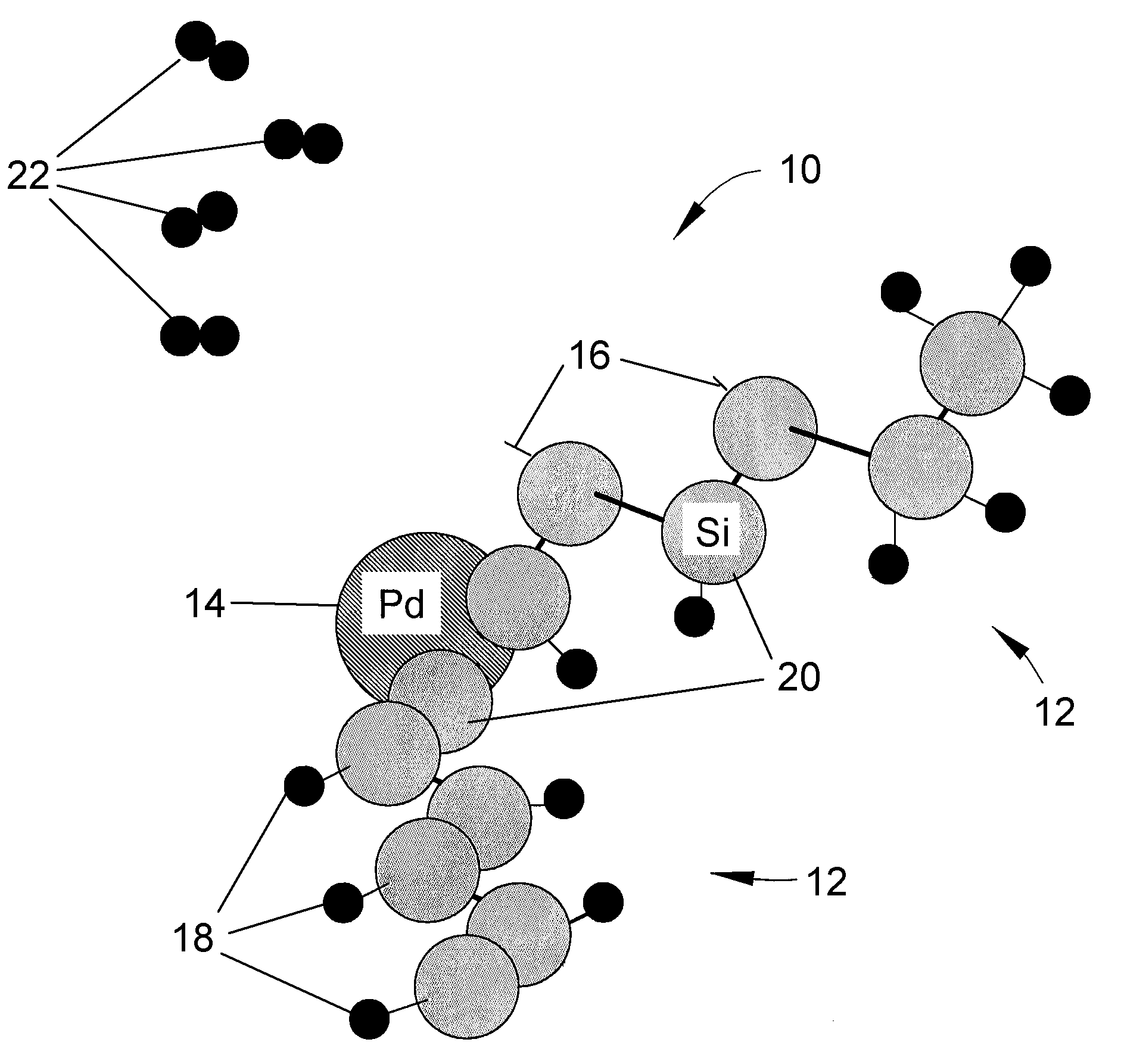
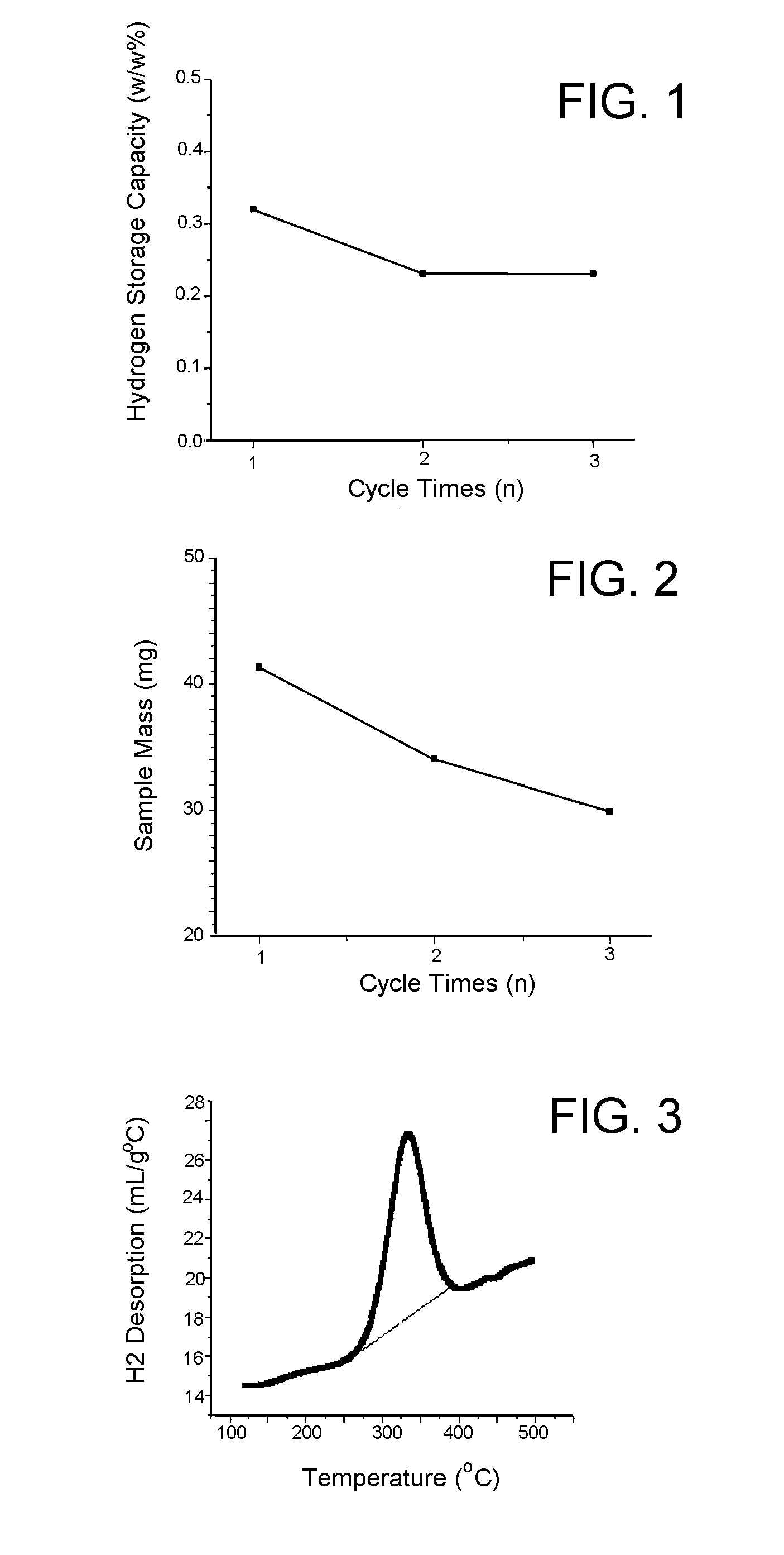
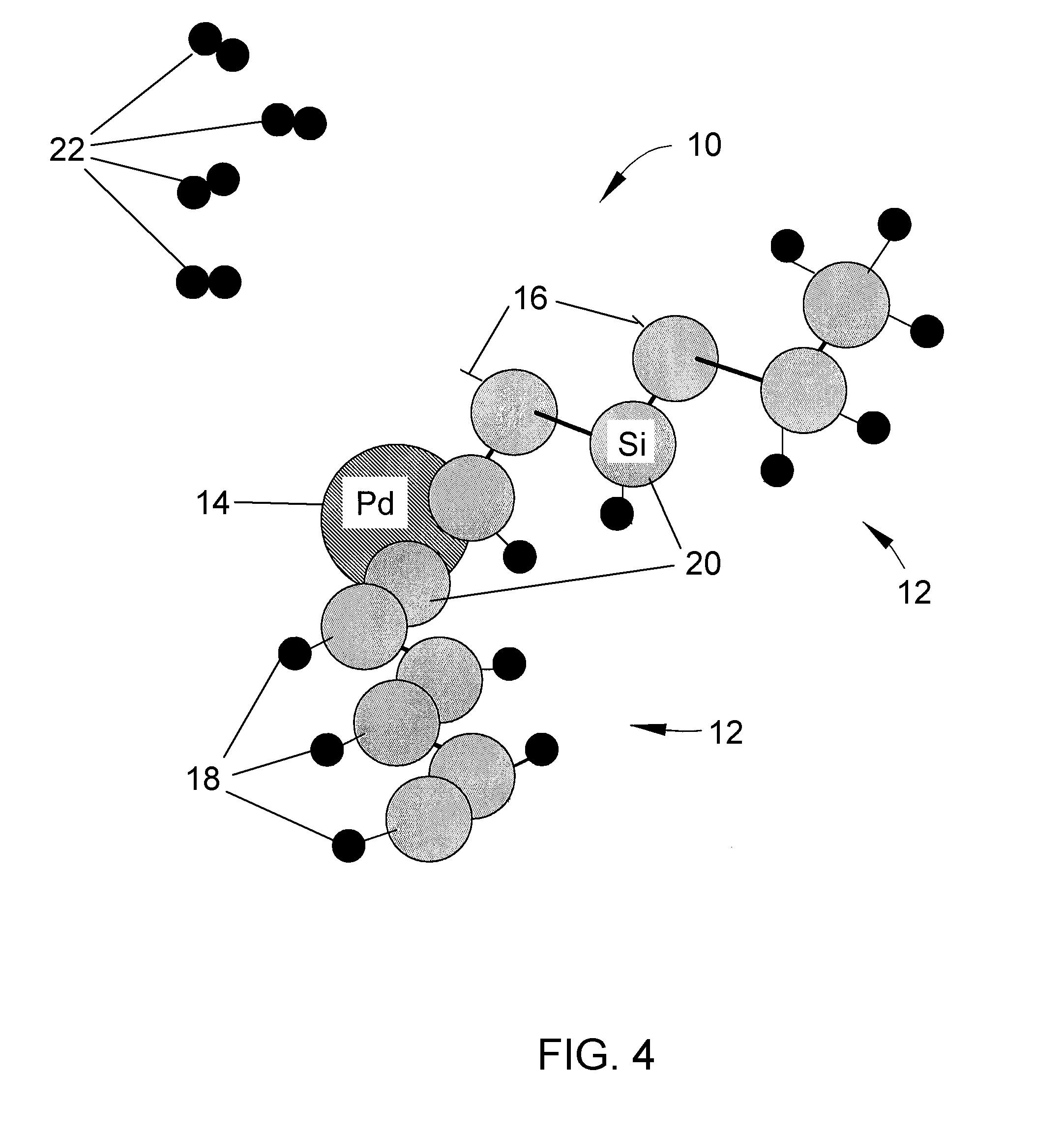
- A process involving a catalyst to inhibit silicon dangling bond reforming after dehydrogenation, allowing for near-full recharge of hydrogen in a porous matrix material by selectively removing weakly bonded hydrogen atoms and introducing a second element to preserve bond sites, thereby enhancing the rechargeability and efficiency of solid-state hydrogen storage systems.
Solid-state hydrogen storage media and catalytic hydrogen recharging thereof
PatentWO2008137273A1
Innovation
- A process involving a porous matrix material with a first element capable of bonding with multiple hydrogen atoms, where a catalyst is used to inhibit silicon dangling bond reforming after dehydrogenation, preserving bond sites for subsequent hydrogen storage and allowing nearly full recharge of the material.


Safety and Regulatory Framework for Hydrogen Storage Systems
The regulatory landscape for hydrogen storage systems, particularly those utilizing solid storage catalysts, has evolved significantly in response to the unique safety challenges posed by hydrogen as an energy carrier. International standards such as ISO/TC 197 and IEC/TC 105 provide comprehensive frameworks specifically addressing hydrogen technologies, with particular emphasis on storage system requirements, testing protocols, and risk assessment methodologies.
In the United States, the Department of Energy's Hydrogen and Fuel Cell Technologies Office has established stringent safety guidelines for hydrogen storage systems, including specific requirements for solid-state storage materials and catalysts. These regulations address thermal management, pressure control, and material degradation concerns unique to catalytic hydrogen storage systems. The National Fire Protection Association's NFPA 2 (Hydrogen Technologies Code) further complements these frameworks with detailed safety provisions for hydrogen infrastructure.
European regulatory frameworks, notably through the EU's Alternative Fuels Infrastructure Directive and the Renewable Energy Directive II, have incorporated specific provisions for hydrogen storage safety. The European Industrial Gases Association (EIGA) has developed specialized guidelines addressing the unique characteristics of solid storage systems, particularly focusing on catalyst degradation monitoring and containment strategies.
Risk assessment methodologies for hydrogen solid storage systems have evolved to incorporate specialized failure mode and effects analysis (FMEA) approaches that address catalyst poisoning, thermal runaway scenarios, and hydrogen embrittlement concerns. These methodologies inform both regulatory compliance strategies and engineering design practices, particularly for systems utilizing advanced catalysts that may introduce novel safety considerations.
Material compatibility requirements represent a critical regulatory focus area, with standards specifying acceptable materials for containment vessels, seals, and auxiliary components that may come into contact with hydrogen or catalyst materials. These standards are particularly relevant for innovative catalyst systems that may operate under extreme temperature or pressure conditions, or that utilize reactive metal compounds.
Certification processes for hydrogen storage systems increasingly incorporate specialized testing protocols for solid storage catalysts, including accelerated aging tests, thermal cycling evaluations, and catalyst poisoning resistance assessments. These certification requirements vary by jurisdiction but generally align with international standards while accommodating regional safety priorities and existing regulatory frameworks.
Training and operational safety requirements complete the regulatory landscape, with increasing emphasis on specialized knowledge requirements for personnel working with advanced catalyst systems. These requirements typically address emergency response procedures, system monitoring protocols, and maintenance practices specific to the unique characteristics of solid hydrogen storage technologies.
In the United States, the Department of Energy's Hydrogen and Fuel Cell Technologies Office has established stringent safety guidelines for hydrogen storage systems, including specific requirements for solid-state storage materials and catalysts. These regulations address thermal management, pressure control, and material degradation concerns unique to catalytic hydrogen storage systems. The National Fire Protection Association's NFPA 2 (Hydrogen Technologies Code) further complements these frameworks with detailed safety provisions for hydrogen infrastructure.
European regulatory frameworks, notably through the EU's Alternative Fuels Infrastructure Directive and the Renewable Energy Directive II, have incorporated specific provisions for hydrogen storage safety. The European Industrial Gases Association (EIGA) has developed specialized guidelines addressing the unique characteristics of solid storage systems, particularly focusing on catalyst degradation monitoring and containment strategies.
Risk assessment methodologies for hydrogen solid storage systems have evolved to incorporate specialized failure mode and effects analysis (FMEA) approaches that address catalyst poisoning, thermal runaway scenarios, and hydrogen embrittlement concerns. These methodologies inform both regulatory compliance strategies and engineering design practices, particularly for systems utilizing advanced catalysts that may introduce novel safety considerations.
Material compatibility requirements represent a critical regulatory focus area, with standards specifying acceptable materials for containment vessels, seals, and auxiliary components that may come into contact with hydrogen or catalyst materials. These standards are particularly relevant for innovative catalyst systems that may operate under extreme temperature or pressure conditions, or that utilize reactive metal compounds.
Certification processes for hydrogen storage systems increasingly incorporate specialized testing protocols for solid storage catalysts, including accelerated aging tests, thermal cycling evaluations, and catalyst poisoning resistance assessments. These certification requirements vary by jurisdiction but generally align with international standards while accommodating regional safety priorities and existing regulatory frameworks.
Training and operational safety requirements complete the regulatory landscape, with increasing emphasis on specialized knowledge requirements for personnel working with advanced catalyst systems. These requirements typically address emergency response procedures, system monitoring protocols, and maintenance practices specific to the unique characteristics of solid hydrogen storage technologies.
Environmental Impact and Sustainability Assessment
The environmental implications of hydrogen solid storage technologies extend far beyond their immediate energy applications. Current catalyst innovations for hydrogen storage must be evaluated through a comprehensive sustainability lens that considers their full lifecycle impact. The production processes for many advanced catalysts involve rare earth elements and precious metals, raising concerns about resource depletion and extraction-related environmental damage. Mining operations for these materials often result in habitat destruction, water pollution, and significant carbon emissions that partially offset the environmental benefits of hydrogen as a clean energy carrier.
Energy efficiency represents another critical environmental consideration. While catalysts improve hydrogen storage capacity and kinetics, their synthesis frequently requires energy-intensive processes operating at high temperatures and pressures. The environmental footprint of these manufacturing steps must be factored into sustainability assessments to ensure that the overall energy balance remains favorable compared to conventional energy technologies.
Recyclability and end-of-life management present both challenges and opportunities. Many current catalyst systems contain materials that are difficult to separate and recover, potentially leading to waste management issues. However, innovative approaches focusing on catalyst design for disassembly and material recovery are emerging, with some research teams developing catalysts specifically engineered for circular economy principles.
The toxicity profiles of novel catalysts also warrant careful examination. Certain nanomaterials and metal compounds used in cutting-edge hydrogen storage systems may pose environmental risks if released during production, use, or disposal. Ongoing research into green chemistry alternatives is addressing these concerns by developing bio-inspired catalysts with reduced environmental hazards while maintaining performance characteristics.
Water consumption represents an often-overlooked environmental dimension of hydrogen technologies. Catalyst production and hydrogen generation processes can be water-intensive, raising sustainability questions in water-stressed regions. Advanced catalyst designs that minimize water requirements or enable the use of non-potable water sources are gaining attention as potential solutions to this challenge.
Carbon footprint reduction remains the primary environmental benefit driving hydrogen storage research. By enabling efficient hydrogen utilization as an energy carrier, these catalysts contribute to decarbonization efforts across multiple sectors. Life cycle assessments indicate that despite production-related emissions, advanced catalyst systems can facilitate substantial net reductions in greenhouse gas emissions when deployed at scale in transportation, industrial, and energy storage applications.
Energy efficiency represents another critical environmental consideration. While catalysts improve hydrogen storage capacity and kinetics, their synthesis frequently requires energy-intensive processes operating at high temperatures and pressures. The environmental footprint of these manufacturing steps must be factored into sustainability assessments to ensure that the overall energy balance remains favorable compared to conventional energy technologies.
Recyclability and end-of-life management present both challenges and opportunities. Many current catalyst systems contain materials that are difficult to separate and recover, potentially leading to waste management issues. However, innovative approaches focusing on catalyst design for disassembly and material recovery are emerging, with some research teams developing catalysts specifically engineered for circular economy principles.
The toxicity profiles of novel catalysts also warrant careful examination. Certain nanomaterials and metal compounds used in cutting-edge hydrogen storage systems may pose environmental risks if released during production, use, or disposal. Ongoing research into green chemistry alternatives is addressing these concerns by developing bio-inspired catalysts with reduced environmental hazards while maintaining performance characteristics.
Water consumption represents an often-overlooked environmental dimension of hydrogen technologies. Catalyst production and hydrogen generation processes can be water-intensive, raising sustainability questions in water-stressed regions. Advanced catalyst designs that minimize water requirements or enable the use of non-potable water sources are gaining attention as potential solutions to this challenge.
Carbon footprint reduction remains the primary environmental benefit driving hydrogen storage research. By enabling efficient hydrogen utilization as an energy carrier, these catalysts contribute to decarbonization efforts across multiple sectors. Life cycle assessments indicate that despite production-related emissions, advanced catalyst systems can facilitate substantial net reductions in greenhouse gas emissions when deployed at scale in transportation, industrial, and energy storage applications.
Unlock deeper insights with PatSnap Eureka Quick Research — get a full tech report to explore trends and direct your research. Try now!
Generate Your Research Report Instantly with AI Agent
Supercharge your innovation with PatSnap Eureka AI Agent Platform!