How Patent Landscapes Affect Hydrogen Solid Storage Evolution
OCT 27, 20259 MIN READ
Generate Your Research Report Instantly with AI Agent
PatSnap Eureka helps you evaluate technical feasibility & market potential.
Hydrogen Storage Patent Evolution and Objectives
The evolution of hydrogen storage technology has been significantly influenced by patent landscapes over the past several decades. Initially, hydrogen storage research focused primarily on compressed gas and cryogenic liquid methods, with limited attention to solid-state storage. The first notable patents in solid hydrogen storage emerged in the 1970s, coinciding with the global oil crisis that sparked interest in alternative energy carriers.
The 1980s and 1990s witnessed a gradual increase in patent filings related to metal hydrides and complex hydrides, establishing the foundation for modern solid-state hydrogen storage systems. This period was characterized by fundamental research patents that explored basic material properties and storage mechanisms, predominantly filed by academic institutions and national laboratories.
A significant acceleration in patent activity occurred in the early 2000s, corresponding with increased global awareness of climate change and the potential of hydrogen economy. This era saw the emergence of patents focusing on nanostructured materials, including carbon nanotubes, metal-organic frameworks (MOFs), and chemically modified graphene for hydrogen adsorption. The patent landscape during this period reflects a shift from purely academic research to more application-oriented innovations.
Between 2010 and 2020, patent filings in hydrogen solid storage technologies experienced exponential growth, with major automotive manufacturers and energy companies becoming dominant players. This trend indicates the technology's transition from laboratory research to commercial development. Patent clusters formed around specific material classes, such as complex borohydrides, ammonia borane derivatives, and porous carbon structures, demonstrating technological specialization.
The current patent landscape reveals several strategic objectives driving innovation in hydrogen solid storage. Primary among these is achieving the U.S. Department of Energy's technical targets for onboard hydrogen storage systems: 6.5 wt% system gravimetric capacity and 50 g/L volumetric capacity at near-ambient operating conditions. Patents increasingly address system integration challenges, including heat management during hydrogen absorption/desorption and material stability over multiple cycles.
Recent patent trends indicate growing interest in hybrid storage solutions that combine different mechanisms to overcome individual limitations. Additionally, manufacturing scalability has emerged as a critical focus, with patents addressing cost-effective production methods for advanced storage materials. The geographical distribution of patents has also evolved, with significant increases in filings from China, Japan, and South Korea, challenging the historical dominance of U.S. and European entities.
The patent evolution trajectory suggests that future innovations will likely target system-level integration, multifunctional materials, and technologies that enable the entire hydrogen value chain rather than isolated storage solutions.
The 1980s and 1990s witnessed a gradual increase in patent filings related to metal hydrides and complex hydrides, establishing the foundation for modern solid-state hydrogen storage systems. This period was characterized by fundamental research patents that explored basic material properties and storage mechanisms, predominantly filed by academic institutions and national laboratories.
A significant acceleration in patent activity occurred in the early 2000s, corresponding with increased global awareness of climate change and the potential of hydrogen economy. This era saw the emergence of patents focusing on nanostructured materials, including carbon nanotubes, metal-organic frameworks (MOFs), and chemically modified graphene for hydrogen adsorption. The patent landscape during this period reflects a shift from purely academic research to more application-oriented innovations.
Between 2010 and 2020, patent filings in hydrogen solid storage technologies experienced exponential growth, with major automotive manufacturers and energy companies becoming dominant players. This trend indicates the technology's transition from laboratory research to commercial development. Patent clusters formed around specific material classes, such as complex borohydrides, ammonia borane derivatives, and porous carbon structures, demonstrating technological specialization.
The current patent landscape reveals several strategic objectives driving innovation in hydrogen solid storage. Primary among these is achieving the U.S. Department of Energy's technical targets for onboard hydrogen storage systems: 6.5 wt% system gravimetric capacity and 50 g/L volumetric capacity at near-ambient operating conditions. Patents increasingly address system integration challenges, including heat management during hydrogen absorption/desorption and material stability over multiple cycles.
Recent patent trends indicate growing interest in hybrid storage solutions that combine different mechanisms to overcome individual limitations. Additionally, manufacturing scalability has emerged as a critical focus, with patents addressing cost-effective production methods for advanced storage materials. The geographical distribution of patents has also evolved, with significant increases in filings from China, Japan, and South Korea, challenging the historical dominance of U.S. and European entities.
The patent evolution trajectory suggests that future innovations will likely target system-level integration, multifunctional materials, and technologies that enable the entire hydrogen value chain rather than isolated storage solutions.
Market Analysis for Solid-State Hydrogen Storage Solutions
The solid-state hydrogen storage market is experiencing significant growth driven by the global push towards clean energy solutions and decarbonization efforts. Current market valuations place the global hydrogen storage market at approximately $15.4 billion in 2023, with solid-state storage technologies representing a growing segment expected to reach $3.8 billion by 2028. This represents a compound annual growth rate (CAGR) of 9.7%, outpacing other hydrogen storage methods.
The demand for solid-state hydrogen storage solutions is primarily fueled by three key sectors: transportation, industrial applications, and stationary power generation. The transportation sector, particularly fuel cell electric vehicles (FCEVs), constitutes the largest market share at 42%, as automotive manufacturers seek safer and more efficient hydrogen storage alternatives to compressed gas systems. Major automotive players including Toyota, Hyundai, and BMW have increased investments in solid-state storage R&D by 35% since 2020.
Industrial applications represent the second-largest market segment at 31%, with growing demand from chemical processing, metallurgy, and electronics manufacturing. These industries value the enhanced safety profile and storage efficiency of solid-state systems compared to conventional methods. The stationary power generation sector accounts for 18% of market demand, with the remaining 9% distributed across specialized applications.
Geographically, Asia-Pacific dominates the market with 43% share, led by Japan and South Korea's aggressive hydrogen economy initiatives. North America follows at 28%, with significant growth potential as the U.S. Hydrogen Earthshot program aims to reduce clean hydrogen costs by 80% within the decade. Europe represents 24% of the market, bolstered by the European Clean Hydrogen Alliance's commitment to deploy 40GW of hydrogen capacity by 2030.
Market analysis reveals several key trends shaping future demand. First, the integration of solid-state storage with renewable energy systems is creating new market opportunities, particularly for grid-scale energy storage. Second, material science breakthroughs in metal hydrides and MOFs (Metal-Organic Frameworks) are expanding the commercial viability of these technologies. Third, policy support through initiatives like the EU's Hydrogen Strategy and Japan's Basic Hydrogen Strategy is accelerating market adoption through subsidies and regulatory frameworks.
Customer requirements are evolving toward systems with higher gravimetric capacity (>7 wt%), faster kinetics, and improved cycling stability (>1000 cycles). Price sensitivity remains high, with market adoption accelerating as system costs approach $300/kg of stored hydrogen, representing a critical threshold for commercial viability across multiple applications.
The demand for solid-state hydrogen storage solutions is primarily fueled by three key sectors: transportation, industrial applications, and stationary power generation. The transportation sector, particularly fuel cell electric vehicles (FCEVs), constitutes the largest market share at 42%, as automotive manufacturers seek safer and more efficient hydrogen storage alternatives to compressed gas systems. Major automotive players including Toyota, Hyundai, and BMW have increased investments in solid-state storage R&D by 35% since 2020.
Industrial applications represent the second-largest market segment at 31%, with growing demand from chemical processing, metallurgy, and electronics manufacturing. These industries value the enhanced safety profile and storage efficiency of solid-state systems compared to conventional methods. The stationary power generation sector accounts for 18% of market demand, with the remaining 9% distributed across specialized applications.
Geographically, Asia-Pacific dominates the market with 43% share, led by Japan and South Korea's aggressive hydrogen economy initiatives. North America follows at 28%, with significant growth potential as the U.S. Hydrogen Earthshot program aims to reduce clean hydrogen costs by 80% within the decade. Europe represents 24% of the market, bolstered by the European Clean Hydrogen Alliance's commitment to deploy 40GW of hydrogen capacity by 2030.
Market analysis reveals several key trends shaping future demand. First, the integration of solid-state storage with renewable energy systems is creating new market opportunities, particularly for grid-scale energy storage. Second, material science breakthroughs in metal hydrides and MOFs (Metal-Organic Frameworks) are expanding the commercial viability of these technologies. Third, policy support through initiatives like the EU's Hydrogen Strategy and Japan's Basic Hydrogen Strategy is accelerating market adoption through subsidies and regulatory frameworks.
Customer requirements are evolving toward systems with higher gravimetric capacity (>7 wt%), faster kinetics, and improved cycling stability (>1000 cycles). Price sensitivity remains high, with market adoption accelerating as system costs approach $300/kg of stored hydrogen, representing a critical threshold for commercial viability across multiple applications.
Global Technological Status and Barriers in Hydrogen Storage
Hydrogen storage technology has evolved significantly over the past decades, with solid-state storage emerging as one of the most promising approaches for safe and efficient hydrogen containment. Currently, the global technological landscape for hydrogen storage is characterized by intensive research and development activities across various material systems, including metal hydrides, complex hydrides, chemical hydrides, and porous materials such as metal-organic frameworks (MOFs).
The United States, Japan, Germany, China, and South Korea lead in hydrogen storage research, with significant investments in both academic and industrial sectors. The U.S. Department of Energy has established ambitious targets for hydrogen storage systems: 6.5 wt% gravimetric capacity and 50 g/L volumetric capacity by 2025, which continue to drive technological advancement in this field.
Despite considerable progress, several critical barriers impede the widespread implementation of solid hydrogen storage technologies. The primary technical challenge remains achieving the optimal balance between gravimetric and volumetric storage capacities while maintaining favorable thermodynamics and kinetics. Most current materials either bind hydrogen too strongly, requiring high temperatures for release, or too weakly, necessitating cryogenic conditions for adequate storage.
Material degradation during hydrogen cycling represents another significant barrier, with many promising materials showing substantial capacity loss after repeated absorption-desorption cycles. This degradation often results from structural changes, phase segregation, or contamination effects that compromise long-term stability and reliability.
Heat management during hydrogen absorption and desorption processes presents additional engineering challenges. The exothermic nature of hydrogen absorption requires efficient heat dissipation systems, while endothermic desorption necessitates heat input, both affecting system efficiency and response times.
Manufacturing scalability remains problematic for many advanced materials. Laboratory-scale synthesis methods often involve complex procedures or expensive precursors that are difficult to translate to industrial production. This gap between laboratory demonstration and commercial viability significantly slows technology transfer and market penetration.
Cost factors continue to be prohibitive for many applications. Current estimates place solid-state hydrogen storage systems at approximately $500-800/kg H₂ stored, significantly higher than the $300/kg target considered necessary for commercial viability in transportation applications.
Standardization and safety regulations for solid hydrogen storage systems are still evolving, creating regulatory uncertainty that further complicates commercial deployment. The development of internationally recognized standards for testing, certification, and operation of these systems remains a work in progress, with significant variations across different regions and applications.
The United States, Japan, Germany, China, and South Korea lead in hydrogen storage research, with significant investments in both academic and industrial sectors. The U.S. Department of Energy has established ambitious targets for hydrogen storage systems: 6.5 wt% gravimetric capacity and 50 g/L volumetric capacity by 2025, which continue to drive technological advancement in this field.
Despite considerable progress, several critical barriers impede the widespread implementation of solid hydrogen storage technologies. The primary technical challenge remains achieving the optimal balance between gravimetric and volumetric storage capacities while maintaining favorable thermodynamics and kinetics. Most current materials either bind hydrogen too strongly, requiring high temperatures for release, or too weakly, necessitating cryogenic conditions for adequate storage.
Material degradation during hydrogen cycling represents another significant barrier, with many promising materials showing substantial capacity loss after repeated absorption-desorption cycles. This degradation often results from structural changes, phase segregation, or contamination effects that compromise long-term stability and reliability.
Heat management during hydrogen absorption and desorption processes presents additional engineering challenges. The exothermic nature of hydrogen absorption requires efficient heat dissipation systems, while endothermic desorption necessitates heat input, both affecting system efficiency and response times.
Manufacturing scalability remains problematic for many advanced materials. Laboratory-scale synthesis methods often involve complex procedures or expensive precursors that are difficult to translate to industrial production. This gap between laboratory demonstration and commercial viability significantly slows technology transfer and market penetration.
Cost factors continue to be prohibitive for many applications. Current estimates place solid-state hydrogen storage systems at approximately $500-800/kg H₂ stored, significantly higher than the $300/kg target considered necessary for commercial viability in transportation applications.
Standardization and safety regulations for solid hydrogen storage systems are still evolving, creating regulatory uncertainty that further complicates commercial deployment. The development of internationally recognized standards for testing, certification, and operation of these systems remains a work in progress, with significant variations across different regions and applications.
Current Patent-Protected Solid Storage Technical Solutions
01 Metal hydride-based hydrogen storage systems
Metal hydrides are compounds where hydrogen is bonded to metals, creating a solid storage medium for hydrogen. These systems offer advantages in terms of safety and volumetric storage capacity. The technology involves various metal alloys and compounds that can absorb and release hydrogen under specific temperature and pressure conditions. Recent innovations focus on improving the hydrogen absorption/desorption kinetics and increasing the storage capacity of these systems.- Metal hydride-based hydrogen storage systems: Metal hydrides are compounds where hydrogen is bonded to metals, creating a solid storage medium for hydrogen. These systems offer advantages in terms of safety and volumetric storage capacity. The technology involves various metal alloys that can absorb and release hydrogen under specific temperature and pressure conditions. Recent innovations focus on improving the kinetics of hydrogen absorption/desorption and increasing the gravimetric storage capacity of these systems.
- Carbon-based materials for hydrogen storage: Carbon-based materials such as activated carbon, carbon nanotubes, and graphene are being developed for solid hydrogen storage applications. These materials offer high surface area and porosity that can physically adsorb hydrogen molecules. Research focuses on surface modification techniques to enhance hydrogen binding energy and increase storage capacity at practical operating temperatures and pressures.
- Complex hydride storage systems: Complex hydrides, including borohydrides, alanates, and amides, represent advanced materials for solid hydrogen storage. These compounds can store hydrogen in chemical bonds, offering high theoretical storage capacities. Recent innovations address challenges related to reversibility, operating conditions, and reaction kinetics through catalyst development and nanostructuring approaches.
- Hydrogen storage tank designs and systems: Specialized tank designs and integrated systems for solid-state hydrogen storage focus on thermal management, pressure control, and safety features. These innovations include composite tanks, modular designs, and systems that integrate with fuel cells or other hydrogen utilization technologies. Recent developments address heat exchange efficiency during hydrogen charging and discharging processes.
- Novel manufacturing methods for hydrogen storage materials: Advanced manufacturing techniques for producing hydrogen storage materials include ball milling, thin film deposition, and various nanofabrication approaches. These methods aim to create materials with optimized microstructures, enhanced surface properties, and improved hydrogen absorption/desorption kinetics. Recent innovations focus on scalable production methods and cost reduction strategies for commercial applications.
02 Carbon-based materials for hydrogen storage
Carbon-based materials such as activated carbon, carbon nanotubes, and graphene derivatives are being developed for solid hydrogen storage. These materials offer high surface area and porosity that can physically adsorb hydrogen molecules. Research focuses on modifying the surface properties and pore structures to enhance hydrogen uptake capacity at practical temperatures and pressures, making them promising candidates for next-generation hydrogen storage applications.Expand Specific Solutions03 Complex hydride hydrogen storage systems
Complex hydrides, including borohydrides, alanates, and amides, represent advanced materials for solid hydrogen storage. These compounds can store hydrogen in chemical bonds at higher densities than conventional metal hydrides. Recent innovations focus on catalysts to improve hydrogen release kinetics, thermodynamic tuning to achieve operation at moderate temperatures, and development of regeneration processes for practical applications in hydrogen energy systems.Expand Specific Solutions04 Hydrogen storage tank and container designs
Specialized tank and container designs for solid hydrogen storage focus on thermal management, pressure regulation, and safety features. These innovations include composite materials for lightweight construction, integrated heat exchangers for controlling hydrogen absorption/desorption, and modular designs for scalability. Advanced containers incorporate sensors and control systems to optimize hydrogen storage and release based on demand patterns and operating conditions.Expand Specific Solutions05 Hydrogen storage for transportation applications
Solid hydrogen storage technologies specifically designed for transportation applications focus on weight reduction, rapid refueling capabilities, and integration with fuel cell systems. These innovations address the unique requirements of mobile applications, including volumetric efficiency, thermal cycling stability, and vibration resistance. Recent developments include hybrid storage systems that combine different storage mechanisms to optimize performance across varying operating conditions encountered in vehicles.Expand Specific Solutions
Key Industry Players and Patent Holders Analysis
The hydrogen solid storage technology landscape is evolving within an early-to-growth market phase, with global hydrogen storage market projected to reach significant expansion in the coming decade. The competitive landscape reveals a diverse ecosystem of players across academic institutions (University of California, Tsinghua University, University of Houston), automotive manufacturers (Toyota, GM, Mercedes-Benz), energy companies (BASF, SINOPEC), and specialized technology firms (Form Energy, EnerVenue). Patent activity indicates varying technology maturity levels, with established players focusing on metal hydrides and MOFs while emerging companies explore novel nanomaterials and composite solutions. Academic-industrial collaborations are increasingly prominent, with universities contributing fundamental research while commercial entities focus on scalability and system integration challenges to overcome current density and cycling limitations.
GM Global Technology Operations LLC
Technical Solution: GM has developed a multi-phase approach to solid hydrogen storage centered on complex metal hydrides and nanostructured materials. Their technical solution incorporates destabilized lithium-based hydride systems (primarily Li-N-H and Li-Mg-N-H compounds) that achieve 6-8 wt% hydrogen capacity with significantly reduced operating temperatures compared to conventional metal hydrides. GM's patent landscape reveals innovations in catalyst dispersion techniques that utilize transition metal nanoparticles (primarily Ti and Ni compounds) embedded within the hydride matrix to accelerate hydrogen sorption kinetics. Their system architecture employs a hierarchical structure with nanoscale catalytic sites distributed throughout microscale hydride particles, creating optimized hydrogen diffusion pathways. GM has also pioneered thermal management solutions that integrate the hydrogen storage system with vehicle cooling circuits, allowing waste heat from the powertrain to drive hydrogen release while simultaneously providing cabin climate control. This approach has demonstrated approximately 30% improvement in overall system efficiency compared to standalone storage systems.
Strengths: GM's approach achieves excellent volumetric storage density (>40 g/L) while operating at more moderate temperatures than traditional metal hydrides. Their integrated vehicle systems approach maximizes energy efficiency through thermal integration with other vehicle systems. Weaknesses: The complex hydride materials still require temperatures above 80°C for hydrogen release, creating challenges for cold-start conditions. Material costs remain relatively high, and production scaling has proven challenging for the most advanced nanostructured variants.
BASF SE
Technical Solution: BASF has developed a comprehensive solid hydrogen storage platform based on chemical hydrogen carriers, particularly focusing on liquid organic hydrogen carriers (LOHCs) and advanced metal-organic frameworks (MOFs). Their technical approach centers on synthesizing highly porous MOF structures with tailored pore sizes and functionalized binding sites that maximize hydrogen uptake through both physisorption and chemisorption mechanisms. BASF's patent portfolio reveals innovations in MOF stability enhancement through hydrophobic surface modifications that protect against moisture degradation while maintaining 8-12 wt% hydrogen capacity. Their system incorporates proprietary pressure-swing adsorption cycles optimized for rapid hydrogen charging/discharging kinetics. BASF has also pioneered hybrid storage systems that combine MOFs with intermetallic compounds to achieve balanced performance across temperature and pressure ranges. Their manufacturing process innovations have enabled scale-up of these complex materials while maintaining consistent porosity profiles and surface area metrics exceeding 3000 m²/g, which is critical for commercial viability.
Strengths: BASF's MOF-based solutions achieve exceptional gravimetric hydrogen capacity under moderate conditions (5-30 bar, -20 to 25°C) and demonstrate superior cycling stability compared to many competing technologies. Their established chemical manufacturing infrastructure provides significant scale-up advantages. Weaknesses: The current generation of materials still requires cryogenic temperatures (-196°C) to reach DOE hydrogen storage targets, limiting practical applications. Production costs remain high for the most advanced MOF structures with optimal performance characteristics.
Critical Patent Analysis and Technical Innovations
Solid-state hydrogen storage media and catalytic hydrogen recharging thereof
PatentActiveUS20080274873A1
Innovation
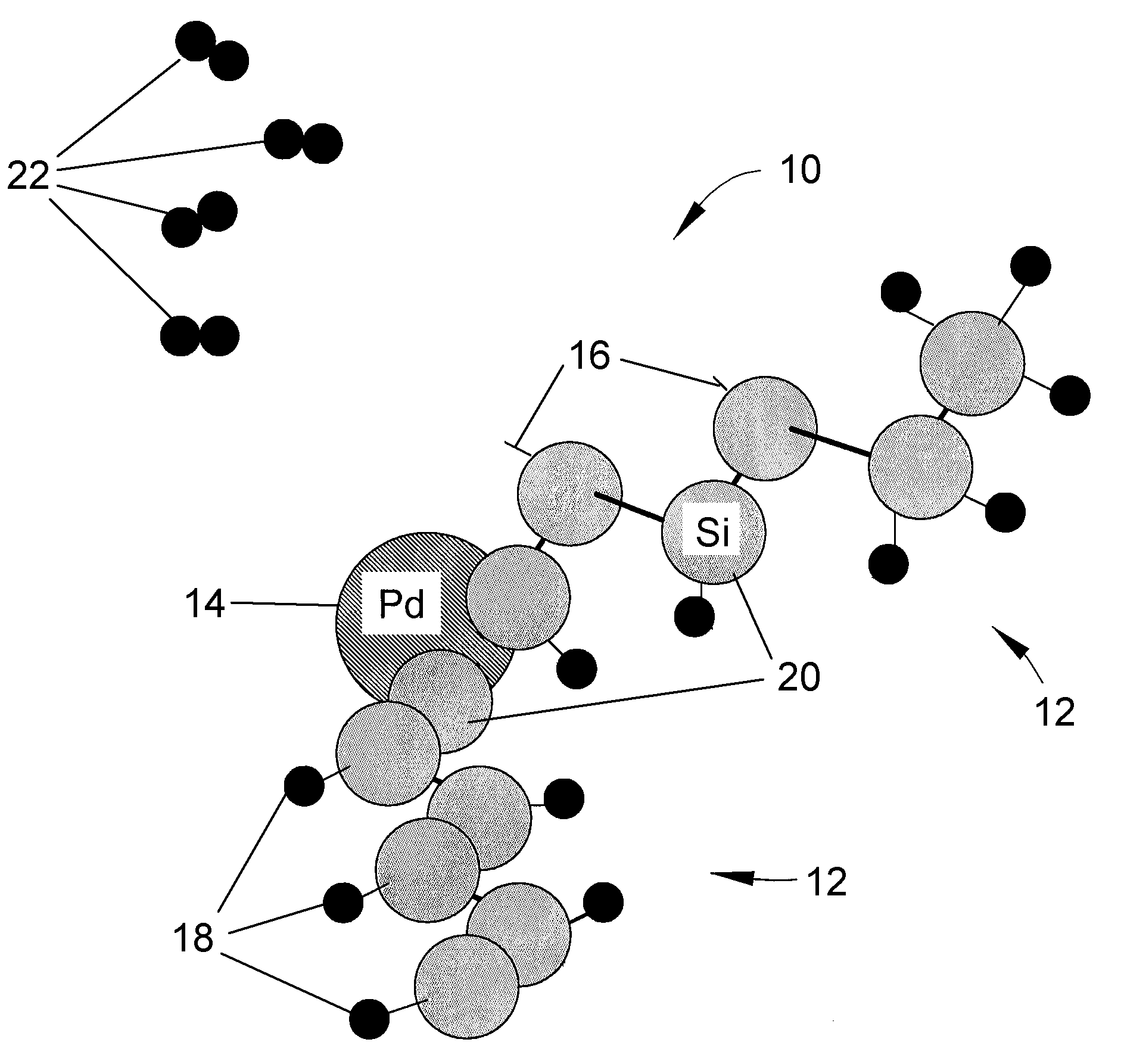
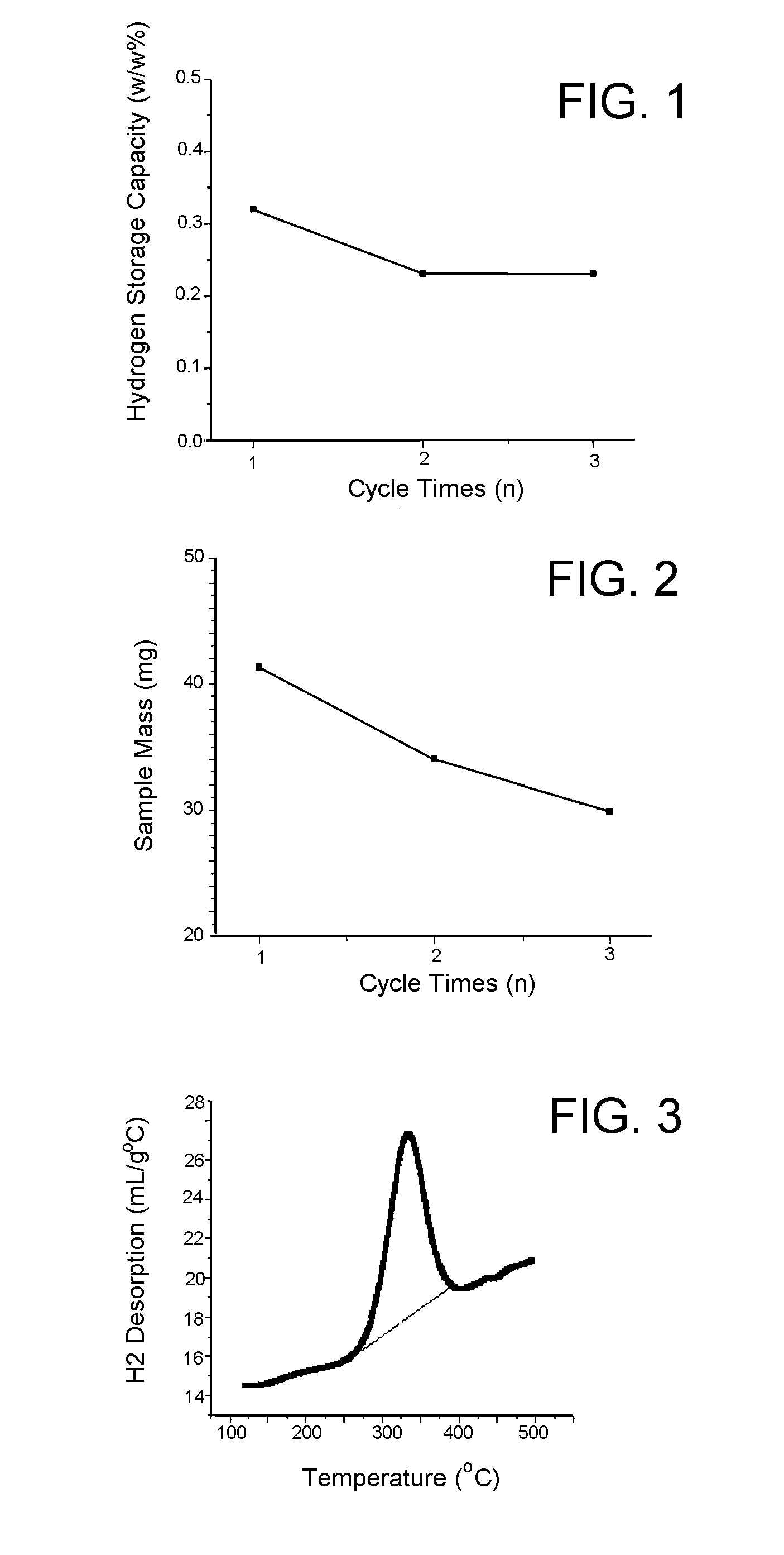
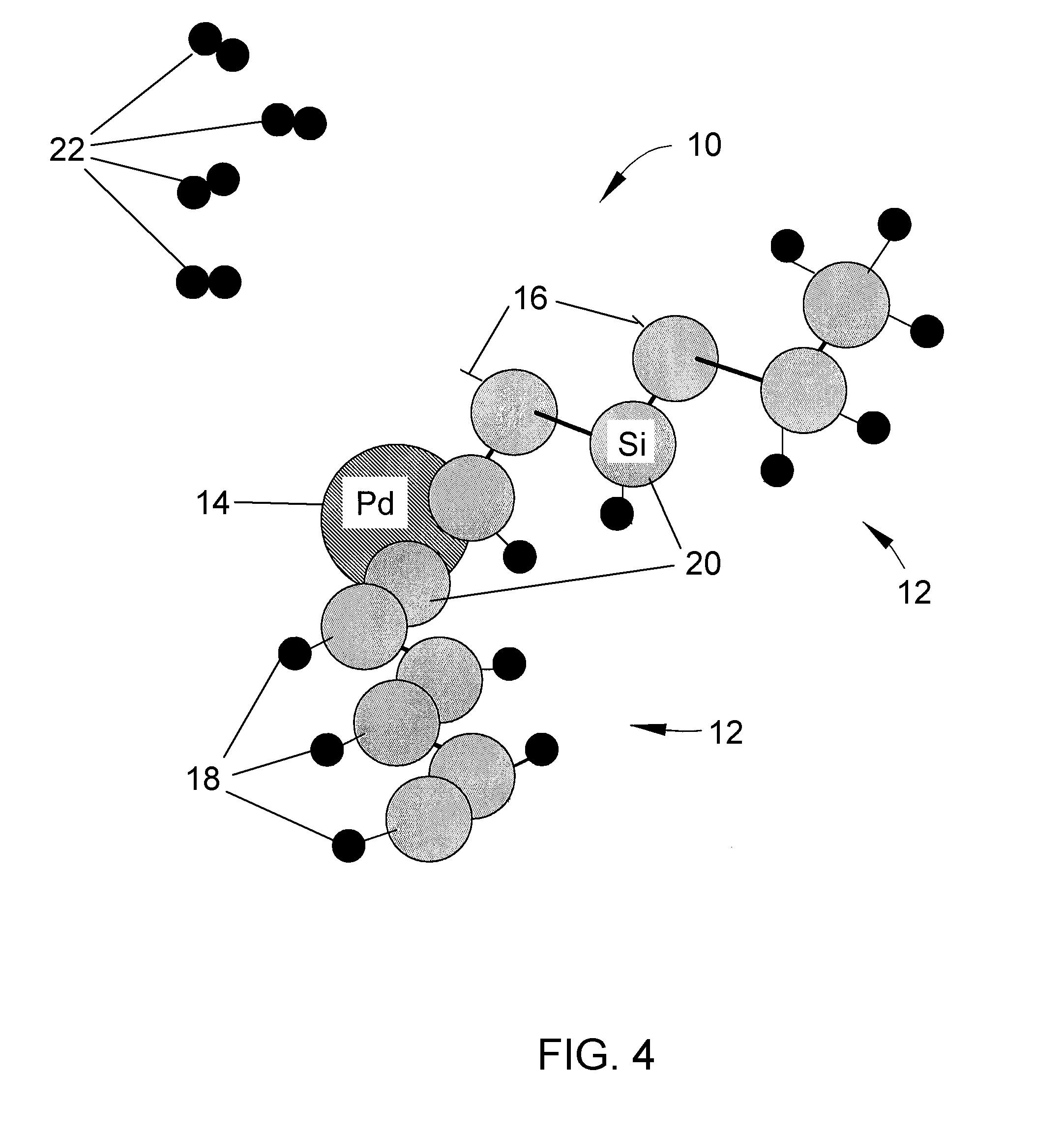
- A process involving a catalyst to inhibit silicon dangling bond reforming after dehydrogenation, allowing for near-full recharge of hydrogen in a porous matrix material by selectively removing weakly bonded hydrogen atoms and introducing a second element to preserve bond sites, thereby enhancing the rechargeability and efficiency of solid-state hydrogen storage systems.
A system for identifying hydrogen storage properties of metal alloys and a method thereof
PatentWO2023223347A1
Innovation
- A system and method that utilizes a machine learning approach to predict hydrogen storage capacity, equilibrium plateau pressure, and enthalpy of hydride formation in multi-component metal alloys by generating feature sets representing metal-metal and metal-hydrogen interactions, and incorporating absorption temperature to identify suitable alloys for hydrogen storage applications.


IP Strategy Implications for Hydrogen Storage Development
Patent landscapes significantly shape the evolution of hydrogen solid storage technologies, creating both opportunities and barriers for industry participants. Companies must develop IP strategies that align with the current patent distribution patterns, which show concentration in specific technological approaches and geographical regions. Organizations with substantial patent portfolios in metal hydrides and complex hydrides have established dominant positions, while emerging areas like MOFs and carbon-based materials present opportunities for new entrants to secure valuable IP positions.
Strategic patent filing requires careful consideration of geographical coverage, with particular attention to regions demonstrating accelerated hydrogen infrastructure development. Companies must balance broad protection in established markets with targeted filings in emerging economies where hydrogen technologies are gaining momentum. Cross-licensing agreements have become increasingly important as the technology landscape fragments, allowing organizations to access complementary technologies without risking infringement litigation.
Freedom-to-operate analyses have become essential components of R&D planning in hydrogen storage development. The dense patent landscape in certain sub-technologies necessitates thorough evaluation before committing substantial resources to specific technical approaches. Companies must regularly monitor patent publications to identify potential infringement risks and adjust development pathways accordingly. This vigilance helps organizations navigate the complex IP environment while maintaining innovation momentum.
Open innovation models are emerging as effective strategies for addressing patent thickets in hydrogen storage. Industry-academic partnerships and pre-competitive research consortia allow for shared IP development that benefits multiple stakeholders while advancing the overall technology field. These collaborative approaches help distribute R&D costs and risks while accelerating technology commercialization through combined expertise and resources.
Defensive patenting strategies have gained prominence as companies seek to protect their freedom to operate in this competitive space. Building strategic patent portfolios around core technologies creates negotiating leverage and helps deter potential litigation. Some organizations are adopting patent pledges and open licensing models for certain technologies to accelerate industry-wide adoption while maintaining competitive advantages in their core technological domains.
The increasing value of hydrogen storage patents has attracted non-practicing entities to the sector, introducing additional complexity to IP strategy development. Companies must prepare for potential assertion challenges while maintaining focus on building commercially relevant technology portfolios. Strategic patent acquisition and participation in defensive patent pools are becoming important tactics for mitigating these emerging IP risks in the hydrogen storage ecosystem.
Strategic patent filing requires careful consideration of geographical coverage, with particular attention to regions demonstrating accelerated hydrogen infrastructure development. Companies must balance broad protection in established markets with targeted filings in emerging economies where hydrogen technologies are gaining momentum. Cross-licensing agreements have become increasingly important as the technology landscape fragments, allowing organizations to access complementary technologies without risking infringement litigation.
Freedom-to-operate analyses have become essential components of R&D planning in hydrogen storage development. The dense patent landscape in certain sub-technologies necessitates thorough evaluation before committing substantial resources to specific technical approaches. Companies must regularly monitor patent publications to identify potential infringement risks and adjust development pathways accordingly. This vigilance helps organizations navigate the complex IP environment while maintaining innovation momentum.
Open innovation models are emerging as effective strategies for addressing patent thickets in hydrogen storage. Industry-academic partnerships and pre-competitive research consortia allow for shared IP development that benefits multiple stakeholders while advancing the overall technology field. These collaborative approaches help distribute R&D costs and risks while accelerating technology commercialization through combined expertise and resources.
Defensive patenting strategies have gained prominence as companies seek to protect their freedom to operate in this competitive space. Building strategic patent portfolios around core technologies creates negotiating leverage and helps deter potential litigation. Some organizations are adopting patent pledges and open licensing models for certain technologies to accelerate industry-wide adoption while maintaining competitive advantages in their core technological domains.
The increasing value of hydrogen storage patents has attracted non-practicing entities to the sector, introducing additional complexity to IP strategy development. Companies must prepare for potential assertion challenges while maintaining focus on building commercially relevant technology portfolios. Strategic patent acquisition and participation in defensive patent pools are becoming important tactics for mitigating these emerging IP risks in the hydrogen storage ecosystem.
Regulatory Framework Influencing Hydrogen Storage Patents
The regulatory landscape surrounding hydrogen storage patents has evolved significantly over the past decades, shaping innovation trajectories and commercial development in this critical clean energy sector. International frameworks such as the Paris Agreement and various national climate commitments have established ambitious decarbonization targets, creating a favorable policy environment for hydrogen technologies, including solid storage solutions.
Key regulatory bodies including the International Organization for Standardization (ISO), the International Electrotechnical Commission (IEC), and national safety authorities have developed specific standards addressing hydrogen storage safety, performance metrics, and testing protocols. These standards, such as ISO/TC 197 for hydrogen technologies, provide essential guidelines for patent development by establishing baseline technical requirements that innovations must satisfy.
Patent offices worldwide have implemented specialized examination procedures for hydrogen storage technologies, recognizing their strategic importance in energy transition. The European Patent Office (EPO) and the United States Patent and Trademark Office (USPTO) have established accelerated examination pathways for clean energy technologies, including hydrogen storage solutions, significantly reducing patent grant timelines from the typical 3-5 years to as little as 12-18 months.
Government funding initiatives have substantially influenced patent activity in hydrogen solid storage. Programs such as the U.S. Department of Energy's Hydrogen and Fuel Cell Technologies Office and the European Union's Horizon Europe have allocated billions in research funding, often with intellectual property provisions that encourage patent filing while ensuring some level of public access to resulting innovations.
Export control regulations present a complex challenge for hydrogen storage patents, as many advanced materials and technologies have potential dual-use applications. The Wassenaar Arrangement and similar international frameworks restrict the transfer of certain technologies that could have military applications, occasionally affecting cross-border collaboration in advanced hydrogen storage research.
Regional variations in patent protection strength and enforcement create strategic considerations for innovators in hydrogen storage. While strong protection exists in North America, Europe, and Japan, emerging markets with growing hydrogen ambitions often present intellectual property enforcement challenges, influencing where companies choose to file patents and commercialize technologies.
Recent regulatory trends indicate movement toward more collaborative intellectual property models, with patent pools and open innovation frameworks gaining traction in the hydrogen sector. These approaches aim to balance innovation incentives with the urgent need for rapid technology deployment to address climate challenges.
Key regulatory bodies including the International Organization for Standardization (ISO), the International Electrotechnical Commission (IEC), and national safety authorities have developed specific standards addressing hydrogen storage safety, performance metrics, and testing protocols. These standards, such as ISO/TC 197 for hydrogen technologies, provide essential guidelines for patent development by establishing baseline technical requirements that innovations must satisfy.
Patent offices worldwide have implemented specialized examination procedures for hydrogen storage technologies, recognizing their strategic importance in energy transition. The European Patent Office (EPO) and the United States Patent and Trademark Office (USPTO) have established accelerated examination pathways for clean energy technologies, including hydrogen storage solutions, significantly reducing patent grant timelines from the typical 3-5 years to as little as 12-18 months.
Government funding initiatives have substantially influenced patent activity in hydrogen solid storage. Programs such as the U.S. Department of Energy's Hydrogen and Fuel Cell Technologies Office and the European Union's Horizon Europe have allocated billions in research funding, often with intellectual property provisions that encourage patent filing while ensuring some level of public access to resulting innovations.
Export control regulations present a complex challenge for hydrogen storage patents, as many advanced materials and technologies have potential dual-use applications. The Wassenaar Arrangement and similar international frameworks restrict the transfer of certain technologies that could have military applications, occasionally affecting cross-border collaboration in advanced hydrogen storage research.
Regional variations in patent protection strength and enforcement create strategic considerations for innovators in hydrogen storage. While strong protection exists in North America, Europe, and Japan, emerging markets with growing hydrogen ambitions often present intellectual property enforcement challenges, influencing where companies choose to file patents and commercialize technologies.
Recent regulatory trends indicate movement toward more collaborative intellectual property models, with patent pools and open innovation frameworks gaining traction in the hydrogen sector. These approaches aim to balance innovation incentives with the urgent need for rapid technology deployment to address climate challenges.
Unlock deeper insights with PatSnap Eureka Quick Research — get a full tech report to explore trends and direct your research. Try now!
Generate Your Research Report Instantly with AI Agent
Supercharge your innovation with PatSnap Eureka AI Agent Platform!