

Aromatic Compounds vs Alkaline Metals: Complexation Dynamics
MAR 5, 20269 MIN READ
Generate Your Research Report Instantly with AI Agent
PatSnap Eureka helps you evaluate technical feasibility & market potential.
Aromatic-Metal Complexation Background and Research Goals
The interaction between aromatic compounds and alkaline metals represents a fundamental area of chemical research that has evolved significantly since the early 20th century. This field emerged from the pioneering work of chemists who first observed the distinctive coloration and conductivity changes when alkali metals were dissolved in liquid ammonia containing aromatic hydrocarbons. The phenomenon revealed a unique class of chemical interactions that challenged conventional understanding of bonding mechanisms and electron transfer processes.
Aromatic-metal complexation encompasses the study of how electron-rich aromatic systems interact with highly electropositive alkaline metals such as lithium, sodium, and potassium. These interactions typically involve electron transfer from the metal to the aromatic π-system, creating radical anion species that exhibit remarkable stability and unique electronic properties. The resulting complexes demonstrate characteristics that bridge the gap between ionic and covalent bonding, making them invaluable for understanding fundamental chemical principles.
The historical development of this field can be traced through several key milestones. Early investigations focused on the visual and spectroscopic changes observed during complex formation, leading to the identification of charge-transfer phenomena. Subsequent research revealed the role of solvation effects, particularly in ethereal and amine solvents, which stabilize these otherwise highly reactive species. The advent of advanced spectroscopic techniques enabled detailed characterization of the electronic structures and dynamic behavior of these complexes.
Contemporary research objectives in aromatic-metal complexation center on several critical areas. Understanding the precise mechanisms governing electron transfer rates and equilibrium positions remains a primary goal, as these factors directly influence the stability and reactivity of the resulting complexes. Researchers seek to elucidate how structural variations in aromatic substrates affect complexation dynamics, including the influence of substituent effects, ring size, and conjugation extent.
Another significant research direction involves investigating the role of solvent environments in modulating complexation behavior. The choice of solvent dramatically affects complex stability, with coordinating solvents often facilitating formation while protic solvents typically lead to decomposition. Understanding these solvent effects is crucial for developing practical applications and controlling reaction outcomes.
The field also aims to establish predictive models for complex formation and stability based on fundamental electronic and thermodynamic parameters. Such models would enable rational design of new aromatic-metal systems with tailored properties for specific applications, ranging from synthetic chemistry to materials science and energy storage technologies.
Aromatic-metal complexation encompasses the study of how electron-rich aromatic systems interact with highly electropositive alkaline metals such as lithium, sodium, and potassium. These interactions typically involve electron transfer from the metal to the aromatic π-system, creating radical anion species that exhibit remarkable stability and unique electronic properties. The resulting complexes demonstrate characteristics that bridge the gap between ionic and covalent bonding, making them invaluable for understanding fundamental chemical principles.
The historical development of this field can be traced through several key milestones. Early investigations focused on the visual and spectroscopic changes observed during complex formation, leading to the identification of charge-transfer phenomena. Subsequent research revealed the role of solvation effects, particularly in ethereal and amine solvents, which stabilize these otherwise highly reactive species. The advent of advanced spectroscopic techniques enabled detailed characterization of the electronic structures and dynamic behavior of these complexes.
Contemporary research objectives in aromatic-metal complexation center on several critical areas. Understanding the precise mechanisms governing electron transfer rates and equilibrium positions remains a primary goal, as these factors directly influence the stability and reactivity of the resulting complexes. Researchers seek to elucidate how structural variations in aromatic substrates affect complexation dynamics, including the influence of substituent effects, ring size, and conjugation extent.
Another significant research direction involves investigating the role of solvent environments in modulating complexation behavior. The choice of solvent dramatically affects complex stability, with coordinating solvents often facilitating formation while protic solvents typically lead to decomposition. Understanding these solvent effects is crucial for developing practical applications and controlling reaction outcomes.
The field also aims to establish predictive models for complex formation and stability based on fundamental electronic and thermodynamic parameters. Such models would enable rational design of new aromatic-metal systems with tailored properties for specific applications, ranging from synthetic chemistry to materials science and energy storage technologies.
Market Demand for Aromatic-Alkaline Metal Complex Applications
The pharmaceutical industry represents the most significant market segment for aromatic-alkaline metal complexes, driven by their unique therapeutic properties and enhanced bioavailability. These complexes demonstrate superior drug delivery capabilities compared to conventional formulations, particularly in oncology and neurological treatments. The growing emphasis on precision medicine and targeted drug delivery systems has intensified demand for sophisticated molecular complexes that can navigate biological barriers more effectively.
Industrial catalysis applications constitute another major demand driver, where aromatic-alkaline metal complexes serve as highly selective catalysts in petrochemical processes and fine chemical synthesis. The transition toward sustainable manufacturing practices has increased interest in these complexes due to their potential for reducing reaction temperatures and improving yield efficiency. Green chemistry initiatives across multiple industries are creating substantial opportunities for environmentally friendly catalytic systems.
The electronics and materials science sectors are experiencing rapid growth in demand for these complexes, particularly in the development of organic light-emitting diodes and advanced semiconductor materials. The unique electronic properties of aromatic-alkaline metal complexes make them valuable components in next-generation display technologies and energy storage systems. Market expansion in consumer electronics and renewable energy applications continues to drive this segment forward.
Energy storage and conversion technologies represent an emerging high-growth market for these complexes. Battery manufacturers are increasingly exploring aromatic-alkaline metal complexes for improving electrode performance and extending operational lifespans. The global shift toward electric vehicles and grid-scale energy storage systems is creating unprecedented demand for advanced materials with superior electrochemical properties.
Research institutions and academic laboratories form a specialized but consistent market segment, requiring high-purity complexes for fundamental research and development activities. This segment, while smaller in volume, often drives innovation and creates pathways for future commercial applications. The increasing focus on materials science research and nanotechnology development sustains steady demand from this sector.
Regional market dynamics show concentrated demand in North America, Europe, and Asia-Pacific regions, with emerging markets beginning to show increased interest as their industrial capabilities expand. Regulatory frameworks governing chemical safety and environmental impact significantly influence market accessibility and growth potential across different geographical regions.
Industrial catalysis applications constitute another major demand driver, where aromatic-alkaline metal complexes serve as highly selective catalysts in petrochemical processes and fine chemical synthesis. The transition toward sustainable manufacturing practices has increased interest in these complexes due to their potential for reducing reaction temperatures and improving yield efficiency. Green chemistry initiatives across multiple industries are creating substantial opportunities for environmentally friendly catalytic systems.
The electronics and materials science sectors are experiencing rapid growth in demand for these complexes, particularly in the development of organic light-emitting diodes and advanced semiconductor materials. The unique electronic properties of aromatic-alkaline metal complexes make them valuable components in next-generation display technologies and energy storage systems. Market expansion in consumer electronics and renewable energy applications continues to drive this segment forward.
Energy storage and conversion technologies represent an emerging high-growth market for these complexes. Battery manufacturers are increasingly exploring aromatic-alkaline metal complexes for improving electrode performance and extending operational lifespans. The global shift toward electric vehicles and grid-scale energy storage systems is creating unprecedented demand for advanced materials with superior electrochemical properties.
Research institutions and academic laboratories form a specialized but consistent market segment, requiring high-purity complexes for fundamental research and development activities. This segment, while smaller in volume, often drives innovation and creates pathways for future commercial applications. The increasing focus on materials science research and nanotechnology development sustains steady demand from this sector.
Regional market dynamics show concentrated demand in North America, Europe, and Asia-Pacific regions, with emerging markets beginning to show increased interest as their industrial capabilities expand. Regulatory frameworks governing chemical safety and environmental impact significantly influence market accessibility and growth potential across different geographical regions.
Current State and Challenges in Aromatic-Metal Interactions
The current landscape of aromatic compound-alkaline metal interactions represents a rapidly evolving field with significant theoretical and practical implications. Contemporary research has established that these interactions primarily occur through π-electron systems of aromatic rings coordinating with alkaline metal cations, forming distinctive sandwich or half-sandwich complexes. The field has witnessed substantial progress in understanding fundamental binding mechanisms, yet several critical challenges persist in achieving predictable and controllable complexation dynamics.
Experimental investigations have revealed that complexation behavior varies dramatically across different alkaline metals, with lithium, sodium, and potassium exhibiting distinct coordination preferences and binding strengths. Current spectroscopic techniques, including NMR, UV-Vis, and X-ray crystallography, have provided valuable insights into structural characteristics of these complexes. However, the dynamic nature of these interactions often leads to rapid exchange processes that complicate detailed mechanistic studies.
One of the primary challenges facing researchers is the inherent instability of many aromatic-alkaline metal complexes under ambient conditions. These systems frequently exhibit high sensitivity to moisture, oxygen, and temperature fluctuations, necessitating specialized handling protocols and inert atmosphere techniques. The weak binding energies characteristic of many π-metal interactions result in equilibrium systems that are difficult to isolate and characterize comprehensively.
Computational modeling efforts have made significant strides in predicting complexation energies and geometries, yet discrepancies between theoretical predictions and experimental observations remain problematic. Density functional theory calculations often struggle to accurately capture the subtle balance between electrostatic attractions, dispersion forces, and orbital overlap effects that govern these interactions. The challenge is further compounded by solvent effects, which can dramatically alter complexation dynamics but are computationally expensive to model accurately.
Industrial applications face additional hurdles related to scalability and cost-effectiveness. While laboratory-scale syntheses of aromatic-metal complexes have demonstrated promising catalytic and electronic properties, translating these findings to commercial processes requires overcoming issues of complex stability, purification challenges, and economic viability. The development of more robust synthetic methodologies and improved understanding of structure-property relationships remains essential for advancing practical applications in this field.
Experimental investigations have revealed that complexation behavior varies dramatically across different alkaline metals, with lithium, sodium, and potassium exhibiting distinct coordination preferences and binding strengths. Current spectroscopic techniques, including NMR, UV-Vis, and X-ray crystallography, have provided valuable insights into structural characteristics of these complexes. However, the dynamic nature of these interactions often leads to rapid exchange processes that complicate detailed mechanistic studies.
One of the primary challenges facing researchers is the inherent instability of many aromatic-alkaline metal complexes under ambient conditions. These systems frequently exhibit high sensitivity to moisture, oxygen, and temperature fluctuations, necessitating specialized handling protocols and inert atmosphere techniques. The weak binding energies characteristic of many π-metal interactions result in equilibrium systems that are difficult to isolate and characterize comprehensively.
Computational modeling efforts have made significant strides in predicting complexation energies and geometries, yet discrepancies between theoretical predictions and experimental observations remain problematic. Density functional theory calculations often struggle to accurately capture the subtle balance between electrostatic attractions, dispersion forces, and orbital overlap effects that govern these interactions. The challenge is further compounded by solvent effects, which can dramatically alter complexation dynamics but are computationally expensive to model accurately.
Industrial applications face additional hurdles related to scalability and cost-effectiveness. While laboratory-scale syntheses of aromatic-metal complexes have demonstrated promising catalytic and electronic properties, translating these findings to commercial processes requires overcoming issues of complex stability, purification challenges, and economic viability. The development of more robust synthetic methodologies and improved understanding of structure-property relationships remains essential for advancing practical applications in this field.
Existing Solutions for Aromatic-Alkaline Metal Complexation
01 Complexation of aromatic compounds with alkali metals in organic synthesis
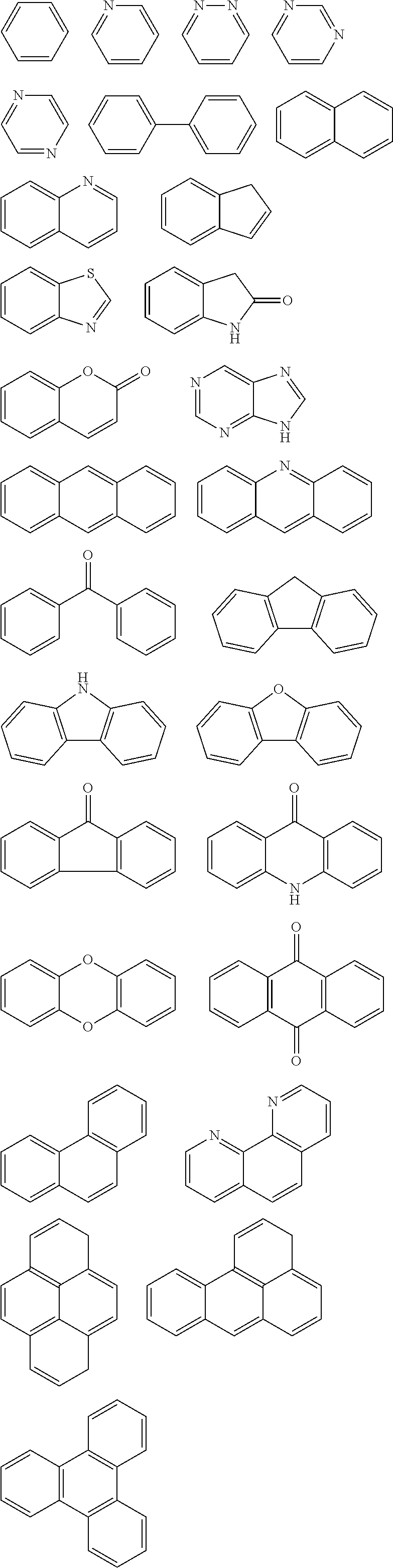
Aromatic compounds can form complexes with alkali metals through coordination interactions, which are utilized in various organic synthesis processes. These complexation reactions involve the interaction between the π-electron system of aromatic rings and alkali metal cations, leading to the formation of stable organometallic intermediates. The dynamics of these complexation processes are influenced by factors such as solvent polarity, temperature, and the electronic properties of the aromatic substrates. Such complexes serve as important intermediates in reduction reactions and other transformations.- Complexation of aromatic compounds with alkali metals in organic synthesis: Aromatic compounds can form complexes with alkali metals through coordination interactions, which are utilized in various organic synthesis processes. These complexation reactions involve the interaction between the π-electron system of aromatic rings and alkali metal cations, leading to the formation of stable organometallic intermediates. The dynamics of these complexation processes are influenced by factors such as solvent polarity, temperature, and the electronic properties of the aromatic substrates. Such complexes serve as important intermediates in reduction reactions and other transformations.
- Metal-aromatic coordination in catalytic systems: The coordination between aromatic ligands and alkaline metals plays a crucial role in catalytic systems. These coordination complexes exhibit unique dynamic behavior that affects reaction rates and selectivity. The formation and dissociation kinetics of these complexes are essential for understanding catalytic mechanisms. The electronic structure of aromatic compounds influences the strength and stability of metal-ligand interactions, which in turn affects the overall catalytic performance.
- Thermodynamic stability of aromatic-alkali metal complexes: The thermodynamic aspects of complexation between aromatic compounds and alkali metals are characterized by specific equilibrium constants and binding energies. The stability of these complexes depends on the nature of the aromatic system, the size of the metal cation, and environmental conditions. Studies on the thermodynamic parameters provide insights into the spontaneity and feasibility of complex formation. Temperature-dependent equilibrium shifts and enthalpy changes are key factors in understanding the complexation dynamics.
- Kinetic mechanisms of aromatic-metal ion association: The kinetic mechanisms governing the association and dissociation of aromatic compounds with alkaline metal ions involve multiple elementary steps. These mechanisms include initial ion-pair formation, structural rearrangement, and stabilization through solvation effects. The rate-determining steps in these processes vary depending on the specific aromatic substrate and metal ion involved. Understanding these kinetic pathways is essential for controlling reaction outcomes and optimizing process conditions.
- Spectroscopic characterization of aromatic-alkali metal interactions: Various spectroscopic techniques are employed to characterize the interactions between aromatic compounds and alkali metals. These methods provide information about the electronic structure, binding modes, and dynamic behavior of the complexes. Spectroscopic studies reveal changes in absorption patterns, chemical shifts, and vibrational frequencies upon complexation. Such characterization is crucial for elucidating the nature of metal-aromatic interactions and validating theoretical models of complexation dynamics.
02 Metal-aromatic coordination in catalytic systems
The coordination dynamics between aromatic ligands and alkaline metals play a crucial role in catalytic applications. These systems exploit the ability of aromatic compounds to act as ligands, forming coordination complexes with metal centers that exhibit unique catalytic properties. The formation and dissociation kinetics of these complexes determine the efficiency of catalytic cycles. The electronic and steric properties of aromatic ligands significantly influence the stability and reactivity of the resulting metal complexes.Expand Specific Solutions03 Thermodynamic stability of aromatic-alkali metal complexes
The thermodynamic aspects of complexation between aromatic compounds and alkali metals are essential for understanding their formation and stability. Equilibrium constants and binding energies vary depending on the nature of the aromatic system and the specific alkali metal involved. Factors such as ring size, substituent effects, and the presence of heteroatoms in the aromatic structure affect the complexation equilibria. Temperature-dependent studies reveal the enthalpic and entropic contributions to complex formation.Expand Specific Solutions04 Kinetic mechanisms of aromatic compound metalation
The kinetic pathways involved in the metalation of aromatic compounds by alkaline metals involve multiple elementary steps including initial coordination, electron transfer, and structural rearrangement. Reaction rates are influenced by the accessibility of aromatic sites, the reducing power of the metal, and the presence of coordinating solvents or additives. Mechanistic studies using spectroscopic techniques have revealed the formation of transient intermediates and the role of radical species in these transformations.Expand Specific Solutions05 Applications in separation and purification processes
The selective complexation of aromatic compounds with alkali metals has been exploited in separation and purification technologies. Differences in complexation affinities allow for the selective extraction or separation of specific aromatic species from mixtures. These processes are particularly useful in petrochemical refining and the purification of aromatic intermediates. The reversibility of complexation reactions enables regeneration of separation media and recovery of both the aromatic compounds and metal species.Expand Specific Solutions
Key Players in Organometallic and Coordination Chemistry
The aromatic compounds and alkaline metals complexation dynamics field represents an emerging technological area in early development stages, characterized by significant research activity but limited commercial maturity. The market remains nascent with substantial growth potential driven by applications in petrochemicals, pharmaceuticals, and advanced materials. Technology maturity varies considerably across different applications, with established players like ExxonMobil Technology & Engineering, Saudi Arabian Oil, and TotalEnergies OneTech leading in industrial applications, while companies such as Sumitomo Chemical, Bayer CropScience, and L'Oréal explore specialized implementations. Academic institutions including Osaka University, Rice University, and CNRS contribute fundamental research advancing the theoretical understanding. The competitive landscape shows fragmentation between traditional chemical giants leveraging existing infrastructure and innovative companies like Cynora developing novel applications, indicating the technology's transitional phase from laboratory research toward commercial viability across multiple industrial sectors.
Sumitomo Chemical Co., Ltd.
Technical Solution: Sumitomo Chemical has developed advanced aromatic compound synthesis technologies focusing on metal-catalyzed complexation reactions. Their approach utilizes transition metal catalysts to facilitate controlled interactions between aromatic systems and alkaline metals, particularly in the development of organometallic intermediates for pharmaceutical and agrochemical applications. The company has established proprietary methodologies for managing the reactivity of alkaline metals with electron-rich aromatic compounds, employing specialized ligand systems to control complexation dynamics and prevent unwanted side reactions. Their technology platform includes advanced purification techniques and real-time monitoring systems to optimize reaction conditions and product yields.
Strengths: Strong industrial experience in large-scale chemical synthesis and established catalyst technologies. Weaknesses: Limited focus on fundamental research compared to academic institutions, potentially slower adaptation to emerging complexation mechanisms.
UOP LLC
Technical Solution: UOP has developed specialized catalytic processes for aromatic compound transformations involving alkaline metal complexation, particularly in petroleum refining and petrochemical applications. Their technology focuses on zeolite-based catalyst systems that incorporate alkaline metals to enhance selectivity in aromatic compound reactions. The company has pioneered methods for controlling the interaction between aromatic substrates and alkaline metal sites within structured catalyst frameworks, enabling precise control over complexation dynamics. Their approach includes advanced regeneration techniques for alkaline metal-containing catalysts and optimization of reaction conditions to maximize aromatic compound conversion while minimizing catalyst deactivation through controlled metal-aromatic interactions.
Strengths: Extensive expertise in industrial catalysis and proven scalability of metal-based catalyst systems. Weaknesses: Primary focus on petroleum applications may limit broader applicability to other aromatic-alkaline metal complexation scenarios.
Core Innovations in Metal-Aromatic Binding Mechanisms
Alkaline earth metal-complexed metal bisamides
PatentWO2013120911A1
Innovation
- A process for preparing alkaline earth metal-complexed metal bisamides by reacting chloroamines with metallic magnesium or calcium and substoichiometric amounts of other metals, eliminating the need for butyllithium and allowing metallation at higher temperatures without damaging sensitive compounds.


More advanced preparation method of organic-transition metal hydride complexes containing aryl group or alkyl group as hydrogen storage materials
PatentInactiveUS20130123527A1
Innovation
- A method utilizing a complex reducing agent composed of alkali metal or earth metal with an aromatic compound in an aprotic polar solvent to react with organic-transition metal halides under controlled temperature and time conditions, minimizing byproducts and facilitating high-yield production of organic-transition metal hydride.
Environmental Impact of Alkaline Metal Complex Synthesis
The synthesis of alkaline metal complexes with aromatic compounds presents significant environmental considerations that must be carefully evaluated throughout the entire production lifecycle. Traditional synthesis methods often rely on organic solvents such as tetrahydrofuran, dimethylformamide, and dichloromethane, which pose substantial environmental risks due to their volatility, toxicity, and persistence in ecosystems. These solvents contribute to volatile organic compound emissions and require extensive waste treatment protocols.
Energy consumption represents another critical environmental factor in complex synthesis processes. The formation of stable aromatic-alkaline metal complexes typically requires controlled atmospheric conditions, elevated temperatures, and extended reaction times. These energy-intensive requirements translate to increased carbon footprint, particularly when conventional energy sources are utilized. The purification and isolation steps further amplify energy demands through crystallization, distillation, and chromatographic separation processes.
Waste generation during synthesis encompasses both organic and inorganic byproducts that require specialized disposal methods. Unreacted starting materials, side products from competing reactions, and spent catalysts contribute to the overall waste stream. Alkaline metal salts used as precursors can lead to high-salinity waste streams that impact water treatment systems and aquatic environments if not properly managed.
The environmental impact extends to raw material extraction and processing. Alkaline metals such as lithium and sodium require mining operations that can disrupt local ecosystems and consume substantial water resources. The purification of these metals involves energy-intensive electrolytic processes that contribute to greenhouse gas emissions.
Recent developments in green chemistry approaches have introduced more environmentally benign synthesis routes. Solvent-free mechanochemical synthesis, aqueous-based reaction systems, and microwave-assisted synthesis methods demonstrate reduced environmental impact while maintaining synthetic efficiency. These alternative approaches minimize organic solvent usage, reduce energy consumption, and decrease waste generation.
Life cycle assessment studies indicate that implementing sustainable synthesis practices can reduce the overall environmental impact by 40-60% compared to conventional methods. The adoption of renewable energy sources, solvent recycling systems, and optimized reaction conditions represents viable pathways toward more sustainable alkaline metal complex production processes.
Energy consumption represents another critical environmental factor in complex synthesis processes. The formation of stable aromatic-alkaline metal complexes typically requires controlled atmospheric conditions, elevated temperatures, and extended reaction times. These energy-intensive requirements translate to increased carbon footprint, particularly when conventional energy sources are utilized. The purification and isolation steps further amplify energy demands through crystallization, distillation, and chromatographic separation processes.
Waste generation during synthesis encompasses both organic and inorganic byproducts that require specialized disposal methods. Unreacted starting materials, side products from competing reactions, and spent catalysts contribute to the overall waste stream. Alkaline metal salts used as precursors can lead to high-salinity waste streams that impact water treatment systems and aquatic environments if not properly managed.
The environmental impact extends to raw material extraction and processing. Alkaline metals such as lithium and sodium require mining operations that can disrupt local ecosystems and consume substantial water resources. The purification of these metals involves energy-intensive electrolytic processes that contribute to greenhouse gas emissions.
Recent developments in green chemistry approaches have introduced more environmentally benign synthesis routes. Solvent-free mechanochemical synthesis, aqueous-based reaction systems, and microwave-assisted synthesis methods demonstrate reduced environmental impact while maintaining synthetic efficiency. These alternative approaches minimize organic solvent usage, reduce energy consumption, and decrease waste generation.
Life cycle assessment studies indicate that implementing sustainable synthesis practices can reduce the overall environmental impact by 40-60% compared to conventional methods. The adoption of renewable energy sources, solvent recycling systems, and optimized reaction conditions represents viable pathways toward more sustainable alkaline metal complex production processes.
Safety Protocols for Aromatic-Metal Complex Handling
The handling of aromatic-metal complexes requires comprehensive safety protocols due to the inherent reactivity and potential hazards associated with both aromatic compounds and alkaline metals. These complexes exhibit unique chemical behaviors that demand specialized precautionary measures throughout their synthesis, storage, and manipulation processes.
Personal protective equipment represents the first line of defense when working with aromatic-metal complexes. Laboratory personnel must utilize chemical-resistant gloves made from materials such as nitrile or neoprene, as standard latex gloves provide insufficient protection against organic solvents commonly used in complex preparation. Full-face shields or safety goggles with side protection are mandatory to prevent eye contact with potentially corrosive materials or reaction byproducts.
Environmental controls play a crucial role in maintaining safe working conditions. All operations involving aromatic-metal complexes should be conducted within properly functioning fume hoods with adequate airflow rates exceeding 100 linear feet per minute. The laboratory atmosphere must be continuously monitored for volatile organic compounds and metal vapors, with emergency ventilation systems readily accessible.
Fire suppression systems require special consideration due to the presence of alkaline metals, which react violently with water-based extinguishing agents. Class D fire extinguishers containing dry powder agents such as sodium chloride or graphite powder must be strategically positioned throughout the work area. Water-based sprinkler systems should be equipped with isolation valves to prevent accidental activation during metal handling procedures.
Storage protocols demand strict adherence to compatibility guidelines and environmental controls. Aromatic-metal complexes must be stored in inert atmosphere containers, typically under nitrogen or argon gas, to prevent oxidation and moisture contact. Storage temperatures should be maintained below ambient conditions, with continuous monitoring systems to detect temperature fluctuations that could trigger decomposition reactions.
Emergency response procedures must address the specific hazards associated with aromatic-metal complex incidents. Spill containment materials should include inert absorbents such as vermiculite or specialized metal-compatible sorbents. Personnel training programs must encompass recognition of exposure symptoms, proper decontamination procedures, and immediate medical intervention protocols for both organic compound exposure and metal poisoning scenarios.
Personal protective equipment represents the first line of defense when working with aromatic-metal complexes. Laboratory personnel must utilize chemical-resistant gloves made from materials such as nitrile or neoprene, as standard latex gloves provide insufficient protection against organic solvents commonly used in complex preparation. Full-face shields or safety goggles with side protection are mandatory to prevent eye contact with potentially corrosive materials or reaction byproducts.
Environmental controls play a crucial role in maintaining safe working conditions. All operations involving aromatic-metal complexes should be conducted within properly functioning fume hoods with adequate airflow rates exceeding 100 linear feet per minute. The laboratory atmosphere must be continuously monitored for volatile organic compounds and metal vapors, with emergency ventilation systems readily accessible.
Fire suppression systems require special consideration due to the presence of alkaline metals, which react violently with water-based extinguishing agents. Class D fire extinguishers containing dry powder agents such as sodium chloride or graphite powder must be strategically positioned throughout the work area. Water-based sprinkler systems should be equipped with isolation valves to prevent accidental activation during metal handling procedures.
Storage protocols demand strict adherence to compatibility guidelines and environmental controls. Aromatic-metal complexes must be stored in inert atmosphere containers, typically under nitrogen or argon gas, to prevent oxidation and moisture contact. Storage temperatures should be maintained below ambient conditions, with continuous monitoring systems to detect temperature fluctuations that could trigger decomposition reactions.
Emergency response procedures must address the specific hazards associated with aromatic-metal complex incidents. Spill containment materials should include inert absorbents such as vermiculite or specialized metal-compatible sorbents. Personnel training programs must encompass recognition of exposure symptoms, proper decontamination procedures, and immediate medical intervention protocols for both organic compound exposure and metal poisoning scenarios.
Unlock deeper insights with PatSnap Eureka Quick Research — get a full tech report to explore trends and direct your research. Try now!
Generate Your Research Report Instantly with AI Agent
Supercharge your innovation with PatSnap Eureka AI Agent Platform!