
Aromatic Compounds vs Cyclodextrins: Molecular Interactions
MAR 5, 20269 MIN READ
Generate Your Research Report Instantly with AI Agent
Patsnap Eureka helps you evaluate technical feasibility & market potential.
Aromatic-Cyclodextrin Complex Background and Objectives
The study of molecular interactions between aromatic compounds and cyclodextrins represents a fundamental area of supramolecular chemistry that has evolved significantly since the discovery of cyclodextrins in the late 19th century. Initially identified as enzymatic degradation products of starch, cyclodextrins were later recognized for their unique ability to form inclusion complexes with various guest molecules, particularly aromatic compounds. This field has progressed from basic structural characterization to sophisticated applications in pharmaceuticals, food science, and materials engineering.
The historical development of this research domain can be traced through several key phases. Early investigations in the 1950s and 1960s focused on understanding the basic structural properties of cyclodextrins and their capacity to encapsulate small organic molecules. The 1970s marked a pivotal period when researchers began systematically studying the thermodynamics and kinetics of host-guest interactions, establishing fundamental principles that govern complex formation between cyclodextrins and aromatic substrates.
Technological advancement in analytical techniques during the 1980s and 1990s, including nuclear magnetic resonance spectroscopy, X-ray crystallography, and calorimetry, enabled detailed characterization of these molecular interactions at the atomic level. This period witnessed the emergence of structure-activity relationships and the development of predictive models for complex stability and selectivity.
The primary objective of current research in aromatic-cyclodextrin interactions centers on achieving precise control over molecular recognition processes. This involves understanding how structural modifications of both host and guest molecules influence binding affinity, selectivity, and complex stability. Researchers aim to elucidate the relative contributions of various non-covalent forces, including hydrophobic interactions, van der Waals forces, hydrogen bonding, and electrostatic interactions, in determining the overall binding thermodynamics.
Contemporary investigations seek to develop predictive frameworks that can guide the rational design of cyclodextrin-based systems for specific applications. This includes optimizing drug delivery systems, enhancing the bioavailability of poorly soluble pharmaceutical compounds, and creating selective separation processes for aromatic pollutants. The field continues to evolve toward achieving unprecedented levels of molecular recognition specificity and functional performance in practical applications.
The historical development of this research domain can be traced through several key phases. Early investigations in the 1950s and 1960s focused on understanding the basic structural properties of cyclodextrins and their capacity to encapsulate small organic molecules. The 1970s marked a pivotal period when researchers began systematically studying the thermodynamics and kinetics of host-guest interactions, establishing fundamental principles that govern complex formation between cyclodextrins and aromatic substrates.
Technological advancement in analytical techniques during the 1980s and 1990s, including nuclear magnetic resonance spectroscopy, X-ray crystallography, and calorimetry, enabled detailed characterization of these molecular interactions at the atomic level. This period witnessed the emergence of structure-activity relationships and the development of predictive models for complex stability and selectivity.
The primary objective of current research in aromatic-cyclodextrin interactions centers on achieving precise control over molecular recognition processes. This involves understanding how structural modifications of both host and guest molecules influence binding affinity, selectivity, and complex stability. Researchers aim to elucidate the relative contributions of various non-covalent forces, including hydrophobic interactions, van der Waals forces, hydrogen bonding, and electrostatic interactions, in determining the overall binding thermodynamics.
Contemporary investigations seek to develop predictive frameworks that can guide the rational design of cyclodextrin-based systems for specific applications. This includes optimizing drug delivery systems, enhancing the bioavailability of poorly soluble pharmaceutical compounds, and creating selective separation processes for aromatic pollutants. The field continues to evolve toward achieving unprecedented levels of molecular recognition specificity and functional performance in practical applications.
Market Demand for Cyclodextrin-Based Applications
The pharmaceutical industry represents the largest market segment for cyclodextrin-based applications, driven by the unique ability of cyclodextrins to form inclusion complexes with aromatic drug compounds. This molecular interaction capability addresses critical challenges in drug formulation, particularly for poorly water-soluble aromatic pharmaceuticals that constitute a significant portion of new drug candidates. The demand stems from cyclodextrins' capacity to enhance bioavailability, improve stability, and reduce side effects of aromatic therapeutic compounds through host-guest molecular interactions.
Food and beverage industries demonstrate substantial growth potential for cyclodextrin applications, particularly in flavor encapsulation and preservation systems. The molecular interactions between cyclodextrins and aromatic flavor compounds enable controlled release mechanisms and protection against oxidation and volatilization. Market demand is accelerating due to consumer preferences for natural preservation methods and enhanced sensory experiences in food products.
Cosmetics and personal care sectors increasingly utilize cyclodextrin-based formulations to encapsulate aromatic compounds such as fragrances, essential oils, and active ingredients. The molecular complexation provides sustained release properties and improved skin penetration, driving demand for premium cosmetic products with enhanced performance characteristics. This market segment values the ability to stabilize volatile aromatic compounds while maintaining their therapeutic or aesthetic properties.
Agricultural applications represent an emerging market for cyclodextrin-based delivery systems, particularly for aromatic pesticides and plant protection compounds. The molecular interactions facilitate controlled release formulations that reduce environmental impact while maintaining efficacy. Growing regulatory pressure for sustainable agricultural practices is driving demand for cyclodextrin-based encapsulation technologies.
Industrial applications encompass textile finishing, where cyclodextrins interact with aromatic compounds to provide antimicrobial properties and fragrance retention. The electronics industry utilizes cyclodextrin complexes for purification processes involving aromatic solvents and compounds. Environmental remediation applications leverage the molecular recognition properties of cyclodextrins to selectively remove aromatic pollutants from contaminated systems.
The overall market demand trajectory indicates strong growth across multiple sectors, driven by increasing awareness of cyclodextrins' unique molecular interaction capabilities with aromatic compounds. Regulatory approvals for food and pharmaceutical applications continue to expand market opportunities, while technological advances in cyclodextrin modification enhance their interaction specificity with target aromatic molecules.
Food and beverage industries demonstrate substantial growth potential for cyclodextrin applications, particularly in flavor encapsulation and preservation systems. The molecular interactions between cyclodextrins and aromatic flavor compounds enable controlled release mechanisms and protection against oxidation and volatilization. Market demand is accelerating due to consumer preferences for natural preservation methods and enhanced sensory experiences in food products.
Cosmetics and personal care sectors increasingly utilize cyclodextrin-based formulations to encapsulate aromatic compounds such as fragrances, essential oils, and active ingredients. The molecular complexation provides sustained release properties and improved skin penetration, driving demand for premium cosmetic products with enhanced performance characteristics. This market segment values the ability to stabilize volatile aromatic compounds while maintaining their therapeutic or aesthetic properties.
Agricultural applications represent an emerging market for cyclodextrin-based delivery systems, particularly for aromatic pesticides and plant protection compounds. The molecular interactions facilitate controlled release formulations that reduce environmental impact while maintaining efficacy. Growing regulatory pressure for sustainable agricultural practices is driving demand for cyclodextrin-based encapsulation technologies.
Industrial applications encompass textile finishing, where cyclodextrins interact with aromatic compounds to provide antimicrobial properties and fragrance retention. The electronics industry utilizes cyclodextrin complexes for purification processes involving aromatic solvents and compounds. Environmental remediation applications leverage the molecular recognition properties of cyclodextrins to selectively remove aromatic pollutants from contaminated systems.
The overall market demand trajectory indicates strong growth across multiple sectors, driven by increasing awareness of cyclodextrins' unique molecular interaction capabilities with aromatic compounds. Regulatory approvals for food and pharmaceutical applications continue to expand market opportunities, while technological advances in cyclodextrin modification enhance their interaction specificity with target aromatic molecules.
Current State of Aromatic-Cyclodextrin Interaction Research
The field of aromatic compound-cyclodextrin interactions has experienced significant advancement over the past two decades, establishing itself as a cornerstone of supramolecular chemistry and pharmaceutical sciences. Current research demonstrates that these host-guest complexes exhibit remarkable stability and selectivity, driven primarily by hydrophobic interactions, van der Waals forces, and hydrogen bonding mechanisms.
Contemporary studies reveal that β-cyclodextrin remains the most extensively investigated host molecule due to its optimal cavity size for accommodating various aromatic guests. Recent spectroscopic analyses using NMR, UV-Vis, and fluorescence techniques have provided detailed insights into binding stoichiometries, with 1:1 complexes being predominant, though 2:1 and 1:2 configurations are increasingly documented for specific aromatic substrates.
Computational modeling has emerged as a critical tool in understanding these interactions, with molecular dynamics simulations and density functional theory calculations providing atomic-level details of complex formation. These theoretical approaches have successfully predicted binding affinities and elucidated the role of water displacement in driving complexation processes.
Current research identifies several key factors governing interaction strength and selectivity. Aromatic ring size and substitution patterns significantly influence binding affinity, with planar molecules showing enhanced inclusion compared to non-planar counterparts. The presence of electron-withdrawing or electron-donating groups on aromatic rings creates distinct binding preferences among different cyclodextrin derivatives.
Pharmaceutical applications dominate current research directions, particularly in drug solubility enhancement and controlled release systems. Studies demonstrate that aromatic drug molecules, including anti-inflammatory agents and anticancer compounds, exhibit improved bioavailability when complexed with cyclodextrins. Environmental applications are also gaining traction, with cyclodextrin-based systems showing promise for aromatic pollutant removal from contaminated water sources.
Despite significant progress, several challenges persist in the field. Accurate prediction of binding constants remains difficult due to the complex interplay of multiple weak interactions. Additionally, the influence of solution conditions, including pH, ionic strength, and temperature, on complex stability requires further investigation to optimize practical applications.
Contemporary studies reveal that β-cyclodextrin remains the most extensively investigated host molecule due to its optimal cavity size for accommodating various aromatic guests. Recent spectroscopic analyses using NMR, UV-Vis, and fluorescence techniques have provided detailed insights into binding stoichiometries, with 1:1 complexes being predominant, though 2:1 and 1:2 configurations are increasingly documented for specific aromatic substrates.
Computational modeling has emerged as a critical tool in understanding these interactions, with molecular dynamics simulations and density functional theory calculations providing atomic-level details of complex formation. These theoretical approaches have successfully predicted binding affinities and elucidated the role of water displacement in driving complexation processes.
Current research identifies several key factors governing interaction strength and selectivity. Aromatic ring size and substitution patterns significantly influence binding affinity, with planar molecules showing enhanced inclusion compared to non-planar counterparts. The presence of electron-withdrawing or electron-donating groups on aromatic rings creates distinct binding preferences among different cyclodextrin derivatives.
Pharmaceutical applications dominate current research directions, particularly in drug solubility enhancement and controlled release systems. Studies demonstrate that aromatic drug molecules, including anti-inflammatory agents and anticancer compounds, exhibit improved bioavailability when complexed with cyclodextrins. Environmental applications are also gaining traction, with cyclodextrin-based systems showing promise for aromatic pollutant removal from contaminated water sources.
Despite significant progress, several challenges persist in the field. Accurate prediction of binding constants remains difficult due to the complex interplay of multiple weak interactions. Additionally, the influence of solution conditions, including pH, ionic strength, and temperature, on complex stability requires further investigation to optimize practical applications.
Existing Methods for Aromatic-Cyclodextrin Complex Formation
01 Cyclodextrin inclusion complexes with aromatic compounds for solubility enhancement
Cyclodextrins can form inclusion complexes with aromatic compounds through host-guest molecular interactions, where the hydrophobic cavity of cyclodextrin encapsulates the aromatic molecule. This complexation significantly improves the aqueous solubility, stability, and bioavailability of poorly water-soluble aromatic compounds. The interaction is driven by hydrophobic forces, van der Waals interactions, and hydrogen bonding between the cyclodextrin rim and the guest molecule.- Cyclodextrin inclusion complexes with aromatic compounds for solubility enhancement: Cyclodextrins can form inclusion complexes with various aromatic compounds to improve their aqueous solubility, stability, and bioavailability. The hydrophobic cavity of cyclodextrins accommodates aromatic guest molecules through non-covalent interactions, creating host-guest complexes. This complexation technique is widely used in pharmaceutical formulations to enhance the dissolution rate and therapeutic efficacy of poorly water-soluble aromatic drugs.
- Modified cyclodextrins for enhanced aromatic compound binding: Chemical modifications of cyclodextrins, including substitution with various functional groups, can improve their binding affinity and selectivity toward specific aromatic compounds. These modifications alter the physicochemical properties of the cyclodextrin cavity, enabling better molecular recognition and stronger host-guest interactions. Modified cyclodextrins demonstrate enhanced performance in encapsulation, controlled release, and targeted delivery applications.
- Cyclodextrin complexes for stabilization of volatile aromatic compounds: Cyclodextrins can effectively encapsulate and stabilize volatile aromatic compounds, protecting them from degradation, oxidation, and evaporation. The inclusion complex formation provides a protective environment that extends the shelf life and maintains the organoleptic properties of aromatic substances. This technology is particularly valuable in food, fragrance, and cosmetic industries where preservation of aromatic compounds is critical.
- Analytical methods for studying cyclodextrin-aromatic compound interactions: Various analytical techniques are employed to characterize the molecular interactions between cyclodextrins and aromatic compounds, including spectroscopic methods, chromatography, and computational modeling. These methods provide insights into binding constants, stoichiometry, thermodynamic parameters, and structural features of the inclusion complexes. Understanding these interactions is essential for optimizing formulation design and predicting complex behavior.
- Pharmaceutical applications of cyclodextrin-aromatic drug complexes: Cyclodextrin complexation with aromatic pharmaceutical compounds enables improved drug delivery systems with enhanced pharmacokinetic profiles. The complexes can modify drug release kinetics, reduce side effects, and improve patient compliance. This approach is utilized across various dosage forms including oral, parenteral, and topical formulations, particularly for aromatic drugs with poor solubility or stability issues.
02 Modified cyclodextrins for enhanced aromatic compound binding
Chemical modification of cyclodextrins through substitution of hydroxyl groups can alter their binding affinity and selectivity toward aromatic compounds. Modified cyclodextrins, including methylated, hydroxypropylated, and sulfobutylether derivatives, exhibit different cavity sizes and polarities, enabling tailored interactions with specific aromatic structures. These modifications can improve complex stability constants and provide better control over release kinetics in pharmaceutical and cosmetic applications.Expand Specific Solutions03 Characterization methods for cyclodextrin-aromatic compound interactions
Various analytical techniques are employed to study the molecular interactions between cyclodextrins and aromatic compounds. These methods include spectroscopic techniques such as UV-visible spectroscopy, fluorescence spectroscopy, and nuclear magnetic resonance to determine binding constants and stoichiometry. Thermal analysis, X-ray diffraction, and molecular modeling approaches provide insights into the structural aspects and thermodynamic parameters of the inclusion complexes.Expand Specific Solutions04 Pharmaceutical formulations utilizing cyclodextrin-aromatic compound complexes
Cyclodextrin complexation technology is widely applied in pharmaceutical formulations to improve the delivery of aromatic drug compounds. The inclusion complexes can enhance drug dissolution rates, mask unpleasant tastes and odors, reduce side effects, and provide controlled release profiles. These formulations are particularly beneficial for aromatic compounds with poor aqueous solubility or stability issues, enabling improved therapeutic efficacy through various administration routes.Expand Specific Solutions05 Industrial applications of cyclodextrin-aromatic compound interactions
Beyond pharmaceutical uses, cyclodextrin-aromatic compound interactions find applications in various industries including food, cosmetics, and environmental remediation. In food industry, cyclodextrins stabilize aromatic flavors and fragrances while masking bitter tastes. In cosmetics, they enhance the stability and delivery of aromatic active ingredients. Environmental applications include the use of cyclodextrins for capturing and removing aromatic pollutants from water and soil through complexation mechanisms.Expand Specific Solutions
Key Players in Cyclodextrin and Host-Guest Chemistry
The aromatic compounds-cyclodextrins molecular interactions field represents a mature technology sector experiencing steady growth across pharmaceutical, cosmetic, and specialty chemical applications. The market demonstrates significant scale with established players like Pfizer Inc., BASF Corp., and Wacker Chemie AG leveraging advanced cyclodextrin technologies for drug delivery and molecular encapsulation. Technology maturity varies considerably across applications, with companies like Givaudan SA and Symrise GmbH achieving commercial-scale implementation in fragrance and flavor industries, while Beiersdorf AG and Procter & Gamble Co. integrate these interactions into consumer products. Research institutions including Osaka University and Northwestern University continue advancing fundamental understanding, while specialized firms like BioCydex focus on novel cyclodextrin applications. The competitive landscape shows consolidation around key technological capabilities, with established chemical giants maintaining dominant positions through extensive R&D investments and manufacturing scale advantages.
Givaudan SA
Technical Solution: Givaudan employs cyclodextrin encapsulation technology to stabilize volatile aromatic compounds in fragrance and flavor applications. Their molecular interaction approach involves creating inclusion complexes that protect aromatic molecules from degradation while enabling controlled release profiles. The company has developed proprietary cyclodextrin modification techniques to enhance binding selectivity for specific aromatic substrates used in consumer products. Their research includes studying the impact of cyclodextrin cavity size and chemical modifications on aromatic compound retention and release kinetics in various formulation matrices.
Strengths: Deep understanding of aromatic compound behavior and extensive consumer product application experience. Weaknesses: Limited focus on pharmaceutical applications and complex molecular interaction mechanisms.
Pfizer Inc.
Technical Solution: Pfizer utilizes cyclodextrin complexation technology to improve the formulation of aromatic drug compounds with poor water solubility. Their research focuses on understanding the thermodynamics and kinetics of inclusion complex formation between beta-cyclodextrin and aromatic pharmaceutical ingredients. The company has developed multiple marketed products using hydroxypropyl-beta-cyclodextrin to enhance bioavailability of aromatic compounds. Their molecular interaction studies employ advanced spectroscopic techniques and computational modeling to optimize drug-cyclodextrin ratios and predict stability profiles for commercial formulations.
Strengths: Extensive pharmaceutical development experience and regulatory expertise for cyclodextrin formulations. Weaknesses: Focus primarily on established cyclodextrin types rather than novel molecular interaction mechanisms.
Core Innovations in Molecular Recognition Mechanisms
Selective Fixing Agents for Halogenated Aromatic Compounds Contained in Media and Method for Selective Fixing
PatentInactiveUS20090294369A1
Innovation
- Development of selective adsorbents comprising modified cyclodextrin compounds and supermolecular assemblies that interact attractively with halogenated aromatic compounds, allowing for their selective adsorption and concentration from organic media, which can then be easily decomposed.


product
PatentInactiveUS20140315780A1
Innovation
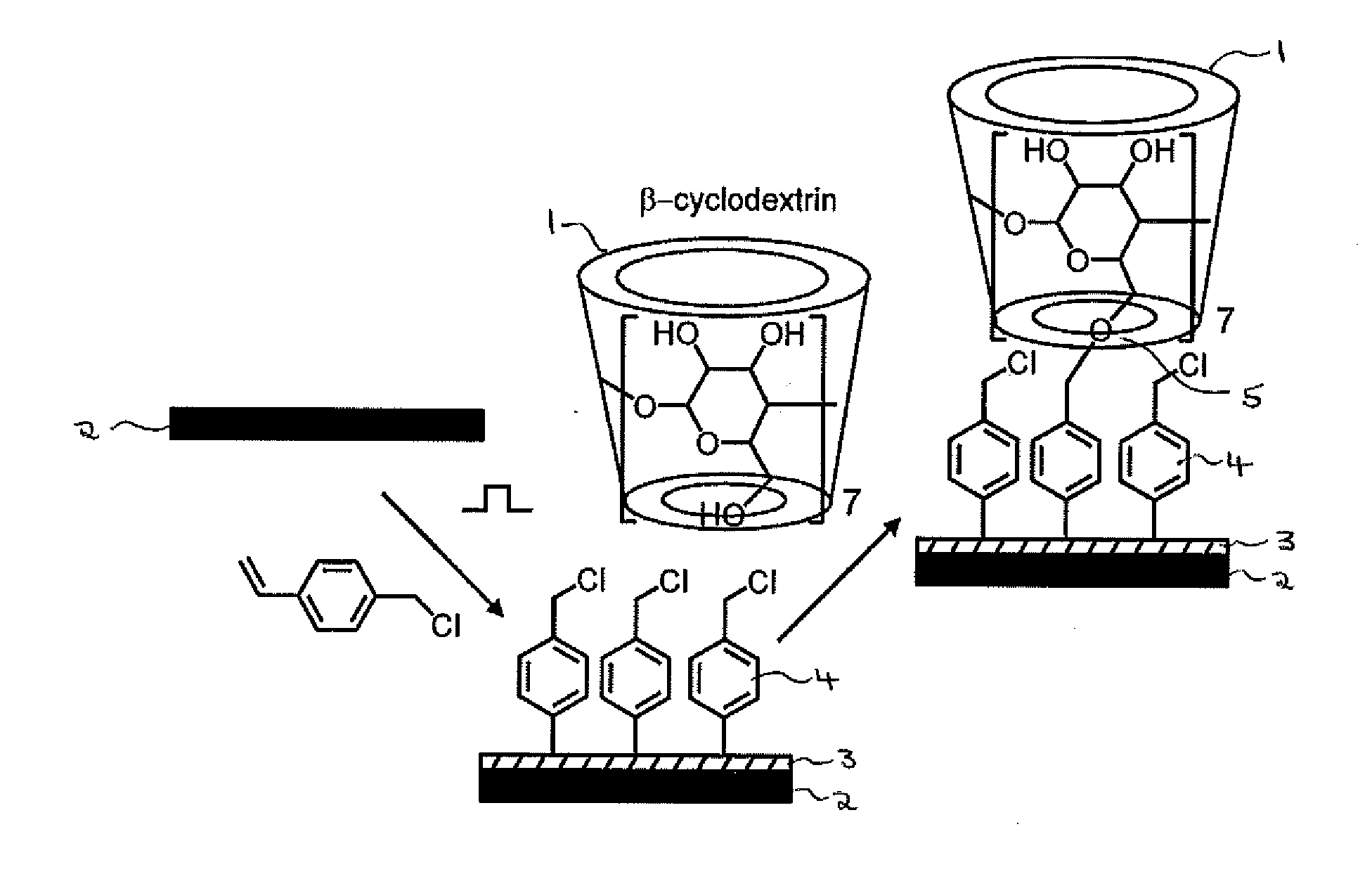
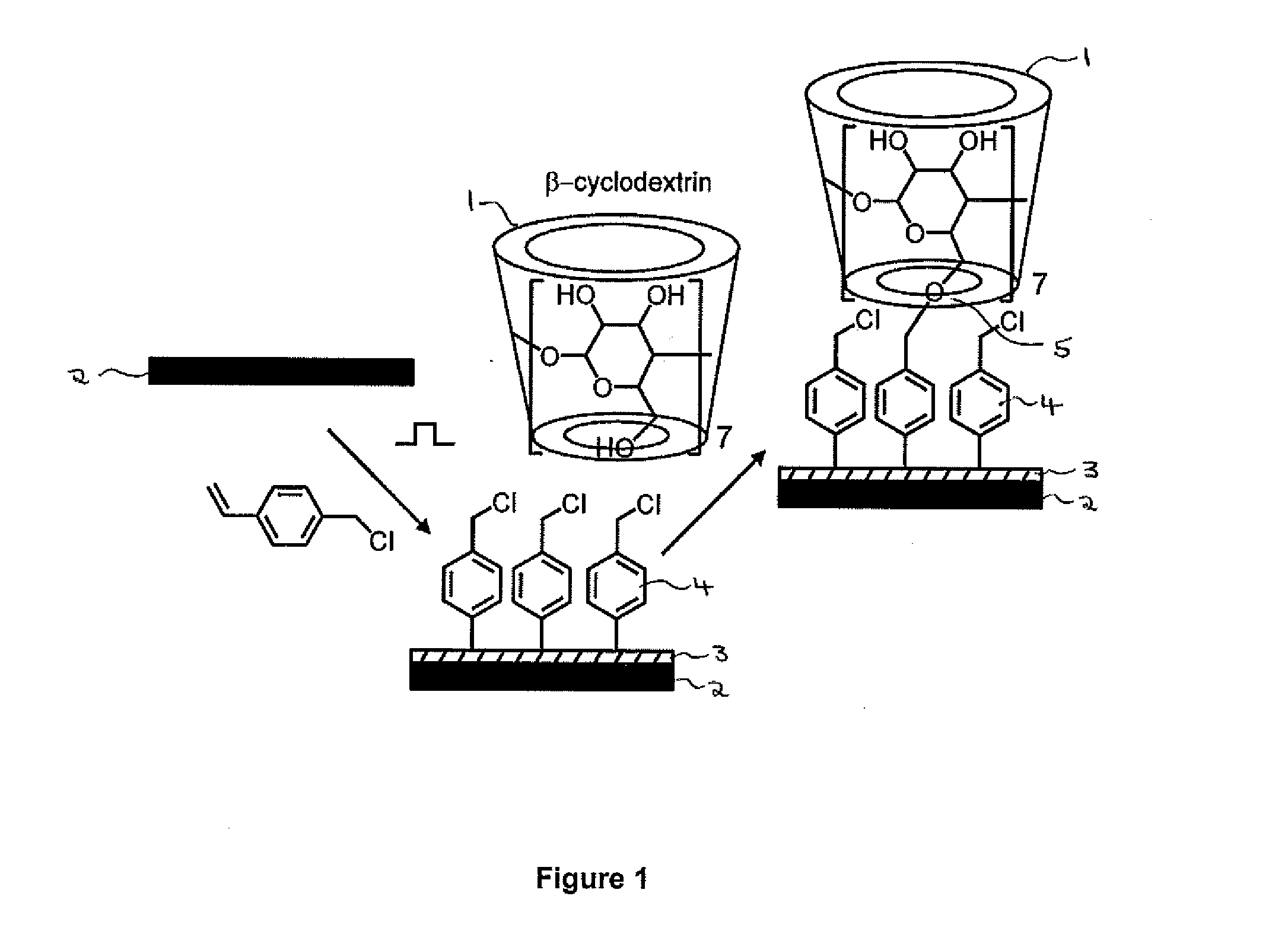
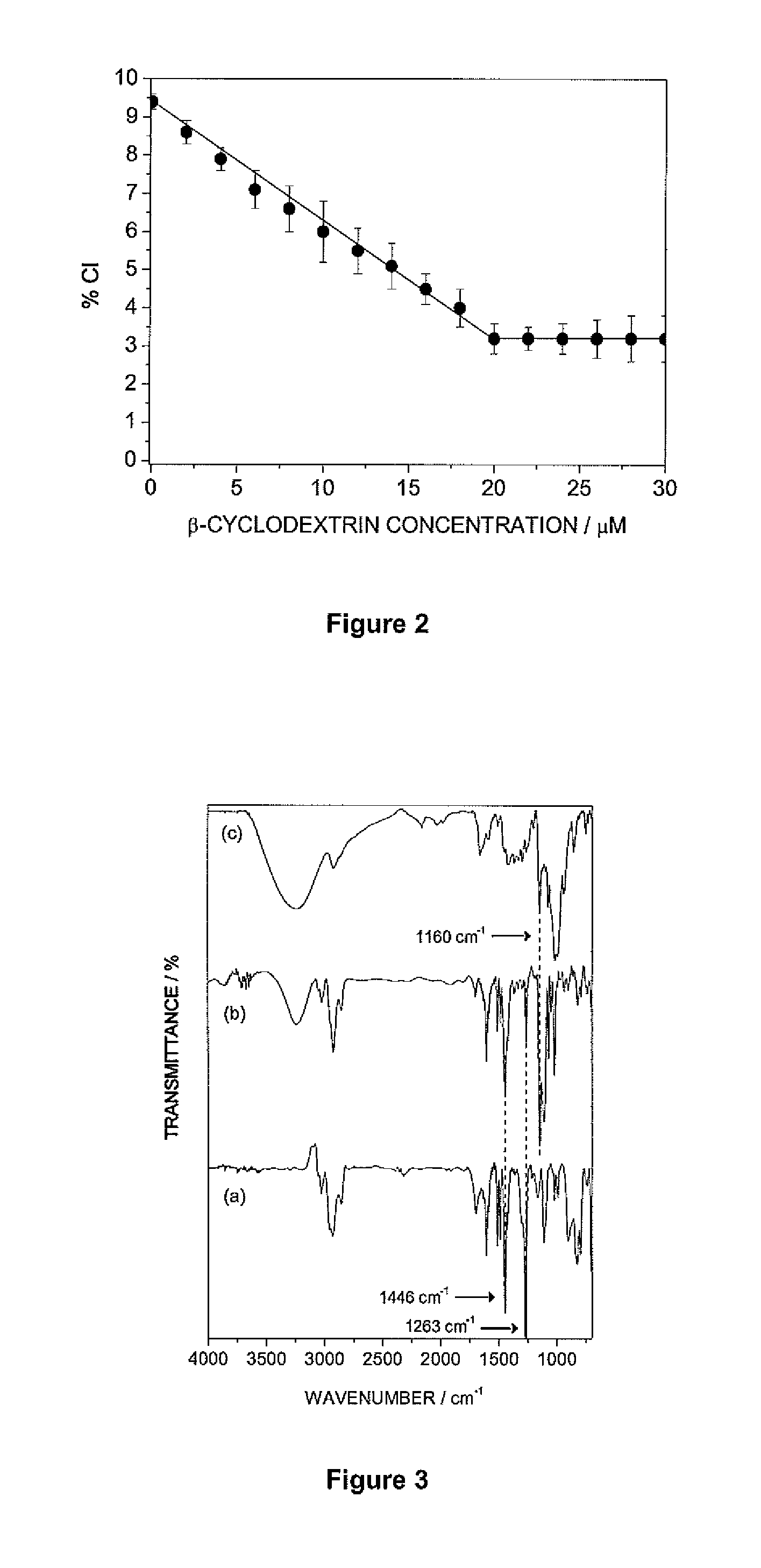
- A delivery system where a substrate is coated with a polymer using plasma deposition, and cyclodextrin inclusion complexes are bound to the polymer through chemical linkages, allowing for the loading and release of active substances without degrading the polymer, enabling extended release periods and reusability.

Environmental Impact of Cyclodextrin Applications
The environmental implications of cyclodextrin applications represent a critical consideration in the sustainable development of molecular interaction technologies. As cyclodextrins gain widespread adoption across pharmaceutical, food, cosmetic, and industrial sectors, their environmental footprint demands comprehensive evaluation to ensure responsible implementation.
Cyclodextrins demonstrate favorable biodegradability characteristics compared to many synthetic encapsulation agents. These naturally derived oligosaccharides undergo enzymatic degradation through α-amylase activity, breaking down into glucose units that integrate seamlessly into natural carbon cycles. This biodegradation pathway significantly reduces long-term environmental accumulation risks, particularly in aquatic ecosystems where pharmaceutical and industrial waste commonly discharge.
The production processes of cyclodextrins present both environmental challenges and opportunities. Traditional enzymatic conversion of starch requires substantial energy inputs and generates organic waste streams. However, emerging biotechnological approaches utilizing engineered microorganisms offer more sustainable production pathways with reduced carbon footprints and improved atom economy.
Aquatic toxicity studies reveal generally low environmental hazard profiles for native cyclodextrins. Ecotoxicological assessments demonstrate minimal adverse effects on aquatic organisms at environmentally relevant concentrations. However, the formation of inclusion complexes with persistent organic pollutants raises concerns about potential bioaccumulation and altered contaminant transport mechanisms in environmental systems.
The application of cyclodextrins in environmental remediation technologies presents positive environmental impacts. Their molecular recognition capabilities enable selective extraction of organic contaminants from soil and groundwater systems. Cyclodextrin-enhanced remediation processes demonstrate effectiveness in removing aromatic hydrocarbons, pesticides, and pharmaceutical residues from contaminated environments.
Waste management considerations become increasingly important as cyclodextrin applications expand. While the compounds themselves biodegrade readily, their guest molecules may exhibit different environmental persistence profiles. Comprehensive lifecycle assessments must evaluate the combined environmental impact of cyclodextrin-guest complexes throughout their entire application and disposal phases.
Regulatory frameworks continue evolving to address cyclodextrin environmental safety. Current guidelines focus primarily on direct toxicity assessments, but emerging regulations increasingly consider indirect environmental effects through molecular interaction modifications and ecosystem-level impacts.
Cyclodextrins demonstrate favorable biodegradability characteristics compared to many synthetic encapsulation agents. These naturally derived oligosaccharides undergo enzymatic degradation through α-amylase activity, breaking down into glucose units that integrate seamlessly into natural carbon cycles. This biodegradation pathway significantly reduces long-term environmental accumulation risks, particularly in aquatic ecosystems where pharmaceutical and industrial waste commonly discharge.
The production processes of cyclodextrins present both environmental challenges and opportunities. Traditional enzymatic conversion of starch requires substantial energy inputs and generates organic waste streams. However, emerging biotechnological approaches utilizing engineered microorganisms offer more sustainable production pathways with reduced carbon footprints and improved atom economy.
Aquatic toxicity studies reveal generally low environmental hazard profiles for native cyclodextrins. Ecotoxicological assessments demonstrate minimal adverse effects on aquatic organisms at environmentally relevant concentrations. However, the formation of inclusion complexes with persistent organic pollutants raises concerns about potential bioaccumulation and altered contaminant transport mechanisms in environmental systems.
The application of cyclodextrins in environmental remediation technologies presents positive environmental impacts. Their molecular recognition capabilities enable selective extraction of organic contaminants from soil and groundwater systems. Cyclodextrin-enhanced remediation processes demonstrate effectiveness in removing aromatic hydrocarbons, pesticides, and pharmaceutical residues from contaminated environments.
Waste management considerations become increasingly important as cyclodextrin applications expand. While the compounds themselves biodegrade readily, their guest molecules may exhibit different environmental persistence profiles. Comprehensive lifecycle assessments must evaluate the combined environmental impact of cyclodextrin-guest complexes throughout their entire application and disposal phases.
Regulatory frameworks continue evolving to address cyclodextrin environmental safety. Current guidelines focus primarily on direct toxicity assessments, but emerging regulations increasingly consider indirect environmental effects through molecular interaction modifications and ecosystem-level impacts.
Safety Assessment of Aromatic-Cyclodextrin Complexes
The safety assessment of aromatic-cyclodextrin complexes represents a critical evaluation framework that encompasses multiple dimensions of biological and environmental impact. These inclusion complexes, formed through non-covalent interactions between aromatic guest molecules and cyclodextrin hosts, require comprehensive toxicological evaluation to ensure their safe application across pharmaceutical, food, and industrial sectors.
Cytotoxicity studies constitute the primary tier of safety evaluation, examining the potential cellular damage caused by aromatic-cyclodextrin complexes. In vitro assays using various cell lines, including hepatocytes, kidney cells, and intestinal epithelial cells, provide initial screening data for cellular viability and metabolic interference. The complexation process often alters the bioavailability and cellular uptake patterns of aromatic compounds, potentially modifying their toxicological profiles compared to free aromatic molecules.
Genotoxicity assessment focuses on evaluating the mutagenic potential of these complexes through standardized test batteries including Ames tests, chromosomal aberration assays, and micronucleus tests. The encapsulation of aromatic compounds within cyclodextrin cavities can significantly influence their interaction with DNA, either by reducing direct contact through molecular shielding or by altering cellular distribution patterns that affect nuclear exposure.
Systemic toxicity evaluation involves comprehensive animal studies examining acute, subacute, and chronic exposure effects. These studies assess organ-specific toxicity, particularly focusing on liver and kidney function, as these organs are primary sites for cyclodextrin metabolism and aromatic compound processing. The formation of inclusion complexes can modify pharmacokinetic parameters, including absorption rates, distribution patterns, and elimination pathways, thereby influencing overall systemic exposure profiles.
Environmental safety considerations address the ecological impact of aromatic-cyclodextrin complexes, including biodegradation pathways, aquatic toxicity, and soil contamination potential. The enhanced solubility of aromatic compounds through cyclodextrin complexation can increase their environmental mobility, requiring careful assessment of groundwater contamination risks and bioaccumulation potential in food chains.
Regulatory compliance frameworks vary across different application domains, with pharmaceutical applications requiring extensive preclinical safety packages, while food applications must meet specific food additive safety standards. The safety assessment protocols must align with relevant guidelines from regulatory bodies such as FDA, EMA, and WHO, ensuring comprehensive risk characterization for intended use scenarios.
Cytotoxicity studies constitute the primary tier of safety evaluation, examining the potential cellular damage caused by aromatic-cyclodextrin complexes. In vitro assays using various cell lines, including hepatocytes, kidney cells, and intestinal epithelial cells, provide initial screening data for cellular viability and metabolic interference. The complexation process often alters the bioavailability and cellular uptake patterns of aromatic compounds, potentially modifying their toxicological profiles compared to free aromatic molecules.
Genotoxicity assessment focuses on evaluating the mutagenic potential of these complexes through standardized test batteries including Ames tests, chromosomal aberration assays, and micronucleus tests. The encapsulation of aromatic compounds within cyclodextrin cavities can significantly influence their interaction with DNA, either by reducing direct contact through molecular shielding or by altering cellular distribution patterns that affect nuclear exposure.
Systemic toxicity evaluation involves comprehensive animal studies examining acute, subacute, and chronic exposure effects. These studies assess organ-specific toxicity, particularly focusing on liver and kidney function, as these organs are primary sites for cyclodextrin metabolism and aromatic compound processing. The formation of inclusion complexes can modify pharmacokinetic parameters, including absorption rates, distribution patterns, and elimination pathways, thereby influencing overall systemic exposure profiles.
Environmental safety considerations address the ecological impact of aromatic-cyclodextrin complexes, including biodegradation pathways, aquatic toxicity, and soil contamination potential. The enhanced solubility of aromatic compounds through cyclodextrin complexation can increase their environmental mobility, requiring careful assessment of groundwater contamination risks and bioaccumulation potential in food chains.
Regulatory compliance frameworks vary across different application domains, with pharmaceutical applications requiring extensive preclinical safety packages, while food applications must meet specific food additive safety standards. The safety assessment protocols must align with relevant guidelines from regulatory bodies such as FDA, EMA, and WHO, ensuring comprehensive risk characterization for intended use scenarios.
Unlock deeper insights with Patsnap Eureka Quick Research — get a full tech report to explore trends and direct your research. Try now!
Generate Your Research Report Instantly with AI Agent
Supercharge your innovation with Patsnap Eureka AI Agent Platform!