
Assessing Battery Composition’s Effect on Thermal Runaway
FEB 26, 20269 MIN READ
Generate Your Research Report Instantly with AI Agent
Patsnap Eureka helps you evaluate technical feasibility & market potential.
Battery Thermal Runaway Background and Research Objectives
Battery thermal runaway represents one of the most critical safety challenges in modern energy storage systems, particularly as lithium-ion batteries become increasingly prevalent across automotive, consumer electronics, and grid-scale applications. This phenomenon occurs when a battery cell experiences an uncontrolled temperature rise, leading to a cascade of exothermic reactions that can result in fire, explosion, or toxic gas release. The severity and frequency of thermal runaway incidents have intensified scrutiny on battery safety mechanisms and design parameters.
The composition of battery materials plays a fundamental role in determining thermal runaway characteristics, yet the complex interplay between different chemical components remains inadequately understood. Current battery chemistries encompass diverse cathode materials including lithium cobalt oxide, lithium iron phosphate, and nickel-manganese-cobalt compounds, each exhibiting distinct thermal stability profiles. Similarly, electrolyte formulations, separator materials, and anode compositions contribute significantly to overall thermal behavior under stress conditions.
Historical development of battery technology has prioritized energy density and performance metrics, often with limited consideration of thermal safety implications. Early lithium-ion batteries demonstrated concerning thermal runaway tendencies, prompting industry-wide efforts to develop safer chemistries and protective systems. However, the push toward higher energy densities and faster charging capabilities continues to challenge thermal management strategies.
The primary objective of assessing battery composition's effect on thermal runaway is to establish quantitative relationships between material properties and thermal safety performance. This research aims to identify critical composition parameters that influence onset temperature, heat generation rates, and propagation characteristics during thermal events. Understanding these relationships enables the development of predictive models for thermal behavior across different battery chemistries.
Secondary objectives include developing standardized testing methodologies for evaluating thermal runaway susceptibility and creating composition guidelines that balance performance requirements with safety considerations. The research seeks to provide actionable insights for battery manufacturers, system integrators, and regulatory bodies to enhance overall battery safety standards while maintaining technological advancement trajectories.
The composition of battery materials plays a fundamental role in determining thermal runaway characteristics, yet the complex interplay between different chemical components remains inadequately understood. Current battery chemistries encompass diverse cathode materials including lithium cobalt oxide, lithium iron phosphate, and nickel-manganese-cobalt compounds, each exhibiting distinct thermal stability profiles. Similarly, electrolyte formulations, separator materials, and anode compositions contribute significantly to overall thermal behavior under stress conditions.
Historical development of battery technology has prioritized energy density and performance metrics, often with limited consideration of thermal safety implications. Early lithium-ion batteries demonstrated concerning thermal runaway tendencies, prompting industry-wide efforts to develop safer chemistries and protective systems. However, the push toward higher energy densities and faster charging capabilities continues to challenge thermal management strategies.
The primary objective of assessing battery composition's effect on thermal runaway is to establish quantitative relationships between material properties and thermal safety performance. This research aims to identify critical composition parameters that influence onset temperature, heat generation rates, and propagation characteristics during thermal events. Understanding these relationships enables the development of predictive models for thermal behavior across different battery chemistries.
Secondary objectives include developing standardized testing methodologies for evaluating thermal runaway susceptibility and creating composition guidelines that balance performance requirements with safety considerations. The research seeks to provide actionable insights for battery manufacturers, system integrators, and regulatory bodies to enhance overall battery safety standards while maintaining technological advancement trajectories.
Market Demand for Safer Battery Technologies
The global battery market is experiencing unprecedented growth driven by the rapid expansion of electric vehicles, energy storage systems, and portable electronics. This surge has intensified focus on battery safety, particularly thermal runaway prevention, as high-profile incidents involving battery fires have raised significant safety concerns across multiple industries.
Electric vehicle manufacturers face mounting pressure from regulatory bodies and consumers to demonstrate superior battery safety standards. The automotive sector represents the largest growth driver for safer battery technologies, with manufacturers increasingly prioritizing thermal stability alongside energy density and charging speed. Recent incidents involving electric vehicle fires have accelerated demand for batteries with enhanced thermal management capabilities and improved compositional stability.
Energy storage system operators require batteries that can operate safely in large-scale installations where thermal runaway events could have catastrophic consequences. Grid-scale storage applications demand robust safety mechanisms, creating substantial market opportunities for battery technologies that demonstrate superior thermal stability through optimized material compositions and advanced monitoring systems.
Consumer electronics manufacturers are seeking battery solutions that balance performance with safety, particularly as devices become more compact and power-dense. The proliferation of wearable devices and portable electronics has created demand for batteries that maintain thermal stability under various operating conditions while delivering consistent performance.
Regulatory frameworks worldwide are evolving to establish stricter safety standards for battery technologies. These regulations are driving market demand toward solutions that can demonstrate measurable improvements in thermal runaway prevention through advanced material engineering and compositional optimization.
The aerospace and defense sectors represent emerging high-value markets for ultra-safe battery technologies. These applications require batteries that can operate reliably under extreme conditions while maintaining strict safety margins, creating opportunities for premium battery solutions with advanced thermal management capabilities.
Insurance companies and fleet operators are increasingly factoring battery safety performance into their risk assessments and procurement decisions. This trend is creating market incentives for battery manufacturers to invest in technologies that can demonstrate quantifiable safety improvements through rigorous testing and validation of compositional effects on thermal behavior.
Electric vehicle manufacturers face mounting pressure from regulatory bodies and consumers to demonstrate superior battery safety standards. The automotive sector represents the largest growth driver for safer battery technologies, with manufacturers increasingly prioritizing thermal stability alongside energy density and charging speed. Recent incidents involving electric vehicle fires have accelerated demand for batteries with enhanced thermal management capabilities and improved compositional stability.
Energy storage system operators require batteries that can operate safely in large-scale installations where thermal runaway events could have catastrophic consequences. Grid-scale storage applications demand robust safety mechanisms, creating substantial market opportunities for battery technologies that demonstrate superior thermal stability through optimized material compositions and advanced monitoring systems.
Consumer electronics manufacturers are seeking battery solutions that balance performance with safety, particularly as devices become more compact and power-dense. The proliferation of wearable devices and portable electronics has created demand for batteries that maintain thermal stability under various operating conditions while delivering consistent performance.
Regulatory frameworks worldwide are evolving to establish stricter safety standards for battery technologies. These regulations are driving market demand toward solutions that can demonstrate measurable improvements in thermal runaway prevention through advanced material engineering and compositional optimization.
The aerospace and defense sectors represent emerging high-value markets for ultra-safe battery technologies. These applications require batteries that can operate reliably under extreme conditions while maintaining strict safety margins, creating opportunities for premium battery solutions with advanced thermal management capabilities.
Insurance companies and fleet operators are increasingly factoring battery safety performance into their risk assessments and procurement decisions. This trend is creating market incentives for battery manufacturers to invest in technologies that can demonstrate quantifiable safety improvements through rigorous testing and validation of compositional effects on thermal behavior.
Current Battery Composition Thermal Runaway Challenges
Battery thermal runaway represents one of the most critical safety challenges in contemporary energy storage systems, with battery composition playing a pivotal role in determining the onset, propagation, and severity of these events. Current lithium-ion battery technologies face significant compositional challenges that directly influence thermal stability and safety performance across various application scenarios.
Cathode material composition presents the most substantial thermal runaway challenges in modern battery systems. Nickel-rich cathodes, particularly NCM811 and NCA chemistries, exhibit enhanced energy density but demonstrate increased thermal instability compared to traditional compositions. These materials release oxygen at lower temperatures, typically around 200-250°C, accelerating thermal decomposition reactions and creating self-sustaining exothermic processes that are difficult to control once initiated.
Electrolyte formulation constitutes another critical challenge area, where conventional carbonate-based electrolytes decompose at elevated temperatures, generating flammable gases and contributing to thermal runaway propagation. The interaction between electrolyte salts, particularly LiPF6, and organic solvents creates complex decomposition pathways that produce toxic and combustible byproducts, significantly complicating thermal management strategies.
Anode composition challenges primarily center around lithium plating phenomena and silicon-based materials integration. Graphite anodes, while relatively stable, can experience lithium metal deposition under certain charging conditions, creating localized hot spots that initiate thermal events. Silicon-containing anodes, despite their high capacity advantages, introduce additional thermal instability due to volume expansion effects and modified solid electrolyte interphase formation.
Separator material degradation represents a fundamental compositional challenge that directly impacts thermal runaway behavior. Polyethylene and polypropylene separators experience thermal shrinkage and melting at temperatures between 130-160°C, leading to internal short circuits that rapidly escalate thermal events. The lack of thermally stable separator materials that maintain ionic conductivity while preventing electronic contact remains a significant technical barrier.
Additive interactions within battery compositions create complex thermal behavior patterns that are difficult to predict and control. Flame retardant additives, while improving safety margins, often compromise electrochemical performance and introduce new decomposition pathways. The optimization of additive concentrations to balance safety and performance requirements presents ongoing challenges for battery manufacturers and researchers seeking comprehensive thermal runaway mitigation strategies.
Cathode material composition presents the most substantial thermal runaway challenges in modern battery systems. Nickel-rich cathodes, particularly NCM811 and NCA chemistries, exhibit enhanced energy density but demonstrate increased thermal instability compared to traditional compositions. These materials release oxygen at lower temperatures, typically around 200-250°C, accelerating thermal decomposition reactions and creating self-sustaining exothermic processes that are difficult to control once initiated.
Electrolyte formulation constitutes another critical challenge area, where conventional carbonate-based electrolytes decompose at elevated temperatures, generating flammable gases and contributing to thermal runaway propagation. The interaction between electrolyte salts, particularly LiPF6, and organic solvents creates complex decomposition pathways that produce toxic and combustible byproducts, significantly complicating thermal management strategies.
Anode composition challenges primarily center around lithium plating phenomena and silicon-based materials integration. Graphite anodes, while relatively stable, can experience lithium metal deposition under certain charging conditions, creating localized hot spots that initiate thermal events. Silicon-containing anodes, despite their high capacity advantages, introduce additional thermal instability due to volume expansion effects and modified solid electrolyte interphase formation.
Separator material degradation represents a fundamental compositional challenge that directly impacts thermal runaway behavior. Polyethylene and polypropylene separators experience thermal shrinkage and melting at temperatures between 130-160°C, leading to internal short circuits that rapidly escalate thermal events. The lack of thermally stable separator materials that maintain ionic conductivity while preventing electronic contact remains a significant technical barrier.
Additive interactions within battery compositions create complex thermal behavior patterns that are difficult to predict and control. Flame retardant additives, while improving safety margins, often compromise electrochemical performance and introduce new decomposition pathways. The optimization of additive concentrations to balance safety and performance requirements presents ongoing challenges for battery manufacturers and researchers seeking comprehensive thermal runaway mitigation strategies.
Existing Battery Composition Thermal Runaway Solutions
01 Thermal management systems for preventing battery thermal runaway
Advanced thermal management systems are designed to regulate battery temperature and prevent thermal runaway events. These systems incorporate cooling mechanisms, heat dissipation structures, and temperature monitoring devices to maintain optimal operating conditions. The systems may include liquid cooling, phase change materials, or air cooling technologies that actively remove excess heat from battery cells before critical temperatures are reached.- Thermal management systems for preventing battery thermal runaway: Advanced thermal management systems are designed to regulate battery temperature and prevent thermal runaway events. These systems incorporate cooling mechanisms, heat dissipation structures, and temperature monitoring components to maintain optimal operating conditions. The systems may include liquid cooling, phase change materials, or air cooling technologies that actively remove excess heat from battery cells before critical temperatures are reached.
- Early detection and warning systems for thermal runaway: Detection systems monitor various parameters such as temperature, voltage, and gas emissions to identify early signs of thermal runaway. These systems utilize sensors and algorithms to detect abnormal conditions and trigger warning signals or safety responses. The technology enables rapid identification of potential failures, allowing for preventive measures to be implemented before catastrophic events occur.
- Fire suppression and containment materials: Specialized materials and structures are incorporated into battery designs to suppress fires and contain thermal runaway propagation. These include flame-retardant separators, thermal barriers, and fire-resistant enclosures that prevent the spread of thermal events between cells. The materials are engineered to withstand high temperatures and provide isolation to limit damage to adjacent components.
- Battery cell design and electrode modifications: Innovations in battery cell architecture and electrode composition aim to reduce the likelihood of thermal runaway initiation. These modifications include optimized electrode materials, improved separator designs, and enhanced electrolyte formulations that increase thermal stability. The structural improvements focus on preventing internal short circuits and reducing heat generation during normal operation and abuse conditions.
- Battery management systems with safety protocols: Sophisticated battery management systems implement safety protocols and control strategies to prevent thermal runaway conditions. These systems monitor cell performance, balance charging and discharging, and execute protective measures when abnormal conditions are detected. The management systems integrate hardware and software solutions to optimize battery operation while maintaining safety margins and preventing thermal events through active intervention.
02 Early detection and warning systems for thermal runaway
Detection systems monitor various parameters such as temperature, voltage, and gas emissions to identify early signs of thermal runaway. These systems utilize sensors, algorithms, and diagnostic tools to detect abnormal conditions before they escalate into dangerous situations. Real-time monitoring and predictive analytics enable timely intervention and safety measures to be activated automatically.Expand Specific Solutions03 Battery cell design and material improvements for thermal stability
Innovations in battery cell architecture and material composition enhance thermal stability and reduce the risk of thermal runaway. These improvements include the use of thermally stable electrolytes, separator materials with enhanced heat resistance, and electrode designs that minimize internal heat generation. Advanced materials and structural modifications help prevent the propagation of thermal events between cells.Expand Specific Solutions04 Safety mechanisms and containment structures
Physical safety features and containment structures are implemented to isolate and contain thermal runaway events. These include pressure relief valves, flame-retardant barriers, thermal insulation layers, and compartmentalized battery pack designs. Such mechanisms prevent the spread of thermal runaway from one cell to adjacent cells and protect the overall battery system integrity.Expand Specific Solutions05 Battery management systems with thermal runaway mitigation protocols
Sophisticated battery management systems incorporate specialized protocols and control strategies to mitigate thermal runaway risks. These systems implement charge and discharge management, cell balancing, and emergency shutdown procedures. Advanced algorithms optimize battery operation to prevent conditions that could lead to thermal runaway while maintaining performance and extending battery life.Expand Specific Solutions
Key Players in Battery Safety and Thermal Control
The battery thermal runaway assessment field represents a rapidly evolving sector within the broader energy storage industry, currently in a growth phase driven by increasing electric vehicle adoption and safety regulations. The market demonstrates significant expansion potential as battery safety becomes paramount for manufacturers and regulators worldwide. Technology maturity varies considerably across market participants, with established players like Contemporary Amperex Technology Co., Tesla, and Samsung SDI leading in advanced thermal management solutions and comprehensive safety testing protocols. These companies have developed sophisticated battery management systems and thermal barrier technologies. Meanwhile, specialized firms such as Aspen Aerogels focus on thermal insulation materials, while automotive giants like Boeing and Safran integrate thermal safety into aerospace applications. Research institutions including Tsinghua University and Newcastle University contribute fundamental research, while emerging companies like SK On and EVE Energy are rapidly advancing their thermal safety capabilities to compete in this critical technology domain.
Contemporary Amperex Technology Co., Ltd.
Technical Solution: CATL has developed comprehensive thermal runaway assessment methodologies focusing on battery composition optimization. Their approach involves systematic evaluation of cathode materials including NCM (Nickel Cobalt Manganese) and LFP (Lithium Iron Phosphate) chemistries to understand thermal stability characteristics. The company employs advanced calorimetry testing and thermal propagation analysis to assess how different electrolyte formulations and separator materials influence thermal runaway onset temperatures and propagation rates. CATL's research demonstrates that LFP chemistry shows superior thermal stability with onset temperatures around 270°C compared to NCM at 210°C, while their proprietary electrolyte additives can delay thermal runaway by 15-20 minutes in abuse conditions.
Strengths: Leading market position with extensive R&D resources and comprehensive testing facilities. Weaknesses: Heavy focus on cost optimization may limit exploration of premium safety materials.
Tesla, Inc.
Technical Solution: Tesla's approach to assessing battery composition effects on thermal runaway centers on their 4680 cell design and tabless architecture. The company conducts extensive thermal abuse testing using different silicon-graphite anode compositions and high-nickel cathode materials to optimize energy density while maintaining safety margins. Tesla's methodology includes nail penetration tests, overcharge scenarios, and external heating protocols to evaluate how their proprietary electrolyte chemistry and cell-level thermal management systems respond to thermal events. Their structural battery pack design incorporates thermal barriers and uses specific adhesive materials that can withstand temperatures up to 180°C, providing additional protection against thermal propagation between cells.
Strengths: Integrated approach combining cell chemistry with pack-level thermal management and real-world validation data. Weaknesses: Limited transparency in sharing detailed composition data and testing methodologies with broader industry.
Core Innovations in Thermal Runaway Prevention
Quantitative evaluation method and system for thermal runaway safety of power battery
PatentWO2020199416A1
Innovation
- The adiabatic thermal runaway test method is used to monitor the temperature and voltage of the battery cells in real time, generate a thermal runaway test curve, and obtain characteristic values such as the starting heat generation temperature, internal large-scale heat release temperature and the maximum temperature, and conduct quantitative evaluation through these characteristic values. Compare to reference values of standard cells to assess safety.


System for battery testing with an ignition device for exhaust gasses
PatentPendingUS20230235879A1
Innovation
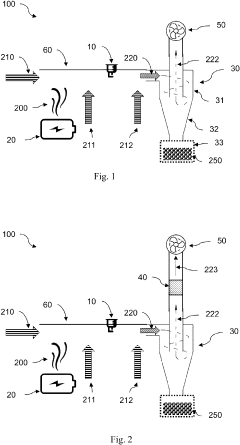
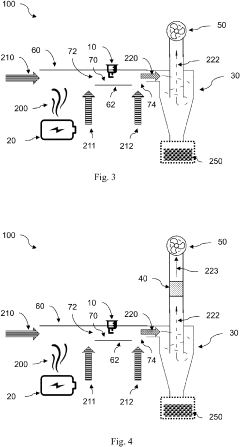
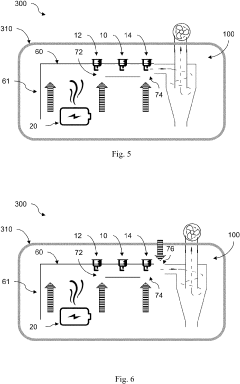
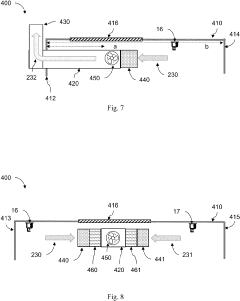
- A battery testing system that includes an ignition device within a test chamber to combust exhaust gases produced during testing, followed by filtration of the combusted gases using a cyclone filter and a fine particle filter to ensure safe release.
Safety Standards and Regulations for Battery Systems
The regulatory landscape for battery systems has evolved significantly in response to growing concerns about thermal runaway incidents and their potential consequences. International standards organizations have established comprehensive frameworks to address safety requirements, with particular emphasis on thermal management and composition-related risks. The International Electrotechnical Commission (IEC) has developed IEC 62133 series standards specifically for portable sealed secondary cells and batteries, while IEC 62619 addresses safety requirements for secondary lithium cells and batteries for industrial applications.
In the United States, Underwriters Laboratories (UL) has implemented UL 2054 and UL 1973 standards, which mandate rigorous testing protocols for battery thermal behavior and abuse tolerance. These standards require manufacturers to demonstrate that their battery compositions can withstand specific thermal stress conditions without propagating thermal runaway to adjacent cells. The Federal Aviation Administration has also established strict regulations for lithium battery transportation, directly linking allowable compositions to thermal stability characteristics.
European regulations under the Battery Directive 2006/66/EC and its recent updates emphasize the relationship between battery chemistry and safety performance. The directive requires comprehensive risk assessments that consider how different electrode materials, electrolyte compositions, and separator technologies influence thermal runaway propagation rates. Testing protocols must demonstrate that battery systems can contain thermal events within acceptable safety margins.
The United Nations has established UN 38.3 transportation testing requirements that specifically evaluate how battery composition affects thermal stability during various abuse scenarios. These tests include thermal cycling, altitude simulation, and mechanical shock assessments that reveal composition-dependent failure modes. Manufacturers must provide detailed documentation linking their specific material choices to demonstrated safety performance under these standardized conditions.
Recent regulatory developments have introduced more stringent requirements for thermal propagation testing, particularly for automotive and energy storage applications. The ISO 26262 functional safety standard for automotive systems now requires detailed analysis of how battery composition variations might affect thermal runaway characteristics throughout the product lifecycle. Similarly, grid-scale energy storage systems must comply with IEEE 1547 standards that mandate comprehensive thermal safety assessments based on specific battery chemistries and compositions.
Emerging regulations are increasingly focusing on predictive safety assessment methodologies that correlate material properties with thermal runaway behavior. These standards require manufacturers to establish clear relationships between composition parameters and safety performance metrics, enabling more precise risk evaluation and mitigation strategies.
In the United States, Underwriters Laboratories (UL) has implemented UL 2054 and UL 1973 standards, which mandate rigorous testing protocols for battery thermal behavior and abuse tolerance. These standards require manufacturers to demonstrate that their battery compositions can withstand specific thermal stress conditions without propagating thermal runaway to adjacent cells. The Federal Aviation Administration has also established strict regulations for lithium battery transportation, directly linking allowable compositions to thermal stability characteristics.
European regulations under the Battery Directive 2006/66/EC and its recent updates emphasize the relationship between battery chemistry and safety performance. The directive requires comprehensive risk assessments that consider how different electrode materials, electrolyte compositions, and separator technologies influence thermal runaway propagation rates. Testing protocols must demonstrate that battery systems can contain thermal events within acceptable safety margins.
The United Nations has established UN 38.3 transportation testing requirements that specifically evaluate how battery composition affects thermal stability during various abuse scenarios. These tests include thermal cycling, altitude simulation, and mechanical shock assessments that reveal composition-dependent failure modes. Manufacturers must provide detailed documentation linking their specific material choices to demonstrated safety performance under these standardized conditions.
Recent regulatory developments have introduced more stringent requirements for thermal propagation testing, particularly for automotive and energy storage applications. The ISO 26262 functional safety standard for automotive systems now requires detailed analysis of how battery composition variations might affect thermal runaway characteristics throughout the product lifecycle. Similarly, grid-scale energy storage systems must comply with IEEE 1547 standards that mandate comprehensive thermal safety assessments based on specific battery chemistries and compositions.
Emerging regulations are increasingly focusing on predictive safety assessment methodologies that correlate material properties with thermal runaway behavior. These standards require manufacturers to establish clear relationships between composition parameters and safety performance metrics, enabling more precise risk evaluation and mitigation strategies.
Environmental Impact of Battery Thermal Events
Battery thermal runaway events pose significant environmental risks that extend far beyond immediate safety concerns. When lithium-ion batteries experience thermal runaway, they release a complex mixture of toxic gases, particulate matter, and potentially hazardous chemical compounds into the atmosphere. The environmental impact varies substantially based on battery composition, with different cathode materials, electrolyte formulations, and cell chemistries producing distinct emission profiles during thermal events.
The gaseous emissions from thermal runaway typically include hydrogen fluoride, carbon monoxide, carbon dioxide, and various organic compounds. Hydrogen fluoride represents one of the most concerning environmental pollutants, as it can form hydrofluoric acid when combined with atmospheric moisture, leading to acid rain and soil contamination. The concentration and toxicity of these emissions directly correlate with specific battery compositions, particularly the fluorine content in electrolyte salts and the thermal stability of cathode materials.
Particulate matter released during thermal events contains heavy metals and lithium compounds that can contaminate soil and water systems. Cobalt-based cathodes release cobalt particles, while nickel-rich formulations emit nickel compounds, both of which pose long-term environmental persistence challenges. These particles can travel significant distances through air currents, affecting ecosystems far from the initial thermal event location.
Water contamination represents another critical environmental concern, particularly when thermal runaway occurs in proximity to water sources. The leaching of lithium salts, heavy metals, and organic electrolyte components can alter water chemistry and harm aquatic ecosystems. The environmental persistence of these contaminants varies based on battery composition, with some compounds remaining bioavailable for extended periods.
The scale of environmental impact depends heavily on the quantity of batteries involved and containment measures. Large-scale battery installations, such as energy storage systems, present amplified environmental risks during thermal events. Proper assessment of battery composition effects on thermal runaway must therefore consider not only the immediate safety implications but also the broader environmental consequences, including air quality degradation, soil contamination, and potential impacts on local wildlife populations.
The gaseous emissions from thermal runaway typically include hydrogen fluoride, carbon monoxide, carbon dioxide, and various organic compounds. Hydrogen fluoride represents one of the most concerning environmental pollutants, as it can form hydrofluoric acid when combined with atmospheric moisture, leading to acid rain and soil contamination. The concentration and toxicity of these emissions directly correlate with specific battery compositions, particularly the fluorine content in electrolyte salts and the thermal stability of cathode materials.
Particulate matter released during thermal events contains heavy metals and lithium compounds that can contaminate soil and water systems. Cobalt-based cathodes release cobalt particles, while nickel-rich formulations emit nickel compounds, both of which pose long-term environmental persistence challenges. These particles can travel significant distances through air currents, affecting ecosystems far from the initial thermal event location.
Water contamination represents another critical environmental concern, particularly when thermal runaway occurs in proximity to water sources. The leaching of lithium salts, heavy metals, and organic electrolyte components can alter water chemistry and harm aquatic ecosystems. The environmental persistence of these contaminants varies based on battery composition, with some compounds remaining bioavailable for extended periods.
The scale of environmental impact depends heavily on the quantity of batteries involved and containment measures. Large-scale battery installations, such as energy storage systems, present amplified environmental risks during thermal events. Proper assessment of battery composition effects on thermal runaway must therefore consider not only the immediate safety implications but also the broader environmental consequences, including air quality degradation, soil contamination, and potential impacts on local wildlife populations.
Unlock deeper insights with Patsnap Eureka Quick Research — get a full tech report to explore trends and direct your research. Try now!
Generate Your Research Report Instantly with AI Agent
Supercharge your innovation with Patsnap Eureka AI Agent Platform!