
Comparing Thermal Runaway Mitigation Technologies
FEB 26, 20269 MIN READ
Generate Your Research Report Instantly with AI Agent
Patsnap Eureka helps you evaluate technical feasibility & market potential.
Thermal Runaway Background and Safety Objectives
Thermal runaway represents one of the most critical safety challenges in lithium-ion battery technology, fundamentally altering the landscape of energy storage system design and implementation. This phenomenon occurs when a battery cell experiences an uncontrolled increase in temperature, triggering a cascade of exothermic reactions that can lead to fire, explosion, or toxic gas release. The escalating adoption of lithium-ion batteries across electric vehicles, grid-scale energy storage, consumer electronics, and aerospace applications has intensified the urgency to develop comprehensive thermal runaway mitigation strategies.
The evolution of thermal runaway understanding began in the early 2000s when lithium-ion batteries first gained commercial prominence. Initial incidents in consumer electronics revealed the devastating potential of uncontrolled thermal events, prompting extensive research into the underlying mechanisms. Scientists identified that thermal runaway typically initiates when cell temperatures exceed 130-150°C, causing the breakdown of the solid electrolyte interphase layer and subsequent electrolyte decomposition. This process generates heat and flammable gases, creating a self-sustaining reaction that can propagate to adjacent cells.
Historical analysis reveals several pivotal moments that shaped current safety approaches. The 2006 laptop battery recalls involving millions of units demonstrated the scalability of thermal runaway risks. Subsequently, early electric vehicle incidents highlighted the unique challenges of large-format battery systems, where thermal propagation between cells could result in complete pack failure. These events catalyzed regulatory responses and industry-wide safety initiatives that continue to influence modern battery system design.
Contemporary safety objectives have evolved to encompass multiple protection layers, reflecting the complexity of thermal runaway phenomena. Primary objectives include early detection and prevention of thermal runaway initiation through advanced battery management systems capable of monitoring cell-level temperature, voltage, and impedance variations. Secondary objectives focus on containment strategies that prevent thermal propagation between cells, utilizing materials and design approaches that can withstand extreme temperatures and toxic gas exposure.
The current regulatory landscape establishes stringent safety benchmarks that drive technological innovation. International standards such as UN38.3, UL9540A, and IEC62619 define specific test protocols for thermal runaway evaluation, requiring battery systems to demonstrate controlled failure modes even under extreme abuse conditions. These standards mandate that thermal events remain contained within designated boundaries, preventing cascading failures that could compromise entire energy storage installations.
Modern safety objectives also emphasize the integration of active and passive mitigation technologies, recognizing that no single approach can address all thermal runaway scenarios. This holistic perspective drives the development of multi-layered protection systems combining advanced materials, intelligent monitoring, and rapid response mechanisms to minimize the probability and consequences of thermal runaway events across diverse application environments.
The evolution of thermal runaway understanding began in the early 2000s when lithium-ion batteries first gained commercial prominence. Initial incidents in consumer electronics revealed the devastating potential of uncontrolled thermal events, prompting extensive research into the underlying mechanisms. Scientists identified that thermal runaway typically initiates when cell temperatures exceed 130-150°C, causing the breakdown of the solid electrolyte interphase layer and subsequent electrolyte decomposition. This process generates heat and flammable gases, creating a self-sustaining reaction that can propagate to adjacent cells.
Historical analysis reveals several pivotal moments that shaped current safety approaches. The 2006 laptop battery recalls involving millions of units demonstrated the scalability of thermal runaway risks. Subsequently, early electric vehicle incidents highlighted the unique challenges of large-format battery systems, where thermal propagation between cells could result in complete pack failure. These events catalyzed regulatory responses and industry-wide safety initiatives that continue to influence modern battery system design.
Contemporary safety objectives have evolved to encompass multiple protection layers, reflecting the complexity of thermal runaway phenomena. Primary objectives include early detection and prevention of thermal runaway initiation through advanced battery management systems capable of monitoring cell-level temperature, voltage, and impedance variations. Secondary objectives focus on containment strategies that prevent thermal propagation between cells, utilizing materials and design approaches that can withstand extreme temperatures and toxic gas exposure.
The current regulatory landscape establishes stringent safety benchmarks that drive technological innovation. International standards such as UN38.3, UL9540A, and IEC62619 define specific test protocols for thermal runaway evaluation, requiring battery systems to demonstrate controlled failure modes even under extreme abuse conditions. These standards mandate that thermal events remain contained within designated boundaries, preventing cascading failures that could compromise entire energy storage installations.
Modern safety objectives also emphasize the integration of active and passive mitigation technologies, recognizing that no single approach can address all thermal runaway scenarios. This holistic perspective drives the development of multi-layered protection systems combining advanced materials, intelligent monitoring, and rapid response mechanisms to minimize the probability and consequences of thermal runaway events across diverse application environments.
Market Demand for Battery Safety Solutions
The global battery safety solutions market has experienced unprecedented growth driven by the rapid expansion of electric vehicles, energy storage systems, and portable electronics. This surge in demand stems from increasing awareness of thermal runaway incidents and their catastrophic consequences, including fires, explosions, and toxic gas emissions that pose significant risks to human safety and property.
Electric vehicle manufacturers represent the largest segment driving demand for thermal runaway mitigation technologies. As EV adoption accelerates worldwide, automotive companies face mounting pressure from regulators, insurers, and consumers to implement comprehensive battery safety measures. The automotive sector's stringent safety requirements have created substantial market opportunities for advanced thermal management systems, fire suppression technologies, and early warning detection systems.
Energy storage system deployments for grid-scale applications have emerged as another critical market driver. Utility companies and renewable energy developers increasingly recognize that battery safety failures can result in massive financial losses, regulatory penalties, and public relations disasters. This awareness has translated into growing investments in sophisticated thermal runaway prevention and mitigation solutions.
Consumer electronics manufacturers continue to demand compact, cost-effective safety solutions as device miniaturization intensifies thermal management challenges. High-profile incidents involving smartphone and laptop battery failures have heightened consumer awareness and regulatory scrutiny, compelling manufacturers to prioritize safety technologies in their product development cycles.
The market demonstrates strong regional variations in demand patterns. Developed markets emphasize advanced detection and suppression systems, while emerging markets focus on cost-effective basic safety measures. Regulatory frameworks significantly influence market dynamics, with stricter safety standards driving adoption of more sophisticated mitigation technologies.
Insurance companies increasingly factor battery safety measures into their risk assessments and premium calculations, creating additional economic incentives for organizations to invest in thermal runaway mitigation technologies. This trend has established a clear business case for implementing comprehensive battery safety solutions across various applications.
The market's evolution reflects a shift from reactive safety measures toward proactive prevention strategies, with customers increasingly seeking integrated solutions that combine multiple mitigation approaches rather than standalone technologies.
Electric vehicle manufacturers represent the largest segment driving demand for thermal runaway mitigation technologies. As EV adoption accelerates worldwide, automotive companies face mounting pressure from regulators, insurers, and consumers to implement comprehensive battery safety measures. The automotive sector's stringent safety requirements have created substantial market opportunities for advanced thermal management systems, fire suppression technologies, and early warning detection systems.
Energy storage system deployments for grid-scale applications have emerged as another critical market driver. Utility companies and renewable energy developers increasingly recognize that battery safety failures can result in massive financial losses, regulatory penalties, and public relations disasters. This awareness has translated into growing investments in sophisticated thermal runaway prevention and mitigation solutions.
Consumer electronics manufacturers continue to demand compact, cost-effective safety solutions as device miniaturization intensifies thermal management challenges. High-profile incidents involving smartphone and laptop battery failures have heightened consumer awareness and regulatory scrutiny, compelling manufacturers to prioritize safety technologies in their product development cycles.
The market demonstrates strong regional variations in demand patterns. Developed markets emphasize advanced detection and suppression systems, while emerging markets focus on cost-effective basic safety measures. Regulatory frameworks significantly influence market dynamics, with stricter safety standards driving adoption of more sophisticated mitigation technologies.
Insurance companies increasingly factor battery safety measures into their risk assessments and premium calculations, creating additional economic incentives for organizations to invest in thermal runaway mitigation technologies. This trend has established a clear business case for implementing comprehensive battery safety solutions across various applications.
The market's evolution reflects a shift from reactive safety measures toward proactive prevention strategies, with customers increasingly seeking integrated solutions that combine multiple mitigation approaches rather than standalone technologies.
Current Thermal Runaway Challenges and Limitations
Thermal runaway in lithium-ion batteries represents one of the most critical safety challenges facing the energy storage industry today. This phenomenon occurs when a battery cell experiences an uncontrolled temperature rise, leading to a cascading failure that can result in fire, explosion, or toxic gas emission. The challenge is particularly acute as battery energy densities continue to increase and applications expand into electric vehicles, grid storage, and consumer electronics.
Current detection methods face significant limitations in providing early warning capabilities. Traditional temperature-based monitoring systems often fail to detect thermal runaway initiation until the process has already begun, as the initial temperature changes can be subtle and localized. Gas detection systems, while more sensitive to early-stage reactions, struggle with selectivity issues and can produce false alarms from normal battery outgassing during charging cycles.
Suppression technologies encounter substantial technical barriers in effectively containing thermal runaway propagation. Conventional fire suppression agents like water or foam are often ineffective against the high-temperature chemical reactions occurring within battery cells. The enclosed nature of battery packs creates additional challenges for suppression agent delivery and distribution. Furthermore, the rapid progression of thermal runaway, which can escalate within seconds, leaves minimal time for intervention once initiated.
Material-level constraints present another significant challenge category. Current battery chemistries inherently contain the necessary components for thermal runaway reactions, including flammable electrolytes and reactive electrode materials. While safer chemistries like lithium iron phosphate offer improved thermal stability, they often compromise energy density and performance characteristics that are critical for many applications.
System-level integration challenges compound these material limitations. Battery management systems must balance performance optimization with safety monitoring, often operating with incomplete information about internal cell conditions. The complexity increases exponentially in large-scale applications where thousands of cells must be monitored and managed simultaneously. Thermal management systems struggle to provide uniform temperature control across entire battery packs, creating hotspots that can trigger thermal runaway events.
Regulatory and standardization gaps further complicate mitigation efforts. Current safety standards vary significantly across different applications and geographic regions, creating inconsistent safety requirements. Testing protocols often fail to adequately simulate real-world failure scenarios, particularly those involving multiple simultaneous stressors such as mechanical damage combined with overcharging or extreme temperatures.
Current detection methods face significant limitations in providing early warning capabilities. Traditional temperature-based monitoring systems often fail to detect thermal runaway initiation until the process has already begun, as the initial temperature changes can be subtle and localized. Gas detection systems, while more sensitive to early-stage reactions, struggle with selectivity issues and can produce false alarms from normal battery outgassing during charging cycles.
Suppression technologies encounter substantial technical barriers in effectively containing thermal runaway propagation. Conventional fire suppression agents like water or foam are often ineffective against the high-temperature chemical reactions occurring within battery cells. The enclosed nature of battery packs creates additional challenges for suppression agent delivery and distribution. Furthermore, the rapid progression of thermal runaway, which can escalate within seconds, leaves minimal time for intervention once initiated.
Material-level constraints present another significant challenge category. Current battery chemistries inherently contain the necessary components for thermal runaway reactions, including flammable electrolytes and reactive electrode materials. While safer chemistries like lithium iron phosphate offer improved thermal stability, they often compromise energy density and performance characteristics that are critical for many applications.
System-level integration challenges compound these material limitations. Battery management systems must balance performance optimization with safety monitoring, often operating with incomplete information about internal cell conditions. The complexity increases exponentially in large-scale applications where thousands of cells must be monitored and managed simultaneously. Thermal management systems struggle to provide uniform temperature control across entire battery packs, creating hotspots that can trigger thermal runaway events.
Regulatory and standardization gaps further complicate mitigation efforts. Current safety standards vary significantly across different applications and geographic regions, creating inconsistent safety requirements. Testing protocols often fail to adequately simulate real-world failure scenarios, particularly those involving multiple simultaneous stressors such as mechanical damage combined with overcharging or extreme temperatures.
Existing Thermal Runaway Mitigation Solutions
01 Battery thermal management systems with cooling mechanisms
Advanced thermal management systems incorporate active cooling mechanisms such as liquid cooling, phase change materials, and heat pipes to dissipate heat generated during battery operation. These systems monitor temperature in real-time and activate cooling when thresholds are exceeded, preventing the escalation to thermal runaway conditions. The integration of cooling channels and thermal interface materials ensures efficient heat transfer away from battery cells.- Battery thermal management systems with cooling mechanisms: Advanced thermal management systems incorporate active cooling mechanisms such as liquid cooling, phase change materials, and heat pipes to dissipate heat generated during battery operation. These systems monitor temperature in real-time and activate cooling when thresholds are exceeded, preventing the escalation to thermal runaway conditions. The integration of cooling channels and thermal interface materials ensures efficient heat transfer away from battery cells.
- Fire suppression and containment systems: Specialized fire suppression technologies are designed to detect and extinguish thermal runaway events before they propagate. These systems utilize fire-retardant materials, automatic extinguishing agents, and containment structures that isolate affected cells from adjacent ones. Detection mechanisms include smoke sensors, temperature monitors, and gas detection systems that trigger immediate suppression responses to prevent cascading failures.
- Advanced battery cell design and materials: Innovative cell architectures and material compositions enhance thermal stability and reduce runaway risk. This includes the use of thermally stable electrolytes, ceramic separators, and electrode materials with improved thermal characteristics. Cell designs incorporate safety features such as current interrupt devices, pressure relief vents, and internal short circuit protection mechanisms that activate under abnormal conditions.
- Monitoring and early warning systems: Comprehensive monitoring systems employ multiple sensors and predictive algorithms to detect early signs of thermal runaway. These systems track parameters including voltage, current, temperature gradients, and internal resistance changes. Machine learning algorithms analyze patterns to predict potential failures before they occur, enabling preemptive actions such as load reduction, isolation of problematic cells, or activation of cooling systems.
- Structural and packaging innovations for thermal isolation: Battery pack designs incorporate thermal barriers, insulation materials, and spacing strategies to prevent thermal propagation between cells. Structural elements include heat shields, thermal break materials, and compartmentalized designs that contain thermal events within isolated zones. Packaging innovations also feature pressure relief systems and flame-resistant enclosures that maintain structural integrity during thermal events while protecting surrounding components.
02 Fire suppression and containment systems
Specialized fire suppression technologies are designed to detect and extinguish thermal runaway events in battery systems. These include automatic fire extinguishing agents, flame retardant materials, and containment structures that prevent fire propagation between cells. Detection systems utilize temperature sensors and gas sensors to identify early signs of thermal runaway and trigger suppression mechanisms before catastrophic failure occurs.Expand Specific Solutions03 Cell-level safety design and separator technologies
Enhanced cell design incorporates safety features at the component level, including advanced separator materials with shutdown capabilities, pressure relief vents, and current interrupt devices. These technologies prevent internal short circuits and provide fail-safe mechanisms that activate when abnormal conditions are detected. Separator materials with thermal shutdown properties cease ion transport at elevated temperatures, effectively stopping the electrochemical reactions that lead to thermal runaway.Expand Specific Solutions04 Battery management systems with predictive algorithms
Sophisticated battery management systems employ predictive algorithms and machine learning to monitor cell health and identify precursor conditions to thermal runaway. These systems track parameters such as voltage, current, temperature gradients, and impedance changes to detect anomalies. Early warning capabilities enable preemptive actions such as load disconnection, controlled discharge, or system isolation before thermal runaway propagation occurs.Expand Specific Solutions05 Structural and material innovations for thermal isolation
Novel structural designs and materials provide thermal barriers between battery cells and modules to prevent thermal runaway propagation. These include aerogel insulation, ceramic coatings, intumescent materials that expand under heat, and thermally conductive yet electrically insulative barriers. Module-level architecture incorporates spacing and thermal breaks that limit heat transfer pathways, containing thermal events to individual cells or small groups rather than allowing cascade failures across the entire battery pack.Expand Specific Solutions
Key Players in Battery Safety and Thermal Management
The thermal runaway mitigation technology sector represents a rapidly evolving market driven by the exponential growth of electric vehicle adoption and energy storage systems. The industry is currently in a growth phase, with market size expanding significantly as safety regulations tighten globally. Technology maturity varies considerably across different approaches, from established thermal barrier solutions by companies like Aspen Aerogels to advanced battery management systems developed by Tesla and Contemporary Amperex Technology. Leading automotive manufacturers including BYD, Hyundai Mobis, and Stellantis are actively integrating multiple mitigation strategies, while specialized battery companies like Samsung SDI and LG Energy Solution focus on cell-level safety innovations. The competitive landscape features a mix of material science companies, automotive OEMs, and battery manufacturers, indicating a multi-faceted approach to addressing thermal runaway challenges across the entire value chain.
Tesla, Inc.
Technical Solution: Tesla implements a comprehensive thermal runaway mitigation strategy through their proprietary battery thermal management system. Their approach includes advanced cooling circuits with glycol coolant, individual cell monitoring systems, and structural battery pack design that isolates thermal events. Tesla's 4680 battery cells feature tabless design reducing heat generation by 5x compared to previous generations. The company employs predictive algorithms that monitor cell temperature, voltage, and current in real-time to detect early signs of thermal runaway. Their battery management system can isolate affected modules within milliseconds and redirect cooling resources to prevent propagation. Tesla also integrates fire suppression systems and uses flame-retardant materials in battery enclosures.
Strengths: Industry-leading battery management algorithms, extensive real-world data collection, integrated vehicle-level thermal management. Weaknesses: Proprietary systems limit third-party integration, high implementation costs for smaller manufacturers.
BYD Co., Ltd.
Technical Solution: BYD's Blade Battery technology represents a breakthrough in thermal runaway mitigation through structural and chemical innovations. The lithium iron phosphate (LFP) chemistry inherently provides superior thermal stability with decomposition temperatures above 500°C compared to 200°C for NCM batteries. BYD's blade-shaped cell design maximizes surface area for heat dissipation while the Cell-to-Pack integration eliminates module-level thermal bridges. Their thermal management system features honeycomb cooling structures and phase-change materials that absorb excess heat during thermal events. BYD has demonstrated their battery's safety through nail penetration tests where the battery surface temperature remains below 60°C. The company integrates smart thermal monitoring with over 100 sensors per battery pack providing real-time thermal mapping and predictive failure analysis.
Strengths: Inherently safer LFP chemistry, proven safety test results, vertical integration from materials to vehicles. Weaknesses: Lower energy density compared to NCM alternatives, limited fast-charging capabilities in extreme temperatures.
Core Innovations in Thermal Runaway Prevention
Active Thermal Runaway Mitigation System for Use Within a Battery Pack
PatentActiveUS20100136391A1
Innovation
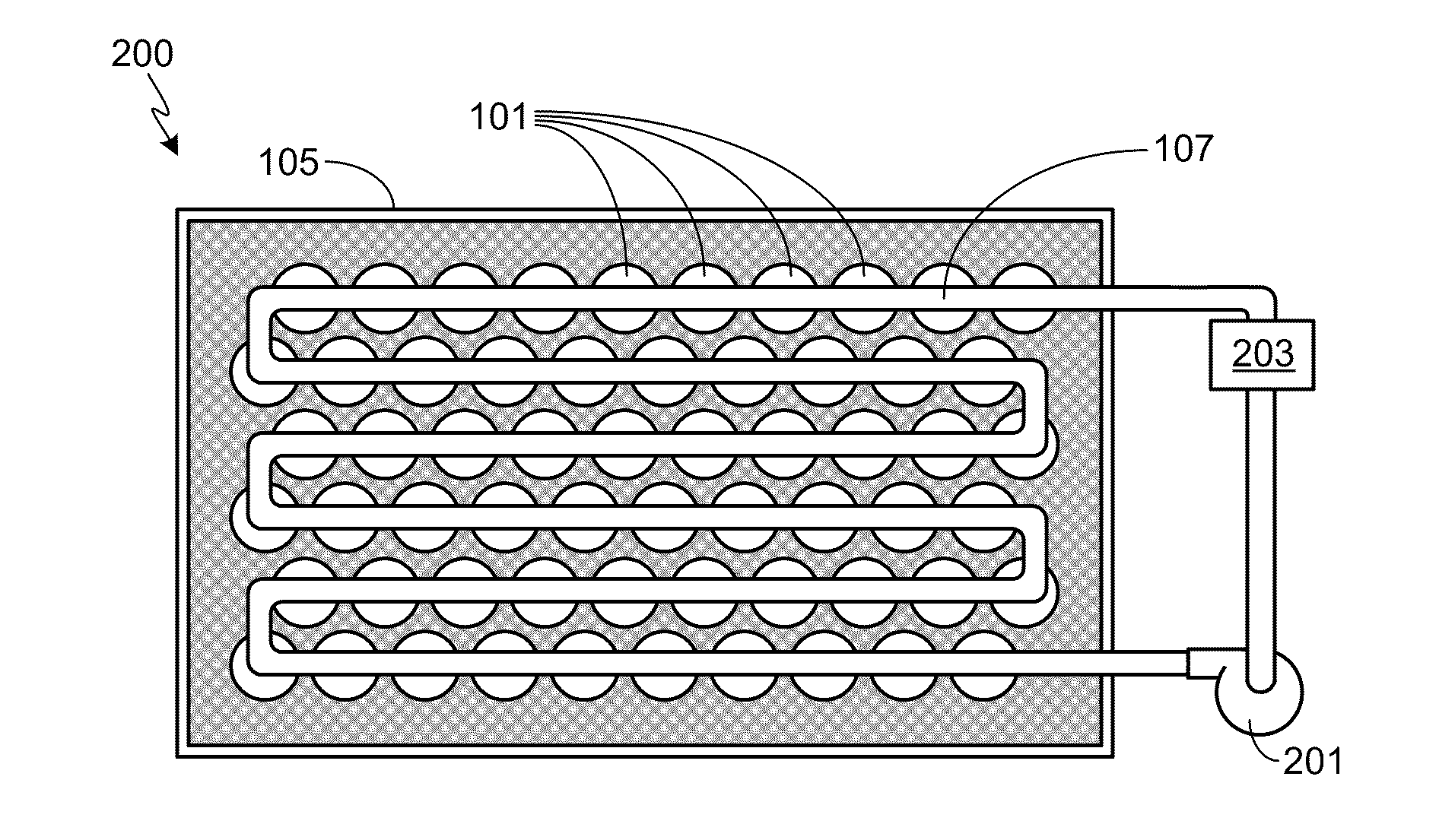
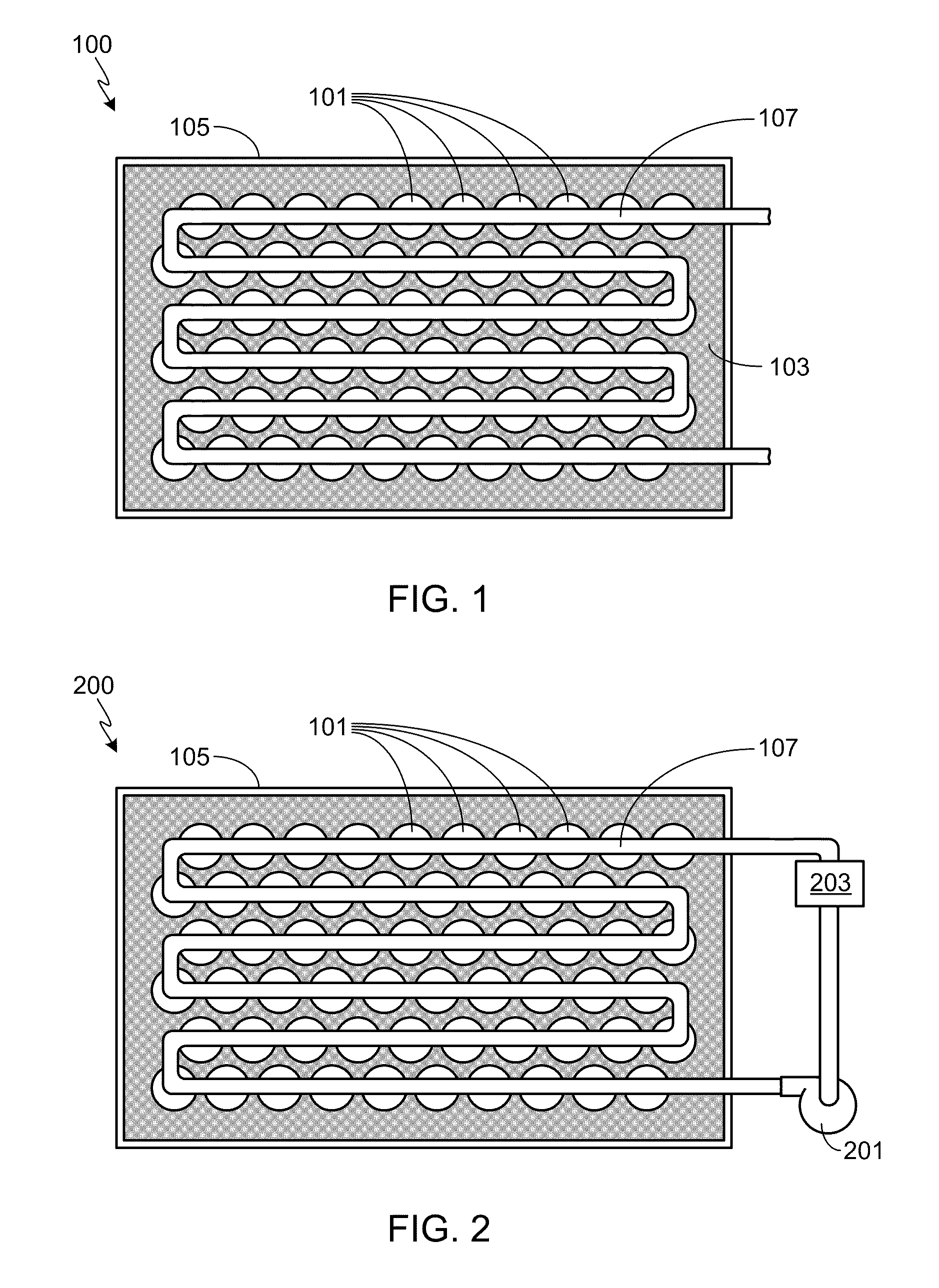
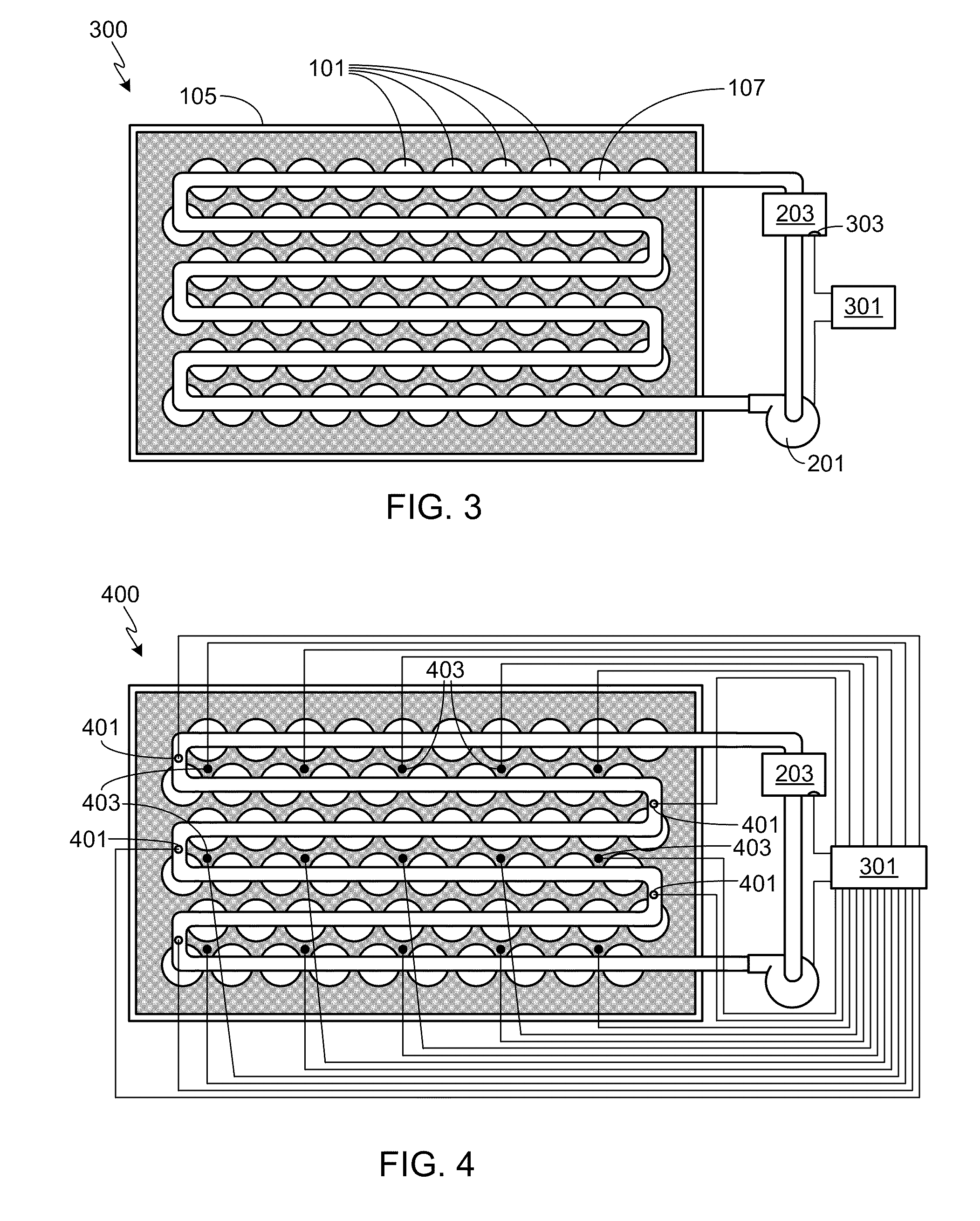
- An active thermal runaway mitigation system is implemented, featuring a battery pack enclosure with fluid-containing conduits that breach at a preset temperature to discharge cooling fluids or gases onto overheated cells, using sensors and a system controller to manage fluid flow and prevent propagation of thermal runaway to adjacent cells.

Method and system for reducing thermal runaways in a battery pack
PatentPendingUS20250325858A1
Innovation
- A method and system that injects nitrogen-rich air and removes oxygen-rich air from the battery pack upon detecting elevated temperatures or voltage drops, using an inerting system to maintain an oxygen volume below 10% and potentially incorporating a cooling unit to manage thermal runaway.

Safety Standards and Regulatory Framework
The regulatory landscape for thermal runaway mitigation technologies is primarily governed by international safety standards that establish fundamental requirements for battery system design and protection mechanisms. The International Electrotechnical Commission (IEC) 62619 standard serves as the cornerstone for lithium-ion battery safety in stationary applications, defining specific test procedures and performance criteria for thermal runaway prevention systems. Similarly, UL 9540A has emerged as a critical standard for evaluating thermal runaway fire and gas hazard characteristics in energy storage systems.
Automotive applications are regulated under ISO 26262 functional safety standards, which mandate comprehensive risk assessment and mitigation strategies for battery thermal events. The United Nations Economic Commission for Europe (UNECE) Global Technical Regulation No. 20 provides additional requirements for electric vehicle battery safety, including thermal propagation resistance testing that directly impacts mitigation technology selection and implementation.
Regional regulatory frameworks demonstrate varying approaches to thermal runaway safety requirements. The European Union's Battery Regulation 2023/1542 introduces stringent lifecycle safety requirements, while China's GB 38031 standard emphasizes thermal abuse testing protocols. The United States relies on a combination of federal regulations through the National Highway Traffic Safety Administration and state-level building codes that influence stationary storage installations.
Certification processes for thermal runaway mitigation technologies typically involve multi-stage testing protocols that evaluate both individual component performance and system-level integration effectiveness. These assessments include thermal abuse testing, gas emission analysis, and fire suppression system validation under controlled laboratory conditions.
The evolving regulatory environment reflects increasing recognition of thermal runaway risks, with recent updates emphasizing proactive detection and suppression capabilities rather than solely containment strategies. Future regulatory developments are expected to incorporate more sophisticated performance metrics and standardized testing methodologies as mitigation technologies mature and deployment scales increase across various applications.
Automotive applications are regulated under ISO 26262 functional safety standards, which mandate comprehensive risk assessment and mitigation strategies for battery thermal events. The United Nations Economic Commission for Europe (UNECE) Global Technical Regulation No. 20 provides additional requirements for electric vehicle battery safety, including thermal propagation resistance testing that directly impacts mitigation technology selection and implementation.
Regional regulatory frameworks demonstrate varying approaches to thermal runaway safety requirements. The European Union's Battery Regulation 2023/1542 introduces stringent lifecycle safety requirements, while China's GB 38031 standard emphasizes thermal abuse testing protocols. The United States relies on a combination of federal regulations through the National Highway Traffic Safety Administration and state-level building codes that influence stationary storage installations.
Certification processes for thermal runaway mitigation technologies typically involve multi-stage testing protocols that evaluate both individual component performance and system-level integration effectiveness. These assessments include thermal abuse testing, gas emission analysis, and fire suppression system validation under controlled laboratory conditions.
The evolving regulatory environment reflects increasing recognition of thermal runaway risks, with recent updates emphasizing proactive detection and suppression capabilities rather than solely containment strategies. Future regulatory developments are expected to incorporate more sophisticated performance metrics and standardized testing methodologies as mitigation technologies mature and deployment scales increase across various applications.
Cost-Benefit Analysis of Mitigation Technologies
The economic evaluation of thermal runaway mitigation technologies requires a comprehensive assessment framework that balances initial investment costs against long-term safety benefits and operational savings. Active cooling systems, while demanding higher upfront capital expenditure ranging from $50-150 per kWh of battery capacity, demonstrate superior performance in preventing thermal propagation and reducing insurance premiums by up to 30%. The return on investment typically materializes within 3-5 years through reduced maintenance costs and extended battery lifecycle.
Passive mitigation approaches, including advanced thermal barrier materials and phase change materials, present lower initial costs of $20-80 per kWh but offer variable effectiveness depending on application scenarios. These solutions excel in stationary energy storage applications where space constraints are minimal, delivering cost savings through simplified installation processes and reduced ongoing maintenance requirements.
Fire suppression systems exhibit diverse cost structures based on detection sophistication and suppression medium selection. Water-based systems require $30-70 per kWh investment, while advanced aerosol or gas-based systems demand $80-200 per kWh. However, the potential cost avoidance from preventing catastrophic failures, which can exceed $500,000 per incident including facility damage and business interruption, justifies the higher investment for critical applications.
The total cost of ownership analysis reveals that hybrid mitigation strategies, combining multiple technologies, often provide optimal cost-effectiveness ratios. Integration of thermal monitoring with passive barriers and targeted suppression systems achieves 85-95% risk reduction while maintaining reasonable implementation costs of $100-250 per kWh. Regulatory compliance benefits further enhance the economic proposition, as comprehensive mitigation systems can reduce certification costs and accelerate market entry timelines by 6-12 months, translating to significant competitive advantages and revenue protection in rapidly evolving battery markets.
Passive mitigation approaches, including advanced thermal barrier materials and phase change materials, present lower initial costs of $20-80 per kWh but offer variable effectiveness depending on application scenarios. These solutions excel in stationary energy storage applications where space constraints are minimal, delivering cost savings through simplified installation processes and reduced ongoing maintenance requirements.
Fire suppression systems exhibit diverse cost structures based on detection sophistication and suppression medium selection. Water-based systems require $30-70 per kWh investment, while advanced aerosol or gas-based systems demand $80-200 per kWh. However, the potential cost avoidance from preventing catastrophic failures, which can exceed $500,000 per incident including facility damage and business interruption, justifies the higher investment for critical applications.
The total cost of ownership analysis reveals that hybrid mitigation strategies, combining multiple technologies, often provide optimal cost-effectiveness ratios. Integration of thermal monitoring with passive barriers and targeted suppression systems achieves 85-95% risk reduction while maintaining reasonable implementation costs of $100-250 per kWh. Regulatory compliance benefits further enhance the economic proposition, as comprehensive mitigation systems can reduce certification costs and accelerate market entry timelines by 6-12 months, translating to significant competitive advantages and revenue protection in rapidly evolving battery markets.
Unlock deeper insights with Patsnap Eureka Quick Research — get a full tech report to explore trends and direct your research. Try now!
Generate Your Research Report Instantly with AI Agent
Supercharge your innovation with Patsnap Eureka AI Agent Platform!