Assessing Environmental Stress Cracking in Underfill Materials
APR 7, 20269 MIN READ
Generate Your Research Report Instantly with AI Agent
PatSnap Eureka helps you evaluate technical feasibility & market potential.
Underfill ESC Background and Technical Objectives
Environmental Stress Cracking (ESC) in underfill materials represents a critical reliability challenge in modern semiconductor packaging, particularly as electronic devices continue to miniaturize while demanding enhanced performance and durability. Underfill materials, typically epoxy-based polymers, serve as protective barriers between semiconductor chips and substrates, providing mechanical support and environmental protection. However, these materials are susceptible to stress cracking when exposed to combined mechanical stress and environmental factors such as moisture, temperature fluctuations, and chemical exposure.
The phenomenon of ESC in underfill materials has gained significant attention over the past two decades as packaging densities have increased and operating environments have become more demanding. Traditional underfill formulations, while adequate for earlier generations of electronic devices, now face unprecedented challenges in maintaining structural integrity under accelerated aging conditions, thermal cycling, and humid environments.
Historical development of underfill technology began in the 1990s with flip-chip packaging applications, where the primary focus was on achieving adequate flow characteristics and curing properties. Early formulations prioritized processability over long-term environmental resistance, leading to field failures attributed to stress cracking phenomena. The evolution toward more robust underfill systems has been driven by increasing awareness of ESC mechanisms and their impact on device reliability.
Current industry trends indicate a growing emphasis on developing ESC-resistant underfill materials that can withstand harsh automotive, aerospace, and industrial applications. The automotive electronics sector, in particular, has established stringent requirements for underfill materials due to extreme temperature variations and prolonged exposure to automotive fluids and environmental contaminants.
The primary technical objective in addressing underfill ESC involves developing comprehensive assessment methodologies that can accurately predict material behavior under real-world conditions. This includes establishing standardized testing protocols that correlate laboratory results with field performance, enabling more reliable material selection and qualification processes.
Advanced characterization techniques aim to identify the fundamental mechanisms governing ESC initiation and propagation in underfill materials. Understanding the interplay between polymer molecular structure, filler distribution, and environmental factors is essential for developing next-generation materials with enhanced resistance to stress cracking.
The ultimate goal encompasses creating predictive models that can guide material design and processing optimization, reducing development cycles while improving reliability outcomes. This objective requires integration of materials science principles with advanced simulation capabilities and accelerated testing methodologies to establish robust design guidelines for ESC-resistant underfill systems.
The phenomenon of ESC in underfill materials has gained significant attention over the past two decades as packaging densities have increased and operating environments have become more demanding. Traditional underfill formulations, while adequate for earlier generations of electronic devices, now face unprecedented challenges in maintaining structural integrity under accelerated aging conditions, thermal cycling, and humid environments.
Historical development of underfill technology began in the 1990s with flip-chip packaging applications, where the primary focus was on achieving adequate flow characteristics and curing properties. Early formulations prioritized processability over long-term environmental resistance, leading to field failures attributed to stress cracking phenomena. The evolution toward more robust underfill systems has been driven by increasing awareness of ESC mechanisms and their impact on device reliability.
Current industry trends indicate a growing emphasis on developing ESC-resistant underfill materials that can withstand harsh automotive, aerospace, and industrial applications. The automotive electronics sector, in particular, has established stringent requirements for underfill materials due to extreme temperature variations and prolonged exposure to automotive fluids and environmental contaminants.
The primary technical objective in addressing underfill ESC involves developing comprehensive assessment methodologies that can accurately predict material behavior under real-world conditions. This includes establishing standardized testing protocols that correlate laboratory results with field performance, enabling more reliable material selection and qualification processes.
Advanced characterization techniques aim to identify the fundamental mechanisms governing ESC initiation and propagation in underfill materials. Understanding the interplay between polymer molecular structure, filler distribution, and environmental factors is essential for developing next-generation materials with enhanced resistance to stress cracking.
The ultimate goal encompasses creating predictive models that can guide material design and processing optimization, reducing development cycles while improving reliability outcomes. This objective requires integration of materials science principles with advanced simulation capabilities and accelerated testing methodologies to establish robust design guidelines for ESC-resistant underfill systems.
Market Demand for Reliable Underfill Materials
The semiconductor packaging industry has witnessed unprecedented growth driven by the proliferation of advanced electronic devices, creating substantial demand for high-performance underfill materials. As electronic components become increasingly miniaturized and densely packed, the reliability requirements for underfill materials have intensified significantly. Environmental stress cracking represents one of the most critical failure modes that directly impacts product longevity and performance, making reliable underfill materials essential for maintaining competitive advantage in the marketplace.
Consumer electronics manufacturers face mounting pressure to deliver products with extended lifespans while operating under diverse environmental conditions. Mobile devices, automotive electronics, and IoT applications expose underfill materials to temperature cycling, humidity variations, and mechanical stress that can trigger environmental stress cracking. This reliability challenge has elevated the importance of comprehensive stress cracking assessment methodologies in material selection processes.
The automotive electronics sector has emerged as a particularly demanding market segment, requiring underfill materials capable of withstanding extreme temperature ranges and prolonged exposure to harsh chemicals. Advanced driver assistance systems and electric vehicle components demand exceptional reliability standards, driving automotive manufacturers to prioritize suppliers who can demonstrate robust environmental stress cracking resistance through validated testing protocols.
Data center and telecommunications infrastructure represent another high-growth market segment where underfill reliability directly correlates with operational costs and service availability. Server manufacturers increasingly specify underfill materials based on comprehensive environmental stress testing results, recognizing that premature failures can result in significant downtime and maintenance expenses.
The aerospace and defense industries maintain stringent qualification requirements for underfill materials, necessitating extensive environmental stress cracking evaluation under accelerated aging conditions. These applications often involve mission-critical systems where material failure is unacceptable, creating demand for premium underfill solutions with proven long-term stability.
Market dynamics indicate growing consolidation among underfill suppliers who can demonstrate superior environmental stress cracking resistance through advanced assessment capabilities. Manufacturers are increasingly willing to pay premium pricing for materials backed by comprehensive reliability data, recognizing the total cost of ownership benefits associated with reduced field failures and warranty claims.
Consumer electronics manufacturers face mounting pressure to deliver products with extended lifespans while operating under diverse environmental conditions. Mobile devices, automotive electronics, and IoT applications expose underfill materials to temperature cycling, humidity variations, and mechanical stress that can trigger environmental stress cracking. This reliability challenge has elevated the importance of comprehensive stress cracking assessment methodologies in material selection processes.
The automotive electronics sector has emerged as a particularly demanding market segment, requiring underfill materials capable of withstanding extreme temperature ranges and prolonged exposure to harsh chemicals. Advanced driver assistance systems and electric vehicle components demand exceptional reliability standards, driving automotive manufacturers to prioritize suppliers who can demonstrate robust environmental stress cracking resistance through validated testing protocols.
Data center and telecommunications infrastructure represent another high-growth market segment where underfill reliability directly correlates with operational costs and service availability. Server manufacturers increasingly specify underfill materials based on comprehensive environmental stress testing results, recognizing that premature failures can result in significant downtime and maintenance expenses.
The aerospace and defense industries maintain stringent qualification requirements for underfill materials, necessitating extensive environmental stress cracking evaluation under accelerated aging conditions. These applications often involve mission-critical systems where material failure is unacceptable, creating demand for premium underfill solutions with proven long-term stability.
Market dynamics indicate growing consolidation among underfill suppliers who can demonstrate superior environmental stress cracking resistance through advanced assessment capabilities. Manufacturers are increasingly willing to pay premium pricing for materials backed by comprehensive reliability data, recognizing the total cost of ownership benefits associated with reduced field failures and warranty claims.
Current ESC Challenges in Underfill Applications
Environmental stress cracking in underfill materials presents multifaceted challenges that significantly impact the reliability and longevity of electronic packaging systems. The primary challenge stems from the complex interaction between mechanical stress, chemical exposure, and thermal cycling that underfill materials experience during their operational lifetime.
Moisture absorption represents one of the most critical challenges in underfill applications. Epoxy-based underfills are particularly susceptible to hygroscopic effects, where absorbed moisture creates internal pressure during thermal excursions. This phenomenon leads to micro-crack initiation at the polymer-filler interface and propagates through the bulk material, compromising the mechanical integrity of the entire package assembly.
Thermal mismatch-induced stress constitutes another significant challenge. The coefficient of thermal expansion differences between underfill materials, silicon dies, and substrate materials create substantial mechanical stress during temperature cycling. These stresses concentrate at critical interfaces, particularly at die corners and along die edges, where geometric discontinuities amplify stress concentrations and accelerate crack propagation.
Chemical compatibility issues further complicate ESC assessment in underfill applications. Exposure to cleaning solvents, flux residues, and atmospheric contaminants can trigger stress cracking mechanisms that are difficult to predict through conventional testing methods. The interaction between chemical exposure and mechanical stress creates synergistic effects that accelerate material degradation beyond what individual stress factors would produce.
Testing methodology limitations present substantial challenges for accurate ESC assessment. Traditional accelerated testing protocols often fail to replicate the complex multi-stress environments that underfills encounter in real-world applications. The lack of standardized test methods specifically designed for underfill ESC evaluation creates inconsistencies in material qualification and reliability prediction across different manufacturers and applications.
Filler-matrix interface degradation emerges as a critical failure mechanism that is particularly challenging to characterize. Silica fillers commonly used in underfill formulations can debond from the polymer matrix under combined environmental and mechanical stress, creating preferential crack propagation paths that significantly reduce material toughness and fracture resistance.
Scale-dependent behavior adds complexity to ESC assessment, as crack initiation and propagation mechanisms at the microscale may not accurately predict macroscale failure behavior. The heterogeneous nature of filled polymer systems creates local stress concentrations that vary significantly across different length scales, making it difficult to establish reliable failure criteria for design applications.
Moisture absorption represents one of the most critical challenges in underfill applications. Epoxy-based underfills are particularly susceptible to hygroscopic effects, where absorbed moisture creates internal pressure during thermal excursions. This phenomenon leads to micro-crack initiation at the polymer-filler interface and propagates through the bulk material, compromising the mechanical integrity of the entire package assembly.
Thermal mismatch-induced stress constitutes another significant challenge. The coefficient of thermal expansion differences between underfill materials, silicon dies, and substrate materials create substantial mechanical stress during temperature cycling. These stresses concentrate at critical interfaces, particularly at die corners and along die edges, where geometric discontinuities amplify stress concentrations and accelerate crack propagation.
Chemical compatibility issues further complicate ESC assessment in underfill applications. Exposure to cleaning solvents, flux residues, and atmospheric contaminants can trigger stress cracking mechanisms that are difficult to predict through conventional testing methods. The interaction between chemical exposure and mechanical stress creates synergistic effects that accelerate material degradation beyond what individual stress factors would produce.
Testing methodology limitations present substantial challenges for accurate ESC assessment. Traditional accelerated testing protocols often fail to replicate the complex multi-stress environments that underfills encounter in real-world applications. The lack of standardized test methods specifically designed for underfill ESC evaluation creates inconsistencies in material qualification and reliability prediction across different manufacturers and applications.
Filler-matrix interface degradation emerges as a critical failure mechanism that is particularly challenging to characterize. Silica fillers commonly used in underfill formulations can debond from the polymer matrix under combined environmental and mechanical stress, creating preferential crack propagation paths that significantly reduce material toughness and fracture resistance.
Scale-dependent behavior adds complexity to ESC assessment, as crack initiation and propagation mechanisms at the microscale may not accurately predict macroscale failure behavior. The heterogeneous nature of filled polymer systems creates local stress concentrations that vary significantly across different length scales, making it difficult to establish reliable failure criteria for design applications.
Existing ESC Assessment Methods for Underfills
01 Modified epoxy resin compositions for enhanced stress crack resistance
Epoxy resin formulations can be modified with specific additives and curing agents to improve resistance to environmental stress cracking. These modifications may include the incorporation of flexibilizers, toughening agents, or specific molecular weight distributions that enhance the material's ability to withstand thermal cycling and mechanical stress while maintaining adhesion properties. The modified compositions demonstrate improved crack resistance under various environmental conditions including temperature fluctuations and humidity exposure.- Modified epoxy resin formulations for enhanced stress crack resistance: Underfill materials can be formulated with modified epoxy resins that incorporate specific additives or structural modifications to improve resistance to environmental stress cracking. These formulations may include flexibilizers, toughening agents, or modified curing systems that reduce internal stress and enhance the material's ability to withstand environmental factors such as temperature cycling and moisture exposure. The modifications help to improve the overall mechanical properties and durability of the underfill material.
- Incorporation of stress-relief additives and fillers: The addition of specific fillers and stress-relief additives to underfill compositions can significantly reduce environmental stress cracking. These materials may include inorganic fillers, elastomeric particles, or nano-scale additives that help distribute stress more evenly throughout the material matrix. The proper selection and dispersion of these additives can improve the coefficient of thermal expansion matching, reduce shrinkage stress, and enhance the overall resistance to crack initiation and propagation under environmental stress conditions.
- Optimized curing processes and thermal management: Controlling the curing process parameters and implementing proper thermal management strategies can minimize residual stress in underfill materials, thereby reducing susceptibility to environmental stress cracking. This includes optimization of curing temperature profiles, curing time, and post-cure treatments. Proper thermal management during application and service life helps prevent the buildup of thermal stress that can lead to crack formation and propagation in the presence of environmental factors.
- Hybrid polymer systems with improved flexibility: Development of hybrid polymer systems that combine different polymer types or incorporate flexible segments can enhance resistance to environmental stress cracking. These systems may blend rigid and flexible components to achieve a balance between mechanical strength and stress accommodation. The hybrid approach allows the underfill material to better absorb and dissipate stress caused by thermal cycling, mechanical loading, and environmental exposure, thereby reducing the likelihood of crack formation.
- Surface treatment and interface engineering: Implementing surface treatments and interface engineering techniques can improve the adhesion and stress distribution at the underfill-substrate interface, reducing environmental stress cracking. These approaches may involve surface modification of substrates, use of adhesion promoters, or incorporation of interfacial layers that provide better stress transfer and crack resistance. Proper interface design helps prevent delamination and crack initiation at critical interfaces where stress concentration typically occurs under environmental exposure.
02 Silicone-based underfill materials with improved environmental stability
Silicone-based formulations offer superior resistance to environmental stress cracking due to their inherent flexibility and thermal stability. These materials can be designed with specific cross-linking densities and filler systems to optimize stress distribution and minimize crack propagation. The silicone matrix provides excellent resistance to moisture absorption and thermal expansion mismatch, reducing the likelihood of stress-induced failures in electronic packaging applications.Expand Specific Solutions03 Filler reinforcement systems for crack mitigation
The incorporation of specific filler materials, including inorganic particles, fibers, or nanoparticles, can significantly enhance the resistance to environmental stress cracking. These fillers help to distribute stress more uniformly throughout the underfill material, prevent crack initiation, and impede crack propagation. The selection of filler type, size, shape, and loading level is critical for optimizing mechanical properties while maintaining processability and adhesion characteristics.Expand Specific Solutions04 Hybrid polymer systems with balanced mechanical properties
Hybrid polymer formulations combining different resin systems can provide an optimal balance between rigidity and flexibility, enhancing resistance to environmental stress cracking. These systems may incorporate combinations of epoxy, acrylic, urethane, or other polymeric materials to achieve desired thermal, mechanical, and chemical resistance properties. The synergistic effects of multiple polymer components help to accommodate stress while maintaining structural integrity under various environmental conditions.Expand Specific Solutions05 Stress relief additives and processing methods
Specialized additives and processing techniques can be employed to reduce internal stress and improve resistance to environmental stress cracking. These approaches may include the use of stress-relief agents, controlled curing profiles, or post-cure treatments that minimize residual stress in the cured material. Processing parameters such as cure temperature, cure time, and cooling rate can be optimized to reduce stress concentration points and enhance long-term reliability under environmental exposure.Expand Specific Solutions
Key Players in Underfill and ESC Testing Industry
The environmental stress cracking assessment in underfill materials represents a mature but evolving technological domain within the semiconductor packaging industry. The market demonstrates significant scale, driven by increasing miniaturization demands and reliability requirements in electronic devices. Technology maturity varies considerably across key players, with Taiwan Semiconductor Manufacturing Co. leading in advanced packaging solutions and process optimization. Chemical giants like BASF Corp., Mitsui Chemicals, and Prime Polymer Co. contribute specialized material formulations and testing methodologies. Energy sector participants including China National Petroleum Corp., Saudi Arabian Oil Co., and Schlumberger entities bring extensive materials testing expertise from harsh environment applications. Research institutions like Tongji University and Wuhan University of Technology advance fundamental understanding of stress mechanisms. The competitive landscape shows established players focusing on reliability enhancement while emerging technologies address next-generation packaging challenges, indicating a transitioning market toward more sophisticated assessment techniques.
Taiwan Semiconductor Manufacturing Co., Ltd.
Technical Solution: TSMC has developed comprehensive environmental stress cracking assessment methodologies for underfill materials used in advanced semiconductor packaging. Their approach involves accelerated aging tests under controlled temperature and humidity conditions, combined with mechanical stress analysis to evaluate crack propagation in epoxy-based underfill materials. The company employs scanning electron microscopy and acoustic microscopy techniques to detect micro-cracks and delamination at the die-substrate interface. TSMC's testing protocols include thermal cycling from -40°C to 150°C with humidity exposure up to 85% RH, simulating real-world operating conditions for mobile and automotive applications.
Strengths: Industry-leading expertise in semiconductor packaging reliability, extensive testing facilities, proven track record in high-volume manufacturing. Weaknesses: Focus primarily on semiconductor applications may limit broader material science applications, proprietary methodologies may not be widely accessible.
Mitsui Chemicals, Inc.
Technical Solution: Mitsui Chemicals has developed comprehensive environmental stress cracking evaluation methods specifically for electronic packaging materials including underfill resins. Their testing approach combines standard ASTM D1693 protocols with modified procedures tailored for miniaturized electronic components. The methodology includes exposure to various organic solvents and cleaning agents commonly used in electronics manufacturing, while applying controlled bending stress through specialized fixtures. Mitsui employs high-resolution optical microscopy and ultrasonic testing to detect crack formation at early stages, and has developed accelerated testing protocols that correlate with field failure data from consumer electronics applications.
Strengths: Strong focus on electronics materials, established correlations with field performance, comprehensive understanding of manufacturing environments. Weaknesses: Testing methods may be proprietary and not widely standardized, focus on specific resin chemistries may limit broader applicability.
Core Innovations in Underfill ESC Evaluation
Method for determining the environmental stress cracking resistance of plastic articles
PatentInactiveUS4829839A
Innovation
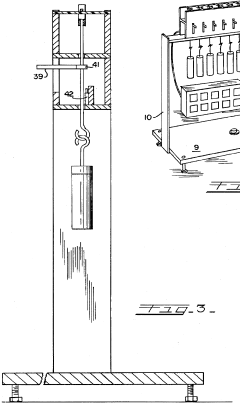
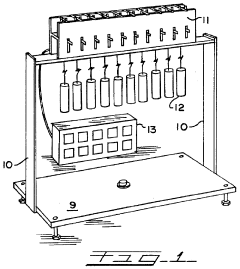
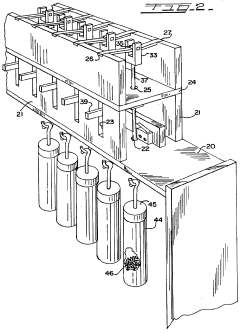
- A method and device where a weight is applied below the horizontal plane of the plastic article to apply uniform stress, with a hanger assembly and timer to record the time to failure, minimizing components and allowing for reproducible and automated testing.
Method and structure to reduce cracking in flip chip underfill
PatentActiveUS20090032974A1
Innovation
- A method is introduced to reduce fillet cracking in flip-chip underfill by creating non-wettable zones on the chip and substrate, limiting the underfill fillet within the chip shadow line, and removing excess fillet material that extends beyond this boundary, thereby shortening the crack propagation path and reducing stress concentrations.


Material Safety Standards for Electronic Packaging
Material safety standards for electronic packaging have evolved significantly to address the complex challenges posed by environmental stress cracking in underfill materials. These standards establish comprehensive frameworks for evaluating material performance under various environmental conditions, ensuring both product reliability and user safety throughout the operational lifecycle.
The International Electrotechnical Commission (IEC) and JEDEC Solid State Technology Association have developed rigorous testing protocols specifically targeting underfill material integrity. IEC 60068 series standards define environmental testing procedures that simulate real-world stress conditions, including temperature cycling, humidity exposure, and mechanical stress applications. These protocols require underfill materials to demonstrate resistance to crack initiation and propagation under accelerated aging conditions.
JEDEC standards, particularly JESD22 series, establish specific requirements for moisture sensitivity levels and thermal cycling performance of packaging materials. These standards mandate that underfill materials maintain structural integrity when exposed to reflow soldering temperatures exceeding 260°C, while simultaneously resisting moisture-induced stress cracking during storage and operation.
Chemical compatibility standards address the interaction between underfill materials and adjacent components, preventing degradation that could lead to stress cracking. ASTM D543 and ISO 175 standards evaluate chemical resistance, ensuring underfill materials remain stable when exposed to cleaning solvents, flux residues, and atmospheric contaminants commonly encountered in electronic assemblies.
Regulatory compliance frameworks, including RoHS and REACH directives, impose additional safety requirements on underfill material compositions. These regulations restrict hazardous substances while maintaining performance standards, creating challenges for material formulation that must balance environmental compliance with mechanical reliability.
Recent developments in safety standards emphasize long-term reliability assessment through extended thermal cycling and humidity testing protocols. These enhanced standards require underfill materials to demonstrate crack resistance over 10,000 thermal cycles, reflecting the increasing demands of automotive and aerospace applications where failure consequences are critical.
The International Electrotechnical Commission (IEC) and JEDEC Solid State Technology Association have developed rigorous testing protocols specifically targeting underfill material integrity. IEC 60068 series standards define environmental testing procedures that simulate real-world stress conditions, including temperature cycling, humidity exposure, and mechanical stress applications. These protocols require underfill materials to demonstrate resistance to crack initiation and propagation under accelerated aging conditions.
JEDEC standards, particularly JESD22 series, establish specific requirements for moisture sensitivity levels and thermal cycling performance of packaging materials. These standards mandate that underfill materials maintain structural integrity when exposed to reflow soldering temperatures exceeding 260°C, while simultaneously resisting moisture-induced stress cracking during storage and operation.
Chemical compatibility standards address the interaction between underfill materials and adjacent components, preventing degradation that could lead to stress cracking. ASTM D543 and ISO 175 standards evaluate chemical resistance, ensuring underfill materials remain stable when exposed to cleaning solvents, flux residues, and atmospheric contaminants commonly encountered in electronic assemblies.
Regulatory compliance frameworks, including RoHS and REACH directives, impose additional safety requirements on underfill material compositions. These regulations restrict hazardous substances while maintaining performance standards, creating challenges for material formulation that must balance environmental compliance with mechanical reliability.
Recent developments in safety standards emphasize long-term reliability assessment through extended thermal cycling and humidity testing protocols. These enhanced standards require underfill materials to demonstrate crack resistance over 10,000 thermal cycles, reflecting the increasing demands of automotive and aerospace applications where failure consequences are critical.
Reliability Testing Protocols for Underfill ESC
Reliability testing protocols for underfill environmental stress cracking (ESC) require standardized methodologies to ensure consistent and reproducible assessment across different materials and applications. The development of comprehensive testing frameworks involves establishing controlled environmental conditions, precise measurement techniques, and accelerated aging procedures that can predict long-term performance within reasonable timeframes.
Temperature cycling protocols represent a fundamental component of ESC reliability testing, typically involving exposure to alternating high and low temperature extremes ranging from -40°C to 150°C. These cycles simulate thermal expansion and contraction stresses that occur during normal device operation and storage conditions. The protocol duration varies from 500 to 3000 cycles depending on the intended application lifetime, with intermediate inspections conducted at predetermined intervals to monitor crack initiation and propagation.
Humidity and temperature combined stress testing protocols expose underfill materials to elevated moisture levels while maintaining specific temperature profiles. Standard conditions include 85°C/85% relative humidity for extended periods, often exceeding 1000 hours for comprehensive evaluation. These protocols assess the synergistic effects of hygrothermal stress on polymer chain degradation and interfacial adhesion properties.
Chemical exposure testing protocols involve subjecting underfill samples to various aggressive media including acids, bases, organic solvents, and cleaning agents commonly encountered in manufacturing and service environments. Standardized immersion times range from 24 hours to several weeks, with periodic mechanical property assessments to quantify degradation rates and establish safe exposure limits.
Mechanical stress application during environmental exposure enhances the relevance of ESC testing protocols. Constant load or cyclic loading conditions are maintained while samples undergo environmental conditioning, more accurately replicating real-world stress states. Load levels typically range from 10% to 50% of ultimate strength to accelerate crack formation without causing immediate failure.
Advanced monitoring techniques integrated into testing protocols include real-time acoustic emission detection, digital image correlation for strain mapping, and impedance spectroscopy for moisture uptake tracking. These methods enable continuous assessment of material degradation without interrupting test conditions, providing valuable kinetic data for failure prediction models and improving the overall reliability of ESC evaluation procedures.
Temperature cycling protocols represent a fundamental component of ESC reliability testing, typically involving exposure to alternating high and low temperature extremes ranging from -40°C to 150°C. These cycles simulate thermal expansion and contraction stresses that occur during normal device operation and storage conditions. The protocol duration varies from 500 to 3000 cycles depending on the intended application lifetime, with intermediate inspections conducted at predetermined intervals to monitor crack initiation and propagation.
Humidity and temperature combined stress testing protocols expose underfill materials to elevated moisture levels while maintaining specific temperature profiles. Standard conditions include 85°C/85% relative humidity for extended periods, often exceeding 1000 hours for comprehensive evaluation. These protocols assess the synergistic effects of hygrothermal stress on polymer chain degradation and interfacial adhesion properties.
Chemical exposure testing protocols involve subjecting underfill samples to various aggressive media including acids, bases, organic solvents, and cleaning agents commonly encountered in manufacturing and service environments. Standardized immersion times range from 24 hours to several weeks, with periodic mechanical property assessments to quantify degradation rates and establish safe exposure limits.
Mechanical stress application during environmental exposure enhances the relevance of ESC testing protocols. Constant load or cyclic loading conditions are maintained while samples undergo environmental conditioning, more accurately replicating real-world stress states. Load levels typically range from 10% to 50% of ultimate strength to accelerate crack formation without causing immediate failure.
Advanced monitoring techniques integrated into testing protocols include real-time acoustic emission detection, digital image correlation for strain mapping, and impedance spectroscopy for moisture uptake tracking. These methods enable continuous assessment of material degradation without interrupting test conditions, providing valuable kinetic data for failure prediction models and improving the overall reliability of ESC evaluation procedures.
Unlock deeper insights with PatSnap Eureka Quick Research — get a full tech report to explore trends and direct your research. Try now!
Generate Your Research Report Instantly with AI Agent
Supercharge your innovation with PatSnap Eureka AI Agent Platform!