
Band Pass Filter vs State-Space Filter: Comparative Efficiency
MAR 25, 20269 MIN READ
Generate Your Research Report Instantly with AI Agent
Patsnap Eureka helps you evaluate technical feasibility & market potential.
Filter Technology Background and Performance Goals
Digital signal processing has undergone remarkable evolution since the 1960s, with filtering technologies serving as fundamental building blocks for countless applications. The development trajectory began with analog filters, progressed through early digital implementations, and has now reached sophisticated adaptive and multi-dimensional filtering systems. This evolution reflects the continuous pursuit of enhanced performance, computational efficiency, and implementation flexibility across diverse technological domains.
Band pass filters emerged as essential components in early communication systems, designed to isolate specific frequency ranges while attenuating unwanted spectral content. Traditional implementations relied on cascaded analog circuits or direct digital filter structures using finite impulse response (FIR) and infinite impulse response (IIR) architectures. These conventional approaches established the foundation for frequency-selective filtering but often faced limitations in computational complexity and adaptive capabilities.
State-space filtering represents a paradigm shift toward modern control theory applications in signal processing. This methodology, rooted in linear algebra and matrix operations, provides a unified framework for describing dynamic systems through state variables and mathematical models. The approach gained prominence in the 1970s and 1980s, particularly in aerospace and control applications, before expanding into broader signal processing domains.
Contemporary filtering challenges demand solutions that balance multiple performance criteria simultaneously. Computational efficiency remains paramount, especially in real-time applications where processing delays directly impact system performance. Power consumption considerations have become increasingly critical with the proliferation of mobile and embedded systems. Additionally, implementation complexity affects both development costs and maintenance requirements across product lifecycles.
The comparative analysis between band pass and state-space filtering approaches addresses fundamental questions about optimal resource utilization. Band pass filters excel in straightforward frequency domain applications but may struggle with time-varying characteristics or multi-dimensional signal processing requirements. State-space methods offer superior flexibility and theoretical elegance but potentially introduce computational overhead that may not be justified for simpler applications.
Performance goals for modern filtering systems encompass accuracy, speed, adaptability, and resource efficiency. Accuracy requirements vary significantly across applications, from basic audio processing to precision instrumentation and scientific measurement systems. Speed considerations include both algorithmic complexity and hardware implementation constraints, particularly in high-throughput applications such as software-defined radio and real-time imaging systems.
The technological landscape continues evolving toward integrated solutions that leverage the strengths of both approaches. Hybrid implementations, adaptive parameter selection, and application-specific optimization strategies represent emerging directions for achieving optimal efficiency while maintaining performance standards across diverse operational conditions.
Band pass filters emerged as essential components in early communication systems, designed to isolate specific frequency ranges while attenuating unwanted spectral content. Traditional implementations relied on cascaded analog circuits or direct digital filter structures using finite impulse response (FIR) and infinite impulse response (IIR) architectures. These conventional approaches established the foundation for frequency-selective filtering but often faced limitations in computational complexity and adaptive capabilities.
State-space filtering represents a paradigm shift toward modern control theory applications in signal processing. This methodology, rooted in linear algebra and matrix operations, provides a unified framework for describing dynamic systems through state variables and mathematical models. The approach gained prominence in the 1970s and 1980s, particularly in aerospace and control applications, before expanding into broader signal processing domains.
Contemporary filtering challenges demand solutions that balance multiple performance criteria simultaneously. Computational efficiency remains paramount, especially in real-time applications where processing delays directly impact system performance. Power consumption considerations have become increasingly critical with the proliferation of mobile and embedded systems. Additionally, implementation complexity affects both development costs and maintenance requirements across product lifecycles.
The comparative analysis between band pass and state-space filtering approaches addresses fundamental questions about optimal resource utilization. Band pass filters excel in straightforward frequency domain applications but may struggle with time-varying characteristics or multi-dimensional signal processing requirements. State-space methods offer superior flexibility and theoretical elegance but potentially introduce computational overhead that may not be justified for simpler applications.
Performance goals for modern filtering systems encompass accuracy, speed, adaptability, and resource efficiency. Accuracy requirements vary significantly across applications, from basic audio processing to precision instrumentation and scientific measurement systems. Speed considerations include both algorithmic complexity and hardware implementation constraints, particularly in high-throughput applications such as software-defined radio and real-time imaging systems.
The technological landscape continues evolving toward integrated solutions that leverage the strengths of both approaches. Hybrid implementations, adaptive parameter selection, and application-specific optimization strategies represent emerging directions for achieving optimal efficiency while maintaining performance standards across diverse operational conditions.
Market Demand for Advanced Digital Filtering Solutions
The global digital signal processing market continues to experience robust growth driven by increasing demand for sophisticated filtering solutions across multiple industries. Telecommunications infrastructure modernization, particularly with 5G network deployments, has created substantial demand for high-performance digital filters capable of handling complex signal processing requirements with minimal latency and power consumption.
Consumer electronics manufacturers are increasingly seeking advanced filtering technologies to enhance audio quality, reduce electromagnetic interference, and improve overall device performance. The proliferation of Internet of Things devices, wearable technology, and smart home systems has further amplified the need for efficient digital filtering solutions that can operate within strict power and computational constraints.
Industrial automation and control systems represent another significant growth driver for advanced digital filtering technologies. Manufacturing facilities require precise signal conditioning and noise reduction capabilities to ensure accurate sensor readings and reliable system operation. The automotive industry's transition toward electric vehicles and autonomous driving systems has created new opportunities for digital filtering applications in battery management, sensor fusion, and communication systems.
Medical device manufacturers are demanding increasingly sophisticated filtering solutions for diagnostic equipment, patient monitoring systems, and implantable devices. These applications require exceptional precision, reliability, and often real-time processing capabilities, driving innovation in both band pass and state-space filtering approaches.
The aerospace and defense sectors continue to invest heavily in advanced signal processing technologies for radar systems, communication equipment, and electronic warfare applications. These demanding environments require filtering solutions that can maintain performance under extreme conditions while meeting stringent reliability and security requirements.
Financial services and high-frequency trading platforms have emerged as unexpected but significant consumers of advanced digital filtering technologies. These applications demand ultra-low latency processing and exceptional numerical precision for real-time market data analysis and algorithmic trading systems.
The growing emphasis on edge computing and distributed processing architectures has created new market dynamics favoring filtering solutions that can deliver high performance while minimizing computational overhead and memory requirements. This trend particularly benefits state-space filtering approaches, which can offer superior computational efficiency in certain applications compared to traditional band pass filtering methods.
Consumer electronics manufacturers are increasingly seeking advanced filtering technologies to enhance audio quality, reduce electromagnetic interference, and improve overall device performance. The proliferation of Internet of Things devices, wearable technology, and smart home systems has further amplified the need for efficient digital filtering solutions that can operate within strict power and computational constraints.
Industrial automation and control systems represent another significant growth driver for advanced digital filtering technologies. Manufacturing facilities require precise signal conditioning and noise reduction capabilities to ensure accurate sensor readings and reliable system operation. The automotive industry's transition toward electric vehicles and autonomous driving systems has created new opportunities for digital filtering applications in battery management, sensor fusion, and communication systems.
Medical device manufacturers are demanding increasingly sophisticated filtering solutions for diagnostic equipment, patient monitoring systems, and implantable devices. These applications require exceptional precision, reliability, and often real-time processing capabilities, driving innovation in both band pass and state-space filtering approaches.
The aerospace and defense sectors continue to invest heavily in advanced signal processing technologies for radar systems, communication equipment, and electronic warfare applications. These demanding environments require filtering solutions that can maintain performance under extreme conditions while meeting stringent reliability and security requirements.
Financial services and high-frequency trading platforms have emerged as unexpected but significant consumers of advanced digital filtering technologies. These applications demand ultra-low latency processing and exceptional numerical precision for real-time market data analysis and algorithmic trading systems.
The growing emphasis on edge computing and distributed processing architectures has created new market dynamics favoring filtering solutions that can deliver high performance while minimizing computational overhead and memory requirements. This trend particularly benefits state-space filtering approaches, which can offer superior computational efficiency in certain applications compared to traditional band pass filtering methods.
Current State and Challenges in Filter Implementation
The current landscape of filter implementation reveals significant disparities in computational efficiency and resource utilization between band pass filters and state-space filters. Traditional band pass filters, particularly those implemented using finite impulse response (FIR) and infinite impulse response (IIR) architectures, continue to dominate applications requiring straightforward frequency domain filtering. These implementations benefit from decades of optimization in digital signal processing libraries and hardware acceleration support.
State-space filters have gained prominence in modern control systems and advanced signal processing applications due to their superior numerical stability and flexibility in handling multi-input, multi-output systems. However, their implementation complexity presents substantial challenges in real-time processing environments. The matrix operations inherent in state-space formulations demand significantly higher computational overhead compared to conventional filter structures.
Memory allocation represents a critical bottleneck in current implementations. Band pass filters typically require minimal memory footprint, storing only coefficient values and delay line elements. Conversely, state-space filters necessitate dynamic allocation for state matrices, transition matrices, and observation matrices, creating memory management challenges in embedded systems with limited resources.
Numerical precision issues plague both filter types but manifest differently. Band pass filters suffer from coefficient quantization effects and potential instability in high-order implementations. State-space filters encounter conditioning problems in their matrix representations, particularly when eigenvalues cluster near unity or exhibit wide dynamic ranges.
Real-time processing constraints expose fundamental limitations in current filter architectures. While band pass filters achieve predictable execution times through fixed computational paths, state-space filters exhibit variable processing loads dependent on matrix dimensions and numerical conditioning. This variability complicates real-time scheduling and system predictability.
Hardware acceleration support remains fragmented across filter types. Graphics processing units and digital signal processors offer extensive optimization for conventional filter operations, while state-space implementations often rely on general-purpose matrix libraries lacking domain-specific optimizations. This disparity significantly impacts comparative efficiency assessments in practical deployment scenarios.
Integration challenges emerge when combining multiple filter stages or implementing adaptive filtering schemes. Band pass filters require careful cascade design to maintain overall system stability, while state-space representations offer more natural frameworks for multi-stage processing but at increased computational cost.
State-space filters have gained prominence in modern control systems and advanced signal processing applications due to their superior numerical stability and flexibility in handling multi-input, multi-output systems. However, their implementation complexity presents substantial challenges in real-time processing environments. The matrix operations inherent in state-space formulations demand significantly higher computational overhead compared to conventional filter structures.
Memory allocation represents a critical bottleneck in current implementations. Band pass filters typically require minimal memory footprint, storing only coefficient values and delay line elements. Conversely, state-space filters necessitate dynamic allocation for state matrices, transition matrices, and observation matrices, creating memory management challenges in embedded systems with limited resources.
Numerical precision issues plague both filter types but manifest differently. Band pass filters suffer from coefficient quantization effects and potential instability in high-order implementations. State-space filters encounter conditioning problems in their matrix representations, particularly when eigenvalues cluster near unity or exhibit wide dynamic ranges.
Real-time processing constraints expose fundamental limitations in current filter architectures. While band pass filters achieve predictable execution times through fixed computational paths, state-space filters exhibit variable processing loads dependent on matrix dimensions and numerical conditioning. This variability complicates real-time scheduling and system predictability.
Hardware acceleration support remains fragmented across filter types. Graphics processing units and digital signal processors offer extensive optimization for conventional filter operations, while state-space implementations often rely on general-purpose matrix libraries lacking domain-specific optimizations. This disparity significantly impacts comparative efficiency assessments in practical deployment scenarios.
Integration challenges emerge when combining multiple filter stages or implementing adaptive filtering schemes. Band pass filters require careful cascade design to maintain overall system stability, while state-space representations offer more natural frameworks for multi-stage processing but at increased computational cost.
Existing BPF and SSF Implementation Approaches
01 State-space filter implementation and optimization
State-space filters utilize mathematical representations based on state variables to achieve efficient signal processing. These filters employ matrix operations and state equations to implement various filtering functions with reduced computational complexity. The state-space approach allows for flexible filter design and can be optimized for specific performance requirements including stability and minimal resource usage.- State-space filter implementation and optimization: State-space filters utilize mathematical representations based on state variables to achieve efficient signal processing. These filters employ matrix operations and state equations to implement various filtering functions with reduced computational complexity. The state-space approach allows for flexible filter design and can be optimized for specific performance requirements including stability and minimal resource usage.
- Band pass filter design with improved selectivity: Band pass filters are designed to allow signals within a specific frequency range to pass while attenuating frequencies outside this range. Advanced designs focus on achieving sharp cutoff characteristics, minimal passband ripple, and high stopband attenuation. These filters can be implemented using various topologies including cascaded stages and coupled resonators to enhance frequency selectivity and overall efficiency.
- Digital filter structures for power efficiency: Digital filter implementations utilize optimized architectures to reduce power consumption while maintaining performance. Techniques include coefficient optimization, reduced arithmetic operations, and efficient memory access patterns. These structures are particularly important in battery-powered devices and applications requiring low power dissipation without compromising filtering accuracy.
- Adaptive filtering techniques for dynamic efficiency: Adaptive filters automatically adjust their parameters in response to changing signal conditions to maintain optimal performance. These systems employ algorithms that continuously update filter coefficients based on error signals or performance metrics. The adaptive approach enables efficient operation across varying conditions while minimizing computational overhead through intelligent parameter adjustment.
- Multi-rate and polyphase filter architectures: Multi-rate filtering techniques employ sample rate conversion and polyphase decomposition to improve computational efficiency. These architectures reduce the number of required operations by processing signals at different rates and distributing filtering tasks across multiple phases. This approach is particularly effective for applications requiring both high performance and resource optimization.
02 Band pass filter design with improved selectivity
Band pass filters are designed to allow signals within a specific frequency range to pass while attenuating frequencies outside this range. Advanced designs focus on achieving sharp cutoff characteristics, minimal passband ripple, and high stopband attenuation. These filters can be implemented using various topologies including cascaded stages and coupled resonators to enhance frequency selectivity and overall efficiency.Expand Specific Solutions03 Digital filter structures for power efficiency
Digital filter implementations focus on reducing power consumption while maintaining performance through optimized architectures. Techniques include coefficient quantization, reduced arithmetic operations, and efficient memory access patterns. These structures are particularly important in battery-powered devices and applications requiring low power dissipation without compromising filter characteristics.Expand Specific Solutions04 Adaptive filtering techniques for dynamic efficiency
Adaptive filters automatically adjust their parameters in response to changing signal conditions to maintain optimal performance. These systems employ algorithms that modify filter coefficients based on error signals or performance metrics. The adaptive approach enables efficient operation across varying conditions while minimizing computational overhead and power consumption through intelligent parameter adjustment.Expand Specific Solutions05 Multi-rate and polyphase filter architectures
Multi-rate filtering techniques employ decimation and interpolation to process signals at different sampling rates, significantly improving computational efficiency. Polyphase decomposition allows for parallel processing of filter operations, reducing the overall computational burden. These architectures are particularly effective in applications requiring high-performance filtering with minimal hardware resources and reduced power consumption.Expand Specific Solutions
Key Players in Digital Signal Processing Industry
The band pass filter versus state-space filter efficiency comparison represents a mature technical domain within the broader signal processing and electronic filtering industry. The market demonstrates steady growth driven by increasing demand for precision filtering in telecommunications, automotive electronics, and consumer devices. Major semiconductor and electronic component manufacturers like Murata Manufacturing, TDK Corp., Sony Group, and Infineon Technologies lead the commercial implementation of advanced filtering solutions. Technology maturity varies significantly across applications - traditional band pass filters represent well-established technology with incremental improvements, while state-space filtering approaches show emerging sophistication in digital signal processing implementations. Companies such as NEC Corp., Siemens AG, and research institutions like South China University of Technology are advancing computational filtering methodologies. The competitive landscape reflects a transition from purely analog solutions toward hybrid and digital implementations, with established players like Hon Hai Precision and Advanced Semiconductor Engineering focusing on manufacturing scalability, while technology leaders emphasize algorithmic optimization and integration efficiency for next-generation applications.
Murata Manufacturing Co. Ltd.
Technical Solution: Murata develops advanced ceramic-based band pass filters utilizing multilayer ceramic capacitor (MLCC) technology for RF applications. Their filters incorporate proprietary dielectric materials and precise manufacturing processes to achieve high Q-factors and steep roll-off characteristics. The company's band pass filters are designed for frequencies ranging from MHz to GHz applications, featuring compact form factors and excellent temperature stability. Murata's filter solutions integrate seamlessly into wireless communication systems, IoT devices, and automotive electronics, providing superior signal selectivity and noise rejection capabilities.
Strengths: Industry-leading ceramic filter technology with excellent miniaturization and high Q-factor performance. Weaknesses: Limited flexibility in real-time parameter adjustment compared to digital state-space implementations.
TDK Corp.
Technical Solution: TDK implements both traditional LC band pass filters and advanced digital signal processing solutions incorporating state-space filtering algorithms. Their approach combines ferrite core inductors with high-precision capacitors for analog filtering, while also developing FPGA-based state-space filter implementations for digital applications. TDK's state-space filters utilize matrix-based mathematical models to achieve superior transient response and stability margins. The company's hybrid filtering solutions offer programmable bandwidth control and adaptive frequency response, particularly suited for power electronics and motor control applications where dynamic performance is critical.
Strengths: Comprehensive portfolio spanning both analog and digital filtering with strong magnetic component expertise. Weaknesses: Higher complexity in state-space implementations requiring specialized design knowledge and increased computational resources.
Core Innovations in Filter Efficiency Optimization
Filter device with finite transmission zeros
PatentInactiveUS20090189716A1
Innovation
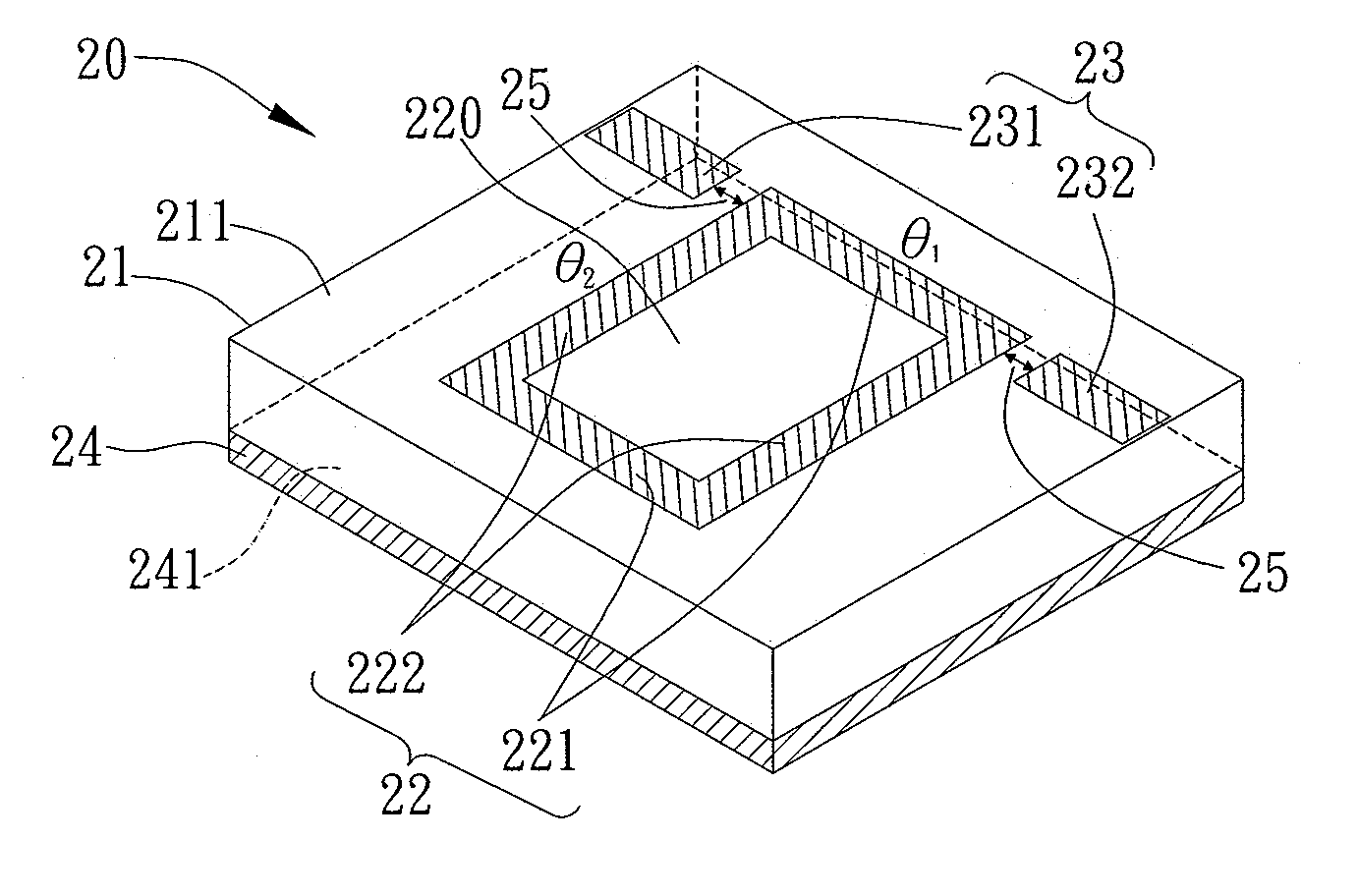
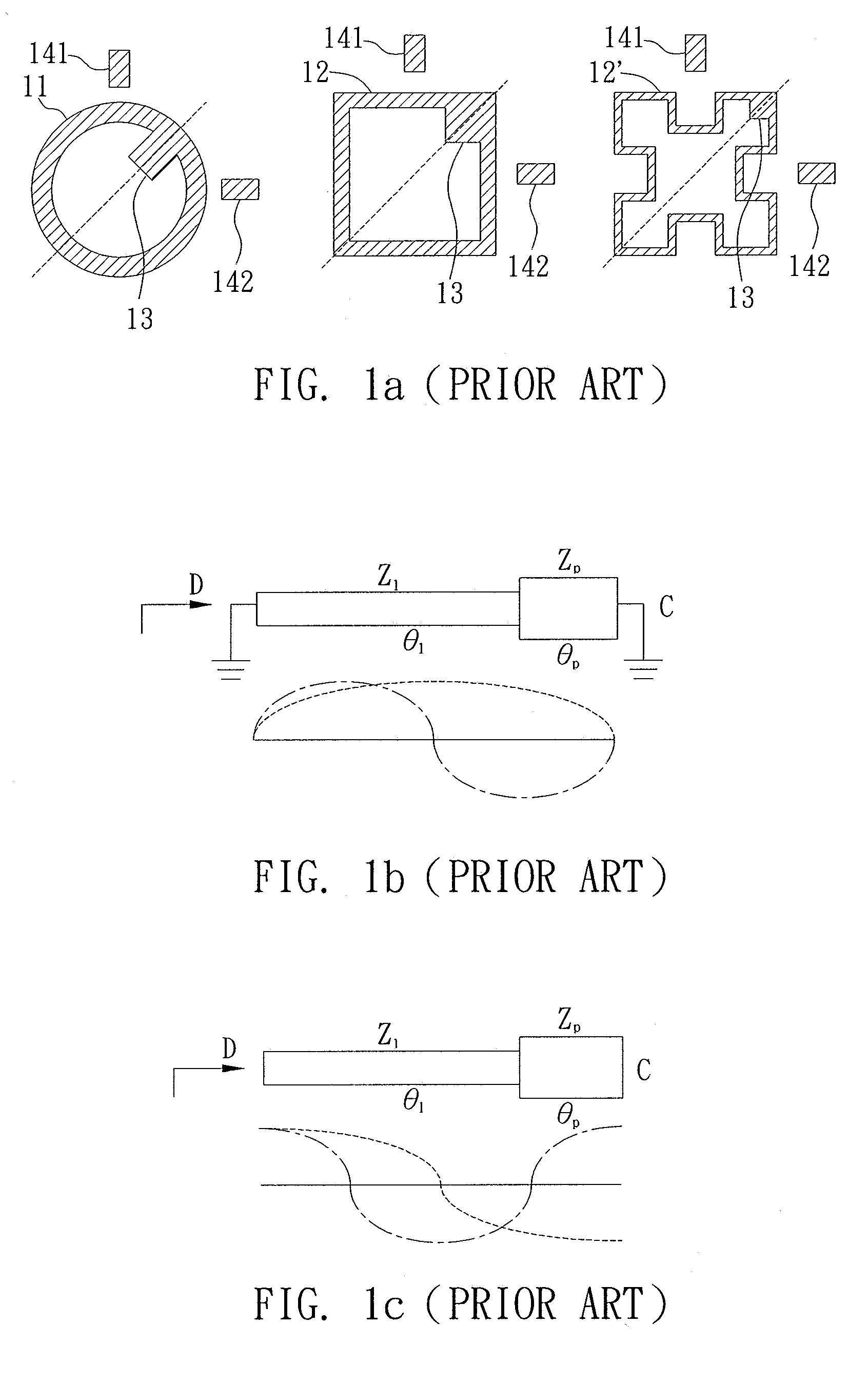
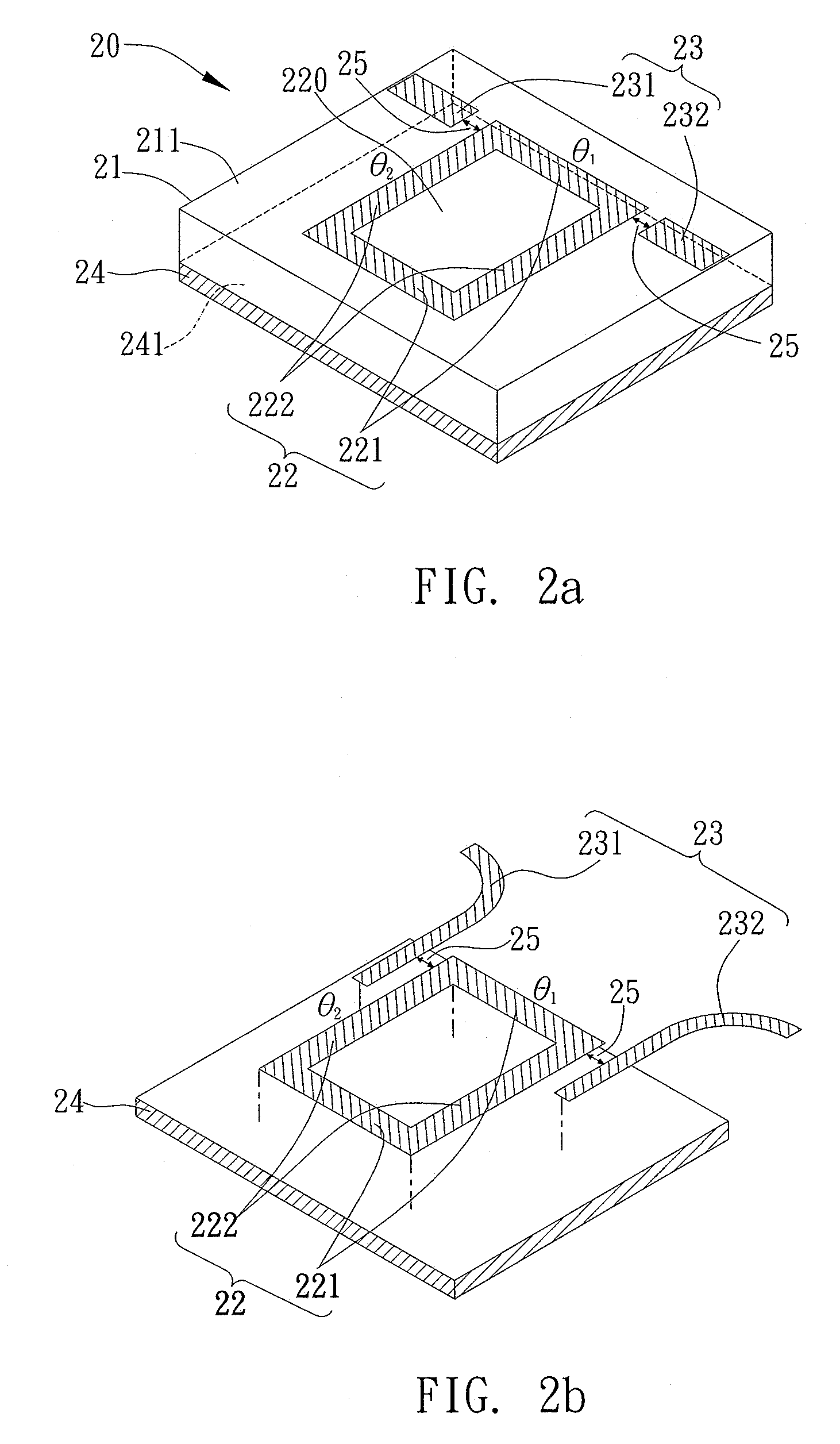
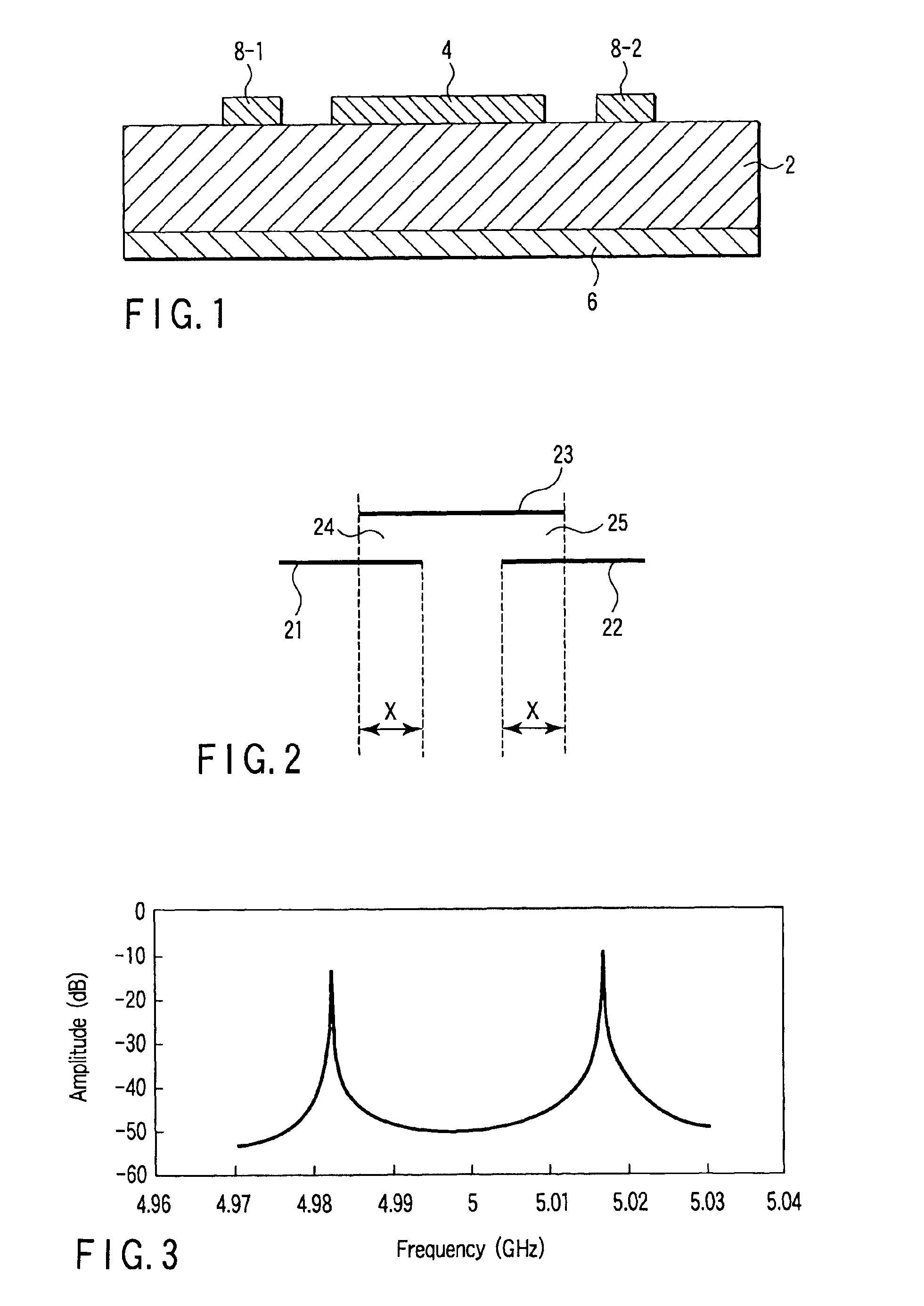
- A filter device with a metallic rectangular ring and a metallic ground plane, where the perimeter of the ring is shorter than or equal to the wavelength corresponding to the mean of the odd and even mode resonant frequencies, and a signal couple-in/couple-out module with coupling gaps, allowing for reduced area and adjustable frequency response through ground capacitors or inductors.

Band pass filter
PatentInactiveUS6903632B2
Innovation
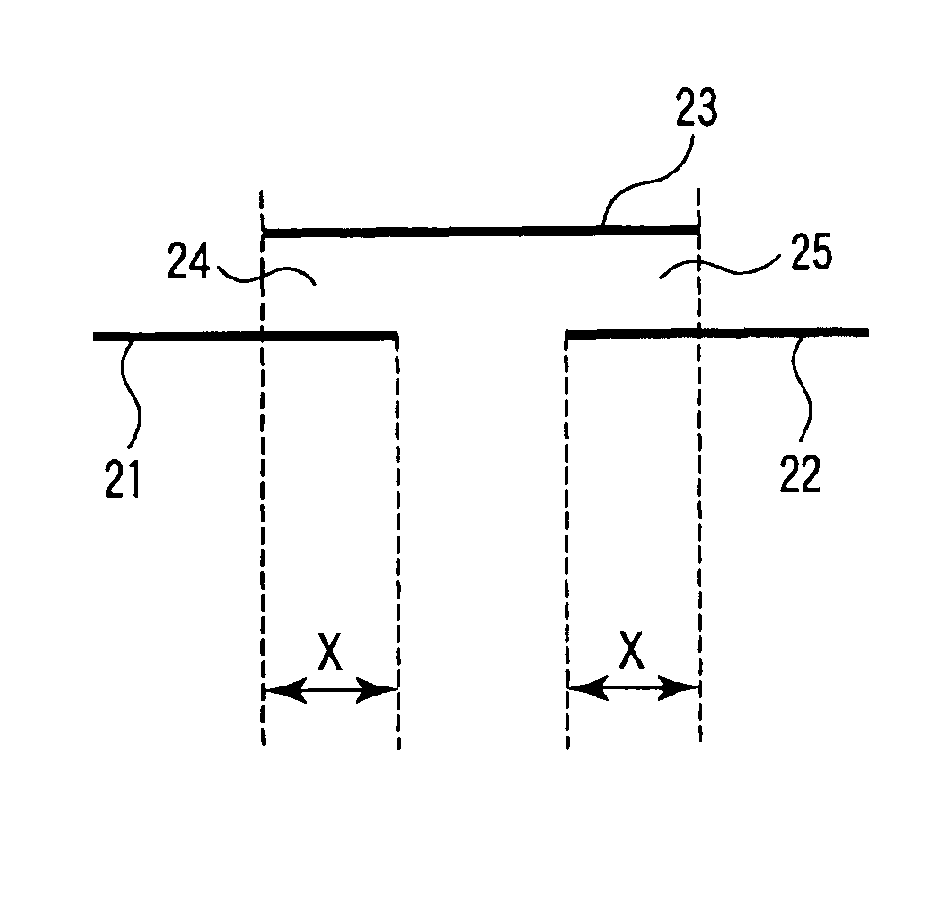
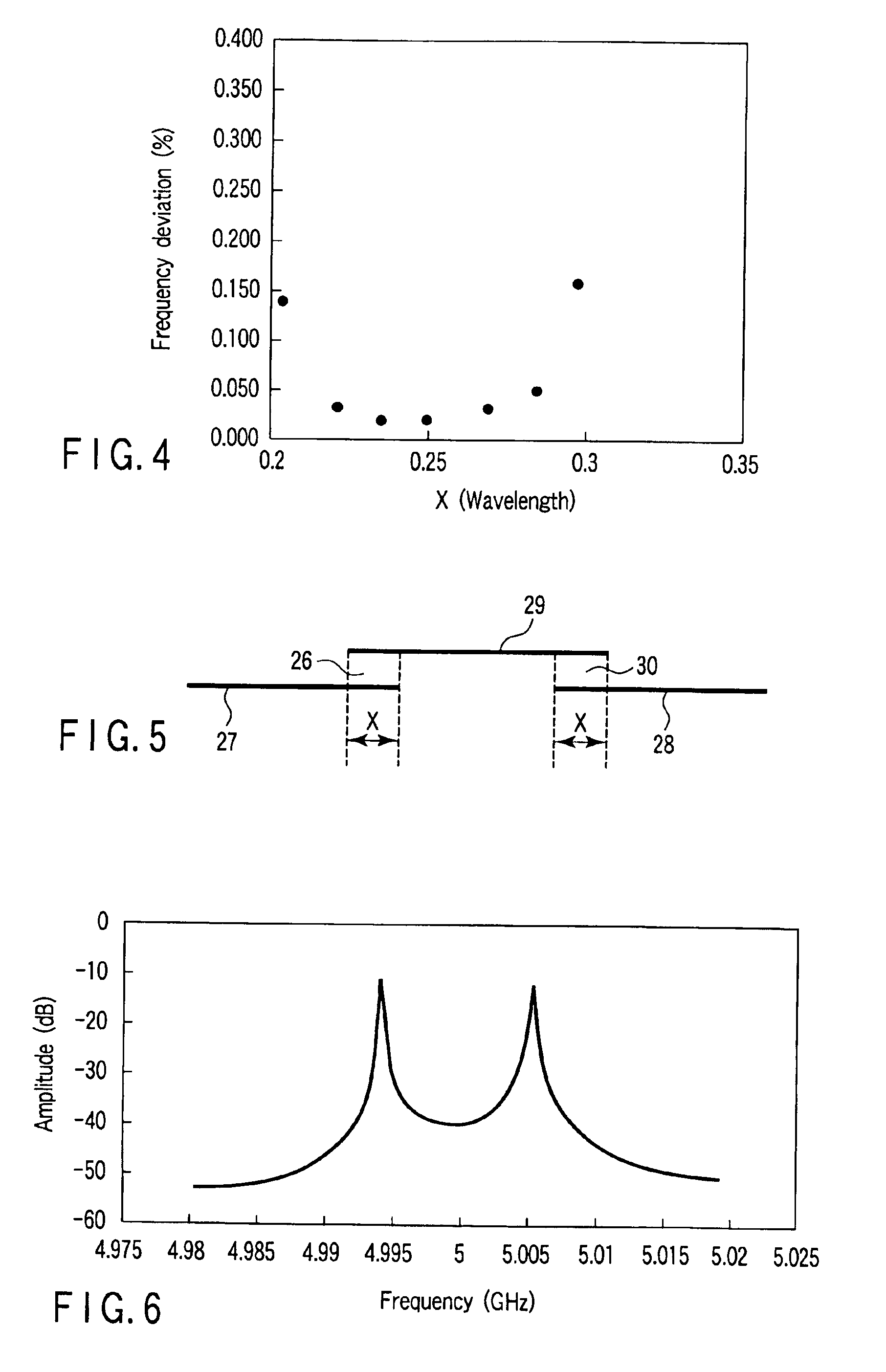
- A band pass filter design featuring a substrate with input/output portions and a plurality of resonators coupled via transmission line paths, where each coupling portion has a length of (1+2m)/4-fold the central wavelength, stabilizing weak coupling and minimizing frequency deviation.

Hardware Resource Constraints and Design Trade-offs
Hardware resource constraints represent a fundamental consideration when selecting between band pass filters and state-space filters for digital signal processing applications. The choice between these filtering approaches directly impacts system performance, cost, and implementation feasibility across various embedded and real-time processing platforms.
Memory utilization patterns differ significantly between the two filtering methodologies. Band pass filters, particularly those implemented using traditional IIR or FIR structures, typically require minimal memory overhead for coefficient storage and delay line buffers. The memory footprint scales linearly with filter order, making resource prediction straightforward. State-space filters, conversely, demand additional memory allocation for state matrices, input-output vectors, and intermediate computation results, often requiring 2-3 times more memory than equivalent band pass implementations.
Computational complexity presents another critical trade-off dimension. Band pass filters leverage optimized multiply-accumulate operations that align well with DSP processor architectures, enabling efficient pipeline utilization and reduced instruction cycles. State-space implementations require matrix operations involving multiple multiplication and addition sequences, potentially creating computational bottlenecks on resource-constrained processors. However, state-space filters offer superior numerical stability, particularly in fixed-point implementations where quantization effects can severely degrade band pass filter performance.
Power consumption considerations become paramount in battery-operated and mobile applications. Band pass filters generally exhibit lower power requirements due to simplified arithmetic operations and reduced memory access patterns. State-space filters, while computationally intensive, can achieve better overall system efficiency through improved numerical precision, potentially reducing the need for higher-precision arithmetic units and associated power overhead.
Real-time processing constraints further influence design decisions. Band pass filters provide predictable execution times and deterministic latency characteristics, essential for hard real-time systems. State-space implementations may introduce variable processing delays depending on matrix dimensions and computational optimization strategies, requiring careful timing analysis and potentially limiting their applicability in stringent real-time environments.
Silicon area requirements in ASIC and FPGA implementations reveal additional trade-offs. Band pass filters can leverage dedicated DSP blocks and optimized multiplier resources efficiently. State-space filters may require custom matrix processing units or multiple parallel processing elements, increasing silicon footprint and design complexity while potentially offering better scalability for multi-channel applications.
Memory utilization patterns differ significantly between the two filtering methodologies. Band pass filters, particularly those implemented using traditional IIR or FIR structures, typically require minimal memory overhead for coefficient storage and delay line buffers. The memory footprint scales linearly with filter order, making resource prediction straightforward. State-space filters, conversely, demand additional memory allocation for state matrices, input-output vectors, and intermediate computation results, often requiring 2-3 times more memory than equivalent band pass implementations.
Computational complexity presents another critical trade-off dimension. Band pass filters leverage optimized multiply-accumulate operations that align well with DSP processor architectures, enabling efficient pipeline utilization and reduced instruction cycles. State-space implementations require matrix operations involving multiple multiplication and addition sequences, potentially creating computational bottlenecks on resource-constrained processors. However, state-space filters offer superior numerical stability, particularly in fixed-point implementations where quantization effects can severely degrade band pass filter performance.
Power consumption considerations become paramount in battery-operated and mobile applications. Band pass filters generally exhibit lower power requirements due to simplified arithmetic operations and reduced memory access patterns. State-space filters, while computationally intensive, can achieve better overall system efficiency through improved numerical precision, potentially reducing the need for higher-precision arithmetic units and associated power overhead.
Real-time processing constraints further influence design decisions. Band pass filters provide predictable execution times and deterministic latency characteristics, essential for hard real-time systems. State-space implementations may introduce variable processing delays depending on matrix dimensions and computational optimization strategies, requiring careful timing analysis and potentially limiting their applicability in stringent real-time environments.
Silicon area requirements in ASIC and FPGA implementations reveal additional trade-offs. Band pass filters can leverage dedicated DSP blocks and optimized multiplier resources efficiently. State-space filters may require custom matrix processing units or multiple parallel processing elements, increasing silicon footprint and design complexity while potentially offering better scalability for multi-channel applications.
Real-time Processing Requirements and Benchmarking
Real-time processing requirements for band pass filters and state-space filters differ significantly in computational complexity and latency constraints. Band pass filters, particularly IIR implementations, typically require fewer computational operations per sample, making them suitable for applications with strict timing requirements such as audio processing and communication systems. The computational load remains relatively constant regardless of filter order, with basic multiply-accumulate operations dominating the processing cycle.
State-space filters present more complex computational demands due to matrix operations and vector multiplications required for state updates. Each processing cycle involves matrix-vector multiplication, state vector updates, and output calculations, resulting in higher computational overhead. However, modern implementations leverage optimized linear algebra libraries and parallel processing capabilities to mitigate these computational burdens, particularly in multi-core and GPU-accelerated environments.
Benchmarking results demonstrate distinct performance characteristics between these filtering approaches. Band pass filters consistently achieve lower latency, typically ranging from 0.1 to 2 milliseconds depending on implementation and hardware platform. Memory requirements remain minimal, usually requiring only coefficient storage and a small number of delay elements. Processing throughput can exceed several hundred thousand samples per second on standard embedded processors.
State-space filters exhibit higher latency, generally ranging from 1 to 10 milliseconds, primarily due to matrix computation overhead. Memory requirements scale with state dimension and system complexity, often requiring substantial buffer allocation for state vectors and system matrices. Despite higher computational costs, state-space implementations demonstrate superior numerical stability and precision, particularly in fixed-point arithmetic systems.
Performance benchmarks reveal that band pass filters excel in single-channel, low-latency applications where computational resources are limited. Conversely, state-space filters prove advantageous in multi-channel processing scenarios where their parallel processing capabilities and numerical robustness justify the additional computational overhead. Modern FPGA and DSP implementations have significantly narrowed the performance gap, enabling real-time state-space processing for increasingly demanding applications.
State-space filters present more complex computational demands due to matrix operations and vector multiplications required for state updates. Each processing cycle involves matrix-vector multiplication, state vector updates, and output calculations, resulting in higher computational overhead. However, modern implementations leverage optimized linear algebra libraries and parallel processing capabilities to mitigate these computational burdens, particularly in multi-core and GPU-accelerated environments.
Benchmarking results demonstrate distinct performance characteristics between these filtering approaches. Band pass filters consistently achieve lower latency, typically ranging from 0.1 to 2 milliseconds depending on implementation and hardware platform. Memory requirements remain minimal, usually requiring only coefficient storage and a small number of delay elements. Processing throughput can exceed several hundred thousand samples per second on standard embedded processors.
State-space filters exhibit higher latency, generally ranging from 1 to 10 milliseconds, primarily due to matrix computation overhead. Memory requirements scale with state dimension and system complexity, often requiring substantial buffer allocation for state vectors and system matrices. Despite higher computational costs, state-space implementations demonstrate superior numerical stability and precision, particularly in fixed-point arithmetic systems.
Performance benchmarks reveal that band pass filters excel in single-channel, low-latency applications where computational resources are limited. Conversely, state-space filters prove advantageous in multi-channel processing scenarios where their parallel processing capabilities and numerical robustness justify the additional computational overhead. Modern FPGA and DSP implementations have significantly narrowed the performance gap, enabling real-time state-space processing for increasingly demanding applications.
Unlock deeper insights with Patsnap Eureka Quick Research — get a full tech report to explore trends and direct your research. Try now!
Generate Your Research Report Instantly with AI Agent
Supercharge your innovation with Patsnap Eureka AI Agent Platform!