

Best Methods to Assess Programmable Matter’s Structural Integrity
JUN 3, 20269 MIN READ
Generate Your Research Report Instantly with AI Agent
PatSnap Eureka helps you evaluate technical feasibility & market potential.
Programmable Matter Structural Integrity Background and Goals
Programmable matter represents a revolutionary paradigm in materials science, encompassing materials that can dynamically alter their physical properties, shape, and functionality through external stimuli or embedded computational capabilities. This emerging field has evolved from theoretical concepts in the 1990s to practical implementations involving smart materials, shape-memory alloys, and self-assembling systems. The convergence of nanotechnology, robotics, and materials engineering has accelerated development, with applications spanning from biomedical devices to aerospace structures.
The fundamental challenge in programmable matter lies in maintaining structural integrity while enabling dynamic reconfiguration. Unlike traditional static materials, programmable matter must preserve mechanical stability during transformation processes, creating unique assessment requirements. Current research focuses on materials that can reversibly change properties such as stiffness, conductivity, and permeability while maintaining load-bearing capacity and dimensional accuracy.
The primary technical objective involves developing comprehensive methodologies to evaluate structural integrity across multiple operational states. This includes assessing material performance during quiescent phases, active transformation periods, and post-reconfiguration stability. Key parameters encompass mechanical strength, fatigue resistance, thermal stability, and long-term durability under cyclic loading conditions.
Assessment methodologies must address the multi-scale nature of programmable matter, from molecular-level interactions to macroscopic structural behavior. Traditional testing approaches prove inadequate for materials exhibiting time-dependent properties and reversible phase transitions. Advanced characterization techniques incorporating real-time monitoring, predictive modeling, and adaptive testing protocols become essential for comprehensive evaluation.
The ultimate goal centers on establishing standardized assessment frameworks that enable reliable prediction of structural performance throughout the operational lifecycle of programmable matter systems. This includes developing failure prediction models, safety factor determination methods, and quality assurance protocols specific to dynamically reconfigurable materials. Such frameworks will facilitate the transition from laboratory demonstrations to practical engineering applications across diverse industries.
The fundamental challenge in programmable matter lies in maintaining structural integrity while enabling dynamic reconfiguration. Unlike traditional static materials, programmable matter must preserve mechanical stability during transformation processes, creating unique assessment requirements. Current research focuses on materials that can reversibly change properties such as stiffness, conductivity, and permeability while maintaining load-bearing capacity and dimensional accuracy.
The primary technical objective involves developing comprehensive methodologies to evaluate structural integrity across multiple operational states. This includes assessing material performance during quiescent phases, active transformation periods, and post-reconfiguration stability. Key parameters encompass mechanical strength, fatigue resistance, thermal stability, and long-term durability under cyclic loading conditions.
Assessment methodologies must address the multi-scale nature of programmable matter, from molecular-level interactions to macroscopic structural behavior. Traditional testing approaches prove inadequate for materials exhibiting time-dependent properties and reversible phase transitions. Advanced characterization techniques incorporating real-time monitoring, predictive modeling, and adaptive testing protocols become essential for comprehensive evaluation.
The ultimate goal centers on establishing standardized assessment frameworks that enable reliable prediction of structural performance throughout the operational lifecycle of programmable matter systems. This includes developing failure prediction models, safety factor determination methods, and quality assurance protocols specific to dynamically reconfigurable materials. Such frameworks will facilitate the transition from laboratory demonstrations to practical engineering applications across diverse industries.
Market Demand for Reliable Programmable Matter Systems
The market demand for reliable programmable matter systems is experiencing unprecedented growth across multiple industrial sectors, driven by the critical need for adaptive materials that can maintain structural integrity under dynamic operational conditions. Industries ranging from aerospace and automotive to biomedical engineering are actively seeking programmable matter solutions that can demonstrate verifiable reliability metrics and consistent performance standards.
Aerospace applications represent one of the most demanding market segments, where programmable matter systems must withstand extreme environmental conditions while maintaining precise structural configurations. The industry requires materials capable of real-time adaptation for morphing aircraft wings, deployable space structures, and self-repairing components. These applications demand rigorous structural integrity assessment methods to ensure safety-critical performance standards are met throughout operational lifecycles.
The construction and architecture sectors are emerging as significant market drivers, particularly for smart building materials that can respond to environmental changes while maintaining load-bearing capabilities. Programmable matter systems in these applications must demonstrate long-term structural reliability under varying stress conditions, temperature fluctuations, and seismic activities. Market demand emphasizes materials with predictable degradation patterns and measurable integrity parameters.
Biomedical applications constitute a rapidly expanding market segment, where programmable matter systems serve as adaptive implants, drug delivery mechanisms, and tissue engineering scaffolds. These applications require exceptionally high reliability standards due to direct human health implications. The market demands comprehensive integrity assessment protocols that can validate biocompatibility alongside structural performance over extended periods.
Manufacturing industries are increasingly adopting programmable matter for reconfigurable tooling, adaptive assembly systems, and self-optimizing production equipment. Market requirements focus on materials that can undergo repeated structural transformations while maintaining dimensional accuracy and mechanical properties. Reliability assessment methods must address fatigue resistance and cyclic loading performance.
The defense and security sectors represent substantial market opportunities, particularly for adaptive armor systems, camouflage materials, and reconfigurable equipment. These applications require programmable matter systems with proven resilience against hostile environments and mechanical impacts. Market demand emphasizes rapid integrity assessment capabilities for field deployment scenarios.
Consumer electronics markets are exploring programmable matter for flexible displays, adaptive interfaces, and morphing device housings. While performance requirements may be less stringent than aerospace applications, market volumes are substantially higher, creating demand for cost-effective integrity assessment methods that can be integrated into manufacturing processes.
Current market trends indicate increasing emphasis on standardization of reliability metrics and assessment protocols. Industry stakeholders are collaborating to establish common testing frameworks that can validate programmable matter performance across different application domains, driving demand for versatile and comprehensive structural integrity evaluation methodologies.
Aerospace applications represent one of the most demanding market segments, where programmable matter systems must withstand extreme environmental conditions while maintaining precise structural configurations. The industry requires materials capable of real-time adaptation for morphing aircraft wings, deployable space structures, and self-repairing components. These applications demand rigorous structural integrity assessment methods to ensure safety-critical performance standards are met throughout operational lifecycles.
The construction and architecture sectors are emerging as significant market drivers, particularly for smart building materials that can respond to environmental changes while maintaining load-bearing capabilities. Programmable matter systems in these applications must demonstrate long-term structural reliability under varying stress conditions, temperature fluctuations, and seismic activities. Market demand emphasizes materials with predictable degradation patterns and measurable integrity parameters.
Biomedical applications constitute a rapidly expanding market segment, where programmable matter systems serve as adaptive implants, drug delivery mechanisms, and tissue engineering scaffolds. These applications require exceptionally high reliability standards due to direct human health implications. The market demands comprehensive integrity assessment protocols that can validate biocompatibility alongside structural performance over extended periods.
Manufacturing industries are increasingly adopting programmable matter for reconfigurable tooling, adaptive assembly systems, and self-optimizing production equipment. Market requirements focus on materials that can undergo repeated structural transformations while maintaining dimensional accuracy and mechanical properties. Reliability assessment methods must address fatigue resistance and cyclic loading performance.
The defense and security sectors represent substantial market opportunities, particularly for adaptive armor systems, camouflage materials, and reconfigurable equipment. These applications require programmable matter systems with proven resilience against hostile environments and mechanical impacts. Market demand emphasizes rapid integrity assessment capabilities for field deployment scenarios.
Consumer electronics markets are exploring programmable matter for flexible displays, adaptive interfaces, and morphing device housings. While performance requirements may be less stringent than aerospace applications, market volumes are substantially higher, creating demand for cost-effective integrity assessment methods that can be integrated into manufacturing processes.
Current market trends indicate increasing emphasis on standardization of reliability metrics and assessment protocols. Industry stakeholders are collaborating to establish common testing frameworks that can validate programmable matter performance across different application domains, driving demand for versatile and comprehensive structural integrity evaluation methodologies.
Current State and Challenges in Structural Assessment Methods
The assessment of programmable matter's structural integrity represents a nascent field where traditional evaluation methodologies encounter significant limitations. Current approaches primarily rely on adapted techniques from conventional materials science, including finite element analysis, mechanical testing protocols, and non-destructive evaluation methods. However, these established frameworks struggle to accommodate the dynamic reconfiguration capabilities and multi-scale behavioral patterns inherent in programmable matter systems.
Existing structural assessment methods face fundamental challenges when applied to programmable matter due to its time-variant properties and adaptive morphology. Traditional static analysis techniques cannot adequately capture the continuous structural transformations that define programmable matter functionality. The dynamic nature of these materials requires real-time monitoring capabilities that exceed the temporal resolution of conventional testing equipment.
Multi-scale complexity presents another critical challenge in current assessment approaches. Programmable matter exhibits emergent structural behaviors spanning from molecular interactions to macroscopic assemblies. Existing evaluation methods typically focus on single-scale analysis, failing to capture the interdependent relationships between different hierarchical levels that determine overall structural integrity.
The heterogeneous composition of programmable matter systems introduces additional complications for structural assessment. Current methods struggle to evaluate materials with spatially varying properties and programmable interfaces between different functional domains. Traditional homogenization techniques prove inadequate for capturing localized failure modes and stress concentrations that may propagate through reconfigurable structures.
Computational modeling approaches face significant obstacles in simulating programmable matter behavior. Existing simulation frameworks lack the sophistication to model concurrent mechanical, electrical, and chemical interactions that govern structural performance. The computational complexity of modeling large-scale programmable matter assemblies with atomic-level precision remains prohibitively expensive for practical assessment applications.
Experimental validation presents unique challenges due to the absence of standardized testing protocols for programmable matter systems. Current mechanical testing standards were developed for static materials and cannot accommodate the dynamic reconfiguration processes essential to programmable matter operation. The lack of established failure criteria and safety factors specific to programmable matter creates uncertainty in structural reliability assessments.
Real-time monitoring capabilities represent a critical gap in current assessment methodologies. Programmable matter requires continuous structural health monitoring during operation, yet existing sensor integration techniques often interfere with the material's reconfiguration processes. The development of non-invasive monitoring systems capable of tracking structural integrity throughout dynamic morphological changes remains an unresolved technical challenge.
Existing structural assessment methods face fundamental challenges when applied to programmable matter due to its time-variant properties and adaptive morphology. Traditional static analysis techniques cannot adequately capture the continuous structural transformations that define programmable matter functionality. The dynamic nature of these materials requires real-time monitoring capabilities that exceed the temporal resolution of conventional testing equipment.
Multi-scale complexity presents another critical challenge in current assessment approaches. Programmable matter exhibits emergent structural behaviors spanning from molecular interactions to macroscopic assemblies. Existing evaluation methods typically focus on single-scale analysis, failing to capture the interdependent relationships between different hierarchical levels that determine overall structural integrity.
The heterogeneous composition of programmable matter systems introduces additional complications for structural assessment. Current methods struggle to evaluate materials with spatially varying properties and programmable interfaces between different functional domains. Traditional homogenization techniques prove inadequate for capturing localized failure modes and stress concentrations that may propagate through reconfigurable structures.
Computational modeling approaches face significant obstacles in simulating programmable matter behavior. Existing simulation frameworks lack the sophistication to model concurrent mechanical, electrical, and chemical interactions that govern structural performance. The computational complexity of modeling large-scale programmable matter assemblies with atomic-level precision remains prohibitively expensive for practical assessment applications.
Experimental validation presents unique challenges due to the absence of standardized testing protocols for programmable matter systems. Current mechanical testing standards were developed for static materials and cannot accommodate the dynamic reconfiguration processes essential to programmable matter operation. The lack of established failure criteria and safety factors specific to programmable matter creates uncertainty in structural reliability assessments.
Real-time monitoring capabilities represent a critical gap in current assessment methodologies. Programmable matter requires continuous structural health monitoring during operation, yet existing sensor integration techniques often interfere with the material's reconfiguration processes. The development of non-invasive monitoring systems capable of tracking structural integrity throughout dynamic morphological changes remains an unresolved technical challenge.
Existing Solutions for Structural Integrity Assessment
01 Self-reconfiguring modular systems for structural adaptation
Programmable matter systems that utilize modular components capable of autonomous reconfiguration to maintain structural integrity. These systems employ distributed control algorithms and mechanical interfaces that allow individual modules to connect, disconnect, and reorganize based on structural requirements and environmental conditions.- Self-reconfiguring modular systems for structural adaptation: Programmable matter systems that utilize modular components capable of autonomous reconfiguration to maintain structural integrity. These systems employ distributed control algorithms and mechanical interfaces that allow individual modules to connect, disconnect, and reorganize based on structural requirements and environmental conditions.
- Shape memory materials for programmable structural response: Integration of shape memory alloys and polymers that provide programmable structural integrity through controlled deformation and recovery mechanisms. These materials can be programmed to respond to specific stimuli while maintaining predetermined structural properties and load-bearing capabilities.
- Distributed sensing and monitoring systems: Implementation of embedded sensor networks within programmable matter structures to continuously monitor stress, strain, and structural health parameters. These systems provide real-time feedback for adaptive structural responses and predictive maintenance capabilities.
- Mechanical interlocking and connection mechanisms: Development of specialized mechanical interfaces and connection systems that enable secure attachment and detachment of programmable matter components while maintaining structural continuity. These mechanisms ensure reliable force transmission and structural stability during reconfiguration processes.
- Computational structural optimization algorithms: Advanced algorithms and control systems that optimize structural configurations in real-time based on loading conditions, environmental factors, and performance requirements. These computational approaches enable dynamic structural adaptation while ensuring safety margins and structural integrity constraints are maintained.
02 Shape memory materials for programmable structural response
Integration of shape memory alloys and polymers that provide programmable structural integrity through controlled deformation and recovery mechanisms. These materials can be programmed to respond to specific stimuli while maintaining predetermined structural properties and load-bearing capabilities.Expand Specific Solutions03 Distributed sensing and monitoring systems
Implementation of embedded sensor networks within programmable matter structures to continuously monitor stress, strain, and structural health parameters. These systems provide real-time feedback for adaptive structural responses and predictive maintenance capabilities.Expand Specific Solutions04 Mechanical interlocking and connection mechanisms
Development of specialized mechanical interfaces and connection systems that ensure reliable structural bonds between programmable matter components. These mechanisms provide secure attachment methods while allowing for controlled disconnection and reconfiguration when required.Expand Specific Solutions05 Computational structural optimization algorithms
Advanced algorithms and control systems that optimize structural configurations in real-time based on load conditions, environmental factors, and performance requirements. These computational approaches enable dynamic structural adaptation while ensuring safety margins and structural reliability.Expand Specific Solutions
Key Players in Programmable Matter and Testing Industry
The programmable matter structural integrity assessment field represents an emerging technology sector in its nascent development stage, characterized by limited market commercialization but significant research investment from diverse industry players. The market remains relatively small with fragmented applications across aerospace, electronics, and manufacturing sectors. Technology maturity varies considerably among participants, with established companies like Boeing, Samsung Electronics, and Hitachi Ltd. leveraging their advanced materials and systems integration capabilities to explore programmable matter applications. Semiconductor manufacturers including SMIC, Yangtze Memory Technologies, and Infineon Technologies contribute foundational fabrication expertise, while academic institutions such as Zhejiang University, Tianjin University, and Vrije Universiteit Brussel drive fundamental research innovations. The competitive landscape reflects early-stage technology development where traditional industry boundaries blur, as aerospace giants, electronics manufacturers, and research institutions collaborate to establish viable assessment methodologies for programmable matter's structural properties and reliability standards.
Hitachi Ltd.
Technical Solution: Hitachi has developed a multi-modal approach to assess programmable matter structural integrity combining electron beam inspection with advanced imaging algorithms. Their system utilizes high-resolution transmission electron microscopy (TEM) coupled with automated defect detection software that can identify structural anomalies at the atomic level. The company has implemented machine learning models trained on extensive datasets of material failure patterns to predict structural degradation. Their methodology includes dynamic loading tests using specialized micro-mechanical testing equipment capable of applying controlled forces while simultaneously imaging structural changes. The system provides quantitative measurements of elastic modulus, yield strength, and fracture toughness in real-time.
Strengths: High-resolution imaging capabilities, comprehensive material property analysis, automated defect detection. Weaknesses: Requires specialized equipment, limited to laboratory environments.
Samsung Electronics Co., Ltd.
Technical Solution: Samsung has developed advanced structural integrity assessment methods for programmable matter through their semiconductor fabrication expertise. They utilize atomic force microscopy (AFM) and scanning electron microscopy (SEM) combined with machine learning algorithms to evaluate structural deformation at nanoscale levels. Their approach incorporates real-time stress analysis using piezoelectric sensors embedded within programmable matter structures, enabling continuous monitoring of mechanical properties during reconfiguration processes. The company has also pioneered the use of X-ray crystallography techniques adapted for dynamic structural analysis of self-assembling materials.
Strengths: Advanced semiconductor manufacturing expertise, cutting-edge nanoscale analysis tools. Weaknesses: High cost implementation, limited to specific material types.
Core Innovations in Programmable Matter Testing Patents
Method and apparatus for determining material structural integrity
PatentInactiveUS5520052A
Innovation
- Combining laser vibrometry with damping analysis techniques to measure the damping loss factor of materials over a known frequency range, allowing for the determination of structural integrity through the use of vibrational force and velocity measurements, and plotting drive point mobility to derive the damping loss factor.
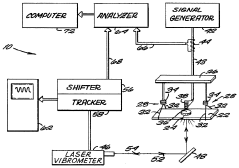
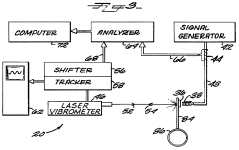
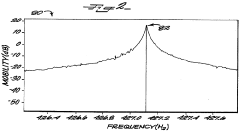
METHOD FOR MONITORING THE STRUCTURAL INTEGRITY OF A COMPONENT AND FLEXIBLE SENSOR STRUCTURE FOR MONITORING THE STRUCTURAL INTEGRITY OF A COMPONENT
PatentPendingDE102020104154A1
Innovation
- A flexible sensor structure with ultrasonic sensors is attached to the component's surface, allowing for continuous monitoring by remaining stationary and using ultrasonic waves to detect deviations from predefined structural integrity, enabling immediate detection of defects such as cracks or material changes.


Safety Standards for Programmable Matter Applications
The establishment of comprehensive safety standards for programmable matter applications represents a critical foundation for the widespread adoption and deployment of these transformative technologies. Current safety frameworks must address the unique characteristics of programmable matter systems, including their dynamic reconfiguration capabilities, distributed control mechanisms, and potential for autonomous behavior. These standards need to encompass both hardware-level safety requirements and software-based control protocols that ensure predictable and secure operation across diverse application domains.
Existing safety standards draw heavily from established frameworks in robotics, nanotechnology, and distributed systems, yet require significant adaptation to address programmable matter's distinctive properties. The IEEE and ISO organizations have initiated preliminary working groups to develop specific guidelines for self-reconfiguring systems, focusing on fail-safe mechanisms, containment protocols, and emergency shutdown procedures. These emerging standards emphasize the importance of hierarchical safety controls that operate at multiple scales, from individual particle behavior to system-wide coordination protocols.
Risk assessment methodologies for programmable matter applications must consider both deterministic failure modes and emergent behaviors that may arise from complex interactions between numerous autonomous units. Safety standards mandate comprehensive hazard analysis procedures that evaluate potential failure cascades, unintended self-assembly patterns, and loss of communication between distributed components. These assessments require novel testing protocols that can simulate large-scale system behaviors while maintaining controlled laboratory conditions.
Regulatory compliance frameworks are evolving to address the cross-disciplinary nature of programmable matter technologies, requiring coordination between agencies responsible for materials science, electronics, biotechnology, and environmental safety. Current standards development focuses on establishing clear boundaries between different regulatory domains while ensuring comprehensive coverage of all potential safety concerns. International harmonization efforts aim to create consistent safety requirements that facilitate global technology transfer and commercial deployment.
The implementation of safety standards necessitates the development of specialized monitoring and verification systems capable of real-time assessment of programmable matter behavior. These systems must integrate advanced sensing technologies, predictive modeling capabilities, and automated response mechanisms to ensure continuous compliance with established safety protocols throughout the operational lifecycle of programmable matter applications.
Existing safety standards draw heavily from established frameworks in robotics, nanotechnology, and distributed systems, yet require significant adaptation to address programmable matter's distinctive properties. The IEEE and ISO organizations have initiated preliminary working groups to develop specific guidelines for self-reconfiguring systems, focusing on fail-safe mechanisms, containment protocols, and emergency shutdown procedures. These emerging standards emphasize the importance of hierarchical safety controls that operate at multiple scales, from individual particle behavior to system-wide coordination protocols.
Risk assessment methodologies for programmable matter applications must consider both deterministic failure modes and emergent behaviors that may arise from complex interactions between numerous autonomous units. Safety standards mandate comprehensive hazard analysis procedures that evaluate potential failure cascades, unintended self-assembly patterns, and loss of communication between distributed components. These assessments require novel testing protocols that can simulate large-scale system behaviors while maintaining controlled laboratory conditions.
Regulatory compliance frameworks are evolving to address the cross-disciplinary nature of programmable matter technologies, requiring coordination between agencies responsible for materials science, electronics, biotechnology, and environmental safety. Current standards development focuses on establishing clear boundaries between different regulatory domains while ensuring comprehensive coverage of all potential safety concerns. International harmonization efforts aim to create consistent safety requirements that facilitate global technology transfer and commercial deployment.
The implementation of safety standards necessitates the development of specialized monitoring and verification systems capable of real-time assessment of programmable matter behavior. These systems must integrate advanced sensing technologies, predictive modeling capabilities, and automated response mechanisms to ensure continuous compliance with established safety protocols throughout the operational lifecycle of programmable matter applications.
Multi-scale Testing Framework for Complex Structures
The assessment of programmable matter's structural integrity requires a comprehensive multi-scale testing framework that addresses the unique challenges posed by these dynamically reconfigurable materials. Unlike conventional static structures, programmable matter exhibits variable mechanical properties that change during reconfiguration processes, necessitating testing methodologies that can capture behavior across multiple length and time scales.
At the molecular and atomic scale, computational modeling approaches such as molecular dynamics simulations provide fundamental insights into bond formation and breaking mechanisms during structural transitions. These simulations reveal critical stress concentrations and failure initiation points that may not be apparent through macroscopic testing alone. The integration of quantum mechanical calculations helps predict the stability of intermediate configurations during morphing processes.
Mesoscale testing focuses on the behavior of individual programmable units and their interconnections. This level employs specialized micro-mechanical testing equipment capable of applying controlled forces while monitoring real-time structural changes. Advanced imaging techniques, including high-resolution scanning electron microscopy and atomic force microscopy, enable direct observation of deformation mechanisms and interface failures between programmable elements.
Macroscale testing addresses the overall structural performance of assembled programmable matter systems. This involves developing novel testing protocols that can accommodate shape-changing specimens during mechanical loading. Traditional testing standards require significant modifications to account for the dynamic nature of these materials, including the development of adaptive gripping systems and real-time geometry tracking capabilities.
The framework incorporates temporal scaling considerations, recognizing that structural integrity assessment must account for both rapid reconfiguration events and long-term stability under sustained loading. Multi-physics coupling effects, including thermal, electrical, and mechanical interactions, are integrated throughout all testing scales to ensure comprehensive evaluation of structural performance under realistic operating conditions.
At the molecular and atomic scale, computational modeling approaches such as molecular dynamics simulations provide fundamental insights into bond formation and breaking mechanisms during structural transitions. These simulations reveal critical stress concentrations and failure initiation points that may not be apparent through macroscopic testing alone. The integration of quantum mechanical calculations helps predict the stability of intermediate configurations during morphing processes.
Mesoscale testing focuses on the behavior of individual programmable units and their interconnections. This level employs specialized micro-mechanical testing equipment capable of applying controlled forces while monitoring real-time structural changes. Advanced imaging techniques, including high-resolution scanning electron microscopy and atomic force microscopy, enable direct observation of deformation mechanisms and interface failures between programmable elements.
Macroscale testing addresses the overall structural performance of assembled programmable matter systems. This involves developing novel testing protocols that can accommodate shape-changing specimens during mechanical loading. Traditional testing standards require significant modifications to account for the dynamic nature of these materials, including the development of adaptive gripping systems and real-time geometry tracking capabilities.
The framework incorporates temporal scaling considerations, recognizing that structural integrity assessment must account for both rapid reconfiguration events and long-term stability under sustained loading. Multi-physics coupling effects, including thermal, electrical, and mechanical interactions, are integrated throughout all testing scales to ensure comprehensive evaluation of structural performance under realistic operating conditions.
Unlock deeper insights with PatSnap Eureka Quick Research — get a full tech report to explore trends and direct your research. Try now!
Generate Your Research Report Instantly with AI Agent
Supercharge your innovation with PatSnap Eureka AI Agent Platform!