
Boosting Structural Integrity with Electromagnetic Induction
FEB 25, 202610 MIN READ
Generate Your Research Report Instantly with AI Agent
Patsnap Eureka helps you evaluate technical feasibility & market potential.
Electromagnetic Induction Structural Enhancement Background and Goals
Electromagnetic induction has emerged as a revolutionary approach to enhancing structural integrity across various engineering applications. This technology leverages the fundamental principles of electromagnetic fields to induce controlled changes in metallic structures, offering unprecedented opportunities for real-time structural reinforcement and adaptive material properties. The concept represents a paradigm shift from traditional passive structural design to dynamic, responsive systems that can actively counteract stress concentrations and fatigue-related degradation.
The historical development of electromagnetic induction for structural applications traces back to early investigations in the 1960s, when researchers first explored the potential of magnetic fields to influence material behavior. Initial studies focused primarily on electromagnetic forming and welding applications, but the scope gradually expanded to encompass structural health monitoring and active reinforcement systems. The evolution accelerated significantly in the 1990s with advances in power electronics and computational modeling capabilities.
Contemporary research has demonstrated that electromagnetic induction can effectively modify local stress distributions within metallic structures through controlled heating, phase transformations, and residual stress redistribution. The technology operates by generating localized electromagnetic fields that interact with conductive materials, creating eddy currents and subsequent thermal effects that can be precisely controlled to achieve desired structural modifications.
The primary technical objectives of electromagnetic induction structural enhancement encompass several critical areas. First, the development of real-time stress mitigation systems capable of detecting and responding to dynamic loading conditions. Second, the creation of adaptive structures that can modify their mechanical properties in response to changing operational requirements. Third, the implementation of fatigue life extension techniques through controlled residual stress management.
Advanced electromagnetic induction systems aim to achieve precise spatial and temporal control over field distribution, enabling targeted interventions at critical structural locations. The technology seeks to integrate seamlessly with existing structural monitoring systems, providing automated responses to detected anomalies or predicted failure modes. Furthermore, the approach targets energy-efficient operation through optimized field generation and intelligent control algorithms.
The ultimate goal involves establishing electromagnetic induction as a standard tool for next-generation smart structures, capable of self-healing, adaptive load redistribution, and extended operational lifespans. This vision encompasses applications ranging from aerospace components and civil infrastructure to marine structures and industrial machinery, where enhanced reliability and reduced maintenance requirements represent significant economic and safety advantages.
The historical development of electromagnetic induction for structural applications traces back to early investigations in the 1960s, when researchers first explored the potential of magnetic fields to influence material behavior. Initial studies focused primarily on electromagnetic forming and welding applications, but the scope gradually expanded to encompass structural health monitoring and active reinforcement systems. The evolution accelerated significantly in the 1990s with advances in power electronics and computational modeling capabilities.
Contemporary research has demonstrated that electromagnetic induction can effectively modify local stress distributions within metallic structures through controlled heating, phase transformations, and residual stress redistribution. The technology operates by generating localized electromagnetic fields that interact with conductive materials, creating eddy currents and subsequent thermal effects that can be precisely controlled to achieve desired structural modifications.
The primary technical objectives of electromagnetic induction structural enhancement encompass several critical areas. First, the development of real-time stress mitigation systems capable of detecting and responding to dynamic loading conditions. Second, the creation of adaptive structures that can modify their mechanical properties in response to changing operational requirements. Third, the implementation of fatigue life extension techniques through controlled residual stress management.
Advanced electromagnetic induction systems aim to achieve precise spatial and temporal control over field distribution, enabling targeted interventions at critical structural locations. The technology seeks to integrate seamlessly with existing structural monitoring systems, providing automated responses to detected anomalies or predicted failure modes. Furthermore, the approach targets energy-efficient operation through optimized field generation and intelligent control algorithms.
The ultimate goal involves establishing electromagnetic induction as a standard tool for next-generation smart structures, capable of self-healing, adaptive load redistribution, and extended operational lifespans. This vision encompasses applications ranging from aerospace components and civil infrastructure to marine structures and industrial machinery, where enhanced reliability and reduced maintenance requirements represent significant economic and safety advantages.
Market Demand for Advanced Structural Integrity Solutions
The global infrastructure sector faces mounting pressure to enhance structural integrity across diverse applications, from aerospace and automotive to civil engineering and energy systems. Traditional structural reinforcement methods often prove inadequate for addressing complex failure modes, particularly in high-stress environments where conventional materials reach their performance limits. This gap has created substantial demand for innovative solutions that can provide real-time structural enhancement without requiring complete system redesigns.
Electromagnetic induction-based structural integrity solutions address critical market needs in sectors where structural failure carries catastrophic consequences. The aerospace industry demonstrates particularly strong demand, as aircraft manufacturers seek lightweight yet robust solutions for wing structures, fuselage reinforcement, and landing gear systems. Similarly, the automotive sector increasingly requires advanced structural integrity technologies to meet stringent safety standards while maintaining fuel efficiency through weight reduction.
The renewable energy sector presents another significant market opportunity, especially for wind turbine applications where blade structural integrity directly impacts operational efficiency and safety. Offshore wind installations face particularly challenging environmental conditions that demand advanced structural monitoring and reinforcement capabilities. Traditional inspection and maintenance approaches prove costly and often inadequate for detecting early-stage structural degradation.
Industrial infrastructure markets show growing interest in electromagnetic induction solutions for bridge monitoring, pipeline integrity assessment, and building structural health management. Aging infrastructure in developed nations creates substantial replacement and upgrade demand, while emerging markets require cost-effective solutions for new construction projects. The technology's ability to provide continuous monitoring while simultaneously offering structural reinforcement capabilities addresses multiple market needs simultaneously.
The defense and security sectors represent high-value market segments where electromagnetic induction technologies can enhance armor systems, naval vessel hulls, and critical infrastructure protection. These applications typically involve higher performance requirements and correspondingly premium pricing structures, making them attractive targets for technology developers.
Market drivers include increasingly stringent safety regulations, rising maintenance costs for aging infrastructure, and growing awareness of structural failure risks. The technology's potential for integration with existing Internet of Things platforms and predictive maintenance systems aligns with broader digital transformation trends across industrial sectors, further expanding market appeal and adoption potential.
Electromagnetic induction-based structural integrity solutions address critical market needs in sectors where structural failure carries catastrophic consequences. The aerospace industry demonstrates particularly strong demand, as aircraft manufacturers seek lightweight yet robust solutions for wing structures, fuselage reinforcement, and landing gear systems. Similarly, the automotive sector increasingly requires advanced structural integrity technologies to meet stringent safety standards while maintaining fuel efficiency through weight reduction.
The renewable energy sector presents another significant market opportunity, especially for wind turbine applications where blade structural integrity directly impacts operational efficiency and safety. Offshore wind installations face particularly challenging environmental conditions that demand advanced structural monitoring and reinforcement capabilities. Traditional inspection and maintenance approaches prove costly and often inadequate for detecting early-stage structural degradation.
Industrial infrastructure markets show growing interest in electromagnetic induction solutions for bridge monitoring, pipeline integrity assessment, and building structural health management. Aging infrastructure in developed nations creates substantial replacement and upgrade demand, while emerging markets require cost-effective solutions for new construction projects. The technology's ability to provide continuous monitoring while simultaneously offering structural reinforcement capabilities addresses multiple market needs simultaneously.
The defense and security sectors represent high-value market segments where electromagnetic induction technologies can enhance armor systems, naval vessel hulls, and critical infrastructure protection. These applications typically involve higher performance requirements and correspondingly premium pricing structures, making them attractive targets for technology developers.
Market drivers include increasingly stringent safety regulations, rising maintenance costs for aging infrastructure, and growing awareness of structural failure risks. The technology's potential for integration with existing Internet of Things platforms and predictive maintenance systems aligns with broader digital transformation trends across industrial sectors, further expanding market appeal and adoption potential.
Current State and Challenges of EM Induction in Structures
The application of electromagnetic induction for enhancing structural integrity represents an emerging field that combines traditional structural engineering with advanced electromagnetic technologies. Currently, the technology exists primarily in research phases across academic institutions and specialized engineering firms, with limited commercial deployment in real-world infrastructure projects.
Existing implementations focus predominantly on non-destructive testing and monitoring applications rather than active structural reinforcement. Electromagnetic induction systems are being utilized for crack detection, corrosion monitoring, and stress analysis in steel structures, bridges, and pipelines. These systems leverage eddy current principles to identify structural anomalies and material degradation without requiring physical access to internal components.
The geographical distribution of technological advancement shows concentration in developed nations, particularly the United States, Germany, Japan, and South Korea, where substantial research funding supports electromagnetic structural applications. European Union initiatives have promoted collaborative research programs focusing on smart infrastructure integration, while Asian markets emphasize manufacturing and industrial applications.
Several fundamental technical challenges currently limit widespread adoption of electromagnetic induction for structural integrity enhancement. Power consumption requirements for generating sufficient electromagnetic fields to influence large-scale structures remain prohibitively high for continuous operation. The technology struggles with effective penetration depth in thick concrete and composite materials, limiting its applicability to surface-level treatments or thin metallic structures.
Signal interference presents another significant obstacle, as electromagnetic systems are susceptible to environmental noise from power lines, wireless communications, and other electromagnetic sources commonly found in urban infrastructure environments. This interference compromises measurement accuracy and system reliability, particularly in densely populated areas where structural monitoring is most critical.
Material compatibility issues further constrain implementation possibilities. While ferromagnetic materials respond effectively to electromagnetic fields, many modern construction materials including advanced composites, ceramics, and non-metallic reinforcements show limited electromagnetic interaction. This limitation restricts the technology's applicability across diverse structural types and construction methodologies.
Cost-effectiveness remains a primary barrier to commercial adoption. Current electromagnetic induction systems require specialized equipment, trained operators, and ongoing maintenance protocols that significantly exceed traditional structural monitoring approaches. The economic justification becomes challenging when compared to established inspection methods, despite potential long-term benefits.
Integration complexity with existing structural systems poses additional implementation challenges. Retrofitting electromagnetic induction capabilities into established infrastructure requires extensive modification of existing monitoring systems and potential structural alterations to accommodate electromagnetic field generators and sensors.
Existing implementations focus predominantly on non-destructive testing and monitoring applications rather than active structural reinforcement. Electromagnetic induction systems are being utilized for crack detection, corrosion monitoring, and stress analysis in steel structures, bridges, and pipelines. These systems leverage eddy current principles to identify structural anomalies and material degradation without requiring physical access to internal components.
The geographical distribution of technological advancement shows concentration in developed nations, particularly the United States, Germany, Japan, and South Korea, where substantial research funding supports electromagnetic structural applications. European Union initiatives have promoted collaborative research programs focusing on smart infrastructure integration, while Asian markets emphasize manufacturing and industrial applications.
Several fundamental technical challenges currently limit widespread adoption of electromagnetic induction for structural integrity enhancement. Power consumption requirements for generating sufficient electromagnetic fields to influence large-scale structures remain prohibitively high for continuous operation. The technology struggles with effective penetration depth in thick concrete and composite materials, limiting its applicability to surface-level treatments or thin metallic structures.
Signal interference presents another significant obstacle, as electromagnetic systems are susceptible to environmental noise from power lines, wireless communications, and other electromagnetic sources commonly found in urban infrastructure environments. This interference compromises measurement accuracy and system reliability, particularly in densely populated areas where structural monitoring is most critical.
Material compatibility issues further constrain implementation possibilities. While ferromagnetic materials respond effectively to electromagnetic fields, many modern construction materials including advanced composites, ceramics, and non-metallic reinforcements show limited electromagnetic interaction. This limitation restricts the technology's applicability across diverse structural types and construction methodologies.
Cost-effectiveness remains a primary barrier to commercial adoption. Current electromagnetic induction systems require specialized equipment, trained operators, and ongoing maintenance protocols that significantly exceed traditional structural monitoring approaches. The economic justification becomes challenging when compared to established inspection methods, despite potential long-term benefits.
Integration complexity with existing structural systems poses additional implementation challenges. Retrofitting electromagnetic induction capabilities into established infrastructure requires extensive modification of existing monitoring systems and potential structural alterations to accommodate electromagnetic field generators and sensors.
Existing EM Induction Solutions for Structural Reinforcement
01 Eddy current testing methods for structural integrity assessment
Electromagnetic induction techniques utilizing eddy currents are employed to detect defects, cracks, and material degradation in conductive structures. These non-destructive testing methods involve inducing eddy currents in the test material and analyzing the electromagnetic response to identify anomalies. The technology enables real-time monitoring and assessment of structural integrity without causing damage to the inspected components.- Eddy current testing methods for structural integrity assessment: Electromagnetic induction techniques utilizing eddy currents are employed to detect defects, cracks, and material degradation in conductive structures. These non-destructive testing methods involve inducing eddy currents in the material and analyzing the electromagnetic response to identify anomalies. The technology enables real-time monitoring and assessment of structural integrity without causing damage to the inspected components.
- Electromagnetic sensor arrays for multi-point inspection: Advanced sensor array configurations are utilized to perform comprehensive structural integrity evaluations across large surface areas. These systems employ multiple electromagnetic induction sensors arranged in specific patterns to simultaneously inspect different regions of a structure. The approach enhances inspection efficiency and provides detailed mapping of structural conditions, enabling detection of localized defects and overall integrity assessment.
- Signal processing and defect characterization algorithms: Sophisticated signal processing techniques are applied to electromagnetic induction data to accurately characterize defects and assess structural integrity. These methods involve analyzing frequency responses, phase shifts, and amplitude variations in the induced electromagnetic fields. Advanced algorithms enable differentiation between various types of defects, estimation of defect dimensions, and assessment of material properties, providing comprehensive structural integrity information.
- Portable and automated electromagnetic inspection systems: Compact and automated inspection systems incorporating electromagnetic induction technology enable field deployment and continuous monitoring of structural integrity. These systems feature portable probe designs, automated scanning mechanisms, and integrated data acquisition capabilities. The technology facilitates in-situ inspections of critical infrastructure components, including pipelines, aircraft structures, and industrial equipment, with minimal operational disruption.
- Electromagnetic induction for composite and layered structure evaluation: Specialized electromagnetic induction techniques are developed for assessing the integrity of composite materials and multi-layered structures. These methods address the challenges of inspecting non-homogeneous materials by adapting frequency ranges, probe configurations, and analysis algorithms. The technology enables detection of delamination, fiber breakage, and interface defects in composite structures, as well as evaluation of coating thickness and bonding quality in layered assemblies.
02 Electromagnetic sensor arrays for multi-point inspection
Advanced sensor array configurations are utilized to perform comprehensive structural integrity evaluations across large surface areas. These systems employ multiple electromagnetic induction sensors arranged in specific patterns to simultaneously monitor different regions of a structure. The approach enhances inspection efficiency and provides detailed mapping of structural conditions through parallel data acquisition and processing.Expand Specific Solutions03 Signal processing and defect characterization algorithms
Sophisticated signal processing techniques are applied to electromagnetic induction data to accurately characterize defects and assess structural integrity. These methods involve filtering, feature extraction, and pattern recognition algorithms that interpret complex electromagnetic signatures. The technology enables precise determination of defect size, depth, orientation, and severity through advanced computational analysis of induced electromagnetic responses.Expand Specific Solutions04 Portable and automated electromagnetic inspection systems
Compact and automated inspection devices incorporating electromagnetic induction principles are developed for field deployment and continuous monitoring applications. These systems integrate sensors, power supplies, and data processing units into portable configurations suitable for various inspection scenarios. The technology facilitates rapid deployment and enables automated scanning procedures for efficient structural integrity assessment in diverse operational environments.Expand Specific Solutions05 Electromagnetic induction for composite and layered structure evaluation
Specialized electromagnetic induction techniques are developed to assess the integrity of composite materials and multi-layered structures. These methods address the challenges of inspecting non-homogeneous materials by adapting frequency ranges, probe designs, and analysis algorithms. The technology enables detection of delamination, fiber breakage, and interface defects in complex structural assemblies through tailored electromagnetic interrogation approaches.Expand Specific Solutions
Key Players in EM Induction and Structural Engineering Industry
The electromagnetic induction technology for structural integrity enhancement represents an emerging field in the early development stage, characterized by significant research activity but limited commercial deployment. The market remains nascent with substantial growth potential as industries increasingly prioritize structural health monitoring and predictive maintenance solutions. Technology maturity varies considerably across the competitive landscape, with established electronics giants like TDK Corp., Samsung Electronics, and Sony Group Corp. leveraging their electromagnetic expertise from consumer applications into structural solutions. Industrial leaders including Schneider Electric, Johnson Controls, and Boeing are integrating these technologies into their existing infrastructure and aerospace applications. Meanwhile, specialized companies such as ROSEN Swiss AG focus on pipeline integrity solutions, while semiconductor manufacturers like Samsung Electro-Mechanics and Soitec SA contribute advanced materials and sensing capabilities. Academic institutions including Central South University and Dalian University of Technology drive fundamental research, while emerging players like LG Energy Solution explore applications in energy storage systems, creating a diverse ecosystem spanning multiple industries and technological approaches.
TDK Corp.
Technical Solution: TDK has developed advanced electromagnetic induction technologies for structural integrity enhancement through their magnetic materials and inductive components. Their approach utilizes high-permeability ferrite cores and precision-wound inductors to generate controlled electromagnetic fields that can detect micro-cracks and structural defects in real-time. The company's proprietary multilayer ceramic technology enables the creation of compact, high-frequency induction systems that can be embedded directly into structural components. These systems provide continuous monitoring capabilities by analyzing changes in electromagnetic field patterns, allowing for early detection of structural degradation before critical failure occurs.
Strengths: Industry-leading magnetic materials expertise, miniaturized components suitable for embedded applications. Weaknesses: Limited experience in large-scale structural applications, higher cost compared to traditional monitoring methods.
Samsung Electro-Mechanics Co., Ltd.
Technical Solution: Samsung Electro-Mechanics has developed electromagnetic induction solutions for structural health monitoring using their advanced MLCC (Multi-Layer Ceramic Capacitor) technology combined with inductive sensing systems. Their approach integrates high-frequency electromagnetic field generators with AI-powered signal processing to detect structural anomalies. The system employs arrays of miniaturized induction coils that can be surface-mounted or embedded within composite materials to create a distributed sensing network. This technology enables real-time monitoring of structural stress, fatigue, and deformation by analyzing electromagnetic field disturbances caused by material property changes.
Strengths: Advanced miniaturization capabilities, strong AI integration for signal processing. Weaknesses: Primarily focused on electronic applications, limited proven track record in heavy structural engineering.
Core Patents in Electromagnetic Structural Integrity Enhancement
Structural integrity monitoring systems employing electromechanical impedance technology.
PatentActiveBR112016013821A2
Innovation
- A system and method for automatically detecting mechanical impedance changes using electromechanical impedance technology, involving piezoelectric transducers and microcontrollers, to assess structural integrity by measuring the resistive part of electromechanical impedance at multiple frequency points, compensating for environmental effects, and comparing with baseline data to detect damage.


Method and apparatus for determining material structural integrity
PatentInactiveUS5520052A
Innovation
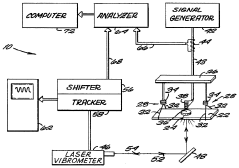
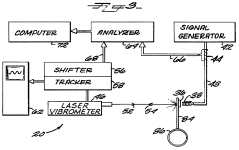
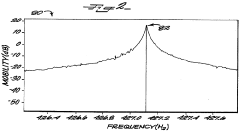
- Combining laser vibrometry with damping analysis techniques to measure the damping loss factor of materials over a known frequency range, allowing for the determination of structural integrity through the use of vibrational force and velocity measurements, and plotting drive point mobility to derive the damping loss factor.
Safety Standards and Regulations for EM Structural Systems
The development of electromagnetic induction-based structural integrity systems necessitates comprehensive safety standards and regulatory frameworks to ensure reliable operation and public safety. Current regulatory landscapes vary significantly across jurisdictions, with most existing standards focusing on traditional electromagnetic applications rather than structural enhancement technologies. The International Electrotechnical Commission (IEC) provides foundational guidelines for electromagnetic compatibility, while national bodies like ANSI in the United States and EN standards in Europe establish specific requirements for electromagnetic field exposure limits and equipment safety.
Electromagnetic field exposure represents a primary safety concern for EM structural systems. Regulatory bodies have established specific absorption rate (SAR) limits and electromagnetic field strength thresholds to protect human health. The IEEE C95.1 standard defines exposure limits for radiofrequency electromagnetic fields, while IEC 62311 addresses assessment methods for electronic equipment regarding human exposure restrictions. These standards require careful consideration when designing EM structural systems, particularly in occupied buildings where continuous exposure may occur.
Structural safety regulations must integrate electromagnetic considerations into traditional building codes. The International Building Code (IBC) and Eurocode standards are evolving to accommodate smart structural systems, requiring new provisions for electromagnetic interference mitigation and system redundancy. Critical safety requirements include fail-safe mechanisms that ensure structural integrity during electromagnetic system failures, electromagnetic shielding to prevent interference with nearby electronic systems, and continuous monitoring capabilities to detect system anomalies.
Certification processes for EM structural systems involve multi-disciplinary assessments combining structural engineering, electromagnetic compatibility, and safety evaluations. Testing protocols must verify system performance under various electromagnetic conditions, including power fluctuations, electromagnetic interference, and extreme weather events. Third-party certification bodies are developing specialized testing procedures that address the unique challenges of electromagnetic structural enhancement technologies.
Future regulatory developments will likely establish dedicated standards for EM structural systems, incorporating lessons learned from early implementations and addressing emerging safety concerns. Harmonization efforts between international standards organizations aim to create unified global frameworks that facilitate technology adoption while maintaining rigorous safety requirements. These evolving regulations will play a crucial role in enabling widespread deployment of electromagnetic structural integrity enhancement systems.
Electromagnetic field exposure represents a primary safety concern for EM structural systems. Regulatory bodies have established specific absorption rate (SAR) limits and electromagnetic field strength thresholds to protect human health. The IEEE C95.1 standard defines exposure limits for radiofrequency electromagnetic fields, while IEC 62311 addresses assessment methods for electronic equipment regarding human exposure restrictions. These standards require careful consideration when designing EM structural systems, particularly in occupied buildings where continuous exposure may occur.
Structural safety regulations must integrate electromagnetic considerations into traditional building codes. The International Building Code (IBC) and Eurocode standards are evolving to accommodate smart structural systems, requiring new provisions for electromagnetic interference mitigation and system redundancy. Critical safety requirements include fail-safe mechanisms that ensure structural integrity during electromagnetic system failures, electromagnetic shielding to prevent interference with nearby electronic systems, and continuous monitoring capabilities to detect system anomalies.
Certification processes for EM structural systems involve multi-disciplinary assessments combining structural engineering, electromagnetic compatibility, and safety evaluations. Testing protocols must verify system performance under various electromagnetic conditions, including power fluctuations, electromagnetic interference, and extreme weather events. Third-party certification bodies are developing specialized testing procedures that address the unique challenges of electromagnetic structural enhancement technologies.
Future regulatory developments will likely establish dedicated standards for EM structural systems, incorporating lessons learned from early implementations and addressing emerging safety concerns. Harmonization efforts between international standards organizations aim to create unified global frameworks that facilitate technology adoption while maintaining rigorous safety requirements. These evolving regulations will play a crucial role in enabling widespread deployment of electromagnetic structural integrity enhancement systems.
Energy Efficiency Considerations in EM Structural Applications
Energy efficiency represents a critical consideration in electromagnetic structural applications, as the power consumption directly impacts both operational costs and system sustainability. The electromagnetic induction systems used for structural integrity enhancement typically require substantial energy input to generate the necessary magnetic fields for material property modification or structural reinforcement. Current implementations often struggle with energy conversion losses, which can reach 15-25% in conventional electromagnetic systems, primarily due to resistive heating in conductors and hysteresis losses in magnetic materials.
The power requirements for electromagnetic structural applications vary significantly based on the target material properties and structural dimensions. For steel structure reinforcement, typical power densities range from 50-200 watts per cubic meter of treated material, while more advanced applications requiring precise magnetic field control may demand up to 500 watts per cubic meter. These energy demands necessitate careful optimization of electromagnetic coil designs, magnetic core materials, and power supply systems to achieve acceptable efficiency levels.
Advanced power management strategies have emerged as essential components in modern electromagnetic structural systems. Pulse-width modulation techniques allow for precise control of electromagnetic field strength while reducing average power consumption by up to 40% compared to continuous operation modes. Additionally, resonant circuit designs can significantly improve energy transfer efficiency by matching the impedance characteristics of the electromagnetic system to the structural materials being treated.
Heat dissipation management presents another crucial energy efficiency challenge, as excessive thermal generation not only wastes energy but can also compromise the structural integrity of the materials being enhanced. Effective cooling systems, including both passive heat sinks and active cooling mechanisms, are essential for maintaining optimal operating temperatures while minimizing energy overhead.
Smart control algorithms incorporating real-time feedback mechanisms enable dynamic adjustment of electromagnetic parameters based on structural response measurements. These adaptive systems can reduce energy consumption by 20-35% while maintaining desired structural enhancement effects, representing a significant advancement in electromagnetic structural application efficiency.
The power requirements for electromagnetic structural applications vary significantly based on the target material properties and structural dimensions. For steel structure reinforcement, typical power densities range from 50-200 watts per cubic meter of treated material, while more advanced applications requiring precise magnetic field control may demand up to 500 watts per cubic meter. These energy demands necessitate careful optimization of electromagnetic coil designs, magnetic core materials, and power supply systems to achieve acceptable efficiency levels.
Advanced power management strategies have emerged as essential components in modern electromagnetic structural systems. Pulse-width modulation techniques allow for precise control of electromagnetic field strength while reducing average power consumption by up to 40% compared to continuous operation modes. Additionally, resonant circuit designs can significantly improve energy transfer efficiency by matching the impedance characteristics of the electromagnetic system to the structural materials being treated.
Heat dissipation management presents another crucial energy efficiency challenge, as excessive thermal generation not only wastes energy but can also compromise the structural integrity of the materials being enhanced. Effective cooling systems, including both passive heat sinks and active cooling mechanisms, are essential for maintaining optimal operating temperatures while minimizing energy overhead.
Smart control algorithms incorporating real-time feedback mechanisms enable dynamic adjustment of electromagnetic parameters based on structural response measurements. These adaptive systems can reduce energy consumption by 20-35% while maintaining desired structural enhancement effects, representing a significant advancement in electromagnetic structural application efficiency.
Unlock deeper insights with Patsnap Eureka Quick Research — get a full tech report to explore trends and direct your research. Try now!
Generate Your Research Report Instantly with AI Agent
Supercharge your innovation with Patsnap Eureka AI Agent Platform!