

Bridge Rectifier vs Dual Interface: Responsiveness in Devices
MAR 24, 20269 MIN READ
Generate Your Research Report Instantly with AI Agent
Patsnap Eureka helps you evaluate technical feasibility & market potential.
Bridge Rectifier Interface Technology Background and Objectives
Bridge rectifier interface technology has evolved significantly since the early days of electronic circuit design, originating from the fundamental need to convert alternating current (AC) to direct current (DC) in electronic devices. The bridge rectifier configuration, first conceptualized in the 1890s and refined throughout the 20th century, represents one of the most efficient methods for full-wave rectification without requiring a center-tapped transformer.
The historical development of bridge rectifier interfaces can be traced through several key phases. Initially, vacuum tube-based rectifiers dominated the landscape until the advent of semiconductor diodes in the 1950s. The introduction of silicon diodes in the 1960s marked a pivotal moment, enabling more compact and efficient bridge rectifier designs. Subsequently, the integration of advanced materials like Schottky diodes and silicon carbide components has further enhanced performance characteristics.
In contrast, dual interface technology emerged as a response to the growing complexity of modern electronic systems requiring multiple communication protocols and power management schemes. This approach gained prominence in the late 1990s and early 2000s as devices began incorporating both analog and digital interfaces, necessitating sophisticated switching mechanisms and protocol translation capabilities.
The primary objective of bridge rectifier interface technology centers on achieving optimal power conversion efficiency while maintaining signal integrity and minimizing electromagnetic interference. Modern implementations target efficiency rates exceeding 95% while reducing forward voltage drops and reverse recovery times. Additionally, thermal management and component longevity remain critical objectives, particularly in high-frequency switching applications.
Contemporary research focuses on enhancing device responsiveness through advanced control algorithms and adaptive switching techniques. The integration of smart sensing capabilities enables real-time optimization of rectification parameters based on load conditions and environmental factors. Furthermore, the development of wide bandgap semiconductors promises to revolutionize bridge rectifier performance by enabling higher switching frequencies and improved thermal characteristics.
The convergence of bridge rectifier and dual interface technologies represents a significant technological evolution, addressing the increasing demand for versatile, high-performance power management solutions in modern electronic devices. This hybrid approach aims to combine the proven reliability of traditional rectification methods with the flexibility and intelligence of contemporary interface technologies.
The historical development of bridge rectifier interfaces can be traced through several key phases. Initially, vacuum tube-based rectifiers dominated the landscape until the advent of semiconductor diodes in the 1950s. The introduction of silicon diodes in the 1960s marked a pivotal moment, enabling more compact and efficient bridge rectifier designs. Subsequently, the integration of advanced materials like Schottky diodes and silicon carbide components has further enhanced performance characteristics.
In contrast, dual interface technology emerged as a response to the growing complexity of modern electronic systems requiring multiple communication protocols and power management schemes. This approach gained prominence in the late 1990s and early 2000s as devices began incorporating both analog and digital interfaces, necessitating sophisticated switching mechanisms and protocol translation capabilities.
The primary objective of bridge rectifier interface technology centers on achieving optimal power conversion efficiency while maintaining signal integrity and minimizing electromagnetic interference. Modern implementations target efficiency rates exceeding 95% while reducing forward voltage drops and reverse recovery times. Additionally, thermal management and component longevity remain critical objectives, particularly in high-frequency switching applications.
Contemporary research focuses on enhancing device responsiveness through advanced control algorithms and adaptive switching techniques. The integration of smart sensing capabilities enables real-time optimization of rectification parameters based on load conditions and environmental factors. Furthermore, the development of wide bandgap semiconductors promises to revolutionize bridge rectifier performance by enabling higher switching frequencies and improved thermal characteristics.
The convergence of bridge rectifier and dual interface technologies represents a significant technological evolution, addressing the increasing demand for versatile, high-performance power management solutions in modern electronic devices. This hybrid approach aims to combine the proven reliability of traditional rectification methods with the flexibility and intelligence of contemporary interface technologies.
Market Demand for Responsive Dual Interface Devices
The market demand for responsive dual interface devices has experienced substantial growth across multiple sectors, driven by the increasing need for seamless connectivity and enhanced user experiences. Consumer electronics, automotive systems, industrial automation, and healthcare devices represent the primary market segments where dual interface responsiveness has become a critical differentiator. The convergence of wireless and wired connectivity requirements in modern applications has created a compelling value proposition for manufacturers to invest in responsive dual interface solutions.
Consumer electronics manufacturers are witnessing unprecedented demand for devices that can intelligently switch between multiple interface modes without compromising performance. Smartphones, tablets, and laptops increasingly require simultaneous support for charging, data transfer, and peripheral connectivity through unified interfaces. The market expectation for instantaneous response times has elevated the importance of optimized power management circuits, where bridge rectifier configurations play a crucial role in maintaining stable power delivery during interface transitions.
The automotive industry represents one of the fastest-growing market segments for responsive dual interface technology. Modern vehicles require robust communication systems that can handle both legacy and next-generation protocols simultaneously. Infotainment systems, advanced driver assistance systems, and electric vehicle charging infrastructure demand highly responsive interface switching capabilities. The market has shown particular interest in solutions that minimize latency during critical safety-related communications while maintaining power efficiency.
Industrial automation and Internet of Things applications have created substantial demand for devices capable of operating across diverse communication protocols and power delivery methods. Manufacturing environments require equipment that can seamlessly transition between different interface standards while maintaining real-time responsiveness. The market values solutions that combine reliable power conversion through optimized bridge rectifier designs with intelligent interface management systems.
Healthcare and medical device markets have emerged as significant drivers of demand for responsive dual interface solutions. Patient monitoring systems, diagnostic equipment, and portable medical devices require uninterrupted operation with the ability to switch between battery and external power sources while maintaining continuous data connectivity. Regulatory requirements in healthcare applications have intensified the focus on power stability and interface reliability, creating opportunities for advanced bridge rectifier implementations that ensure consistent device responsiveness across all operating conditions.
Consumer electronics manufacturers are witnessing unprecedented demand for devices that can intelligently switch between multiple interface modes without compromising performance. Smartphones, tablets, and laptops increasingly require simultaneous support for charging, data transfer, and peripheral connectivity through unified interfaces. The market expectation for instantaneous response times has elevated the importance of optimized power management circuits, where bridge rectifier configurations play a crucial role in maintaining stable power delivery during interface transitions.
The automotive industry represents one of the fastest-growing market segments for responsive dual interface technology. Modern vehicles require robust communication systems that can handle both legacy and next-generation protocols simultaneously. Infotainment systems, advanced driver assistance systems, and electric vehicle charging infrastructure demand highly responsive interface switching capabilities. The market has shown particular interest in solutions that minimize latency during critical safety-related communications while maintaining power efficiency.
Industrial automation and Internet of Things applications have created substantial demand for devices capable of operating across diverse communication protocols and power delivery methods. Manufacturing environments require equipment that can seamlessly transition between different interface standards while maintaining real-time responsiveness. The market values solutions that combine reliable power conversion through optimized bridge rectifier designs with intelligent interface management systems.
Healthcare and medical device markets have emerged as significant drivers of demand for responsive dual interface solutions. Patient monitoring systems, diagnostic equipment, and portable medical devices require uninterrupted operation with the ability to switch between battery and external power sources while maintaining continuous data connectivity. Regulatory requirements in healthcare applications have intensified the focus on power stability and interface reliability, creating opportunities for advanced bridge rectifier implementations that ensure consistent device responsiveness across all operating conditions.
Current State of Bridge Rectifier vs Dual Interface Technologies
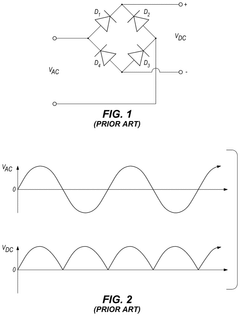
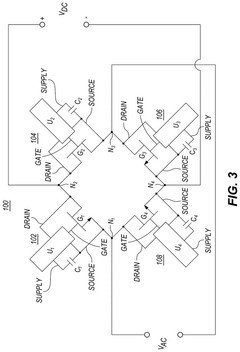
Bridge rectifier technology represents a mature and well-established approach in power conversion systems, utilizing four diodes arranged in a diamond configuration to convert alternating current to direct current. This technology has been extensively deployed across consumer electronics, industrial equipment, and automotive applications for decades. Current implementations achieve efficiency rates of 85-95% depending on the diode technology employed, with silicon carbide and gallium nitride variants pushing performance boundaries further.
The responsiveness characteristics of bridge rectifiers are fundamentally limited by diode switching speeds and reverse recovery times. Modern Schottky diodes can achieve switching frequencies up to several hundred kilohertz, while silicon carbide variants extend this capability into the megahertz range. However, inherent voltage drops across diodes, typically 0.7V for silicon devices, create efficiency bottlenecks particularly in low-voltage applications.
Dual interface technologies have emerged as a more sophisticated alternative, incorporating intelligent switching mechanisms and bidirectional power flow capabilities. These systems typically integrate microcontroller-based control units with advanced power MOSFETs or IGBTs, enabling dynamic response to varying load conditions. Current dual interface implementations demonstrate response times in the microsecond range, significantly outperforming traditional bridge rectifiers in dynamic load scenarios.
Contemporary dual interface solutions leverage digital signal processing to optimize power conversion efficiency in real-time. Advanced implementations incorporate predictive algorithms that anticipate load changes, pre-adjusting switching parameters to minimize response delays. This approach has proven particularly effective in applications requiring rapid power delivery adjustments, such as electric vehicle charging systems and renewable energy inverters.
The integration of wide bandgap semiconductors has revolutionized both technologies, with gallium nitride and silicon carbide devices enabling higher switching frequencies and reduced conduction losses. However, dual interface systems demonstrate superior adaptability to these advanced semiconductors, as their programmable nature allows optimization for specific device characteristics.
Current market implementations show bridge rectifiers maintaining dominance in cost-sensitive applications, while dual interface technologies gain traction in performance-critical systems. The responsiveness gap between these approaches continues to widen as dual interface systems incorporate machine learning algorithms and advanced control strategies, positioning them as the preferred solution for next-generation responsive power management applications.
The responsiveness characteristics of bridge rectifiers are fundamentally limited by diode switching speeds and reverse recovery times. Modern Schottky diodes can achieve switching frequencies up to several hundred kilohertz, while silicon carbide variants extend this capability into the megahertz range. However, inherent voltage drops across diodes, typically 0.7V for silicon devices, create efficiency bottlenecks particularly in low-voltage applications.
Dual interface technologies have emerged as a more sophisticated alternative, incorporating intelligent switching mechanisms and bidirectional power flow capabilities. These systems typically integrate microcontroller-based control units with advanced power MOSFETs or IGBTs, enabling dynamic response to varying load conditions. Current dual interface implementations demonstrate response times in the microsecond range, significantly outperforming traditional bridge rectifiers in dynamic load scenarios.
Contemporary dual interface solutions leverage digital signal processing to optimize power conversion efficiency in real-time. Advanced implementations incorporate predictive algorithms that anticipate load changes, pre-adjusting switching parameters to minimize response delays. This approach has proven particularly effective in applications requiring rapid power delivery adjustments, such as electric vehicle charging systems and renewable energy inverters.
The integration of wide bandgap semiconductors has revolutionized both technologies, with gallium nitride and silicon carbide devices enabling higher switching frequencies and reduced conduction losses. However, dual interface systems demonstrate superior adaptability to these advanced semiconductors, as their programmable nature allows optimization for specific device characteristics.
Current market implementations show bridge rectifiers maintaining dominance in cost-sensitive applications, while dual interface technologies gain traction in performance-critical systems. The responsiveness gap between these approaches continues to widen as dual interface systems incorporate machine learning algorithms and advanced control strategies, positioning them as the preferred solution for next-generation responsive power management applications.
Existing Bridge Rectifier and Dual Interface Solutions
01 Bridge rectifier circuits with dual interface power supply configurations
Bridge rectifier circuits can be designed to support dual interface power supply systems, enabling devices to operate with both contact and contactless power sources. These configurations typically incorporate switching mechanisms that allow seamless transition between different power input modes. The rectifier topology is optimized to handle varying input voltages and frequencies from multiple interface types while maintaining stable DC output. Such designs are particularly useful in smart card applications and other portable devices requiring flexible power options.- Bridge rectifier circuits with dual interface capability: Bridge rectifier circuits can be designed to support dual interface functionality, enabling devices to operate with both contact and contactless communication interfaces. These circuits incorporate rectification components arranged in a bridge configuration to convert AC signals to DC power while maintaining compatibility with multiple interface standards. The design allows for seamless switching between different communication modes and power delivery methods.
- Enhanced responsiveness in dual interface systems: Dual interface systems can be optimized for improved responsiveness by implementing advanced signal processing and power management techniques. These systems utilize specialized circuitry to detect and respond quickly to interface activation, reducing latency in communication establishment. The responsiveness enhancement involves optimizing the transition time between different operational modes and improving the detection sensitivity of interface signals.
- Power supply circuits for dual interface devices: Power supply circuits incorporating bridge rectifiers are essential for dual interface devices to efficiently manage power from different sources. These circuits enable devices to draw power from either contact-based or contactless interfaces, with automatic source selection and voltage regulation. The power management system ensures stable operation regardless of the active interface while preventing conflicts between power sources.
- Interface detection and switching mechanisms: Advanced detection and switching mechanisms enable automatic identification of the active interface in dual interface systems. These mechanisms employ sensing circuits that monitor both interfaces simultaneously and activate the appropriate communication pathway based on detected signals. The switching logic ensures smooth transitions between interfaces without data loss or communication interruption, while the bridge rectifier maintains consistent power delivery during transitions.
- Protection circuits for dual interface bridge rectifiers: Protection circuits integrated with bridge rectifiers safeguard dual interface systems from voltage spikes, reverse polarity, and overcurrent conditions. These protective measures include clamping circuits, current limiting components, and isolation barriers that prevent damage from either interface. The protection scheme ensures reliable operation across varying environmental conditions and prevents cross-interference between the contact and contactless interfaces.
02 Responsive switching mechanisms for dual interface detection
Advanced detection circuits are employed to automatically identify the active interface and configure the bridge rectifier accordingly. These mechanisms utilize sensing elements that monitor voltage levels, current flow patterns, or communication signals to determine which interface is being used. The responsive switching ensures optimal power conversion efficiency by adapting the rectifier configuration based on the detected interface type. This approach minimizes power loss and prevents conflicts when multiple power sources are available simultaneously.Expand Specific Solutions03 Protection circuits for dual interface bridge rectifiers
Protection mechanisms are integrated into dual interface bridge rectifier designs to safeguard against overvoltage, reverse polarity, and simultaneous activation of multiple interfaces. These circuits include clamping diodes, current limiting resistors, and isolation components that prevent damage to sensitive downstream electronics. The protection schemes are designed to respond rapidly to fault conditions while maintaining normal operation during interface transitions. Such protective measures are essential for ensuring reliability in applications where power source switching occurs frequently.Expand Specific Solutions04 Efficiency optimization in dual interface rectification
Techniques for improving power conversion efficiency in dual interface bridge rectifiers include the use of low forward-voltage-drop diodes, synchronous rectification, and adaptive biasing schemes. These optimizations reduce power dissipation during the rectification process and extend battery life in portable applications. The efficiency enhancement methods are tailored to the specific characteristics of each interface type, accounting for differences in voltage levels, frequency ranges, and load conditions. Advanced designs may incorporate active components that dynamically adjust rectifier parameters based on real-time operating conditions.Expand Specific Solutions05 Integration of bridge rectifiers in contactless and contact card systems
Bridge rectifier circuits are specifically adapted for integration into dual interface card systems that support both contactless RF communication and physical contact interfaces. These implementations address the unique challenges of extracting power from RF fields while also accommodating traditional contact-based power delivery. The rectifier designs must handle the high-frequency AC signals from contactless interfaces and convert them efficiently to DC, while also supporting direct DC input from contact pads. Compact layout techniques and specialized component selection enable these rectifiers to fit within the space constraints of card form factors.Expand Specific Solutions
Key Players in Interface Technology and Power Management
The bridge rectifier versus dual interface responsiveness technology landscape represents a mature semiconductor market experiencing steady growth driven by increasing demand for efficient power conversion and device connectivity solutions. The market demonstrates significant scale with established players like STMicroelectronics, Infineon Technologies, and Samsung Electronics leading traditional rectification technologies, while companies such as Energous Corp. and Ganpower International pioneer advanced dual interface and wireless power solutions. Technology maturity varies considerably across segments, with bridge rectifiers representing well-established silicon-based solutions offered by major semiconductor manufacturers including Robert Bosch, Siemens AG, and Semiconductor Components Industries, whereas dual interface responsiveness technologies remain in earlier development stages, particularly in wireless power transmission and GaN-based implementations. Research institutions like Nanyang Technological University and CSEM contribute to advancing next-generation solutions, while automotive suppliers including Vitesco Technologies and Valeo focus on specialized applications, indicating a competitive landscape balancing mature technologies with emerging innovations.
STMicroelectronics Asia Pacific Pte Ltd.
Technical Solution: STMicroelectronics develops advanced bridge rectifier solutions with integrated Schottky diodes and fast recovery characteristics, achieving switching speeds under 35ns for improved device responsiveness. Their dual interface approach combines traditional rectification with smart power management, featuring adaptive voltage regulation and real-time monitoring capabilities. The company's silicon carbide (SiC) bridge rectifiers offer superior thermal performance and reduced conduction losses, enabling faster response times in power conversion applications. Their integrated dual interface design incorporates both analog and digital control paths, allowing for dynamic optimization of power delivery based on load conditions and system requirements.
Strengths: Industry-leading switching speeds and thermal efficiency, extensive product portfolio. Weaknesses: Higher cost compared to standard solutions, complex integration requirements.
Robert Bosch GmbH
Technical Solution: Bosch implements intelligent bridge rectifier systems with dual interface architecture for automotive applications, focusing on enhanced responsiveness through predictive power management algorithms. Their solution integrates traditional bridge rectification with advanced digital control interfaces, enabling sub-millisecond response times for critical automotive systems. The dual interface design features separate high-speed analog paths for immediate power delivery and digital communication channels for system optimization. Bosch's approach emphasizes fault detection and rapid recovery mechanisms, ensuring continuous operation even under adverse conditions. Their rectifier systems incorporate machine learning algorithms to adapt to varying load patterns and optimize power conversion efficiency in real-time.
Strengths: Automotive-grade reliability and advanced predictive algorithms for optimal responsiveness. Weaknesses: Limited to automotive applications, requires specialized integration expertise.
Core Patents in Responsive Interface Design
Synchronous bridge rectifier using planar switching elements
PatentPendingUS20250080007A1
Innovation
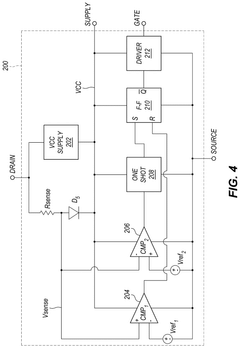
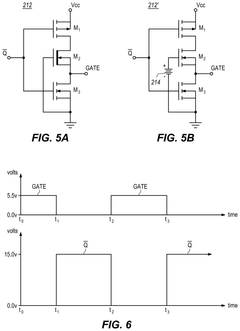
- A synchronous bridge rectifier utilizing planar switching elements, such as gallium nitride (GaN) transistors, with integrated controller circuits that sense voltage and generate drive signals to control the switching elements for efficient rectification.
Full bridge rectifier module
PatentActiveUS9337171B2
Innovation
- A full bridge rectifier circuit utilizing four bipolar transistors with associated parallel diodes and inductive current splitting inductors, which reduces the total voltage drop across the module to less than one volt, thereby minimizing power loss.


Power Efficiency Standards for Interface Technologies
Power efficiency standards for interface technologies have become increasingly critical as electronic devices demand higher performance while maintaining optimal energy consumption. The comparison between bridge rectifier and dual interface architectures reveals significant variations in power efficiency metrics that directly impact device responsiveness and overall system performance.
Current industry standards for power efficiency in interface technologies are primarily governed by IEEE 802.3 specifications for Ethernet interfaces, USB Power Delivery standards, and emerging protocols like Thunderbolt 4. These standards establish baseline efficiency requirements ranging from 80% to 95% depending on the interface type and power delivery capacity. Bridge rectifier implementations typically achieve efficiency rates between 85-92%, while dual interface configurations can reach 90-96% efficiency under optimal conditions.
The Energy Star certification program has established specific power efficiency benchmarks for interface technologies, requiring devices to maintain minimum efficiency thresholds during both active and idle states. For bridge rectifier systems, the standard mandates efficiency levels above 87% at 50% load and 90% at full load. Dual interface technologies must demonstrate superior performance with minimum efficiency requirements of 92% at 50% load and 94% at full load.
Regulatory frameworks across different regions impose varying efficiency standards. The European Union's ErP Directive sets stringent requirements for interface power consumption, while the US Department of Energy establishes efficiency standards through the ENERGY STAR program. These regulations directly influence the adoption of bridge rectifier versus dual interface solutions based on their ability to meet or exceed mandated efficiency levels.
Emerging standards such as USB4 and PCIe 5.0 incorporate advanced power management features that favor dual interface architectures due to their superior efficiency characteristics. These standards include dynamic power scaling, intelligent load balancing, and adaptive voltage regulation capabilities that optimize power consumption based on real-time device requirements.
The International Electrotechnical Commission has proposed new efficiency measurement methodologies specifically designed for modern interface technologies. These standards emphasize real-world performance metrics rather than theoretical maximum efficiency, providing more accurate assessments of bridge rectifier and dual interface implementations in practical applications.
Current industry standards for power efficiency in interface technologies are primarily governed by IEEE 802.3 specifications for Ethernet interfaces, USB Power Delivery standards, and emerging protocols like Thunderbolt 4. These standards establish baseline efficiency requirements ranging from 80% to 95% depending on the interface type and power delivery capacity. Bridge rectifier implementations typically achieve efficiency rates between 85-92%, while dual interface configurations can reach 90-96% efficiency under optimal conditions.
The Energy Star certification program has established specific power efficiency benchmarks for interface technologies, requiring devices to maintain minimum efficiency thresholds during both active and idle states. For bridge rectifier systems, the standard mandates efficiency levels above 87% at 50% load and 90% at full load. Dual interface technologies must demonstrate superior performance with minimum efficiency requirements of 92% at 50% load and 94% at full load.
Regulatory frameworks across different regions impose varying efficiency standards. The European Union's ErP Directive sets stringent requirements for interface power consumption, while the US Department of Energy establishes efficiency standards through the ENERGY STAR program. These regulations directly influence the adoption of bridge rectifier versus dual interface solutions based on their ability to meet or exceed mandated efficiency levels.
Emerging standards such as USB4 and PCIe 5.0 incorporate advanced power management features that favor dual interface architectures due to their superior efficiency characteristics. These standards include dynamic power scaling, intelligent load balancing, and adaptive voltage regulation capabilities that optimize power consumption based on real-time device requirements.
The International Electrotechnical Commission has proposed new efficiency measurement methodologies specifically designed for modern interface technologies. These standards emphasize real-world performance metrics rather than theoretical maximum efficiency, providing more accurate assessments of bridge rectifier and dual interface implementations in practical applications.
Signal Integrity Considerations in Interface Design
Signal integrity represents a critical design consideration when comparing bridge rectifier and dual interface architectures in responsive device applications. The fundamental challenge lies in maintaining clean, stable signals while minimizing electromagnetic interference and crosstalk between different circuit sections. Bridge rectifier configurations typically introduce higher levels of switching noise due to the rapid transitions of diode states, which can propagate through the system and affect sensitive analog and digital circuits downstream.
The impedance matching characteristics differ significantly between these two approaches. Bridge rectifiers inherently present varying input impedance depending on the AC input phase, creating potential reflection points that can degrade signal quality. This impedance variation becomes particularly problematic in high-frequency applications where transmission line effects dominate. Dual interface designs, conversely, can be engineered with more consistent impedance profiles, reducing signal reflections and improving overall system stability.
Ground plane integrity emerges as another crucial factor in interface design. Bridge rectifier circuits often require careful ground plane partitioning to isolate switching noise from sensitive analog sections. The rectification process generates harmonic content that can couple into adjacent circuits through shared ground paths. Dual interface architectures typically offer better ground isolation opportunities, allowing designers to implement separate analog and digital ground planes more effectively.
Power supply rejection ratio considerations become paramount when evaluating responsiveness requirements. Bridge rectifiers introduce ripple components at twice the input frequency, necessitating additional filtering stages that can impact transient response. The filtering requirements directly influence the system's ability to respond rapidly to input changes, creating a trade-off between signal cleanliness and response speed.
Electromagnetic compatibility aspects require careful evaluation in both architectures. Bridge rectifiers generate broadband noise spectra due to their switching nature, potentially requiring additional shielding and filtering measures. Dual interface designs can be optimized for specific frequency ranges, allowing for more targeted EMC mitigation strategies that preserve system responsiveness while meeting regulatory requirements.
Layout considerations significantly impact signal integrity performance in both approaches. Bridge rectifier implementations require careful component placement to minimize loop areas and reduce radiated emissions. Dual interface designs offer more flexibility in layout optimization, enabling designers to implement dedicated signal routing strategies that enhance overall system performance and maintain signal integrity across varying operational conditions.
The impedance matching characteristics differ significantly between these two approaches. Bridge rectifiers inherently present varying input impedance depending on the AC input phase, creating potential reflection points that can degrade signal quality. This impedance variation becomes particularly problematic in high-frequency applications where transmission line effects dominate. Dual interface designs, conversely, can be engineered with more consistent impedance profiles, reducing signal reflections and improving overall system stability.
Ground plane integrity emerges as another crucial factor in interface design. Bridge rectifier circuits often require careful ground plane partitioning to isolate switching noise from sensitive analog sections. The rectification process generates harmonic content that can couple into adjacent circuits through shared ground paths. Dual interface architectures typically offer better ground isolation opportunities, allowing designers to implement separate analog and digital ground planes more effectively.
Power supply rejection ratio considerations become paramount when evaluating responsiveness requirements. Bridge rectifiers introduce ripple components at twice the input frequency, necessitating additional filtering stages that can impact transient response. The filtering requirements directly influence the system's ability to respond rapidly to input changes, creating a trade-off between signal cleanliness and response speed.
Electromagnetic compatibility aspects require careful evaluation in both architectures. Bridge rectifiers generate broadband noise spectra due to their switching nature, potentially requiring additional shielding and filtering measures. Dual interface designs can be optimized for specific frequency ranges, allowing for more targeted EMC mitigation strategies that preserve system responsiveness while meeting regulatory requirements.
Layout considerations significantly impact signal integrity performance in both approaches. Bridge rectifier implementations require careful component placement to minimize loop areas and reduce radiated emissions. Dual interface designs offer more flexibility in layout optimization, enabling designers to implement dedicated signal routing strategies that enhance overall system performance and maintain signal integrity across varying operational conditions.
Unlock deeper insights with Patsnap Eureka Quick Research — get a full tech report to explore trends and direct your research. Try now!
Generate Your Research Report Instantly with AI Agent
Supercharge your innovation with Patsnap Eureka AI Agent Platform!