

CDI vs Multi-Stage Filtration: Efficacy Comparison
APR 21, 20269 MIN READ
Generate Your Research Report Instantly with AI Agent
PatSnap Eureka helps you evaluate technical feasibility & market potential.
CDI and Multi-Stage Filtration Technology Background and Goals
Water scarcity and contamination challenges have intensified globally, driving the evolution of advanced water treatment technologies. Traditional filtration methods, while effective for certain contaminants, often fall short in addressing complex water quality issues, particularly dissolved salts and ionic pollutants. This technological gap has catalyzed the development of innovative solutions, with Capacitive Deionization (CDI) emerging as a promising electrochemical approach alongside established multi-stage filtration systems.
CDI technology represents a paradigm shift in water treatment, utilizing electrochemical principles to remove ionic contaminants through electrostatic attraction. The technology employs porous carbon electrodes that capture and release ions when electrical potential is applied or removed, offering a reversible and energy-efficient desalination process. This approach contrasts fundamentally with conventional filtration mechanisms that rely on physical barriers, chemical reactions, or pressure-driven separation processes.
Multi-stage filtration systems have evolved through decades of refinement, incorporating various separation mechanisms including sediment filtration, activated carbon adsorption, reverse osmosis, and ion exchange. These systems demonstrate proven reliability across diverse applications, from municipal water treatment to industrial process water purification. The multi-barrier approach provides comprehensive contaminant removal capabilities, addressing particles, organic compounds, microorganisms, and dissolved substances through sequential treatment stages.
The technological objectives driving current research focus on optimizing treatment efficiency while minimizing energy consumption and operational costs. CDI technology aims to achieve selective ion removal with lower energy requirements compared to pressure-driven membrane processes, particularly for brackish water applications. The regenerative nature of CDI electrodes presents opportunities for sustainable operation with reduced chemical consumption and waste generation.
Multi-stage filtration systems continue advancing through membrane technology improvements, enhanced automation, and integrated monitoring capabilities. Current development goals emphasize modular design flexibility, extended component lifespan, and reduced maintenance requirements. The integration of smart sensors and predictive analytics represents a significant technological trajectory for optimizing system performance and operational efficiency.
Both technologies target specific performance benchmarks including removal efficiency rates, energy consumption per unit volume treated, system longevity, and operational simplicity. The comparative evaluation of these approaches requires comprehensive analysis of their respective strengths, limitations, and optimal application scenarios to guide future technological development and implementation strategies.
CDI technology represents a paradigm shift in water treatment, utilizing electrochemical principles to remove ionic contaminants through electrostatic attraction. The technology employs porous carbon electrodes that capture and release ions when electrical potential is applied or removed, offering a reversible and energy-efficient desalination process. This approach contrasts fundamentally with conventional filtration mechanisms that rely on physical barriers, chemical reactions, or pressure-driven separation processes.
Multi-stage filtration systems have evolved through decades of refinement, incorporating various separation mechanisms including sediment filtration, activated carbon adsorption, reverse osmosis, and ion exchange. These systems demonstrate proven reliability across diverse applications, from municipal water treatment to industrial process water purification. The multi-barrier approach provides comprehensive contaminant removal capabilities, addressing particles, organic compounds, microorganisms, and dissolved substances through sequential treatment stages.
The technological objectives driving current research focus on optimizing treatment efficiency while minimizing energy consumption and operational costs. CDI technology aims to achieve selective ion removal with lower energy requirements compared to pressure-driven membrane processes, particularly for brackish water applications. The regenerative nature of CDI electrodes presents opportunities for sustainable operation with reduced chemical consumption and waste generation.
Multi-stage filtration systems continue advancing through membrane technology improvements, enhanced automation, and integrated monitoring capabilities. Current development goals emphasize modular design flexibility, extended component lifespan, and reduced maintenance requirements. The integration of smart sensors and predictive analytics represents a significant technological trajectory for optimizing system performance and operational efficiency.
Both technologies target specific performance benchmarks including removal efficiency rates, energy consumption per unit volume treated, system longevity, and operational simplicity. The comparative evaluation of these approaches requires comprehensive analysis of their respective strengths, limitations, and optimal application scenarios to guide future technological development and implementation strategies.
Water Treatment Market Demand Analysis
The global water treatment market is experiencing unprecedented growth driven by escalating water scarcity, stringent environmental regulations, and increasing industrial demand for high-quality water. Municipal water treatment facilities face mounting pressure to upgrade aging infrastructure while meeting stricter discharge standards. Industrial sectors, particularly pharmaceuticals, electronics manufacturing, and food processing, require increasingly pure water for their operations, creating substantial demand for advanced treatment technologies.
Desalination markets represent one of the fastest-growing segments, with coastal regions and water-stressed nations investing heavily in seawater and brackish water treatment facilities. The Middle East, North Africa, and parts of Asia-Pacific lead this expansion, seeking energy-efficient alternatives to traditional reverse osmosis systems. This trend directly impacts the comparative evaluation of CDI and multi-stage filtration technologies, as both offer potential advantages in specific desalination applications.
Industrial wastewater treatment demands are intensifying as manufacturers face tighter discharge regulations and water reuse mandates. Zero liquid discharge requirements in many jurisdictions are pushing industries toward more sophisticated treatment trains that combine multiple technologies. The semiconductor and pharmaceutical industries particularly value treatment methods that can achieve ultra-high purity levels while maintaining operational flexibility.
Emerging contaminants, including pharmaceuticals, personal care products, and per- and polyfluoroalkyl substances, are driving demand for advanced treatment capabilities beyond conventional methods. Regulatory agencies worldwide are establishing new standards for these contaminants, creating market opportunities for technologies that can effectively remove trace-level pollutants. This regulatory landscape influences the selection criteria between CDI and multi-stage filtration systems.
The distributed water treatment market is expanding as communities seek localized solutions for specific water quality challenges. Small-scale systems that can operate with minimal maintenance and energy consumption are particularly attractive for remote locations and developing regions. This market segment values treatment technologies that offer modularity, scalability, and operational simplicity.
Resource recovery from wastewater streams is becoming increasingly important as organizations recognize the economic value of extracting useful materials during treatment processes. Technologies that can simultaneously treat water and recover valuable resources, such as nutrients or metals, are gaining market traction. This trend influences technology selection based on recovery capabilities alongside treatment efficacy.
Desalination markets represent one of the fastest-growing segments, with coastal regions and water-stressed nations investing heavily in seawater and brackish water treatment facilities. The Middle East, North Africa, and parts of Asia-Pacific lead this expansion, seeking energy-efficient alternatives to traditional reverse osmosis systems. This trend directly impacts the comparative evaluation of CDI and multi-stage filtration technologies, as both offer potential advantages in specific desalination applications.
Industrial wastewater treatment demands are intensifying as manufacturers face tighter discharge regulations and water reuse mandates. Zero liquid discharge requirements in many jurisdictions are pushing industries toward more sophisticated treatment trains that combine multiple technologies. The semiconductor and pharmaceutical industries particularly value treatment methods that can achieve ultra-high purity levels while maintaining operational flexibility.
Emerging contaminants, including pharmaceuticals, personal care products, and per- and polyfluoroalkyl substances, are driving demand for advanced treatment capabilities beyond conventional methods. Regulatory agencies worldwide are establishing new standards for these contaminants, creating market opportunities for technologies that can effectively remove trace-level pollutants. This regulatory landscape influences the selection criteria between CDI and multi-stage filtration systems.
The distributed water treatment market is expanding as communities seek localized solutions for specific water quality challenges. Small-scale systems that can operate with minimal maintenance and energy consumption are particularly attractive for remote locations and developing regions. This market segment values treatment technologies that offer modularity, scalability, and operational simplicity.
Resource recovery from wastewater streams is becoming increasingly important as organizations recognize the economic value of extracting useful materials during treatment processes. Technologies that can simultaneously treat water and recover valuable resources, such as nutrients or metals, are gaining market traction. This trend influences technology selection based on recovery capabilities alongside treatment efficacy.
Current CDI and Filtration Technology Status and Challenges
Capacitive Deionization (CDI) technology has emerged as a promising electrochemical water treatment method, leveraging the principle of electrical double-layer formation at electrode surfaces to remove ionic contaminants. Current CDI systems typically operate at voltages between 1.0-1.4V, achieving salt removal efficiencies of 80-95% for brackish water applications. The technology demonstrates particular strength in treating water with total dissolved solids (TDS) levels ranging from 500-5000 mg/L, positioning it as an energy-efficient alternative to reverse osmosis for specific salinity ranges.
Multi-stage filtration systems represent the established paradigm in water treatment, incorporating sequential processes such as coagulation, sedimentation, sand filtration, activated carbon adsorption, and membrane separation. These systems achieve comprehensive contaminant removal across physical, chemical, and biological categories, with removal efficiencies exceeding 99% for suspended solids and 90-99% for dissolved organics depending on the specific configuration and target contaminants.
The primary challenge facing CDI technology lies in electrode fouling and capacity degradation over extended operational periods. Organic fouling, calcium scaling, and electrode oxidation significantly impact long-term performance, with capacity retention typically declining to 70-80% after 1000 cycles. Additionally, CDI systems struggle with high-salinity feeds above 10,000 mg/L TDS, where energy consumption becomes prohibitive and removal efficiency drops substantially.
Multi-stage filtration faces distinct challenges related to membrane fouling, chemical consumption, and waste stream management. Membrane replacement costs constitute 20-30% of operational expenses, while chemical pretreatment requirements increase environmental impact. The technology also encounters limitations in removing specific emerging contaminants such as pharmaceuticals and endocrine disruptors without specialized treatment stages.
Energy consumption patterns differ significantly between technologies. CDI systems typically consume 0.5-2.0 kWh/m³ for brackish water treatment, while multi-stage systems with reverse osmosis components require 2-4 kWh/m³. However, CDI's energy advantage diminishes rapidly with increasing feed salinity, creating a narrow operational window for optimal performance.
Geographic distribution of these technologies reflects regional water quality challenges and economic factors. CDI adoption remains concentrated in research institutions and pilot-scale applications across North America, Europe, and Asia-Pacific regions, with limited commercial deployment. Multi-stage filtration dominates global water treatment infrastructure, particularly in municipal and industrial applications where reliability and proven performance outweigh energy considerations.
Multi-stage filtration systems represent the established paradigm in water treatment, incorporating sequential processes such as coagulation, sedimentation, sand filtration, activated carbon adsorption, and membrane separation. These systems achieve comprehensive contaminant removal across physical, chemical, and biological categories, with removal efficiencies exceeding 99% for suspended solids and 90-99% for dissolved organics depending on the specific configuration and target contaminants.
The primary challenge facing CDI technology lies in electrode fouling and capacity degradation over extended operational periods. Organic fouling, calcium scaling, and electrode oxidation significantly impact long-term performance, with capacity retention typically declining to 70-80% after 1000 cycles. Additionally, CDI systems struggle with high-salinity feeds above 10,000 mg/L TDS, where energy consumption becomes prohibitive and removal efficiency drops substantially.
Multi-stage filtration faces distinct challenges related to membrane fouling, chemical consumption, and waste stream management. Membrane replacement costs constitute 20-30% of operational expenses, while chemical pretreatment requirements increase environmental impact. The technology also encounters limitations in removing specific emerging contaminants such as pharmaceuticals and endocrine disruptors without specialized treatment stages.
Energy consumption patterns differ significantly between technologies. CDI systems typically consume 0.5-2.0 kWh/m³ for brackish water treatment, while multi-stage systems with reverse osmosis components require 2-4 kWh/m³. However, CDI's energy advantage diminishes rapidly with increasing feed salinity, creating a narrow operational window for optimal performance.
Geographic distribution of these technologies reflects regional water quality challenges and economic factors. CDI adoption remains concentrated in research institutions and pilot-scale applications across North America, Europe, and Asia-Pacific regions, with limited commercial deployment. Multi-stage filtration dominates global water treatment infrastructure, particularly in municipal and industrial applications where reliability and proven performance outweigh energy considerations.
Current CDI vs Multi-Stage Filtration Solutions
01 Integration of CDI with multi-stage filtration systems
Capacitive deionization (CDI) technology can be integrated with multi-stage filtration systems to enhance water purification efficacy. This combination allows for the removal of both particulate matter through physical filtration and ionic contaminants through electrosorption. The multi-stage approach ensures comprehensive water treatment by addressing different types of contaminants at various stages, resulting in improved overall water quality and system efficiency.- Integration of CDI with multi-stage filtration systems: Capacitive deionization (CDI) technology can be integrated with multi-stage filtration processes to enhance water purification efficacy. This combination allows for the removal of both particulate matter through physical filtration and ionic contaminants through electrosorption. The multi-stage approach typically involves pre-filtration stages followed by CDI treatment, resulting in improved overall water quality and system efficiency.
- Sequential filtration stages for enhanced contaminant removal: Multi-stage filtration systems employ sequential filtration stages with different pore sizes and filtration mechanisms to progressively remove contaminants of varying sizes. Each stage targets specific contaminant categories, from large particles to dissolved solids. This staged approach maximizes removal efficiency while optimizing energy consumption and extending the lifespan of individual filtration components.
- Electrode configuration and optimization in CDI systems: The efficacy of CDI systems depends significantly on electrode design, material selection, and configuration. Advanced electrode architectures with high surface area and optimized spacing enhance ion adsorption capacity and regeneration efficiency. Proper electrode configuration in combination with filtration stages ensures effective removal of ionic species while maintaining system stability and longevity.
- Hybrid systems combining physical and electrochemical treatment: Hybrid water treatment systems that combine physical filtration methods with electrochemical processes like CDI offer superior performance compared to standalone technologies. These systems leverage the strengths of both approaches, with physical filtration removing suspended solids and larger contaminants, while electrochemical treatment addresses dissolved ions and trace contaminants. The synergistic effect results in higher overall treatment efficacy and water recovery rates.
- Performance monitoring and optimization of multi-stage systems: Effective monitoring and control strategies are essential for optimizing the performance of integrated CDI and multi-stage filtration systems. Real-time monitoring of water quality parameters, pressure differentials, and electrical conductivity enables dynamic adjustment of operating conditions. Advanced control algorithms can optimize stage sequencing, regeneration cycles, and energy consumption to maintain high treatment efficacy while minimizing operational costs.
02 Pre-filtration stages for CDI system protection
Multi-stage filtration systems incorporate pre-filtration stages to protect CDI electrodes from fouling and damage. These preliminary filtration steps remove suspended solids, organic matter, and other particulates that could compromise CDI performance. By implementing sediment filters, activated carbon filters, or membrane filtration before the CDI stage, the lifespan of CDI electrodes is extended and the overall system efficiency is maintained at optimal levels.Expand Specific Solutions03 Post-CDI polishing filtration
Post-treatment filtration stages following CDI processes provide final polishing to ensure water quality meets stringent standards. These downstream filtration units remove any residual contaminants, trace ions, or particles that may remain after the CDI treatment. The polishing stage often includes fine membrane filtration or advanced oxidation processes to achieve ultra-pure water quality suitable for sensitive applications.Expand Specific Solutions04 Hybrid CDI-membrane filtration configurations
Hybrid systems combining CDI with membrane filtration technologies such as reverse osmosis, ultrafiltration, or nanofiltration demonstrate enhanced efficacy in water treatment. These configurations leverage the strengths of both technologies, with membrane filtration providing size-based separation and CDI offering selective ion removal. The synergistic effect results in reduced energy consumption, improved water recovery rates, and superior contaminant removal compared to standalone systems.Expand Specific Solutions05 Optimization of filtration sequence and CDI operating parameters
The efficacy of combined CDI and multi-stage filtration systems depends on optimizing the sequence of filtration stages and CDI operating parameters. Factors such as flow rate, voltage application, electrode spacing, and regeneration cycles must be coordinated with filtration stages to maximize contaminant removal efficiency. Proper system design considers water chemistry, target contaminants, and desired output quality to determine the optimal configuration and operating conditions for each treatment stage.Expand Specific Solutions
Major Players in CDI and Filtration Industry
The water treatment industry is experiencing significant growth driven by increasing environmental regulations and water scarcity concerns, with the market expanding rapidly across industrial and municipal sectors. The competition between Capacitive Deionization (CDI) and multi-stage filtration technologies represents a mature yet evolving landscape where established players leverage different technological approaches. Major industrial conglomerates like 3M Innovative Properties, MANN+HUMMEL, and Robert Bosch bring extensive R&D capabilities and manufacturing scale to advanced filtration solutions, while companies such as COWAY, LG Electronics, and Current Water Technologies focus on specialized water treatment applications. The technology maturity varies significantly, with traditional multi-stage filtration being well-established across companies like EMD Millipore and EcoWater Systems, whereas CDI technology represents an emerging approach being developed by research institutions including New Jersey Institute of Technology and University of Kentucky Research Foundation, alongside innovative companies like Amtek Research International, creating a competitive dynamic between proven conventional methods and promising next-generation solutions.
3M Innovative Properties Co.
Technical Solution: 3M has developed proprietary multi-stage filtration technologies utilizing their advanced membrane and media technologies. Their systems combine gradient density filtration media with selective adsorption materials and ion-exchange resins in sequential stages. The technology achieves contaminant removal rates of 95-99% across multiple contaminant categories including particles, chemicals, and dissolved ions. Their multi-stage approach utilizes proprietary Nexera membrane technology with controlled porosity and surface functionalization for enhanced selectivity. The systems incorporate flow optimization designs that minimize pressure drop while maximizing contact time, resulting in improved efficiency and reduced energy consumption compared to conventional multi-stage systems.
Strengths: Innovative membrane technology with high selectivity and broad contaminant removal capability. Weaknesses: Higher initial investment costs and proprietary filter replacement requirements.
COWAY Co., Ltd.
Technical Solution: COWAY has developed integrated water treatment systems that combine both CDI and multi-stage filtration technologies. Their hybrid approach utilizes pre-filtration stages including sediment and carbon filters, followed by CDI modules for ionic contaminant removal, and post-treatment polishing filters. The multi-stage configuration includes 4-6 treatment stages with different media types optimized for specific contaminant removal. Their systems achieve total dissolved solids reduction of 90-95% while maintaining flow rates of 10-50 liters per hour for residential applications. The technology incorporates smart monitoring systems that track filter life and water quality parameters in real-time.
Strengths: Comprehensive contaminant removal covering both particulate and ionic species, user-friendly operation. Weaknesses: Higher maintenance frequency due to multiple filter stages and moderate energy consumption.
Core CDI and Advanced Filtration Technologies
Capacitive deionization using hybrid polar electrodes
PatentInactiveTW200942494A
Innovation
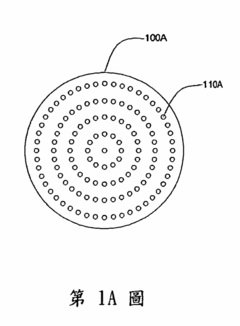
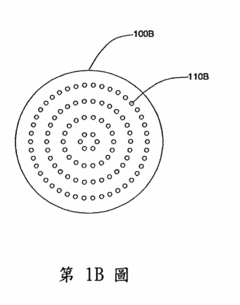
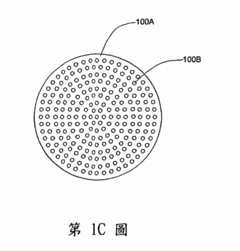
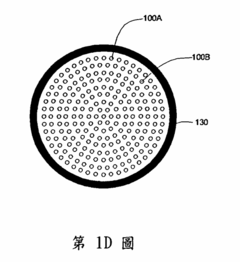
- A hybrid flow-through capacitor module incorporating both unipolar and bipolar electrodes, optimized fluid dynamics through perforated electrode plates, and supercapacitors for energy recovery, enabling balanced operating voltage and current while reducing energy costs and cycle times.
Water treatment device using multi-stage flow path capacitive deionization process
PatentActiveKR1020150065300A
Innovation
- The device partitions the unit electrode module into multiple stages, prioritizing the removal of ions with high adsorption power at the front end and low adsorption power at the rear end, using a separator to connect the flow in series and individually controlling electricity supply to enhance electrode utilization and efficiency.


Environmental Regulations for Water Treatment Technologies
The regulatory landscape for water treatment technologies has evolved significantly in response to growing environmental concerns and public health imperatives. Both Capacitive Deionization (CDI) and multi-stage filtration systems must comply with increasingly stringent environmental standards that govern discharge quality, energy consumption, and waste management practices.
Water quality regulations form the foundation of environmental compliance for both technologies. The Safe Drinking Water Act in the United States establishes maximum contaminant levels for various pollutants, while the European Union's Drinking Water Directive sets similar standards. These regulations directly impact the efficacy requirements for CDI and multi-stage filtration systems, as both must demonstrate consistent removal of regulated contaminants including heavy metals, dissolved salts, and organic compounds.
Energy efficiency regulations increasingly influence technology selection and design parameters. The Energy Policy Act and various state-level efficiency standards require water treatment facilities to minimize energy consumption per unit of treated water. CDI systems, with their lower energy requirements compared to reverse osmosis, often align better with these efficiency mandates, while multi-stage filtration systems must optimize pump operations and membrane replacement cycles to maintain compliance.
Waste discharge regulations present distinct challenges for each technology. CDI systems generate concentrated brine streams that must meet specific discharge criteria or require further treatment before release. Multi-stage filtration produces backwash water and spent filter media that are subject to hazardous waste regulations if contaminated with regulated substances. The Resource Conservation and Recovery Act governs the handling and disposal of these waste streams.
Emerging contaminant regulations continue to expand the scope of compliance requirements. Per- and polyfluoroalkyl substances (PFAS) regulations, microplastics standards, and pharmaceutical compound limits are being implemented across various jurisdictions. These evolving standards require both CDI and multi-stage filtration systems to demonstrate adaptability and effectiveness against newly regulated contaminants.
Environmental impact assessment requirements mandate comprehensive evaluation of technology lifecycle effects. Both systems must undergo environmental review processes that consider carbon footprint, material sourcing, manufacturing impacts, and end-of-life disposal considerations, influencing long-term technology viability and regulatory approval.
Water quality regulations form the foundation of environmental compliance for both technologies. The Safe Drinking Water Act in the United States establishes maximum contaminant levels for various pollutants, while the European Union's Drinking Water Directive sets similar standards. These regulations directly impact the efficacy requirements for CDI and multi-stage filtration systems, as both must demonstrate consistent removal of regulated contaminants including heavy metals, dissolved salts, and organic compounds.
Energy efficiency regulations increasingly influence technology selection and design parameters. The Energy Policy Act and various state-level efficiency standards require water treatment facilities to minimize energy consumption per unit of treated water. CDI systems, with their lower energy requirements compared to reverse osmosis, often align better with these efficiency mandates, while multi-stage filtration systems must optimize pump operations and membrane replacement cycles to maintain compliance.
Waste discharge regulations present distinct challenges for each technology. CDI systems generate concentrated brine streams that must meet specific discharge criteria or require further treatment before release. Multi-stage filtration produces backwash water and spent filter media that are subject to hazardous waste regulations if contaminated with regulated substances. The Resource Conservation and Recovery Act governs the handling and disposal of these waste streams.
Emerging contaminant regulations continue to expand the scope of compliance requirements. Per- and polyfluoroalkyl substances (PFAS) regulations, microplastics standards, and pharmaceutical compound limits are being implemented across various jurisdictions. These evolving standards require both CDI and multi-stage filtration systems to demonstrate adaptability and effectiveness against newly regulated contaminants.
Environmental impact assessment requirements mandate comprehensive evaluation of technology lifecycle effects. Both systems must undergo environmental review processes that consider carbon footprint, material sourcing, manufacturing impacts, and end-of-life disposal considerations, influencing long-term technology viability and regulatory approval.
Energy Efficiency Comparison in Water Purification Systems
Energy consumption represents a critical differentiator between Capacitive Deionization (CDI) and Multi-Stage Filtration systems in water purification applications. CDI technology demonstrates superior energy efficiency through its electrochemical desalination mechanism, typically consuming 0.5-1.5 kWh per cubic meter of treated water. This low energy requirement stems from CDI's ability to operate at relatively low voltages (1-2V) while achieving effective ion removal through electrosorption processes.
Multi-Stage Filtration systems exhibit varying energy consumption patterns depending on their configuration and treatment requirements. Conventional multi-stage systems incorporating reverse osmosis components typically consume 3-6 kWh per cubic meter, primarily due to high-pressure pump operations required to overcome membrane resistance. However, gravity-fed multi-stage systems without pressurized components can achieve significantly lower energy consumption rates of 0.1-0.5 kWh per cubic meter.
The energy efficiency advantage of CDI becomes particularly pronounced in brackish water treatment scenarios where total dissolved solids concentrations range from 500-5000 ppm. Under these conditions, CDI systems maintain consistent energy performance while multi-stage filtration systems often require additional pre-treatment stages, increasing overall energy demands. CDI's regeneration process, involving electrode discharge and ion release, consumes minimal additional energy compared to the continuous high-pressure requirements of membrane-based multi-stage systems.
Operational energy profiles reveal distinct characteristics between these technologies. CDI systems demonstrate intermittent energy consumption patterns aligned with adsorption-desorption cycles, allowing for potential integration with renewable energy sources and load balancing strategies. Multi-stage filtration systems typically require continuous energy input to maintain consistent flow rates and pressure differentials across multiple treatment stages.
Temperature sensitivity significantly impacts energy efficiency comparisons. CDI performance remains relatively stable across temperature variations, maintaining consistent energy consumption rates. Multi-Stage Filtration systems, particularly those incorporating membrane technologies, experience increased energy requirements at lower temperatures due to reduced membrane permeability and higher viscosity-related pressure losses.
System scaling considerations further differentiate energy efficiency characteristics. CDI systems exhibit favorable energy scaling properties, with per-unit energy consumption remaining relatively constant across different capacity ranges. Multi-stage filtration systems often demonstrate economies of scale in larger installations, where shared pumping infrastructure and optimized pressure management can reduce specific energy consumption rates.
Multi-Stage Filtration systems exhibit varying energy consumption patterns depending on their configuration and treatment requirements. Conventional multi-stage systems incorporating reverse osmosis components typically consume 3-6 kWh per cubic meter, primarily due to high-pressure pump operations required to overcome membrane resistance. However, gravity-fed multi-stage systems without pressurized components can achieve significantly lower energy consumption rates of 0.1-0.5 kWh per cubic meter.
The energy efficiency advantage of CDI becomes particularly pronounced in brackish water treatment scenarios where total dissolved solids concentrations range from 500-5000 ppm. Under these conditions, CDI systems maintain consistent energy performance while multi-stage filtration systems often require additional pre-treatment stages, increasing overall energy demands. CDI's regeneration process, involving electrode discharge and ion release, consumes minimal additional energy compared to the continuous high-pressure requirements of membrane-based multi-stage systems.
Operational energy profiles reveal distinct characteristics between these technologies. CDI systems demonstrate intermittent energy consumption patterns aligned with adsorption-desorption cycles, allowing for potential integration with renewable energy sources and load balancing strategies. Multi-stage filtration systems typically require continuous energy input to maintain consistent flow rates and pressure differentials across multiple treatment stages.
Temperature sensitivity significantly impacts energy efficiency comparisons. CDI performance remains relatively stable across temperature variations, maintaining consistent energy consumption rates. Multi-Stage Filtration systems, particularly those incorporating membrane technologies, experience increased energy requirements at lower temperatures due to reduced membrane permeability and higher viscosity-related pressure losses.
System scaling considerations further differentiate energy efficiency characteristics. CDI systems exhibit favorable energy scaling properties, with per-unit energy consumption remaining relatively constant across different capacity ranges. Multi-stage filtration systems often demonstrate economies of scale in larger installations, where shared pumping infrastructure and optimized pressure management can reduce specific energy consumption rates.
Unlock deeper insights with PatSnap Eureka Quick Research — get a full tech report to explore trends and direct your research. Try now!
Generate Your Research Report Instantly with AI Agent
Supercharge your innovation with PatSnap Eureka AI Agent Platform!