

Optimizing CDI Operational Costs and Energy Use
APR 21, 20268 MIN READ
Generate Your Research Report Instantly with AI Agent
PatSnap Eureka helps you evaluate technical feasibility & market potential.
CDI Technology Background and Cost Optimization Goals
Capacitive Deionization (CDI) technology emerged in the 1960s as a promising electrochemical water treatment method, initially developed for space applications where energy efficiency and compact design were paramount. The technology operates on the principle of electrosorption, where ions are removed from water by applying an electric field across porous carbon electrodes. Unlike conventional desalination methods such as reverse osmosis or thermal distillation, CDI offers inherent advantages in energy recovery and operational flexibility, making it particularly attractive for brackish water treatment and industrial water purification applications.
The evolution of CDI technology has been driven by continuous improvements in electrode materials, system architecture, and process optimization. Early CDI systems suffered from limited salt removal capacity and electrode degradation issues. However, advances in carbon nanotechnology, membrane integration, and hybrid system designs have significantly enhanced performance metrics. Modern CDI systems demonstrate superior energy efficiency compared to traditional methods, particularly for low to moderate salinity water sources, with energy consumption typically ranging from 0.5 to 2.0 kWh per cubic meter of treated water.
Current market drivers for CDI cost optimization stem from increasing global water scarcity, stringent environmental regulations, and rising energy costs. Industrial sectors including semiconductor manufacturing, pharmaceutical production, and food processing require high-purity water with minimal environmental impact. The technology's ability to operate without chemical additives and generate minimal waste streams aligns with sustainability objectives while addressing operational cost concerns.
The primary cost optimization goals for CDI technology focus on three critical areas: energy consumption reduction, electrode longevity enhancement, and system throughput maximization. Energy optimization targets include improving charge efficiency, minimizing parasitic losses, and developing advanced energy recovery mechanisms. Electrode durability improvements aim to extend operational lifespans beyond current 2-3 year cycles, reducing replacement costs and maintenance downtime. Throughput enhancement involves optimizing flow rates, cycle times, and system configurations to maximize water production per unit of capital investment.
Emerging cost reduction strategies encompass the integration of renewable energy sources, development of low-cost electrode materials, and implementation of intelligent process control systems. These approaches collectively target a 30-50% reduction in total cost of ownership while maintaining or improving water quality standards, positioning CDI as a economically viable alternative to conventional desalination technologies.
The evolution of CDI technology has been driven by continuous improvements in electrode materials, system architecture, and process optimization. Early CDI systems suffered from limited salt removal capacity and electrode degradation issues. However, advances in carbon nanotechnology, membrane integration, and hybrid system designs have significantly enhanced performance metrics. Modern CDI systems demonstrate superior energy efficiency compared to traditional methods, particularly for low to moderate salinity water sources, with energy consumption typically ranging from 0.5 to 2.0 kWh per cubic meter of treated water.
Current market drivers for CDI cost optimization stem from increasing global water scarcity, stringent environmental regulations, and rising energy costs. Industrial sectors including semiconductor manufacturing, pharmaceutical production, and food processing require high-purity water with minimal environmental impact. The technology's ability to operate without chemical additives and generate minimal waste streams aligns with sustainability objectives while addressing operational cost concerns.
The primary cost optimization goals for CDI technology focus on three critical areas: energy consumption reduction, electrode longevity enhancement, and system throughput maximization. Energy optimization targets include improving charge efficiency, minimizing parasitic losses, and developing advanced energy recovery mechanisms. Electrode durability improvements aim to extend operational lifespans beyond current 2-3 year cycles, reducing replacement costs and maintenance downtime. Throughput enhancement involves optimizing flow rates, cycle times, and system configurations to maximize water production per unit of capital investment.
Emerging cost reduction strategies encompass the integration of renewable energy sources, development of low-cost electrode materials, and implementation of intelligent process control systems. These approaches collectively target a 30-50% reduction in total cost of ownership while maintaining or improving water quality standards, positioning CDI as a economically viable alternative to conventional desalination technologies.
Market Demand for Energy-Efficient Water Treatment Solutions
The global water treatment market is experiencing unprecedented growth driven by escalating water scarcity, stringent environmental regulations, and increasing awareness of sustainable technologies. Traditional desalination methods such as reverse osmosis and thermal distillation, while effective, consume substantial amounts of energy and require significant operational expenditures. This has created a compelling market opportunity for energy-efficient alternatives like Capacitive Deionization technology.
Industrial sectors represent the largest demand segment for energy-efficient water treatment solutions. Manufacturing facilities, particularly in semiconductor, pharmaceutical, and food processing industries, require consistent access to high-quality water while facing mounting pressure to reduce operational costs and environmental footprint. These industries are actively seeking technologies that can deliver reliable water purification with lower energy consumption compared to conventional methods.
Municipal water treatment facilities constitute another significant market segment driving demand for CDI optimization. Growing urban populations and aging infrastructure have intensified the need for cost-effective water treatment solutions. Municipalities are increasingly prioritizing technologies that offer reduced energy consumption and lower maintenance requirements, making optimized CDI systems particularly attractive for both new installations and infrastructure upgrades.
The agricultural sector presents an emerging market opportunity, especially in regions facing water stress. Precision agriculture and controlled environment farming operations require efficient water treatment solutions that can operate cost-effectively at various scales. Energy-efficient CDI systems offer particular advantages for agricultural applications due to their modular design and relatively low maintenance requirements.
Market demand is further amplified by corporate sustainability initiatives and environmental, social, and governance mandates. Companies across industries are establishing ambitious carbon reduction targets, creating internal demand for technologies that can significantly reduce energy consumption in water treatment operations. This trend is particularly pronounced in water-intensive industries where treatment costs represent a substantial portion of operational expenses.
Regulatory frameworks worldwide are increasingly favoring energy-efficient technologies through incentives, tax credits, and mandatory efficiency standards. These policy drivers are accelerating market adoption of optimized water treatment solutions and creating favorable conditions for CDI technology deployment across multiple sectors.
Industrial sectors represent the largest demand segment for energy-efficient water treatment solutions. Manufacturing facilities, particularly in semiconductor, pharmaceutical, and food processing industries, require consistent access to high-quality water while facing mounting pressure to reduce operational costs and environmental footprint. These industries are actively seeking technologies that can deliver reliable water purification with lower energy consumption compared to conventional methods.
Municipal water treatment facilities constitute another significant market segment driving demand for CDI optimization. Growing urban populations and aging infrastructure have intensified the need for cost-effective water treatment solutions. Municipalities are increasingly prioritizing technologies that offer reduced energy consumption and lower maintenance requirements, making optimized CDI systems particularly attractive for both new installations and infrastructure upgrades.
The agricultural sector presents an emerging market opportunity, especially in regions facing water stress. Precision agriculture and controlled environment farming operations require efficient water treatment solutions that can operate cost-effectively at various scales. Energy-efficient CDI systems offer particular advantages for agricultural applications due to their modular design and relatively low maintenance requirements.
Market demand is further amplified by corporate sustainability initiatives and environmental, social, and governance mandates. Companies across industries are establishing ambitious carbon reduction targets, creating internal demand for technologies that can significantly reduce energy consumption in water treatment operations. This trend is particularly pronounced in water-intensive industries where treatment costs represent a substantial portion of operational expenses.
Regulatory frameworks worldwide are increasingly favoring energy-efficient technologies through incentives, tax credits, and mandatory efficiency standards. These policy drivers are accelerating market adoption of optimized water treatment solutions and creating favorable conditions for CDI technology deployment across multiple sectors.
Current CDI Operational Challenges and Energy Limitations
Capacitive Deionization technology faces significant operational challenges that directly impact its commercial viability and widespread adoption. The primary constraint lies in energy consumption patterns, where current CDI systems exhibit suboptimal energy efficiency during both charging and discharging cycles. Traditional CDI operations require substantial electrical energy input to create the electric field necessary for ion adsorption, with energy recovery during the discharge phase remaining incomplete, resulting in net energy losses that accumulate over extended operational periods.
Electrode degradation represents another critical limitation affecting long-term operational sustainability. Carbon-based electrodes, while cost-effective, experience gradual capacity reduction due to repeated charge-discharge cycles, leading to decreased desalination efficiency over time. This degradation necessitates frequent electrode replacement or regeneration procedures, significantly increasing maintenance costs and operational downtime. The degradation rate accelerates under high salinity conditions or when processing water with complex ionic compositions.
Membrane fouling and scaling issues pose substantial operational barriers, particularly when treating real-world water sources containing organic compounds, suspended solids, and multivalent ions. These contaminants accumulate on electrode surfaces and ion-exchange membranes, reducing system performance and requiring intensive cleaning protocols. The fouling phenomenon not only decreases treatment efficiency but also increases pressure drop across the system, demanding higher pumping energy and more frequent maintenance interventions.
Current CDI systems demonstrate limited scalability for large-volume water treatment applications. The modular design approach, while offering flexibility, introduces complexity in system integration and control, leading to increased capital and operational expenditures. Flow distribution challenges across multiple CDI modules result in uneven performance and reduced overall system efficiency.
Energy recovery mechanisms in existing CDI configurations remain underdeveloped compared to other desalination technologies. The inability to effectively capture and reuse the energy stored in charged electrodes during the discharge phase represents a significant operational inefficiency, particularly impacting the technology's competitiveness against reverse osmosis and other established desalination methods in energy-sensitive applications.
Electrode degradation represents another critical limitation affecting long-term operational sustainability. Carbon-based electrodes, while cost-effective, experience gradual capacity reduction due to repeated charge-discharge cycles, leading to decreased desalination efficiency over time. This degradation necessitates frequent electrode replacement or regeneration procedures, significantly increasing maintenance costs and operational downtime. The degradation rate accelerates under high salinity conditions or when processing water with complex ionic compositions.
Membrane fouling and scaling issues pose substantial operational barriers, particularly when treating real-world water sources containing organic compounds, suspended solids, and multivalent ions. These contaminants accumulate on electrode surfaces and ion-exchange membranes, reducing system performance and requiring intensive cleaning protocols. The fouling phenomenon not only decreases treatment efficiency but also increases pressure drop across the system, demanding higher pumping energy and more frequent maintenance interventions.
Current CDI systems demonstrate limited scalability for large-volume water treatment applications. The modular design approach, while offering flexibility, introduces complexity in system integration and control, leading to increased capital and operational expenditures. Flow distribution challenges across multiple CDI modules result in uneven performance and reduced overall system efficiency.
Energy recovery mechanisms in existing CDI configurations remain underdeveloped compared to other desalination technologies. The inability to effectively capture and reuse the energy stored in charged electrodes during the discharge phase represents a significant operational inefficiency, particularly impacting the technology's competitiveness against reverse osmosis and other established desalination methods in energy-sensitive applications.
Existing CDI Cost Reduction and Energy Saving Solutions
01 Energy recovery and regeneration optimization in CDI systems
Capacitive deionization systems can be optimized by implementing energy recovery mechanisms during the regeneration phase. By capturing and reusing the energy released when electrodes are discharged, operational costs can be significantly reduced. Advanced control strategies and circuit designs enable efficient energy storage and redistribution, minimizing overall power consumption while maintaining desalination performance.- Energy recovery and regeneration optimization in CDI systems: Capacitive deionization systems can be optimized by implementing energy recovery mechanisms during the regeneration phase. By capturing and reusing the energy released when electrodes are discharged, operational costs can be significantly reduced. Advanced control strategies and circuit designs enable efficient energy storage and redistribution, minimizing overall power consumption while maintaining desalination performance.
- Electrode material selection for improved energy efficiency: The choice of electrode materials directly impacts the energy consumption and operational costs of capacitive deionization systems. Materials with high specific capacitance, low electrical resistance, and enhanced ion adsorption capacity reduce the energy required per unit of water treated. Novel carbon-based materials, composite electrodes, and surface-modified substrates can lower voltage requirements and extend operational lifespan, thereby reducing long-term costs.
- System design and flow configuration optimization: Optimizing the hydraulic design and flow configuration of capacitive deionization systems can minimize energy losses and improve overall efficiency. Factors such as flow rate control, channel geometry, electrode spacing, and module arrangement affect pressure drop and pumping energy requirements. Streamlined designs that reduce hydraulic resistance and ensure uniform flow distribution contribute to lower operational energy consumption.
- Integration with renewable energy sources: Integrating capacitive deionization systems with renewable energy sources such as solar or wind power can substantially reduce operational costs by decreasing reliance on grid electricity. Hybrid systems that incorporate energy storage and smart grid connectivity enable operation during off-peak hours or when renewable energy is abundant. This approach not only lowers energy expenses but also enhances the sustainability profile of water treatment operations.
- Process monitoring and adaptive control strategies: Implementing real-time monitoring and adaptive control strategies allows capacitive deionization systems to operate at optimal efficiency under varying feed water conditions. Sensors that track conductivity, flow rate, and electrode performance enable dynamic adjustment of voltage, current, and cycle timing. Such intelligent control minimizes unnecessary energy expenditure, reduces wear on system components, and extends maintenance intervals, thereby lowering overall operational costs.
02 Electrode material selection for improved energy efficiency
The choice of electrode materials directly impacts the energy consumption and operational costs of capacitive deionization systems. Materials with high specific capacitance, low electrical resistance, and enhanced ion adsorption capacity reduce the energy required per unit of water treated. Novel carbon-based materials, composite electrodes, and surface-modified substrates can lower voltage requirements and extend operational lifespan, thereby reducing long-term costs.Expand Specific Solutions03 System design and flow configuration optimization
Optimizing the physical design and flow configuration of capacitive deionization systems can substantially reduce energy use and operational expenses. This includes optimizing electrode spacing, flow channel geometry, and hydraulic residence time to minimize pressure drops and pumping energy. Modular designs and stackable cell configurations allow for scalable implementations that maintain energy efficiency across different treatment capacities.Expand Specific Solutions04 Process control and monitoring for cost reduction
Implementing advanced process control and real-time monitoring systems enables dynamic optimization of capacitive deionization operations. Sensors that track conductivity, voltage, current, and flow rates allow for adaptive control strategies that minimize energy consumption based on feed water quality and treatment objectives. Automated switching between charging and discharging cycles, along with predictive maintenance algorithms, reduces unnecessary energy expenditure and extends equipment life.Expand Specific Solutions05 Hybrid and integrated CDI systems for operational efficiency
Integrating capacitive deionization with other treatment technologies or energy sources can enhance overall operational efficiency and reduce costs. Hybrid systems that combine CDI with reverse osmosis, electrodialysis, or renewable energy sources leverage the strengths of each technology to minimize energy consumption. Pre-treatment stages and cascaded configurations optimize the energy profile across the entire water treatment process, resulting in lower operational expenses.Expand Specific Solutions
Key Players in CDI and Water Treatment Industry
The CDI operational cost and energy optimization sector represents a mature industrial technology market experiencing steady growth driven by increasing energy efficiency demands and regulatory pressures. The competitive landscape is dominated by established industrial automation giants like Siemens AG and Robert Bosch GmbH, who leverage decades of engineering expertise and comprehensive technology portfolios. Asian technology leaders including Samsung Electronics, Huawei Technologies, and LG Electronics bring advanced semiconductor and IoT capabilities to energy management solutions. State-owned Chinese entities such as State Grid Corp. of China and its subsidiaries demonstrate strong government backing for grid modernization initiatives. The market shows high technology maturity with proven solutions, though innovation continues in digitalization and smart grid integration, positioning the sector for sustained evolution rather than disruptive transformation.
Samsung Electronics Co., Ltd.
Technical Solution: Samsung has developed CDI solutions primarily focused on semiconductor manufacturing and electronics production facilities, where energy costs represent a significant operational expense. Their approach combines advanced process control systems with AI-powered energy analytics to optimize power consumption across cleanroom environments and production lines. Samsung's CDI platform utilizes real-time monitoring of equipment energy usage, environmental controls, and production scheduling to minimize energy waste while maintaining strict quality standards. The system can automatically adjust facility operations during off-peak energy pricing periods and optimize cooling systems based on production loads. Their solution has demonstrated energy cost reductions of 12-18% in semiconductor fabrication facilities through intelligent scheduling and equipment optimization algorithms.
Strengths: Deep semiconductor industry expertise, advanced process control capabilities, proven results in high-energy manufacturing. Weaknesses: Solutions primarily tailored for electronics manufacturing, limited applicability to other industries.
Huawei Technologies Co., Ltd.
Technical Solution: Huawei has developed comprehensive CDI (Carbon Data Intelligence) solutions focusing on energy optimization through AI-driven analytics and smart grid technologies. Their approach integrates IoT sensors, edge computing, and cloud-based platforms to monitor real-time energy consumption patterns across industrial facilities. The company's CDI framework utilizes machine learning algorithms to predict energy demand, optimize load distribution, and reduce operational costs by up to 15-20%. Their solution includes automated energy management systems that can dynamically adjust power consumption based on production schedules and energy pricing fluctuations. Huawei's CDI platform also incorporates renewable energy integration capabilities, enabling facilities to maximize the use of solar and wind power while minimizing grid dependency and associated costs.
Strengths: Strong AI capabilities, comprehensive IoT ecosystem, proven track record in smart grid solutions. Weaknesses: Limited presence in some regional markets, high initial implementation costs.
Core Innovations in CDI Energy Management Systems
Capacitive deionization device
PatentInactiveUS20110147212A1
Innovation
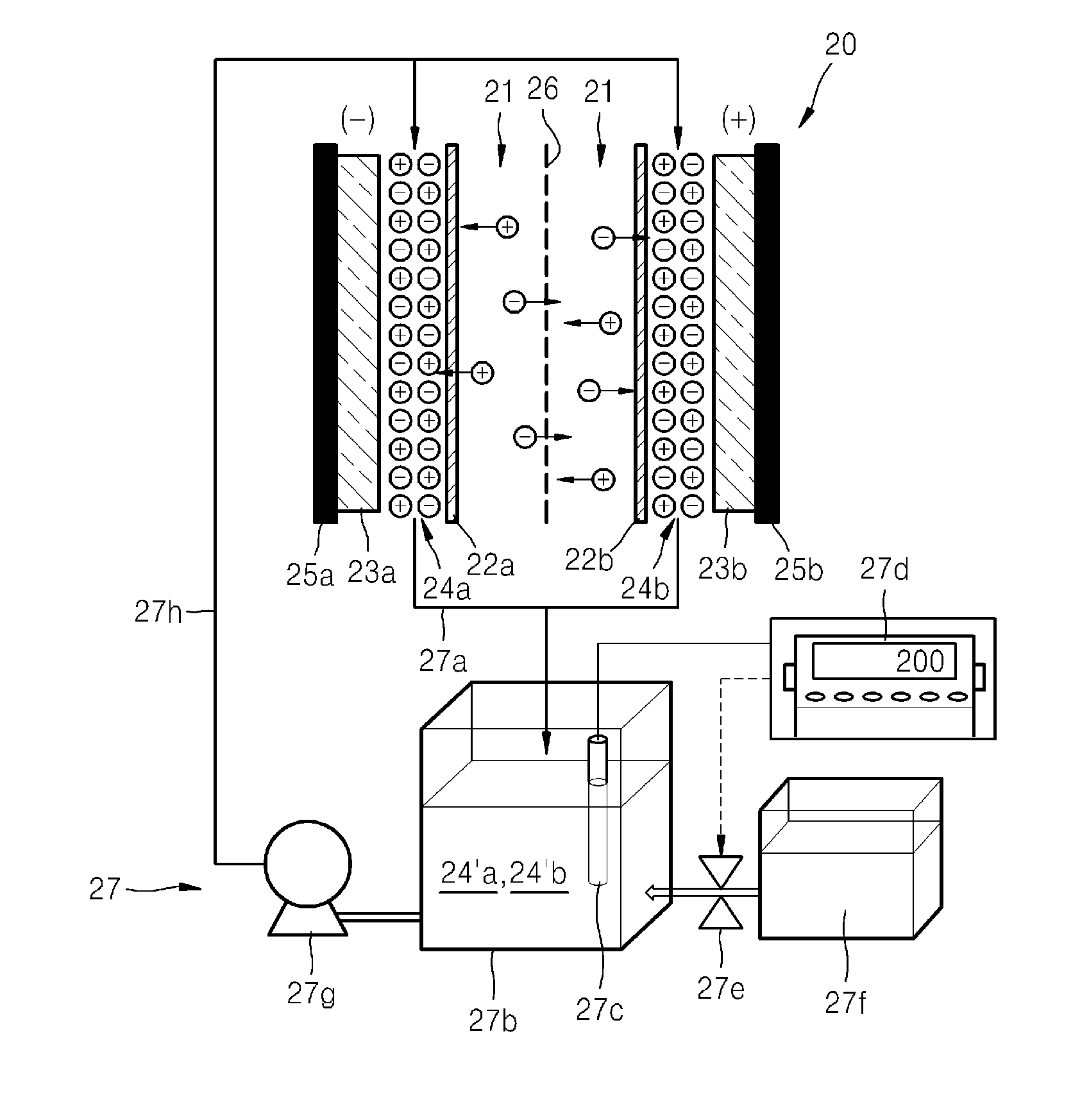
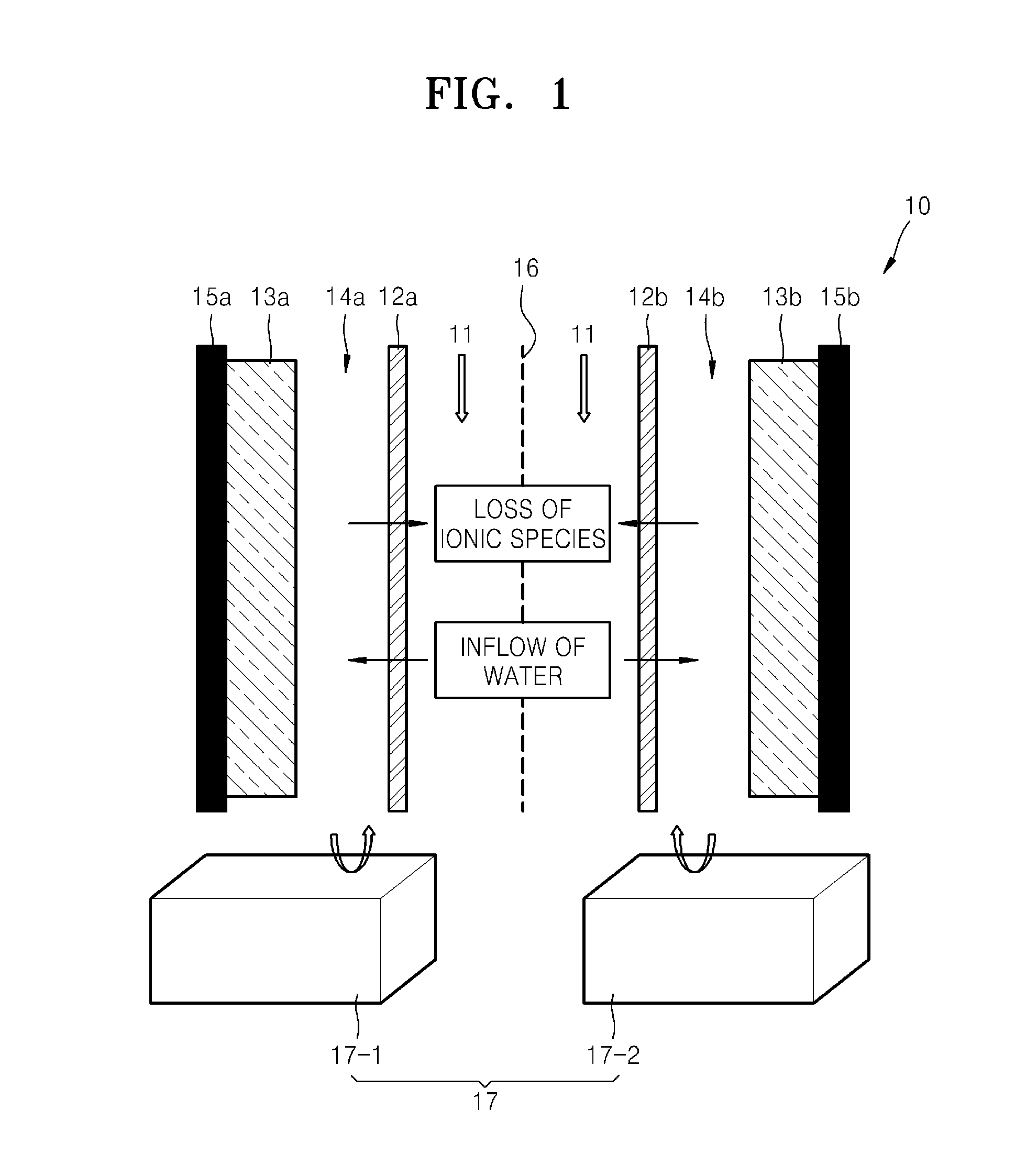
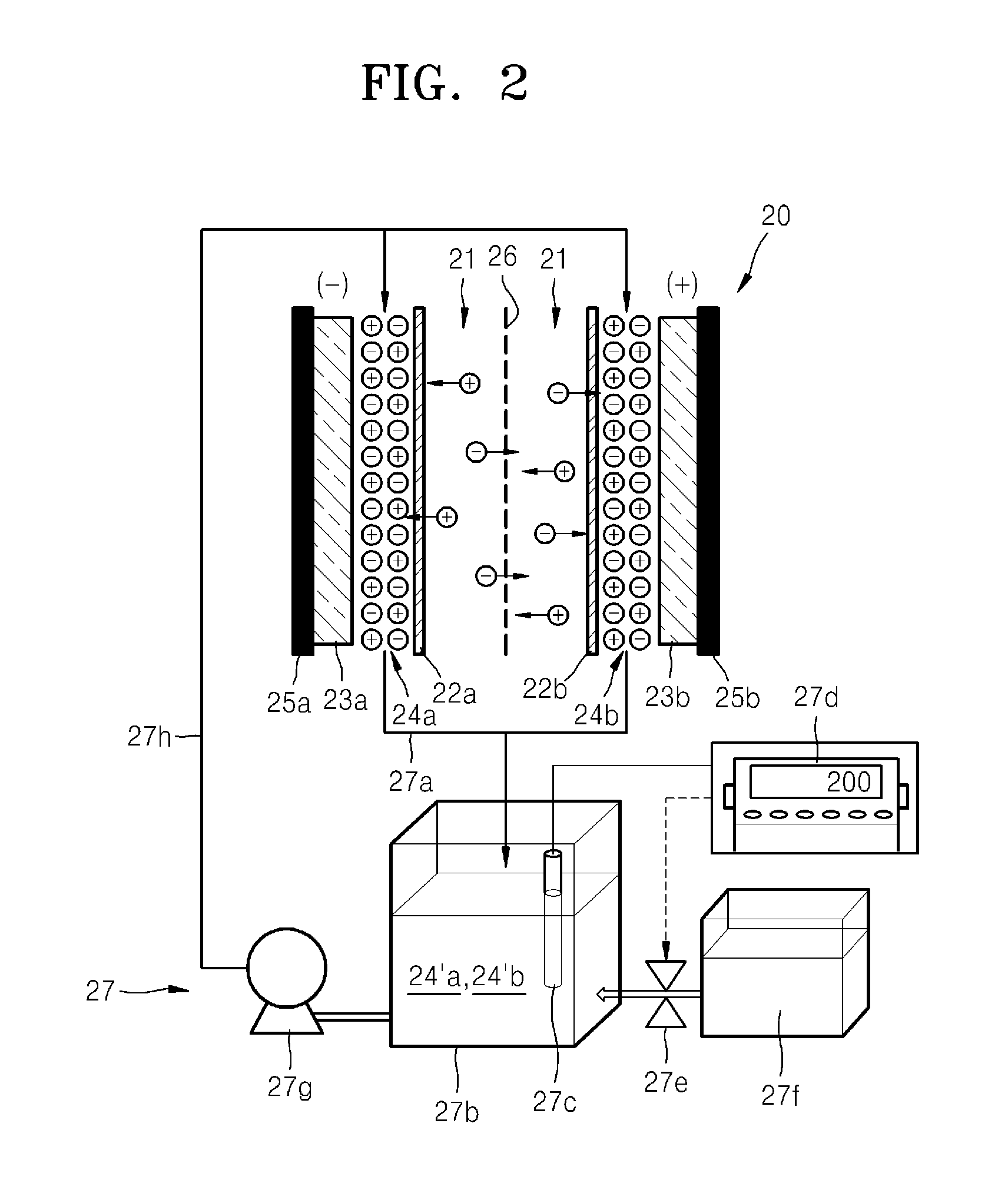
- A capacitive deionization device with a flow path, pair of electrodes, charge barriers, and an electrolyte solution that differs from influent fluid, along with an electrolyte compensation device that adjusts ionic species concentration and purity, using charge barriers and electrolyte solutions with selective permeability to enhance ion transfer and retention.

Environmental Regulations for Water Treatment Technologies
The regulatory landscape for water treatment technologies, particularly Capacitive Deionization (CDI) systems, is becoming increasingly stringent as governments worldwide prioritize environmental protection and sustainable water management. These regulations directly impact CDI operational costs and energy optimization strategies, creating both compliance challenges and innovation opportunities for technology developers and operators.
Water quality standards established by agencies such as the EPA in the United States, the European Environment Agency, and similar bodies globally set strict limits on discharge parameters including total dissolved solids, heavy metals, and chemical contaminants. CDI systems must demonstrate consistent compliance with these standards while maintaining energy-efficient operations, often requiring advanced monitoring systems and automated control mechanisms that add to operational complexity and costs.
Energy efficiency regulations are emerging as critical factors in CDI system design and operation. The European Union's Energy Efficiency Directive and similar frameworks in other regions mandate minimum energy performance standards for industrial water treatment equipment. These requirements push CDI operators to optimize energy consumption patterns, implement energy recovery systems, and adopt smart grid integration technologies to reduce overall operational costs while meeting regulatory compliance.
Brine discharge regulations present significant challenges for CDI operations, as concentrated waste streams must be managed according to strict environmental guidelines. Many jurisdictions now require zero liquid discharge or mandate specific treatment protocols for high-salinity waste streams, forcing operators to invest in additional treatment stages or alternative disposal methods that impact both capital and operational expenditures.
Emerging regulations on carbon footprint reporting and lifecycle environmental impact assessments are reshaping how CDI systems are evaluated and operated. These frameworks require comprehensive tracking of energy sources, operational efficiency metrics, and environmental impact data, necessitating sophisticated monitoring and reporting systems that influence both technology selection and operational procedures.
The regulatory trend toward circular economy principles is driving new requirements for resource recovery and waste minimization in water treatment processes. CDI systems must increasingly demonstrate not only effective desalination but also potential for valuable resource extraction from waste streams, creating opportunities for cost offset through byproduct recovery while ensuring regulatory compliance across multiple environmental domains.
Water quality standards established by agencies such as the EPA in the United States, the European Environment Agency, and similar bodies globally set strict limits on discharge parameters including total dissolved solids, heavy metals, and chemical contaminants. CDI systems must demonstrate consistent compliance with these standards while maintaining energy-efficient operations, often requiring advanced monitoring systems and automated control mechanisms that add to operational complexity and costs.
Energy efficiency regulations are emerging as critical factors in CDI system design and operation. The European Union's Energy Efficiency Directive and similar frameworks in other regions mandate minimum energy performance standards for industrial water treatment equipment. These requirements push CDI operators to optimize energy consumption patterns, implement energy recovery systems, and adopt smart grid integration technologies to reduce overall operational costs while meeting regulatory compliance.
Brine discharge regulations present significant challenges for CDI operations, as concentrated waste streams must be managed according to strict environmental guidelines. Many jurisdictions now require zero liquid discharge or mandate specific treatment protocols for high-salinity waste streams, forcing operators to invest in additional treatment stages or alternative disposal methods that impact both capital and operational expenditures.
Emerging regulations on carbon footprint reporting and lifecycle environmental impact assessments are reshaping how CDI systems are evaluated and operated. These frameworks require comprehensive tracking of energy sources, operational efficiency metrics, and environmental impact data, necessitating sophisticated monitoring and reporting systems that influence both technology selection and operational procedures.
The regulatory trend toward circular economy principles is driving new requirements for resource recovery and waste minimization in water treatment processes. CDI systems must increasingly demonstrate not only effective desalination but also potential for valuable resource extraction from waste streams, creating opportunities for cost offset through byproduct recovery while ensuring regulatory compliance across multiple environmental domains.
Economic Impact Assessment of CDI Implementation
The economic impact assessment of CDI implementation reveals significant financial implications across multiple dimensions, fundamentally altering the cost structure of water treatment operations. Initial capital expenditure requirements for CDI systems typically range from $2,000 to $5,000 per cubic meter of daily treatment capacity, positioning CDI as a competitive alternative to reverse osmosis systems in specific salinity ranges below 5,000 ppm total dissolved solids.
Operational expenditure analysis demonstrates CDI's superior economic performance in energy-sensitive markets. Energy consumption patterns show 30-50% lower electricity requirements compared to conventional membrane technologies, translating to operational savings of $0.15-0.25 per cubic meter treated. This advantage becomes particularly pronounced in regions with high electricity costs, where energy represents 40-60% of total operational expenses.
The economic viability of CDI implementation exhibits strong correlation with water salinity levels and treatment volumes. Break-even analysis indicates optimal economic performance for brackish water applications with salinity ranges of 1,000-3,000 ppm, where CDI systems achieve payback periods of 3-5 years. Higher salinity applications above 5,000 ppm show diminishing economic returns due to increased electrode replacement frequency and energy consumption.
Labor cost implications present favorable economic outcomes, as CDI systems require minimal operator intervention and maintenance compared to chemical-intensive treatment processes. Reduced chemical procurement and handling costs contribute additional savings of $0.05-0.10 per cubic meter, while simplified waste management protocols decrease disposal expenses by approximately 60-80%.
Market penetration scenarios suggest CDI implementation could capture 15-25% of the brackish water treatment market by 2030, representing a potential market value of $2.8-4.2 billion globally. Regional economic impact varies significantly, with water-stressed regions showing higher adoption rates and corresponding economic benefits through reduced water importation costs and enhanced water security investments.
Operational expenditure analysis demonstrates CDI's superior economic performance in energy-sensitive markets. Energy consumption patterns show 30-50% lower electricity requirements compared to conventional membrane technologies, translating to operational savings of $0.15-0.25 per cubic meter treated. This advantage becomes particularly pronounced in regions with high electricity costs, where energy represents 40-60% of total operational expenses.
The economic viability of CDI implementation exhibits strong correlation with water salinity levels and treatment volumes. Break-even analysis indicates optimal economic performance for brackish water applications with salinity ranges of 1,000-3,000 ppm, where CDI systems achieve payback periods of 3-5 years. Higher salinity applications above 5,000 ppm show diminishing economic returns due to increased electrode replacement frequency and energy consumption.
Labor cost implications present favorable economic outcomes, as CDI systems require minimal operator intervention and maintenance compared to chemical-intensive treatment processes. Reduced chemical procurement and handling costs contribute additional savings of $0.05-0.10 per cubic meter, while simplified waste management protocols decrease disposal expenses by approximately 60-80%.
Market penetration scenarios suggest CDI implementation could capture 15-25% of the brackish water treatment market by 2030, representing a potential market value of $2.8-4.2 billion globally. Regional economic impact varies significantly, with water-stressed regions showing higher adoption rates and corresponding economic benefits through reduced water importation costs and enhanced water security investments.
Unlock deeper insights with PatSnap Eureka Quick Research — get a full tech report to explore trends and direct your research. Try now!
Generate Your Research Report Instantly with AI Agent
Supercharge your innovation with PatSnap Eureka AI Agent Platform!