

Comparing CDI vs RO: Desalination Efficiency
APR 21, 20269 MIN READ
Generate Your Research Report Instantly with AI Agent
PatSnap Eureka helps you evaluate technical feasibility & market potential.
CDI vs RO Desalination Technology Background and Objectives
Water scarcity has emerged as one of the most pressing global challenges of the 21st century, affecting over 2 billion people worldwide. As freshwater resources become increasingly strained due to population growth, industrialization, and climate change, desalination technologies have gained paramount importance as sustainable solutions for water security. The global desalination market has experienced exponential growth, reaching approximately $15 billion in 2023, with projections indicating continued expansion driven by urgent water demands in arid regions and coastal communities.
Traditional desalination methods, particularly Reverse Osmosis (RO), have dominated the industry for decades due to their proven reliability and scalability. RO technology utilizes high-pressure membrane filtration to remove salt and contaminants from seawater and brackish water, achieving desalination through physical separation processes. However, RO systems face inherent limitations including high energy consumption, membrane fouling, and significant operational costs that have prompted researchers to explore alternative approaches.
Capacitive Deionization (CDI) has emerged as a promising electrochemical desalination technology that offers potential advantages over conventional methods. CDI operates through electrosorption principles, where ions are removed from water by applying electrical potential across porous carbon electrodes. This technology has gained considerable attention due to its lower energy requirements for brackish water treatment, reduced chemical usage, and potential for energy recovery during regeneration cycles.
The fundamental operational differences between CDI and RO create distinct efficiency profiles that warrant comprehensive evaluation. While RO excels in treating high-salinity feedwater and achieving consistent product water quality, CDI demonstrates superior energy efficiency for low to moderate salinity applications and offers operational flexibility through reversible ion adsorption processes.
The primary objective of comparing CDI versus RO desalination efficiency encompasses multiple performance dimensions including energy consumption per unit of product water, water recovery rates, operational stability, and economic viability across different salinity ranges. This comparative analysis aims to establish clear performance benchmarks that can guide technology selection decisions for specific applications and operating conditions.
Furthermore, the evaluation seeks to identify optimal application scenarios for each technology, considering factors such as feedwater characteristics, required product water quality, operational scale, and long-term sustainability requirements. Understanding these efficiency parameters is crucial for advancing desalination technology adoption and optimizing water treatment strategies in diverse geographical and industrial contexts.
Traditional desalination methods, particularly Reverse Osmosis (RO), have dominated the industry for decades due to their proven reliability and scalability. RO technology utilizes high-pressure membrane filtration to remove salt and contaminants from seawater and brackish water, achieving desalination through physical separation processes. However, RO systems face inherent limitations including high energy consumption, membrane fouling, and significant operational costs that have prompted researchers to explore alternative approaches.
Capacitive Deionization (CDI) has emerged as a promising electrochemical desalination technology that offers potential advantages over conventional methods. CDI operates through electrosorption principles, where ions are removed from water by applying electrical potential across porous carbon electrodes. This technology has gained considerable attention due to its lower energy requirements for brackish water treatment, reduced chemical usage, and potential for energy recovery during regeneration cycles.
The fundamental operational differences between CDI and RO create distinct efficiency profiles that warrant comprehensive evaluation. While RO excels in treating high-salinity feedwater and achieving consistent product water quality, CDI demonstrates superior energy efficiency for low to moderate salinity applications and offers operational flexibility through reversible ion adsorption processes.
The primary objective of comparing CDI versus RO desalination efficiency encompasses multiple performance dimensions including energy consumption per unit of product water, water recovery rates, operational stability, and economic viability across different salinity ranges. This comparative analysis aims to establish clear performance benchmarks that can guide technology selection decisions for specific applications and operating conditions.
Furthermore, the evaluation seeks to identify optimal application scenarios for each technology, considering factors such as feedwater characteristics, required product water quality, operational scale, and long-term sustainability requirements. Understanding these efficiency parameters is crucial for advancing desalination technology adoption and optimizing water treatment strategies in diverse geographical and industrial contexts.
Market Demand Analysis for Advanced Desalination Solutions
The global desalination market is experiencing unprecedented growth driven by escalating water scarcity challenges and increasing population demands. Traditional reverse osmosis technology has dominated the market for decades, but emerging capacitive deionization solutions are creating new market segments focused on energy efficiency and sustainability. The market demand for advanced desalination technologies reflects a fundamental shift toward more environmentally conscious and economically viable water treatment solutions.
Municipal water authorities represent the largest demand segment for advanced desalination technologies, particularly in water-stressed regions across the Middle East, North Africa, and parts of Asia-Pacific. These entities are increasingly evaluating CDI technology for brackish water treatment applications where energy consumption directly impacts operational costs. The growing emphasis on carbon footprint reduction in public utilities is driving interest in lower-energy alternatives to conventional RO systems.
Industrial sectors including electronics manufacturing, pharmaceutical production, and food processing are emerging as significant demand drivers for efficient desalination solutions. These industries require consistent water quality while managing operational expenses, making the energy efficiency comparison between CDI and RO technologies a critical decision factor. The semiconductor industry particularly values CDI's ability to produce high-purity water with reduced energy consumption compared to traditional multi-stage RO processes.
Agricultural applications represent a rapidly expanding market segment where desalination efficiency directly correlates with economic viability. Farmers and agricultural cooperatives in arid regions are increasingly adopting brackish water desalination for irrigation purposes. The lower energy requirements of CDI systems make them attractive for solar-powered agricultural applications, creating demand for integrated renewable energy desalination solutions.
The residential and small-scale commercial market is witnessing growing interest in point-of-use desalination systems. Consumers are becoming more aware of water quality issues and energy costs associated with water treatment. This segment particularly values the modular nature of CDI systems and their potential for distributed water treatment applications.
Market demand is also being shaped by regulatory frameworks emphasizing energy efficiency and environmental sustainability. Government incentives for low-energy water treatment technologies are accelerating adoption of advanced desalination solutions. The increasing focus on circular economy principles is driving demand for technologies that minimize waste streams and energy consumption, positioning both optimized RO and CDI technologies as viable solutions depending on specific application requirements.
Municipal water authorities represent the largest demand segment for advanced desalination technologies, particularly in water-stressed regions across the Middle East, North Africa, and parts of Asia-Pacific. These entities are increasingly evaluating CDI technology for brackish water treatment applications where energy consumption directly impacts operational costs. The growing emphasis on carbon footprint reduction in public utilities is driving interest in lower-energy alternatives to conventional RO systems.
Industrial sectors including electronics manufacturing, pharmaceutical production, and food processing are emerging as significant demand drivers for efficient desalination solutions. These industries require consistent water quality while managing operational expenses, making the energy efficiency comparison between CDI and RO technologies a critical decision factor. The semiconductor industry particularly values CDI's ability to produce high-purity water with reduced energy consumption compared to traditional multi-stage RO processes.
Agricultural applications represent a rapidly expanding market segment where desalination efficiency directly correlates with economic viability. Farmers and agricultural cooperatives in arid regions are increasingly adopting brackish water desalination for irrigation purposes. The lower energy requirements of CDI systems make them attractive for solar-powered agricultural applications, creating demand for integrated renewable energy desalination solutions.
The residential and small-scale commercial market is witnessing growing interest in point-of-use desalination systems. Consumers are becoming more aware of water quality issues and energy costs associated with water treatment. This segment particularly values the modular nature of CDI systems and their potential for distributed water treatment applications.
Market demand is also being shaped by regulatory frameworks emphasizing energy efficiency and environmental sustainability. Government incentives for low-energy water treatment technologies are accelerating adoption of advanced desalination solutions. The increasing focus on circular economy principles is driving demand for technologies that minimize waste streams and energy consumption, positioning both optimized RO and CDI technologies as viable solutions depending on specific application requirements.
Current Status and Challenges in CDI and RO Technologies
Capacitive Deionization (CDI) technology has emerged as a promising alternative to traditional desalination methods, particularly for brackish water treatment. Current CDI systems achieve energy consumption rates of 1.5-3.0 kWh/m³ for brackish water with total dissolved solids (TDS) levels between 1,000-5,000 mg/L. However, CDI faces significant limitations in treating high-salinity feedwater, with most commercial systems operating effectively only up to 10,000 mg/L TDS. The technology relies on electrosorption principles using porous carbon electrodes, which limits salt removal capacity and requires frequent regeneration cycles.
Reverse Osmosis (RO) technology represents the dominant desalination method globally, with over 95% market share in seawater desalination applications. Modern RO systems demonstrate remarkable efficiency improvements, with seawater reverse osmosis (SWRO) plants achieving energy consumption as low as 2.5-3.5 kWh/m³. Advanced membrane materials and energy recovery devices have significantly enhanced performance, enabling treatment of feedwater with TDS levels exceeding 35,000 mg/L. However, RO systems face persistent challenges including membrane fouling, high operating pressures, and substantial pretreatment requirements.
The primary challenge for CDI technology lies in scaling up electrode capacity and improving salt adsorption rates. Current carbon electrode materials exhibit limited electrosorption capacity, typically ranging from 10-20 mg/g, which constrains overall system efficiency. Additionally, CDI systems experience performance degradation due to electrode fouling and require complex electrode regeneration processes that impact operational continuity.
RO technology confronts different but equally significant challenges. Membrane fouling remains the most critical operational issue, leading to increased energy consumption and frequent membrane replacement. Biofouling, scaling, and organic fouling reduce membrane lifespan and system efficiency. Furthermore, RO systems generate concentrated brine waste streams, creating environmental disposal challenges that require additional treatment solutions.
Energy efficiency comparisons reveal distinct operational profiles for each technology. CDI demonstrates superior energy performance for low-salinity applications but shows exponential energy increases with higher salt concentrations. RO maintains relatively consistent energy requirements across varying salinity levels, making it more suitable for high-salinity applications despite higher baseline energy consumption.
The geographical distribution of these technologies reflects their respective strengths and limitations. CDI installations are predominantly concentrated in regions with abundant brackish water resources, while RO dominates coastal areas requiring seawater desalination. This distribution pattern highlights the complementary nature of both technologies in addressing diverse water treatment needs across different salinity ranges and operational requirements.
Reverse Osmosis (RO) technology represents the dominant desalination method globally, with over 95% market share in seawater desalination applications. Modern RO systems demonstrate remarkable efficiency improvements, with seawater reverse osmosis (SWRO) plants achieving energy consumption as low as 2.5-3.5 kWh/m³. Advanced membrane materials and energy recovery devices have significantly enhanced performance, enabling treatment of feedwater with TDS levels exceeding 35,000 mg/L. However, RO systems face persistent challenges including membrane fouling, high operating pressures, and substantial pretreatment requirements.
The primary challenge for CDI technology lies in scaling up electrode capacity and improving salt adsorption rates. Current carbon electrode materials exhibit limited electrosorption capacity, typically ranging from 10-20 mg/g, which constrains overall system efficiency. Additionally, CDI systems experience performance degradation due to electrode fouling and require complex electrode regeneration processes that impact operational continuity.
RO technology confronts different but equally significant challenges. Membrane fouling remains the most critical operational issue, leading to increased energy consumption and frequent membrane replacement. Biofouling, scaling, and organic fouling reduce membrane lifespan and system efficiency. Furthermore, RO systems generate concentrated brine waste streams, creating environmental disposal challenges that require additional treatment solutions.
Energy efficiency comparisons reveal distinct operational profiles for each technology. CDI demonstrates superior energy performance for low-salinity applications but shows exponential energy increases with higher salt concentrations. RO maintains relatively consistent energy requirements across varying salinity levels, making it more suitable for high-salinity applications despite higher baseline energy consumption.
The geographical distribution of these technologies reflects their respective strengths and limitations. CDI installations are predominantly concentrated in regions with abundant brackish water resources, while RO dominates coastal areas requiring seawater desalination. This distribution pattern highlights the complementary nature of both technologies in addressing diverse water treatment needs across different salinity ranges and operational requirements.
Current Technical Solutions for CDI and RO Systems
01 Hybrid CDI-RO desalination systems for enhanced efficiency
Integration of capacitive deionization (CDI) technology with reverse osmosis (RO) systems can significantly improve overall desalination efficiency. CDI serves as a pre-treatment stage to reduce the salt concentration before RO processing, thereby decreasing energy consumption and extending membrane lifespan. This hybrid approach optimizes the strengths of both technologies, with CDI handling lower salinity water and RO managing the final purification stages.- Hybrid CDI-RO desalination systems for enhanced efficiency: Integration of capacitive deionization (CDI) technology with reverse osmosis (RO) systems can significantly improve overall desalination efficiency. CDI can serve as a pre-treatment stage to reduce the salt concentration before RO processing, thereby decreasing energy consumption and extending membrane life. This hybrid approach optimizes the strengths of both technologies, with CDI handling lower salinity water and RO managing higher concentration streams, resulting in improved water recovery rates and reduced operational costs.
- Energy recovery and optimization in CDI systems: Advanced energy recovery mechanisms in capacitive deionization systems enhance desalination efficiency by capturing and reusing energy during the desorption cycle. These systems employ optimized electrode configurations and charging-discharging protocols to minimize energy waste. Implementation of energy-efficient power management systems and regeneration strategies can significantly reduce the specific energy consumption per unit of water produced, making CDI technology more competitive for brackish water desalination applications.
- Membrane and electrode material improvements for RO systems: Development of advanced membrane materials and electrode configurations enhances reverse osmosis desalination efficiency through improved salt rejection rates and water permeability. Novel membrane compositions with optimized pore structures and surface properties reduce fouling and scaling, extending operational lifetime. Enhanced electrode materials with higher surface area and conductivity improve ion removal efficiency while maintaining structural stability under high-pressure operating conditions.
- Flow configuration and system design optimization: Optimized flow configurations and system architectures improve desalination efficiency by enhancing mass transfer and reducing concentration polarization effects. Advanced designs incorporate multi-stage processing, optimized channel geometries, and improved flow distribution systems. These configurations minimize energy losses, reduce pressure drops, and enhance overall system performance by ensuring uniform flow patterns and maximizing contact between feed water and treatment surfaces.
- Monitoring and control systems for performance enhancement: Implementation of advanced monitoring and control systems enables real-time optimization of desalination processes, improving efficiency and reliability. Automated control mechanisms adjust operating parameters based on feed water quality, system performance metrics, and energy consumption patterns. Integration of sensors and intelligent control algorithms allows for predictive maintenance, optimal resource allocation, and adaptive process management, resulting in sustained high-efficiency operation and reduced downtime.
02 Energy recovery systems in RO desalination
Advanced energy recovery devices can be incorporated into reverse osmosis systems to capture and reuse the energy from high-pressure brine streams. These systems utilize pressure exchangers or turbines to transfer energy from the concentrate stream back into the feed water, significantly reducing the overall energy consumption of the desalination process. This technology can improve the energy efficiency of RO systems by up to 60 percent.Expand Specific Solutions03 Electrode optimization in CDI systems
The efficiency of capacitive deionization can be enhanced through the development and use of advanced electrode materials with high surface area and improved ion adsorption capacity. Novel carbon-based materials, composite electrodes, and modified electrode structures can increase the salt removal capacity and reduce the energy required per unit of water treated. Optimization of electrode spacing and configuration also contributes to improved desalination performance.Expand Specific Solutions04 Membrane fouling prevention and cleaning technologies
Advanced anti-fouling strategies and cleaning protocols can significantly improve the operational efficiency of both RO and membrane-based desalination systems. These include surface modification of membranes, implementation of pre-treatment processes, development of self-cleaning membrane materials, and optimized cleaning-in-place procedures. Effective fouling control extends membrane lifetime, maintains flux rates, and reduces operational costs.Expand Specific Solutions05 Process monitoring and control systems for desalination optimization
Implementation of intelligent monitoring and automated control systems enables real-time optimization of desalination processes. These systems utilize sensors, data analytics, and feedback control mechanisms to adjust operational parameters such as pressure, flow rate, and voltage in response to changing feed water conditions. Advanced process control improves water recovery rates, reduces energy consumption, and ensures consistent product water quality.Expand Specific Solutions
Major Players in CDI and RO Desalination Industry
The desalination technology sector comparing CDI and RO efficiency is in a mature development stage with significant market expansion driven by global water scarcity concerns. The market demonstrates substantial scale with major industrial players like Siemens Water Technologies Corp. and Shell Oil Co. leading commercial applications, while energy giants including Saudi Arabian Oil Co., Korea Electric Power Corp., and Aramco Services Co. drive large-scale implementation. Technology maturity varies significantly across the competitive landscape, with established research institutions like MIT, Nanyang Technological University, and Lawrence Livermore National Security LLC advancing fundamental CDI innovations, while companies such as Lockheed Martin Corp., BAE Systems, and Battelle Memorial Institute focus on engineering optimization. The sector shows strong R&D investment from both academic institutions including University of California Regents, Rice University, and King Fahd University of Petroleum & Minerals, and specialized technology firms like Lynntech Inc. and Merck Patent GmbH, indicating robust technological advancement potential across both CDI and RO methodologies.
Lockheed Martin Corp.
Technical Solution: Lockheed Martin has developed perforene graphene-based reverse osmosis membranes that demonstrate 100 times higher water permeability than conventional polymer membranes while maintaining excellent salt rejection rates above 99%. Their technology aims to reduce energy consumption in RO systems by 20-30% through improved membrane performance. The company has also conducted comparative studies between advanced RO and CDI technologies for military and aerospace applications, focusing on system reliability, maintenance requirements, and energy efficiency in remote deployment scenarios.
Strengths: Advanced membrane technology with superior permeability and innovative materials research. Weaknesses: Technology still in development phase with limited commercial deployment compared to established RO systems.
Massachusetts Institute of Technology
Technical Solution: MIT has developed advanced capacitive deionization (CDI) systems using carbon nanotube electrodes that achieve energy consumption as low as 0.5-1.5 kWh/m³ for brackish water desalination. Their research focuses on optimizing electrode materials and system configurations to enhance salt removal efficiency while minimizing energy requirements. The technology demonstrates superior performance in treating low-salinity water sources compared to traditional reverse osmosis systems, particularly for applications requiring intermittent operation and energy recovery capabilities.
Strengths: Leading research in electrode materials and energy-efficient CDI systems. Weaknesses: Limited scalability for high-salinity seawater applications compared to RO systems.
Core Technology Analysis in CDI vs RO Efficiency
Capacitive deionization using hybrid polar electrodes
PatentInactiveTW200942494A
Innovation
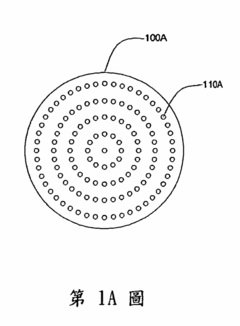
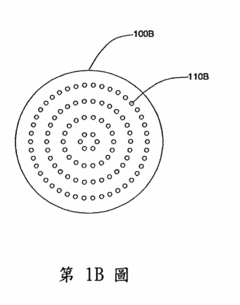
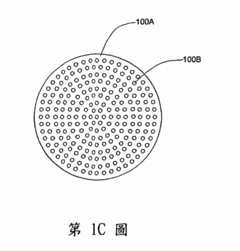
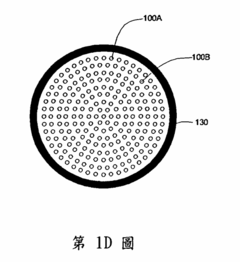
- A hybrid flow-through capacitor module incorporating both unipolar and bipolar electrodes, optimized fluid dynamics through perforated electrode plates, and supercapacitors for energy recovery, enabling balanced operating voltage and current while reducing energy costs and cycle times.
Desalination process using capacitive deionization
PatentInactiveIN201641018077A
Innovation
- The use of capacitive deionization technology based on ion sorption on high surface area materials like activated carbon, carbon nanotubes, and graphene to remove dissolved ions from water by applying a potential difference, leveraging the principles of electro-sorption and double-layer capacitance.
Environmental Impact Assessment of Desalination Methods
The environmental implications of desalination technologies represent a critical consideration in the comparative analysis of Capacitive Deionization (CDI) and Reverse Osmosis (RO) systems. Both technologies present distinct environmental footprints that significantly influence their long-term sustainability and adoption potential across different geographical and regulatory contexts.
Energy consumption patterns constitute the primary environmental differentiator between CDI and RO technologies. CDI systems typically operate at lower energy intensities, consuming approximately 0.5-2.0 kWh per cubic meter of treated water, compared to RO systems which require 3-6 kWh per cubic meter for seawater applications. This energy differential translates directly into carbon footprint variations, with CDI systems generating substantially lower greenhouse gas emissions when powered by conventional grid electricity.
Brine management represents another crucial environmental consideration. RO systems produce concentrated brine streams containing elevated salt concentrations and chemical additives, requiring careful disposal strategies to prevent marine ecosystem disruption. CDI technology offers advantages in this regard, as the regeneration process can be controlled to produce less concentrated waste streams, potentially reducing environmental stress on receiving water bodies.
Chemical usage patterns differ significantly between the two technologies. RO systems require extensive pretreatment chemicals, antiscalants, and biocides to maintain membrane performance, introducing additional environmental burdens through chemical manufacturing and disposal. CDI systems generally require fewer chemical additives, though electrode materials and their eventual disposal present unique environmental considerations related to carbon and metal recovery.
Water recovery rates directly impact environmental efficiency metrics. While RO systems typically achieve 35-50% recovery rates for seawater applications, CDI systems currently demonstrate lower recovery rates of 50-80% for brackish water treatment. However, CDI's modular design enables optimization for specific water qualities, potentially improving overall resource utilization efficiency.
The manufacturing and end-of-life environmental impacts reveal contrasting profiles. RO membrane production involves energy-intensive polymer synthesis and complex manufacturing processes. CDI electrode materials, primarily activated carbon and specialized coatings, present different environmental challenges related to material sourcing and recycling potential, though emerging research suggests promising pathways for electrode material recovery and reuse.
Energy consumption patterns constitute the primary environmental differentiator between CDI and RO technologies. CDI systems typically operate at lower energy intensities, consuming approximately 0.5-2.0 kWh per cubic meter of treated water, compared to RO systems which require 3-6 kWh per cubic meter for seawater applications. This energy differential translates directly into carbon footprint variations, with CDI systems generating substantially lower greenhouse gas emissions when powered by conventional grid electricity.
Brine management represents another crucial environmental consideration. RO systems produce concentrated brine streams containing elevated salt concentrations and chemical additives, requiring careful disposal strategies to prevent marine ecosystem disruption. CDI technology offers advantages in this regard, as the regeneration process can be controlled to produce less concentrated waste streams, potentially reducing environmental stress on receiving water bodies.
Chemical usage patterns differ significantly between the two technologies. RO systems require extensive pretreatment chemicals, antiscalants, and biocides to maintain membrane performance, introducing additional environmental burdens through chemical manufacturing and disposal. CDI systems generally require fewer chemical additives, though electrode materials and their eventual disposal present unique environmental considerations related to carbon and metal recovery.
Water recovery rates directly impact environmental efficiency metrics. While RO systems typically achieve 35-50% recovery rates for seawater applications, CDI systems currently demonstrate lower recovery rates of 50-80% for brackish water treatment. However, CDI's modular design enables optimization for specific water qualities, potentially improving overall resource utilization efficiency.
The manufacturing and end-of-life environmental impacts reveal contrasting profiles. RO membrane production involves energy-intensive polymer synthesis and complex manufacturing processes. CDI electrode materials, primarily activated carbon and specialized coatings, present different environmental challenges related to material sourcing and recycling potential, though emerging research suggests promising pathways for electrode material recovery and reuse.
Energy Consumption Optimization in Desalination Processes
Energy consumption represents the most critical operational parameter determining the economic viability and environmental sustainability of desalination technologies. Both Capacitive Deionization (CDI) and Reverse Osmosis (RO) systems exhibit distinct energy profiles that significantly impact their deployment strategies and long-term operational costs. The optimization of energy consumption in these processes has become paramount as global water scarcity intensifies and energy costs continue to fluctuate.
CDI systems demonstrate inherently lower energy requirements compared to traditional RO processes, typically consuming 0.5-2.0 kWh/m³ for brackish water treatment. This energy advantage stems from CDI's electrochemical mechanism, which operates at relatively low voltages and eliminates the need for high-pressure pumping systems. The energy consumption in CDI is primarily attributed to the charging and discharging cycles of electrodes, with minimal auxiliary power requirements for circulation pumps and control systems.
RO systems, while more energy-intensive at 3-6 kWh/m³ for seawater and 1-3 kWh/m³ for brackish water, have undergone significant optimization through advanced membrane technologies and energy recovery devices. Modern RO plants incorporate pressure exchangers and energy recovery turbines that can recover up to 95% of the high-pressure energy, substantially reducing overall consumption. The integration of variable frequency drives and intelligent control systems further enhances energy efficiency by optimizing pump operations based on real-time demand.
Several optimization strategies have emerged to minimize energy consumption across both technologies. For CDI systems, electrode material engineering focusing on high-capacity carbon aerogels and graphene-based composites has improved charge efficiency and reduced parasitic losses. Advanced control algorithms that optimize charging voltages and cycle timing have demonstrated 15-25% energy savings in pilot-scale implementations.
RO optimization approaches concentrate on membrane flux enhancement and fouling mitigation. The development of thin-film composite membranes with improved permeability-selectivity trade-offs has reduced the pressure requirements while maintaining rejection rates. Pretreatment optimization, including advanced oxidation processes and membrane bioreactors, minimizes fouling-related energy penalties and extends membrane lifespan.
Hybrid system configurations present promising opportunities for energy optimization by leveraging the complementary strengths of both technologies. Sequential CDI-RO arrangements can reduce overall energy consumption by 20-30% compared to standalone RO systems, particularly for brackish water applications where CDI serves as an energy-efficient pretreatment stage.
CDI systems demonstrate inherently lower energy requirements compared to traditional RO processes, typically consuming 0.5-2.0 kWh/m³ for brackish water treatment. This energy advantage stems from CDI's electrochemical mechanism, which operates at relatively low voltages and eliminates the need for high-pressure pumping systems. The energy consumption in CDI is primarily attributed to the charging and discharging cycles of electrodes, with minimal auxiliary power requirements for circulation pumps and control systems.
RO systems, while more energy-intensive at 3-6 kWh/m³ for seawater and 1-3 kWh/m³ for brackish water, have undergone significant optimization through advanced membrane technologies and energy recovery devices. Modern RO plants incorporate pressure exchangers and energy recovery turbines that can recover up to 95% of the high-pressure energy, substantially reducing overall consumption. The integration of variable frequency drives and intelligent control systems further enhances energy efficiency by optimizing pump operations based on real-time demand.
Several optimization strategies have emerged to minimize energy consumption across both technologies. For CDI systems, electrode material engineering focusing on high-capacity carbon aerogels and graphene-based composites has improved charge efficiency and reduced parasitic losses. Advanced control algorithms that optimize charging voltages and cycle timing have demonstrated 15-25% energy savings in pilot-scale implementations.
RO optimization approaches concentrate on membrane flux enhancement and fouling mitigation. The development of thin-film composite membranes with improved permeability-selectivity trade-offs has reduced the pressure requirements while maintaining rejection rates. Pretreatment optimization, including advanced oxidation processes and membrane bioreactors, minimizes fouling-related energy penalties and extends membrane lifespan.
Hybrid system configurations present promising opportunities for energy optimization by leveraging the complementary strengths of both technologies. Sequential CDI-RO arrangements can reduce overall energy consumption by 20-30% compared to standalone RO systems, particularly for brackish water applications where CDI serves as an energy-efficient pretreatment stage.
Unlock deeper insights with PatSnap Eureka Quick Research — get a full tech report to explore trends and direct your research. Try now!
Generate Your Research Report Instantly with AI Agent
Supercharge your innovation with PatSnap Eureka AI Agent Platform!