
Closed-Cycle Heat Engine vs Open Cycle: Hydrogen Power
OCT 9, 20269 MIN READ
Generate Your Research Report Instantly with AI Agent
Patsnap Eureka helps you evaluate technical feasibility & market potential.
Hydrogen Power Engine Technology Background and Objectives
Hydrogen has emerged as a critical energy carrier in the global transition toward carbon-neutral transportation and power generation systems. The fundamental distinction between closed-cycle and open-cycle hydrogen power engines represents a pivotal technological crossroads that will shape the future of clean energy applications. This dichotomy reflects different philosophical approaches to harnessing hydrogen's chemical energy, each with distinct thermodynamic principles, efficiency characteristics, and practical implementation challenges.
The historical development of hydrogen power technology traces back to early internal combustion engine experiments in the 19th century, but gained substantial momentum following the 1970s energy crisis. Open-cycle hydrogen engines, which combust hydrogen directly with atmospheric air and exhaust products to the environment, evolved as natural extensions of conventional internal combustion technology. Conversely, closed-cycle systems, which contain working fluids within sealed thermodynamic loops, emerged from aerospace and specialized industrial applications where precise control and efficiency optimization were paramount.
The primary objective of contemporary hydrogen power engine research is to maximize energy conversion efficiency while minimizing system complexity, cost, and environmental impact. Open-cycle engines target practical implementation in transportation sectors, leveraging existing manufacturing infrastructure and operational familiarity. Their development focuses on addressing challenges such as nitrogen oxide emissions, pre-ignition tendencies, and hydrogen storage integration. Closed-cycle systems pursue higher theoretical efficiencies through controlled thermodynamic processes, targeting stationary power generation and specialized mobile applications where weight and volume constraints are less restrictive.
Current technological goals encompass achieving thermal efficiencies exceeding forty-five percent for open-cycle engines and surpassing fifty-five percent for closed-cycle configurations. Additional objectives include developing robust materials capable of withstanding hydrogen embrittlement, creating cost-effective heat exchangers for closed-cycle systems, and establishing standardized performance metrics for comparative evaluation. The ultimate ambition is determining optimal application domains for each approach, enabling strategic deployment that maximizes hydrogen's potential as a versatile, zero-carbon energy solution across diverse industrial and transportation sectors.
The historical development of hydrogen power technology traces back to early internal combustion engine experiments in the 19th century, but gained substantial momentum following the 1970s energy crisis. Open-cycle hydrogen engines, which combust hydrogen directly with atmospheric air and exhaust products to the environment, evolved as natural extensions of conventional internal combustion technology. Conversely, closed-cycle systems, which contain working fluids within sealed thermodynamic loops, emerged from aerospace and specialized industrial applications where precise control and efficiency optimization were paramount.
The primary objective of contemporary hydrogen power engine research is to maximize energy conversion efficiency while minimizing system complexity, cost, and environmental impact. Open-cycle engines target practical implementation in transportation sectors, leveraging existing manufacturing infrastructure and operational familiarity. Their development focuses on addressing challenges such as nitrogen oxide emissions, pre-ignition tendencies, and hydrogen storage integration. Closed-cycle systems pursue higher theoretical efficiencies through controlled thermodynamic processes, targeting stationary power generation and specialized mobile applications where weight and volume constraints are less restrictive.
Current technological goals encompass achieving thermal efficiencies exceeding forty-five percent for open-cycle engines and surpassing fifty-five percent for closed-cycle configurations. Additional objectives include developing robust materials capable of withstanding hydrogen embrittlement, creating cost-effective heat exchangers for closed-cycle systems, and establishing standardized performance metrics for comparative evaluation. The ultimate ambition is determining optimal application domains for each approach, enabling strategic deployment that maximizes hydrogen's potential as a versatile, zero-carbon energy solution across diverse industrial and transportation sectors.
Market Demand for Hydrogen Engine Systems
The global transition toward decarbonization and sustainable energy systems has positioned hydrogen as a critical energy carrier, driving substantial market demand for hydrogen engine systems across multiple sectors. Transportation represents the most prominent application domain, with heavy-duty vehicles, maritime vessels, and rail transport seeking alternatives to diesel engines. The logistics and freight industries are particularly interested in hydrogen solutions due to range limitations and refueling time constraints associated with battery-electric systems. Aviation sectors are also exploring hydrogen propulsion for regional aircraft, though technical challenges remain significant.
Stationary power generation constitutes another major demand segment, where hydrogen engines serve as backup power sources, grid stabilization units, and distributed energy systems. Industrial facilities requiring reliable on-site power generation, especially in remote locations or areas with unstable grid infrastructure, represent growing customer bases. Data centers and telecommunications infrastructure are increasingly evaluating hydrogen systems as resilient alternatives to diesel generators, driven by corporate sustainability commitments and regulatory pressures.
The marine industry demonstrates accelerating interest in hydrogen propulsion systems, particularly for coastal shipping, ferries, and harbor operations where refueling infrastructure can be strategically positioned. International Maritime Organization emissions regulations are compelling shipowners to explore zero-emission technologies, with hydrogen engines offering advantages over fuel cells in certain power ranges and operational profiles.
Regional demand patterns reveal distinct characteristics. European markets lead in adoption driven by stringent emissions regulations, substantial government subsidies, and established hydrogen infrastructure development programs. Asian markets, particularly Japan, South Korea, and China, demonstrate strong governmental support through national hydrogen strategies and industrial policy frameworks. North American demand is emerging more gradually, concentrated in specific applications such as port operations, mining equipment, and heavy-duty trucking corridors.
Market barriers include hydrogen production costs, distribution infrastructure limitations, and storage challenges. However, declining renewable energy costs and advancing electrolysis technologies are improving the economic viability of green hydrogen production. The total addressable market continues expanding as technological maturation reduces system costs and performance gaps narrow compared to conventional engines. Customer requirements increasingly emphasize fuel flexibility, operational efficiency, and integration capabilities with existing energy systems, influencing the competitive dynamics between closed-cycle and open-cycle hydrogen engine architectures.
Stationary power generation constitutes another major demand segment, where hydrogen engines serve as backup power sources, grid stabilization units, and distributed energy systems. Industrial facilities requiring reliable on-site power generation, especially in remote locations or areas with unstable grid infrastructure, represent growing customer bases. Data centers and telecommunications infrastructure are increasingly evaluating hydrogen systems as resilient alternatives to diesel generators, driven by corporate sustainability commitments and regulatory pressures.
The marine industry demonstrates accelerating interest in hydrogen propulsion systems, particularly for coastal shipping, ferries, and harbor operations where refueling infrastructure can be strategically positioned. International Maritime Organization emissions regulations are compelling shipowners to explore zero-emission technologies, with hydrogen engines offering advantages over fuel cells in certain power ranges and operational profiles.
Regional demand patterns reveal distinct characteristics. European markets lead in adoption driven by stringent emissions regulations, substantial government subsidies, and established hydrogen infrastructure development programs. Asian markets, particularly Japan, South Korea, and China, demonstrate strong governmental support through national hydrogen strategies and industrial policy frameworks. North American demand is emerging more gradually, concentrated in specific applications such as port operations, mining equipment, and heavy-duty trucking corridors.
Market barriers include hydrogen production costs, distribution infrastructure limitations, and storage challenges. However, declining renewable energy costs and advancing electrolysis technologies are improving the economic viability of green hydrogen production. The total addressable market continues expanding as technological maturation reduces system costs and performance gaps narrow compared to conventional engines. Customer requirements increasingly emphasize fuel flexibility, operational efficiency, and integration capabilities with existing energy systems, influencing the competitive dynamics between closed-cycle and open-cycle hydrogen engine architectures.
Closed vs Open Cycle Technology Status and Challenges
Closed-cycle and open-cycle hydrogen power systems represent two fundamentally different approaches to energy conversion, each exhibiting distinct technological maturity levels and facing unique developmental challenges. The closed-cycle configuration, primarily exemplified by Stirling engines and supercritical CO2 Brayton cycles adapted for hydrogen combustion heat sources, operates with a sealed working fluid that never contacts the hydrogen fuel directly. This architecture has achieved significant progress in aerospace and specialized industrial applications, where efficiency and controllability are paramount. Current closed-cycle systems demonstrate thermal efficiencies ranging from 35% to 45%, with some advanced prototypes reaching beyond 50% through recuperation and multi-stage compression.
Open-cycle systems, conversely, directly combust hydrogen with air or oxygen, with combustion products expelled to the atmosphere or captured for further processing. Gas turbine technology dominates this category, benefiting from decades of natural gas turbine development. Modified industrial gas turbines now operate on hydrogen blends up to 60%, with several manufacturers targeting 100% hydrogen capability by 2025. Open-cycle systems currently achieve efficiencies between 40% and 60% in combined-cycle configurations, representing a more mature technological baseline.
The primary challenge confronting closed-cycle systems involves heat exchanger design capable of withstanding extreme temperature gradients while maintaining compact form factors. Material degradation under cyclic thermal stress and the complexity of sealing systems at elevated pressures remain significant engineering obstacles. Additionally, the capital cost per kilowatt remains 2-3 times higher than open-cycle alternatives, limiting commercial deployment outside niche applications.
Open-cycle hydrogen systems face different but equally formidable challenges. NOx emissions from high-temperature combustion require sophisticated control strategies, including steam injection, lean-premixed combustion, or catalytic reduction systems. Flame stability across varying hydrogen concentrations and the risk of flashback in premixed systems demand advanced combustion chamber designs. Turbine blade materials must withstand higher flame temperatures inherent to hydrogen combustion while resisting hydrogen embrittlement. Infrastructure compatibility presents another barrier, as existing natural gas turbines require substantial modifications for pure hydrogen operation.
Both technological pathways confront common challenges in hydrogen supply chain integration, including fuel storage, delivery infrastructure, and safety protocols. The geographical distribution of development efforts shows concentrated activity in Europe and East Asia, where policy frameworks strongly support hydrogen economy transitions.
Open-cycle systems, conversely, directly combust hydrogen with air or oxygen, with combustion products expelled to the atmosphere or captured for further processing. Gas turbine technology dominates this category, benefiting from decades of natural gas turbine development. Modified industrial gas turbines now operate on hydrogen blends up to 60%, with several manufacturers targeting 100% hydrogen capability by 2025. Open-cycle systems currently achieve efficiencies between 40% and 60% in combined-cycle configurations, representing a more mature technological baseline.
The primary challenge confronting closed-cycle systems involves heat exchanger design capable of withstanding extreme temperature gradients while maintaining compact form factors. Material degradation under cyclic thermal stress and the complexity of sealing systems at elevated pressures remain significant engineering obstacles. Additionally, the capital cost per kilowatt remains 2-3 times higher than open-cycle alternatives, limiting commercial deployment outside niche applications.
Open-cycle hydrogen systems face different but equally formidable challenges. NOx emissions from high-temperature combustion require sophisticated control strategies, including steam injection, lean-premixed combustion, or catalytic reduction systems. Flame stability across varying hydrogen concentrations and the risk of flashback in premixed systems demand advanced combustion chamber designs. Turbine blade materials must withstand higher flame temperatures inherent to hydrogen combustion while resisting hydrogen embrittlement. Infrastructure compatibility presents another barrier, as existing natural gas turbines require substantial modifications for pure hydrogen operation.
Both technological pathways confront common challenges in hydrogen supply chain integration, including fuel storage, delivery infrastructure, and safety protocols. The geographical distribution of development efforts shows concentrated activity in Europe and East Asia, where policy frameworks strongly support hydrogen economy transitions.
Current Closed and Open Cycle Technical Solutions
01 Closed-cycle heat engine systems and configurations
Closed-cycle heat engines retain their working fluid within a sealed system, recirculating it continuously to transfer heat and generate mechanical power. Various engine designs—including rotary, hydraulic-turbine, and piston configurations—utilize closed thermodynamic cycles to improve thermal efficiency, streamline heat transfer, and prevent working fluid loss.- Closed-cycle heat engine systems and designs: Closed-cycle heat engines retain their working fluid within a sealed system, recirculating it continuously to transfer heat and perform mechanical work. Innovations in this area focus on structural engine improvements, pressure control mechanisms, rotary or piston configurations, and bottoming-cycle integrations to enhance overall thermodynamic efficiency and mechanical power output.
- Working fluids and compositions for heat cycle systems: The performance of heat cycle systems relies heavily on specialized working media, fluids, and chemical compositions. Research focuses on developing optimized fluid compositions and storage methods to facilitate efficient heat transfer, lower operational environmental impacts, and maximize work recovery across various thermal operating conditions.
- Open-cycle heat engines and thermal recovery systems: Open-cycle heat engines continuously intake fresh working medium from the external environment and exhaust it after heat exchange and work generation. Applications include isothermal open-cycle thermodynamic engines, open-cycle heat pumps, internal combustion heat exchangers, and systems designed for ocean thermal energy conversion.
- Dual-cycle and multifuel closed-loop piston engine technology: Advanced engine architectures utilize dual open-cycle arrangements or multifuel closed-loop thermal piston cycles to handle diverse fuel sources and optimize energy conversion. These hybrid structures and operating methods allow heat engines to adapt to changing fuel types while maintaining stable closed-loop pressure and thermal cycles.
- Closed-cycle regenerative heat engines and waste heat recovery: Regenerative closed-cycle heat engines incorporate thermal exchangers and regenerators to capture and recycle internal heat or low-grade waste heat. By minimizing heat loss and recompressing fluids, these systems improve the theoretical upper limits of cycle efficiency, enabling both mechanical shaft power generation and efficient refrigeration.
02 Open-cycle heat engine systems and processes
Open-cycle heat engine systems continuously intake fresh working fluid or atmospheric gas from an external source, extract thermal energy to generate work or facilitate heat pumping, and then exhaust the fluid back into the environment. These systems often employ thermodynamic open-cycle processes to optimize heat exchange and energy conversion efficiency.Expand Specific Solutions03 Working fluids and compositions for heat cycles
Specialized working fluids and medium compositions are developed for closed and heat cycle systems to optimize heat transfer capabilities, system durability, and overall thermodynamic performance. These fluid compositions are stored, manufactured, and introduced into heat engines to enhance efficiency across operating temperature ranges.Expand Specific Solutions04 Closed-cycle regenerative and waste heat recovery engines
Closed-cycle engines frequently incorporate regenerative heat exchangers and bottoming-cycle systems to capture low-grade or waste heat. By recycling thermal energy within the closed loop, these systems reduce heat loss, minimize environmental impact, and generate additional shaft power or refrigeration.Expand Specific Solutions05 Dual-mode and specialized open/closed-cycle engine technologies
Advanced engine technologies integrate dual open-cycle configurations, multifuel capabilities, or specialized control systems. These configurations manage working fluid pressures and enable engines—such as closed-loop thermal cycle piston engines or rocket assemblies—to adapt to multiple fuel types and operational demands.Expand Specific Solutions
Major Players in Hydrogen Engine Development
The hydrogen power sector comparing closed-cycle and open-cycle heat engines represents an evolving competitive landscape characterized by early-to-mid stage technological development. The market demonstrates significant growth potential driven by decarbonization imperatives and hydrogen economy expansion. Technology maturity varies considerably across players, with established aerospace and defense entities like Boeing, General Electric, and Mitsubishi Heavy Industries leveraging decades of combustion expertise, while specialized firms such as Clean Energy Systems pioneer zero-emission oxy-fuel processes. Leading Chinese research institutions including Tsinghua University, Zhejiang University, and Beijing Aerospace Propulsion Institute contribute fundamental research alongside emerging technology companies like Moore Power focusing on next-generation efficient engines. The competitive dynamics reflect a transition phase where traditional industrial giants, innovative startups, and academic institutions converge to advance both closed and open-cycle architectures for hydrogen-based power generation applications.
Clean Energy Systems, Inc.
Technical Solution: Clean Energy Systems specializes in oxy-fuel combustion technology for hydrogen power generation, operating as a closed-cycle system where hydrogen is combusted with pure oxygen to produce high-pressure steam. The system captures all combustion products including water vapor, enabling zero-emission power generation with thermal efficiencies exceeding 65%. Their proprietary technology integrates heat recovery steam generators with advanced condensation systems, allowing for complete recycling of working fluids. The closed-loop configuration eliminates atmospheric emissions while maximizing energy extraction from hydrogen combustion, making it particularly suitable for industrial-scale power generation and carbon capture applications.
Strengths: Zero atmospheric emissions, high thermal efficiency, integrated carbon capture capability, proven industrial scalability. Weaknesses: High capital costs for oxy-fuel combustion equipment, requires pure oxygen supply infrastructure, complex system integration.
The Boeing Co.
Technical Solution: Boeing has developed advanced closed-cycle hydrogen propulsion systems primarily for aerospace applications, utilizing regenerative cooling and closed Brayton cycle configurations. Their technology employs hydrogen as both fuel and coolant in a closed-loop system, where combustion heat drives turbomachinery while excess thermal energy is recovered through regenerative heat exchangers. The system achieves specific impulse improvements of 15-20% compared to open-cycle designs through complete energy recovery and pressure management. Boeing's approach integrates lightweight materials and compact heat exchanger designs optimized for weight-sensitive applications, with particular focus on reusability and operational efficiency in space and high-altitude environments.
Strengths: Superior specific impulse, excellent weight-to-power ratio, proven aerospace heritage, advanced thermal management. Weaknesses: Limited terrestrial applications, high development costs, requires specialized materials and manufacturing processes.
Core Patents in Hydrogen Cycle Engine Design
RAKH Cycle, Boilerless, Airless, Hydrogen Fueled, Closed Cycle, Steam Engine
PatentInactiveUS20110297120A1
Innovation
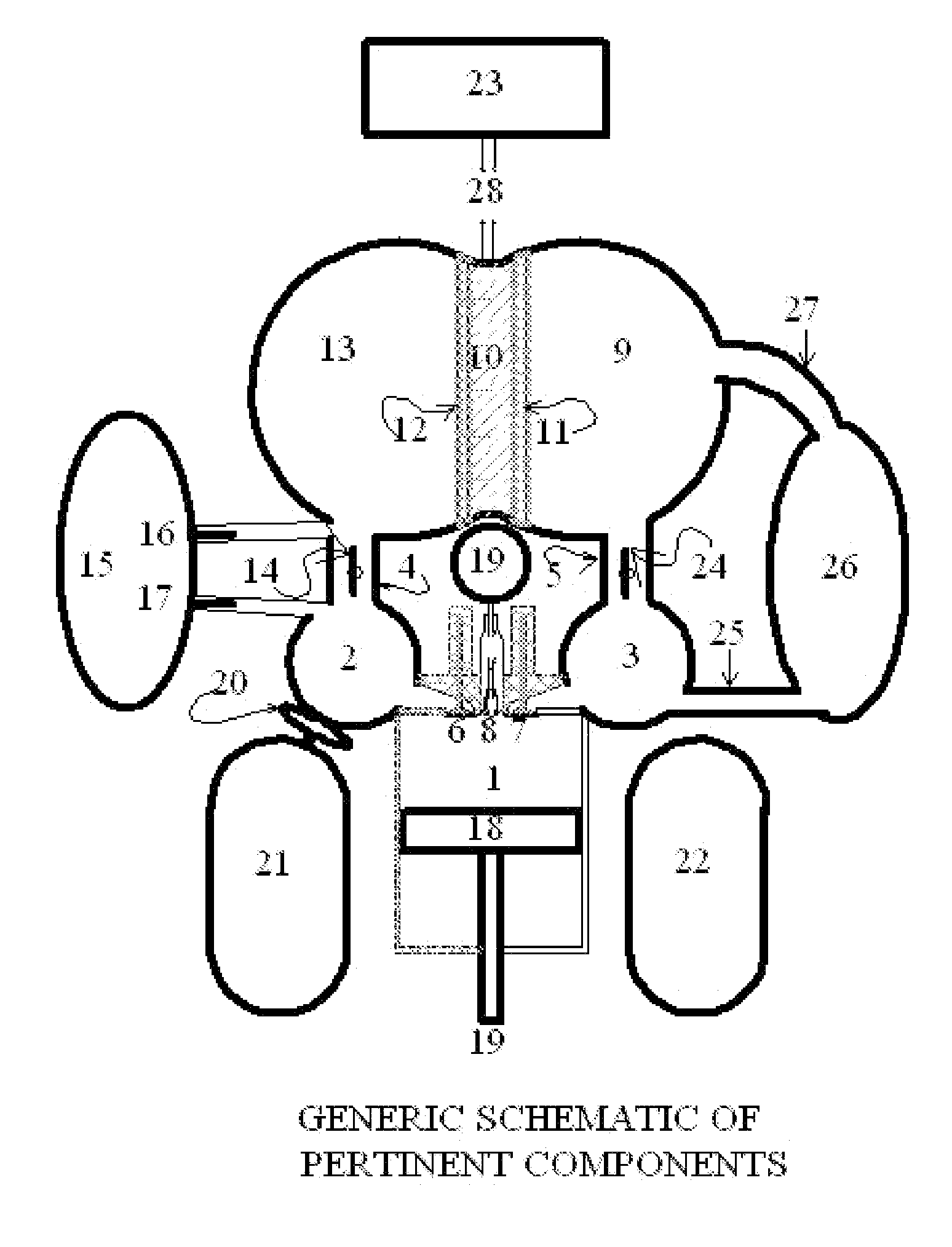
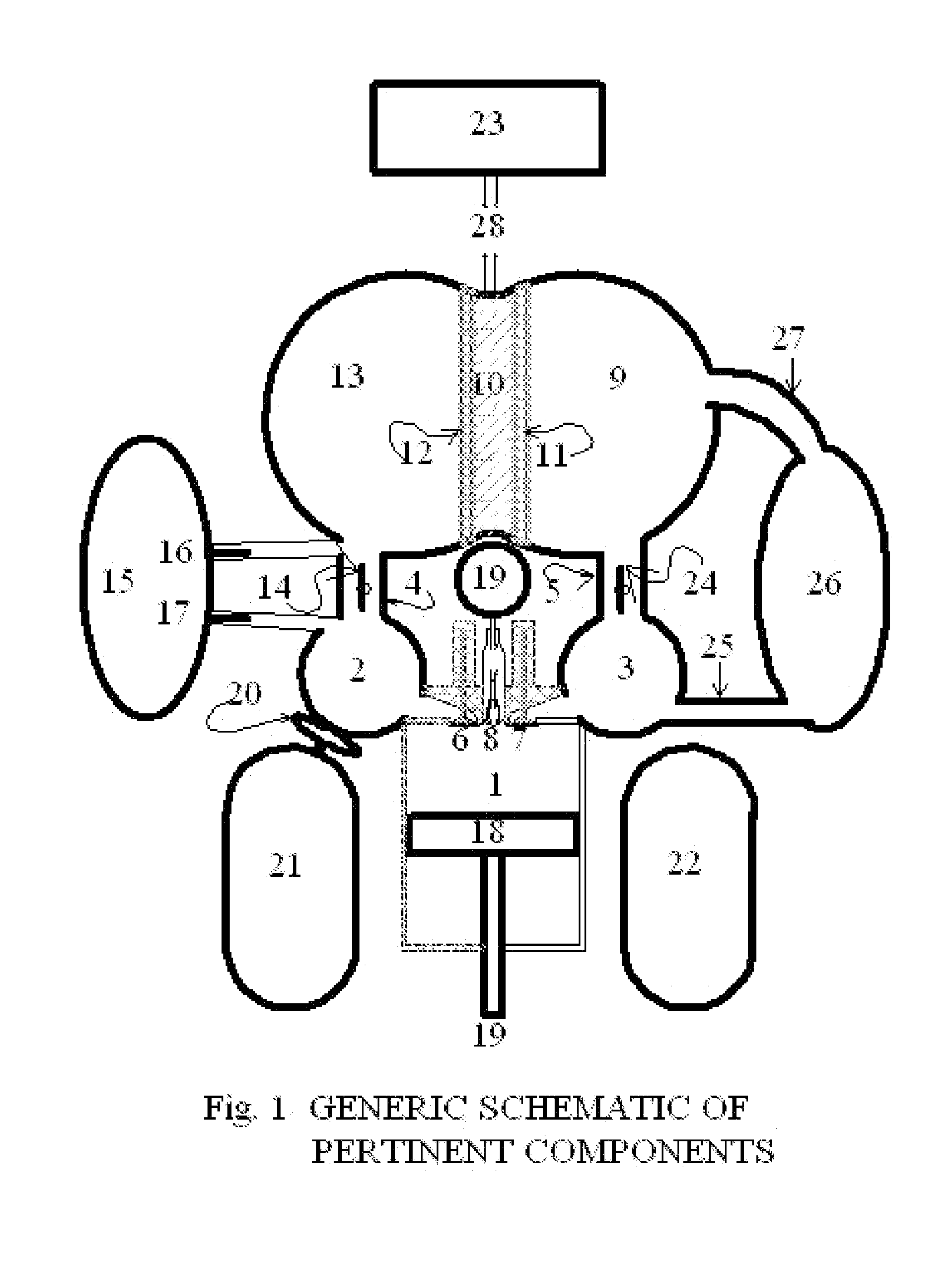
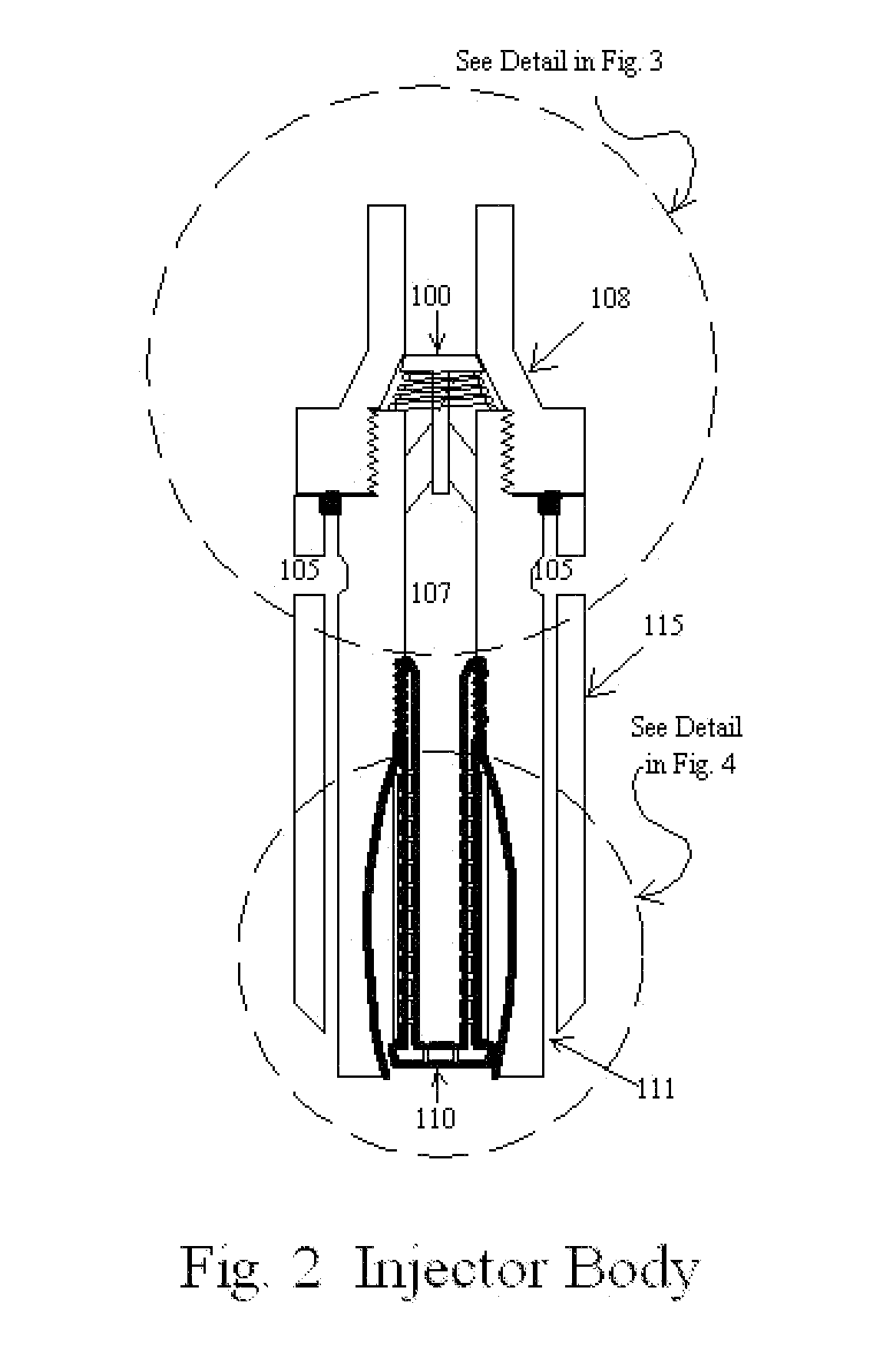
- The RAKH Cycle Engine generates superheated steam directly from the combustion of hydrogen and oxygen within the engine's combustion chamber, eliminating the need for a boiler and associated heat transfer surfaces, and uses a novel Gas Drier/Condenser to efficiently remove steam while passing non-condensable gases back into the engine, reducing weight and size while preventing gas binding.

Closed-loop cryogenic ambient-heat engine system for simultaneous power generation and cooled-air production and method thereof
PatentPendingIN202641099016A
Innovation
- A closed-loop cryogenic ambient-heat engine system utilizing hydrogen and helium fluid loops thermally coupled through a hydrogen condenser, where liquid hydrogen and helium are pressurized, vaporized by ambient heat, expanded for power generation, and condensed before being returned to respective storage tanks, with helium assisting hydrogen condensation and both fluids recirculating in separate loops.


Hydrogen Safety Standards and Regulations
The development and deployment of hydrogen power systems, whether utilizing closed-cycle or open-cycle heat engines, must operate within a comprehensive framework of safety standards and regulations. These regulatory requirements address the unique hazards associated with hydrogen as an energy carrier, including its high flammability, wide explosive range, low ignition energy, and propensity for embrittlement of certain materials. International organizations such as ISO, IEC, and SAE have established foundational standards that govern hydrogen production, storage, transportation, and utilization across various applications.
For closed-cycle hydrogen systems, regulations primarily focus on pressure vessel integrity, leak detection mechanisms, and containment protocols. Standards such as ISO 19880 series and ASME Boiler and Pressure Vessel Code Section VIII provide specifications for hydrogen storage tanks and piping systems operating under high pressure conditions. These standards mandate rigorous material selection criteria, welding procedures, and periodic inspection protocols to prevent catastrophic failures. Additionally, ventilation requirements and hydrogen concentration monitoring systems are prescribed to mitigate accumulation risks in enclosed spaces where closed-cycle engines operate.
Open-cycle hydrogen systems face additional regulatory scrutiny due to direct atmospheric discharge and combustion product management. Emission standards comparable to those governing conventional combustion engines apply, with specific attention to NOx formation at high combustion temperatures. The European Union's Type Approval Framework and EPA regulations in the United States establish permissible emission thresholds that open-cycle hydrogen engines must meet. Furthermore, workplace safety regulations such as OSHA standards in North America and ATEX directives in Europe mandate explosion-proof equipment classifications and zone designations for areas where hydrogen handling occurs.
Emerging regulatory frameworks increasingly address lifecycle safety considerations, including decommissioning procedures, hydrogen quality specifications per ISO 14687, and cybersecurity requirements for digitally controlled hydrogen systems. Compliance certification processes require extensive documentation, third-party testing, and ongoing safety audits. As hydrogen technologies mature, regulatory harmonization efforts aim to reduce barriers to international deployment while maintaining stringent safety performance standards across both closed and open-cycle applications.
For closed-cycle hydrogen systems, regulations primarily focus on pressure vessel integrity, leak detection mechanisms, and containment protocols. Standards such as ISO 19880 series and ASME Boiler and Pressure Vessel Code Section VIII provide specifications for hydrogen storage tanks and piping systems operating under high pressure conditions. These standards mandate rigorous material selection criteria, welding procedures, and periodic inspection protocols to prevent catastrophic failures. Additionally, ventilation requirements and hydrogen concentration monitoring systems are prescribed to mitigate accumulation risks in enclosed spaces where closed-cycle engines operate.
Open-cycle hydrogen systems face additional regulatory scrutiny due to direct atmospheric discharge and combustion product management. Emission standards comparable to those governing conventional combustion engines apply, with specific attention to NOx formation at high combustion temperatures. The European Union's Type Approval Framework and EPA regulations in the United States establish permissible emission thresholds that open-cycle hydrogen engines must meet. Furthermore, workplace safety regulations such as OSHA standards in North America and ATEX directives in Europe mandate explosion-proof equipment classifications and zone designations for areas where hydrogen handling occurs.
Emerging regulatory frameworks increasingly address lifecycle safety considerations, including decommissioning procedures, hydrogen quality specifications per ISO 14687, and cybersecurity requirements for digitally controlled hydrogen systems. Compliance certification processes require extensive documentation, third-party testing, and ongoing safety audits. As hydrogen technologies mature, regulatory harmonization efforts aim to reduce barriers to international deployment while maintaining stringent safety performance standards across both closed and open-cycle applications.
Thermal Efficiency Optimization Strategies
Thermal efficiency optimization in hydrogen-powered heat engines requires fundamentally different approaches for closed-cycle and open-cycle configurations. The theoretical maximum efficiency is governed by the Carnot limit, yet practical implementations demand specific strategies tailored to each cycle architecture. For closed-cycle systems, maintaining optimal working fluid properties throughout operation becomes paramount, while open-cycle engines must address combustion dynamics and exhaust energy recovery to maximize thermal conversion.
In closed-cycle hydrogen engines, regenerative heat exchange represents a critical optimization pathway. By recovering waste heat from the expansion process to preheat the working fluid before combustion, regenerators can improve thermal efficiency by 15-25 percent compared to non-regenerative designs. Advanced ceramic heat exchangers operating at temperatures exceeding 1200°C enable higher temperature ratios, directly translating to improved Carnot efficiency. Additionally, optimizing compression ratios between 12:1 and 18:1 balances mechanical losses against thermodynamic gains, with hydrogen's wide flammability range permitting leaner combustion mixtures that reduce heat rejection losses.
Open-cycle configurations benefit from distinct optimization strategies centered on combustion control and exhaust management. Staged combustion techniques allow precise temperature regulation, preventing excessive peak temperatures that increase NOx formation and material stress while maintaining high average cycle temperatures. Implementing variable valve timing and direct hydrogen injection enables adaptive control of equivalence ratios across operating conditions, sustaining near-stoichiometric combustion for maximum energy extraction. Turbocompounding and organic Rankine cycle bottoming systems can recover 8-12 percent additional energy from exhaust streams, significantly enhancing overall system efficiency.
Both architectures benefit from advanced insulation strategies and friction reduction technologies. Thermal barrier coatings minimize heat losses through cylinder walls, while low-friction piston rings and bearings reduce parasitic mechanical losses. Computational fluid dynamics optimization of combustion chamber geometry ensures complete hydrogen oxidation and uniform temperature distribution, eliminating hot spots and incomplete combustion that degrade efficiency. Real-time adaptive control systems that adjust operating parameters based on load conditions and ambient temperatures represent the frontier of efficiency optimization, potentially yielding 3-5 percent improvements over fixed-parameter operation.
In closed-cycle hydrogen engines, regenerative heat exchange represents a critical optimization pathway. By recovering waste heat from the expansion process to preheat the working fluid before combustion, regenerators can improve thermal efficiency by 15-25 percent compared to non-regenerative designs. Advanced ceramic heat exchangers operating at temperatures exceeding 1200°C enable higher temperature ratios, directly translating to improved Carnot efficiency. Additionally, optimizing compression ratios between 12:1 and 18:1 balances mechanical losses against thermodynamic gains, with hydrogen's wide flammability range permitting leaner combustion mixtures that reduce heat rejection losses.
Open-cycle configurations benefit from distinct optimization strategies centered on combustion control and exhaust management. Staged combustion techniques allow precise temperature regulation, preventing excessive peak temperatures that increase NOx formation and material stress while maintaining high average cycle temperatures. Implementing variable valve timing and direct hydrogen injection enables adaptive control of equivalence ratios across operating conditions, sustaining near-stoichiometric combustion for maximum energy extraction. Turbocompounding and organic Rankine cycle bottoming systems can recover 8-12 percent additional energy from exhaust streams, significantly enhancing overall system efficiency.
Both architectures benefit from advanced insulation strategies and friction reduction technologies. Thermal barrier coatings minimize heat losses through cylinder walls, while low-friction piston rings and bearings reduce parasitic mechanical losses. Computational fluid dynamics optimization of combustion chamber geometry ensures complete hydrogen oxidation and uniform temperature distribution, eliminating hot spots and incomplete combustion that degrade efficiency. Real-time adaptive control systems that adjust operating parameters based on load conditions and ambient temperatures represent the frontier of efficiency optimization, potentially yielding 3-5 percent improvements over fixed-parameter operation.
Unlock deeper insights with Patsnap Eureka Quick Research — get a full tech report to explore trends and direct your research. Try now!
Generate Your Research Report Instantly with AI Agent
Supercharge your innovation with Patsnap Eureka AI Agent Platform!