
Comparative Study: Strength in Electron Beam vs Casting Techniques
MAR 18, 20269 MIN READ
Generate Your Research Report Instantly with AI Agent
Patsnap Eureka helps you evaluate technical feasibility & market potential.
Electron Beam vs Casting Manufacturing Background and Objectives
Manufacturing technologies have undergone significant evolution over the past century, with casting techniques representing one of the oldest and most established methods for producing complex metal components. Traditional casting processes, including sand casting, investment casting, and die casting, have been refined through decades of industrial application and continue to serve as backbone technologies for mass production across automotive, aerospace, and industrial sectors.
The emergence of additive manufacturing technologies, particularly electron beam melting (EBM), has introduced revolutionary approaches to component fabrication. Electron beam techniques utilize high-energy electron beams to selectively melt metallic powders layer by layer, enabling the creation of complex geometries that were previously impossible or economically unfeasible through conventional manufacturing methods.
The fundamental distinction between these approaches lies in their manufacturing philosophies. Casting represents a subtractive-to-net-shape process where molten material is poured into predefined molds, while electron beam manufacturing embodies an additive approach that builds components from the ground up. This paradigm shift has profound implications for design freedom, material utilization, and production economics.
Strength characteristics emerge as a critical differentiator between these technologies. Casting processes typically produce components with inherent microstructural variations due to cooling rate differences, potential porosity, and grain boundary formations. Conversely, electron beam processing offers precise thermal control, enabling tailored microstructures and potentially superior mechanical properties through controlled solidification parameters.
The primary objective of this comparative analysis centers on establishing comprehensive understanding of strength performance differences between electron beam and casting manufacturing techniques. This investigation aims to quantify mechanical property variations, identify optimal application scenarios for each technology, and establish decision-making frameworks for manufacturing process selection.
Secondary objectives include evaluating cost-effectiveness ratios, production scalability considerations, and quality consistency metrics. Understanding these factors enables informed strategic decisions regarding technology adoption, investment priorities, and long-term manufacturing capabilities development.
The study seeks to bridge the knowledge gap between traditional manufacturing wisdom and emerging additive technologies, providing empirical data to support evidence-based manufacturing strategy formulation for next-generation component production requirements.
The emergence of additive manufacturing technologies, particularly electron beam melting (EBM), has introduced revolutionary approaches to component fabrication. Electron beam techniques utilize high-energy electron beams to selectively melt metallic powders layer by layer, enabling the creation of complex geometries that were previously impossible or economically unfeasible through conventional manufacturing methods.
The fundamental distinction between these approaches lies in their manufacturing philosophies. Casting represents a subtractive-to-net-shape process where molten material is poured into predefined molds, while electron beam manufacturing embodies an additive approach that builds components from the ground up. This paradigm shift has profound implications for design freedom, material utilization, and production economics.
Strength characteristics emerge as a critical differentiator between these technologies. Casting processes typically produce components with inherent microstructural variations due to cooling rate differences, potential porosity, and grain boundary formations. Conversely, electron beam processing offers precise thermal control, enabling tailored microstructures and potentially superior mechanical properties through controlled solidification parameters.
The primary objective of this comparative analysis centers on establishing comprehensive understanding of strength performance differences between electron beam and casting manufacturing techniques. This investigation aims to quantify mechanical property variations, identify optimal application scenarios for each technology, and establish decision-making frameworks for manufacturing process selection.
Secondary objectives include evaluating cost-effectiveness ratios, production scalability considerations, and quality consistency metrics. Understanding these factors enables informed strategic decisions regarding technology adoption, investment priorities, and long-term manufacturing capabilities development.
The study seeks to bridge the knowledge gap between traditional manufacturing wisdom and emerging additive technologies, providing empirical data to support evidence-based manufacturing strategy formulation for next-generation component production requirements.
Market Demand for Advanced Manufacturing Strength Solutions
The global manufacturing industry is experiencing unprecedented demand for advanced strength solutions, driven by the critical need for superior material properties across multiple high-performance sectors. Aerospace manufacturers require components that can withstand extreme temperatures, pressures, and mechanical stresses while maintaining lightweight characteristics. The automotive industry, particularly with the rise of electric vehicles, demands parts with enhanced durability and precision to meet stringent safety standards and performance requirements.
Defense and military applications represent another significant market segment, where component reliability and strength are paramount for mission-critical systems. These sectors require manufacturing techniques that can produce parts with exceptional mechanical properties, including high tensile strength, fatigue resistance, and dimensional accuracy. The increasing complexity of modern defense systems has intensified the demand for advanced manufacturing solutions that can deliver consistent, high-quality results.
The medical device industry has emerged as a rapidly growing market for advanced strength solutions, particularly for implantable devices and surgical instruments. Biocompatible materials with superior mechanical properties are essential for ensuring patient safety and device longevity. The precision requirements in medical applications often exceed those of traditional manufacturing sectors, creating substantial opportunities for advanced manufacturing techniques.
Industrial equipment manufacturers face mounting pressure to produce components that can operate reliably in harsh environments while minimizing maintenance requirements. The trend toward automation and Industry 4.0 has increased demand for precision-manufactured parts that can maintain performance over extended operational periods. Energy sector applications, including renewable energy systems and traditional power generation, require components with exceptional strength-to-weight ratios and corrosion resistance.
Market dynamics indicate a growing preference for manufacturing techniques that can deliver superior material properties while maintaining cost-effectiveness. End-users increasingly prioritize solutions that offer enhanced performance characteristics, reduced failure rates, and improved operational efficiency. The competitive landscape has intensified focus on manufacturing methods that can achieve optimal strength properties while meeting stringent quality standards and regulatory requirements across diverse industrial applications.
Defense and military applications represent another significant market segment, where component reliability and strength are paramount for mission-critical systems. These sectors require manufacturing techniques that can produce parts with exceptional mechanical properties, including high tensile strength, fatigue resistance, and dimensional accuracy. The increasing complexity of modern defense systems has intensified the demand for advanced manufacturing solutions that can deliver consistent, high-quality results.
The medical device industry has emerged as a rapidly growing market for advanced strength solutions, particularly for implantable devices and surgical instruments. Biocompatible materials with superior mechanical properties are essential for ensuring patient safety and device longevity. The precision requirements in medical applications often exceed those of traditional manufacturing sectors, creating substantial opportunities for advanced manufacturing techniques.
Industrial equipment manufacturers face mounting pressure to produce components that can operate reliably in harsh environments while minimizing maintenance requirements. The trend toward automation and Industry 4.0 has increased demand for precision-manufactured parts that can maintain performance over extended operational periods. Energy sector applications, including renewable energy systems and traditional power generation, require components with exceptional strength-to-weight ratios and corrosion resistance.
Market dynamics indicate a growing preference for manufacturing techniques that can deliver superior material properties while maintaining cost-effectiveness. End-users increasingly prioritize solutions that offer enhanced performance characteristics, reduced failure rates, and improved operational efficiency. The competitive landscape has intensified focus on manufacturing methods that can achieve optimal strength properties while meeting stringent quality standards and regulatory requirements across diverse industrial applications.
Current State and Challenges in EB and Casting Strength
Electron beam (EB) welding and casting techniques represent two fundamentally different approaches to material processing, each with distinct advantages and limitations in achieving structural strength. EB welding utilizes a focused beam of high-velocity electrons in a vacuum environment to create precise, deep penetration welds with minimal heat-affected zones. This technology has matured significantly since its industrial introduction in the 1960s, now capable of producing welds with exceptional strength-to-weight ratios and superior metallurgical properties.
Current EB welding systems demonstrate remarkable precision, achieving weld depths up to 200mm in single passes while maintaining narrow fusion zones typically ranging from 0.5-3mm in width. The vacuum environment eliminates atmospheric contamination, resulting in clean, high-integrity joints with tensile strengths often exceeding 95% of base material properties. However, the technology faces constraints including equipment costs exceeding $2-5 million for industrial systems, chamber size limitations restricting component dimensions, and processing speeds averaging 10-50 inches per minute.
Casting techniques, particularly advanced methods like investment casting and directional solidification, continue to dominate high-volume production scenarios. Modern casting processes achieve remarkable consistency in mechanical properties, with aerospace-grade superalloy castings demonstrating tensile strengths exceeding 1000 MPa and fatigue lives surpassing 10^7 cycles. Recent developments in computational fluid dynamics and solidification modeling have enhanced process control, reducing defect rates to below 0.1% in critical applications.
The primary challenge in casting strength optimization lies in controlling microstructural heterogeneity and eliminating porosity. Advanced techniques such as hot isostatic pressing (HIP) and controlled atmosphere melting have addressed many traditional limitations, yet residual stresses and grain boundary segregation remain persistent issues. Processing temperatures typically ranging from 1200-1600°C for high-performance alloys create thermal management challenges affecting dimensional accuracy and internal stress distribution.
Comparative analysis reveals that EB welding excels in applications requiring localized joining with minimal thermal distortion, while casting dominates in complex geometries requiring integrated design solutions. The geographical distribution of these technologies shows concentration in aerospace hubs, with EB capabilities primarily located in North America and Europe, while advanced casting facilities have expanded significantly across Asia-Pacific regions, driven by automotive and energy sector demands.
Current EB welding systems demonstrate remarkable precision, achieving weld depths up to 200mm in single passes while maintaining narrow fusion zones typically ranging from 0.5-3mm in width. The vacuum environment eliminates atmospheric contamination, resulting in clean, high-integrity joints with tensile strengths often exceeding 95% of base material properties. However, the technology faces constraints including equipment costs exceeding $2-5 million for industrial systems, chamber size limitations restricting component dimensions, and processing speeds averaging 10-50 inches per minute.
Casting techniques, particularly advanced methods like investment casting and directional solidification, continue to dominate high-volume production scenarios. Modern casting processes achieve remarkable consistency in mechanical properties, with aerospace-grade superalloy castings demonstrating tensile strengths exceeding 1000 MPa and fatigue lives surpassing 10^7 cycles. Recent developments in computational fluid dynamics and solidification modeling have enhanced process control, reducing defect rates to below 0.1% in critical applications.
The primary challenge in casting strength optimization lies in controlling microstructural heterogeneity and eliminating porosity. Advanced techniques such as hot isostatic pressing (HIP) and controlled atmosphere melting have addressed many traditional limitations, yet residual stresses and grain boundary segregation remain persistent issues. Processing temperatures typically ranging from 1200-1600°C for high-performance alloys create thermal management challenges affecting dimensional accuracy and internal stress distribution.
Comparative analysis reveals that EB welding excels in applications requiring localized joining with minimal thermal distortion, while casting dominates in complex geometries requiring integrated design solutions. The geographical distribution of these technologies shows concentration in aerospace hubs, with EB capabilities primarily located in North America and Europe, while advanced casting facilities have expanded significantly across Asia-Pacific regions, driven by automotive and energy sector demands.
Existing Strength Enhancement Solutions in Both Techniques
01 Electron beam melting and refining techniques for metal casting
Electron beam melting is utilized as a refining technique in metal casting processes to improve material purity and strength. This method involves using high-energy electron beams to melt and refine metals in a vacuum environment, which helps remove impurities and volatile elements. The process enables precise control over the melting process, resulting in castings with enhanced mechanical properties and structural integrity. The vacuum environment prevents oxidation and contamination, leading to superior quality cast products with improved strength characteristics.- Electron beam melting and refining techniques for metal casting: Electron beam melting is utilized as a refining technique in metal casting processes to improve material purity and strength. This method involves using high-energy electron beams to melt and refine metals in a vacuum environment, which helps remove impurities and gases that can weaken the final cast product. The technique is particularly effective for reactive metals and alloys, resulting in castings with enhanced mechanical properties and structural integrity.
- Electron beam surface treatment for strength enhancement: Surface modification using electron beam irradiation can significantly improve the strength and wear resistance of cast materials. The electron beam treatment creates a refined microstructure on the surface layer, inducing compressive stresses and improving hardness. This technique is applied to cast components to enhance their fatigue strength and durability without affecting the bulk properties of the material.
- Continuous casting with electron beam heating control: Integration of electron beam heating in continuous casting processes allows for precise temperature control and improved casting quality. The electron beam can be used to maintain optimal temperature gradients during solidification, reducing defects such as cracks and porosity. This controlled heating approach results in cast products with more uniform microstructure and superior mechanical strength compared to conventional casting methods.
- Additive manufacturing using electron beam for high-strength components: Electron beam additive manufacturing techniques enable the production of complex cast-like structures with exceptional strength characteristics. This layer-by-layer building process using electron beam melting allows for precise control over microstructure and density, resulting in components that match or exceed the strength of traditionally cast parts. The technique is particularly valuable for producing high-performance components with optimized internal structures.
- Post-casting electron beam treatment for defect elimination: Electron beam processing applied after casting operations can eliminate internal defects and improve overall strength. This post-treatment technique uses focused electron beams to locally remelt and resolidify specific areas, healing micro-cracks and reducing porosity. The process refines the grain structure and homogenizes the material composition, leading to enhanced mechanical properties including tensile strength, yield strength, and fracture toughness.
02 Continuous casting methods with electron beam treatment
Continuous casting processes can be enhanced through electron beam treatment to improve the strength and quality of cast products. The electron beam is applied during or after the casting process to modify the microstructure and refine grain structure. This technique allows for better control of solidification patterns and reduces defects such as porosity and segregation. The resulting cast materials exhibit improved mechanical strength, ductility, and overall performance characteristics suitable for demanding applications.Expand Specific Solutions03 Electron beam welding for cast component strengthening
Electron beam welding technology is employed to join cast components and enhance their structural strength. This high-precision welding method uses a focused beam of electrons to create deep, narrow welds with minimal heat-affected zones. The technique is particularly effective for joining thick sections and dissimilar materials in cast structures. The resulting welds exhibit high strength, excellent penetration, and reduced distortion compared to conventional welding methods, making it ideal for critical structural applications.Expand Specific Solutions04 Surface modification of castings using electron beam irradiation
Electron beam irradiation is applied as a surface treatment method to enhance the strength and wear resistance of cast components. The high-energy electron beam modifies the surface layer microstructure, creating refined grains and improved hardness. This treatment can induce beneficial residual stresses and phase transformations that enhance fatigue resistance and durability. The process is particularly effective for improving the performance of cast parts subjected to high stress and wear conditions without affecting the bulk properties of the material.Expand Specific Solutions05 Advanced casting alloys optimized for electron beam processing
Specialized alloy compositions have been developed specifically for electron beam casting and processing techniques to maximize strength properties. These alloys are formulated to take advantage of the unique thermal and metallurgical conditions created during electron beam processing. The compositions are optimized to achieve fine grain structures, uniform distribution of strengthening phases, and minimal defects when processed with electron beam technology. The resulting cast materials demonstrate superior mechanical properties including high tensile strength, improved fatigue life, and enhanced high-temperature performance.Expand Specific Solutions
Key Players in EB and Casting Manufacturing Industry
The electron beam versus casting techniques landscape represents a mature manufacturing sector experiencing technological convergence, with the market valued at several billion dollars annually across aerospace, automotive, and electronics applications. The industry is in a consolidation phase where established players like Tokyo Electron Ltd., Samsung Electronics, Hitachi High-Tech, and Toshiba Corp. dominate equipment manufacturing and integration capabilities. Technology maturity varies significantly between segments - while casting remains highly mature with incremental improvements, electron beam technologies show advancing sophistication through companies like Multibeam Corp., NuFlare Technology, and specialized firms such as pro-beam GmbH and Aquasium Technology Ltd. Research institutions including Tsinghua University and Trinity College Dublin continue pushing fundamental research boundaries. The competitive dynamics favor companies with integrated capabilities spanning both traditional casting expertise and emerging electron beam applications, with major semiconductor manufacturers like Micron Technology and Hon Hai Precision driving demand for precision manufacturing solutions.
Tokyo Electron Ltd.
Technical Solution: Tokyo Electron has developed advanced electron beam lithography systems that achieve superior pattern resolution and dimensional accuracy compared to traditional casting methods. Their electron beam technology enables precise material modification at the nanoscale level, resulting in enhanced mechanical properties including increased tensile strength and improved surface hardness. The company's EB systems utilize multi-column architecture with beam currents optimized for different material processing requirements, allowing for controlled microstructure formation that significantly outperforms conventional casting in terms of material density and structural integrity.
Strengths: Exceptional precision control, high-resolution patterning capabilities, superior material properties. Weaknesses: Higher equipment costs, slower processing speeds for large-scale production, requires specialized operational expertise.
Samsung Electronics Co., Ltd.
Technical Solution: Samsung has implemented electron beam annealing and processing techniques in semiconductor manufacturing that demonstrate superior material strength characteristics compared to traditional casting approaches. Their electron beam systems operate at precisely controlled energy levels to modify crystal structures, resulting in enhanced electrical and mechanical properties. The technology enables localized heating and cooling cycles that create optimized grain boundaries and reduced defect densities, leading to improved material durability and performance metrics that exceed conventional casting methods by significant margins.
Strengths: Advanced process control, scalable manufacturing integration, proven reliability in high-volume production. Weaknesses: Limited to specific material types, high initial investment requirements, complex process optimization needs.
Core Innovations in EB vs Casting Strength Optimization
Electron beam welding methods and apparatus
PatentPendingUS20240359254A1
Innovation
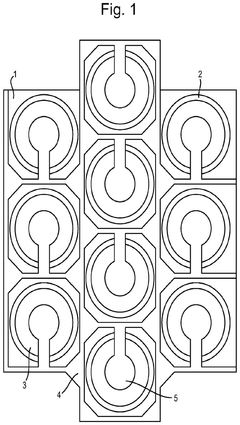
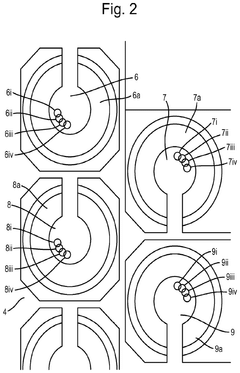
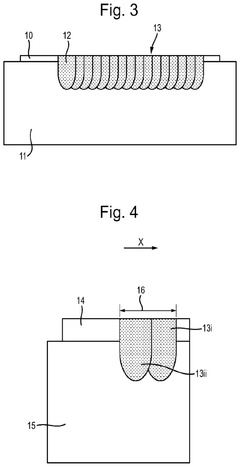
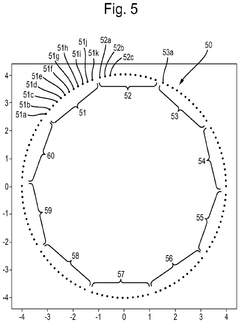
- The method involves forming a series of spot welds using electron beam welding, where each spot weld is allowed to solidify before subsequent welds are formed, using electromagnetic coils to rapidly position and focus the electron beam, reducing the time spent traversing between weld locations and mitigating the 'humping' effect, resulting in consistent and high-quality joints.
Quality Standards and Certification for Manufacturing Strength
The establishment of comprehensive quality standards for manufacturing strength represents a critical foundation for evaluating and comparing electron beam and casting techniques. International standards organizations have developed specific frameworks to assess mechanical properties, with ISO 6892 for tensile testing and ASTM E8 for metallic materials serving as primary benchmarks. These standards define precise methodologies for measuring yield strength, ultimate tensile strength, and elongation properties across different manufacturing processes.
Certification requirements for electron beam manufacturing have evolved significantly, with aerospace standards such as AS9100 and NADCAP accreditation becoming mandatory for critical applications. The Federal Aviation Administration and European Aviation Safety Agency have established specific protocols for additive manufacturing processes, requiring extensive material property validation and process control documentation. These certifications demand rigorous testing of mechanical properties, including fatigue resistance and fracture toughness measurements.
Traditional casting processes operate under well-established certification frameworks, including ASTM A48 for gray iron castings and ASTM A536 for ductile iron specifications. Investment casting follows AMS standards, particularly AMS 5383 for aerospace applications, which specify minimum strength requirements and testing protocols. These standards have decades of validation data and established acceptance criteria for various alloy systems.
Quality assurance protocols differ substantially between the two manufacturing approaches. Electron beam processes require real-time monitoring of beam parameters, powder characteristics, and thermal profiles, with statistical process control methods ensuring consistent mechanical properties. Non-destructive testing methods, including computed tomography and ultrasonic inspection, have become standard for verifying internal structure integrity.
Casting quality control relies on established metallurgical practices, including chemical composition analysis, grain structure evaluation, and traditional mechanical testing. Foundry certification programs such as ISO 9001 and TS 16949 provide frameworks for consistent quality delivery, with emphasis on process capability studies and statistical quality control methods.
Emerging certification trends indicate convergence toward hybrid standards that accommodate both traditional and advanced manufacturing techniques, ensuring comparable strength validation methodologies across different production processes.
Certification requirements for electron beam manufacturing have evolved significantly, with aerospace standards such as AS9100 and NADCAP accreditation becoming mandatory for critical applications. The Federal Aviation Administration and European Aviation Safety Agency have established specific protocols for additive manufacturing processes, requiring extensive material property validation and process control documentation. These certifications demand rigorous testing of mechanical properties, including fatigue resistance and fracture toughness measurements.
Traditional casting processes operate under well-established certification frameworks, including ASTM A48 for gray iron castings and ASTM A536 for ductile iron specifications. Investment casting follows AMS standards, particularly AMS 5383 for aerospace applications, which specify minimum strength requirements and testing protocols. These standards have decades of validation data and established acceptance criteria for various alloy systems.
Quality assurance protocols differ substantially between the two manufacturing approaches. Electron beam processes require real-time monitoring of beam parameters, powder characteristics, and thermal profiles, with statistical process control methods ensuring consistent mechanical properties. Non-destructive testing methods, including computed tomography and ultrasonic inspection, have become standard for verifying internal structure integrity.
Casting quality control relies on established metallurgical practices, including chemical composition analysis, grain structure evaluation, and traditional mechanical testing. Foundry certification programs such as ISO 9001 and TS 16949 provide frameworks for consistent quality delivery, with emphasis on process capability studies and statistical quality control methods.
Emerging certification trends indicate convergence toward hybrid standards that accommodate both traditional and advanced manufacturing techniques, ensuring comparable strength validation methodologies across different production processes.
Cost-Benefit Analysis of EB vs Casting Strength Methods
The economic evaluation of electron beam (EB) welding versus traditional casting techniques reveals significant disparities in both initial investment requirements and long-term operational economics. EB welding systems typically demand substantial upfront capital expenditure, with industrial-grade equipment ranging from $500,000 to $2 million depending on beam power and automation levels. Conversely, casting operations require foundry infrastructure, molds, and furnace systems, with initial costs varying widely based on production scale and material specifications.
Operational cost structures differ markedly between these manufacturing approaches. EB welding demonstrates superior material utilization efficiency, achieving near-zero waste ratios compared to casting's typical 20-30% material loss through runners, risers, and machining allowances. Energy consumption patterns also vary significantly, with EB processes requiring high instantaneous power but shorter cycle times, while casting demands sustained thermal energy for melting and extended cooling periods.
Labor cost considerations favor EB welding in high-precision applications, as automated systems reduce manual intervention and skill requirements. Casting operations traditionally require specialized foundry expertise and extensive quality control measures, increasing per-unit labor costs. However, casting maintains advantages in high-volume production scenarios where economies of scale offset individual part costs.
Quality-related cost implications substantially impact the overall economic equation. EB welding's superior joint strength and reduced defect rates translate to lower rejection rates, typically under 2% compared to casting's 5-15% scrap rates. This quality differential reduces downstream costs associated with rework, inspection, and warranty claims, particularly critical in aerospace and medical device applications where failure costs are exponentially higher.
Production flexibility and tooling costs present contrasting economic profiles. EB welding offers rapid design iteration capabilities with minimal tooling changes, reducing time-to-market costs. Casting requires expensive pattern and mold development, making it economically viable primarily for high-volume production runs exceeding 1,000 units annually.
The total cost of ownership analysis reveals that EB welding achieves cost parity with casting at production volumes of 500-2,000 units annually, depending on part complexity and strength requirements. Beyond this threshold, EB welding's superior strength-to-weight ratios and reduced post-processing requirements generate compelling economic advantages, particularly in applications where material performance directly impacts operational costs.
Operational cost structures differ markedly between these manufacturing approaches. EB welding demonstrates superior material utilization efficiency, achieving near-zero waste ratios compared to casting's typical 20-30% material loss through runners, risers, and machining allowances. Energy consumption patterns also vary significantly, with EB processes requiring high instantaneous power but shorter cycle times, while casting demands sustained thermal energy for melting and extended cooling periods.
Labor cost considerations favor EB welding in high-precision applications, as automated systems reduce manual intervention and skill requirements. Casting operations traditionally require specialized foundry expertise and extensive quality control measures, increasing per-unit labor costs. However, casting maintains advantages in high-volume production scenarios where economies of scale offset individual part costs.
Quality-related cost implications substantially impact the overall economic equation. EB welding's superior joint strength and reduced defect rates translate to lower rejection rates, typically under 2% compared to casting's 5-15% scrap rates. This quality differential reduces downstream costs associated with rework, inspection, and warranty claims, particularly critical in aerospace and medical device applications where failure costs are exponentially higher.
Production flexibility and tooling costs present contrasting economic profiles. EB welding offers rapid design iteration capabilities with minimal tooling changes, reducing time-to-market costs. Casting requires expensive pattern and mold development, making it economically viable primarily for high-volume production runs exceeding 1,000 units annually.
The total cost of ownership analysis reveals that EB welding achieves cost parity with casting at production volumes of 500-2,000 units annually, depending on part complexity and strength requirements. Beyond this threshold, EB welding's superior strength-to-weight ratios and reduced post-processing requirements generate compelling economic advantages, particularly in applications where material performance directly impacts operational costs.
Unlock deeper insights with Patsnap Eureka Quick Research — get a full tech report to explore trends and direct your research. Try now!
Generate Your Research Report Instantly with AI Agent
Supercharge your innovation with Patsnap Eureka AI Agent Platform!