
Explore Cross-Industry Electron Beam Melting Applications
MAR 18, 20269 MIN READ
Generate Your Research Report Instantly with AI Agent
Patsnap Eureka helps you evaluate technical feasibility & market potential.
Electron Beam Melting Technology Background and Objectives
Electron Beam Melting (EBM) technology represents a revolutionary advancement in additive manufacturing, utilizing a high-energy electron beam to selectively melt metallic powders in a layer-by-layer fashion to create three-dimensional components. This powder bed fusion process operates under vacuum conditions, enabling the processing of reactive materials and achieving superior material properties compared to conventional manufacturing methods.
The technology emerged from the convergence of electron beam welding principles and additive manufacturing concepts, first commercialized by Arcam AB in the early 2000s. EBM distinguishes itself from other additive manufacturing technologies through its ability to process materials at elevated temperatures, typically ranging from 700°C to 1000°C, which significantly reduces residual stresses and eliminates the need for post-processing heat treatments in many applications.
The fundamental mechanism involves an electron gun generating a focused beam that scans across a powder bed according to predetermined patterns derived from CAD models. The vacuum environment prevents oxidation and contamination while enabling precise control over the melting process. This controlled environment allows for the processing of highly reactive materials such as titanium alloys, which are challenging to manufacture using traditional methods.
Current technological objectives focus on expanding material compatibility beyond traditional aerospace-grade titanium alloys to include advanced steel grades, aluminum alloys, and emerging superalloys. Industry stakeholders are pursuing enhanced resolution capabilities, improved surface finish quality, and increased build rates to make the technology economically viable for broader industrial applications.
The strategic importance of EBM technology lies in its potential to revolutionize manufacturing across multiple sectors by enabling the production of complex geometries that are impossible or economically unfeasible with conventional manufacturing. The technology's ability to produce fully dense parts with mechanical properties often exceeding those of wrought materials positions it as a critical enabler for next-generation product designs.
Primary development goals include achieving greater geometric accuracy, expanding the range of processable materials, and developing multi-material processing capabilities. These objectives align with industry demands for customized, high-performance components that can be produced on-demand with minimal material waste, supporting both sustainability initiatives and supply chain resilience strategies.
The technology emerged from the convergence of electron beam welding principles and additive manufacturing concepts, first commercialized by Arcam AB in the early 2000s. EBM distinguishes itself from other additive manufacturing technologies through its ability to process materials at elevated temperatures, typically ranging from 700°C to 1000°C, which significantly reduces residual stresses and eliminates the need for post-processing heat treatments in many applications.
The fundamental mechanism involves an electron gun generating a focused beam that scans across a powder bed according to predetermined patterns derived from CAD models. The vacuum environment prevents oxidation and contamination while enabling precise control over the melting process. This controlled environment allows for the processing of highly reactive materials such as titanium alloys, which are challenging to manufacture using traditional methods.
Current technological objectives focus on expanding material compatibility beyond traditional aerospace-grade titanium alloys to include advanced steel grades, aluminum alloys, and emerging superalloys. Industry stakeholders are pursuing enhanced resolution capabilities, improved surface finish quality, and increased build rates to make the technology economically viable for broader industrial applications.
The strategic importance of EBM technology lies in its potential to revolutionize manufacturing across multiple sectors by enabling the production of complex geometries that are impossible or economically unfeasible with conventional manufacturing. The technology's ability to produce fully dense parts with mechanical properties often exceeding those of wrought materials positions it as a critical enabler for next-generation product designs.
Primary development goals include achieving greater geometric accuracy, expanding the range of processable materials, and developing multi-material processing capabilities. These objectives align with industry demands for customized, high-performance components that can be produced on-demand with minimal material waste, supporting both sustainability initiatives and supply chain resilience strategies.
Cross-Industry Market Demand for EBM Applications
The aerospace industry represents the most established market for electron beam melting technology, driven by stringent requirements for lightweight, high-strength components with complex geometries. Aircraft engine manufacturers increasingly demand turbine blades, fuel nozzles, and structural brackets that traditional manufacturing cannot efficiently produce. The technology's ability to process titanium alloys and superalloys makes it particularly valuable for critical flight components where material integrity and weight reduction directly impact fuel efficiency and performance.
Medical device manufacturing has emerged as a rapidly expanding market segment, particularly for orthopedic implants and surgical instruments. The biocompatibility of EBM-processed titanium and cobalt-chrome alloys, combined with the technology's capability to create patient-specific implants with porous structures, addresses growing demands for personalized medicine. Hip joints, spinal implants, and dental prosthetics benefit from EBM's precision in creating complex internal architectures that promote bone ingrowth and reduce implant rejection rates.
The automotive sector shows increasing interest in EBM applications, especially for high-performance and electric vehicle components. Lightweight structural elements, heat exchangers, and specialized tooling represent key demand drivers. As automotive manufacturers pursue electrification strategies, the need for efficient thermal management systems and reduced vehicle weight creates opportunities for EBM-produced components that offer superior performance-to-weight ratios compared to conventional manufacturing methods.
Energy sector applications span both traditional and renewable energy markets. Oil and gas companies require corrosion-resistant components for harsh operating environments, while wind turbine manufacturers seek lightweight, durable parts for improved efficiency. The nuclear industry presents emerging opportunities for EBM in producing specialized components that meet strict regulatory requirements and material specifications.
Industrial tooling and machinery manufacturing represents a growing market segment where EBM enables production of conformal cooling channels in injection molds and complex geometries in specialized equipment. The technology's ability to consolidate multiple parts into single components reduces assembly complexity and improves operational reliability, driving adoption across various manufacturing sectors seeking operational efficiency improvements.
Medical device manufacturing has emerged as a rapidly expanding market segment, particularly for orthopedic implants and surgical instruments. The biocompatibility of EBM-processed titanium and cobalt-chrome alloys, combined with the technology's capability to create patient-specific implants with porous structures, addresses growing demands for personalized medicine. Hip joints, spinal implants, and dental prosthetics benefit from EBM's precision in creating complex internal architectures that promote bone ingrowth and reduce implant rejection rates.
The automotive sector shows increasing interest in EBM applications, especially for high-performance and electric vehicle components. Lightweight structural elements, heat exchangers, and specialized tooling represent key demand drivers. As automotive manufacturers pursue electrification strategies, the need for efficient thermal management systems and reduced vehicle weight creates opportunities for EBM-produced components that offer superior performance-to-weight ratios compared to conventional manufacturing methods.
Energy sector applications span both traditional and renewable energy markets. Oil and gas companies require corrosion-resistant components for harsh operating environments, while wind turbine manufacturers seek lightweight, durable parts for improved efficiency. The nuclear industry presents emerging opportunities for EBM in producing specialized components that meet strict regulatory requirements and material specifications.
Industrial tooling and machinery manufacturing represents a growing market segment where EBM enables production of conformal cooling channels in injection molds and complex geometries in specialized equipment. The technology's ability to consolidate multiple parts into single components reduces assembly complexity and improves operational reliability, driving adoption across various manufacturing sectors seeking operational efficiency improvements.
Current EBM Technology Status and Cross-Industry Challenges
Electron Beam Melting technology has reached a mature stage in aerospace and medical sectors, with established systems like Arcam EBM machines demonstrating reliable performance for titanium alloy components and biomedical implants. The technology operates in vacuum environments at elevated temperatures, enabling processing of reactive materials that are challenging for other additive manufacturing methods. Current EBM systems achieve layer thicknesses of 50-200 micrometers with build rates significantly higher than laser-based alternatives.
The aerospace industry has successfully integrated EBM for producing complex geometries in turbine blades, structural brackets, and engine components. Medical applications focus primarily on orthopedic implants, leveraging EBM's ability to create porous structures that promote bone ingrowth. However, surface finish quality remains a limitation, typically requiring post-processing for critical applications.
Cross-industry expansion faces several technical challenges that vary significantly across sectors. The automotive industry requires higher production volumes and cost efficiency than current EBM systems can deliver economically. Energy sector applications demand processing of diverse material compositions, including superalloys and refractory metals, pushing the boundaries of current beam control systems.
Material availability represents a critical bottleneck for cross-industry adoption. While titanium and some steel powders are well-established, industries like electronics require specialized materials with specific electrical and thermal properties. Powder quality consistency and recycling capabilities remain inconsistent across different material systems, affecting process reliability and cost-effectiveness.
Process monitoring and quality control present ongoing challenges, particularly for industries with stringent regulatory requirements. Current in-situ monitoring technologies provide limited real-time feedback on part quality, making it difficult to ensure consistent results across different applications. The lack of standardized qualification procedures for new materials and applications further complicates cross-industry implementation.
Scalability issues persist as industries evaluate EBM for larger components or higher volume production. Current build chamber sizes limit part dimensions, while cycle times may not meet industrial production requirements. Additionally, the specialized knowledge required for parameter optimization creates barriers for industries without extensive additive manufacturing expertise, necessitating significant investment in training and process development.
The aerospace industry has successfully integrated EBM for producing complex geometries in turbine blades, structural brackets, and engine components. Medical applications focus primarily on orthopedic implants, leveraging EBM's ability to create porous structures that promote bone ingrowth. However, surface finish quality remains a limitation, typically requiring post-processing for critical applications.
Cross-industry expansion faces several technical challenges that vary significantly across sectors. The automotive industry requires higher production volumes and cost efficiency than current EBM systems can deliver economically. Energy sector applications demand processing of diverse material compositions, including superalloys and refractory metals, pushing the boundaries of current beam control systems.
Material availability represents a critical bottleneck for cross-industry adoption. While titanium and some steel powders are well-established, industries like electronics require specialized materials with specific electrical and thermal properties. Powder quality consistency and recycling capabilities remain inconsistent across different material systems, affecting process reliability and cost-effectiveness.
Process monitoring and quality control present ongoing challenges, particularly for industries with stringent regulatory requirements. Current in-situ monitoring technologies provide limited real-time feedback on part quality, making it difficult to ensure consistent results across different applications. The lack of standardized qualification procedures for new materials and applications further complicates cross-industry implementation.
Scalability issues persist as industries evaluate EBM for larger components or higher volume production. Current build chamber sizes limit part dimensions, while cycle times may not meet industrial production requirements. Additionally, the specialized knowledge required for parameter optimization creates barriers for industries without extensive additive manufacturing expertise, necessitating significant investment in training and process development.
Current Cross-Industry EBM Implementation Solutions
01 Electron beam melting apparatus and system configuration
Patents in this category describe the fundamental apparatus and system configurations for electron beam melting processes. These inventions cover the basic structural components, vacuum chamber designs, electron beam generation systems, and control mechanisms necessary for melting materials using focused electron beams. The systems typically include electron guns, deflection systems, and power supply units designed to generate and control high-energy electron beams for precise melting operations.- Electron beam melting apparatus and system design: This category covers the design and configuration of electron beam melting equipment, including the arrangement of electron beam generators, vacuum chambers, and control systems. The technology focuses on optimizing the apparatus structure to achieve efficient melting processes, proper beam focusing, and temperature control during the melting operation.
- Electron beam melting process control and parameters: This category encompasses methods for controlling electron beam melting processes, including beam power adjustment, scanning patterns, melting speed, and temperature monitoring. The technology addresses process optimization to ensure uniform melting, reduce defects, and improve the quality of melted materials through precise parameter control.
- Material processing and powder bed fusion techniques: This category relates to techniques for processing various materials using electron beam melting, particularly in powder bed fusion applications. The technology covers powder layer preparation, selective melting strategies, and methods to achieve desired material properties and microstructures in the final products.
- Electron beam generation and acceleration systems: This category focuses on the generation and acceleration of electron beams for melting applications, including electron gun design, cathode configurations, and beam acceleration mechanisms. The technology addresses methods to produce stable, high-energy electron beams with appropriate current density and energy levels for effective material melting.
- Quality control and defect prevention in electron beam melting: This category covers techniques for monitoring and controlling the quality of electron beam melting processes, including defect detection, porosity reduction, and methods to ensure structural integrity of melted parts. The technology includes monitoring systems, feedback control mechanisms, and post-processing methods to achieve high-quality melted products.
02 Electron beam melting process control and parameter optimization
This category focuses on methods and techniques for controlling electron beam melting processes and optimizing operational parameters. The inventions address beam scanning patterns, power density control, melting speed regulation, and temperature management during the melting process. These technologies aim to improve melting efficiency, reduce defects, and achieve better material properties through precise control of beam characteristics and process variables.Expand Specific Solutions03 Material processing and additive manufacturing using electron beam melting
Patents in this group relate to the application of electron beam melting technology for material processing and additive manufacturing purposes. These inventions describe methods for layer-by-layer fabrication of three-dimensional objects, powder bed fusion techniques, and selective melting strategies. The technologies enable the production of complex geometries and high-performance components from various metal powders and alloys through controlled electron beam melting.Expand Specific Solutions04 Electron beam melting for specific material applications
This category encompasses inventions focused on electron beam melting applications for specific materials and alloys. The patents describe specialized techniques for processing particular metals, refractory materials, or reactive alloys that benefit from the vacuum environment and precise energy control of electron beam melting. These methods address material-specific challenges such as evaporation control, alloy composition maintenance, and microstructure optimization during the melting process.Expand Specific Solutions05 Electron beam melting equipment improvements and auxiliary systems
Patents in this category describe improvements to electron beam melting equipment and auxiliary systems that enhance overall process performance. These inventions cover innovations in powder feeding mechanisms, substrate handling systems, cooling arrangements, and monitoring devices. The technologies aim to improve process reliability, reduce contamination, enhance safety, and enable better quality control during electron beam melting operations.Expand Specific Solutions
Major EBM Equipment and Service Providers Analysis
The electron beam melting (EBM) technology landscape represents a rapidly maturing additive manufacturing sector experiencing significant cross-industry expansion. Currently in its growth phase, the market demonstrates substantial potential across aerospace, medical, and industrial applications, with estimated valuations reaching billions globally. Technology maturity varies significantly among key players: established aerospace giants like Lockheed Martin, GE Avio, and Rolls-Royce leverage EBM for critical flight components, while medical device manufacturers such as LimaCorporate utilize the technology for orthopedic implants. Materials specialists including Toho Titanium, NIPPON STEEL, and Kobe Steel provide essential feedstock powders, supporting the ecosystem's foundation. Emerging companies like Seurat Technologies and Xi'an Sailong Additive Technology are advancing next-generation EBM systems, while research institutions including Beihang University drive innovation. The competitive landscape shows increasing consolidation as traditional manufacturers integrate EBM capabilities, indicating technology transition from experimental to production-ready applications across multiple sectors.
Lockheed Martin Corp.
Technical Solution: Lockheed Martin utilizes electron beam melting for defense and aerospace applications, focusing on lightweight structural components and complex geometries that are difficult to manufacture using conventional methods. Their EBM systems process titanium alloys and specialized materials for satellite components, missile systems, and aircraft structures. The technology enables the production of parts with internal lattice structures and optimized weight-to-strength ratios, achieving up to 40% weight reduction while maintaining structural integrity. The company has implemented quality assurance protocols including in-situ monitoring and post-process inspection to ensure compliance with military specifications.
Strengths: Defense-grade quality standards, complex geometry capabilities, weight optimization expertise. Weaknesses: High security requirements limit technology sharing, specialized applications with limited commercial scalability.
3M Innovative Properties Co.
Technical Solution: 3M has developed electron beam melting applications for manufacturing specialized components used in their diverse product portfolio, including medical devices, automotive parts, and industrial equipment. Their EBM technology focuses on processing advanced materials including biocompatible titanium alloys for medical implants and high-performance polymers for electronic applications. The company has integrated EBM into their research and development processes, enabling rapid prototyping and small-batch production of complex geometries with precise dimensional control within ±0.1mm tolerances. Their approach emphasizes material innovation and surface treatment technologies to enhance component performance and durability.
Strengths: Diverse application portfolio, strong materials science expertise, established manufacturing infrastructure. Weaknesses: Limited focus on large-scale EBM production, primarily research and development oriented rather than commercial manufacturing.
Core EBM Patents and Cross-Industry Innovations
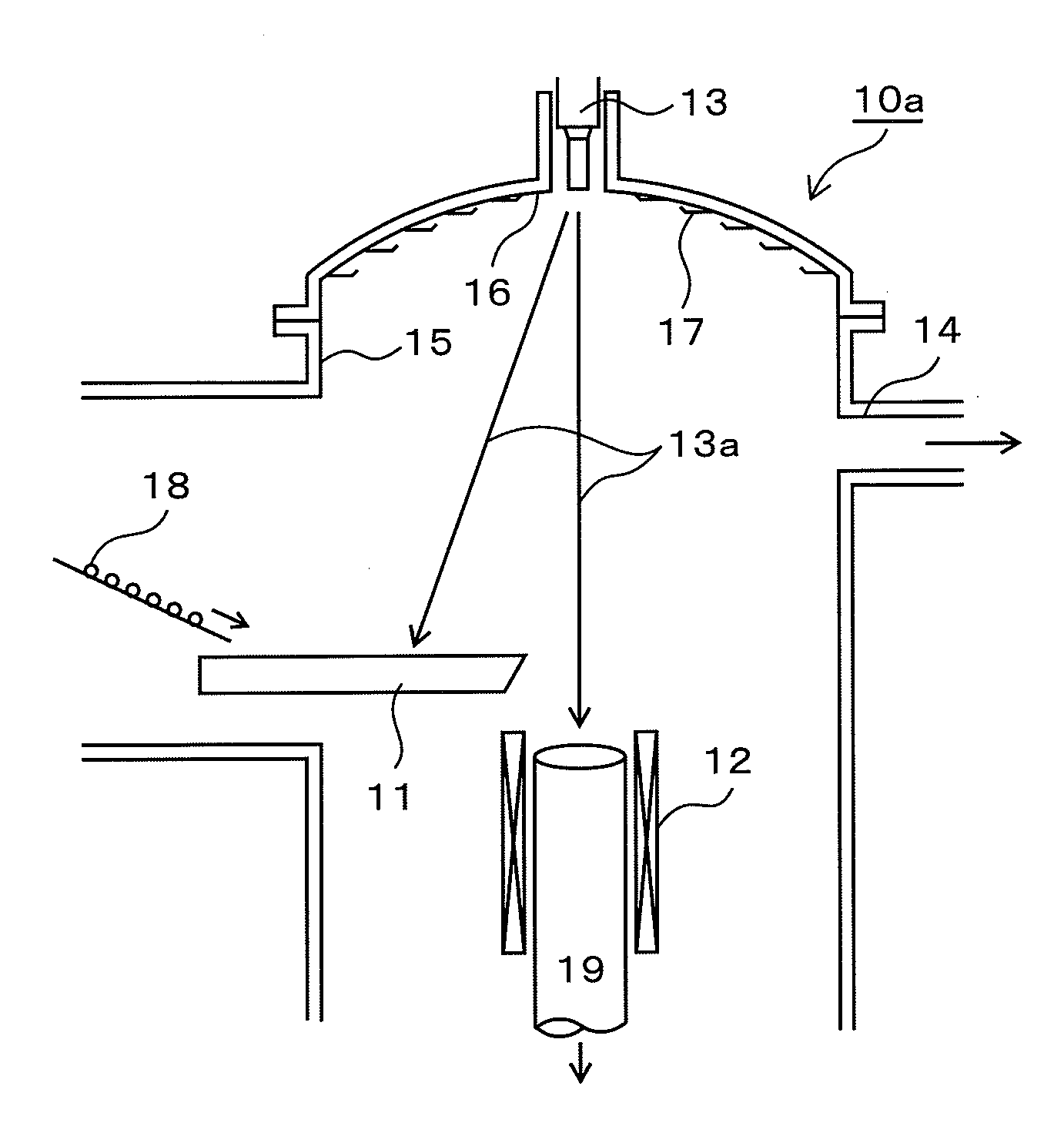
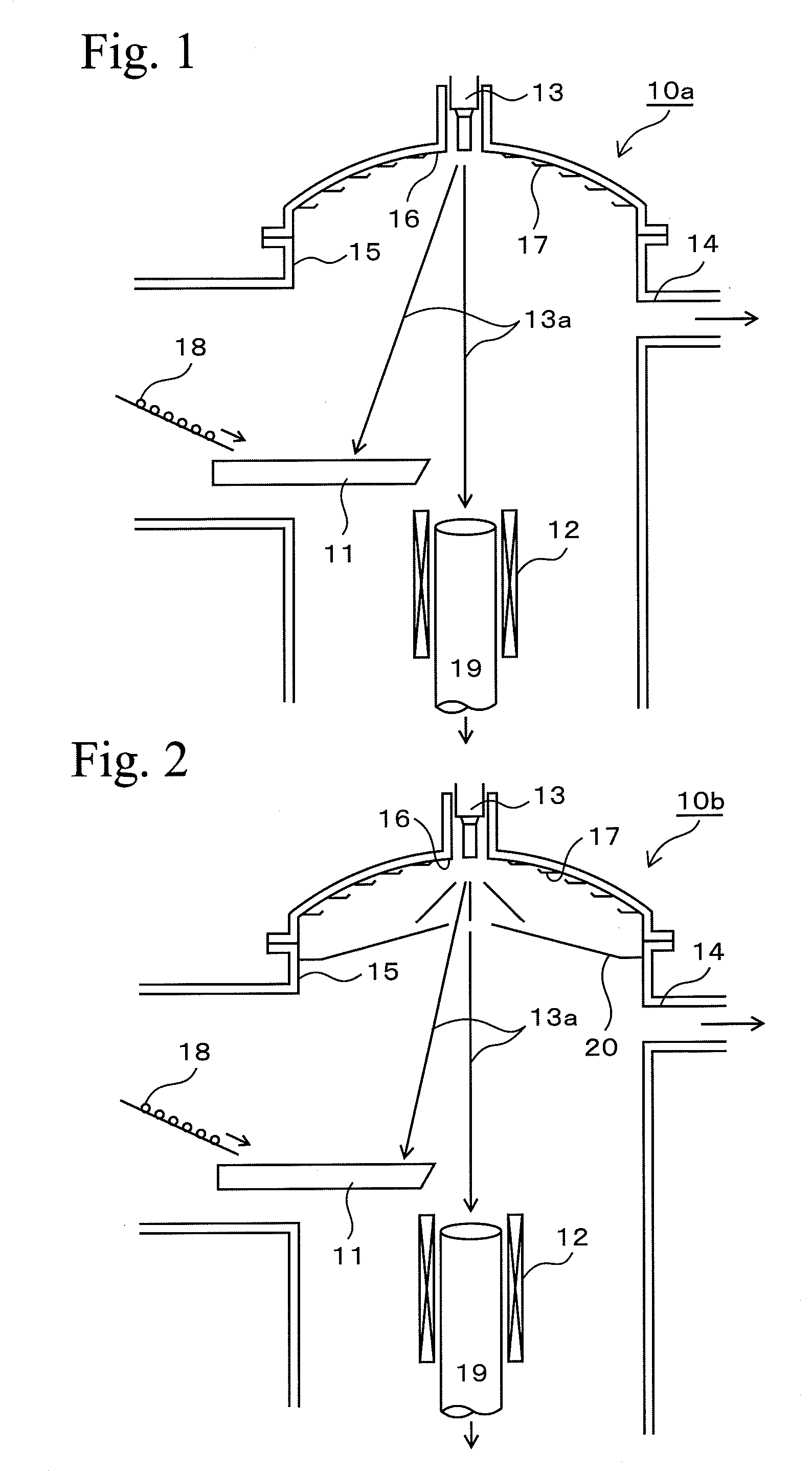
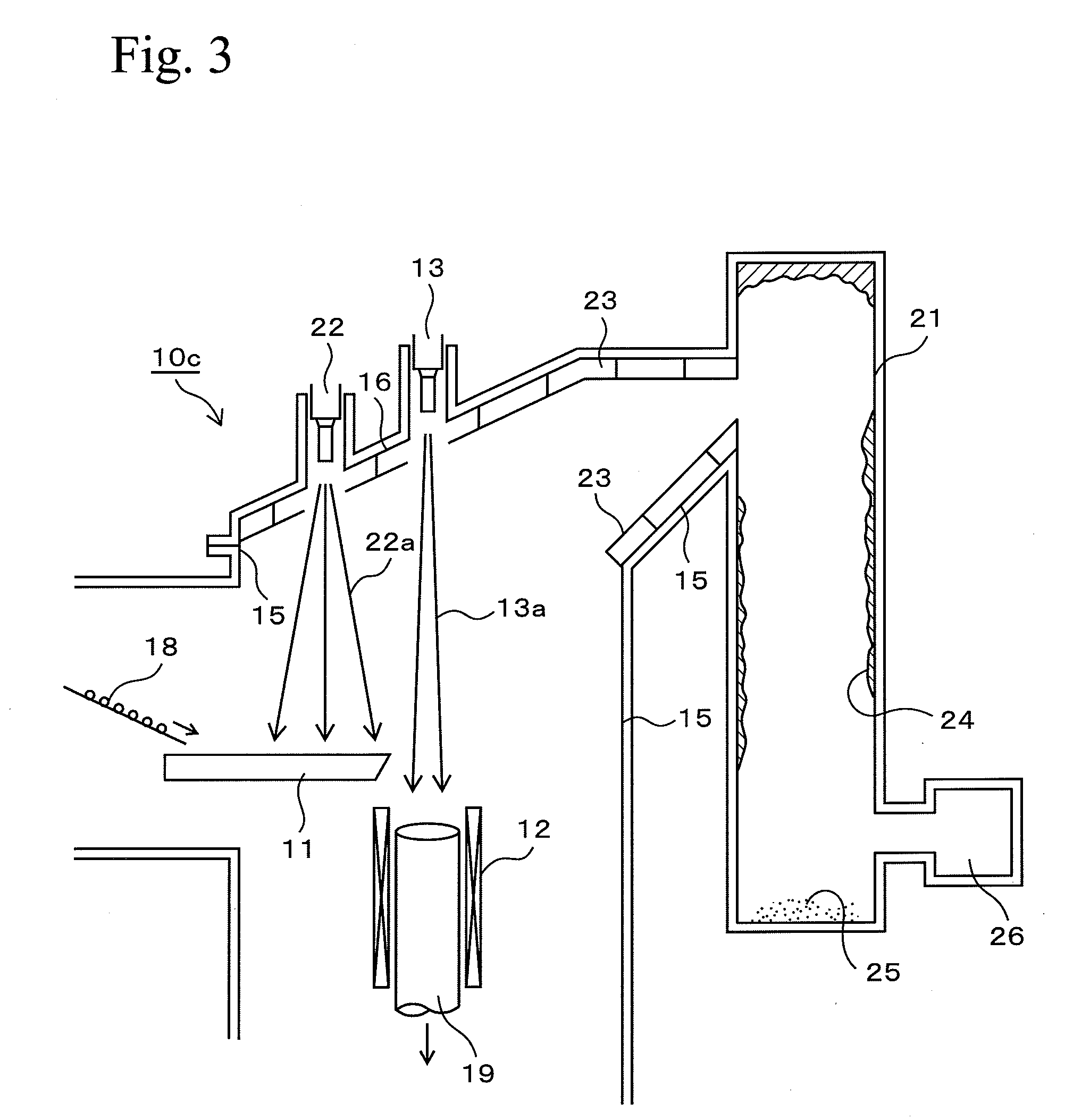
Apparatus for melting metal by electron beams and process for producing high-melting metal ingot using this apparatus
PatentWO2006080269A1
Innovation
- The electron beam melting apparatus is designed with titanium or stainless steel-lined furnace walls and ceiling walls, featuring fin-shaped members to retain condensed impurities and a shielding member to prevent re-mixing of vaporized impurities into the molten pool, along with a detachable lining system for efficient maintenance and a condensation tube for vapor recovery.


Apparatus For Melting Metal By Electron Beams And Process For Producing High-Melting Metal Ingot Using This Apparatus
PatentActiveUS20080105400A1
Innovation
- The electron-beam furnace is designed with a titanium or stainless steel lining on the walls and ceiling, featuring fin-shaped members to prevent impurities from falling into the molten metal, and a condensation tube to separate and recover evaporated titanium vapor, along with a removable lining system for quick maintenance and reduced corrosion.

EBM Quality Standards and Certification Requirements
The establishment of comprehensive quality standards and certification requirements for Electron Beam Melting technology represents a critical foundation for its widespread adoption across diverse industrial sectors. Current quality frameworks primarily stem from aerospace and medical device industries, where stringent material properties and traceability requirements have driven the development of initial standards. These foundational standards focus on powder quality specifications, process parameter validation, and final part mechanical properties verification.
International standardization organizations have begun developing EBM-specific guidelines, with ASTM International leading efforts through committees F42 on Additive Manufacturing Technologies. Key standards include ASTM F2924 for standard specification of additive manufacturing titanium-6 aluminum-4 vanadium, and ISO/ASTM 52900 series covering general principles and terminology. These standards establish baseline requirements for material certification, process qualification, and quality assurance protocols that must be adapted for cross-industry applications.
Industry-specific certification requirements vary significantly across sectors, creating complexity for manufacturers seeking multi-market applications. Aerospace applications demand compliance with AS9100 quality management systems and specific material certifications like AMS specifications. Medical device applications require FDA 510(k) clearance or CE marking under MDR regulations, necessitating comprehensive biocompatibility testing and clinical validation. Automotive sector applications increasingly reference IATF 16949 standards while developing EBM-specific quality metrics.
Process validation protocols constitute a fundamental component of EBM quality assurance, encompassing powder handling procedures, machine calibration requirements, and build parameter optimization. Critical process parameters including beam current, scan speed, and layer thickness must be continuously monitored and documented to ensure consistent part quality. Statistical process control methods are increasingly integrated into EBM workflows to enable real-time quality assessment and predictive maintenance capabilities.
Post-processing quality requirements present additional certification challenges, as heat treatment, surface finishing, and inspection procedures significantly impact final part properties. Non-destructive testing methods including computed tomography, ultrasonic inspection, and surface roughness measurement are becoming standardized requirements across industries. Traceability systems linking raw material lots to final part performance data are essential for meeting regulatory compliance and enabling continuous improvement initiatives.
International standardization organizations have begun developing EBM-specific guidelines, with ASTM International leading efforts through committees F42 on Additive Manufacturing Technologies. Key standards include ASTM F2924 for standard specification of additive manufacturing titanium-6 aluminum-4 vanadium, and ISO/ASTM 52900 series covering general principles and terminology. These standards establish baseline requirements for material certification, process qualification, and quality assurance protocols that must be adapted for cross-industry applications.
Industry-specific certification requirements vary significantly across sectors, creating complexity for manufacturers seeking multi-market applications. Aerospace applications demand compliance with AS9100 quality management systems and specific material certifications like AMS specifications. Medical device applications require FDA 510(k) clearance or CE marking under MDR regulations, necessitating comprehensive biocompatibility testing and clinical validation. Automotive sector applications increasingly reference IATF 16949 standards while developing EBM-specific quality metrics.
Process validation protocols constitute a fundamental component of EBM quality assurance, encompassing powder handling procedures, machine calibration requirements, and build parameter optimization. Critical process parameters including beam current, scan speed, and layer thickness must be continuously monitored and documented to ensure consistent part quality. Statistical process control methods are increasingly integrated into EBM workflows to enable real-time quality assessment and predictive maintenance capabilities.
Post-processing quality requirements present additional certification challenges, as heat treatment, surface finishing, and inspection procedures significantly impact final part properties. Non-destructive testing methods including computed tomography, ultrasonic inspection, and surface roughness measurement are becoming standardized requirements across industries. Traceability systems linking raw material lots to final part performance data are essential for meeting regulatory compliance and enabling continuous improvement initiatives.
Environmental Impact and Sustainability of EBM Processes
Electron Beam Melting (EBM) technology demonstrates significant environmental advantages compared to conventional manufacturing processes, particularly in terms of material efficiency and waste reduction. The additive manufacturing nature of EBM enables near-net-shape production, achieving material utilization rates exceeding 95% in many applications. This contrasts sharply with subtractive manufacturing methods that typically waste 60-90% of raw materials through machining operations.
The energy consumption profile of EBM processes presents a complex environmental picture. While the electron beam generation requires substantial electrical energy, typically consuming 15-25 kWh per kilogram of processed material, this energy intensity must be evaluated against the entire product lifecycle. EBM eliminates multiple manufacturing steps, reduces transportation requirements for complex assemblies, and enables lightweight designs that offer operational energy savings throughout product lifecycles.
Powder recycling capabilities represent a cornerstone of EBM sustainability. Unmelted powder can be recovered and reused with minimal degradation, achieving recycling rates of 95-98% for titanium alloys and similar performance for other materials. Advanced powder management systems incorporate sieving, blending, and contamination monitoring to maintain powder quality across multiple build cycles, significantly reducing raw material consumption.
The carbon footprint of EBM manufacturing varies considerably across applications and geographic locations. In regions with renewable energy sources, EBM processes can achieve carbon intensities as low as 2-4 kg CO2 equivalent per kilogram of finished product. However, in coal-dependent electrical grids, emissions may reach 15-20 kg CO2 equivalent per kilogram, highlighting the importance of energy source considerations in sustainability assessments.
Lifecycle assessment studies reveal that EBM's environmental benefits become more pronounced for complex, high-value components. Aerospace applications demonstrate 30-50% reductions in overall environmental impact when considering material savings, weight reduction benefits, and elimination of traditional manufacturing waste streams. The technology's ability to produce optimized geometries impossible through conventional methods enables designs with superior strength-to-weight ratios, translating to operational efficiency gains.
Emerging sustainability initiatives focus on closed-loop manufacturing systems and renewable energy integration. Advanced EBM facilities are implementing solar and wind power systems, while developing comprehensive material traceability systems to optimize powder lifecycle management and minimize environmental impact across the entire value chain.
The energy consumption profile of EBM processes presents a complex environmental picture. While the electron beam generation requires substantial electrical energy, typically consuming 15-25 kWh per kilogram of processed material, this energy intensity must be evaluated against the entire product lifecycle. EBM eliminates multiple manufacturing steps, reduces transportation requirements for complex assemblies, and enables lightweight designs that offer operational energy savings throughout product lifecycles.
Powder recycling capabilities represent a cornerstone of EBM sustainability. Unmelted powder can be recovered and reused with minimal degradation, achieving recycling rates of 95-98% for titanium alloys and similar performance for other materials. Advanced powder management systems incorporate sieving, blending, and contamination monitoring to maintain powder quality across multiple build cycles, significantly reducing raw material consumption.
The carbon footprint of EBM manufacturing varies considerably across applications and geographic locations. In regions with renewable energy sources, EBM processes can achieve carbon intensities as low as 2-4 kg CO2 equivalent per kilogram of finished product. However, in coal-dependent electrical grids, emissions may reach 15-20 kg CO2 equivalent per kilogram, highlighting the importance of energy source considerations in sustainability assessments.
Lifecycle assessment studies reveal that EBM's environmental benefits become more pronounced for complex, high-value components. Aerospace applications demonstrate 30-50% reductions in overall environmental impact when considering material savings, weight reduction benefits, and elimination of traditional manufacturing waste streams. The technology's ability to produce optimized geometries impossible through conventional methods enables designs with superior strength-to-weight ratios, translating to operational efficiency gains.
Emerging sustainability initiatives focus on closed-loop manufacturing systems and renewable energy integration. Advanced EBM facilities are implementing solar and wind power systems, while developing comprehensive material traceability systems to optimize powder lifecycle management and minimize environmental impact across the entire value chain.
Unlock deeper insights with Patsnap Eureka Quick Research — get a full tech report to explore trends and direct your research. Try now!
Generate Your Research Report Instantly with AI Agent
Supercharge your innovation with Patsnap Eureka AI Agent Platform!