
Increasing Component Longevity with Electron Beam Melting Innovations
MAR 18, 20269 MIN READ
Generate Your Research Report Instantly with AI Agent
Patsnap Eureka helps you evaluate technical feasibility & market potential.
EBM Technology Background and Longevity Goals
Electron Beam Melting (EBM) technology represents a revolutionary advancement in additive manufacturing that has fundamentally transformed the landscape of component production since its commercial introduction in the early 2000s. Originally developed by Arcam AB in Sweden, EBM utilizes a high-energy electron beam to selectively melt metallic powder in a vacuum environment, creating three-dimensional components layer by layer. This powder bed fusion process operates at elevated temperatures, typically between 700-1000°C, enabling the production of fully dense metallic parts with exceptional mechanical properties.
The evolution of EBM technology has been marked by significant milestones that have progressively enhanced its capability to produce long-lasting components. Early developments focused on titanium alloy processing, particularly Ti-6Al-4V, which demonstrated superior fatigue resistance and biocompatibility compared to traditionally manufactured counterparts. The vacuum environment inherent to EBM processing eliminates oxygen contamination, resulting in cleaner microstructures and improved material properties that directly contribute to enhanced component longevity.
Recent technological advancements have expanded EBM's material portfolio to include superalloys, stainless steels, and specialized alloys designed for extreme operating conditions. The process's unique thermal characteristics, including high build temperatures and controlled cooling rates, promote stress relief and optimal grain structure formation during manufacturing. These metallurgical advantages translate into components with reduced residual stresses, improved fatigue life, and enhanced resistance to crack propagation.
The primary longevity goals driving EBM innovation center on achieving component lifespans that exceed conventional manufacturing methods by 20-40%. Key objectives include minimizing internal defects such as porosity and inclusions, optimizing surface finish to reduce stress concentration points, and developing process parameters that enhance material density and mechanical properties. Advanced monitoring systems now enable real-time quality control, ensuring consistent production of components with predictable long-term performance characteristics.
Contemporary EBM systems incorporate sophisticated beam control technologies and multi-beam configurations that enable precise energy distribution and improved build rates. These innovations support the production of complex geometries with internal cooling channels and lattice structures that were previously impossible to manufacture, opening new possibilities for component design optimization focused on longevity enhancement.
The evolution of EBM technology has been marked by significant milestones that have progressively enhanced its capability to produce long-lasting components. Early developments focused on titanium alloy processing, particularly Ti-6Al-4V, which demonstrated superior fatigue resistance and biocompatibility compared to traditionally manufactured counterparts. The vacuum environment inherent to EBM processing eliminates oxygen contamination, resulting in cleaner microstructures and improved material properties that directly contribute to enhanced component longevity.
Recent technological advancements have expanded EBM's material portfolio to include superalloys, stainless steels, and specialized alloys designed for extreme operating conditions. The process's unique thermal characteristics, including high build temperatures and controlled cooling rates, promote stress relief and optimal grain structure formation during manufacturing. These metallurgical advantages translate into components with reduced residual stresses, improved fatigue life, and enhanced resistance to crack propagation.
The primary longevity goals driving EBM innovation center on achieving component lifespans that exceed conventional manufacturing methods by 20-40%. Key objectives include minimizing internal defects such as porosity and inclusions, optimizing surface finish to reduce stress concentration points, and developing process parameters that enhance material density and mechanical properties. Advanced monitoring systems now enable real-time quality control, ensuring consistent production of components with predictable long-term performance characteristics.
Contemporary EBM systems incorporate sophisticated beam control technologies and multi-beam configurations that enable precise energy distribution and improved build rates. These innovations support the production of complex geometries with internal cooling channels and lattice structures that were previously impossible to manufacture, opening new possibilities for component design optimization focused on longevity enhancement.
Market Demand for Durable EBM Components
The aerospace industry represents the largest market segment driving demand for durable EBM components, where component longevity directly correlates with operational safety and cost efficiency. Aircraft engines, turbine blades, and structural components manufactured through electron beam melting must withstand extreme temperatures, mechanical stress, and corrosive environments over extended operational periods. The stringent certification requirements and high replacement costs in aerospace applications create substantial economic incentives for enhanced component durability.
Medical device manufacturing constitutes another critical market segment, particularly for orthopedic implants and surgical instruments. The biocompatibility requirements combined with the need for long-term performance in biological environments drive demand for EBM components with superior fatigue resistance and corrosion properties. Hip and knee implants manufactured using advanced EBM techniques must maintain structural integrity for decades within the human body, making longevity a paramount concern for medical device manufacturers.
The automotive sector increasingly demands durable EBM components for high-performance applications, including engine components, transmission parts, and lightweight structural elements. As electric vehicle adoption accelerates, the need for thermally stable and mechanically robust components in battery systems and electric drivetrains creates new market opportunities for enhanced EBM technologies. The automotive industry's focus on reducing warranty costs and improving vehicle reliability directly translates to demand for longer-lasting components.
Energy sector applications, particularly in oil and gas exploration, nuclear power generation, and renewable energy systems, require EBM components capable of withstanding harsh operational environments. Downhole drilling tools, reactor components, and wind turbine parts manufactured through electron beam melting must demonstrate exceptional durability to minimize maintenance costs and operational downtime in remote or hazardous locations.
The defense and military applications market demands EBM components with extended service life for critical systems where failure is not acceptable. Military aircraft, naval vessels, and ground vehicles require components that maintain performance under extreme conditions while minimizing logistical support requirements. The emphasis on mission readiness and reduced maintenance intervals drives substantial investment in durable EBM component technologies.
Industrial manufacturing sectors, including chemical processing, power generation, and heavy machinery, represent growing markets for durable EBM components. These applications require parts that can withstand continuous operation, chemical exposure, and mechanical wear while maintaining dimensional stability and performance characteristics over extended periods.
Medical device manufacturing constitutes another critical market segment, particularly for orthopedic implants and surgical instruments. The biocompatibility requirements combined with the need for long-term performance in biological environments drive demand for EBM components with superior fatigue resistance and corrosion properties. Hip and knee implants manufactured using advanced EBM techniques must maintain structural integrity for decades within the human body, making longevity a paramount concern for medical device manufacturers.
The automotive sector increasingly demands durable EBM components for high-performance applications, including engine components, transmission parts, and lightweight structural elements. As electric vehicle adoption accelerates, the need for thermally stable and mechanically robust components in battery systems and electric drivetrains creates new market opportunities for enhanced EBM technologies. The automotive industry's focus on reducing warranty costs and improving vehicle reliability directly translates to demand for longer-lasting components.
Energy sector applications, particularly in oil and gas exploration, nuclear power generation, and renewable energy systems, require EBM components capable of withstanding harsh operational environments. Downhole drilling tools, reactor components, and wind turbine parts manufactured through electron beam melting must demonstrate exceptional durability to minimize maintenance costs and operational downtime in remote or hazardous locations.
The defense and military applications market demands EBM components with extended service life for critical systems where failure is not acceptable. Military aircraft, naval vessels, and ground vehicles require components that maintain performance under extreme conditions while minimizing logistical support requirements. The emphasis on mission readiness and reduced maintenance intervals drives substantial investment in durable EBM component technologies.
Industrial manufacturing sectors, including chemical processing, power generation, and heavy machinery, represent growing markets for durable EBM components. These applications require parts that can withstand continuous operation, chemical exposure, and mechanical wear while maintaining dimensional stability and performance characteristics over extended periods.
Current EBM Status and Component Durability Challenges
Electron Beam Melting technology has established itself as a prominent additive manufacturing technique, particularly valued for its ability to process high-performance materials under vacuum conditions. The technology operates by using a focused electron beam to selectively melt metal powder layers, enabling the production of complex geometries with excellent material properties. Current EBM systems demonstrate remarkable capabilities in processing titanium alloys, cobalt-chrome, and other aerospace-grade materials, achieving near-full density components with mechanical properties often exceeding those of conventionally manufactured parts.
Despite these advantages, contemporary EBM technology faces significant challenges in achieving optimal component longevity. Surface roughness remains a persistent issue, with as-built surfaces typically exhibiting Ra values between 25-40 micrometers, substantially higher than conventional manufacturing methods. This roughness creates stress concentration points that can initiate fatigue crack propagation, directly impacting component durability. The inherent layer-by-layer building process also introduces anisotropic material properties, where components exhibit different mechanical behaviors depending on build orientation.
Thermal management represents another critical challenge affecting component longevity. The high-energy electron beam generates intense localized heating, creating steep temperature gradients that can lead to residual stress accumulation and microstructural inconsistencies. These thermal effects often result in columnar grain structures that may compromise fatigue resistance and long-term mechanical stability. Current preheating strategies, while helpful, cannot completely eliminate these thermal-induced defects.
Process parameter optimization remains complex and material-dependent, with limited standardization across different EBM systems. Beam current, scanning speed, and layer thickness interactions significantly influence final component properties, yet comprehensive understanding of these relationships for durability enhancement is still evolving. Many manufacturers rely on empirical approaches rather than predictive models, leading to inconsistent results and suboptimal component performance.
Post-processing requirements further complicate the durability equation. Most EBM components require extensive machining, heat treatment, or surface finishing to achieve desired performance characteristics, adding cost and complexity while potentially introducing additional stress concentrations. The powder removal process from internal channels and complex geometries also presents challenges that can affect long-term component integrity if not properly executed.
Despite these advantages, contemporary EBM technology faces significant challenges in achieving optimal component longevity. Surface roughness remains a persistent issue, with as-built surfaces typically exhibiting Ra values between 25-40 micrometers, substantially higher than conventional manufacturing methods. This roughness creates stress concentration points that can initiate fatigue crack propagation, directly impacting component durability. The inherent layer-by-layer building process also introduces anisotropic material properties, where components exhibit different mechanical behaviors depending on build orientation.
Thermal management represents another critical challenge affecting component longevity. The high-energy electron beam generates intense localized heating, creating steep temperature gradients that can lead to residual stress accumulation and microstructural inconsistencies. These thermal effects often result in columnar grain structures that may compromise fatigue resistance and long-term mechanical stability. Current preheating strategies, while helpful, cannot completely eliminate these thermal-induced defects.
Process parameter optimization remains complex and material-dependent, with limited standardization across different EBM systems. Beam current, scanning speed, and layer thickness interactions significantly influence final component properties, yet comprehensive understanding of these relationships for durability enhancement is still evolving. Many manufacturers rely on empirical approaches rather than predictive models, leading to inconsistent results and suboptimal component performance.
Post-processing requirements further complicate the durability equation. Most EBM components require extensive machining, heat treatment, or surface finishing to achieve desired performance characteristics, adding cost and complexity while potentially introducing additional stress concentrations. The powder removal process from internal channels and complex geometries also presents challenges that can affect long-term component integrity if not properly executed.
Current EBM Solutions for Component Longevity
01 Material composition optimization for electron beam melting
Optimizing the material composition and alloy selection is crucial for improving component longevity in electron beam melting processes. Specific alloy formulations and material properties can enhance resistance to thermal stress, reduce cracking, and improve overall structural integrity. The selection of appropriate base materials and additives directly impacts the durability and performance characteristics of the final melted components.- Material composition optimization for electron beam melting: Optimizing the material composition and alloy selection is crucial for improving component longevity in electron beam melting processes. Specific alloy formulations and material properties can enhance resistance to thermal stress, reduce defects, and improve mechanical properties of the final components. The selection of appropriate base materials and additives directly impacts the durability and performance characteristics of electron beam melted parts.
- Process parameter control and optimization: Controlling electron beam parameters such as beam current, scanning speed, and power density is essential for extending component life. Proper parameter optimization reduces thermal gradients, minimizes residual stresses, and prevents defect formation during the melting process. Advanced control strategies for beam manipulation and energy distribution contribute to improved microstructural uniformity and enhanced mechanical properties of manufactured components.
- Thermal management and cooling strategies: Effective thermal management during and after electron beam melting significantly impacts component longevity. Controlled cooling rates, preheating strategies, and temperature monitoring systems help minimize thermal shock and reduce crack formation. Proper heat dissipation methods and temperature gradient control throughout the build process ensure better metallurgical bonding and reduced internal stresses in the final components.
- Surface treatment and post-processing techniques: Post-processing treatments and surface modifications play a vital role in enhancing the durability of electron beam melted components. Various surface finishing methods, heat treatment procedures, and coating applications can improve wear resistance, corrosion resistance, and fatigue life. These techniques address surface roughness issues and residual stress relief, contributing to overall component longevity and performance reliability.
- Defect detection and quality control methods: Implementation of comprehensive quality control measures and defect detection systems is critical for ensuring long-lasting electron beam melted components. Non-destructive testing methods, in-process monitoring, and inspection protocols help identify porosity, cracks, and other defects that could compromise component integrity. Advanced monitoring systems enable real-time adjustments to process parameters, preventing defect propagation and ensuring consistent quality throughout production.
02 Process parameter control and optimization
Controlling electron beam parameters such as beam current, scanning speed, and power density is essential for extending component life. Proper parameter optimization reduces thermal gradients, minimizes residual stresses, and prevents defect formation during the melting process. Advanced control strategies enable consistent quality and improved mechanical properties in the manufactured components.Expand Specific Solutions03 Surface treatment and post-processing techniques
Implementing surface treatment methods and post-processing procedures significantly enhances the longevity of electron beam melted components. These techniques include heat treatment, surface finishing, and coating applications that improve wear resistance, corrosion protection, and fatigue life. Post-processing steps are critical for achieving desired surface quality and mechanical properties.Expand Specific Solutions04 Thermal management and cooling strategies
Effective thermal management during electron beam melting is vital for component longevity. Controlled cooling rates, temperature monitoring, and heat dissipation methods prevent thermal shock and reduce the formation of undesirable microstructures. Proper thermal control throughout the melting cycle ensures uniform properties and minimizes internal defects that could compromise component durability.Expand Specific Solutions05 Defect detection and quality control methods
Implementing comprehensive defect detection and quality control measures ensures the production of long-lasting electron beam melted components. Non-destructive testing techniques, in-process monitoring, and inspection protocols identify potential weaknesses before they lead to premature failure. Quality assurance systems help maintain consistent production standards and predict component service life.Expand Specific Solutions
Key Players in EBM and Additive Manufacturing
The electron beam melting (EBM) technology for component longevity enhancement represents a rapidly evolving sector within the additive manufacturing landscape. The industry is transitioning from early adoption to mainstream integration, driven by aerospace, automotive, and medical applications demanding high-performance materials. Market growth is substantial, with increasing investments from both established manufacturers and research institutions. Technology maturity varies significantly across players: established aerospace companies like GKN Aerospace Services, Rolls-Royce Deutschland, and Raytheon demonstrate advanced implementation capabilities, while research institutions including Dalian University of Technology, Beihang University, and Institute of Metal Research Chinese Academy of Sciences focus on fundamental innovations. Industrial giants such as Siemens AG and Toyota Motor Corp. are integrating EBM into production workflows, whereas specialized materials companies like Toho Titanium and Aurubis AG provide essential feedstock materials. The competitive landscape shows strong collaboration between academic research centers and industrial applications, indicating a maturing technology with significant commercial potential across multiple high-value sectors.
GKN Aerospace Services Ltd.
Technical Solution: GKN Aerospace has developed innovative electron beam melting technologies focused on extending component longevity for critical aerospace applications. Their EBM processes utilize advanced beam control systems and optimized powder metallurgy techniques to produce components with superior mechanical properties and extended service life. The company's technology incorporates multi-beam configurations, real-time temperature monitoring, and adaptive process control algorithms that minimize thermal gradients and residual stresses during manufacturing. Their EBM innovations have achieved significant improvements in fatigue life, with components demonstrating up to 50% longer operational cycles compared to conventionally manufactured parts. The technology particularly excels in producing complex geometries for landing gear components, engine parts, and structural elements where longevity is critical for safety and operational efficiency.
Strengths: Extensive aerospace manufacturing experience, established supply chain relationships, proven component certification capabilities. Weaknesses: Limited diversification outside aerospace sector, dependency on aerospace market cycles.
Fraunhofer-Gesellschaft eV
Technical Solution: Fraunhofer has developed advanced electron beam melting (EBM) technologies focusing on powder bed fusion processes that significantly enhance component longevity through precise microstructural control. Their EBM systems utilize high-energy electron beams in vacuum environments to achieve superior material properties, including reduced porosity levels below 0.1% and improved fatigue resistance up to 40% compared to conventional manufacturing methods. The institute's innovations include real-time process monitoring systems, adaptive beam control algorithms, and post-processing heat treatment protocols specifically designed to optimize grain structure and eliminate defects that typically reduce component lifespan in aerospace and medical applications.
Strengths: Leading research capabilities in additive manufacturing, extensive industrial partnerships, proven track record in EBM process optimization. Weaknesses: Limited commercial manufacturing scale, higher development costs compared to established competitors.
Core EBM Innovations for Enhanced Durability
Electron beam analysis
PatentWO2018206459A1
Innovation
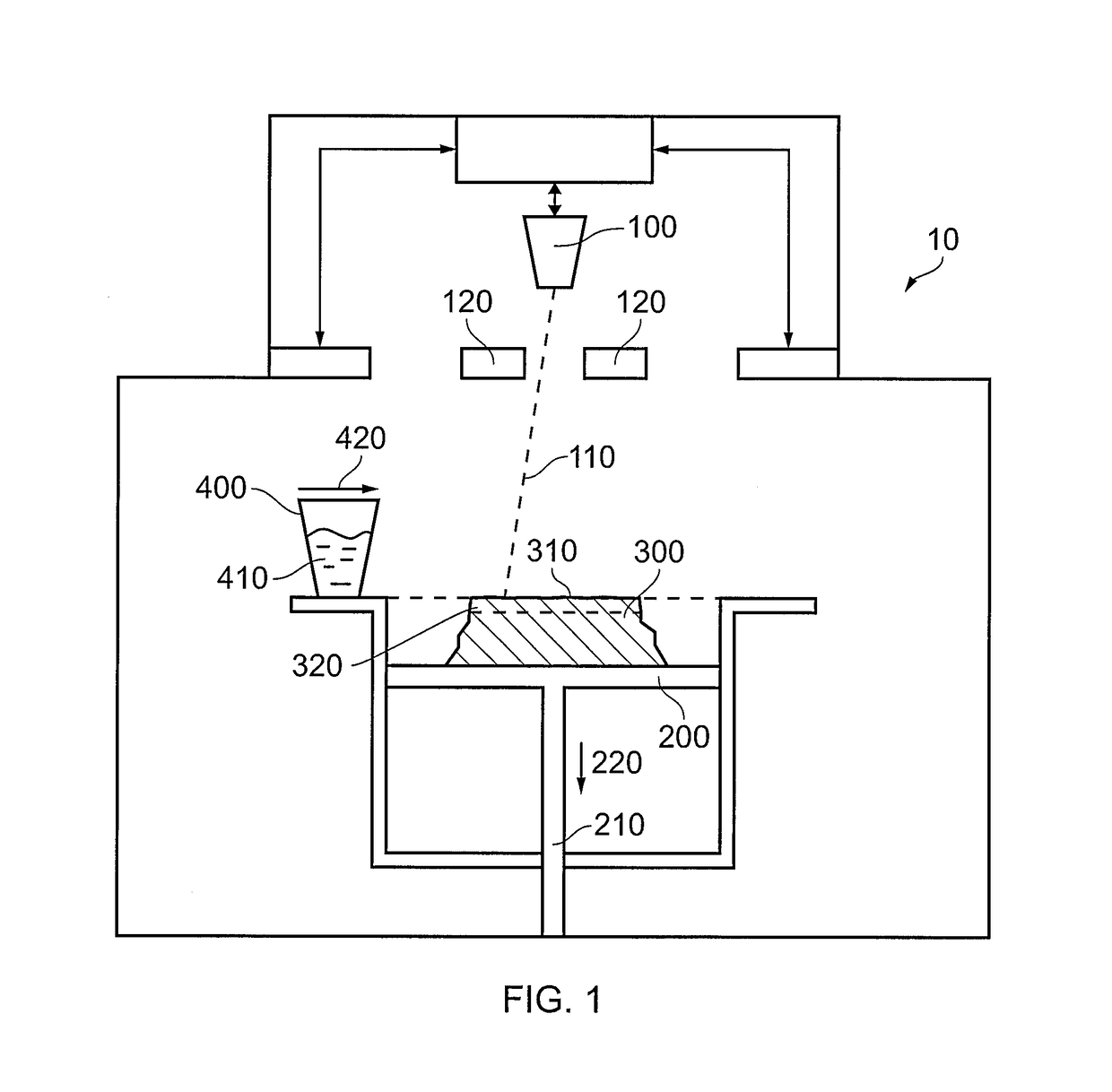
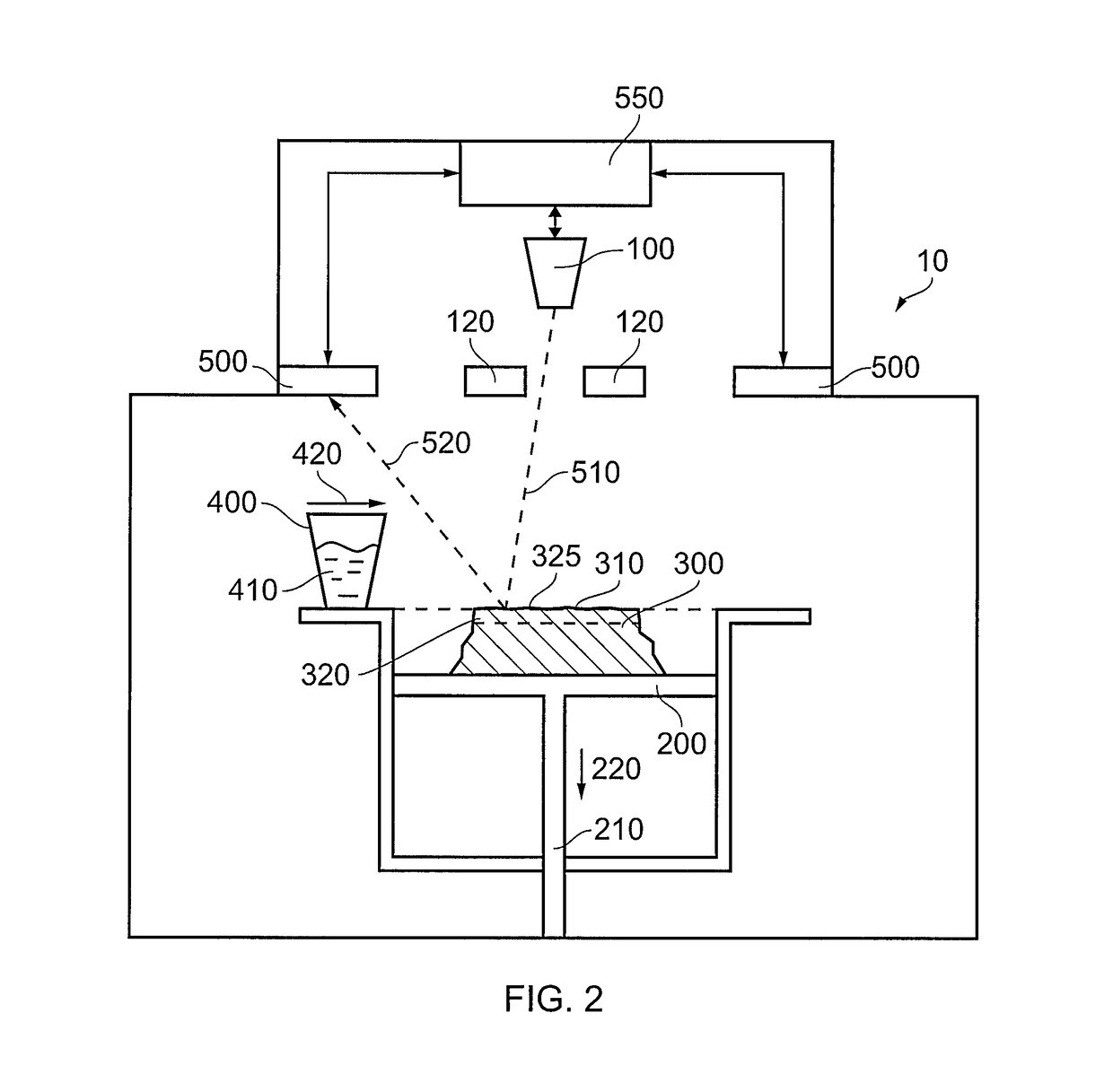
- A method using a near-infrared camera to detect the excitation of a reference surface within the EBM machine, allowing for real-time assessment of cathode performance by comparing energy distribution across predetermined measurement points against predetermined data, enabling pre-build identification of cathode deterioration.


Method of manufacturing a component
PatentActiveUS10137500B2
Innovation
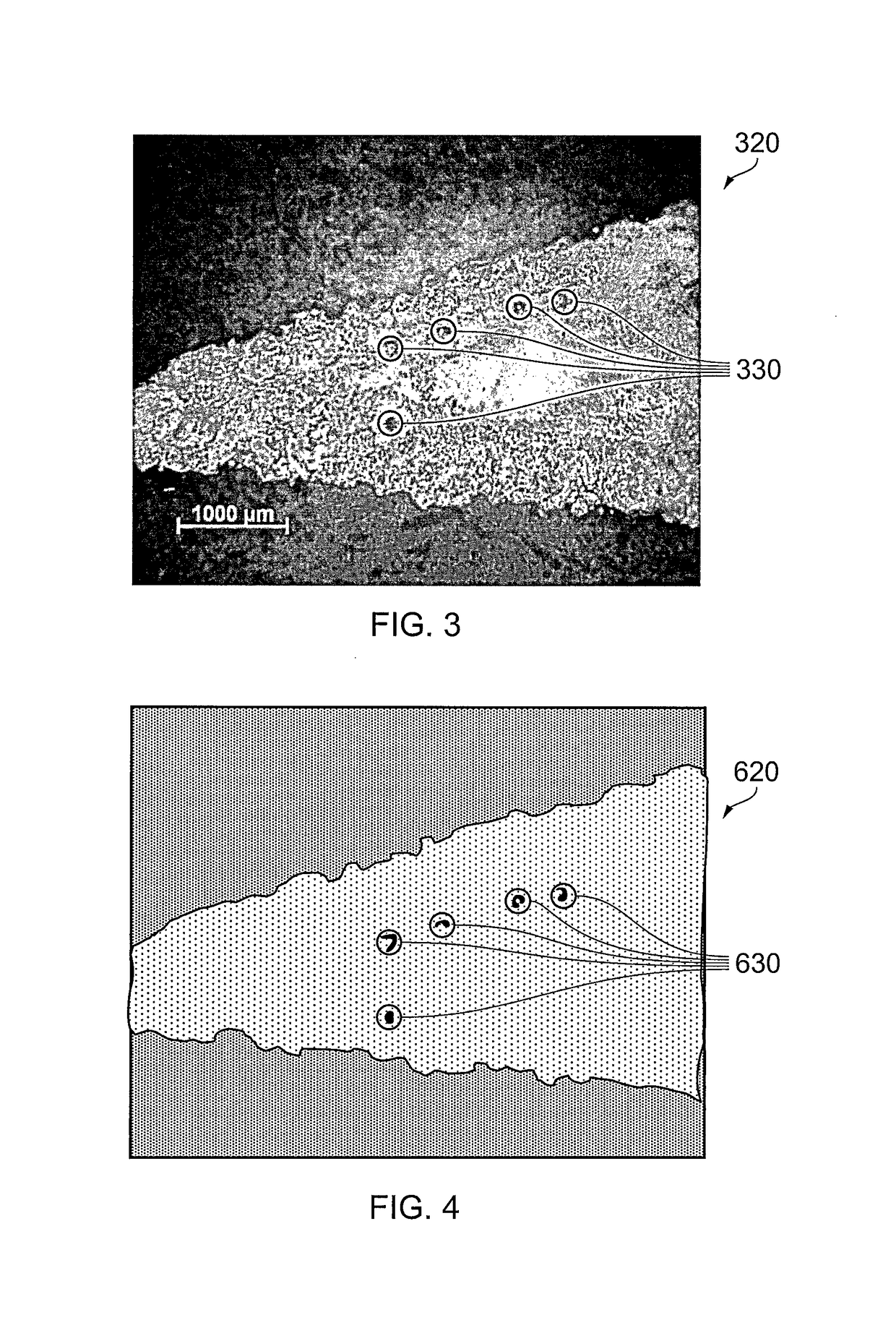
- A method involving the use of a first electron beam for selective melting and a second, lower-power electron beam for in-situ defect identification and removal, allowing for the detection and correction of defects before subsequent layer formation, thereby optimizing the manufacturing process and reducing defects.

Quality Standards for EBM Manufacturing
The establishment of comprehensive quality standards for Electron Beam Melting manufacturing represents a critical foundation for achieving enhanced component longevity. Current industry standards primarily draw from ASTM F2924 and ISO/ASTM 52900 specifications, which provide baseline requirements for powder bed fusion processes. However, these standards require significant adaptation to address the unique characteristics of EBM technology, particularly regarding thermal management and vacuum environment control.
Process parameter standardization forms the cornerstone of EBM quality assurance. Key parameters including beam current, scanning speed, layer thickness, and preheating temperature must be precisely controlled within defined tolerances. Industry best practices suggest maintaining beam current variations within ±2% and scanning speed consistency within ±5% to ensure uniform microstructural properties. Temperature uniformity across the build platform should not exceed ±10°C to prevent thermal stress-induced defects that compromise long-term component performance.
Material qualification standards specifically tailored for EBM processes address powder characteristics, chemical composition, and particle size distribution. Powder flowability requirements typically mandate a Hausner ratio below 1.25, while oxygen content must remain under 0.13% for titanium alloys to prevent embrittlement. Recycled powder usage protocols limit reuse cycles to maximum five iterations, with mandatory sieving and chemical analysis between cycles to maintain consistent material properties.
Post-processing quality standards encompass surface finish requirements, dimensional accuracy specifications, and mandatory stress relief procedures. Surface roughness standards typically require Ra values below 25 μm for as-built surfaces, while dimensional tolerances generally follow ISO 2768-m classification. Hot isostatic pressing parameters are standardized at 920°C and 100 MPa for titanium components to eliminate residual porosity and optimize mechanical properties.
Inspection and testing protocols integrate both destructive and non-destructive evaluation methods. Computed tomography scanning requirements mandate detection capabilities for defects larger than 50 μm, while mechanical testing standards specify minimum sample sizes and testing frequencies. Documentation requirements ensure complete traceability from powder batch to final component, supporting quality assurance and regulatory compliance across aerospace and medical applications.
Process parameter standardization forms the cornerstone of EBM quality assurance. Key parameters including beam current, scanning speed, layer thickness, and preheating temperature must be precisely controlled within defined tolerances. Industry best practices suggest maintaining beam current variations within ±2% and scanning speed consistency within ±5% to ensure uniform microstructural properties. Temperature uniformity across the build platform should not exceed ±10°C to prevent thermal stress-induced defects that compromise long-term component performance.
Material qualification standards specifically tailored for EBM processes address powder characteristics, chemical composition, and particle size distribution. Powder flowability requirements typically mandate a Hausner ratio below 1.25, while oxygen content must remain under 0.13% for titanium alloys to prevent embrittlement. Recycled powder usage protocols limit reuse cycles to maximum five iterations, with mandatory sieving and chemical analysis between cycles to maintain consistent material properties.
Post-processing quality standards encompass surface finish requirements, dimensional accuracy specifications, and mandatory stress relief procedures. Surface roughness standards typically require Ra values below 25 μm for as-built surfaces, while dimensional tolerances generally follow ISO 2768-m classification. Hot isostatic pressing parameters are standardized at 920°C and 100 MPa for titanium components to eliminate residual porosity and optimize mechanical properties.
Inspection and testing protocols integrate both destructive and non-destructive evaluation methods. Computed tomography scanning requirements mandate detection capabilities for defects larger than 50 μm, while mechanical testing standards specify minimum sample sizes and testing frequencies. Documentation requirements ensure complete traceability from powder batch to final component, supporting quality assurance and regulatory compliance across aerospace and medical applications.
Sustainability Impact of Long-Life EBM Components
The sustainability impact of long-life EBM components represents a paradigm shift in manufacturing philosophy, fundamentally altering the environmental calculus of industrial production. Extended component lifecycles achieved through electron beam melting innovations directly translate to reduced material consumption, decreased manufacturing frequency, and minimized waste generation across multiple industrial sectors.
Resource conservation emerges as the most immediate sustainability benefit. Traditional manufacturing approaches often require component replacement every 2-3 years, whereas EBM-enhanced components can extend operational lifespans to 8-10 years or beyond. This dramatic improvement reduces raw material extraction by approximately 60-70%, significantly diminishing the environmental footprint associated with mining, processing, and transportation of base materials such as titanium, nickel alloys, and specialized steels.
Energy consumption patterns undergo substantial transformation through EBM longevity innovations. While initial EBM processing requires higher energy input compared to conventional manufacturing, the extended service life creates a favorable energy amortization profile. Lifecycle energy analysis demonstrates that EBM components achieve energy neutrality within 18-24 months, subsequently delivering net energy savings of 40-50% over their extended operational period.
Waste reduction represents another critical sustainability dimension. Enhanced component durability directly correlates with decreased disposal volumes, reducing landfill burden and associated environmental contamination. The precision of EBM manufacturing also minimizes material waste during production, with powder recycling rates exceeding 95% in optimized systems, compared to 60-70% waste rates in traditional subtractive manufacturing processes.
Carbon footprint implications extend beyond direct manufacturing impacts. Reduced replacement frequency translates to fewer transportation cycles, decreased packaging requirements, and minimized maintenance interventions. Preliminary assessments indicate that EBM longevity innovations can reduce overall carbon emissions by 35-45% across component lifecycles, contributing meaningfully to industrial decarbonization objectives and supporting corporate sustainability commitments in aerospace, automotive, and energy sectors.
Resource conservation emerges as the most immediate sustainability benefit. Traditional manufacturing approaches often require component replacement every 2-3 years, whereas EBM-enhanced components can extend operational lifespans to 8-10 years or beyond. This dramatic improvement reduces raw material extraction by approximately 60-70%, significantly diminishing the environmental footprint associated with mining, processing, and transportation of base materials such as titanium, nickel alloys, and specialized steels.
Energy consumption patterns undergo substantial transformation through EBM longevity innovations. While initial EBM processing requires higher energy input compared to conventional manufacturing, the extended service life creates a favorable energy amortization profile. Lifecycle energy analysis demonstrates that EBM components achieve energy neutrality within 18-24 months, subsequently delivering net energy savings of 40-50% over their extended operational period.
Waste reduction represents another critical sustainability dimension. Enhanced component durability directly correlates with decreased disposal volumes, reducing landfill burden and associated environmental contamination. The precision of EBM manufacturing also minimizes material waste during production, with powder recycling rates exceeding 95% in optimized systems, compared to 60-70% waste rates in traditional subtractive manufacturing processes.
Carbon footprint implications extend beyond direct manufacturing impacts. Reduced replacement frequency translates to fewer transportation cycles, decreased packaging requirements, and minimized maintenance interventions. Preliminary assessments indicate that EBM longevity innovations can reduce overall carbon emissions by 35-45% across component lifecycles, contributing meaningfully to industrial decarbonization objectives and supporting corporate sustainability commitments in aerospace, automotive, and energy sectors.
Unlock deeper insights with Patsnap Eureka Quick Research — get a full tech report to explore trends and direct your research. Try now!
Generate Your Research Report Instantly with AI Agent
Supercharge your innovation with Patsnap Eureka AI Agent Platform!