Compare Ionizing Ray Attenuation: Lead vs Concrete
MAR 16, 20269 MIN READ
Generate Your Research Report Instantly with AI Agent
PatSnap Eureka helps you evaluate technical feasibility & market potential.
Ionizing Radiation Shielding Background and Objectives
Ionizing radiation poses significant health and safety risks across numerous industries, from nuclear power generation and medical imaging to industrial radiography and space exploration. The fundamental challenge lies in effectively attenuating these high-energy electromagnetic waves and particles to protect personnel, equipment, and the general public from harmful exposure. As radiation applications continue to expand in scope and intensity, the demand for efficient, cost-effective, and practical shielding solutions has become increasingly critical.
The historical development of radiation shielding began in the early 20th century following the discovery of X-rays and radioactivity. Initial approaches relied heavily on dense materials, with lead emerging as the gold standard due to its exceptional attenuation properties. However, as radiation applications scaled up, particularly in nuclear facilities and large medical installations, the limitations of lead-based solutions became apparent, driving the exploration of alternative materials like concrete.
Current technological evolution in radiation shielding reflects a growing emphasis on optimizing the balance between protection effectiveness, material costs, structural requirements, and environmental considerations. Modern applications demand shielding solutions that can accommodate varying energy spectra, from low-energy diagnostic X-rays to high-energy gamma radiation and neutron fields. This complexity has necessitated a more nuanced understanding of material properties and their performance across different radiation types.
The primary objective of comparing lead versus concrete for ionizing radiation attenuation centers on establishing clear performance benchmarks for different application scenarios. This evaluation aims to quantify the mass attenuation coefficients, half-value layers, and practical thickness requirements for each material across various energy ranges. Understanding these fundamental parameters enables engineers to make informed decisions based on specific project constraints and requirements.
Secondary objectives include assessing the economic implications of material selection, considering factors such as initial material costs, installation complexity, structural support requirements, and long-term maintenance needs. The analysis also seeks to evaluate practical implementation challenges, including material availability, fabrication constraints, and regulatory compliance requirements that may influence material selection in real-world applications.
Environmental and sustainability considerations represent an increasingly important objective in modern shielding design. This includes evaluating the environmental impact of material production, recyclability potential, and long-term disposal considerations. The comparison aims to provide a comprehensive framework for decision-making that extends beyond pure technical performance to encompass broader operational and environmental factors.
The historical development of radiation shielding began in the early 20th century following the discovery of X-rays and radioactivity. Initial approaches relied heavily on dense materials, with lead emerging as the gold standard due to its exceptional attenuation properties. However, as radiation applications scaled up, particularly in nuclear facilities and large medical installations, the limitations of lead-based solutions became apparent, driving the exploration of alternative materials like concrete.
Current technological evolution in radiation shielding reflects a growing emphasis on optimizing the balance between protection effectiveness, material costs, structural requirements, and environmental considerations. Modern applications demand shielding solutions that can accommodate varying energy spectra, from low-energy diagnostic X-rays to high-energy gamma radiation and neutron fields. This complexity has necessitated a more nuanced understanding of material properties and their performance across different radiation types.
The primary objective of comparing lead versus concrete for ionizing radiation attenuation centers on establishing clear performance benchmarks for different application scenarios. This evaluation aims to quantify the mass attenuation coefficients, half-value layers, and practical thickness requirements for each material across various energy ranges. Understanding these fundamental parameters enables engineers to make informed decisions based on specific project constraints and requirements.
Secondary objectives include assessing the economic implications of material selection, considering factors such as initial material costs, installation complexity, structural support requirements, and long-term maintenance needs. The analysis also seeks to evaluate practical implementation challenges, including material availability, fabrication constraints, and regulatory compliance requirements that may influence material selection in real-world applications.
Environmental and sustainability considerations represent an increasingly important objective in modern shielding design. This includes evaluating the environmental impact of material production, recyclability potential, and long-term disposal considerations. The comparison aims to provide a comprehensive framework for decision-making that extends beyond pure technical performance to encompass broader operational and environmental factors.
Market Demand for Radiation Protection Materials
The global radiation protection materials market demonstrates robust growth driven by expanding applications across multiple sectors. Nuclear power generation remains the largest consumer segment, with over 440 operational reactors worldwide requiring comprehensive shielding solutions for reactor vessels, containment structures, and waste storage facilities. The medical sector represents another significant demand driver, particularly with the proliferation of diagnostic imaging equipment, radiation therapy systems, and interventional radiology procedures in hospitals and specialized treatment centers.
Industrial applications contribute substantially to market demand, encompassing non-destructive testing facilities, research laboratories, and manufacturing plants handling radioactive materials. The aerospace and defense industries also generate consistent demand for radiation protection materials, particularly for satellite components, military equipment, and personnel protection systems in nuclear-related operations.
Regulatory frameworks significantly influence market dynamics, with stringent safety standards mandated by organizations such as the International Atomic Energy Agency and national nuclear regulatory bodies. These regulations drive continuous demand for certified radiation shielding materials and periodic upgrades to existing protection systems. Compliance requirements often favor established materials like lead and concrete due to their well-documented performance characteristics and regulatory acceptance.
Emerging market segments include decommissioning activities for aging nuclear facilities, which require specialized shielding solutions for dismantling operations and waste management. The growing medical isotope production industry also creates new demand patterns, particularly for facilities producing radiopharmaceuticals and medical devices.
Geographic demand patterns reflect nuclear infrastructure distribution, with North America, Europe, and Asia-Pacific representing primary markets. Developing nations expanding their nuclear programs contribute to growing demand, while established markets focus on facility upgrades and replacement cycles.
Cost considerations significantly impact material selection decisions, with concrete-based solutions often preferred for large-scale applications due to economic advantages, while lead maintains dominance in applications requiring compact, high-performance shielding despite higher material costs.
Industrial applications contribute substantially to market demand, encompassing non-destructive testing facilities, research laboratories, and manufacturing plants handling radioactive materials. The aerospace and defense industries also generate consistent demand for radiation protection materials, particularly for satellite components, military equipment, and personnel protection systems in nuclear-related operations.
Regulatory frameworks significantly influence market dynamics, with stringent safety standards mandated by organizations such as the International Atomic Energy Agency and national nuclear regulatory bodies. These regulations drive continuous demand for certified radiation shielding materials and periodic upgrades to existing protection systems. Compliance requirements often favor established materials like lead and concrete due to their well-documented performance characteristics and regulatory acceptance.
Emerging market segments include decommissioning activities for aging nuclear facilities, which require specialized shielding solutions for dismantling operations and waste management. The growing medical isotope production industry also creates new demand patterns, particularly for facilities producing radiopharmaceuticals and medical devices.
Geographic demand patterns reflect nuclear infrastructure distribution, with North America, Europe, and Asia-Pacific representing primary markets. Developing nations expanding their nuclear programs contribute to growing demand, while established markets focus on facility upgrades and replacement cycles.
Cost considerations significantly impact material selection decisions, with concrete-based solutions often preferred for large-scale applications due to economic advantages, while lead maintains dominance in applications requiring compact, high-performance shielding despite higher material costs.
Current Status of Lead vs Concrete Shielding Performance
Lead and concrete represent the two most widely adopted materials for ionizing radiation shielding across medical, nuclear, and industrial applications. Current performance evaluations demonstrate that lead maintains superior attenuation capabilities per unit thickness, with a density of 11.34 g/cm³ compared to concrete's typical range of 2.2-2.4 g/cm³. This fundamental density difference translates to lead requiring approximately one-tenth the thickness of concrete to achieve equivalent radiation protection levels.
Contemporary shielding performance assessments reveal that lead excels in gamma ray attenuation, particularly for photon energies below 3 MeV. Standard lead sheets of 2mm thickness can effectively attenuate diagnostic X-rays, while equivalent concrete protection would require 20-25cm thickness. However, concrete demonstrates competitive performance for neutron shielding applications, where its hydrogen content provides effective neutron moderation capabilities that lead cannot match.
Recent comparative studies indicate that concrete's shielding effectiveness varies significantly based on composition and aggregate materials. High-density concrete formulations incorporating barite, magnetite, or steel shot can achieve densities up to 4.5 g/cm³, substantially improving attenuation performance while maintaining cost advantages over lead. These specialized concrete mixtures reduce the thickness differential with lead from 10:1 to approximately 4:1 ratios.
Current industry standards recognize lead's limitations in high-energy applications, where pair production phenomena can actually increase secondary radiation. Concrete maintains more consistent attenuation characteristics across broader energy spectrums, making it preferable for multi-energy radiation environments. Additionally, concrete's structural integrity under prolonged radiation exposure surpasses lead's performance, as lead can become brittle and develop micro-fractures over time.
Modern shielding design increasingly favors hybrid approaches, utilizing lead for primary barriers in space-constrained applications while employing concrete for secondary barriers and structural shielding. This combination optimizes both space utilization and cost-effectiveness. Regulatory frameworks continue to evolve, with recent updates emphasizing lifecycle performance assessments that consider material degradation, maintenance requirements, and disposal considerations alongside pure attenuation metrics.
Contemporary shielding performance assessments reveal that lead excels in gamma ray attenuation, particularly for photon energies below 3 MeV. Standard lead sheets of 2mm thickness can effectively attenuate diagnostic X-rays, while equivalent concrete protection would require 20-25cm thickness. However, concrete demonstrates competitive performance for neutron shielding applications, where its hydrogen content provides effective neutron moderation capabilities that lead cannot match.
Recent comparative studies indicate that concrete's shielding effectiveness varies significantly based on composition and aggregate materials. High-density concrete formulations incorporating barite, magnetite, or steel shot can achieve densities up to 4.5 g/cm³, substantially improving attenuation performance while maintaining cost advantages over lead. These specialized concrete mixtures reduce the thickness differential with lead from 10:1 to approximately 4:1 ratios.
Current industry standards recognize lead's limitations in high-energy applications, where pair production phenomena can actually increase secondary radiation. Concrete maintains more consistent attenuation characteristics across broader energy spectrums, making it preferable for multi-energy radiation environments. Additionally, concrete's structural integrity under prolonged radiation exposure surpasses lead's performance, as lead can become brittle and develop micro-fractures over time.
Modern shielding design increasingly favors hybrid approaches, utilizing lead for primary barriers in space-constrained applications while employing concrete for secondary barriers and structural shielding. This combination optimizes both space utilization and cost-effectiveness. Regulatory frameworks continue to evolve, with recent updates emphasizing lifecycle performance assessments that consider material degradation, maintenance requirements, and disposal considerations alongside pure attenuation metrics.
Existing Lead and Concrete Shielding Solutions
01 Lead-based shielding materials for ionizing radiation attenuation
Traditional lead-based materials have been widely used for radiation shielding due to their high atomic number and density, which provide effective attenuation of ionizing radiation including X-rays and gamma rays. These materials can be used in various forms such as sheets, blocks, or composite structures to protect against harmful radiation exposure in medical, industrial, and nuclear applications.- Lead-based shielding materials for ionizing radiation attenuation: Traditional lead-based materials have been widely used for radiation shielding due to their high atomic number and density, which provide effective attenuation of ionizing radiation including X-rays and gamma rays. These materials can be used in various forms such as sheets, blocks, or composite structures to protect against harmful radiation exposure in medical, industrial, and nuclear applications.
- Concrete-based radiation shielding compositions: Concrete formulations specifically designed for radiation shielding incorporate heavy aggregates and additives to enhance attenuation properties. These compositions offer advantages in terms of structural integrity, cost-effectiveness, and ease of construction for large-scale shielding applications. The concrete can be modified with various materials to optimize its radiation absorption characteristics while maintaining mechanical strength.
- Comparative performance analysis of shielding materials: Studies and methods for evaluating the radiation attenuation effectiveness of different shielding materials, including comparative assessments between lead and concrete-based solutions. These analyses consider factors such as thickness requirements, weight, cost, and attenuation coefficients for various types of ionizing radiation to determine optimal shielding solutions for specific applications.
- Alternative and composite shielding materials: Development of novel shielding materials that combine multiple components or utilize alternative heavy elements to achieve radiation attenuation comparable to traditional lead while offering improved properties such as reduced toxicity, lighter weight, or enhanced durability. These materials may include polymer composites, metal oxides, or hybrid structures designed to optimize radiation protection performance.
- Multilayer and engineered shielding structures: Advanced shielding designs incorporating multiple layers of different materials or engineered structures to optimize radiation attenuation across various energy ranges. These systems may combine the benefits of different shielding materials in stratified configurations to achieve superior protection while addressing practical considerations such as weight reduction, space constraints, and manufacturing feasibility.
02 Concrete compositions with enhanced radiation shielding properties
Specialized concrete formulations incorporating heavy aggregates, minerals, or additives can provide effective radiation attenuation while offering structural benefits. These concrete compositions can be engineered to achieve specific shielding requirements by adjusting the density, thickness, and composition of materials, making them suitable for construction of radiation protection barriers in nuclear facilities and medical installations.Expand Specific Solutions03 Lead-free alternative shielding materials
Development of non-lead radiation shielding materials addresses environmental and health concerns associated with lead usage. These alternatives may include tungsten-based composites, bismuth compounds, or polymer matrices filled with high-density materials that can provide comparable or superior radiation attenuation performance while being more environmentally friendly and easier to handle.Expand Specific Solutions04 Composite and layered shielding structures
Multi-layered or composite shielding systems combine different materials to optimize radiation attenuation across various energy ranges. These structures may integrate metals, concrete, polymers, or other materials in specific configurations to achieve enhanced shielding effectiveness while potentially reducing weight, cost, or thickness compared to single-material solutions.Expand Specific Solutions05 Radiation shielding performance testing and optimization
Methods and systems for evaluating and comparing the radiation attenuation capabilities of different shielding materials involve measurement techniques, computational modeling, and standardized testing protocols. These approaches enable quantitative assessment of shielding effectiveness, allowing for optimization of material selection, thickness determination, and cost-benefit analysis for specific radiation protection applications.Expand Specific Solutions
Key Players in Radiation Shielding Industry
The ionizing ray attenuation technology sector represents a mature, specialized market primarily driven by nuclear power, medical imaging, and radiation protection applications. The industry operates in a stable growth phase with established technical standards, where lead has traditionally dominated due to superior attenuation properties, while concrete offers cost-effective solutions for large-scale shielding. Key players demonstrate varying technological maturity levels: established manufacturers like Toshiba Energy Systems, Kobe Steel, and Halliburton Energy Services possess advanced materials engineering capabilities, while research institutions including University of California, Wuhan University of Technology, and Council of Scientific & Industrial Research drive innovation in composite materials and optimization techniques. Companies such as China Building Materials Academy and Taiheiyo Cement focus on concrete-based solutions, whereas Kennametal and Northern Technologies International develop specialized metallic shielding materials, indicating a diverse competitive landscape with both material suppliers and end-user industries contributing to technological advancement.
China Building Materials Academy Co. Ltd.
Technical Solution: Develops advanced concrete formulations with enhanced radiation shielding properties through incorporation of heavy aggregates like barite and magnetite. Their research focuses on optimizing concrete density (up to 3.5-4.0 g/cm³) while maintaining structural integrity. The academy has developed specialized concrete mixes that can achieve linear attenuation coefficients comparable to lead for certain gamma ray energies, particularly effective for medical and nuclear facility applications. Their concrete solutions offer cost-effective radiation protection for large-scale construction projects requiring radiation containment.
Advantages: Cost-effective for large structures, excellent structural properties, fire resistance. Disadvantages: Lower attenuation efficiency per unit thickness compared to lead, requires greater thickness for equivalent protection.
Areva NC, Inc.
Technical Solution: Provides comprehensive radiation shielding solutions comparing lead and concrete applications for nuclear facilities. Their engineering approach evaluates material selection based on radiation type, energy levels, and facility requirements. Areva utilizes lead for compact shielding applications where space is limited, achieving high attenuation in minimal thickness. For large-scale applications, they employ high-density concrete with carefully selected aggregates. Their comparative analysis demonstrates that lead provides superior attenuation per unit thickness but concrete offers better cost-effectiveness for bulk shielding applications in nuclear waste storage and reactor containment structures.
Advantages: Comprehensive nuclear industry expertise, proven safety record, regulatory compliance knowledge. Disadvantages: Higher implementation costs, requires specialized handling procedures for lead applications.
Core Technologies in Ionizing Ray Attenuation
Environment-adaptive concrete gamma-ray shielding capability measurement device and method
PatentWO2025020432A1
Innovation
- A environmental concrete gamar shielding capacity measurement device is designed, including the spiral radiation laboratory poured by the concrete pouring of heavy spar and multiple sets of concrete test blocks. Positioning through three -dimensional laser scanner and fixed concrete test blocks to avoid photon scattering from escaping from the surroundings to ensure the accuracy of the measurement results.


Back-scattered X-ray radiation attenuation method and apparatus
PatentInactiveUS7336767B1
Innovation
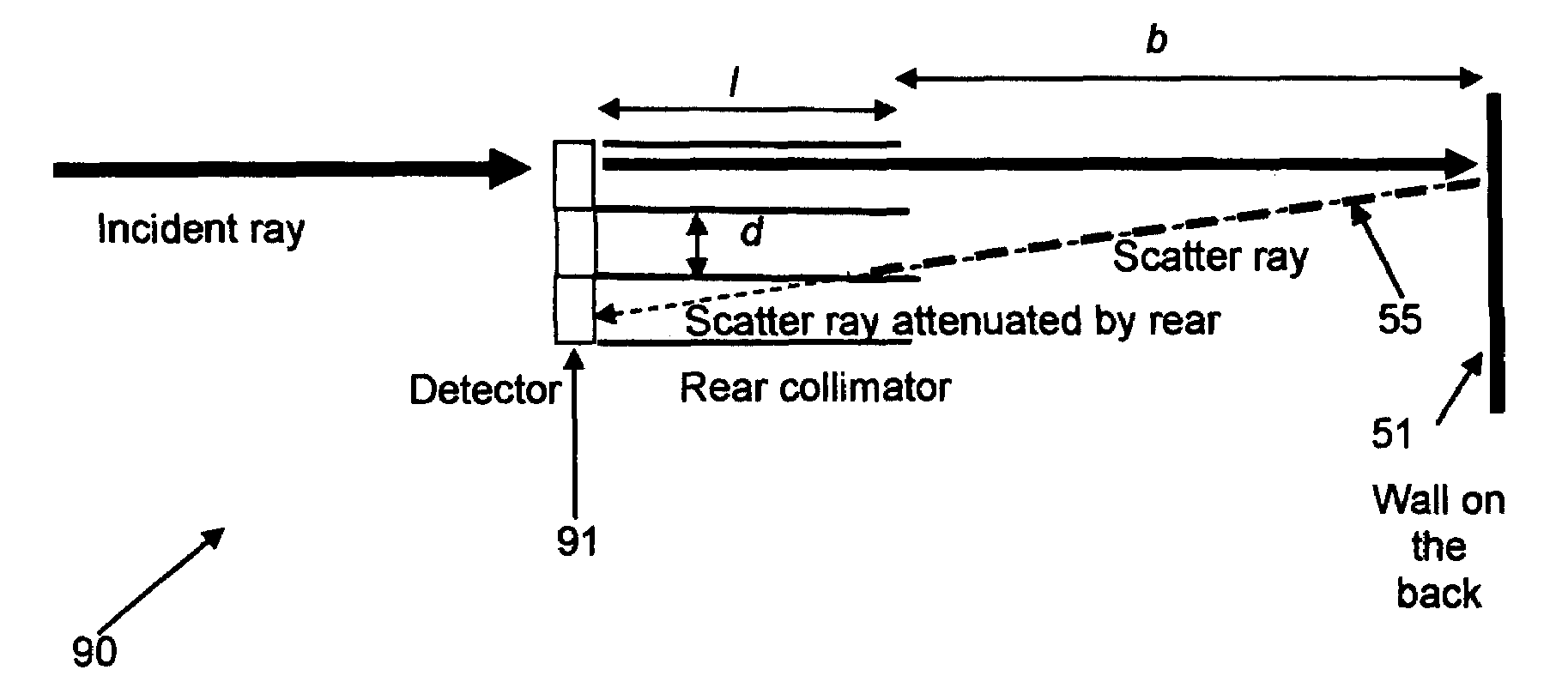
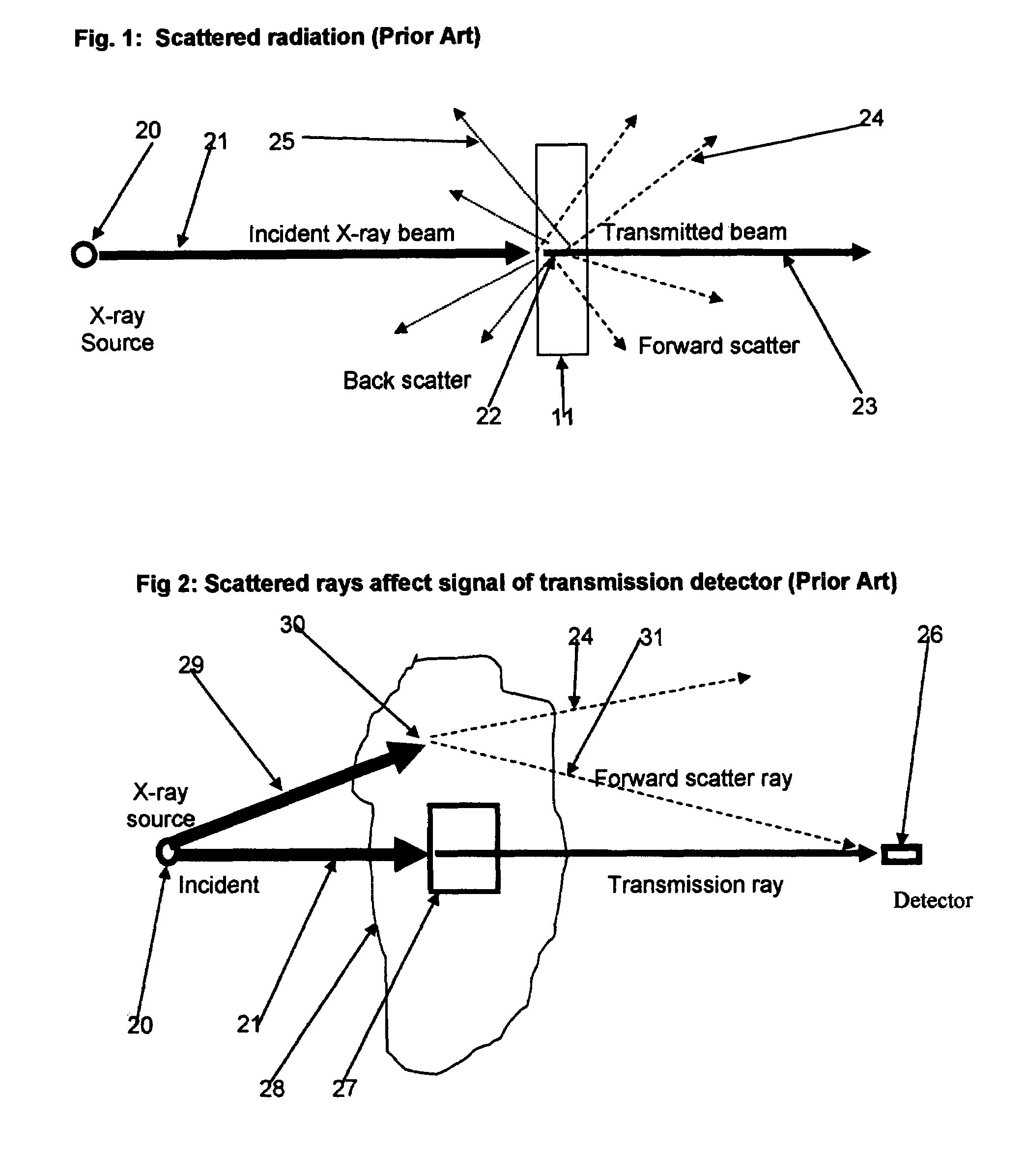
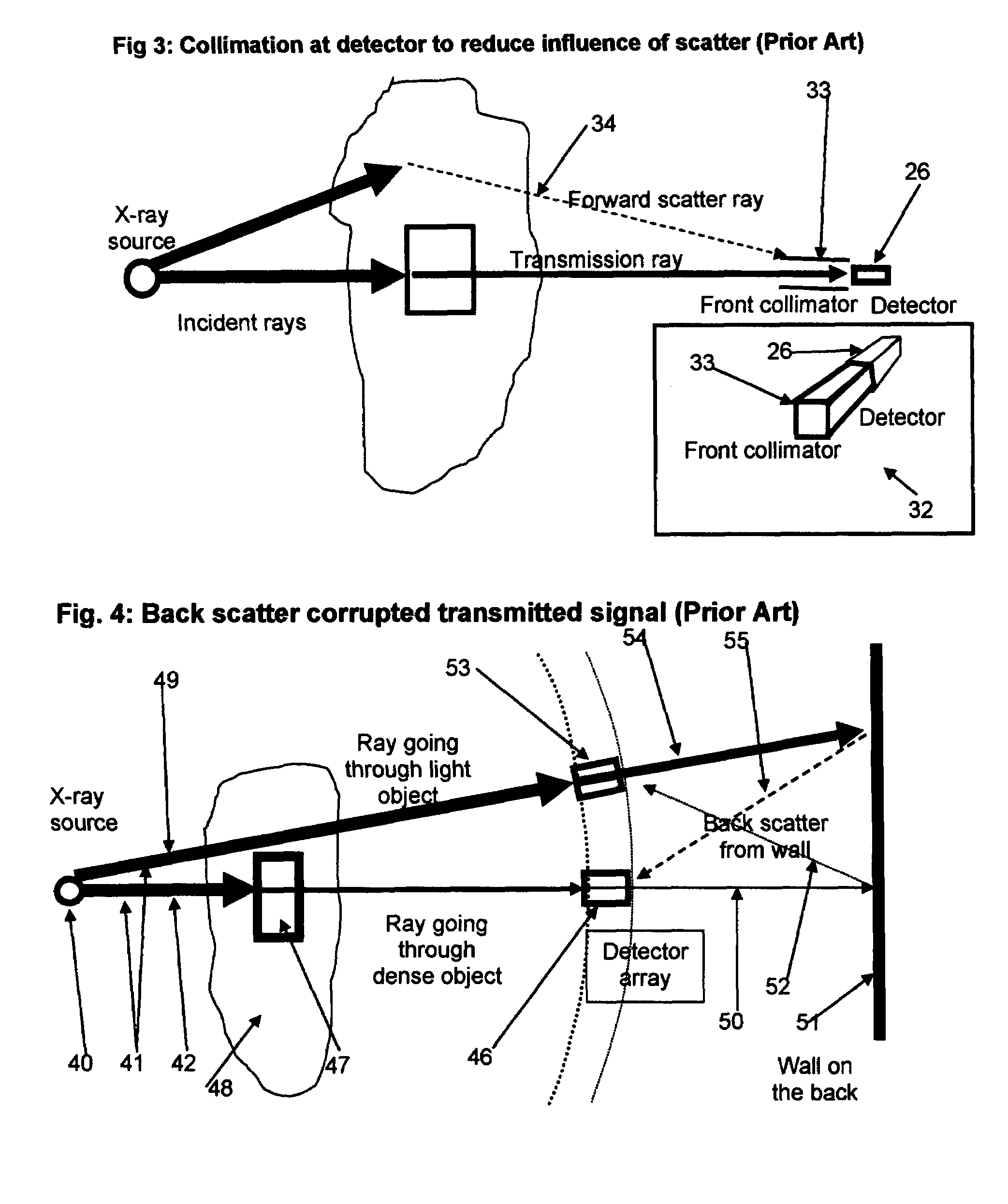
- The implementation of X-ray attenuating baffle plates made of high-Z materials like lead or steel, positioned behind detectors and in front of the back-stop, to intercept and attenuate back-scattered radiation, forming a geometric configuration that reduces the acceptance angle and thereby minimizes the intensity of back-scattered X-rays reaching the detectors.

Regulatory Framework for Radiation Protection Standards
The regulatory framework governing radiation protection standards for ionizing ray attenuation materials represents a complex international and national system designed to ensure public safety and occupational health. The International Commission on Radiological Protection (ICRP) serves as the primary global authority, establishing fundamental principles and dose limits that form the foundation for national regulations worldwide.
At the international level, the International Atomic Energy Agency (IAEA) provides comprehensive safety standards through its Basic Safety Standards (BSS), which specifically address shielding requirements for different radiation types and energy levels. These standards establish minimum thickness requirements for both lead and concrete shielding materials based on radiation source characteristics and exposure scenarios. The IAEA guidelines also specify calculation methodologies for determining appropriate shielding effectiveness, incorporating factors such as half-value layers and tenth-value layers for various materials.
National regulatory bodies implement these international standards through domestic legislation and technical specifications. In the United States, the Nuclear Regulatory Commission (NRC) and the Environmental Protection Agency (EPA) jointly oversee radiation protection standards, with specific regulations outlined in Title 10 of the Code of Federal Regulations. European Union member states follow the Euratom Basic Safety Standards Directive, which harmonizes radiation protection requirements across the region while allowing for national implementation variations.
The regulatory framework addresses material certification requirements for radiation shielding applications. Lead-based shielding materials must meet specific purity standards and density requirements, typically requiring lead content exceeding 99.9% for medical and industrial applications. Concrete shielding regulations specify minimum density requirements, aggregate composition standards, and quality control procedures during construction to ensure consistent attenuation properties.
Compliance verification procedures mandate regular testing and documentation of shielding effectiveness through standardized measurement protocols. These regulations require periodic assessments using calibrated radiation detection equipment and certified reference sources to validate theoretical calculations against actual performance. Documentation requirements include material certificates, installation records, and ongoing monitoring data to demonstrate continued regulatory compliance throughout the operational lifetime of radiation facilities.
At the international level, the International Atomic Energy Agency (IAEA) provides comprehensive safety standards through its Basic Safety Standards (BSS), which specifically address shielding requirements for different radiation types and energy levels. These standards establish minimum thickness requirements for both lead and concrete shielding materials based on radiation source characteristics and exposure scenarios. The IAEA guidelines also specify calculation methodologies for determining appropriate shielding effectiveness, incorporating factors such as half-value layers and tenth-value layers for various materials.
National regulatory bodies implement these international standards through domestic legislation and technical specifications. In the United States, the Nuclear Regulatory Commission (NRC) and the Environmental Protection Agency (EPA) jointly oversee radiation protection standards, with specific regulations outlined in Title 10 of the Code of Federal Regulations. European Union member states follow the Euratom Basic Safety Standards Directive, which harmonizes radiation protection requirements across the region while allowing for national implementation variations.
The regulatory framework addresses material certification requirements for radiation shielding applications. Lead-based shielding materials must meet specific purity standards and density requirements, typically requiring lead content exceeding 99.9% for medical and industrial applications. Concrete shielding regulations specify minimum density requirements, aggregate composition standards, and quality control procedures during construction to ensure consistent attenuation properties.
Compliance verification procedures mandate regular testing and documentation of shielding effectiveness through standardized measurement protocols. These regulations require periodic assessments using calibrated radiation detection equipment and certified reference sources to validate theoretical calculations against actual performance. Documentation requirements include material certificates, installation records, and ongoing monitoring data to demonstrate continued regulatory compliance throughout the operational lifetime of radiation facilities.
Environmental Impact of Lead-based Shielding Materials
Lead-based shielding materials present significant environmental challenges throughout their lifecycle, from extraction and manufacturing to disposal and potential contamination. The mining of lead ore generates substantial environmental disruption, including soil contamination, water pollution, and ecosystem degradation. Lead processing facilities release particulate matter and toxic compounds into surrounding environments, creating long-term contamination risks that persist for decades.
The manufacturing phase of lead shielding products involves energy-intensive processes that contribute to greenhouse gas emissions and generate hazardous waste streams. Lead smelting operations produce sulfur dioxide emissions and release heavy metal particulates into the atmosphere, affecting air quality in industrial regions. These manufacturing processes also generate slag and other byproducts containing concentrated lead compounds that require specialized disposal methods.
During operational use, lead shielding materials pose minimal direct environmental risks when properly contained and maintained. However, deterioration, corrosion, or physical damage can result in lead particle release into surrounding environments. Improper handling during installation, maintenance, or renovation activities can create contaminated dust and debris that spreads beyond the immediate work area.
End-of-life disposal represents the most critical environmental challenge for lead-based shielding materials. Lead's persistence in the environment means that improper disposal creates long-term contamination risks for soil and groundwater systems. Landfill disposal of lead materials can result in leachate contamination, while incineration releases lead compounds into the atmosphere.
Recycling programs for lead shielding materials offer environmental benefits by reducing primary lead production demands and preventing disposal-related contamination. However, recycling processes themselves generate environmental impacts through energy consumption and potential emissions during reprocessing operations.
Regulatory frameworks increasingly restrict lead use in construction applications due to environmental and health concerns. These regulations drive demand for alternative shielding materials with reduced environmental footprints, though lead recycling remains economically viable due to the material's high intrinsic value and established recovery infrastructure.
The manufacturing phase of lead shielding products involves energy-intensive processes that contribute to greenhouse gas emissions and generate hazardous waste streams. Lead smelting operations produce sulfur dioxide emissions and release heavy metal particulates into the atmosphere, affecting air quality in industrial regions. These manufacturing processes also generate slag and other byproducts containing concentrated lead compounds that require specialized disposal methods.
During operational use, lead shielding materials pose minimal direct environmental risks when properly contained and maintained. However, deterioration, corrosion, or physical damage can result in lead particle release into surrounding environments. Improper handling during installation, maintenance, or renovation activities can create contaminated dust and debris that spreads beyond the immediate work area.
End-of-life disposal represents the most critical environmental challenge for lead-based shielding materials. Lead's persistence in the environment means that improper disposal creates long-term contamination risks for soil and groundwater systems. Landfill disposal of lead materials can result in leachate contamination, while incineration releases lead compounds into the atmosphere.
Recycling programs for lead shielding materials offer environmental benefits by reducing primary lead production demands and preventing disposal-related contamination. However, recycling processes themselves generate environmental impacts through energy consumption and potential emissions during reprocessing operations.
Regulatory frameworks increasingly restrict lead use in construction applications due to environmental and health concerns. These regulations drive demand for alternative shielding materials with reduced environmental footprints, though lead recycling remains economically viable due to the material's high intrinsic value and established recovery infrastructure.
Unlock deeper insights with PatSnap Eureka Quick Research — get a full tech report to explore trends and direct your research. Try now!
Generate Your Research Report Instantly with AI Agent
Supercharge your innovation with PatSnap Eureka AI Agent Platform!