Compare Simulation-Driven Design with Digital Twins: Effectiveness
MAR 6, 20269 MIN READ
Generate Your Research Report Instantly with AI Agent
Patsnap Eureka helps you evaluate technical feasibility & market potential.
Simulation-Driven Design and Digital Twins Background
Simulation-driven design emerged in the 1960s as computational power began enabling engineers to model physical phenomena digitally. Initially limited to basic finite element analysis for structural mechanics, this approach gradually expanded across aerospace, automotive, and manufacturing industries. The methodology fundamentally transforms traditional design processes by replacing physical prototyping with virtual testing environments, allowing engineers to explore design alternatives rapidly and cost-effectively.
The evolution of simulation-driven design accelerated significantly during the 1980s and 1990s with advances in computational fluid dynamics, thermal analysis, and multi-physics simulations. Software platforms like ANSYS, ABAQUS, and NASTRAN democratized access to sophisticated modeling capabilities, enabling widespread adoption across engineering disciplines. This period established simulation as a critical component of product development lifecycles.
Digital twins represent a more recent paradigm shift, conceptualized in the early 2000s by Dr. Michael Grieves at the University of Michigan. Unlike traditional simulation models, digital twins maintain continuous bidirectional connections with their physical counterparts through IoT sensors, real-time data streams, and cloud computing infrastructure. This connectivity enables dynamic model updates, predictive maintenance, and operational optimization throughout product lifecycles.
The convergence of Industry 4.0 technologies has accelerated digital twin adoption since 2010. Advanced sensor networks, edge computing, artificial intelligence, and machine learning algorithms now enable real-time synchronization between physical assets and their digital representations. Major technology companies including General Electric, Siemens, and Microsoft have invested heavily in digital twin platforms, recognizing their potential to revolutionize industrial operations.
Both approaches share common foundations in mathematical modeling, computational analysis, and virtual representation of physical systems. However, their temporal characteristics differ fundamentally. Simulation-driven design typically operates in discrete phases during product development, while digital twins function continuously throughout operational lifecycles. This distinction creates different value propositions and implementation requirements.
The effectiveness comparison between these methodologies has become increasingly relevant as organizations seek to optimize their digital transformation strategies. Understanding their respective strengths, limitations, and appropriate application contexts is essential for making informed technology investment decisions and maximizing return on digital initiatives.
The evolution of simulation-driven design accelerated significantly during the 1980s and 1990s with advances in computational fluid dynamics, thermal analysis, and multi-physics simulations. Software platforms like ANSYS, ABAQUS, and NASTRAN democratized access to sophisticated modeling capabilities, enabling widespread adoption across engineering disciplines. This period established simulation as a critical component of product development lifecycles.
Digital twins represent a more recent paradigm shift, conceptualized in the early 2000s by Dr. Michael Grieves at the University of Michigan. Unlike traditional simulation models, digital twins maintain continuous bidirectional connections with their physical counterparts through IoT sensors, real-time data streams, and cloud computing infrastructure. This connectivity enables dynamic model updates, predictive maintenance, and operational optimization throughout product lifecycles.
The convergence of Industry 4.0 technologies has accelerated digital twin adoption since 2010. Advanced sensor networks, edge computing, artificial intelligence, and machine learning algorithms now enable real-time synchronization between physical assets and their digital representations. Major technology companies including General Electric, Siemens, and Microsoft have invested heavily in digital twin platforms, recognizing their potential to revolutionize industrial operations.
Both approaches share common foundations in mathematical modeling, computational analysis, and virtual representation of physical systems. However, their temporal characteristics differ fundamentally. Simulation-driven design typically operates in discrete phases during product development, while digital twins function continuously throughout operational lifecycles. This distinction creates different value propositions and implementation requirements.
The effectiveness comparison between these methodologies has become increasingly relevant as organizations seek to optimize their digital transformation strategies. Understanding their respective strengths, limitations, and appropriate application contexts is essential for making informed technology investment decisions and maximizing return on digital initiatives.
Market Demand for Advanced Simulation Technologies
The global market for advanced simulation technologies is experiencing unprecedented growth driven by the increasing complexity of modern engineering challenges and the digital transformation initiatives across industries. Manufacturing sectors, particularly automotive, aerospace, and electronics, are leading the adoption of sophisticated simulation tools to reduce product development cycles and minimize physical prototyping costs. The automotive industry alone has become a major consumer of simulation technologies, with electric vehicle development and autonomous driving systems requiring extensive virtual testing capabilities.
Healthcare and pharmaceutical industries represent rapidly expanding market segments for advanced simulation technologies. Medical device manufacturers increasingly rely on computational modeling to predict device performance and ensure regulatory compliance before clinical trials. Drug discovery processes now heavily incorporate molecular simulation and digital modeling to accelerate compound identification and reduce development timelines. The COVID-19 pandemic further accelerated the adoption of simulation-based approaches in vaccine development and epidemiological modeling.
Energy sector transformation toward renewable sources has created substantial demand for advanced simulation capabilities. Wind turbine design, solar panel optimization, and smart grid management require sophisticated modeling tools that can handle complex environmental variables and system interactions. Oil and gas companies continue investing in reservoir simulation and drilling optimization technologies to maximize extraction efficiency while minimizing environmental impact.
The construction and infrastructure sectors are witnessing growing adoption of Building Information Modeling integrated with advanced simulation capabilities. Smart city initiatives and sustainable building design requirements drive demand for comprehensive simulation platforms that can model structural performance, energy efficiency, and environmental impact simultaneously. Climate change adaptation strategies further amplify the need for predictive modeling in infrastructure planning.
Financial services and supply chain management represent emerging application areas for advanced simulation technologies. Risk modeling, algorithmic trading, and supply chain optimization increasingly rely on sophisticated simulation engines capable of processing vast datasets and modeling complex market dynamics. The global supply chain disruptions have highlighted the critical importance of predictive simulation capabilities for business continuity planning.
The market demand is increasingly shifting toward integrated platforms that combine traditional simulation-driven design with digital twin capabilities, reflecting the industry's recognition that static simulation models are insufficient for modern complex systems requiring real-time monitoring and continuous optimization.
Healthcare and pharmaceutical industries represent rapidly expanding market segments for advanced simulation technologies. Medical device manufacturers increasingly rely on computational modeling to predict device performance and ensure regulatory compliance before clinical trials. Drug discovery processes now heavily incorporate molecular simulation and digital modeling to accelerate compound identification and reduce development timelines. The COVID-19 pandemic further accelerated the adoption of simulation-based approaches in vaccine development and epidemiological modeling.
Energy sector transformation toward renewable sources has created substantial demand for advanced simulation capabilities. Wind turbine design, solar panel optimization, and smart grid management require sophisticated modeling tools that can handle complex environmental variables and system interactions. Oil and gas companies continue investing in reservoir simulation and drilling optimization technologies to maximize extraction efficiency while minimizing environmental impact.
The construction and infrastructure sectors are witnessing growing adoption of Building Information Modeling integrated with advanced simulation capabilities. Smart city initiatives and sustainable building design requirements drive demand for comprehensive simulation platforms that can model structural performance, energy efficiency, and environmental impact simultaneously. Climate change adaptation strategies further amplify the need for predictive modeling in infrastructure planning.
Financial services and supply chain management represent emerging application areas for advanced simulation technologies. Risk modeling, algorithmic trading, and supply chain optimization increasingly rely on sophisticated simulation engines capable of processing vast datasets and modeling complex market dynamics. The global supply chain disruptions have highlighted the critical importance of predictive simulation capabilities for business continuity planning.
The market demand is increasingly shifting toward integrated platforms that combine traditional simulation-driven design with digital twin capabilities, reflecting the industry's recognition that static simulation models are insufficient for modern complex systems requiring real-time monitoring and continuous optimization.
Current State of Simulation-Driven vs Digital Twin Tech
Simulation-driven design has established itself as a mature technology with widespread adoption across industries. Traditional CAD-integrated simulation tools like ANSYS, Abaqus, and SolidWorks Simulation have dominated the market for decades, offering robust finite element analysis, computational fluid dynamics, and multiphysics modeling capabilities. These tools excel in pre-production design validation, enabling engineers to optimize products before physical prototyping. Current simulation-driven approaches typically operate in discrete phases, where design modifications trigger new simulation runs in an iterative cycle.
Digital twin technology represents a more recent paradigm shift, emerging prominently in the last decade with the convergence of IoT, cloud computing, and advanced analytics. Unlike traditional simulation, digital twins create persistent virtual replicas that continuously synchronize with physical assets through real-time data streams. Leading platforms include GE Predix, Siemens MindSphere, Microsoft Azure Digital Twins, and PTC ThingWorx, each offering comprehensive ecosystems for asset monitoring, predictive maintenance, and operational optimization.
The technological maturity levels differ significantly between these approaches. Simulation-driven design benefits from decades of mathematical model refinement, extensive validation databases, and standardized workflows. However, it faces limitations in handling real-time variability and operational uncertainties. Digital twins, while technologically advanced, still grapple with challenges in data integration, model fidelity, and computational scalability when managing complex systems.
Current implementation patterns reveal distinct use case preferences. Simulation-driven design dominates in aerospace, automotive, and consumer electronics where design optimization is paramount. Digital twins show stronger adoption in manufacturing, energy, and smart cities where operational intelligence and predictive capabilities drive value creation.
The integration landscape is evolving rapidly, with hybrid approaches emerging that combine simulation accuracy with digital twin connectivity. This convergence suggests a future where the boundaries between these technologies become increasingly blurred, creating new possibilities for comprehensive product lifecycle management.
Digital twin technology represents a more recent paradigm shift, emerging prominently in the last decade with the convergence of IoT, cloud computing, and advanced analytics. Unlike traditional simulation, digital twins create persistent virtual replicas that continuously synchronize with physical assets through real-time data streams. Leading platforms include GE Predix, Siemens MindSphere, Microsoft Azure Digital Twins, and PTC ThingWorx, each offering comprehensive ecosystems for asset monitoring, predictive maintenance, and operational optimization.
The technological maturity levels differ significantly between these approaches. Simulation-driven design benefits from decades of mathematical model refinement, extensive validation databases, and standardized workflows. However, it faces limitations in handling real-time variability and operational uncertainties. Digital twins, while technologically advanced, still grapple with challenges in data integration, model fidelity, and computational scalability when managing complex systems.
Current implementation patterns reveal distinct use case preferences. Simulation-driven design dominates in aerospace, automotive, and consumer electronics where design optimization is paramount. Digital twins show stronger adoption in manufacturing, energy, and smart cities where operational intelligence and predictive capabilities drive value creation.
The integration landscape is evolving rapidly, with hybrid approaches emerging that combine simulation accuracy with digital twin connectivity. This convergence suggests a future where the boundaries between these technologies become increasingly blurred, creating new possibilities for comprehensive product lifecycle management.
Existing Simulation-Driven and Digital Twin Solutions
01 Digital twin creation and synchronization methods
Methods and systems for creating digital twins that accurately represent physical assets or processes in real-time. These approaches focus on establishing bidirectional data flow between physical entities and their digital counterparts, enabling continuous synchronization and updates. The digital twin models incorporate sensor data, operational parameters, and environmental conditions to maintain accurate virtual representations that can be used for monitoring, analysis, and prediction.- Digital twin creation and synchronization with physical systems: Methods and systems for creating digital twins that mirror physical assets or processes in real-time. These digital replicas are synchronized with their physical counterparts through sensor data, IoT connectivity, and continuous data exchange. The digital twin maintains an up-to-date virtual representation that can be used for monitoring, analysis, and prediction of the physical system's behavior and performance.
- Simulation-based design optimization and validation: Techniques for utilizing simulation environments to optimize product designs before physical prototyping. These methods involve running multiple simulation scenarios to test different design parameters, materials, and configurations. The simulation results guide design decisions, reduce development costs, and validate performance characteristics without requiring physical testing iterations.
- Predictive maintenance and performance monitoring through digital twins: Systems that leverage digital twin technology to predict equipment failures and optimize maintenance schedules. By analyzing real-time operational data and comparing it with the digital model, these systems can identify anomalies, predict component degradation, and recommend preventive actions. This approach reduces downtime and extends asset lifecycle through data-driven maintenance strategies.
- Integration of artificial intelligence with simulation models: Methods combining machine learning and artificial intelligence algorithms with simulation-driven design processes. These integrated systems use AI to enhance simulation accuracy, automate design iterations, and discover optimal solutions. The AI components learn from simulation results to improve prediction capabilities and accelerate the design optimization process.
- Multi-domain and multi-scale simulation frameworks: Comprehensive simulation platforms that enable modeling across different physical domains and scales simultaneously. These frameworks support the integration of mechanical, electrical, thermal, and fluid dynamics simulations within a unified environment. They facilitate complex system analysis by allowing interactions between different subsystems and scales to be captured in the design process.
02 Simulation-based design optimization and validation
Techniques for utilizing simulation environments to optimize product designs before physical prototyping. These methods employ computational models to test multiple design iterations, evaluate performance under various conditions, and identify optimal configurations. The simulation-driven approach reduces development time and costs by enabling virtual testing and validation of design parameters, material selections, and operational scenarios.Expand Specific Solutions03 Predictive maintenance and performance monitoring through digital twins
Systems that leverage digital twin technology for predictive maintenance and real-time performance monitoring of physical assets. These solutions analyze operational data, detect anomalies, and predict potential failures before they occur. The digital twin continuously learns from historical and real-time data to improve prediction accuracy and optimize maintenance schedules, thereby reducing downtime and extending asset lifespan.Expand Specific Solutions04 Integration of artificial intelligence with digital twin frameworks
Advanced frameworks that combine artificial intelligence and machine learning algorithms with digital twin technology to enhance decision-making capabilities. These systems use AI to process complex data patterns, automate analysis, and generate actionable insights. The integration enables autonomous optimization, adaptive control strategies, and intelligent scenario planning based on the digital twin's continuous learning from operational data.Expand Specific Solutions05 Multi-domain simulation and system-level digital twins
Comprehensive approaches for creating system-level digital twins that integrate multiple domains and subsystems into unified simulation environments. These methods enable holistic analysis of complex systems by modeling interactions between mechanical, electrical, thermal, and software components. The multi-domain simulation capability supports end-to-end system validation, cross-functional optimization, and evaluation of emergent behaviors in integrated systems.Expand Specific Solutions
Key Players in Simulation and Digital Twin Industry
The simulation-driven design versus digital twins comparison reveals a rapidly evolving competitive landscape in an emerging growth phase. The market demonstrates significant expansion potential, driven by Industry 4.0 initiatives and digital transformation demands. Technology maturity varies considerably across players, with established industrial giants like Siemens AG and IBM leading in comprehensive digital twin implementations, while automotive manufacturers including Toyota Motor Corp., Hyundai Motor Co., and BYD Co. focus on simulation-driven approaches for product development. Semiconductor companies such as Applied Materials and Lam Research Corp. leverage both methodologies for manufacturing optimization. Academic institutions like Shandong University and Beijing University of Technology contribute foundational research, bridging theoretical frameworks with practical applications. The convergence of these technologies indicates a maturing ecosystem where traditional simulation capabilities are increasingly integrated with real-time digital twin functionalities.
International Business Machines Corp.
Technical Solution: IBM's approach focuses on AI-powered digital twins that leverage Watson AI and cloud computing infrastructure to enhance simulation-driven design processes. Their platform combines physics-based simulations with machine learning models to create adaptive digital twins that can predict system behavior under various conditions. The solution integrates historical simulation data with real-time sensor inputs to continuously refine predictive models. IBM emphasizes the use of hybrid cloud architectures to enable scalable simulation workloads while maintaining data security and compliance. Their methodology particularly excels in complex system modeling where traditional simulation approaches may fall short due to computational limitations or incomplete understanding of system dynamics.
Strengths: Advanced AI integration, scalable cloud infrastructure, strong data analytics capabilities. Weaknesses: Requires significant data preprocessing, potential vendor lock-in concerns, high licensing costs for enterprise deployments.
Siemens AG
Technical Solution: Siemens has developed a comprehensive digital twin platform that integrates simulation-driven design with real-time operational data. Their approach combines traditional CAD/CAE simulation tools with IoT sensors and machine learning algorithms to create dynamic digital replicas of physical systems. The platform enables continuous model validation and updating based on real-world performance data, bridging the gap between design-phase simulations and operational digital twins. This hybrid methodology allows for more accurate predictive maintenance, optimized product performance, and reduced time-to-market for new products. Their solution spans across manufacturing, energy, and transportation sectors, providing end-to-end lifecycle management from initial design through operational optimization.
Strengths: Comprehensive ecosystem integration, strong industrial heritage, real-time data synchronization capabilities. Weaknesses: High implementation complexity, significant computational resource requirements, steep learning curve for users.
Core Innovations in Effectiveness Comparison Methods
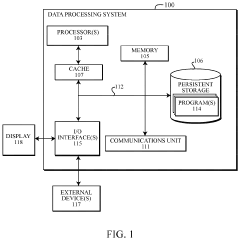
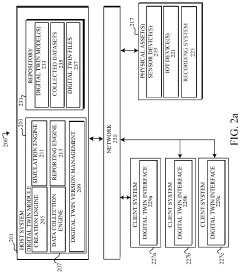
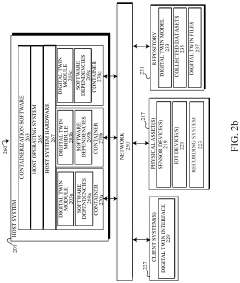
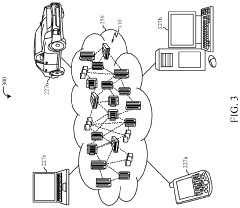
Digital twin workflow simulation
PatentActiveUS11556449B2
Innovation
- A computer-implemented method for simulating digital twin performance that allows users to selectively bypass certain input parameters and components, using customizable configurations to focus on specific parts, substitute alternative components, and provide overriding values for intermediate simulation results, enabling more targeted analysis and optimization.
Method for Engineering and Simulating an Automation System via Digital Twins
PatentActiveUS20220163953A1
Innovation
- The method involves generating and logically linking virtual components as digital twins within the hardware configuration of the automation system, allowing for parallel configuration, optimization, and testing with real components, enabling coexistent and flexible commissioning, and allowing for the distribution of virtual components across servers for optimal resource utilization.


Standards and Validation Frameworks for Simulation
The establishment of robust standards and validation frameworks represents a critical foundation for ensuring the reliability and effectiveness of both simulation-driven design and digital twin technologies. Current industry standards primarily focus on verification and validation (V&V) methodologies, with IEEE 1516 for High Level Architecture (HLA) and ISO 23247 for digital twin manufacturing frameworks leading the standardization efforts. These frameworks provide essential guidelines for model credibility assessment, data quality assurance, and interoperability requirements.
Validation frameworks for simulation-driven design typically emphasize static verification processes, where models are validated against known datasets or analytical solutions before deployment. The American Society of Mechanical Engineers (ASME) V&V guidelines establish systematic approaches for code verification, solution verification, and validation activities. These frameworks focus on ensuring mathematical accuracy and physical fidelity of simulation models through structured testing protocols and uncertainty quantification methods.
Digital twin validation frameworks present more complex challenges due to their dynamic, real-time nature. The Industrial Internet Consortium (IIC) has developed comprehensive validation methodologies that address continuous model updating, real-time data synchronization, and adaptive calibration processes. These frameworks emphasize the importance of establishing feedback loops between physical assets and digital models, requiring validation approaches that can accommodate evolving system behaviors and environmental conditions.
Emerging validation standards are incorporating machine learning and artificial intelligence components, recognizing the increasing integration of data-driven approaches in both simulation and digital twin applications. The IEEE P2857 standard for privacy engineering and the ISO/IEC 23053 framework for AI system validation provide guidance for handling uncertainty and bias in intelligent simulation systems.
Cross-domain validation remains a significant challenge, particularly when comparing effectiveness between simulation-driven design and digital twins. Current frameworks lack standardized metrics for evaluating predictive accuracy, computational efficiency, and decision-making support capabilities across different application domains. Industry consortiums are developing unified benchmarking protocols to address these gaps and enable objective performance comparisons.
Validation frameworks for simulation-driven design typically emphasize static verification processes, where models are validated against known datasets or analytical solutions before deployment. The American Society of Mechanical Engineers (ASME) V&V guidelines establish systematic approaches for code verification, solution verification, and validation activities. These frameworks focus on ensuring mathematical accuracy and physical fidelity of simulation models through structured testing protocols and uncertainty quantification methods.
Digital twin validation frameworks present more complex challenges due to their dynamic, real-time nature. The Industrial Internet Consortium (IIC) has developed comprehensive validation methodologies that address continuous model updating, real-time data synchronization, and adaptive calibration processes. These frameworks emphasize the importance of establishing feedback loops between physical assets and digital models, requiring validation approaches that can accommodate evolving system behaviors and environmental conditions.
Emerging validation standards are incorporating machine learning and artificial intelligence components, recognizing the increasing integration of data-driven approaches in both simulation and digital twin applications. The IEEE P2857 standard for privacy engineering and the ISO/IEC 23053 framework for AI system validation provide guidance for handling uncertainty and bias in intelligent simulation systems.
Cross-domain validation remains a significant challenge, particularly when comparing effectiveness between simulation-driven design and digital twins. Current frameworks lack standardized metrics for evaluating predictive accuracy, computational efficiency, and decision-making support capabilities across different application domains. Industry consortiums are developing unified benchmarking protocols to address these gaps and enable objective performance comparisons.
ROI Assessment Models for Simulation Technologies
ROI assessment models for simulation technologies have evolved significantly to address the growing need for quantifiable returns on investment in both simulation-driven design and digital twin implementations. Traditional financial metrics alone prove insufficient for capturing the full value proposition of these advanced technologies, necessitating comprehensive frameworks that account for both tangible and intangible benefits.
The most widely adopted ROI model is the Total Economic Impact (TEI) framework, which evaluates direct cost savings, productivity improvements, and risk mitigation benefits. For simulation-driven design, this model typically measures reduced physical prototyping costs, shortened development cycles, and improved product quality metrics. Digital twins demonstrate ROI through operational efficiency gains, predictive maintenance savings, and enhanced decision-making capabilities that translate to measurable financial outcomes.
Net Present Value (NPV) calculations remain fundamental to ROI assessment, incorporating time-value considerations for long-term simulation technology investments. These models factor in initial software licensing costs, hardware infrastructure requirements, training expenses, and ongoing maintenance fees against projected benefits over a 3-5 year horizon. Sensitivity analysis within NPV models helps organizations understand how varying adoption rates and utilization levels impact overall returns.
Value-based ROI models have gained prominence for their ability to capture strategic benefits beyond immediate cost reductions. These frameworks quantify improvements in innovation velocity, market responsiveness, and competitive positioning that simulation technologies enable. For digital twins specifically, value-based models assess the monetary impact of enhanced asset utilization, reduced downtime, and improved customer satisfaction metrics.
Risk-adjusted ROI models incorporate probability distributions and Monte Carlo simulations to account for implementation uncertainties and technology adoption challenges. These sophisticated approaches provide more realistic return projections by considering potential delays, integration complexities, and varying success rates across different organizational contexts.
Benchmarking-based ROI models leverage industry-specific performance data to establish realistic expectations and comparative baselines. These models prove particularly valuable for organizations seeking to justify simulation technology investments by demonstrating alignment with industry best practices and peer performance standards.
The most widely adopted ROI model is the Total Economic Impact (TEI) framework, which evaluates direct cost savings, productivity improvements, and risk mitigation benefits. For simulation-driven design, this model typically measures reduced physical prototyping costs, shortened development cycles, and improved product quality metrics. Digital twins demonstrate ROI through operational efficiency gains, predictive maintenance savings, and enhanced decision-making capabilities that translate to measurable financial outcomes.
Net Present Value (NPV) calculations remain fundamental to ROI assessment, incorporating time-value considerations for long-term simulation technology investments. These models factor in initial software licensing costs, hardware infrastructure requirements, training expenses, and ongoing maintenance fees against projected benefits over a 3-5 year horizon. Sensitivity analysis within NPV models helps organizations understand how varying adoption rates and utilization levels impact overall returns.
Value-based ROI models have gained prominence for their ability to capture strategic benefits beyond immediate cost reductions. These frameworks quantify improvements in innovation velocity, market responsiveness, and competitive positioning that simulation technologies enable. For digital twins specifically, value-based models assess the monetary impact of enhanced asset utilization, reduced downtime, and improved customer satisfaction metrics.
Risk-adjusted ROI models incorporate probability distributions and Monte Carlo simulations to account for implementation uncertainties and technology adoption challenges. These sophisticated approaches provide more realistic return projections by considering potential delays, integration complexities, and varying success rates across different organizational contexts.
Benchmarking-based ROI models leverage industry-specific performance data to establish realistic expectations and comparative baselines. These models prove particularly valuable for organizations seeking to justify simulation technology investments by demonstrating alignment with industry best practices and peer performance standards.
Unlock deeper insights with Patsnap Eureka Quick Research — get a full tech report to explore trends and direct your research. Try now!
Generate Your Research Report Instantly with AI Agent
Supercharge your innovation with Patsnap Eureka AI Agent Platform!