

Compare Thermal Conductivity in Dual-Layer Shutdown Separators
JUN 1, 20269 MIN READ
Generate Your Research Report Instantly with AI Agent
PatSnap Eureka helps you evaluate technical feasibility & market potential.
Thermal Management in Battery Separator Technology Background
Battery separator technology has undergone significant evolution since the early development of lithium-ion batteries in the 1990s. Initially, single-layer polyolefin separators dominated the market, primarily utilizing polyethylene (PE) or polypropylene (PP) materials. These early separators provided basic ionic conductivity and electrical isolation but lacked sophisticated thermal management capabilities, leading to safety concerns in high-temperature operating conditions.
The introduction of dual-layer separator architectures marked a pivotal advancement in battery thermal management. This innovation emerged from the critical need to address thermal runaway incidents and improve battery safety performance. Dual-layer separators typically combine different polymer materials, such as PE/PP or ceramic-coated configurations, to achieve enhanced thermal stability while maintaining optimal electrochemical performance.
Thermal conductivity has become a paramount consideration in modern battery separator design due to the increasing energy density requirements and rapid charging demands of contemporary applications. Effective heat dissipation through separator materials directly impacts battery cycle life, safety margins, and overall system reliability. The challenge lies in balancing thermal conductivity with other essential properties including porosity, mechanical strength, and shutdown functionality.
The shutdown mechanism represents a critical safety feature where separators undergo controlled pore closure at elevated temperatures, typically between 130-140°C for PE-based materials. This process temporarily halts ionic transport, preventing further heat generation and potential thermal runaway. However, optimizing thermal conductivity while preserving shutdown characteristics requires sophisticated material engineering and precise layer composition control.
Recent technological developments have focused on incorporating thermally conductive additives, such as ceramic particles or carbon-based materials, into separator matrices. These approaches aim to create preferential heat conduction pathways while maintaining the fundamental separator functions. Advanced manufacturing techniques, including co-extrusion and coating processes, enable precise control over thermal properties in dual-layer configurations.
The automotive electrification trend and grid-scale energy storage applications have intensified the demand for separators with superior thermal management capabilities. Operating temperature ranges have expanded, requiring separators to maintain performance across wider thermal windows while providing reliable safety mechanisms. This evolution continues to drive innovation in dual-layer separator architectures and thermal conductivity optimization strategies.
The introduction of dual-layer separator architectures marked a pivotal advancement in battery thermal management. This innovation emerged from the critical need to address thermal runaway incidents and improve battery safety performance. Dual-layer separators typically combine different polymer materials, such as PE/PP or ceramic-coated configurations, to achieve enhanced thermal stability while maintaining optimal electrochemical performance.
Thermal conductivity has become a paramount consideration in modern battery separator design due to the increasing energy density requirements and rapid charging demands of contemporary applications. Effective heat dissipation through separator materials directly impacts battery cycle life, safety margins, and overall system reliability. The challenge lies in balancing thermal conductivity with other essential properties including porosity, mechanical strength, and shutdown functionality.
The shutdown mechanism represents a critical safety feature where separators undergo controlled pore closure at elevated temperatures, typically between 130-140°C for PE-based materials. This process temporarily halts ionic transport, preventing further heat generation and potential thermal runaway. However, optimizing thermal conductivity while preserving shutdown characteristics requires sophisticated material engineering and precise layer composition control.
Recent technological developments have focused on incorporating thermally conductive additives, such as ceramic particles or carbon-based materials, into separator matrices. These approaches aim to create preferential heat conduction pathways while maintaining the fundamental separator functions. Advanced manufacturing techniques, including co-extrusion and coating processes, enable precise control over thermal properties in dual-layer configurations.
The automotive electrification trend and grid-scale energy storage applications have intensified the demand for separators with superior thermal management capabilities. Operating temperature ranges have expanded, requiring separators to maintain performance across wider thermal windows while providing reliable safety mechanisms. This evolution continues to drive innovation in dual-layer separator architectures and thermal conductivity optimization strategies.
Market Demand for Advanced Dual-Layer Shutdown Separators
The global lithium-ion battery market expansion has created substantial demand for advanced dual-layer shutdown separators, driven primarily by the electric vehicle revolution and energy storage system deployment. Traditional single-layer separators are increasingly inadequate for meeting the stringent safety and performance requirements of next-generation battery applications, particularly in high-energy density configurations where thermal management becomes critical.
Electric vehicle manufacturers represent the largest demand segment, requiring separators that can effectively manage thermal runaway scenarios while maintaining optimal ionic conductivity. The automotive industry's shift toward higher energy density battery packs has intensified the need for separators with superior thermal conductivity characteristics, as these components directly influence battery safety margins and operational reliability under extreme conditions.
Energy storage systems for grid-scale applications constitute another significant demand driver, where dual-layer shutdown separators provide essential safety mechanisms for large-format battery installations. These applications demand separators capable of rapid thermal response while maintaining structural integrity during shutdown events, creating specific market requirements for advanced thermal conductivity properties.
Consumer electronics manufacturers increasingly specify dual-layer separators for premium devices, particularly smartphones and laptops with fast-charging capabilities. The miniaturization trend in electronics requires separators that can efficiently dissipate heat in confined spaces while providing reliable shutdown protection, driving demand for materials with optimized thermal conductivity profiles.
The renewable energy sector's growth has amplified demand for residential and commercial energy storage solutions, where dual-layer separators play crucial roles in ensuring system safety and longevity. Battery manufacturers serving this market segment require separators with consistent thermal performance across wide temperature ranges, creating opportunities for advanced materials with tailored thermal conductivity characteristics.
Industrial applications, including power tools and medical devices, represent emerging demand segments where dual-layer separators provide competitive advantages through enhanced thermal management. These applications often involve high discharge rates and challenging operating environments, necessitating separators with superior thermal conductivity properties to maintain performance and safety standards.
Market demand is further intensified by regulatory requirements and safety standards that increasingly mandate advanced separator technologies in critical applications, particularly where thermal management directly impacts user safety and system reliability.
Electric vehicle manufacturers represent the largest demand segment, requiring separators that can effectively manage thermal runaway scenarios while maintaining optimal ionic conductivity. The automotive industry's shift toward higher energy density battery packs has intensified the need for separators with superior thermal conductivity characteristics, as these components directly influence battery safety margins and operational reliability under extreme conditions.
Energy storage systems for grid-scale applications constitute another significant demand driver, where dual-layer shutdown separators provide essential safety mechanisms for large-format battery installations. These applications demand separators capable of rapid thermal response while maintaining structural integrity during shutdown events, creating specific market requirements for advanced thermal conductivity properties.
Consumer electronics manufacturers increasingly specify dual-layer separators for premium devices, particularly smartphones and laptops with fast-charging capabilities. The miniaturization trend in electronics requires separators that can efficiently dissipate heat in confined spaces while providing reliable shutdown protection, driving demand for materials with optimized thermal conductivity profiles.
The renewable energy sector's growth has amplified demand for residential and commercial energy storage solutions, where dual-layer separators play crucial roles in ensuring system safety and longevity. Battery manufacturers serving this market segment require separators with consistent thermal performance across wide temperature ranges, creating opportunities for advanced materials with tailored thermal conductivity characteristics.
Industrial applications, including power tools and medical devices, represent emerging demand segments where dual-layer separators provide competitive advantages through enhanced thermal management. These applications often involve high discharge rates and challenging operating environments, necessitating separators with superior thermal conductivity properties to maintain performance and safety standards.
Market demand is further intensified by regulatory requirements and safety standards that increasingly mandate advanced separator technologies in critical applications, particularly where thermal management directly impacts user safety and system reliability.
Current Thermal Conductivity Challenges in Battery Separators
Battery separators face significant thermal conductivity challenges that directly impact safety, performance, and reliability in lithium-ion battery systems. The primary challenge lies in achieving optimal thermal management while maintaining essential separator functions including ionic conductivity, mechanical integrity, and shutdown capability. Traditional single-layer separators often struggle to balance these competing requirements, leading to thermal hotspots and potential safety hazards.
The fundamental thermal conductivity challenge stems from the inherent properties of polymer materials commonly used in separator manufacturing. Polyethylene and polypropylene, the dominant materials, exhibit relatively low thermal conductivity ranging from 0.1 to 0.4 W/m·K. This limitation creates thermal barriers within battery cells, impeding efficient heat dissipation and contributing to temperature gradients that can accelerate degradation and reduce cycle life.
Dual-layer shutdown separators introduce additional complexity to thermal management. The interface between different polymer layers creates thermal resistance that can significantly impact overall heat transfer efficiency. Mismatched thermal expansion coefficients between layers can lead to delamination under thermal stress, compromising both thermal and electrical performance. The shutdown mechanism itself presents a paradox, as the polymer melting required for safety shutdown inherently alters thermal conductivity properties.
Manufacturing processes further complicate thermal conductivity optimization. Porosity control, essential for ionic transport, directly affects thermal properties. Higher porosity typically reduces thermal conductivity while improving ionic conductivity, creating an optimization challenge. Coating processes and surface treatments used to enhance separator performance can introduce additional thermal barriers or create non-uniform thermal properties across the separator surface.
Temperature-dependent thermal conductivity variations pose another significant challenge. As battery operating temperatures fluctuate, separator thermal properties change dynamically, affecting heat dissipation efficiency. This variability is particularly pronounced near shutdown temperatures where phase transitions occur, creating unpredictable thermal behavior that complicates thermal management system design.
The integration of ceramic coatings and functional additives, while improving mechanical and electrochemical properties, introduces thermal conductivity heterogeneity. These modifications can create localized thermal resistance points that contribute to uneven temperature distribution and potential thermal runaway initiation sites. Achieving uniform thermal properties across the entire separator area remains a persistent manufacturing and design challenge.
The fundamental thermal conductivity challenge stems from the inherent properties of polymer materials commonly used in separator manufacturing. Polyethylene and polypropylene, the dominant materials, exhibit relatively low thermal conductivity ranging from 0.1 to 0.4 W/m·K. This limitation creates thermal barriers within battery cells, impeding efficient heat dissipation and contributing to temperature gradients that can accelerate degradation and reduce cycle life.
Dual-layer shutdown separators introduce additional complexity to thermal management. The interface between different polymer layers creates thermal resistance that can significantly impact overall heat transfer efficiency. Mismatched thermal expansion coefficients between layers can lead to delamination under thermal stress, compromising both thermal and electrical performance. The shutdown mechanism itself presents a paradox, as the polymer melting required for safety shutdown inherently alters thermal conductivity properties.
Manufacturing processes further complicate thermal conductivity optimization. Porosity control, essential for ionic transport, directly affects thermal properties. Higher porosity typically reduces thermal conductivity while improving ionic conductivity, creating an optimization challenge. Coating processes and surface treatments used to enhance separator performance can introduce additional thermal barriers or create non-uniform thermal properties across the separator surface.
Temperature-dependent thermal conductivity variations pose another significant challenge. As battery operating temperatures fluctuate, separator thermal properties change dynamically, affecting heat dissipation efficiency. This variability is particularly pronounced near shutdown temperatures where phase transitions occur, creating unpredictable thermal behavior that complicates thermal management system design.
The integration of ceramic coatings and functional additives, while improving mechanical and electrochemical properties, introduces thermal conductivity heterogeneity. These modifications can create localized thermal resistance points that contribute to uneven temperature distribution and potential thermal runaway initiation sites. Achieving uniform thermal properties across the entire separator area remains a persistent manufacturing and design challenge.
Existing Thermal Conductivity Measurement Solutions
01 Multi-layer separator structure design for enhanced thermal management
Dual-layer shutdown separators utilize specialized multi-layer structures to optimize thermal conductivity properties. These designs incorporate different materials in each layer to achieve controlled thermal response during battery operation. The layered architecture allows for precise thermal management while maintaining separator integrity during normal operation and providing shutdown functionality when temperatures exceed safe limits.- Dual-layer separator structure design and configuration: Dual-layer shutdown separators feature specialized structural configurations that combine two distinct layers with different properties to achieve optimal thermal management. The design focuses on creating layered architectures that can effectively control heat transfer while maintaining separator functionality during thermal events. These structures are engineered to provide enhanced thermal stability and controlled shutdown behavior through strategic layer arrangement and material selection.
- Thermal conductivity enhancement materials and additives: Various materials and additives are incorporated into dual-layer separators to modify their thermal conductivity properties. These include ceramic particles, metal oxides, and thermally conductive fillers that can be distributed within the separator layers to achieve desired heat transfer characteristics. The selection and distribution of these materials directly impact the overall thermal performance of the separator system.
- Shutdown mechanism and thermal response control: The shutdown functionality of dual-layer separators is achieved through temperature-responsive mechanisms that activate at predetermined thermal thresholds. These systems are designed to provide controlled closure of ionic pathways when excessive temperatures are detected, preventing thermal runaway while maintaining structural integrity. The thermal response is carefully calibrated to ensure reliable shutdown performance across various operating conditions.
- Layer interface optimization and bonding techniques: The interface between the two layers in dual-layer separators requires specialized bonding and optimization techniques to ensure proper thermal conductivity transfer and mechanical stability. Various methods are employed to create strong interlayer adhesion while maintaining the distinct properties of each layer. The interface design is critical for achieving uniform thermal distribution and preventing delamination under thermal stress.
- Manufacturing processes and quality control for thermal properties: Specialized manufacturing processes are developed to produce dual-layer shutdown separators with consistent thermal conductivity properties. These processes include controlled coating techniques, lamination methods, and thermal treatment procedures that ensure uniform layer formation and optimal thermal characteristics. Quality control measures are implemented to verify thermal performance and ensure reproducible separator properties across production batches.
02 Thermal shutdown mechanism integration
Advanced thermal shutdown mechanisms are integrated into dual-layer separators to provide safety protection during thermal events. These systems are designed to activate at specific temperature thresholds, effectively stopping ion transport while managing heat dissipation. The shutdown functionality is engineered to work in conjunction with the thermal conductivity properties to prevent thermal runaway in battery applications.Expand Specific Solutions03 Material composition for thermal conductivity optimization
Specific material compositions are employed in dual-layer separators to achieve optimal thermal conductivity characteristics. These materials are selected based on their thermal properties, chemical stability, and compatibility with battery electrolytes. The composition includes polymeric materials, ceramic fillers, and other additives that enhance thermal management while maintaining electrical insulation properties.Expand Specific Solutions04 Manufacturing processes for dual-layer thermal separators
Specialized manufacturing techniques are developed to produce dual-layer shutdown separators with controlled thermal conductivity properties. These processes involve precise coating methods, lamination techniques, and thermal treatment procedures to achieve the desired layer structure and thermal characteristics. The manufacturing approach ensures uniform thermal properties across the separator while maintaining mechanical integrity.Expand Specific Solutions05 Performance testing and thermal characterization methods
Comprehensive testing methodologies are established to evaluate the thermal conductivity and shutdown performance of dual-layer separators. These testing protocols include thermal analysis techniques, conductivity measurements, and safety performance evaluations under various temperature conditions. The characterization methods ensure that the separators meet required thermal management specifications for battery applications.Expand Specific Solutions
Key Players in Battery Separator Manufacturing Industry
The dual-layer shutdown separator technology represents a mature segment within the rapidly expanding lithium-ion battery market, currently valued at over $50 billion globally. The industry has progressed beyond early development stages, with established players like Celgard LLC, SK IE Technology, and LG Energy Solution demonstrating advanced manufacturing capabilities and proven commercial deployment. Technology maturity varies significantly across market participants, with Celgard's patented dry-stretch process and SK Innovation's integrated battery solutions representing high-maturity implementations, while companies like Maxell and Sumitomo Chemical focus on specialized material innovations. Asian manufacturers, particularly SK On, Dongguan Amperex Technology, and various Chinese institutes, are driving competitive pressure through cost optimization and performance enhancements. The competitive landscape shows consolidation around key players with established intellectual property portfolios, manufacturing scale, and automotive industry partnerships, indicating a maturing market transitioning from technology development to manufacturing excellence and cost competitiveness.
Celgard LLC
Technical Solution: Celgard has developed advanced dual-layer shutdown separator technology featuring asymmetric pore structures with differentiated thermal conductivity properties. Their separators incorporate a polyethylene shutdown layer with thermal conductivity around 0.2-0.4 W/mK combined with a polypropylene backing layer offering enhanced mechanical strength. The company's proprietary dry-process manufacturing enables precise control of pore size distribution and thermal transport properties across each layer. Their X-series separators demonstrate superior thermal management through optimized layer thickness ratios and controlled porosity gradients, allowing for effective heat dissipation while maintaining shutdown functionality at critical temperatures around 130-135°C.
Strengths: Market-leading expertise in separator manufacturing with proven dual-layer technology and extensive patent portfolio. Weaknesses: Higher manufacturing costs compared to single-layer alternatives and potential delamination issues under extreme thermal cycling.
SK Innovation Co., Ltd.
Technical Solution: SK Innovation has developed ceramic-coated dual-layer shutdown separators with enhanced thermal conductivity management for high-energy density battery applications. Their technology combines a traditional polyethylene shutdown layer with a ceramic-enhanced top layer featuring aluminum oxide nanoparticles that improve thermal conductivity to approximately 0.6-0.8 W/mK. The dual-layer design incorporates gradient porosity structures where the shutdown layer maintains standard thermal properties while the ceramic layer provides superior heat dissipation pathways. Their separators demonstrate improved thermal stability up to 200°C and enhanced electrolyte wettability through surface modification techniques, making them suitable for fast-charging applications where thermal management is critical.
Strengths: Advanced ceramic coating technology provides excellent thermal stability and improved safety margins. Weaknesses: Complex manufacturing process increases production costs and ceramic particles may affect long-term mechanical flexibility.
Core Innovations in Dual-Layer Separator Design
Improved microporous membranes, separators,lithium batteries, and related methods
PatentWO2016164677A1
Innovation
- Ionized radiation treatment, specifically electron-beam radiation, is applied to polyethylene and polypropylene-based membranes to enhance their thermal and mechanical properties, reducing thermal shrinkage and extending the thermal shutdown window, thereby improving safety and performance.


Separator of lithium-ion-battery preparation and method thereof
PatentActiveUS20140322587A1
Innovation
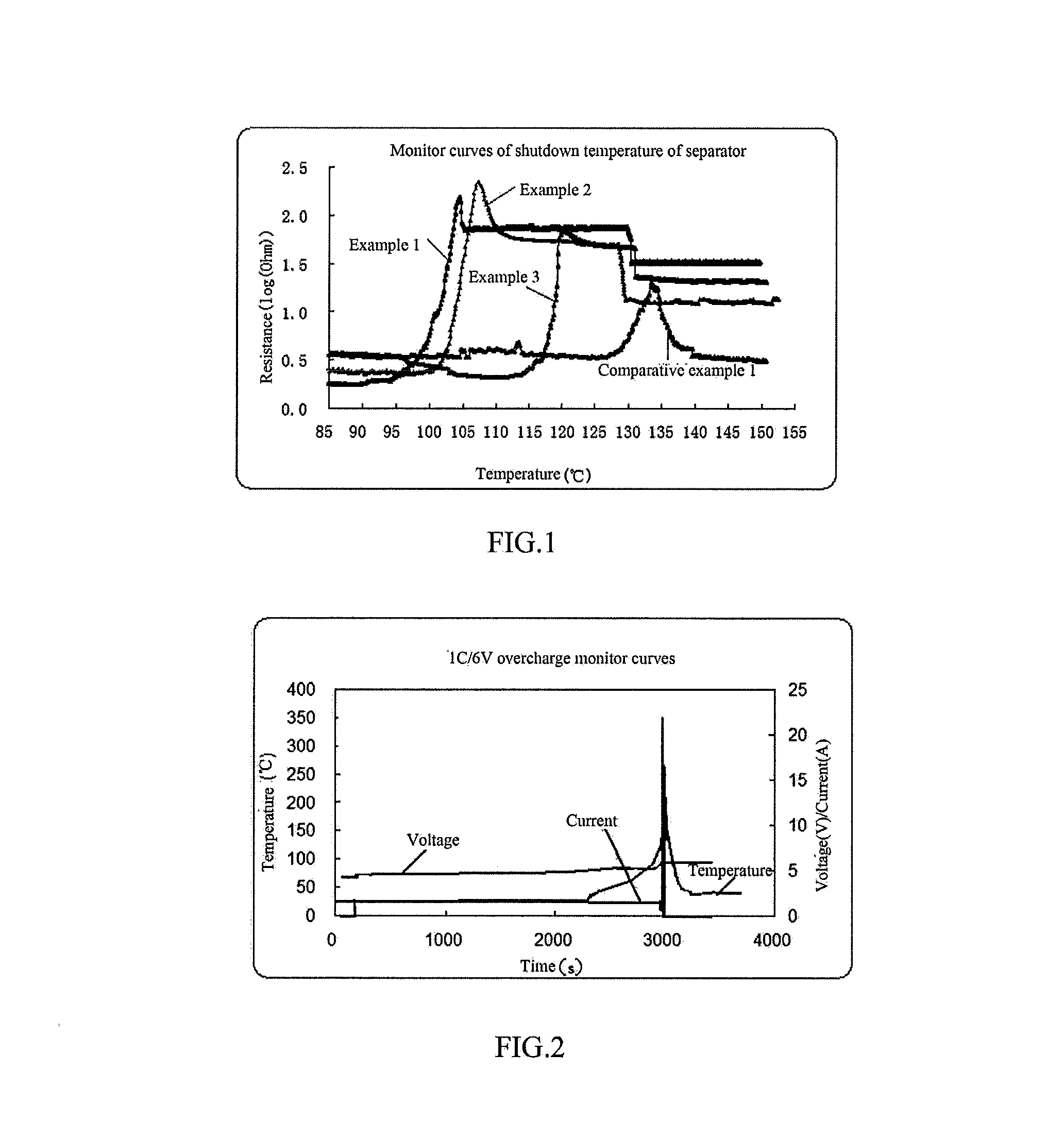
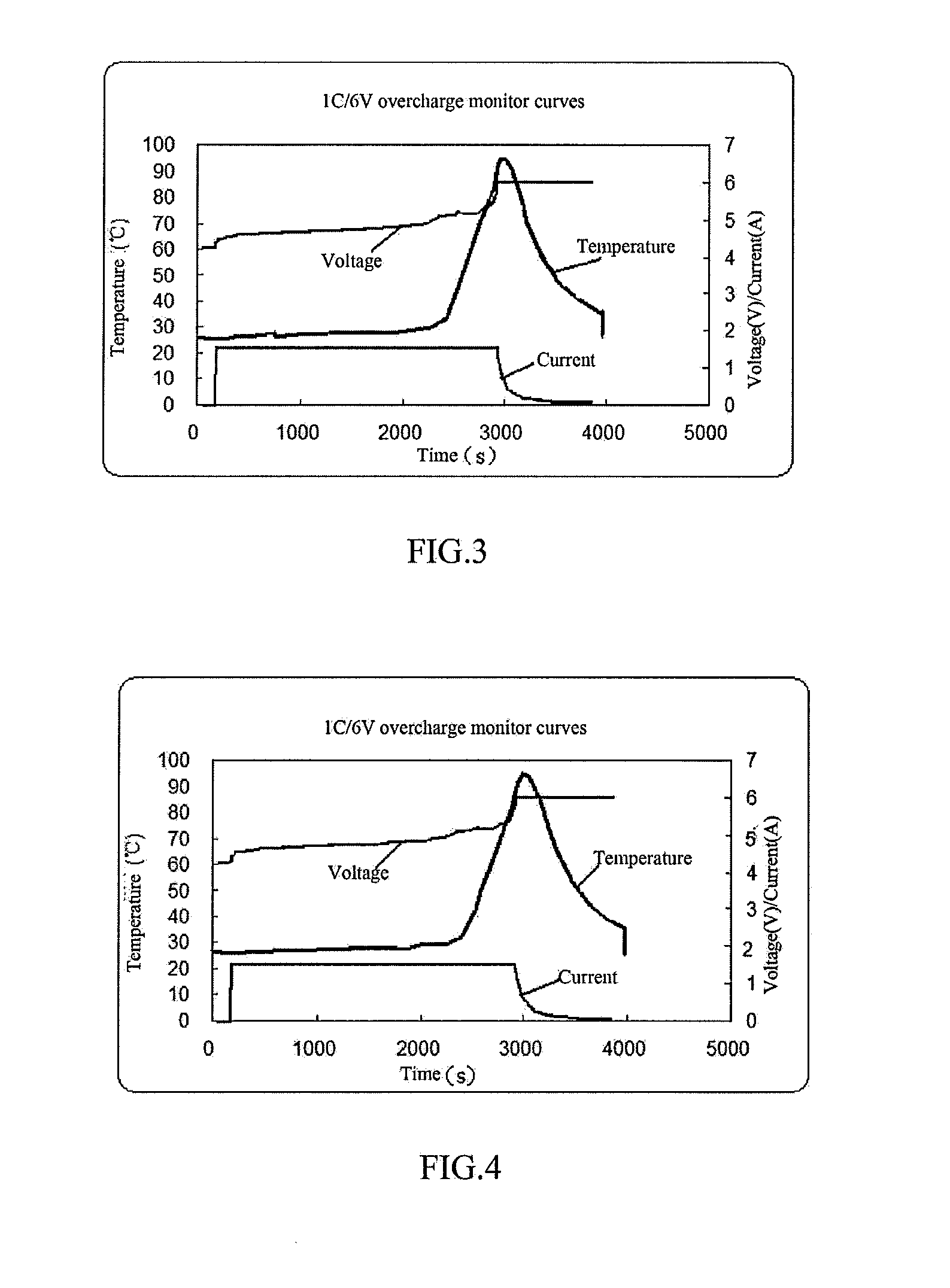
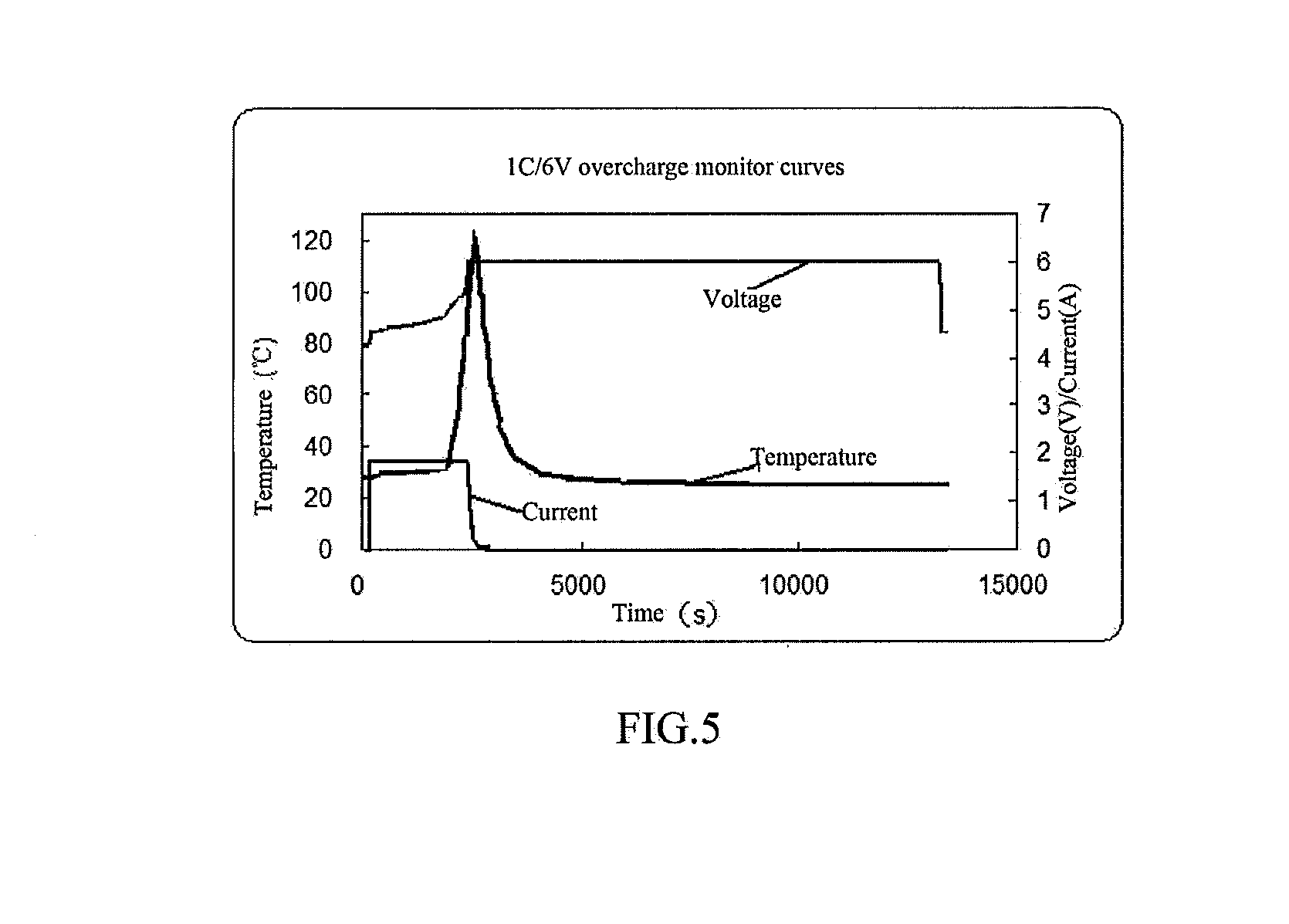
- A lithium-ion battery separator with a substrate membrane coated with a mixture of ceramic particles, solid polymer wax, and adhesive, where the wax melts at a temperature below the separator's shutdown point to block ion channels, preventing overcharge and reducing thermal shrinkage.
Safety Standards for Battery Separator Materials
Battery separator materials must comply with stringent safety standards to ensure reliable performance in lithium-ion battery applications. These standards encompass thermal stability requirements, mechanical integrity specifications, and chemical compatibility guidelines that directly impact the thermal conductivity characteristics of dual-layer shutdown separators.
The International Electrotechnical Commission (IEC) 62133 standard establishes fundamental safety requirements for portable sealed secondary cells and batteries. This standard mandates specific thermal abuse testing protocols, including exposure to elevated temperatures up to 130°C, which directly relates to how thermal conductivity affects separator performance during thermal events. The standard requires separators to maintain structural integrity while providing adequate shutdown functionality.
UL 1642 and UL 2054 standards provide comprehensive safety criteria for lithium battery cells and battery packs respectively. These standards specify thermal runaway prevention measures and require separators to demonstrate controlled thermal response characteristics. The thermal conductivity properties of dual-layer separators must balance heat dissipation capabilities with shutdown temperature precision to meet these safety requirements.
ASTM D6400 and ASTM D5511 standards address material degradation and thermal stability testing methodologies. These standards establish testing protocols for evaluating how thermal conductivity changes affect separator performance over extended temperature cycles. Dual-layer separators must demonstrate consistent thermal behavior across multiple heating and cooling cycles while maintaining their shutdown functionality.
The Japanese Industrial Standards (JIS C 8714) and Chinese National Standards (GB/T 31485) provide additional regional safety requirements that influence thermal conductivity specifications. These standards emphasize the importance of predictable thermal behavior in separator materials, requiring manufacturers to demonstrate that thermal conductivity variations do not compromise safety performance.
Safety standards also mandate specific testing conditions for thermal conductivity measurement, including standardized sample preparation methods, environmental controls, and measurement accuracy requirements. These standardized approaches ensure that thermal conductivity comparisons between different dual-layer separator designs provide meaningful safety-relevant data for battery system designers and regulatory compliance verification.
The International Electrotechnical Commission (IEC) 62133 standard establishes fundamental safety requirements for portable sealed secondary cells and batteries. This standard mandates specific thermal abuse testing protocols, including exposure to elevated temperatures up to 130°C, which directly relates to how thermal conductivity affects separator performance during thermal events. The standard requires separators to maintain structural integrity while providing adequate shutdown functionality.
UL 1642 and UL 2054 standards provide comprehensive safety criteria for lithium battery cells and battery packs respectively. These standards specify thermal runaway prevention measures and require separators to demonstrate controlled thermal response characteristics. The thermal conductivity properties of dual-layer separators must balance heat dissipation capabilities with shutdown temperature precision to meet these safety requirements.
ASTM D6400 and ASTM D5511 standards address material degradation and thermal stability testing methodologies. These standards establish testing protocols for evaluating how thermal conductivity changes affect separator performance over extended temperature cycles. Dual-layer separators must demonstrate consistent thermal behavior across multiple heating and cooling cycles while maintaining their shutdown functionality.
The Japanese Industrial Standards (JIS C 8714) and Chinese National Standards (GB/T 31485) provide additional regional safety requirements that influence thermal conductivity specifications. These standards emphasize the importance of predictable thermal behavior in separator materials, requiring manufacturers to demonstrate that thermal conductivity variations do not compromise safety performance.
Safety standards also mandate specific testing conditions for thermal conductivity measurement, including standardized sample preparation methods, environmental controls, and measurement accuracy requirements. These standardized approaches ensure that thermal conductivity comparisons between different dual-layer separator designs provide meaningful safety-relevant data for battery system designers and regulatory compliance verification.
Environmental Impact of Advanced Separator Technologies
The environmental implications of advanced separator technologies, particularly dual-layer shutdown separators with varying thermal conductivity properties, represent a critical consideration in sustainable battery development. These sophisticated separator systems offer significant environmental advantages through enhanced safety mechanisms that reduce the risk of thermal runaway events, thereby minimizing potential environmental contamination from battery failures.
Manufacturing processes for dual-layer shutdown separators typically require more complex production methodologies compared to conventional single-layer alternatives. However, the environmental cost of increased manufacturing complexity is often offset by the extended operational lifespan and improved safety profile of batteries incorporating these advanced separators. The production of ceramic-coated and polymer-based dual-layer systems involves different environmental footprints, with ceramic materials generally requiring higher energy inputs during processing but offering superior recyclability characteristics.
Life cycle assessments of batteries utilizing dual-layer shutdown separators demonstrate reduced environmental impact through decreased failure rates and extended service life. The thermal conductivity variations between layers contribute to more effective heat dissipation, reducing the likelihood of catastrophic failures that could result in hazardous material release into the environment. This enhanced thermal management capability translates to fewer battery replacements over time, consequently reducing overall material consumption and waste generation.
End-of-life considerations for advanced separator technologies reveal both challenges and opportunities. While the multi-layer construction complicates recycling processes, the improved durability and safety characteristics result in batteries that maintain performance longer, delaying entry into waste streams. Recovery of valuable materials from dual-layer separators requires specialized separation techniques, but the concentrated nature of these materials in advanced battery systems can improve recycling efficiency.
Regulatory frameworks increasingly favor separator technologies that demonstrate superior environmental performance throughout their lifecycle. The thermal conductivity characteristics of dual-layer systems contribute to compliance with emerging environmental standards by reducing the probability of thermal events that could compromise environmental safety. This alignment with regulatory trends positions advanced separator technologies as environmentally responsible choices for next-generation energy storage applications.
Manufacturing processes for dual-layer shutdown separators typically require more complex production methodologies compared to conventional single-layer alternatives. However, the environmental cost of increased manufacturing complexity is often offset by the extended operational lifespan and improved safety profile of batteries incorporating these advanced separators. The production of ceramic-coated and polymer-based dual-layer systems involves different environmental footprints, with ceramic materials generally requiring higher energy inputs during processing but offering superior recyclability characteristics.
Life cycle assessments of batteries utilizing dual-layer shutdown separators demonstrate reduced environmental impact through decreased failure rates and extended service life. The thermal conductivity variations between layers contribute to more effective heat dissipation, reducing the likelihood of catastrophic failures that could result in hazardous material release into the environment. This enhanced thermal management capability translates to fewer battery replacements over time, consequently reducing overall material consumption and waste generation.
End-of-life considerations for advanced separator technologies reveal both challenges and opportunities. While the multi-layer construction complicates recycling processes, the improved durability and safety characteristics result in batteries that maintain performance longer, delaying entry into waste streams. Recovery of valuable materials from dual-layer separators requires specialized separation techniques, but the concentrated nature of these materials in advanced battery systems can improve recycling efficiency.
Regulatory frameworks increasingly favor separator technologies that demonstrate superior environmental performance throughout their lifecycle. The thermal conductivity characteristics of dual-layer systems contribute to compliance with emerging environmental standards by reducing the probability of thermal events that could compromise environmental safety. This alignment with regulatory trends positions advanced separator technologies as environmentally responsible choices for next-generation energy storage applications.
Unlock deeper insights with PatSnap Eureka Quick Research — get a full tech report to explore trends and direct your research. Try now!
Generate Your Research Report Instantly with AI Agent
Supercharge your innovation with PatSnap Eureka AI Agent Platform!