Comparing Passive vs Active Cooling for Thermal Runaway
FEB 26, 20269 MIN READ
Generate Your Research Report Instantly with AI Agent
Patsnap Eureka helps you evaluate technical feasibility & market potential.
Thermal Runaway Cooling Technology Background and Objectives
Thermal runaway represents one of the most critical safety challenges in modern energy storage systems, particularly in lithium-ion battery applications. This phenomenon occurs when a battery cell experiences an uncontrolled increase in temperature, leading to a cascading failure that can propagate to adjacent cells and potentially result in fire or explosion. The escalating adoption of electric vehicles, grid-scale energy storage, and portable electronics has intensified the urgency to develop effective thermal management solutions.
The fundamental mechanism of thermal runaway involves a self-reinforcing cycle where elevated temperatures accelerate chemical reactions within the battery cell, generating additional heat and further increasing temperature. Once initiated, this process becomes extremely difficult to halt without external intervention. Traditional approaches have focused primarily on prevention through battery management systems and thermal monitoring, but the industry increasingly recognizes the need for active mitigation strategies when prevention fails.
Current thermal management approaches can be broadly categorized into passive and active cooling methodologies, each presenting distinct advantages and limitations. Passive cooling systems rely on natural heat dissipation mechanisms such as conduction, convection, and radiation, typically incorporating materials like thermal interface materials, heat sinks, and phase change materials. These systems offer simplicity, reliability, and cost-effectiveness but may lack the rapid response capability required for emergency thermal runaway scenarios.
Active cooling systems, conversely, employ powered mechanisms such as forced air circulation, liquid cooling loops, or refrigeration cycles to actively remove heat from battery systems. While these approaches provide superior heat removal capacity and controllability, they introduce complexity, power consumption, and potential failure points that must be carefully considered in system design.
The primary objective of this technological investigation is to establish a comprehensive framework for evaluating the relative merits of passive versus active cooling approaches specifically for thermal runaway mitigation. This analysis aims to identify optimal cooling strategies based on application requirements, performance criteria, and economic considerations. Key performance metrics include thermal response time, heat removal capacity, system reliability, energy efficiency, and implementation complexity.
Furthermore, this research seeks to explore hybrid approaches that combine passive and active cooling elements to maximize thermal management effectiveness while minimizing system complexity and cost. The ultimate goal is to provide actionable insights that enable engineers and system designers to make informed decisions regarding thermal runaway cooling technology selection and implementation strategies.
The fundamental mechanism of thermal runaway involves a self-reinforcing cycle where elevated temperatures accelerate chemical reactions within the battery cell, generating additional heat and further increasing temperature. Once initiated, this process becomes extremely difficult to halt without external intervention. Traditional approaches have focused primarily on prevention through battery management systems and thermal monitoring, but the industry increasingly recognizes the need for active mitigation strategies when prevention fails.
Current thermal management approaches can be broadly categorized into passive and active cooling methodologies, each presenting distinct advantages and limitations. Passive cooling systems rely on natural heat dissipation mechanisms such as conduction, convection, and radiation, typically incorporating materials like thermal interface materials, heat sinks, and phase change materials. These systems offer simplicity, reliability, and cost-effectiveness but may lack the rapid response capability required for emergency thermal runaway scenarios.
Active cooling systems, conversely, employ powered mechanisms such as forced air circulation, liquid cooling loops, or refrigeration cycles to actively remove heat from battery systems. While these approaches provide superior heat removal capacity and controllability, they introduce complexity, power consumption, and potential failure points that must be carefully considered in system design.
The primary objective of this technological investigation is to establish a comprehensive framework for evaluating the relative merits of passive versus active cooling approaches specifically for thermal runaway mitigation. This analysis aims to identify optimal cooling strategies based on application requirements, performance criteria, and economic considerations. Key performance metrics include thermal response time, heat removal capacity, system reliability, energy efficiency, and implementation complexity.
Furthermore, this research seeks to explore hybrid approaches that combine passive and active cooling elements to maximize thermal management effectiveness while minimizing system complexity and cost. The ultimate goal is to provide actionable insights that enable engineers and system designers to make informed decisions regarding thermal runaway cooling technology selection and implementation strategies.
Market Demand for Battery Thermal Management Solutions
The global battery thermal management systems market has experienced substantial growth driven by the rapid expansion of electric vehicles, energy storage systems, and portable electronics. This growth trajectory reflects increasing awareness of thermal runaway risks and the critical need for effective cooling solutions across various applications.
Electric vehicle manufacturers represent the largest demand segment, as thermal management directly impacts battery performance, safety, and longevity. Automotive OEMs are increasingly prioritizing sophisticated thermal management solutions to address consumer concerns about battery safety and to meet stringent regulatory requirements. The transition from internal combustion engines to electric powertrains has created unprecedented demand for both passive and active cooling technologies.
Energy storage system deployments for grid-scale applications constitute another significant market driver. Utility companies and renewable energy developers require robust thermal management solutions to ensure safe operation of large-scale battery installations. The intermittent nature of renewable energy sources has accelerated the adoption of battery storage systems, consequently driving demand for advanced thermal management technologies.
Consumer electronics manufacturers continue to seek compact and efficient thermal management solutions as device power densities increase. The proliferation of high-performance smartphones, tablets, and wearable devices has created sustained demand for innovative cooling approaches that balance thermal performance with size constraints.
Market demand patterns reveal distinct preferences across application segments. Automotive applications typically favor active cooling systems due to their superior heat dissipation capabilities and precise temperature control. However, cost-sensitive applications often gravitate toward passive cooling solutions, particularly in consumer electronics and smaller energy storage systems.
Regulatory frameworks worldwide are increasingly emphasizing battery safety standards, creating mandatory requirements for thermal management systems. These regulations have transformed thermal management from an optional feature to a fundamental safety requirement, significantly expanding the addressable market.
The competitive landscape shows growing investment in thermal management technologies, with both established automotive suppliers and specialized thermal management companies expanding their capabilities. This investment surge indicates strong market confidence in long-term demand growth and the strategic importance of thermal management solutions in battery-powered applications.
Electric vehicle manufacturers represent the largest demand segment, as thermal management directly impacts battery performance, safety, and longevity. Automotive OEMs are increasingly prioritizing sophisticated thermal management solutions to address consumer concerns about battery safety and to meet stringent regulatory requirements. The transition from internal combustion engines to electric powertrains has created unprecedented demand for both passive and active cooling technologies.
Energy storage system deployments for grid-scale applications constitute another significant market driver. Utility companies and renewable energy developers require robust thermal management solutions to ensure safe operation of large-scale battery installations. The intermittent nature of renewable energy sources has accelerated the adoption of battery storage systems, consequently driving demand for advanced thermal management technologies.
Consumer electronics manufacturers continue to seek compact and efficient thermal management solutions as device power densities increase. The proliferation of high-performance smartphones, tablets, and wearable devices has created sustained demand for innovative cooling approaches that balance thermal performance with size constraints.
Market demand patterns reveal distinct preferences across application segments. Automotive applications typically favor active cooling systems due to their superior heat dissipation capabilities and precise temperature control. However, cost-sensitive applications often gravitate toward passive cooling solutions, particularly in consumer electronics and smaller energy storage systems.
Regulatory frameworks worldwide are increasingly emphasizing battery safety standards, creating mandatory requirements for thermal management systems. These regulations have transformed thermal management from an optional feature to a fundamental safety requirement, significantly expanding the addressable market.
The competitive landscape shows growing investment in thermal management technologies, with both established automotive suppliers and specialized thermal management companies expanding their capabilities. This investment surge indicates strong market confidence in long-term demand growth and the strategic importance of thermal management solutions in battery-powered applications.
Current Thermal Runaway Cooling Challenges and Status
Thermal runaway in lithium-ion batteries represents one of the most critical safety challenges in modern energy storage systems. Current cooling approaches face significant limitations in effectively managing the rapid temperature escalation and gas generation that characterize thermal runaway events. The phenomenon typically initiates when battery cell temperatures exceed 130-150°C, triggering an exothermic chain reaction that can propagate temperatures beyond 800°C within minutes.
Existing passive cooling systems, while cost-effective and maintenance-free, struggle with insufficient heat dissipation rates during thermal runaway scenarios. Traditional heat sinks, thermal pads, and phase change materials demonstrate adequate performance under normal operating conditions but become overwhelmed when confronted with the extreme heat flux generated during thermal runaway. The thermal conductivity limitations of these materials create bottlenecks that prevent rapid heat removal, allowing dangerous temperature accumulation.
Active cooling systems currently deployed in the market face their own set of challenges. Liquid cooling systems, though more effective at heat removal, introduce complexity through pump failures, coolant leakage risks, and potential electrical hazards when coolant contacts energized components. Air-based active cooling systems require significant power consumption and may inadvertently spread toxic gases generated during thermal runaway events throughout the system or surrounding environment.
The integration challenges between cooling systems and battery management systems present another significant hurdle. Current thermal monitoring technologies often lack the response speed necessary to detect and react to thermal runaway initiation. Temperature sensors typically exhibit lag times that prevent timely activation of cooling interventions, while the placement of sensors may not capture localized hot spots where thermal runaway begins.
Scalability issues plague both passive and active cooling approaches in large-format battery systems. As battery pack sizes increase for electric vehicles and grid storage applications, maintaining uniform temperature distribution becomes increasingly difficult. Hot spots can develop in interior cells that are poorly accessible to cooling systems, creating preferential sites for thermal runaway initiation.
The current technological landscape reveals a critical gap in cooling system effectiveness during the transition from normal operation to thermal runaway conditions. Most existing solutions are optimized for steady-state thermal management rather than emergency thermal suppression, leaving a vulnerability window where thermal runaway can establish and propagate before cooling systems can respond effectively.
Existing passive cooling systems, while cost-effective and maintenance-free, struggle with insufficient heat dissipation rates during thermal runaway scenarios. Traditional heat sinks, thermal pads, and phase change materials demonstrate adequate performance under normal operating conditions but become overwhelmed when confronted with the extreme heat flux generated during thermal runaway. The thermal conductivity limitations of these materials create bottlenecks that prevent rapid heat removal, allowing dangerous temperature accumulation.
Active cooling systems currently deployed in the market face their own set of challenges. Liquid cooling systems, though more effective at heat removal, introduce complexity through pump failures, coolant leakage risks, and potential electrical hazards when coolant contacts energized components. Air-based active cooling systems require significant power consumption and may inadvertently spread toxic gases generated during thermal runaway events throughout the system or surrounding environment.
The integration challenges between cooling systems and battery management systems present another significant hurdle. Current thermal monitoring technologies often lack the response speed necessary to detect and react to thermal runaway initiation. Temperature sensors typically exhibit lag times that prevent timely activation of cooling interventions, while the placement of sensors may not capture localized hot spots where thermal runaway begins.
Scalability issues plague both passive and active cooling approaches in large-format battery systems. As battery pack sizes increase for electric vehicles and grid storage applications, maintaining uniform temperature distribution becomes increasingly difficult. Hot spots can develop in interior cells that are poorly accessible to cooling systems, creating preferential sites for thermal runaway initiation.
The current technological landscape reveals a critical gap in cooling system effectiveness during the transition from normal operation to thermal runaway conditions. Most existing solutions are optimized for steady-state thermal management rather than emergency thermal suppression, leaving a vulnerability window where thermal runaway can establish and propagate before cooling systems can respond effectively.
Existing Passive vs Active Cooling Solutions
01 Active cooling systems for thermal runaway prevention
Active cooling systems utilize liquid or gas circulation to dissipate heat from battery cells or modules. These systems employ pumps, heat exchangers, and cooling channels to maintain optimal temperature ranges and prevent thermal runaway events. The cooling medium actively removes excess heat generated during operation or abnormal conditions, providing rapid thermal management response.- Active cooling systems for thermal runaway prevention: Active cooling systems utilize liquid or gas-based cooling mechanisms to prevent thermal runaway in battery systems. These systems actively circulate coolant through channels or plates in contact with battery cells to dissipate heat. The cooling systems can be integrated with temperature sensors and control units that activate cooling when temperature thresholds are exceeded, thereby preventing the escalation of thermal events.
- Thermal runaway detection and early warning systems: Detection systems monitor critical parameters such as temperature, voltage, and pressure to identify early signs of thermal runaway. These systems employ multiple sensors distributed throughout battery packs to detect abnormal conditions. Upon detection of potential thermal runaway conditions, the systems trigger alerts and initiate protective measures such as disconnection or enhanced cooling to mitigate risks.
- Thermal barrier and insulation structures: Thermal barriers and insulation materials are incorporated between battery cells or modules to contain and prevent the propagation of thermal runaway. These structures use heat-resistant materials with low thermal conductivity to isolate affected cells from adjacent ones. The barriers can include phase change materials or aerogel-based insulation that absorb heat and slow down thermal propagation.
- Emergency cooling activation mechanisms: Emergency cooling mechanisms are designed to activate automatically when thermal runaway is detected or imminent. These systems may include rapid coolant injection, emergency venting, or deployment of fire suppression agents. The mechanisms are triggered by control systems that respond to critical temperature or pressure readings, providing immediate cooling to prevent catastrophic failure.
- Integrated thermal management with safety protocols: Integrated thermal management systems combine passive and active cooling with comprehensive safety protocols. These systems coordinate cooling operations with battery management systems to optimize thermal performance under normal and emergency conditions. The integration includes predictive algorithms that anticipate thermal events and adjust cooling parameters proactively to maintain safe operating temperatures.
02 Thermal runaway detection and early warning systems
Detection systems monitor temperature, voltage, and other parameters to identify early signs of thermal runaway. These systems use sensors and algorithms to detect abnormal conditions and trigger preventive measures before catastrophic failure occurs. Early warning mechanisms enable timely intervention through cooling activation or system shutdown to mitigate risks.Expand Specific Solutions03 Passive thermal management structures
Passive cooling approaches incorporate phase change materials, thermal insulation barriers, and heat dissipation structures that do not require external power. These designs provide inherent thermal protection by absorbing heat during temperature spikes and releasing it gradually. Structural elements are integrated to contain and isolate thermal events, preventing propagation between cells.Expand Specific Solutions04 Immersion and direct contact cooling methods
Direct contact cooling involves submerging battery components in dielectric fluids or applying cooling media directly to heat-generating surfaces. This approach maximizes heat transfer efficiency by eliminating thermal interface resistance. Immersion cooling provides uniform temperature distribution and enhanced thermal runaway suppression through direct heat absorption.Expand Specific Solutions05 Integrated safety and cooling system architectures
Comprehensive system designs combine multiple cooling technologies with safety mechanisms including venting, fire suppression, and thermal barriers. These architectures coordinate active and passive elements to provide layered protection against thermal runaway. Integration of monitoring, cooling, and containment functions creates robust thermal management solutions for high-energy applications.Expand Specific Solutions
Key Players in Battery Thermal Management Industry
The thermal runaway cooling technology sector is experiencing rapid evolution as the industry transitions from early-stage research to commercial deployment. The market demonstrates significant growth potential, driven by increasing adoption of electric vehicles and energy storage systems, with major automotive manufacturers like Tesla, Toyota, and GM Global Technology Operations leading implementation efforts. Technology maturity varies considerably across the competitive landscape, with established battery manufacturers such as Samsung SDI and LG Chem advancing integrated cooling solutions, while aerospace giants Boeing and Airbus focus on specialized applications. Industrial leaders including Intel, Pfannenberg, and Morgan Advanced Materials contribute thermal management expertise, creating a diverse ecosystem where passive cooling solutions compete with active systems based on application-specific requirements, cost considerations, and performance demands across automotive, aerospace, and industrial sectors.
GM Global Technology Operations LLC
Technical Solution: General Motors has developed a multi-layered thermal management approach focusing on both passive and active cooling for their Ultium battery platform. The passive system incorporates phase change materials and thermal interface materials to absorb and dissipate heat during normal operation and emergency conditions. Their active cooling system features a dual-loop liquid cooling architecture with dedicated cooling plates and channels integrated into the battery pack structure. GM's design includes thermal propagation barriers between cell groups and emergency cooling activation systems that can rapidly reduce temperatures during thermal runaway events. The system also incorporates predictive thermal modeling to optimize cooling performance based on driving conditions and battery state.
Strengths: Modular design allows scalability across vehicle platforms, advanced predictive cooling algorithms. Weaknesses: Limited field deployment data compared to competitors, higher manufacturing complexity.
Samsung SDI Co., Ltd.
Technical Solution: Samsung SDI has developed advanced thermal management solutions that combine passive thermal barriers with active liquid cooling systems for their battery cells and modules. Their passive approach utilizes ceramic-based thermal interface materials and fire-resistant separators to prevent thermal propagation between cells. The active cooling system employs micro-channel cooling plates with optimized coolant flow patterns to maintain uniform temperature distribution. Samsung SDI's technology includes smart thermal sensors that can detect early signs of thermal runaway and trigger emergency cooling protocols. Their system also incorporates gas venting mechanisms and flame-retardant materials to manage thermal events safely while maintaining battery performance and longevity.
Strengths: Strong materials science expertise, proven performance in consumer electronics scaling to automotive. Weaknesses: Primarily focused on cell-level solutions, less integration experience at pack level.
Core Technologies in Thermal Runaway Prevention
Active Thermal Runaway Mitigation System for Use Within a Battery Pack
PatentActiveUS20100136391A1
Innovation
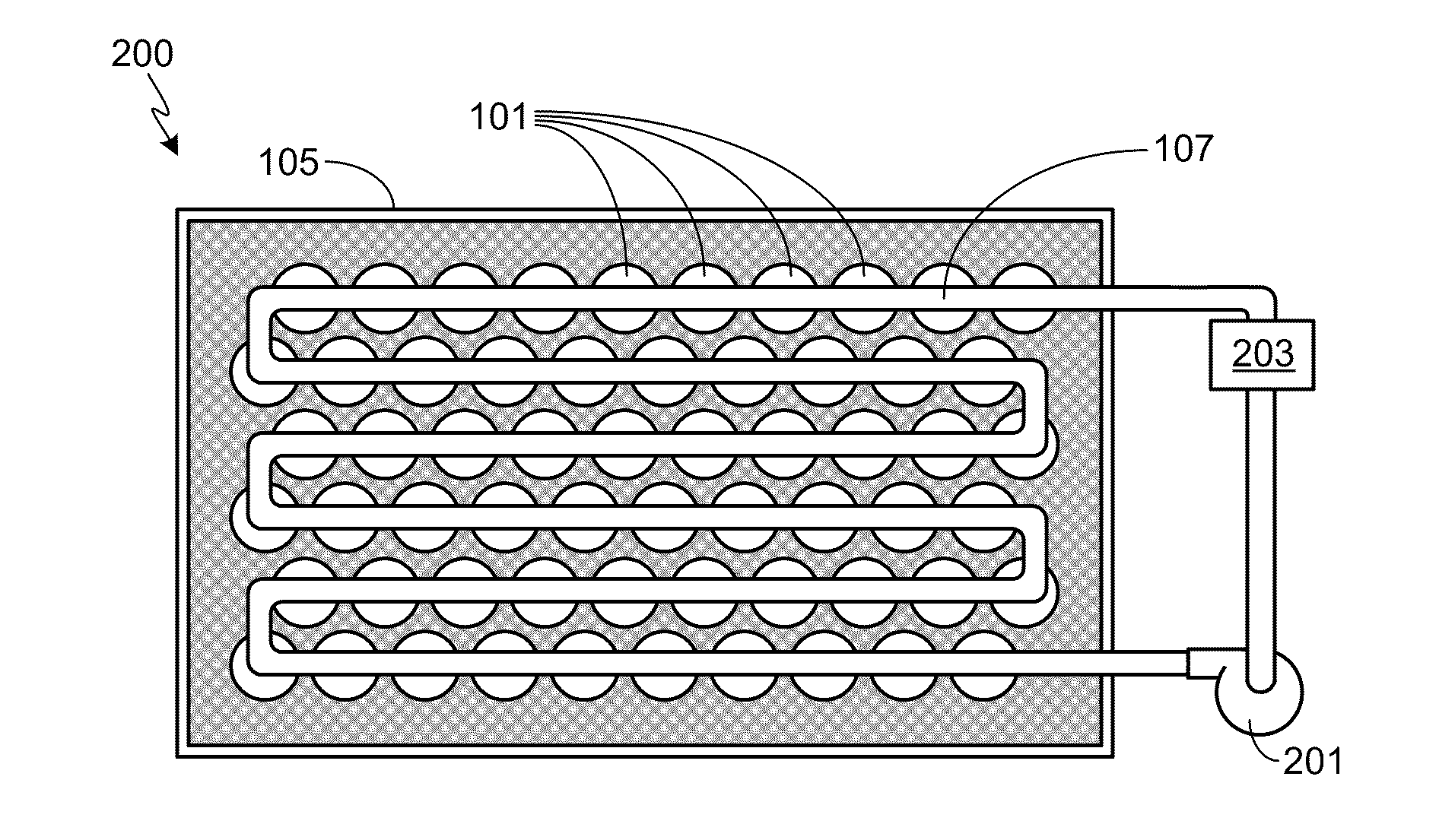
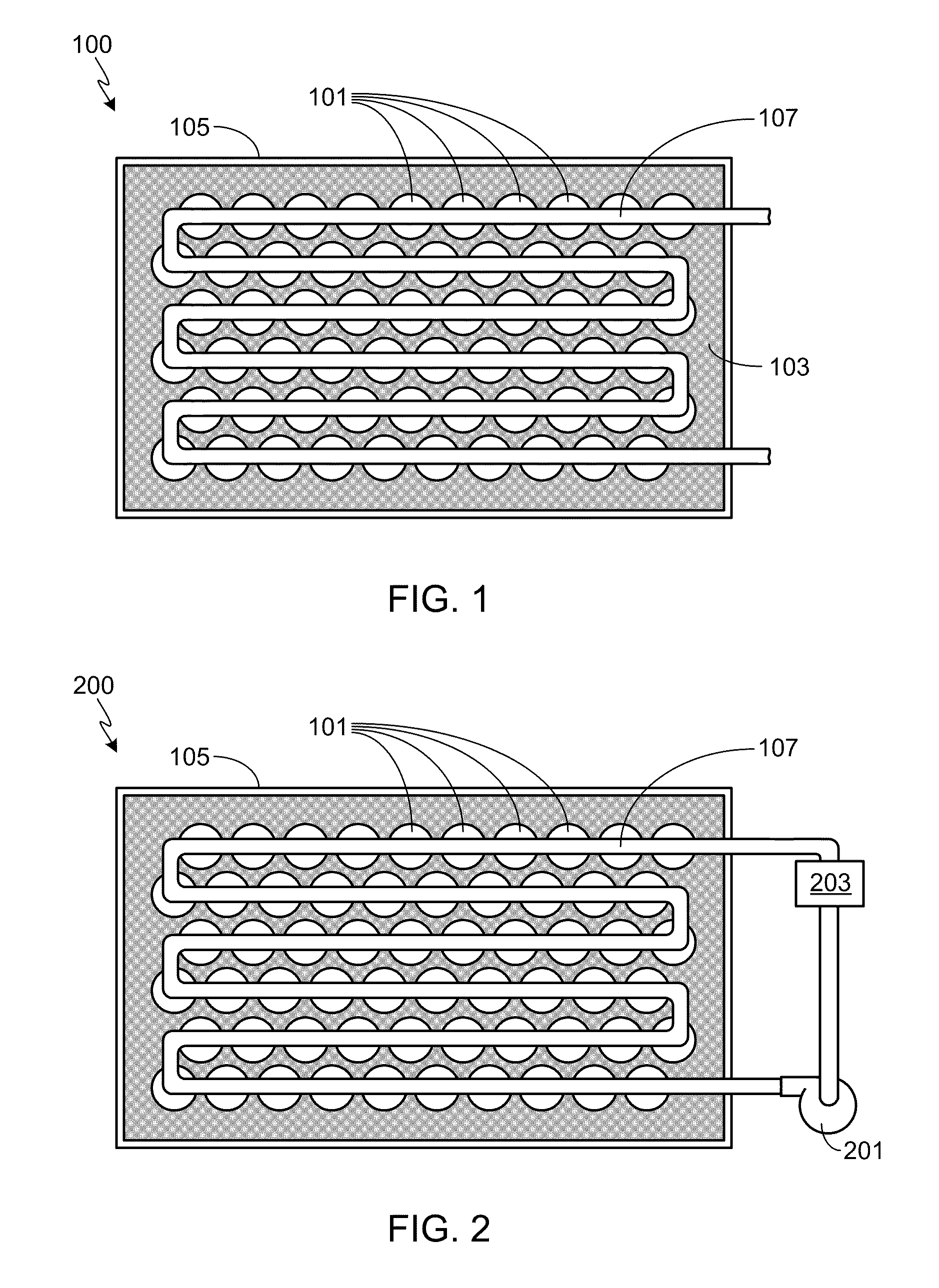
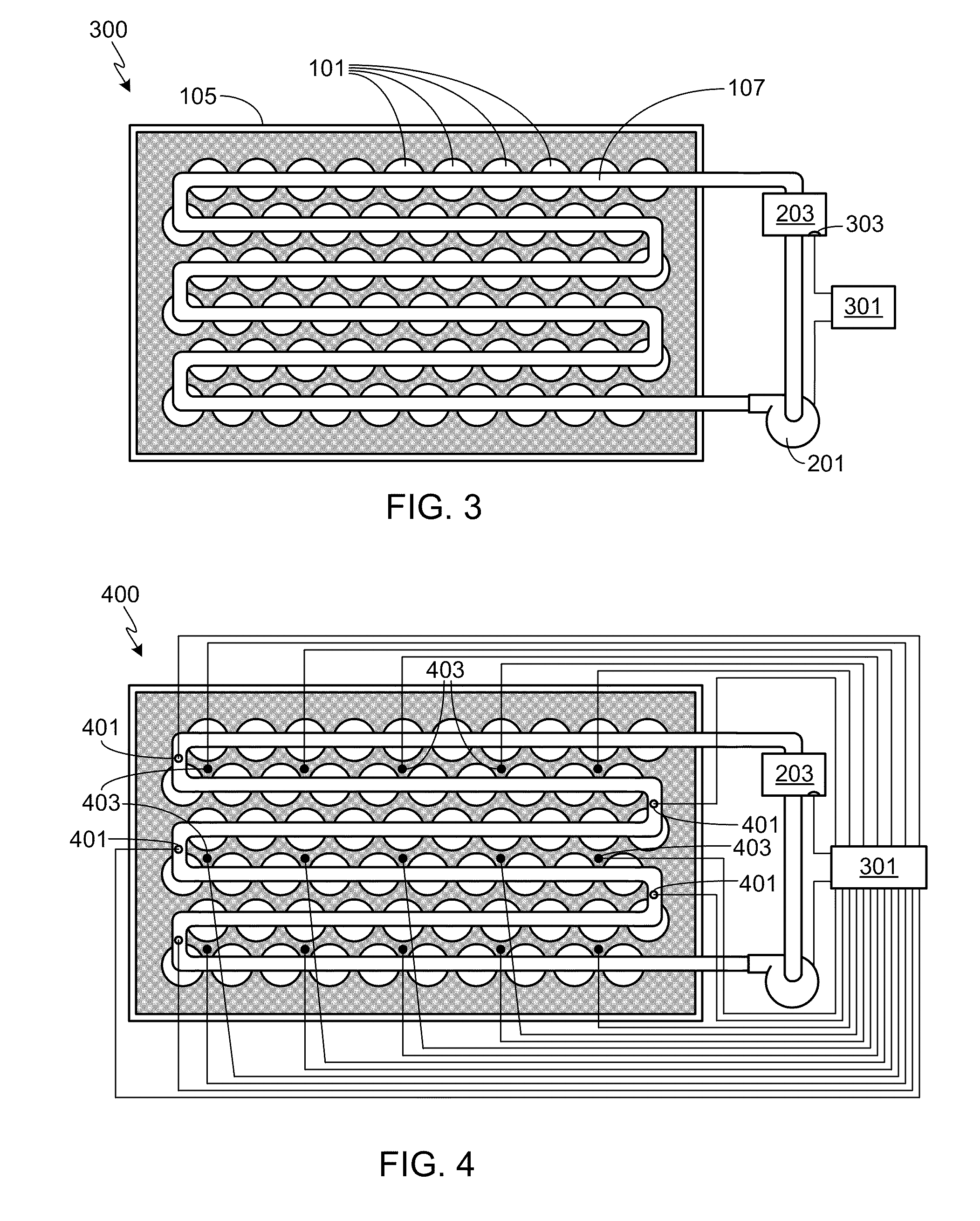
- An active thermal runaway mitigation system is implemented, featuring a battery pack enclosure with fluid-containing conduits that breach at a preset temperature to discharge cooling fluids or gases onto overheated cells, using sensors and a system controller to manage fluid flow and prevent propagation of thermal runaway to adjacent cells.

Battery system with active cooling of venting channel
PatentPendingUS20230246289A1
Innovation
- A battery system with an integrated venting and cooling device that guides venting gases away from battery cells through a venting channel and cools the channel using cooling fluid, reducing the risk of deflagration and preventing heat transfer to neighboring cells.


Safety Standards for Battery Thermal Management
Battery thermal management systems must comply with a comprehensive framework of international and regional safety standards that govern both passive and active cooling approaches for thermal runaway prevention. The International Electrotechnical Commission (IEC) 62133 series provides fundamental safety requirements for portable sealed secondary cells, while IEC 62619 addresses safety requirements for secondary lithium cells and batteries for industrial applications. These standards establish baseline thermal abuse testing protocols and temperature monitoring requirements that directly impact cooling system design choices.
The United Nations Manual of Tests and Criteria, particularly UN 38.3, mandates specific thermal stability tests that cooling systems must accommodate. For automotive applications, ISO 12405 series and SAE J2464 define thermal propagation testing requirements, where both passive and active cooling solutions must demonstrate their ability to contain or mitigate thermal runaway events within specified timeframes and temperature thresholds.
Regional standards add additional layers of compliance complexity. The European Union's ECE R100 regulation for electric vehicle safety includes thermal management requirements, while China's GB/T 31485 and GB/T 31467 standards specify thermal abuse testing conditions that influence cooling system selection. The United States follows UL 2580 for electric vehicle battery safety, which includes specific thermal runaway propagation criteria.
Safety standards increasingly emphasize predictive thermal management capabilities, requiring active monitoring systems regardless of whether passive or active cooling is employed. NFPA 855 for energy storage systems mandates thermal monitoring and suppression systems, often favoring active cooling solutions due to their enhanced control capabilities and faster response times during thermal events.
Certification processes under these standards typically require extensive thermal abuse testing, including overcharge, external heating, and nail penetration tests. Active cooling systems generally demonstrate superior performance in meeting the rapid temperature reduction requirements specified in standards like IEC 62133-2, though passive systems may achieve compliance through robust thermal barrier designs and heat dissipation materials that meet the prescribed safety margins.
The United Nations Manual of Tests and Criteria, particularly UN 38.3, mandates specific thermal stability tests that cooling systems must accommodate. For automotive applications, ISO 12405 series and SAE J2464 define thermal propagation testing requirements, where both passive and active cooling solutions must demonstrate their ability to contain or mitigate thermal runaway events within specified timeframes and temperature thresholds.
Regional standards add additional layers of compliance complexity. The European Union's ECE R100 regulation for electric vehicle safety includes thermal management requirements, while China's GB/T 31485 and GB/T 31467 standards specify thermal abuse testing conditions that influence cooling system selection. The United States follows UL 2580 for electric vehicle battery safety, which includes specific thermal runaway propagation criteria.
Safety standards increasingly emphasize predictive thermal management capabilities, requiring active monitoring systems regardless of whether passive or active cooling is employed. NFPA 855 for energy storage systems mandates thermal monitoring and suppression systems, often favoring active cooling solutions due to their enhanced control capabilities and faster response times during thermal events.
Certification processes under these standards typically require extensive thermal abuse testing, including overcharge, external heating, and nail penetration tests. Active cooling systems generally demonstrate superior performance in meeting the rapid temperature reduction requirements specified in standards like IEC 62133-2, though passive systems may achieve compliance through robust thermal barrier designs and heat dissipation materials that meet the prescribed safety margins.
Cost-Benefit Analysis of Cooling System Implementation
The economic evaluation of thermal runaway cooling systems requires comprehensive analysis of initial capital expenditure, operational costs, and long-term benefits. Passive cooling systems typically demonstrate lower upfront investment requirements, with costs primarily concentrated in thermal interface materials, heat sinks, and structural modifications. These systems generally range from $50-200 per kWh of battery capacity, depending on the complexity of thermal management design and material specifications.
Active cooling systems present significantly higher initial capital costs, typically ranging from $150-500 per kWh of battery capacity. The investment encompasses cooling pumps, fans, heat exchangers, control systems, and associated infrastructure. However, these systems offer superior thermal control precision and can extend battery lifespan by 15-25% compared to passive alternatives, creating substantial long-term value propositions.
Operational expenditure analysis reveals contrasting patterns between the two approaches. Passive systems maintain minimal ongoing costs, primarily limited to periodic maintenance and material replacement cycles. Energy consumption remains negligible, contributing to lower total cost of ownership over extended operational periods. Maintenance intervals typically extend 3-5 years for component replacement.
Active cooling systems incur continuous operational expenses through energy consumption, typically adding 3-8% to overall system power requirements. Maintenance costs increase substantially due to moving components, requiring regular servicing of pumps, fans, and control electronics. Annual maintenance expenses can reach 2-4% of initial system investment, significantly impacting long-term economic viability.
The benefit analysis demonstrates that active cooling systems provide superior thermal runaway prevention capabilities, potentially reducing catastrophic failure risks by 60-80% compared to passive systems. This translates to substantial insurance cost reductions and liability mitigation. Additionally, enhanced thermal management enables higher power density operations and extended battery lifecycles, improving overall return on investment despite higher initial costs.
Risk-adjusted financial modeling indicates that active cooling systems typically achieve payback periods of 4-7 years in high-utilization applications, while passive systems offer immediate cost advantages in moderate-duty cycles. The selection criteria should incorporate application-specific factors including duty cycle intensity, safety requirements, and long-term operational strategies to optimize economic outcomes.
Active cooling systems present significantly higher initial capital costs, typically ranging from $150-500 per kWh of battery capacity. The investment encompasses cooling pumps, fans, heat exchangers, control systems, and associated infrastructure. However, these systems offer superior thermal control precision and can extend battery lifespan by 15-25% compared to passive alternatives, creating substantial long-term value propositions.
Operational expenditure analysis reveals contrasting patterns between the two approaches. Passive systems maintain minimal ongoing costs, primarily limited to periodic maintenance and material replacement cycles. Energy consumption remains negligible, contributing to lower total cost of ownership over extended operational periods. Maintenance intervals typically extend 3-5 years for component replacement.
Active cooling systems incur continuous operational expenses through energy consumption, typically adding 3-8% to overall system power requirements. Maintenance costs increase substantially due to moving components, requiring regular servicing of pumps, fans, and control electronics. Annual maintenance expenses can reach 2-4% of initial system investment, significantly impacting long-term economic viability.
The benefit analysis demonstrates that active cooling systems provide superior thermal runaway prevention capabilities, potentially reducing catastrophic failure risks by 60-80% compared to passive systems. This translates to substantial insurance cost reductions and liability mitigation. Additionally, enhanced thermal management enables higher power density operations and extended battery lifecycles, improving overall return on investment despite higher initial costs.
Risk-adjusted financial modeling indicates that active cooling systems typically achieve payback periods of 4-7 years in high-utilization applications, while passive systems offer immediate cost advantages in moderate-duty cycles. The selection criteria should incorporate application-specific factors including duty cycle intensity, safety requirements, and long-term operational strategies to optimize economic outcomes.
Unlock deeper insights with Patsnap Eureka Quick Research — get a full tech report to explore trends and direct your research. Try now!
Generate Your Research Report Instantly with AI Agent
Supercharge your innovation with Patsnap Eureka AI Agent Platform!