Comparing Solvent vs Solid Sorbent Carbon Capture Efficiency
MAR 23, 20268 MIN READ
Generate Your Research Report Instantly with AI Agent
PatSnap Eureka helps you evaluate technical feasibility & market potential.
Carbon Capture Technology Background and Efficiency Goals
Carbon capture technology has emerged as a critical component in global climate mitigation strategies, representing one of the most promising approaches to reduce atmospheric CO2 concentrations from industrial sources. The technology encompasses various methodologies designed to separate, capture, and store carbon dioxide emissions before they enter the atmosphere, with post-combustion capture being the most widely applicable approach for existing industrial infrastructure.
The historical development of carbon capture can be traced back to the 1930s when chemical absorption processes were first employed for gas purification in industrial applications. However, the modern focus on carbon capture for climate purposes gained momentum in the 1990s, driven by increasing awareness of anthropogenic climate change and the need for large-scale emission reduction technologies.
Two primary technological pathways have dominated the carbon capture landscape: solvent-based systems and solid sorbent technologies. Solvent-based capture, primarily utilizing aqueous amine solutions, represents the most mature and commercially deployed approach. This technology leverages the chemical absorption properties of amines to selectively capture CO2 from flue gas streams through reversible chemical reactions.
Solid sorbent technologies have emerged as an alternative approach, utilizing various materials including metal-organic frameworks, zeolites, activated carbons, and novel polymer-based adsorbents. These systems operate through physical or chemical adsorption mechanisms, offering potential advantages in terms of energy requirements and operational flexibility.
The efficiency goals for carbon capture technologies are typically defined by several key performance indicators. Capture efficiency, representing the percentage of CO2 successfully removed from flue gas streams, generally targets 90% or higher for commercial applications. Energy penalty, measured as the additional energy required per ton of CO2 captured, aims for minimization to maintain economic viability of industrial processes.
Current technological objectives focus on achieving capture costs below $50 per ton of CO2 while maintaining high capture rates and minimizing parasitic energy consumption. The comparative evaluation of solvent versus solid sorbent efficiency has become increasingly important as industries seek optimal solutions balancing performance, cost, and operational requirements for large-scale deployment.
The historical development of carbon capture can be traced back to the 1930s when chemical absorption processes were first employed for gas purification in industrial applications. However, the modern focus on carbon capture for climate purposes gained momentum in the 1990s, driven by increasing awareness of anthropogenic climate change and the need for large-scale emission reduction technologies.
Two primary technological pathways have dominated the carbon capture landscape: solvent-based systems and solid sorbent technologies. Solvent-based capture, primarily utilizing aqueous amine solutions, represents the most mature and commercially deployed approach. This technology leverages the chemical absorption properties of amines to selectively capture CO2 from flue gas streams through reversible chemical reactions.
Solid sorbent technologies have emerged as an alternative approach, utilizing various materials including metal-organic frameworks, zeolites, activated carbons, and novel polymer-based adsorbents. These systems operate through physical or chemical adsorption mechanisms, offering potential advantages in terms of energy requirements and operational flexibility.
The efficiency goals for carbon capture technologies are typically defined by several key performance indicators. Capture efficiency, representing the percentage of CO2 successfully removed from flue gas streams, generally targets 90% or higher for commercial applications. Energy penalty, measured as the additional energy required per ton of CO2 captured, aims for minimization to maintain economic viability of industrial processes.
Current technological objectives focus on achieving capture costs below $50 per ton of CO2 while maintaining high capture rates and minimizing parasitic energy consumption. The comparative evaluation of solvent versus solid sorbent efficiency has become increasingly important as industries seek optimal solutions balancing performance, cost, and operational requirements for large-scale deployment.
Market Demand for Industrial Carbon Capture Solutions
The global industrial carbon capture market is experiencing unprecedented growth driven by stringent environmental regulations and corporate sustainability commitments. Major industrial sectors including cement, steel, petrochemicals, and power generation are under increasing pressure to reduce their carbon footprint, creating substantial demand for effective carbon capture technologies. The urgency stems from international climate agreements and national carbon neutrality targets that require significant emissions reductions within the next two decades.
Power generation facilities represent the largest market segment for carbon capture solutions, particularly coal and natural gas plants seeking to extend their operational lifespan while meeting emissions standards. The cement industry follows as a critical market due to its inherently high process emissions that cannot be eliminated through fuel switching alone. Steel production facilities are increasingly exploring carbon capture as part of their decarbonization strategies, especially in regions where hydrogen-based production remains economically challenging.
The choice between solvent-based and solid sorbent carbon capture technologies significantly impacts market adoption patterns. Industrial facilities with consistent, high-concentration CO2 streams often favor solvent systems for their proven scalability and efficiency. However, operations with variable load conditions or space constraints increasingly prefer solid sorbent solutions due to their operational flexibility and reduced infrastructure requirements.
Regional market dynamics vary considerably based on policy frameworks and industrial composition. European markets demonstrate strong demand driven by carbon pricing mechanisms and regulatory mandates, while Asian markets focus on technology deployment in heavy industry clusters. North American demand is increasingly influenced by federal incentives and state-level clean energy standards.
Economic factors play a crucial role in technology selection and market penetration. The total cost of ownership, including capital expenditure, operational costs, and maintenance requirements, determines the viability of different carbon capture approaches. Industrial customers increasingly evaluate solutions based on their ability to integrate with existing processes while minimizing production disruptions and energy penalties.
Market growth is further accelerated by the development of carbon utilization pathways and permanent storage infrastructure, which provide revenue opportunities for captured CO2 and enhance the overall economic proposition of carbon capture investments across industrial sectors.
Power generation facilities represent the largest market segment for carbon capture solutions, particularly coal and natural gas plants seeking to extend their operational lifespan while meeting emissions standards. The cement industry follows as a critical market due to its inherently high process emissions that cannot be eliminated through fuel switching alone. Steel production facilities are increasingly exploring carbon capture as part of their decarbonization strategies, especially in regions where hydrogen-based production remains economically challenging.
The choice between solvent-based and solid sorbent carbon capture technologies significantly impacts market adoption patterns. Industrial facilities with consistent, high-concentration CO2 streams often favor solvent systems for their proven scalability and efficiency. However, operations with variable load conditions or space constraints increasingly prefer solid sorbent solutions due to their operational flexibility and reduced infrastructure requirements.
Regional market dynamics vary considerably based on policy frameworks and industrial composition. European markets demonstrate strong demand driven by carbon pricing mechanisms and regulatory mandates, while Asian markets focus on technology deployment in heavy industry clusters. North American demand is increasingly influenced by federal incentives and state-level clean energy standards.
Economic factors play a crucial role in technology selection and market penetration. The total cost of ownership, including capital expenditure, operational costs, and maintenance requirements, determines the viability of different carbon capture approaches. Industrial customers increasingly evaluate solutions based on their ability to integrate with existing processes while minimizing production disruptions and energy penalties.
Market growth is further accelerated by the development of carbon utilization pathways and permanent storage infrastructure, which provide revenue opportunities for captured CO2 and enhance the overall economic proposition of carbon capture investments across industrial sectors.
Current State of Solvent vs Solid Sorbent Technologies
The carbon capture landscape is currently dominated by two primary technological approaches: solvent-based systems and solid sorbent technologies, each representing distinct maturity levels and deployment scales. Solvent-based carbon capture, particularly using amine-based solutions, has achieved commercial-scale implementation across multiple industrial sectors, with over 30 large-scale facilities operational worldwide. These systems demonstrate proven reliability in power generation, cement production, and petrochemical industries, with capture efficiencies typically ranging from 85% to 95%.
Monoethanolamine (MEA) remains the most widely deployed solvent technology, offering robust performance characteristics and extensive operational data. Advanced solvent formulations, including piperazine-promoted systems and novel ionic liquids, have emerged to address energy penalty concerns inherent in traditional amine processes. These next-generation solvents demonstrate reduced regeneration energy requirements, with some achieving 20-25% energy savings compared to conventional MEA systems.
Solid sorbent technologies present a more diverse technological landscape, encompassing metal-organic frameworks (MOFs), solid amines, and calcium-based materials. While these technologies remain predominantly in pilot and demonstration phases, they offer compelling advantages in specific applications. Temperature swing adsorption (TSA) and pressure swing adsorption (PSA) processes using solid sorbents have shown particular promise in direct air capture applications, where lower CO2 concentrations favor solid-phase capture mechanisms.
Current solid sorbent systems face significant scalability challenges, with most commercial deployments limited to smaller-scale applications or specialized industrial processes. However, recent advances in material synthesis and process optimization have enabled several solid sorbent technologies to achieve capture efficiencies comparable to solvent systems, particularly in moderate-temperature applications.
The integration of both technologies into hybrid systems represents an emerging trend, leveraging the complementary strengths of each approach. These integrated solutions aim to optimize overall system efficiency while minimizing energy penalties and operational complexity across varying operational conditions and CO2 concentration ranges.
Monoethanolamine (MEA) remains the most widely deployed solvent technology, offering robust performance characteristics and extensive operational data. Advanced solvent formulations, including piperazine-promoted systems and novel ionic liquids, have emerged to address energy penalty concerns inherent in traditional amine processes. These next-generation solvents demonstrate reduced regeneration energy requirements, with some achieving 20-25% energy savings compared to conventional MEA systems.
Solid sorbent technologies present a more diverse technological landscape, encompassing metal-organic frameworks (MOFs), solid amines, and calcium-based materials. While these technologies remain predominantly in pilot and demonstration phases, they offer compelling advantages in specific applications. Temperature swing adsorption (TSA) and pressure swing adsorption (PSA) processes using solid sorbents have shown particular promise in direct air capture applications, where lower CO2 concentrations favor solid-phase capture mechanisms.
Current solid sorbent systems face significant scalability challenges, with most commercial deployments limited to smaller-scale applications or specialized industrial processes. However, recent advances in material synthesis and process optimization have enabled several solid sorbent technologies to achieve capture efficiencies comparable to solvent systems, particularly in moderate-temperature applications.
The integration of both technologies into hybrid systems represents an emerging trend, leveraging the complementary strengths of each approach. These integrated solutions aim to optimize overall system efficiency while minimizing energy penalties and operational complexity across varying operational conditions and CO2 concentration ranges.
Existing Solvent and Solid Sorbent Solutions
01 Advanced sorbent materials for enhanced CO2 capture
Development of novel sorbent materials with high selectivity and capacity for carbon dioxide capture. These materials include metal-organic frameworks, amine-functionalized materials, and porous carbon structures that can significantly improve capture efficiency through enhanced surface area and optimized binding sites. The materials demonstrate superior performance in terms of adsorption capacity, regeneration capability, and stability under various operating conditions.- Advanced sorbent materials for enhanced CO2 capture: Development of novel sorbent materials with improved adsorption capacity and selectivity for carbon dioxide capture. These materials include metal-organic frameworks, functionalized porous materials, and modified amine-based sorbents that demonstrate higher capture efficiency through optimized surface area, pore structure, and chemical affinity. The enhanced materials enable more effective separation of CO2 from gas mixtures while reducing energy consumption during regeneration cycles.
- Process optimization and system integration: Optimization of carbon capture process parameters and system configurations to maximize capture efficiency. This includes improvements in gas-liquid contact methods, flow distribution, temperature and pressure control, and multi-stage capture systems. Integration of various unit operations and process intensification techniques help achieve higher overall capture rates while minimizing operational costs and energy penalties.
- Membrane-based separation technology: Application of advanced membrane materials and configurations for selective CO2 separation from flue gas or industrial emissions. These systems utilize polymeric, ceramic, or hybrid membranes with tailored permeability and selectivity properties. Membrane technology offers continuous operation, compact design, and potential for high capture efficiency when properly designed with appropriate membrane materials and module configurations.
- Chemical absorption enhancement methods: Improvements in chemical absorption processes using optimized solvent formulations and absorption column designs. This includes development of novel amine blends, addition of promoters or activators, and use of phase-change solvents that enhance CO2 loading capacity and absorption kinetics. Enhanced mass transfer through innovative column internals and operating strategies further improves capture efficiency while reducing solvent degradation and energy requirements for regeneration.
- Monitoring and control systems for efficiency optimization: Implementation of advanced monitoring, measurement, and control systems to optimize carbon capture performance in real-time. These systems incorporate sensors, analytical instruments, and intelligent control algorithms to track capture efficiency, adjust operating parameters dynamically, and ensure consistent performance. Data-driven approaches and automation enable continuous optimization of capture processes based on feed gas composition variations and operating conditions.
02 Process optimization and system integration
Optimization of carbon capture processes through improved system design and integration strategies. This includes enhanced reactor configurations, optimized flow patterns, temperature and pressure control systems, and integration with existing industrial processes. These improvements focus on maximizing contact efficiency between gas streams and capture media while minimizing energy consumption and operational costs.Expand Specific Solutions03 Membrane-based separation technology
Implementation of advanced membrane technologies for selective carbon dioxide separation from mixed gas streams. These systems utilize specialized membrane materials with high permeability and selectivity ratios, enabling efficient separation at lower energy requirements. The technology includes polymeric membranes, ceramic membranes, and hybrid membrane systems designed for various industrial applications.Expand Specific Solutions04 Chemical absorption and solvent systems
Development of improved chemical absorption processes using advanced solvent systems for carbon capture. This includes novel amine-based solvents, ionic liquids, and hybrid solvent systems that offer enhanced absorption rates, reduced degradation, and lower regeneration energy requirements. The systems are designed to achieve higher capture efficiency while addressing issues such as corrosion and solvent loss.Expand Specific Solutions05 Monitoring and control systems for capture efficiency
Implementation of advanced monitoring, measurement, and control systems to optimize capture efficiency in real-time. These systems incorporate sensors, data analytics, and automated control mechanisms to continuously monitor process parameters and adjust operating conditions. The technology enables precise tracking of capture performance, early detection of system degradation, and optimization of overall efficiency through feedback control mechanisms.Expand Specific Solutions
Key Players in Carbon Capture Technology Industry
The carbon capture technology sector comparing solvent versus solid sorbent efficiency represents a rapidly evolving competitive landscape in the early commercialization stage. The market demonstrates significant growth potential driven by increasing climate commitments and regulatory pressures, with global carbon capture markets projected to reach billions in value. Technology maturity varies considerably across players, with established industrial giants like China Petroleum & Chemical Corp., Shell, and GE Vernova leveraging decades of process engineering expertise in solvent-based systems, while innovative companies like Climeworks and Noya PBC pioneer solid sorbent direct air capture technologies. Research institutions including Norwegian University of Science & Technology, Zhejiang University, and West Virginia University contribute fundamental advances in both approaches. The competitive dynamics show traditional energy companies focusing on point-source capture using proven amine solvents, while emerging players develop novel solid sorbents for atmospheric CO2 removal, creating distinct market segments with different technical and economic profiles.
TDA Research, Inc.
Technical Solution: TDA Research has developed novel solid CO2 sorbents based on supported amine materials and metal-organic frameworks (MOFs) for carbon capture applications. Their solid sorbent technology utilizes polyethylenimine (PEI) impregnated on mesoporous silica supports, achieving CO2 working capacities of 3-5 mmol/g at flue gas conditions. The materials operate effectively at temperatures between 40-80°C for adsorption and 80-120°C for desorption in temperature swing adsorption processes. Compared to conventional liquid amine solvents, their solid sorbents eliminate solvent losses, reduce corrosion issues, and demonstrate 20-30% lower parasitic energy consumption. The technology shows particular promise for retrofitting existing power plants due to reduced infrastructure requirements and simplified process design.
Strengths: Eliminated solvent losses and corrosion, lower energy consumption, simplified process design suitable for retrofits. Weaknesses: Lower CO2 working capacity compared to liquid solvents, slower adsorption kinetics, higher material costs.
GE Infrastructure Technology, Inc.
Technical Solution: GE has developed both solvent and solid sorbent carbon capture technologies for power generation applications. Their solvent-based system uses advanced amine formulations with reduced energy penalties, achieving regeneration temperatures as low as 100°C compared to conventional 120°C systems. For solid sorbents, GE has developed structured adsorbent materials based on supported amines that can operate in temperature swing adsorption (TSA) cycles. The solid sorbent systems demonstrate working capacities of 2-4 mmol CO2/g sorbent with regeneration temperatures of 80-120°C. Their comparative studies show that while solvent systems achieve higher capture rates (>95%), solid sorbents offer 15-25% lower energy consumption per ton of CO2 captured.
Strengths: Dual technology portfolio allowing optimization for specific applications, reduced energy consumption in solid systems. Weaknesses: Solid sorbents have lower volumetric capacity, solvent systems still face degradation challenges.
Core Innovations in Sorbent Efficiency Technologies
Method for capturing co2
PatentWO2012120173A1
Innovation
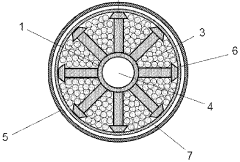
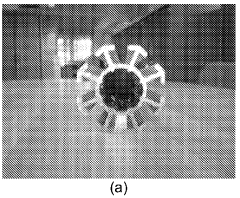
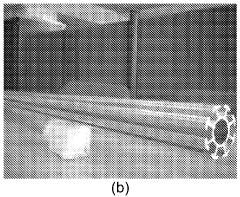
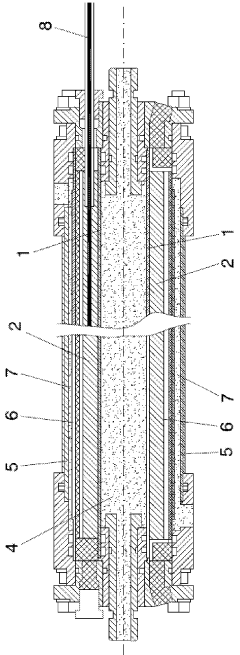
- A CO2 capture process using fixed-bed reactors with alumina sorbents impregnated with aminoalcohols under combined temperature swing adsorption (TSA), pressure swing adsorption (PSA), and steam stripping conditions, optimizing absorption and desorption times for continuous operation with reduced reactor numbers and energy usage.
Gas capture system
PatentActiveUS20200016537A1
Innovation
- A gas capture system utilizing a high-temperature solid sorbent that recirculates between a carbonation and regeneration process, employing indirect heating with a combustor to regenerate the sorbent, allowing for continuous operation and reducing the need for pure oxygen, thereby minimizing costs and environmental impact.


Carbon Policy and Environmental Regulations
The global regulatory landscape for carbon capture technologies has evolved significantly, with governments worldwide implementing increasingly stringent policies to address climate change. The Paris Agreement has catalyzed national commitments to achieve net-zero emissions, directly influencing the development and deployment of carbon capture, utilization, and storage (CCUS) technologies. These international frameworks create a regulatory foundation that favors efficient carbon capture solutions, making the comparison between solvent and solid sorbent technologies particularly relevant for compliance strategies.
In the United States, the 45Q tax credit program provides substantial financial incentives for carbon capture projects, offering up to $85 per metric ton of CO2 permanently stored. This policy framework significantly impacts the economic viability of different capture technologies, as higher efficiency systems can maximize tax credit benefits. The Infrastructure Investment and Jobs Act further allocated $12 billion for CCUS demonstration projects, emphasizing the need for proven, efficient technologies that can meet regulatory performance standards.
The European Union's Emissions Trading System (ETS) and the proposed Carbon Border Adjustment Mechanism create market-driven incentives for deploying efficient carbon capture technologies. Under these regulations, industries face increasing carbon pricing pressure, making the efficiency differences between solvent and solid sorbent systems economically critical. The EU's Green Deal and REPowerEU plan specifically target industrial decarbonization, with carbon capture efficiency becoming a key factor in regulatory compliance and competitiveness.
China's national ETS, covering over 4 billion tons of CO2 annually, represents the world's largest carbon market. Chinese regulations increasingly favor technologies demonstrating superior capture rates and energy efficiency. The country's 14th Five-Year Plan emphasizes CCUS technology development, with specific performance benchmarks that influence technology selection criteria for industrial applications.
Environmental regulations also address the broader impacts of carbon capture systems, including energy consumption, water usage, and waste generation. Solvent-based systems face scrutiny regarding solvent degradation products and thermal energy requirements, while solid sorbent technologies encounter regulations concerning material lifecycle and regeneration processes. These environmental considerations increasingly influence regulatory approval processes and operational permits, making efficiency comparisons essential for regulatory compliance and long-term viability in the evolving policy landscape.
In the United States, the 45Q tax credit program provides substantial financial incentives for carbon capture projects, offering up to $85 per metric ton of CO2 permanently stored. This policy framework significantly impacts the economic viability of different capture technologies, as higher efficiency systems can maximize tax credit benefits. The Infrastructure Investment and Jobs Act further allocated $12 billion for CCUS demonstration projects, emphasizing the need for proven, efficient technologies that can meet regulatory performance standards.
The European Union's Emissions Trading System (ETS) and the proposed Carbon Border Adjustment Mechanism create market-driven incentives for deploying efficient carbon capture technologies. Under these regulations, industries face increasing carbon pricing pressure, making the efficiency differences between solvent and solid sorbent systems economically critical. The EU's Green Deal and REPowerEU plan specifically target industrial decarbonization, with carbon capture efficiency becoming a key factor in regulatory compliance and competitiveness.
China's national ETS, covering over 4 billion tons of CO2 annually, represents the world's largest carbon market. Chinese regulations increasingly favor technologies demonstrating superior capture rates and energy efficiency. The country's 14th Five-Year Plan emphasizes CCUS technology development, with specific performance benchmarks that influence technology selection criteria for industrial applications.
Environmental regulations also address the broader impacts of carbon capture systems, including energy consumption, water usage, and waste generation. Solvent-based systems face scrutiny regarding solvent degradation products and thermal energy requirements, while solid sorbent technologies encounter regulations concerning material lifecycle and regeneration processes. These environmental considerations increasingly influence regulatory approval processes and operational permits, making efficiency comparisons essential for regulatory compliance and long-term viability in the evolving policy landscape.
Economic Viability of Carbon Capture Technologies
The economic viability of carbon capture technologies represents a critical factor in determining the widespread adoption of solvent-based versus solid sorbent systems. Current cost analyses reveal significant disparities between these two approaches, with solvent systems typically requiring higher initial capital expenditures due to complex infrastructure requirements including absorption towers, regeneration units, and extensive piping networks. Solid sorbent technologies, while potentially offering lower initial setup costs, face challenges related to material replacement frequencies and specialized handling equipment.
Operational expenditure patterns differ substantially between the two technologies. Solvent-based systems incur continuous costs associated with solvent makeup, energy-intensive regeneration processes, and corrosion management. The thermal energy requirements for solvent regeneration typically account for 60-70% of total operational costs, making these systems particularly sensitive to energy price fluctuations. Additionally, solvent degradation and environmental compliance measures contribute to ongoing operational expenses.
Solid sorbent systems present alternative cost structures characterized by periodic material replacement cycles and lower continuous energy consumption. The economic advantage of solid sorbents becomes more pronounced in applications with intermittent operation patterns, where the ability to pause and restart without significant energy penalties provides substantial cost savings. However, the replacement frequency of solid materials and associated downtime costs must be carefully evaluated against these operational benefits.
Lifecycle cost assessments indicate that economic competitiveness varies significantly based on application scale and operational parameters. Large-scale industrial applications often favor solvent systems due to economies of scale and established supply chains, while smaller or distributed capture applications may benefit from solid sorbent approaches. The break-even analysis typically occurs at capture rates between 100-500 tons CO2 per day, depending on local energy costs and regulatory frameworks.
Investment recovery timelines for both technologies remain heavily dependent on carbon pricing mechanisms and regulatory incentives. Current economic models suggest payback periods ranging from 8-15 years for solvent systems and 6-12 years for solid sorbent technologies under favorable policy conditions. The economic viability threshold continues to evolve as technology maturation drives down costs and carbon pricing mechanisms strengthen globally.
Operational expenditure patterns differ substantially between the two technologies. Solvent-based systems incur continuous costs associated with solvent makeup, energy-intensive regeneration processes, and corrosion management. The thermal energy requirements for solvent regeneration typically account for 60-70% of total operational costs, making these systems particularly sensitive to energy price fluctuations. Additionally, solvent degradation and environmental compliance measures contribute to ongoing operational expenses.
Solid sorbent systems present alternative cost structures characterized by periodic material replacement cycles and lower continuous energy consumption. The economic advantage of solid sorbents becomes more pronounced in applications with intermittent operation patterns, where the ability to pause and restart without significant energy penalties provides substantial cost savings. However, the replacement frequency of solid materials and associated downtime costs must be carefully evaluated against these operational benefits.
Lifecycle cost assessments indicate that economic competitiveness varies significantly based on application scale and operational parameters. Large-scale industrial applications often favor solvent systems due to economies of scale and established supply chains, while smaller or distributed capture applications may benefit from solid sorbent approaches. The break-even analysis typically occurs at capture rates between 100-500 tons CO2 per day, depending on local energy costs and regulatory frameworks.
Investment recovery timelines for both technologies remain heavily dependent on carbon pricing mechanisms and regulatory incentives. Current economic models suggest payback periods ranging from 8-15 years for solvent systems and 6-12 years for solid sorbent technologies under favorable policy conditions. The economic viability threshold continues to evolve as technology maturation drives down costs and carbon pricing mechanisms strengthen globally.
Unlock deeper insights with PatSnap Eureka Quick Research — get a full tech report to explore trends and direct your research. Try now!
Generate Your Research Report Instantly with AI Agent
Supercharge your innovation with PatSnap Eureka AI Agent Platform!